
See all 32 recipes
Table of Contents
- The Five Slot Formula
- Starters: Six Openers That Cook While Guests Arrive
- Mains: Fourteen Centerpieces for the Grill
- Sides: Twelve Dishes for the Oven, Stove, and Cooler
- Three Ready Made Menus
- Grill and Oven Planning
- Food Safety for Outdoor Cooking
- Time and Protein at a Glance
- How I Counted Protein
- Where These Cards Differ From Typical Versions
- FAQ
- Recipe Cards
A Christmas barbecue is a menu problem, not a recipe problem.
So this list is organized as a menu: starters, mains, and sides, with three ready made menus near the end. Every card lists exact weights, servings, and protein per serving, from 6 to 50 grams.
For a smaller table, see our family dinners.
The Five Slot Formula
Every dinner here fills the same five slots, and each card names them in a line called The five.
- Protein: the main source, such as chicken, shrimp, sausage, eggs, or beans.
- Base: what turns it into a meal, such as pasta, rice, potatoes, or tortillas.
- Engine: the ingredient that does the seasoning, such as a jarred sauce or a blend.
- Body: what adds richness or thickness, such as cheese, coconut milk, or canned tomatoes.
- Extra: a vegetable or a bean that rounds out the plate.
Salt, black pepper, cooking oil, and water don't count toward the five, and each card lists them anyway. A seasoning blend counts as one ingredient, and broth counts when it's the cooking liquid. A few cards run short of five on purpose.
Our Take
Use a thermometer on every cut, and keep cold food cold.
Starters: Six Openers That Cook While Guests Arrive
A good opener is ready before the main course is even on the grill. These 6 starters are quick over the flame or made the day before, and each one has a protein source so guests don't fill up on chips.
For more finger foods, see our football party snacks.
Garlic Lemon Shrimp Skewers
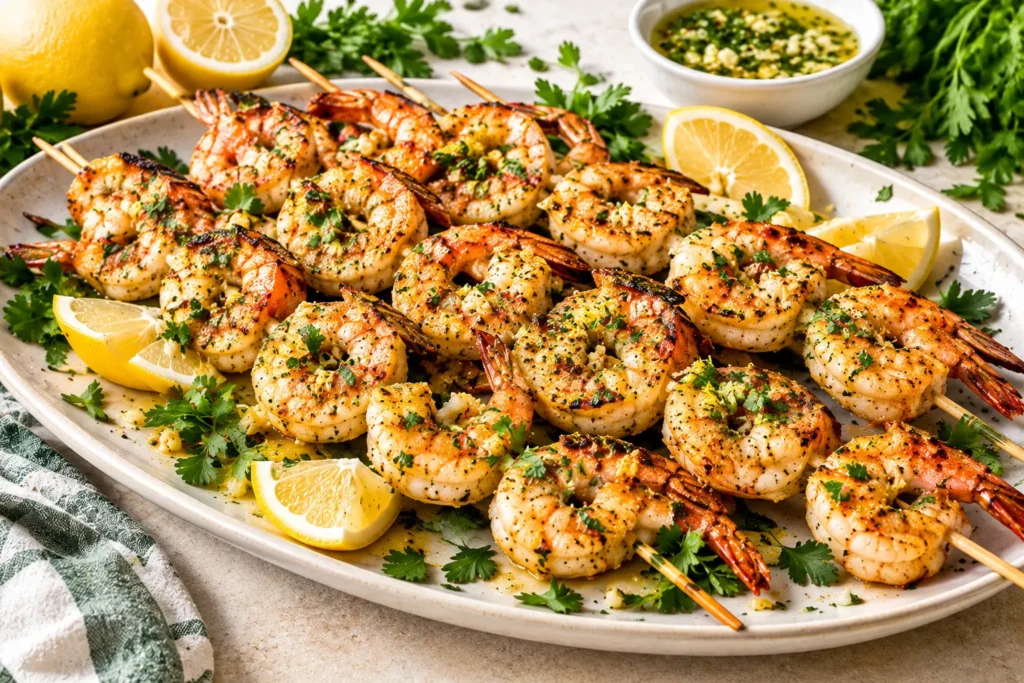
Menu role: Opener, ready in minutes. Grill it as guests arrive, over direct heat.
Shrimp cooks in about five minutes, which makes it the right opener for a grill that's still heating. A garlic, lemon, and paprika marinade is all it needs.
Soak the skewers for 30 minutes. They don't burn. Leave the tails on if you like.
The nutrition: About 17 g protein per serving (1 of 8). The shrimp carries the most, and the garlic comes next.
Thread three or four shrimp on each skewer and leave a small gap between them, because crowded shrimp steam in the middle and stay raw near the stick. They're ready the moment they turn pink and opaque.
Swap: Chicken strips work in the same marinade. Grill them to 165°F.
Smoky BBQ Chicken Wings
Wings are a holiday favorite that feeds a crowd, and they're forgiving on the grill. The trick is to cook them indirectly first and sauce them late.
Pat the wings dry. Dry skin crisps. Wet skin steams.
Menu role: Opener for a crowd. Needs the grill for 45 minutes, so start it first.
The nutrition: Each serving has about 24 g protein, and the pan makes 8. Most of that comes from the wings, with the barbecue sauce adding more.
Brush the sauce on only at the end, since the sugar in barbecue sauce burns over direct heat in minutes, and a thermometer should read 165°F in the thickest part. I'd serve them with a cold coleslaw on the side.
Make ahead: Season the wings the night before. Leave them uncovered in the refrigerator.
Don't Miss the Next Recipe
Get fresh recipes, meal prep systems, and high-protein meal ideas delivered to your inbox every week.
No spam. Unsubscribe anytime.
Classic Deviled Eggs
The nutrition: Count on roughly 10 g protein per serving, from 8 equal servings. The eggs leads, followed by the mayo.
Deviled eggs are the easiest opener, since they need no heat on the day. Boil them the day before, and the work is almost done.
Menu role: Opener, no heat at all. Make it the day before and chill it.
Cover the eggs and let them sit off the heat. They don't turn green. Twelve minutes is right.
Cool the eggs in ice water right away, because it stops the cooking and makes the shells slide off cleanly. Eggs should stay cold, so keep the tray in the refrigerator until guests arrive and don't leave it out past two hours.
Safety: Hard cooked eggs keep up to 7 days in the refrigerator, per the USDA. Deviled eggs are best eaten within 3 to 4 days.
Sausage Stuffed Mushrooms
Mushroom caps hold a savory filling like a tiny bowl. Sausage and cream cheese make it rich enough that one bite goes a long way.
Menu role: Opener that needs indirect heat. Stuff them an hour ahead.
Wipe the mushrooms with a damp towel. Don't soak them. They absorb water.
The nutrition: One serving comes to about 8 g protein, with 8 in all. The sausage carries the most, and the mushrooms comes next.
Make ahead: Stuff the caps up to 4 hours ahead and keep them covered in the refrigerator.
Cook the sausage fully before it goes in the caps, since the mushrooms only need to soften, and the filling won't reach a safe temperature on its own in 15 minutes. Cream cheese stirred in at the end keeps the filling creamy.
Never Miss a Recipe
Fresh high-protein recipes, meal prep ideas, and kitchen tips, straight to your inbox every week. No spam, just good food.
No spam. Unsubscribe anytime.
BBQ Meatball Skewers
Menu role: Opener that doubles as a snack. Roll the meatballs the day before.
Meatballs on a stick are easy to eat while standing around the grill. A barbecue glaze in the last few minutes gives them a sticky, caramelized coat.
The nutrition: Per serving, it's about 19 g protein (8 servings). Most of that comes from the beef, with the eggs adding more.
Roll the meatballs the same size. They cook together. Wet hands help.
Lean beef dries out quickly, so pull the skewers as soon as a thermometer reads 160°F in the center of a meatball. Brush the sauce on late, since it burns if it goes on at the start.
Swap: Ground turkey works at the same weight. Cook it to 165°F.
Chicken Satay With Peanut Sauce
Satay is a skewered chicken dish with a peanut sauce that works as both marinade and dip. It's an unexpected opener at a Christmas table, and it's easy to prepare ahead.
Cut the chicken into long, thin strips. They thread easily. Thin strips cook in minutes.
The nutrition: About 24 g protein per serving (1 of 8). The chicken leads, followed by the peanut butter.
Menu role: Opener with a built-in dipping sauce. Marinate it in the morning.
Keep the dipping sauce separate from the marinade, since sauce that touched raw chicken isn't safe to serve, and set half aside before the chicken goes in. If your guests have peanut allergies, sunflower seed butter is a swap.
Safety: Never reuse a marinade that held raw chicken. Reserve the dipping sauce first.
Mains: Fourteen Centerpieces for the Grill
Pick one or two of these 14 centerpieces and the menu is set. They run from 10 minute lamb chops to a 5 hour pulled pork, so choose by how much time you want to spend at the grill.
For more grill ideas, see our grilled mains.
Grilled Herb Turkey Breast
Menu role: Centerpiece for a traditional table. Needs indirect heat for over an hour.
A whole turkey doesn't fit on most grills, but a boneless breast does, and it cooks in about an hour. It's the closest thing to a traditional Christmas bird at a barbecue.
Salt the turkey and let it stand. It seasons through. Thirty minutes helps.
The nutrition: Each serving has about 50 g protein, and the pan makes 6. The turkey carries the most, and the garlic comes next.
Cook it over indirect heat and don't open the lid more than you have to, because every peek drops the temperature and adds minutes. Pull it at 165°F, then rest it for fifteen minutes so the juices settle before you slice.
Leftovers: Refrigerate sliced turkey within 2 hours. It keeps 3 to 4 days, per FoodSafety.gov.
Maple Mustard Glazed Ham Steaks
Fully cooked ham steaks only need heat and a glaze, so they're the least stressful centerpiece on this list. Maple and Dijon give them the sweet and tangy flavor of a holiday ham.
Brush the glaze on late. Sugar burns. Two minutes is enough.
Menu role: Fast centerpiece, 12 minutes on direct heat. It's the easiest ham you'll make.
The nutrition: Count on roughly 27 g protein per serving, from 6 equal servings. Nearly all of that comes from the ham.
Packaged ham is already cooked, and the USDA says to reheat it to 140°F, so a thermometer is the only thing you need. Watch the grill closely, since ham steaks are thin and go from glossy to dry quickly.
Swap: Sliced pineapple on the grill makes a classic side. Grill it 2 minutes per side.
Garlic Herb Sirloin Steaks
The nutrition: One steak comes to about 48 g protein, with 4 in all. The steak leads, followed by the garlic.
Steaks are the simple choice when guests want something plain. A garlic and rosemary rub is all they need, and a hot grill does the rest.
Menu role: Centerpiece for four, hot and fast. Rest it while the sides finish.
Let the steaks reach room temperature first. They cook evenly. Don't skip the salt.
Pull the steaks when a thermometer reads 145°F, which is the USDA's minimum for whole cuts of beef, and rest them for ten minutes so the juices stay inside. Sirloin is lean, so I'd slice it thin across the grain.
Make ahead: Rub the steaks in the morning and keep them covered in the refrigerator.
Dry Rub Baby Back Ribs
Ribs are the centerpiece people remember. They take most of a day, but nearly all of it is waiting, and the grill does the work.
Menu role: Slow centerpiece. Start it in the morning and finish over direct heat.
Remove the membrane on the back. It stays tough. A paper towel grips it.
The nutrition: Per serving, it's about 45 g protein (6 servings). The ribs carries the most, and the barbecue sauce comes next.
Timing: Start by 10 a.m. for a 2 p.m. meal. Rest them for 10 minutes before cutting.
Pork is safe at 145°F, per the USDA, but ribs only turn tender at about 195°F, when the collagen breaks down. That's why they cook for hours, and why the foil wrap keeps them moist along the way.
Pulled Pork Shoulder
Menu role: Slow centerpiece that feeds ten. Cook it a day early if you like.
Pulled pork is the easiest centerpiece for a big crowd. One shoulder feeds ten, and it holds well in a warm pan for an hour.
The nutrition: About 31 g protein per serving (1 of 10). Most of that comes from the pork, with the barbecue sauce adding more.
Leave the fat cap on. It bastes the meat. Trim it later.
A shoulder is safe at 145°F, but it only pulls apart at about 195°F, after hours of slow heat, so plan around the thermometer and not the clock. Toss the shredded meat with sauce in the pan so every strand is coated.
Make ahead: Cook it the day before. Reheat it in a covered pan at 300°F with a splash of water.
Rosemary Garlic Lamb Chops
Lamb chops cook in under ten minutes, and the flavor of rosemary and garlic suits the season. They're the most elegant option on the list.
Cook them hot and fast, because a cool grill turns the meat gray and tough before the outside has browned, and keep the lid up so the heat stays high.
The nutrition: Each serving has about 34 g protein, and the pan makes 4. The lamb leads, followed by the garlic.
Menu role: Quick, elegant centerpiece for four. Direct high heat.
Lamb is safe at 145°F, per the USDA, with a rest of at least three minutes. The chops are small, so watch the thermometer, and I'd pull them just as they reach it.
Buy: Loin chops about 1 inch thick. Thin chops overcook before they brown.
Classic BBQ Chicken Thighs
Menu role: Crowd pleasing centerpiece. Use indirect heat first, then sauce over direct.
Bone-in thighs stay juicy on a grill and forgive a few extra minutes. They're the safest bet for a crowd with mixed tastes.
Start with indirect heat so the skin renders and the meat cooks through slowly, then move the thighs over the flame at the very end to crisp the outside.
The nutrition: Count on roughly 38 g protein per serving, from 6 equal servings. The chicken carries the most, and the barbecue sauce comes next.
Sauce goes on only at the end, because the sugars burn quickly and turn the skin bitter. Bone-in thighs need about 165°F in the thickest part, and I'd test two or three, not just one.
Leftovers: Pull the meat off the bone and refrigerate it within 2 hours. It makes good sandwiches.
Spatchcock Grilled Chicken
Spatchcocking means cutting out the backbone and flattening the bird. It cooks evenly and faster than a whole chicken, and the skin crisps across the whole top.
Use sturdy kitchen shears to cut along both sides of the backbone, because a knife is harder to control and the ribs resist it. Save the backbone for stock.
Menu role: Centerpiece for four, and one whole bird takes about an hour.
The nutrition: One serving comes to about 45 g protein, with 4 in all. Nearly all of that comes from the chicken.
Keep the bird skin side up over the cool side of the grill, and the dripping fat won't flare. The thigh should read 165°F, and I'd rest it ten minutes before carving so the juices stay in.
Make ahead: Spatchcock and season it the night before. Leave it uncovered in the refrigerator.
Brown Sugar Glazed Salmon
The nutrition: Per fillet, it's about 35 g protein (4 servings). Nearly all of that comes from the salmon.
Salmon is a lighter centerpiece for guests who skip red meat. A brown sugar and Dijon glaze gives it a sweet crust that looks festive.
Menu role: Centerpiece that doesn't need hours. Twelve minutes at the grill.
Oil the grates well. Fish sticks. Don't flip it early.
Grill the salmon skin side down first and let the skin do the sticking, because the fillet then lifts off the grate in one piece. It's done at 145°F, when it flakes easily with a fork.
Swap: Trout fillets work at the same weight. They cook a minute faster.
Cajun Shrimp and Sausage Foil Packets
Foil packets are the no-dish dinner. Everything cooks together in one sealed pocket, and each guest gets their own.
Menu role: Centerpiece with no dishes. Each guest gets a packet.
Seal the packets well. Steam stays in. Leave some air inside.
The nutrition: About 27 g protein per packet (1 of 6). The shrimp carries the most, and the sausage comes next.
Make ahead: Assemble the potato packets in the morning. Add the shrimp just before grilling.
Open a packet carefully, because the steam is hot, and check that the shrimp are pink and the sausage is steaming. Potatoes go in first since they need the most time, and the shrimp join them for the last stretch.
Grilled Sausages With Peppers and Onions
Menu role: Easy centerpiece that holds warm. Serve from the pan.
Sausages with peppers and onions are a holdover from every summer cookout, and they work just as well in December. They're easy to hold warm in a foil pan.
The nutrition: Each serving has about 23 g protein, and the pan makes 6. Most of that comes from the sausage, with the peppers adding more.
Don't pierce the sausages. The juices stay in. Turn them with tongs.
Grill the sausages over medium heat so they brown without bursting, and move them to a cooler spot if the fat flares. Raw pork sausage must reach 160°F, per the USDA, so check one in the thickest part.
Serve: Pile it on rolls or serve it in the pan. It holds warm for an hour in a covered tray.
Cheeseburger Sliders
Sliders are the safest bet for kids and picky eaters, and they cook faster than full burgers. Form the patties ahead and the grill work is quick.
Press a small dimple in the middle of each patty so it doesn't puff into a ball, and handle the meat lightly, since packing it tight makes sliders dense. Go gently.
The nutrition: Count on roughly 41 g protein per serving, from 6 equal servings. The beef leads, followed by the cheddar.
Menu role: Centerpiece for kids and adults. Form the patties the day before.
Ground beef must reach 160°F, per the USDA, so a thermometer matters more than color. Add the cheese in the last minute, and toast the buns on the cool side of the grill.
Make ahead: Form the patties the day before and layer them between wax paper.
Cranberry Dijon Pork Tenderloin
Menu role: Holiday flavored centerpiece for four. Cranberry glaze looks festive.
Cranberry sauce is already on the Christmas table, and it makes a glossy glaze for pork. Mixed with Dijon, it's sweet, tart, and a little sharp.
Trim the silver skin. It stays tough. A thin knife slides under it.
The nutrition: One serving comes to about 35 g protein, with 4 in all. Nearly all of that comes from the pork.
Tenderloin is lean and cooks in about twenty minutes, so brush the glaze on late and pull the pork at 145°F. Rest it five minutes, and the slices will stay moist and pink at the edges.
Swap: Chicken thighs work with the same glaze. Cook them to 165°F.
Lemon Herb Chicken Breasts
A simple lemon and herb chicken breast is the light choice, and it lets the rich sides carry the meal. Pounding the chicken flat makes it cook evenly.
Pound the breasts to an even thickness. They cook together. Use a heavy pan.
Menu role: Light centerpiece for a menu with rich sides. Marinate it for 30 minutes.
The nutrition: Per serving, it's about 38 g protein (4 servings). Most of that comes from the chicken, with the garlic adding more.
Marinate for 30 minutes, not hours, because lemon juice can turn the surface of chicken mushy if it sits too long. Grill until the thermometer reads 165°F, and rest the chicken for five minutes before slicing.
Make ahead: Pound and marinate it in a bag in the morning. Grill it when guests arrive.
Sides: Twelve Dishes for the Oven, Stove, and Cooler
Sides keep the grill free, and most of these 12 use the oven, the stove, or no heat at all. Every one carries at least 6 grams of protein per serving, so the plate stays balanced.
For more side and batch ideas, see our meal prep dinners.
Bacon Ranch Potato Salad
The nutrition: About 11 g protein per serving (1 of 8). The cheddar leads, followed by the Greek yogurt.
A cold potato salad is the side that frees up the grill. Greek yogurt takes the place of most of the mayonnaise and adds protein.
Menu role: Cold side, made a day ahead. It frees the grill for the mains.
Cool the potatoes first. Hot potatoes thin the dressing. Ten minutes is enough.
Keep the salad cold until it's served, and don't let it sit out for more than two hours, or one hour in a hot yard. Dairy and cooked potatoes are an easy spot for bacteria to grow.
Make ahead: Mix it the day before. It tastes better after a night in the refrigerator.
Cheesy Corn Casserole
A corn casserole uses the oven, so it doesn't compete with the meat for grill space. Cream cheese and cheddar make it rich and creamy.
Menu role: Oven side. It uses no grill space, so it suits a full grill.
Thaw the corn and pat it dry. It stays creamy. Extra water makes it runny.
The nutrition: Each serving has about 11 g protein, and the pan makes 8. The cheddar carries the most, and the corn comes next.
Make ahead: Assemble it the day before and bake it as the grill heats.
Bake until the center is set and a thermometer reads 160°F, since the casserole contains eggs and needs that temperature to be safe. It holds warm for an hour, which makes it easy to serve.
Grilled Corn With Cotija
Menu role: Grill side. Cook it while the meat rests.
Corn on the grill chars at the edges and turns sweet. Cotija and lime give it the flavor of Mexican street corn.
The nutrition: Count on roughly 7 g protein per ear, from 8 equal servings. Most of that comes from the corn, with the cotija adding more.
Turn the ears often. They char evenly. Don't walk away.
Cook the corn while the meat rests, since it needs only ten or twelve minutes and it tastes best hot. Cotija is salty and crumbly, so you won't need much salt on the cobs themselves.
Swap: Feta works in place of cotija. It's creamier and a little tangier.
Garlic Parmesan Grilled Green Beans
Green beans in a grill basket pick up smoke and char, and a handful of parmesan and almonds makes them a proper side. They're ready while the meat rests.
Use a grill basket. The beans don't fall through. Shake it often.
The nutrition: One serving comes to about 6 g protein, with 8 in all. The parmesan leads, followed by the green beans.
Menu role: Grill basket side. Ready in about 12 minutes.
Grill the beans until they're tender and charred in a few spots, which takes about twelve minutes, and toss them with the parmesan while they're still hot so it clings. Sliced almonds add crunch and a little protein.
Swap: Asparagus works the same way. It cooks in 6 to 8 minutes.
Black Bean and Corn Salad
Menu role: Cold side with no cooking. Make it in the morning.
A bean and corn salad is colorful, cold, and needs no stove. It's also one of the sides with the most protein per serving.
Rinse the beans. The liquid is salty. Drain them well.
The nutrition: Per serving, it's about 8 g protein (8 servings). The black beans carries the most, and the feta comes next.
Chill the salad for at least thirty minutes so the flavors blend, and add the feta last so it doesn't turn mushy. It keeps for three to four days in the refrigerator, and it's even better the next day.
Make ahead: Mix it in the morning. Keep it covered and cold until serving.
Roasted Brussels Sprouts With Bacon
Brussels sprouts roast sweet and crisp at the edges, and bacon adds smoke and salt. It's a side that wins over people who say they dislike sprouts.
Halve the sprouts and set them cut side down. They brown. Don't stir often.
Menu role: Oven side. Roast it while the grill is busy.
The nutrition: About 7 g protein per serving (1 of 8). Most of that comes from the sprouts, with the bacon adding more.
Roast them in the oven, so the grill stays free for the meat, and drizzle the balsamic at the end because it burns in a hot oven. The bacon crisps in the same pan and flavors everything around it.
Make ahead: Trim and halve the sprouts the day before. Keep them dry in a bag.
Smoked Cheddar Mac and Cheese
The nutrition: Each serving has about 19 g protein, and the pan makes 8. The cheddar leads, followed by the pasta.
Mac and cheese is a holiday side that kids and adults both want. A stove top version is quicker than a baked one and stays creamy.
Menu role: Stove side. It stays warm in a covered pot.
Melt the cheese over low heat. High heat makes it grainy. Add it slowly.
Stir in the cheddar a handful at a time and keep the heat gentle, because the milk can scorch and the cheese can turn oily if it's rushed. It holds warm in a covered pot for an hour, and a splash of milk loosens it.
Make ahead: Reheat it the next day with a splash of milk. Stir it often.
Creamy Greek Yogurt Coleslaw
Coleslaw adds a cool, crunchy contrast to rich barbecue. Greek yogurt in place of mayonnaise makes it lighter and adds protein.
Menu role: Cold side. Make it an hour ahead so it chills.
Shred the cabbage fine. It softens in the dressing. A food processor is quick.
The nutrition: Count on roughly 7 g protein per serving, from 8 equal servings. The Greek yogurt carries the most, and the pumpkin seeds comes next.
Swap: Sunflower seeds replace pumpkin seeds at the same weight.
Chill the slaw for an hour before serving so the cabbage releases a little water and the dressing thickens, and stir in the pumpkin seeds last so they stay crunchy. It keeps three to four days.
Smoky Charro Beans
Menu role: Stove side that holds warm for hours. It improves as it sits.
Charro beans are a Mexican side of pinto beans simmered with bacon, onion, and tomato. They hold warm for hours, which makes them an easy side for a long meal.
The nutrition: One serving comes to about 9 g protein, with 8 in all. Most of that comes from the pinto beans, with the bacon adding more.
Cook the bacon first. The fat flavors the onion. Don't drain it all.
Simmer the beans until the sauce is thick enough to coat a spoon, and mash a few against the pot to thicken the broth. They taste better after sitting, so they're ideal for making ahead.
Make ahead: Make them the day before. Reheat them gently with a splash of water.
Spinach Salad With Feta and Chickpeas
A spinach salad is the fresh note on a heavy table. Chickpeas and feta give it enough protein to count as a real side.
Dry the spinach well. Wet leaves dilute the dressing. A salad spinner helps.
The nutrition: Per serving, it's about 7 g protein (8 servings). The chickpeas leads, followed by the feta.
Menu role: Cold side. Dress it just before serving.
Dress the salad right before serving, since vinegar wilts spinach within minutes, and keep the feta and almonds on top so they stay crisp. If you've got leftovers, store the dressing apart.
Make ahead: Whisk the dressing in the morning. Toss the salad when guests sit down.
Garlic Yogurt Mashed Potatoes
Menu role: Stove side. Keep it warm in a covered dish.
Mashed potatoes are the holiday classic, and Greek yogurt and parmesan make them tangy and rich with a bit more protein. Boiling the garlic with the potatoes mellows it.
Drain the potatoes well. Steam escapes. Let them sit a minute.
The nutrition: About 9 g protein per serving (1 of 8). The potatoes carries the most, and the Greek yogurt comes next.
Stir in the yogurt after the butter, not before, because cold yogurt on hot potatoes can turn them gluey if you overwork them. Mash gently and keep the dish covered, and it holds warm for an hour.
Make ahead: Make them in the morning and reheat in a covered dish at 300°F.
Sweet Potato Casserole With Yogurt
Sweet potato casserole is the dessert-like side of a Christmas table. Greek yogurt and eggs replace most of the butter and add protein.
Bake the potatoes whole. They stay dry. Peel them while they're warm.
Menu role: Oven side with a sweet note. Mash the potatoes the day before.
The nutrition: Each serving has about 8 g protein, and the pan makes 8. Most of that comes from the Greek yogurt, with the sweet potatoes adding more.
The casserole contains eggs, so it needs to reach 160°F in the center, and I'd rest it for ten minutes before serving. Almonds on top replace the usual marshmallows and add crunch.
Make ahead: Mash the potatoes the day before. Stir in the eggs and bake on the day.
Three Ready Made Menus
Pick one menu and you've planned the day. Each serves 8 to 10 guests, with one starter, two mains, and three sides.
The Classic Crowd Menu: Smoky BBQ Chicken Wings, Pulled Pork Shoulder, Classic BBQ Chicken Thighs, Bacon Ranch Potato Salad, Smoked Cheddar Mac and Cheese, Smoky Charro Beans.
The Holiday Centerpiece Menu: Classic Deviled Eggs, Grilled Herb Turkey Breast, Maple Mustard Glazed Ham Steaks, Garlic Yogurt Mashed Potatoes, Sweet Potato Casserole With Yogurt, Roasted Brussels Sprouts With Bacon.
The Quick Grill Menu: Garlic Lemon Shrimp Skewers, Rosemary Garlic Lamb Chops, Brown Sugar Glazed Salmon, Grilled Corn With Cotija, Garlic Parmesan Grilled Green Beans, Spinach Salad With Feta and Chickpeas.
Grill and Oven Planning
The usual problem on Christmas Day is space, not skill, and our air fryer dinners can take some of the load. A grill holds one or two dishes, so spread the work across the grill, the oven, the stove, and the refrigerator.
- Cold sides and deviled eggs go in the refrigerator the day before.
- Slow mains, such as ribs and pulled pork, start in the morning and rest while everything else cooks.
- Oven sides bake while the grill is busy, and stove sides stay warm in covered pots.
- Quick grill items, such as shrimp, corn, and chops, go on last, when guests are at the table.
- Use a separate platter and tongs for raw and cooked meat.
Food Safety for Outdoor Cooking
The USDA's safe temperature chart lists 165°F for poultry, including ground poultry, and for leftovers, 160°F for ground beef, ground pork, sausage, and egg dishes, and 145°F for fish and for whole cuts of beef, pork, and lamb, with a 3 minute rest. Fully cooked ham should be reheated to 140°F. Shrimp should turn pink and opaque. Cooked leftovers keep 3 to 4 days in the refrigerator, per FoodSafety.gov.
- Use a thermometer for every cut, because color doesn't prove that meat is done.
- Keep cold food cold and hot food hot, and don't leave anything out for more than 2 hours, or 1 hour above 90°F.
- Don't rinse raw poultry. The USDA advises against it because the water spreads bacteria.
- Never reuse a marinade that held raw meat, unless you boil it first.
- Refrigerate leftovers in shallow containers and reheat them to 165°F.
Time and Protein at a Glance
Use this list to plan the day. Times include prep, cooking, and resting, and protein's per serving.
- Garlic Lemon Shrimp Skewers: 26 min, about 17 g protein per serving
- Smoky BBQ Chicken Wings: 1 hr, about 24 g protein per serving
- Classic Deviled Eggs: 1 hr 2 min, about 10 g protein per serving
- Sausage Stuffed Mushrooms: 45 min, about 8 g protein per serving
- BBQ Meatball Skewers: 43 min, about 19 g protein per serving
- Chicken Satay With Peanut Sauce: 1 hr 5 min, about 24 g protein per serving
- Grilled Herb Turkey Breast: 1 hr 50 min, about 50 g protein per serving
- Maple Mustard Glazed Ham Steaks: 22 min, about 27 g protein per serving
- Garlic Herb Sirloin Steaks: 32 min, about 48 g protein per steak
- Dry Rub Baby Back Ribs: 3 hr 20 min, about 45 g protein per serving
- Pulled Pork Shoulder: 5 hr 40 min, about 31 g protein per serving
- Rosemary Garlic Lamb Chops: 25 min, about 34 g protein per serving
- Classic BBQ Chicken Thighs: 1 hr, about 38 g protein per serving
- Spatchcock Grilled Chicken: 1 hr 25 min, about 45 g protein per serving
- Brown Sugar Glazed Salmon: 24 min, about 35 g protein per fillet
- Cajun Shrimp and Sausage Foil Packets: 42 min, about 27 g protein per packet
- Grilled Sausages With Peppers and Onions: 40 min, about 23 g protein per serving
- Cheeseburger Sliders: 32 min, about 41 g protein per serving
- Cranberry Dijon Pork Tenderloin: 40 min, about 35 g protein per serving
- Lemon Herb Chicken Breasts: 29 min, about 38 g protein per serving
- Bacon Ranch Potato Salad: 1 hr 45 min, about 11 g protein per serving
- Cheesy Corn Casserole: 55 min, about 11 g protein per serving
- Grilled Corn With Cotija: 25 min, about 7 g protein per ear
- Garlic Parmesan Grilled Green Beans: 22 min, about 6 g protein per serving
- Black Bean and Corn Salad: 45 min, about 8 g protein per serving
- Roasted Brussels Sprouts With Bacon: 45 min, about 7 g protein per serving
- Smoked Cheddar Mac and Cheese: 35 min, about 19 g protein per serving
- Creamy Greek Yogurt Coleslaw: 1 hr 15 min, about 7 g protein per serving
- Smoky Charro Beans: 50 min, about 9 g protein per serving
- Spinach Salad With Feta and Chickpeas: 15 min, about 7 g protein per serving
- Garlic Yogurt Mashed Potatoes: 40 min, about 9 g protein per serving
- Sweet Potato Casserole With Yogurt: 1 hr 15 min, about 8 g protein per serving
How I Counted Protein
I multiplied typical USDA FoodData Central values by the weights on each card, then divided by the servings. Raw meat is counted raw, bone-in cuts are counted with the bone, and canned beans are counted drained, so the numbers are estimates.
Some inputs rest on assumptions: baby back ribs at 15 g per 100 g, lamb chops at 20, whole chicken at 10, chicken wings at 14, and pork shoulder at 17. Bone and fat vary by cut, so treat those cards as rough.
Where These Cards Differ From Typical Versions
These cards are my own builds, weighed so the protein can be counted. A test cook is wise before you serve them to guests. Check your first batch early.
Two common habits don't meet USDA advice. Judging doneness by color and leaving the buffet out all afternoon both raise the risk, so the cards give a thermometer reading and the safe time limits. That matters most for children, older adults, and pregnant guests.
A few dishes resemble cards in our earlier lists, including the cheeseburger sliders and the lemon herb chicken, which also appear in our grilled dinners. Don't cook both in one week.
Questions About Christmas Day BBQ Menus
Which dish has the most protein?
Grilled Herb Turkey Breast leads at about 50 grams per serving, followed by Garlic Herb Sirloin Steaks at about 48 grams and Dry Rub Baby Back Ribs at about 45. The lowest's the Garlic Parmesan Grilled Green Beans at about 6 grams.
How much food should I plan per guest?
Plan about one third to one half pound of cooked meat per adult, plus two or three sides. The cards list servings, so scale the number of mains to your guest count.
Can I cook these indoors?
Most of the grilled mains work in a 400°F oven or a grill pan. Cook to the same thermometer readings, and expect a little less smoke flavor. For oven ideas, see our sheet pan dinners.
How long do leftovers keep?
Cooked leftovers keep 3 to 4 days in the refrigerator, per FoodSafety.gov. Reheat them to 165°F.
Are these protein numbers exact?
No. They're estimates based on typical USDA values, and bone-in cuts are the least precise.
1. Garlic Lemon Shrimp Skewers
Approx. 17g ProteinIngredients: 1 1/2 lb (680 g) large peeled shrimp; 4 garlic cloves, minced (12 g); 3 tbsp (45 g) lemon juice; 1 tsp smoked paprika; 3 tbsp olive oil; 1 tsp salt; 24 wooden skewers soaked 30 minutes.
Step 1: Toss the shrimp with the garlic, lemon juice, smoked paprika, olive oil, and salt and thread 3 or 4 on each skewer.
Step 2: Heat the grill to medium-high, about 400°F, and oil the grates.
Step 3: Grill 2 to 3 minutes per side, until pink, opaque, and firm. Cool within 2 hours, or within 1 hour above 90°F, and pack in shallow containers. Refrigerate up to 3 to 4 days, and reheat to 165°F in the microwave or oven.
2. Smoky BBQ Chicken Wings
Approx. 24g ProteinIngredients: 3 lb (1360 g) chicken wings, split; 1 cup (280 g) barbecue sauce; 2 tsp smoked paprika; 1 tsp garlic powder; 1 tbsp olive oil; 1 tsp salt; 1/2 tsp black pepper.
Step 1: Pat the wings dry and toss with the olive oil, smoked paprika, garlic powder, salt, and pepper.
Step 2: Set up the grill for indirect heat at 375°F and cook the wings over the cool side, covered, for 35 minutes, turning once.
Step 3: Brush with the barbecue sauce and grill over direct heat 5 to 8 minutes, until a thermometer reads 165°F. Cool within 2 hours, or within 1 hour above 90°F, and pack in shallow containers. Refrigerate up to 3 to 4 days, and reheat to 165°F in the microwave or oven.
3. Classic Deviled Eggs
Approx. 10g ProteinIngredients: 12 large eggs (50 g each, 600 g); 1/3 cup (80 g) mayonnaise; 1 tbsp Dijon mustard; 1 tsp smoked paprika; Water to cover the eggs; 1 tsp salt.
Step 1: Cover the eggs with water in a pot, bring to a boil, cover, and turn off the heat for 12 minutes. Chill in ice water, then peel.
Step 2: Halve the eggs and mash the yolks with the mayonnaise, Dijon mustard, and salt until smooth.
Step 3: Spoon the yolk mixture into the whites, dust with the smoked paprika, and chill 30 minutes until firm. Keep cold and don't leave out past 2 hours. Refrigerate within 2 hours, or within 1 hour above 90°F, and keep it cold in a sealed container up to 3 to 4 days. Eat it cold.
4. Sausage Stuffed Mushrooms
Approx. 8g ProteinIngredients: 24 large white mushrooms, stems removed (450 g); 8 oz (227 g) Italian sausage, casings removed; 4 oz (113 g) cream cheese; 1/4 cup (30 g) grated parmesan cheese; 1 tbsp olive oil; 1 tsp salt.
Step 1: Heat the grill to 375°F for indirect heat. Brown the sausage in a skillet for 6 minutes, until no pink remains and a thermometer reads 160°F, and stir in the cream cheese and parmesan.
Step 2: Brush the mushroom caps with the olive oil and salt and fill with the sausage mixture.
Step 3: Grill over indirect heat, covered, for 15 to 18 minutes, until tender and golden. Cool within 2 hours, or within 1 hour above 90°F, and pack in shallow containers. Refrigerate up to 3 to 4 days, and reheat to 165°F in the microwave or oven.
5. BBQ Meatball Skewers
Approx. 19g ProteinIngredients: 1 1/2 lb (680 g) 90 percent lean ground beef; 1 large egg (50 g); 1/2 cup (40 g) panko; 3/4 cup (210 g) barbecue sauce; 1 tsp salt; 1/2 tsp black pepper; 24 wooden skewers soaked 30 minutes; Oil for the grates.
Step 1: Mix the beef, egg, panko, salt, and pepper and roll into 24 small meatballs. Thread 2 or 3 on each skewer.
Step 2: Heat the grill to medium, about 375°F, and oil the grates.
Step 3: Grill 12 to 14 minutes, turning, until a thermometer reads 160°F, brushing with the barbecue sauce for the last 3 minutes. Cool within 2 hours, or within 1 hour above 90°F, and pack in shallow containers. Refrigerate up to 3 to 4 days, and reheat to 165°F in the microwave or oven.
6. Chicken Satay With Peanut Sauce
Approx. 24g ProteinIngredients: 1 1/2 lb (680 g) boneless chicken breast, in strips; 1/2 cup (130 g) creamy peanut butter; 1/4 cup (64 g) soy sauce; 2 tbsp (30 g) lime juice; 1 tbsp honey; 3 tbsp warm water; 24 wooden skewers soaked 30 minutes.
Step 1: Whisk the peanut butter, soy sauce, lime juice, honey, and warm water. Set half aside for dipping and toss the chicken in the rest for 30 minutes.
Step 2: Thread the chicken on the skewers and heat the grill to medium-high, about 400°F.
Step 3: Grill 4 to 5 minutes per side, until a thermometer reads 165°F, and serve with the reserved sauce. Cool within 2 hours, or within 1 hour above 90°F, and pack in shallow containers. Refrigerate up to 3 to 4 days, and reheat to 165°F in the microwave or oven.
7. Grilled Herb Turkey Breast
Approx. 50g ProteinIngredients: 3 lb (1360 g) boneless turkey breast; 3 tbsp olive oil; 4 garlic cloves, minced (12 g); 2 tsp dried thyme; 1 tbsp (18 g) salt; 1/2 tsp black pepper.
Step 1: Rub the turkey breast with the olive oil, garlic, thyme, salt, and pepper and let it stand 30 minutes at room temperature.
Step 2: Set up the grill for indirect heat at 350°F and cook the turkey over the cool side, covered, for 70 to 80 minutes.
Step 3: Cook until a thermometer in the thickest part reads 165°F, then rest 15 minutes before slicing. Cool within 2 hours, or within 1 hour above 90°F, and pack in shallow containers. Refrigerate up to 3 to 4 days, and reheat to 165°F in the microwave or oven.
8. Maple Mustard Glazed Ham Steaks
Approx. 27g ProteinIngredients: 2 lb (900 g) fully cooked ham steaks; 1/4 cup (80 g) maple syrup; 3 tbsp Dijon mustard; 1 tbsp apple cider vinegar; 1 tbsp olive oil.
Step 1: Whisk the maple syrup, Dijon mustard, and cider vinegar. Brush the ham steaks with the olive oil.
Step 2: Heat the grill to medium-high, about 400°F, and grill the ham 4 minutes per side.
Step 3: Brush with the glaze for the last 2 minutes, until a thermometer reads 140°F and the glaze is glossy. Cool within 2 hours, or within 1 hour above 90°F, and pack in shallow containers. Refrigerate up to 3 to 4 days, and reheat to 165°F in the microwave or oven.
9. Garlic Herb Sirloin Steaks
Approx. 48g ProteinIngredients: 4 sirloin steaks, 8 oz each (907 g); 4 garlic cloves, minced (12 g); 2 tbsp olive oil; 1 tbsp fresh rosemary, chopped; 1 tsp salt; 1/2 tsp black pepper.
Step 1: Rub the steaks with the olive oil, garlic, rosemary, salt, and pepper and let them stand 20 minutes.
Step 2: Heat the grill to high, about 450°F, and oil the grates.
Step 3: Grill 4 to 5 minutes per side, until a thermometer reads 145°F, then rest 10 minutes. Cool within 2 hours, or within 1 hour above 90°F, and pack in shallow containers. Refrigerate up to 3 to 4 days, and reheat to 165°F in the microwave or oven.
10. Dry Rub Baby Back Ribs
Approx. 45g ProteinIngredients: 2 racks (1.8 kg) baby back ribs; 3 tbsp brown sugar; 2 tbsp smoked paprika; 1 tbsp garlic powder; 1 tbsp (18 g) salt; 1/2 cup (140 g) barbecue sauce; Aluminum foil.
Step 1: Remove the membrane from the back of the ribs and rub with the brown sugar, smoked paprika, garlic powder, and salt.
Step 2: Wrap each rack in foil and cook over indirect heat at 275°F for 2 1/2 hours, until tender.
Step 3: Unwrap, brush with the barbecue sauce, and grill over direct heat 8 to 10 minutes, until a thermometer reads at least 195°F and the sauce is sticky. Rest 10 minutes. Cool within 2 hours, or within 1 hour above 90°F, and pack in shallow containers. Refrigerate up to 3 to 4 days, and reheat to 165°F in the microwave or oven.
11. Pulled Pork Shoulder
Approx. 31g ProteinIngredients: 4 lb (1.8 kg) boneless pork shoulder; 3 tbsp brown sugar; 2 tbsp smoked paprika; 1 tbsp garlic powder; 1 tbsp (18 g) salt; 1 cup (280 g) barbecue sauce; Aluminum foil.
Step 1: Rub the pork with the brown sugar, smoked paprika, garlic powder, and salt.
Step 2: Cook over indirect heat at 275°F for 4 to 5 hours, until a thermometer reads 195°F and the pork is tender, wrapping in foil if the outside gets dark.
Step 3: Rest 20 minutes, shred, and toss with the barbecue sauce. Cool within 2 hours, or within 1 hour above 90°F, and pack in shallow containers. Refrigerate up to 3 to 4 days, or freeze portions up to 2 to 3 months, and reheat to 165°F.
12. Rosemary Garlic Lamb Chops
Approx. 34g ProteinIngredients: 8 lamb loin chops (680 g); 3 garlic cloves, minced (9 g); 2 tbsp olive oil; 1 tbsp fresh rosemary, chopped; 2 tbsp (30 g) lemon juice; 1 tsp salt; 1/2 tsp black pepper.
Step 1: Rub the lamb chops with the olive oil, garlic, rosemary, lemon juice, salt, and pepper and let them stand 20 minutes.
Step 2: Heat the grill to high, about 450°F, and oil the grates.
Step 3: Grill 3 to 4 minutes per side, until a thermometer reads 145°F, then rest 5 minutes. Cool within 2 hours, or within 1 hour above 90°F, and pack in shallow containers. Refrigerate up to 3 to 4 days, and reheat to 165°F in the microwave or oven.
13. Classic BBQ Chicken Thighs
Approx. 38g ProteinIngredients: 12 bone-in chicken thighs (1.4 kg); 1 cup (280 g) barbecue sauce; 2 tsp smoked paprika; 2 tsp garlic powder; 1 tsp salt; 1/2 tsp black pepper.
Step 1: Season the chicken thighs with the smoked paprika, garlic powder, salt, and pepper.
Step 2: Grill over indirect heat at 375°F, covered, for 30 minutes, turning once.
Step 3: Brush with the barbecue sauce and grill over direct heat 8 to 10 minutes, until a thermometer reads 165°F. Cool within 2 hours, or within 1 hour above 90°F, and pack in shallow containers. Refrigerate up to 3 to 4 days, and reheat to 165°F in the microwave or oven.
14. Spatchcock Grilled Chicken
Approx. 45g ProteinIngredients: 1 whole chicken, 4 lb (1.8 kg); 3 tbsp olive oil; 2 tsp smoked paprika; 2 tsp garlic powder; 2 tsp salt; 1/2 tsp black pepper.
Step 1: Cut out the backbone, flatten the chicken, and rub with the olive oil, smoked paprika, garlic powder, salt, and pepper.
Step 2: Set up the grill for indirect heat at 400°F and cook the chicken skin side up over the cool side, covered, for 50 to 60 minutes.
Step 3: Cook until a thermometer in the thickest part of the thigh reads 165°F, then rest 10 minutes. Cool within 2 hours, or within 1 hour above 90°F, and pack in shallow containers. Refrigerate up to 3 to 4 days, and reheat to 165°F in the microwave or oven.
15. Brown Sugar Glazed Salmon
Approx. 35g ProteinIngredients: 4 salmon fillets, 6 oz each (680 g); 2 tbsp brown sugar; 2 tbsp Dijon mustard; 1 tbsp olive oil; 1 lemon, cut into wedges; 1 tsp salt.
Step 1: Brush the salmon with the olive oil and sprinkle with the salt. Mix the brown sugar and Dijon mustard.
Step 2: Heat the grill to medium-high, about 400°F, and grill the salmon skin side down for 6 minutes.
Step 3: Spread with the glaze and grill 4 to 6 minutes more, until it flakes and a thermometer reads 145°F. Serve with the lemon. Cool within 2 hours, or within 1 hour above 90°F, and pack in shallow containers. Refrigerate up to 3 to 4 days, and reheat to 165°F in the microwave or oven.
16. Cajun Shrimp and Sausage Foil Packets
Approx. 27g ProteinIngredients: 1 lb (454 g) peeled shrimp; 12 oz (340 g) smoked sausage, sliced; 3 ears corn, cut in 2 inch pieces (450 g); 1 lb (450 g) baby potatoes, halved; 2 tbsp Cajun seasoning; 3 tbsp butter, melted; Aluminum foil.
Step 1: Toss the potatoes with the butter and Cajun seasoning, divide among 6 foil sheets, and fold into sealed packets.
Step 2: Grill the potato packets at 400°F for 12 minutes, then open them and add the sausage, corn, and shrimp.
Step 3: Reseal and grill 8 to 10 minutes, until the shrimp are pink and opaque and a thermometer in the sausage reads 165°F. Cool within 2 hours, or within 1 hour above 90°F, and pack in shallow containers. Refrigerate up to 3 to 4 days, and reheat to 165°F in the microwave or oven.
17. Grilled Sausages With Peppers and Onions
Approx. 23g ProteinIngredients: 2 lb (900 g) Italian sausage links; 3 bell peppers, sliced (450 g); 2 yellow onions, sliced (300 g); 2 tbsp olive oil; 1 tsp salt; Aluminum foil.
Step 1: Toss the bell peppers and onions with the olive oil and salt in a foil pan.
Step 2: Grill the sausages over medium heat at 375°F for 20 to 25 minutes, turning, until a thermometer reads 160°F.
Step 3: Set the pan of vegetables on the grill for the last 15 minutes, until tender. Cool within 2 hours, or within 1 hour above 90°F, and pack in shallow containers. Refrigerate up to 3 to 4 days, and reheat to 165°F in the microwave or oven.
18. Cheeseburger Sliders
Approx. 41g ProteinIngredients: 2 lb (900 g) 90 percent lean ground beef; 12 slider buns (360 g); 6 slices (150 g) cheddar cheese; 1 tbsp Worcestershire sauce; 1 tsp salt; 1/2 tsp black pepper.
Step 1: Mix the beef, Worcestershire sauce, salt, and pepper lightly and form 12 patties.
Step 2: Heat the grill to medium-high, about 400°F, and grill the patties 3 to 4 minutes per side, until a thermometer reads 160°F.
Step 3: Top with the cheddar for the last minute and serve on the toasted buns. Cool within 2 hours, or within 1 hour above 90°F, and pack in shallow containers. Refrigerate up to 3 to 4 days, and reheat to 165°F in the microwave or oven.
19. Cranberry Dijon Pork Tenderloin
Approx. 35g ProteinIngredients: 1 1/2 lb (680 g) pork tenderloin; 1/2 cup (140 g) cranberry sauce; 2 tbsp Dijon mustard; 1 tbsp olive oil; 1 tsp salt; 1/2 tsp black pepper.
Step 1: Rub the pork with the olive oil, salt, and pepper. Whisk the cranberry sauce and Dijon mustard for the glaze.
Step 2: Grill over medium-high heat at 400°F, turning, for 15 minutes.
Step 3: Brush with the glaze for the last 5 minutes and cook until a thermometer reads 145°F, then rest 5 minutes. Cool within 2 hours, or within 1 hour above 90°F, and pack in shallow containers. Refrigerate up to 3 to 4 days, and reheat to 165°F in the microwave or oven.
20. Lemon Herb Chicken Breasts
Approx. 38g ProteinIngredients: 1 1/2 lb (680 g) boneless chicken breast; 1/4 cup (60 g) lemon juice; 3 tbsp olive oil; 3 garlic cloves, minced (9 g); 1 tsp dried oregano; 1 tsp salt; 1/2 tsp black pepper.
Step 1: Pound the chicken to an even 3/4 inch and marinate in the lemon juice, olive oil, garlic, oregano, salt, and pepper for 30 minutes.
Step 2: Heat the grill to medium-high, about 400°F, and oil the grates.
Step 3: Grill 6 to 7 minutes per side, until a thermometer reads 165°F. Cool within 2 hours, or within 1 hour above 90°F, and pack in shallow containers. Refrigerate up to 3 to 4 days, and reheat to 165°F in the microwave or oven.
21. Bacon Ranch Potato Salad
Approx. 11g ProteinIngredients: 2 lb (900 g) baby potatoes; 6 oz (170 g) bacon, chopped; 1 cup (240 g) plain Greek yogurt; 1 cup (113 g) shredded cheddar cheese; 4 scallions, sliced (60 g); Water for boiling the potatoes; 1 tsp salt; 1/2 tsp black pepper.
Step 1: Boil the potatoes in water with the salt for 15 minutes, until tender, drain, and cool 10 minutes.
Step 2: Cook the bacon for 8 minutes, until crisp, and drain.
Step 3: Toss the potatoes with the Greek yogurt, cheddar, scallions, bacon, and pepper and chill 1 hour until cold. Refrigerate within 2 hours, or within 1 hour above 90°F, and keep it cold in a sealed container up to 3 to 4 days. Eat it cold.
22. Cheesy Corn Casserole
Approx. 11g ProteinIngredients: 5 cups (800 g) frozen corn, thawed; 8 oz (227 g) cream cheese, softened; 1 1/2 cups (170 g) shredded cheddar cheese; 2 large eggs (100 g); 1 tbsp olive oil; 1 tsp salt; 1/2 tsp black pepper.
Step 1: Heat the oven to 375°F and brush a baking dish with the olive oil.
Step 2: Beat the cream cheese with the eggs, salt, and pepper, then fold in the corn and 1 cup of the cheddar and spread in a 9 by 13 inch baking dish.
Step 3: Top with the remaining cheddar and bake 35 minutes, until set and golden and a thermometer reads 160°F. Cool within 2 hours, or within 1 hour above 90°F, and pack in shallow containers. Refrigerate up to 3 to 4 days, or freeze portions up to 2 to 3 months, and reheat to 165°F.
23. Grilled Corn With Cotija
Approx. 7g ProteinIngredients: 8 ears corn, husked (1200 g kernels); 3 oz (85 g) crumbled cotija cheese; 3 tbsp butter, melted; 2 tbsp (30 g) lime juice; 1 tsp chili powder; 1 tsp salt.
Step 1: Brush the corn with the butter and sprinkle with the salt.
Step 2: Grill over medium-high heat at 400°F for 10 to 12 minutes, turning, until charred in spots and tender.
Step 3: Sprinkle with the cotija, lime juice, and chili powder. Cool within 2 hours, or within 1 hour above 90°F, and pack in shallow containers. Refrigerate up to 3 to 4 days, and reheat to 165°F in the microwave or oven.
24. Garlic Parmesan Grilled Green Beans
Approx. 6g ProteinIngredients: 2 lb (900 g) green beans, trimmed; 1/2 cup (60 g) grated parmesan cheese; 1/2 cup (60 g) sliced almonds; 4 garlic cloves, minced (12 g); 3 tbsp olive oil; 1 tsp salt.
Step 1: Toss the green beans with the olive oil, garlic, and salt in a grill basket.
Step 2: Grill over medium-high heat at 400°F for 10 to 12 minutes, shaking often, until tender and charred in spots.
Step 3: Toss with the parmesan and almonds. Cool within 2 hours, or within 1 hour above 90°F, and pack in shallow containers. Refrigerate up to 3 to 4 days, and reheat to 165°F in the microwave or oven.
25. Black Bean and Corn Salad
Approx. 8g ProteinIngredients: 2 cans (15 oz each) black beans, drained (510 g); 2 cups (300 g) frozen corn, thawed; 1 cup (113 g) crumbled feta cheese; 1 red bell pepper, diced (150 g); 1/4 cup (60 g) lime juice; 2 tbsp olive oil; 1 tsp salt.
Step 1: Whisk the lime juice, olive oil, and salt.
Step 2: Toss the black beans, corn, feta, and bell pepper with the dressing.
Step 3: Chill 30 minutes until cold. Refrigerate within 2 hours, or within 1 hour above 90°F, and keep it cold in a sealed container up to 3 to 4 days. Eat it cold.
26. Roasted Brussels Sprouts With Bacon
Approx. 7g ProteinIngredients: 2 lb (900 g) Brussels sprouts, halved; 8 oz (227 g) bacon, chopped; 2 tbsp olive oil; 1 tbsp balsamic vinegar; 1 tsp salt.
Step 1: Heat the oven to 425°F. Toss the Brussels sprouts with the olive oil and salt on a rimmed baking sheet and scatter the bacon over.
Step 2: Roast 25 to 30 minutes, stirring once, until the bacon is crisp and the sprouts are browned.
Step 3: Drizzle with the balsamic vinegar. Cool within 2 hours, or within 1 hour above 90°F, and pack in shallow containers. Refrigerate up to 3 to 4 days, and reheat to 165°F in the microwave or oven.
27. Smoked Cheddar Mac and Cheese
Approx. 19g ProteinIngredients: 1 lb (450 g) elbow macaroni; 3 cups (340 g) shredded cheddar cheese; 2 cups (480 g) milk; 2 tbsp butter; Water for boiling the macaroni; 1 tsp salt; 1/2 tsp black pepper.
Step 1: Boil the macaroni in water until just tender and drain.
Step 2: Warm the milk and butter in the pot until steaming, then stir in the cheddar a handful at a time until melted and smooth.
Step 3: Fold in the macaroni, salt, and pepper and heat 3 minutes, until hot and creamy. Cool within 2 hours, or within 1 hour above 90°F, and pack in shallow containers. Refrigerate up to 3 to 4 days, or freeze portions up to 2 to 3 months, and reheat to 165°F.
28. Creamy Greek Yogurt Coleslaw
Approx. 7g ProteinIngredients: 1 head green cabbage, shredded (900 g); 1 cup (240 g) plain Greek yogurt; 1/2 cup (60 g) pumpkin seeds; 2 carrots, shredded (120 g); 2 tbsp apple cider vinegar; 1 tbsp honey; 1 tsp salt.
Step 1: Whisk the Greek yogurt, cider vinegar, honey, and salt.
Step 2: Toss the cabbage and carrots with the dressing.
Step 3: Chill 1 hour until cold, then stir in the pumpkin seeds. Refrigerate within 2 hours, or within 1 hour above 90°F, and keep it cold in a sealed container up to 3 to 4 days. Eat it cold.
29. Smoky Charro Beans
Approx. 9g ProteinIngredients: 3 cans (15 oz each) pinto beans, drained (765 g); 4 oz (113 g) bacon, chopped; 1 yellow onion, diced (150 g); 1 can (14.5 oz) diced tomatoes (411 g); 2 tsp ground cumin; 1 tsp salt.
Step 1: Cook the bacon for 6 minutes, until crisp, and add the onion for 4 minutes.
Step 2: Stir in the pinto beans, diced tomatoes, cumin, and salt.
Step 3: Simmer 25 minutes, until thick. Cool within 2 hours, or within 1 hour above 90°F, and pack in shallow containers. Refrigerate up to 3 to 4 days, or freeze portions up to 2 to 3 months, and reheat to 165°F.
30. Spinach Salad With Feta and Chickpeas
Approx. 7g ProteinIngredients: 10 oz (300 g) baby spinach; 1 can (15 oz) chickpeas, drained (255 g); 1 cup (113 g) crumbled feta cheese; 1/2 cup (60 g) sliced almonds; 3 tbsp olive oil; 2 tbsp red wine vinegar; 1 tsp salt.
Step 1: Whisk the olive oil, red wine vinegar, and salt.
Step 2: Toss the spinach and chickpeas with the dressing.
Step 3: Top with the feta and almonds just before serving. Refrigerate within 2 hours, or within 1 hour above 90°F, and keep it cold in a sealed container up to 3 to 4 days. Eat it cold.
31. Garlic Yogurt Mashed Potatoes
Approx. 9g ProteinIngredients: 3 lb (1.3 kg) potatoes, peeled and cubed; 1 cup (240 g) plain Greek yogurt; 1/2 cup (60 g) grated parmesan cheese; 4 garlic cloves, minced (12 g); 3 tbsp butter; Water for boiling the potatoes; 1 tsp salt.
Step 1: Boil the potatoes in water with the garlic and salt for 15 to 20 minutes, until tender, and drain.
Step 2: Mash with the butter.
Step 3: Stir in the Greek yogurt and parmesan until smooth and hot. Cool within 2 hours, or within 1 hour above 90°F, and pack in shallow containers. Refrigerate up to 3 to 4 days, or freeze portions up to 2 to 3 months, and reheat to 165°F.
32. Sweet Potato Casserole With Yogurt
Approx. 8g ProteinIngredients: 2 1/2 lb (1.1 kg) sweet potatoes; 1 cup (240 g) plain Greek yogurt; 2 large eggs (100 g); 1/2 cup (60 g) sliced almonds; 1/4 cup (60 g) maple syrup; 1 tsp ground cinnamon; 1 tsp salt.
Step 1: Heat the oven to 400°F. Bake the sweet potatoes 45 minutes, until tender, then peel and mash.
Step 2: Lower the oven to 350°F. Stir the Greek yogurt, eggs, maple syrup, cinnamon, and salt into the sweet potatoes and spread in a 9 by 13 inch baking dish.
Step 3: Top with the almonds and bake 25 minutes, until set and a thermometer reads 160°F. Cool within 2 hours, or within 1 hour above 90°F, and pack in shallow containers. Refrigerate up to 3 to 4 days, or freeze portions up to 2 to 3 months, and reheat to 165°F.
Get Fresh Recipes Every Week
Join readers getting fresh recipes, meal prep systems, and high-protein meal ideas delivered to your inbox every week.
No spam. Unsubscribe anytime.