
See all 26 recipes
Table of Contents
- How the Leftover Path Works
- Path One: Dinner Tonight, Lunch Tomorrow
- Path Two: Tonight’s Meal Becomes a Different Dinner
- Path Three: Split the Batch and Freeze It
- Path Four: Cook It, Eat It, Move On
- A Sample Week From Two Cooking Days
- Leftover Safety in Cold Weather
- Time and Protein at a Glance
- How I Counted Protein
- Where These Cards Differ From Typical Versions
- FAQ
- Recipe Cards
A cheap dinner gets cheaper when it feeds you twice.
So this list sorts 26 winter dinners by what happens to the leftovers: lunch tomorrow, a different dinner, a freezer meal, or nothing at all. Every card feeds four people tonight, lists exact weights, and gives the protein per serving, from 15 to 46 grams.
If you'd rather start with a broader list, our cheap high protein dinners for 4 covers more ground.
Our Take
Cool leftovers within 2 hours, and eat or freeze them within 3 to 4 days.
How the Leftover Path Works
Most cheap dinner lists stop at the plate. This one keeps going, because the second meal is where the savings are, and each card ends with a line called Night two that says what to do with what's left.
- Path One: soups and chilis that taste better on day two.
- Path Two: roasts and bakes whose leftovers turn into a new dinner.
- Path Three: casseroles and handhelds you wrap and freeze in portions.
- Path Four: fast skillet dinners that feed four and are meant to be finished.
A serving here is one plate or bowl. The batch cards make six or eight, so four portions go on tonight's table and the rest are the second meal, while the four serving cards in Path Four are cooked to be eaten that night.
Path One: Dinner Tonight, Lunch Tomorrow
These 7 soups and chilis improve after a night in the refrigerator, so the second serving is a ready lunch. Each pot makes six bowls, and four go on tonight's table.
For more pots of this kind, see our winter soups.
Pasta e Ceci With Rosemary
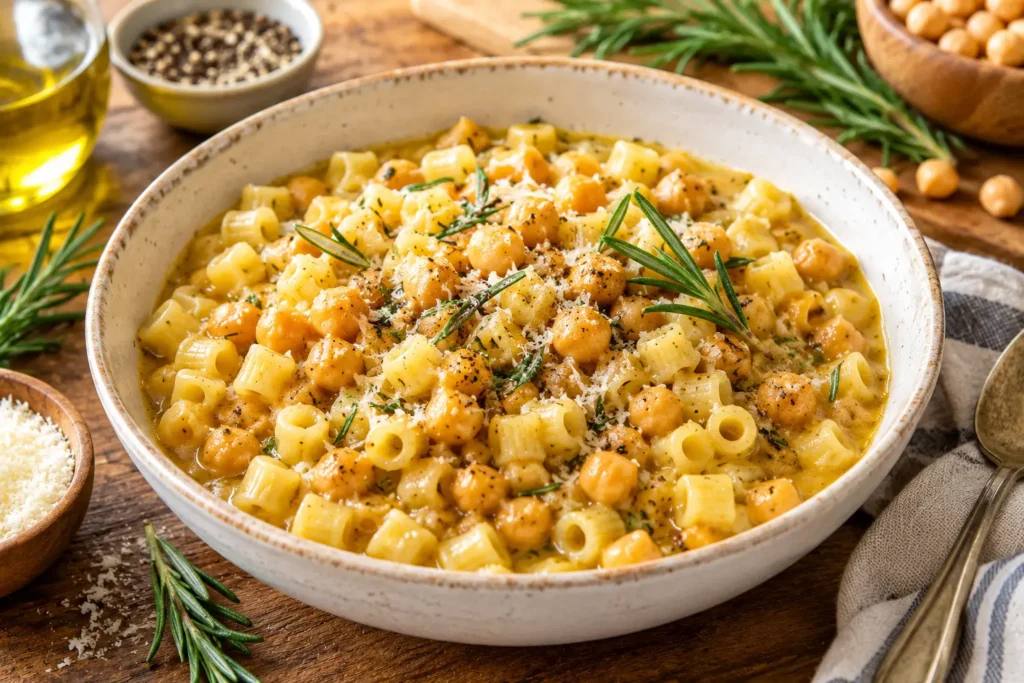
Night two: The pasta drinks the broth overnight. Loosen the pot with a splash of water when you reheat it, and bring it to 165°F.
Pasta e ceci is the Roman answer to a bare cupboard, and it asks for little more than a can of chickpeas and a handful of small pasta. The broth turns creamy because some of the chickpeas break down as they simmer.
Mash a few chickpeas. That's the thickener.
The nutrition: About 15 g protein per bowl (1 of 6). The chickpeas carries the most, and the pasta comes next.
Cook the pasta right in the pot so its starch goes into the broth, and stop while it still has a little bite, because it keeps softening as it sits. At about 15 grams per bowl this is the lightest card in the list, so I'd serve it with a thick slice of bread.
Lentil and Smoked Sausage Soup
A smoked sausage costs little and flavors a whole pot, and dry lentils need no soaking, so this soup goes from shelf to table in under an hour. Brown lentils hold their shape better than red ones, which matters when you plan to reheat.
Brown the sausage first. The fat seasons everything.
The nutrition: Each bowl has about 21 g protein, and the batch makes 6. Most of that comes from the lentils, with the sausage adding more.
Night two: It tastes better the next day. Pack it in a wide mug or jar for lunch, and microwave it until steaming hot all the way through.
Add the vinegar at the very end, because a spoonful of acid wakes up the earthy lentils and the smoke without making the soup sour. If your pot looks dry halfway through, add a cup of water, since lentils keep absorbing liquid until they're done.
White Bean, Ham, and Kale Soup
The nutrition: Count on roughly 20 g protein per bowl, from 6 equal servings. The white beans leads, followed by the ham.
Diced ham gives canned white beans the savory backbone they usually lack, and kale holds up in a hot broth instead of dissolving the way spinach does. It's a quiet, thrifty soup for the coldest week of the year.
Mash some beans. They thicken the broth.
Night two: Freeze it in single bowls. Thaw one overnight in the refrigerator, and the kale stays green enough to look good.
Strip the kale from its stems and chop the leaves small so they soften in five minutes. Ham is already cooked, so you're really just heating it and letting the flavors move into the broth over fifteen minutes.
Don't Miss the Next Recipe
Get fresh recipes, meal prep systems, and high-protein meal ideas delivered to your inbox every week.
No spam. Unsubscribe anytime.
Turkey and Two Bean Chili
Ground turkey is often cheaper than beef and it makes a lean chili that still tastes rich once the tomatoes and chili powder cook down. Two kinds of beans stretch the pot and push the protein past 27 grams a bowl.
Night two: Spoon leftover chili over baked potatoes or a bowl of rice. Reheat it to 165°F before you top anything.
Brown it well. Color means flavor.
Turkey is done when a thermometer reads 165°F, and because it has little fat, I'd keep the simmer gentle and add a splash of water if the pot gets thick. Thirty minutes is enough to cook off the raw tomato taste, but longer won't hurt.
The nutrition: One bowl comes to about 28 g protein, with 6 in all. The turkey carries the most, and the pinto beans comes next.
Beef and Barley Soup
Night two: Plan on stew. Thin it with water or broth, then heat it until it steams and reads 165°F.
Beef and barley is old fashioned for a good reason, because a single pound of ground beef feeds six when the barley soaks up the broth. Pearled barley is cheap, sold in the rice aisle, and chewy in the best way.
Skim the fat. A spoon does it.
Barley keeps swelling as it stands, so the soup you ladle tonight will be closer to a stew tomorrow. I'd leave the pot a little brothy at the end, and I'd plan on adding a cup of water when it's reheated.
The nutrition: Per bowl, it's about 18 g protein (6 servings). Most of that comes from the beef, with the barley adding more.
Split Pea Soup With Ham
Split pea soup is one of the cheapest big pots you can make, since dry peas are among the cheapest proteins in the store and need no soaking. Diced ham adds salt and a little extra protein.
The nutrition: About 26 g protein per bowl (1 of 6). The split peas leads, followed by the ham.
Night two: It's a lunch soup first. Thin it with water, stir well, and heat it to 165°F, and a fresh slice of toast makes it feel new.
Stir often. Peas stick.
The soup is ready when the peas have collapsed into a thick purée, which takes about an hour and fifteen minutes at a low simmer, and it will firm up in the refrigerator into something close to pudding. That's normal, and a little hot water fixes it.
Chicken and Rice Soup With Carrots
Boneless thighs stay tender in a soup where breasts often turn stringy, and they usually cost less per pound. A small amount of rice turns a thin broth into a full meal for six.
Shred the chicken after cooking. It's easier.
Night two: Rice keeps absorbing broth. Add extra broth or water when you reheat, and heat the soup to 165°F.
Add the rice only after the chicken is out of the pot, because rice cooked for the whole simmer turns to mush by the time you ladle it. Pull the thighs when a thermometer reads 165°F, then let the rice cook in the same broth for fifteen minutes.
The nutrition: Each bowl has about 25 g protein, and the batch makes 6. The chicken carries the most, and the rice comes next.
Never Miss a Recipe
Fresh high-protein recipes, meal prep ideas, and kitchen tips, straight to your inbox every week. No spam, just good food.
No spam. Unsubscribe anytime.
Path Two: Tonight's Meal Becomes a Different Dinner
Each of these 6 dinners is built around one large piece of meat or one big pan, and the extra portions change shape the next night. Cook once, and the second dinner takes ten minutes.
For more long, hands off cooking, see our slow cooker winter dinners.
Roasted Chicken Leg Quarters With Potatoes
Night two: Strip the meat from the extra quarters into quesadillas or fried rice. Refrigerate the cooked chicken within 2 hours.
Chicken leg quarters are among the least expensive cuts in the case, and roasted hot on a sheet pan they come out with crisp skin and plenty of meat. Each quarter is a full serving, so there's no counting thighs.
Pat them dry. Dry skin crisps.
The nutrition: Count on roughly 46 g protein per leg quarter, from 6 equal servings. Most of that comes from the chicken, with the potatoes adding more.
Dark meat is safe at 165°F but doesn't turn tender until it's closer to 175°F, so I'd roast until the thermometer reads at least 165°F and then give it a few more minutes if the joint still feels firm. Two pans keep the pieces from steaming each other.
Slow Cooker Salsa Pulled Pork
A bone free pork shoulder is a forgiving cut, and a jar of salsa does the seasoning, the liquid, and the sauce in one move. It makes eight portions, so half the pot is already tomorrow's dinner.
Don't add water. The pork releases juice.
The nutrition: One serving comes to about 30 g protein, with 8 in all. The pork leads, followed by the salsa.
Night two: Pile the leftover pork into quesadillas, tacos, or over rice. Store it with some of its juices, so it doesn't dry out.
Pork is safe at 145°F, but a shoulder needs closer to 195°F before it shreds, and a slow cooker gets there in eight to ten hours on LOW. Don't cook it from frozen, because a slow cooker heats too gently to thaw a large cut safely.
Oat Meatloaf With a Ketchup Glaze
The nutrition: Per slice, it's about 33 g protein (6 servings). The beef carries the most, and the eggs comes next.
Meatloaf is a budget classic because oats and eggs stretch two pounds of beef into six thick slices. Rolled oats hold moisture better than dry crumbs and keep the loaf tender.
Mix gently. Overworked meat turns tough.
Night two: Cold meatloaf makes a good sandwich. Pan fry a slice in a little butter, and make sure it's hot to 165°F.
Ground beef must reach 160°F in the center, and a loaf pan hides the doneness, so I'd check the middle with a thermometer instead of trusting the color of the slice. Resting the loaf for ten minutes lets the juices settle and makes clean slices.
Dutch Oven Chuck Pot Roast
A chuck roast is a tough, inexpensive cut that turns spoon tender after hours in a low oven, and the vegetables cook in the same pot. It takes patience more than skill.
Night two: Chop leftover roast and potatoes into a skillet hash, and top it with a fried egg. Heat the hash to 165°F.
Sear it hard. That's where the flavor starts.
Beef is safe at 145°F, but chuck has a lot of connective tissue and only becomes tender well beyond that, when it shreds with a fork, so judge by feel after about three hours. Add the carrots and potatoes halfway through so they don't fall apart.
The nutrition: About 43 g protein per serving (1 of 6). Most of that comes from the beef, with the potatoes adding more.
Smoked Sausage and Cabbage Skillet
Night two: Turn the extra into soup. Add broth and a handful of beans, and simmer it until it steams.
Cabbage is one of the cheapest vegetables in winter, and it melts into a sweet, soft mound once it cooks with smoked sausage and potatoes. White beans at the end give the skillet more protein than you'd expect.
Cover the pan. Steam softens the cabbage.
Fully cooked smoked sausage only needs browning for flavor, but I'd still reheat the finished skillet to 165°F if it has been in the refrigerator. A tablespoon each of mustard and vinegar at the end cuts the richness and keeps the cabbage from tasting flat.
The nutrition: Each serving has about 23 g protein, and the batch makes 6. The sausage leads, followed by the white beans.
Beef and Rice Stuffed Peppers
Stuffed peppers look fussy but they're really a one dish dinner, with beef, rice, and beans packed into peppers that act as the bowl. They're a smart way to use up cooked rice.
The nutrition: Count on roughly 25 g protein per pepper, from 6 equal servings. The beef carries the most, and the cheddar comes next.
Night two: Chop a leftover pepper into a skillet with eggs. The filling also works as a burrito bowl with salsa.
Pick flat bottomed peppers. They stand up.
Browning the beef first lets you check the 160°F mark with a thermometer, and baking covered with foil steams the peppers until they're tender before the cheese goes on. Pour a little tomato around the base so the peppers don't scorch.
Path Three: Split the Batch and Freeze It
The 6 cards here make six or eight portions, and the plan is to bake it all but serve only four. Wrap the rest while it's still fresh, and you've got dinner banked for a night you don't want to cook.
For a full freezer plan, see our winter meal prep ideas.
Freezer Chicken and Bean Burritos
A tray of burritos in the freezer is the cheapest insurance against a night when nobody wants to cook. Shredded thighs, pinto beans, rice, and cheddar make a filling that stays moist after freezing.
Cool the filling first. Hot filling steams.
Night two: Freeze them flat in a bag. Thaw overnight in the refrigerator for a faster reheat, but never on the counter.
Wrap each burrito tightly in foil, and write the date on it, since they keep their best quality for two to three months. I'd reheat from frozen in a 375°F oven until a thermometer in the center reads 165°F, which takes about forty minutes.
The nutrition: One burrito comes to about 26 g protein, with 8 in all. Most of that comes from the chicken, with the cheddar adding more.
Baked Ziti With Italian Sausage
Night two: Build two dishes and freeze one unbaked. Thaw it overnight in the refrigerator, then bake it until it reads 165°F.
Baked ziti feeds a crowd for the price of one jar of sauce, a box of pasta, and a pound of sausage. Ricotta makes it creamy and also adds about six grams of protein per portion.
Undercook the pasta. It bakes later.
The nutrition: Per serving, it's about 30 g protein (8 servings). The sausage leads, followed by the pasta.
Because the ziti finishes in the oven, boiling it two minutes short keeps it from turning soft, and the foil lid steams the top layer so it doesn't dry out. Uncover for the last fifteen minutes to brown the cheese, and rest the dish ten minutes before cutting.
Spinach Ricotta Stuffed Shells
Stuffed shells look special but cost very little, since the filling is mostly ricotta and frozen spinach. A jar of marinara supplies the sauce, and the shells cook in the oven.
Squeeze the spinach dry. Wet filling weeps.
The nutrition: About 26 g protein per serving (1 of 6). The ricotta carries the most, and the pasta comes next.
Night two: Freeze the filled, unbaked dish, wrapped tight. Bake it from thawed, adding a few extra minutes, until bubbling hot.
Use a spoon or a zip bag with the corner cut off to fill the shells, which is faster and tidier than your fingers, and nestle them seam side up in the sauce. Foil keeps them from drying out during the first half hour in the oven.
Baked Turkey Meatballs in Marinara
The nutrition: Each serving has about 25 g protein, and the batch makes 6. Most of that comes from the turkey, with the marinara adding more.
Turkey meatballs baked on a sheet pan are fast to shape and don't splatter the stove. Panko and an egg hold them together, and Parmesan adds a salty note that ground turkey needs.
Wet your hands. The mix won't stick.
Night two: Tuck leftover meatballs into rolls with melted cheese. They also freeze well in their sauce for a quick pasta night.
Bake them at 400°F until a thermometer reads 165°F, then let them finish in the marinara so they pick up some sauce. Ground turkey dries out quickly, so I'd pull them as soon as they hit the mark and not leave them in the oven.
Beef and Lentil Shepherd's Pie
Lentils stretch the beef in this pie, so a pound and a half feeds eight, and mashed potatoes on top make it feel like a Sunday meal. It's the most filling card in the freezer group.
Night two: Cut it into squares before freezing. Wrap each square in foil, then reheat in a 350°F oven until hot in the middle.
Cook the lentils separately. They finish first.
Spread the filling in the dish while it's still hot and cover it right away with the mash, which keeps the potatoes from sinking, and check that the beef itself reached 160°F in the skillet before it goes into the oven. Rest the pie ten minutes before cutting.
The nutrition: Count on roughly 25 g protein per serving, from 8 equal servings. The beef leads, followed by the lentils.
Cheesy Chicken and Broccoli Rice Bake
Night two: Roll leftovers into tortillas for a quick burrito. The cheese helps them hold together when reheated.
A rice casserole with chicken and broccoli is cheap because the rice cooks in the same dish and the sauce is just milk, broth, and cheddar. It's a good dinner for a night when the oven is already on.
Cover it tightly. Steam cooks the rice.
Starting with hot liquid is what lets raw rice cook in a covered dish in forty minutes, and the chicken only needs to be browned on the outside before it goes in. Check the center with a thermometer, which should read 165°F, before you take off the foil.
The nutrition: One serving comes to about 31 g protein, with 8 in all. The chicken carries the most, and the cheddar comes next.
Path Four: Cook It, Eat It, Move On
These 7 dinners feed four and nothing more, because they're at their best straight from the pan. They're fast, and several use eggs or tuna, which are among the cheapest proteins on the shelf.
For more quick pan meals, see our skillet dinners.
Chickpea Shakshuka With Feta
Shakshuka is eggs poached in spiced tomato sauce, and it's about as cheap as dinner gets. Chickpeas turn the sauce into a meal and lift each bowl to roughly 25 grams of protein.
The nutrition: Per serving, it's about 25 g protein (4 servings). Most of that comes from the eggs, with the chickpeas adding more.
Night two: Nothing planned. If a little sauce is left, cool it within 2 hours and reuse it as a pasta sauce.
Keep the pan covered. Steam sets the eggs.
Cook the eggs until both the whites and the yolks are firm, which takes six to eight minutes, because runny yolks aren't advised for young children, older adults, or anyone who's pregnant. Make deep wells in the sauce so the eggs don't slide.
Tuna Cheddar Melts
Canned tuna is one of the cheapest proteins in the store, and a hot sandwich makes it feel like dinner. Greek yogurt replaces part of the mayonnaise and adds protein while keeping the filling creamy.
Butter the outside. It browns evenly.
Night two: Nothing planned. Any extra tuna salad keeps in the refrigerator for 3 to 4 days and works on crackers.
Cook the sandwiches over medium heat instead of high, so the cheddar has time to melt before the bread burns. The FDA's fish advice lists canned light tuna as a best choice at two to three servings a week and albacore as a good choice at one, so I'd keep this to a weekly dinner.
The nutrition: About 35 g protein per sandwich (1 of 4). The tuna leads, followed by the cheddar.
Ginger Pork and Cabbage Stir Fry
Night two: Nothing planned. If rice is left, cool it fast and use it for fried rice within 3 to 4 days.
Ground pork and cabbage is a thrifty pairing found in Chinese dumpling fillings, and a stir fry gives you the same flavors in fifteen minutes. A little soy sauce and honey carry the seasoning.
Shred the cabbage thin. It cooks fast.
The nutrition: Each serving has about 25 g protein, and the batch makes 4. The pork carries the most, and the rice comes next.
Ground pork needs to reach 160°F, so cook it until no pink remains before the vegetables go in, and keep the cabbage crisp tender so the dish has some texture. If the pan looks wet, turn up the heat for the last two minutes.
Egg Fried Rice With Chicken Thighs
Cold cooked rice fries better than fresh, because the grains have dried and separate in the pan. Chicken thighs and eggs make it a complete dinner from a pot of leftover rice.
Break up the clumps. Use a spoon.
The nutrition: Count on roughly 35 g protein per serving, from 4 equal servings. Most of that comes from the chicken, with the eggs adding more.
Night two: Nothing planned. Leftover fried rice keeps 3 to 4 days if cooled quickly, and it's best reheated to 165°F.
Cooked rice can carry bacteria that survive heat, so it should go into the refrigerator within 2 hours of cooking, and I'd use it within a day or two for frying. Finish the dish only when it's steaming hot all the way through.
Skillet Chilaquiles With Eggs
The nutrition: One serving comes to about 21 g protein, with 4 in all. The eggs leads, followed by the black beans.
Chilaquiles are tortilla chips simmered in salsa, and they turn a bag of chips and a dozen eggs into dinner for four. Black beans bring the protein up and add some fiber.
Serve it fast. Chips go soft.
Night two: Nothing planned. It doesn't reheat well because the chips soften, so cook only what the table will eat.
Fold the chips in only when the salsa is hot and a little thin, so they absorb it without falling apart, and cook the eggs until the whites are set and the yolks are firm. Cotija goes on at the end, since it adds salt and doesn't melt.
Sloppy Joes Stretched With White Beans
Mashed white beans stretch a pound of ground beef into four generous sandwiches, and nobody at the table notices the beans. Ketchup, tomato paste, and vinegar give the sauce its tang.
Night two: Nothing planned. Extra filling keeps 3 to 4 days and works over baked potatoes or rice.
Simmer it thick. Thin sauce soaks buns.
Brown the beef until a thermometer reads 160°F, then spoon off the extra fat before adding the sauce, because a greasy filling makes the buns fall apart. Toast the buns in the same skillet while the filling simmers.
The nutrition: Per sandwich, it's about 31 g protein (4 servings). The beef carries the most, and the bread comes next.
Lemon Orzo With Chicken and Spinach
Night two: Nothing planned. Leftovers turn dry by morning, so add a splash of broth, then heat to 165°F.
Orzo cooks in the same pan as the chicken, so this is a one skillet dinner with almost no cleanup. Lemon and Parmesan make a plain pot of pasta taste bright.
Stir often. Orzo likes to stick.
The orzo is done when it's tender and the broth has mostly disappeared, and the chicken should read 165°F at the center of the largest piece. Stir in the spinach at the end, away from the heat, so it wilts without turning dark.
The nutrition: About 35 g protein per serving (1 of 4). Most of that comes from the chicken, with the pasta adding more.
A Sample Week From Two Cooking Days
Here's one way to use the paths together. Cook big on Sunday and Tuesday, and every other night is reheating or a short skillet.
- Sunday: Dutch Oven Chuck Pot Roast, serving four and saving two portions.
- Monday: hash from the roast leftovers, using the Night two idea on that card.
- Tuesday: Turkey and Two Bean Chili, a batch of six bowls.
- Wednesday: chili over baked potatoes, with no new cooking.
- Thursday: Chickpea Shakshuka With Feta, eaten the same night.
- Friday: whatever is left in the freezer.
Leftover Safety in Cold Weather
The USDA's safe temperature chart lists 165°F for poultry, including ground poultry, and for leftovers, 160°F for ground beef, ground pork, sausage, and egg dishes, and 145°F for whole cuts of beef, pork, and lamb, with a 3 minute rest. Cooked leftovers keep 3 to 4 days in the refrigerator, per FoodSafety.gov.
- Cool food within 2 hours, or within 1 hour when the room is above 90°F.
- Divide big pots of soup and chili into shallow containers so they chill quickly.
- Don't use a cold porch or garage as a refrigerator, because the temperature swings.
- Thaw frozen portions in the refrigerator, not on the counter.
- Reheat leftovers to 165°F, and stir soups so there are no cold spots.
- Cool cooked rice quickly and refrigerate it within 2 hours.
Time and Protein at a Glance
Use this list to plan the evening. Times include prep, cooking, and resting, and protein's per serving.
- Pasta e Ceci With Rosemary: 50 min, about 15 g protein per bowl
- Lentil and Smoked Sausage Soup: 1 hr, about 21 g protein per bowl
- White Bean, Ham, and Kale Soup: 45 min, about 20 g protein per bowl
- Turkey and Two Bean Chili: 1 hr, about 28 g protein per bowl
- Beef and Barley Soup: 1 hr 10 min, about 18 g protein per bowl
- Split Pea Soup With Ham: 1 hr 45 min, about 26 g protein per bowl
- Chicken and Rice Soup With Carrots: 1 hr, about 25 g protein per bowl
- Roasted Chicken Leg Quarters With Potatoes: 1 hr 5 min, about 46 g protein per leg quarter
- Slow Cooker Salsa Pulled Pork: 9 hr 15 min, about 30 g protein per serving
- Oat Meatloaf With a Ketchup Glaze: 1 hr 30 min, about 33 g protein per slice
- Dutch Oven Chuck Pot Roast: 3 hr 50 min, about 43 g protein per serving
- Smoked Sausage and Cabbage Skillet: 55 min, about 23 g protein per serving
- Beef and Rice Stuffed Peppers: 1 hr 20 min, about 25 g protein per pepper
- Freezer Chicken and Bean Burritos: 1 hr, about 26 g protein per burrito
- Baked Ziti With Italian Sausage: 1 hr 20 min, about 30 g protein per serving
- Spinach Ricotta Stuffed Shells: 1 hr 15 min, about 26 g protein per serving
- Baked Turkey Meatballs in Marinara: 1 hr, about 25 g protein per serving
- Beef and Lentil Shepherd's Pie: 1 hr 50 min, about 25 g protein per serving
- Cheesy Chicken and Broccoli Rice Bake: 1 hr 25 min, about 31 g protein per serving
- Chickpea Shakshuka With Feta: 40 min, about 25 g protein per serving
- Tuna Cheddar Melts: 23 min, about 35 g protein per sandwich
- Ginger Pork and Cabbage Stir Fry: 30 min, about 25 g protein per serving
- Egg Fried Rice With Chicken Thighs: 30 min, about 35 g protein per serving
- Skillet Chilaquiles With Eggs: 30 min, about 21 g protein per serving
- Sloppy Joes Stretched With White Beans: 35 min, about 31 g protein per sandwich
- Lemon Orzo With Chicken and Spinach: 35 min, about 35 g protein per serving
How I Counted Protein
I multiplied typical USDA FoodData Central values by the weights on each card, then divided by the servings. Raw meat is counted raw, dry beans and lentils are counted dry, and canned beans are counted drained, so the numbers are estimates.
Some inputs rest on assumptions: chicken leg quarters at 12.5 g per 100 g with the bone, pork shoulder at 17, chuck roast at 18, pearled barley at 9.9, smoked sausage at 14, and canned beans at 7. Bone, fat, and brand vary, so treat those cards as rough.
Where These Cards Differ From Typical Versions
These cards are my own builds, weighed so the protein can be counted. A test cook is wise before you rely on one for guests, and a slow cooker or oven that runs hot can change the times.
Two common habits don't meet USDA advice. Judging doneness by color and leaving a pot on the stove overnight both raise the risk, so the cards give thermometer readings and the safe time limits. That matters most for children, older adults, and pregnant guests.
A few dishes overlap with earlier lists, including the pot roast and the pulled pork in our winter crockpot dinners and the braises in our Dutch oven dinners. Don't cook both in one week.
Questions About Cheap Winter Dinners
Which dinner has the most protein?
Roasted Chicken Leg Quarters With Potatoes leads at about 46 grams per leg quarter, followed by Dutch Oven Chuck Pot Roast at about 43 grams and Egg Fried Rice With Chicken Thighs at about 35. The lowest's the Pasta e Ceci With Rosemary at about 15 grams.
How many people does each card feed?
Every card feeds four at one serving each. The batch cards make six or eight servings, so the extra portions are tomorrow's meal.
Which dinners can I freeze?
Every card in Paths One to Three is written with a freezer line, and portions keep 2 to 3 months. Path Four dishes are best eaten fresh. For more freezer ideas, see our high protein meal prep on a budget.
How long do leftovers keep?
Cooked leftovers keep 3 to 4 days in the refrigerator, per FoodSafety.gov. Reheat them to 165°F.
Are these protein numbers exact?
No. They're estimates based on typical USDA values, and bone-in cuts are the least precise.
1. Pasta e Ceci With Rosemary
Approx. 15g ProteinIngredients: 2 cans (15 oz each) chickpeas, drained (510 g); 8 oz (227 g) ditalini pasta; 1 yellow onion, diced (150 g); 4 garlic cloves, minced (12 g); 3 tbsp (48 g) tomato paste; 2 tsp dried rosemary; 5 cups chicken or vegetable broth; 1/2 cup (50 g) grated Parmesan; 2 tbsp olive oil; 1 tsp salt.
Step 1: Cook the onion in the olive oil in a large pot for 5 minutes, until soft, then stir in the garlic, rosemary, and tomato paste for 1 minute.
Step 2: Add the chickpeas and broth, simmer 10 minutes, and mash a handful of chickpeas against the side of the pot. Stir in the pasta and salt and simmer 10 to 12 minutes, until the pasta is tender and the broth has thickened.
Step 3: Stir in the Parmesan. Cool within 2 hours, or within 1 hour above 90°F, and pack in shallow containers. Refrigerate up to 3 to 4 days, or freeze portions up to 2 to 3 months, and reheat to 165°F.
2. Lentil and Smoked Sausage Soup
Approx. 21g ProteinIngredients: 1 1/2 cups (300 g) dry brown lentils, rinsed; 12 oz (340 g) smoked sausage, sliced; 1 yellow onion, diced (150 g); 2 carrots, diced (120 g); 2 celery ribs, diced (80 g); 3 garlic cloves, minced (9 g); 1 can (14.5 oz) diced tomatoes (411 g); 6 cups chicken broth; 1 tsp ground cumin; 1 tbsp red wine vinegar; 1 tbsp olive oil; 1 tsp salt.
Step 1: Brown the sausage in the olive oil in a large pot for 5 minutes, then add the onion, carrots, and celery and cook 5 minutes more. Stir in the garlic and cumin for 1 minute.
Step 2: Add the lentils, diced tomatoes, and broth and simmer 30 to 35 minutes, until the lentils are tender.
Step 3: Stir in the vinegar and salt. Cool within 2 hours, or within 1 hour above 90°F, and pack in shallow containers. Refrigerate up to 3 to 4 days, or freeze portions up to 2 to 3 months, and reheat to 165°F.
3. White Bean, Ham, and Kale Soup
Approx. 20g ProteinIngredients: 3 cans (15 oz each) white beans, drained (765 g); 8 oz (227 g) cooked ham, diced; 5 oz (140 g) chopped kale; 1 yellow onion, diced (150 g); 2 carrots, diced (120 g); 3 garlic cloves, minced (9 g); 6 cups chicken broth; 1 tsp Italian seasoning; 1/2 cup (50 g) grated Parmesan; 1 tbsp lemon juice; 2 tbsp olive oil; 1 tsp salt.
Step 1: Cook the onion and carrots in the olive oil for 6 minutes, until soft, then add the ham, garlic, and Italian seasoning for 2 minutes.
Step 2: Add the beans and broth and simmer 15 minutes, mashing a few beans against the pot. Stir in the kale and cook 5 minutes, until tender.
Step 3: Stir in the Parmesan, lemon juice, and salt. Cool within 2 hours, or within 1 hour above 90°F, and pack in shallow containers. Refrigerate up to 3 to 4 days, or freeze portions up to 2 to 3 months, and reheat to 165°F.
4. Turkey and Two Bean Chili
Approx. 28g ProteinIngredients: 1 1/2 lb (680 g) ground turkey; 1 can (15 oz) kidney beans, drained (255 g); 1 can (15 oz) pinto beans, drained (255 g); 1 can (28 oz) crushed tomatoes (794 g); 1 yellow onion, diced (150 g); 3 garlic cloves, minced (9 g); 2 tbsp chili powder; 1 tsp ground cumin; 1 cup water; 1 tbsp olive oil; 1 tsp salt.
Step 1: Brown the turkey and onion in the olive oil for 8 minutes, until no pink remains and a thermometer reads 165°F.
Step 2: Stir in the garlic, chili powder, and cumin for 1 minute, then add the tomatoes, kidney beans, pinto beans, water, and salt.
Step 3: Simmer 30 minutes, until thick. Cool within 2 hours, or within 1 hour above 90°F, and pack in shallow containers. Refrigerate up to 3 to 4 days, or freeze portions up to 2 to 3 months, and reheat to 165°F.
5. Beef and Barley Soup
Approx. 18g ProteinIngredients: 1 lb (450 g) 85 percent lean ground beef; 3/4 cup (150 g) pearled barley; 1 yellow onion, diced (150 g); 2 carrots, diced (120 g); 2 celery ribs, diced (80 g); 3 garlic cloves, minced (9 g); 1 can (14.5 oz) diced tomatoes (411 g); 6 cups beef broth; 1 tsp dried thyme; 2 bay leaves; 1 tsp salt; 1/2 tsp black pepper.
Step 1: Brown the beef with the onion, carrots, and celery in a large pot for 8 minutes, until no pink remains and a thermometer reads 160°F. Spoon off most of the fat.
Step 2: Stir in the garlic, thyme, bay leaves, tomatoes, broth, barley, salt, and pepper and simmer, partly covered, for 40 minutes, until the barley is tender.
Step 3: Remove the bay leaves. Cool within 2 hours, or within 1 hour above 90°F, and pack in shallow containers. Refrigerate up to 3 to 4 days, or freeze portions up to 2 to 3 months, and reheat to 165°F.
6. Split Pea Soup With Ham
Approx. 26g ProteinIngredients: 1 lb (450 g) dry green split peas, rinsed; 8 oz (227 g) cooked ham, diced; 1 yellow onion, diced (150 g); 2 carrots, diced (120 g); 1 celery rib, diced (40 g); 3 garlic cloves, minced (9 g); 7 cups water; 1 tsp dried thyme; 1 bay leaf; 1 tbsp olive oil; 1 tsp salt; 1/2 tsp black pepper.
Step 1: Cook the onion, carrots, and celery in the olive oil for 6 minutes, then add the garlic and ham for 1 minute.
Step 2: Add the split peas, water, thyme, and bay leaf and simmer, partly covered, for 1 hour 15 minutes, stirring now and then, until the peas have broken down and the soup is thick.
Step 3: Remove the bay leaf and season with the salt and pepper. Cool within 2 hours, or within 1 hour above 90°F, and pack in shallow containers. Refrigerate up to 3 to 4 days, or freeze portions up to 2 to 3 months, and reheat to 165°F.
7. Chicken and Rice Soup With Carrots
Approx. 25g ProteinIngredients: 1 1/2 lb (680 g) boneless skinless chicken thighs; 2/3 cup (130 g) long grain white rice; 1 yellow onion, diced (150 g); 2 carrots, sliced (120 g); 2 celery ribs, sliced (80 g); 3 garlic cloves, minced (9 g); 8 cups chicken broth; 1 tsp dried thyme; 1 tbsp lemon juice; 1 tbsp olive oil; 1 tsp salt; 1/2 tsp black pepper.
Step 1: Cook the onion, carrots, and celery in the olive oil for 6 minutes, then stir in the garlic and thyme for 1 minute.
Step 2: Add the broth and chicken thighs and simmer 20 minutes, until a thermometer in the thickest thigh reads 165°F. Lift the chicken out and shred it.
Step 3: Stir the rice into the broth and simmer 15 minutes, until tender, then return the chicken and add the lemon juice, salt, and pepper. Cool within 2 hours, or within 1 hour above 90°F, and pack in shallow containers. Refrigerate up to 3 to 4 days, or freeze portions up to 2 to 3 months, and reheat to 165°F.
8. Roasted Chicken Leg Quarters With Potatoes
Approx. 46g ProteinIngredients: 6 chicken leg quarters (about 4 1/2 lb, 2040 g); 2 lb (900 g) small potatoes, halved; 1 tbsp smoked paprika; 1 tsp garlic powder; 3 tbsp olive oil; 1 tsp salt; 1/2 tsp black pepper.
Step 1: Heat the oven to 425°F. Pat the chicken dry and rub it with 2 tablespoons of the olive oil, the paprika, garlic powder, salt, and pepper.
Step 2: Toss the potatoes with the remaining olive oil and a pinch of salt and spread them and the chicken on two rimmed baking sheets, skin side up.
Step 3: Roast 45 to 50 minutes, until the skin is crisp and a thermometer at the thickest part, not touching bone, reads at least 165°F. Cool within 2 hours, or within 1 hour above 90°F, and pack in shallow containers. Refrigerate up to 3 to 4 days, or freeze portions up to 2 to 3 months, and reheat to 165°F.
9. Slow Cooker Salsa Pulled Pork
Approx. 30g ProteinIngredients: 3 lb (1360 g) boneless pork shoulder, cut in 3 chunks; 1 1/2 cups (370 g) salsa; 1 yellow onion, sliced (150 g); 4 garlic cloves, smashed (12 g); 2 tsp ground cumin; 1 tsp chili powder; 1 tbsp lime juice; 1 tsp salt.
Step 1: Rub the pork with the cumin, chili powder, and salt and set it in the slow cooker with the onion and garlic. Pour the salsa over the top.
Step 2: Cover and cook on LOW 8 to 10 hours, until the pork is very tender and a thermometer reads about 195°F, well past the 145°F safe minimum.
Step 3: Shred the pork, stir in the lime juice, and moisten it with a little of the cooking liquid. Cool within 2 hours, or within 1 hour above 90°F, and pack in shallow containers. Refrigerate up to 3 to 4 days, or freeze portions up to 2 to 3 months, and reheat to 165°F.
10. Oat Meatloaf With a Ketchup Glaze
Approx. 33g ProteinIngredients: 2 lb (900 g) 85 percent lean ground beef; 3/4 cup (60 g) rolled oats; 2 large eggs (50 g each, 100 g); 1 yellow onion, finely diced (150 g); 1/2 cup (120 g) milk; 1/3 cup (85 g) ketchup; 1 tbsp Worcestershire sauce; 1 tsp salt; 1/2 tsp black pepper.
Step 1: Heat the oven to 350°F. Mix the beef, oats, eggs, onion, milk, Worcestershire sauce, salt, and pepper gently and press it into a 9 by 5 inch loaf pan.
Step 2: Bake 50 minutes, spread the ketchup over the top, and bake 10 to 15 minutes more, until a thermometer reads 160°F in the center.
Step 3: Rest the meatloaf 10 minutes before slicing. Cool within 2 hours, or within 1 hour above 90°F, and pack in shallow containers. Refrigerate up to 3 to 4 days, or freeze portions up to 2 to 3 months, and reheat to 165°F.
11. Dutch Oven Chuck Pot Roast
Approx. 43g ProteinIngredients: 3 lb (1360 g) boneless chuck roast; 4 carrots, cut in chunks (300 g); 1 lb (450 g) small potatoes, halved; 1 yellow onion, sliced (150 g); 4 garlic cloves, smashed (12 g); 2 cups beef broth; 1 tsp dried thyme; 2 bay leaves; 1 tbsp olive oil; 1 tsp salt; 1/2 tsp black pepper.
Step 1: Heat the oven to 300°F. Season the roast with the salt and pepper and sear it in the olive oil in a Dutch oven for 4 minutes per side.
Step 2: Add the onion, garlic, broth, thyme, and bay leaves, cover, and braise 1 1/2 hours. Add the carrots and potatoes and braise 1 1/2 hours more, until the beef shreds with a fork and the potatoes are tender.
Step 3: Remove the bay leaves. Cool within 2 hours, or within 1 hour above 90°F, and pack in shallow containers. Refrigerate up to 3 to 4 days, or freeze portions up to 2 to 3 months, and reheat to 165°F.
12. Smoked Sausage and Cabbage Skillet
Approx. 23g ProteinIngredients: 1 1/2 lb (680 g) smoked sausage, sliced; 1 small head green cabbage, chopped (900 g); 1 lb (450 g) potatoes, diced; 1 can (15 oz) white beans, drained (255 g); 1 yellow onion, sliced (150 g); 1 tbsp spicy brown mustard; 1 tbsp cider vinegar; 1/2 cup water; 1 tbsp olive oil; 1 tsp salt; 1/2 tsp black pepper.
Step 1: Brown the sausage in the olive oil in a large deep skillet for 5 minutes, then add the onion and potatoes and cook 8 minutes.
Step 2: Add the cabbage, water, and salt, cover, and cook 12 minutes, stirring once, until the potatoes and cabbage are tender.
Step 3: Stir in the beans, mustard, vinegar, and pepper and heat 3 minutes. Cool within 2 hours, or within 1 hour above 90°F, and pack in shallow containers. Refrigerate up to 3 to 4 days, or freeze portions up to 2 to 3 months, and reheat to 165°F.
13. Beef and Rice Stuffed Peppers
Approx. 25g ProteinIngredients: 6 large bell peppers, tops cut off and seeded (about 1000 g); 1 lb (450 g) 85 percent lean ground beef; 1 1/2 cups cooked rice (about 250 g); 1 can (15 oz) black beans, drained (255 g); 1 can (14.5 oz) diced tomatoes (411 g); 1 yellow onion, diced (150 g); 1 cup (113 g) shredded cheddar cheese; 1 tsp ground cumin; 1 tsp chili powder; Aluminum foil; 1 tsp salt.
Step 1: Heat the oven to 375°F. Brown the beef and onion in a skillet for 8 minutes, until no pink remains and a thermometer reads 160°F, then stir in the cumin, chili powder, and salt.
Step 2: Mix the beef with the rice, black beans, half the diced tomatoes, and half the cheddar and fill the peppers. Stand them in a 9 by 13 inch baking dish and pour the remaining tomatoes around them.
Step 3: Cover with foil and bake 35 minutes, then uncover, top with the remaining cheddar, and bake 10 minutes more, until the peppers are tender and the cheese is melted. Cool within 2 hours, or within 1 hour above 90°F, and pack in shallow containers. Refrigerate up to 3 to 4 days, or freeze portions up to 2 to 3 months, and reheat to 165°F.
14. Freezer Chicken and Bean Burritos
Approx. 26g ProteinIngredients: 1 lb (450 g) boneless skinless chicken thighs; 2 cans (15 oz each) pinto beans, drained (510 g); 1 1/2 cups cooked rice (about 280 g); 1 1/2 cups (170 g) shredded cheddar cheese; 8 large flour tortillas (about 50 g each, 400 g); 1 cup (250 g) salsa; 2 tsp ground cumin; Aluminum foil; 1 tsp salt.
Step 1: Simmer the chicken thighs in the salsa in a covered skillet for 20 minutes, until a thermometer reads 165°F, then shred them in the pan.
Step 2: Stir in the pinto beans, rice, cumin, and salt and heat 3 minutes. Divide the filling and the cheddar among the tortillas and roll each one into a burrito.
Step 3: Wrap each burrito in foil. Cool within 2 hours, or within 1 hour above 90°F, and pack in shallow containers. Refrigerate up to 3 to 4 days, or freeze portions up to 2 to 3 months, and reheat to 165°F.
15. Baked Ziti With Italian Sausage
Approx. 30g ProteinIngredients: 1 lb (450 g) ziti; 1 lb (450 g) bulk Italian sausage; 1 jar (24 oz) marinara sauce (680 g); 15 oz (425 g) ricotta cheese; 2 cups (225 g) shredded mozzarella; 1/4 cup (25 g) grated Parmesan; 3 garlic cloves, minced (9 g); Water for boiling the pasta; Aluminum foil; 1 tsp salt.
Step 1: Heat the oven to 375°F. Boil the ziti in salted water for 2 minutes less than the package says and drain.
Step 2: Brown the sausage in a skillet for 8 minutes, until no pink remains and a thermometer reads 160°F, adding the garlic for the last minute. Stir in the marinara, ricotta, half the mozzarella, and the ziti and spread it in a 9 by 13 inch baking dish.
Step 3: Cover with foil and bake 25 minutes, then uncover, top with the remaining mozzarella and the Parmesan, and bake 15 minutes more, until bubbling and golden. Cool within 2 hours, or within 1 hour above 90°F, and pack in shallow containers. Refrigerate up to 3 to 4 days, or freeze portions up to 2 to 3 months, and reheat to 165°F.
16. Spinach Ricotta Stuffed Shells
Approx. 26g ProteinIngredients: 12 oz (340 g) jumbo pasta shells; 15 oz (425 g) ricotta cheese; 10 oz (283 g) frozen chopped spinach, thawed and squeezed dry; 1 1/2 cups (170 g) shredded mozzarella; 1/4 cup (25 g) grated Parmesan; 1 jar (24 oz) marinara sauce (680 g); 2 garlic cloves, minced (6 g); Water for boiling the pasta; Aluminum foil; 1 tsp salt.
Step 1: Heat the oven to 375°F. Boil the pasta shells in salted water for 2 minutes less than the package says, drain, and spread them out to cool.
Step 2: Mix the ricotta, spinach, half the mozzarella, the Parmesan, garlic, and salt. Spread half the marinara in a 9 by 13 inch baking dish, fill the shells, and set them on the sauce with the remaining marinara over the top.
Step 3: Cover with foil and bake 30 minutes, then uncover, top with the remaining mozzarella, and bake 10 to 15 minutes, until bubbling. Cool within 2 hours, or within 1 hour above 90°F, and pack in shallow containers. Refrigerate up to 3 to 4 days, or freeze portions up to 2 to 3 months, and reheat to 165°F.
17. Baked Turkey Meatballs in Marinara
Approx. 25g ProteinIngredients: 1 1/2 lb (680 g) ground turkey; 1/2 cup (40 g) panko bread crumbs; 1 large egg (50 g); 1/4 cup (25 g) grated Parmesan; 2 garlic cloves, minced (6 g); 1 tsp Italian seasoning; 1 jar (24 oz) marinara sauce (680 g); 1 tsp salt.
Step 1: Heat the oven to 400°F. Mix the turkey, panko, egg, Parmesan, garlic, Italian seasoning, and salt gently and roll into 24 meatballs on a lined baking sheet.
Step 2: Bake 18 to 20 minutes, until a thermometer reads 165°F.
Step 3: Warm the marinara in a pot, add the meatballs, and simmer 10 minutes. Cool within 2 hours, or within 1 hour above 90°F, and pack in shallow containers. Refrigerate up to 3 to 4 days, or freeze portions up to 2 to 3 months, and reheat to 165°F.
18. Beef and Lentil Shepherd's Pie
Approx. 25g ProteinIngredients: 1 1/2 lb (680 g) 85 percent lean ground beef; 3/4 cup (150 g) dry brown lentils, rinsed; 2 lb (900 g) potatoes, peeled and cubed; 1 cup (150 g) frozen peas; 1 yellow onion, diced (150 g); 2 carrots, diced (120 g); 2 tbsp (32 g) tomato paste; 1/2 cup (120 g) milk; 2 tbsp butter; 1 tsp dried thyme; 2 cups beef broth; Water for boiling the potatoes; 1 tsp salt; 1/2 tsp black pepper.
Step 1: Heat the oven to 400°F. Simmer the lentils in the broth for 25 minutes, until tender. Boil the potatoes in salted water for 15 minutes, drain, and mash with the milk, butter, salt, and pepper.
Step 2: Brown the beef with the onion and carrots for 8 minutes, until no pink remains and a thermometer reads 160°F, then stir in the tomato paste and thyme. Add the lentils with their broth and the peas and simmer 5 minutes.
Step 3: Spread the filling in a 9 by 13 inch baking dish, top with the mashed potatoes, and bake 20 minutes, until bubbling, then rest 10 minutes. Cool within 2 hours, or within 1 hour above 90°F, and pack in shallow containers. Refrigerate up to 3 to 4 days, or freeze portions up to 2 to 3 months, and reheat to 165°F.
19. Cheesy Chicken and Broccoli Rice Bake
Approx. 31g ProteinIngredients: 1 1/2 lb (680 g) boneless skinless chicken breasts, cut in 1 inch cubes; 1 1/2 cups (280 g) long grain white rice; 1 lb (450 g) frozen broccoli florets; 2 cups (225 g) shredded cheddar cheese; 1 cup (240 g) milk; 3 cups chicken broth; 1 yellow onion, diced (150 g); 2 garlic cloves, minced (6 g); 1 tbsp olive oil; Aluminum foil; 1 tsp salt; 1/2 tsp black pepper.
Step 1: Heat the oven to 375°F. Cook the chicken and onion in the olive oil in a skillet for 5 minutes, adding the garlic for the last minute.
Step 2: Heat the broth and milk until steaming and stir them into a 9 by 13 inch baking dish with the rice, chicken mixture, half the cheddar, salt, and pepper. Cover tightly with foil and bake 40 minutes.
Step 3: Stir in the broccoli, top with the remaining cheddar, and bake uncovered 15 minutes, until the rice is tender, the cheese is melted, and a thermometer reads 165°F. Cool within 2 hours, or within 1 hour above 90°F, and pack in shallow containers. Refrigerate up to 3 to 4 days, or freeze portions up to 2 to 3 months, and reheat to 165°F.
20. Chickpea Shakshuka With Feta
Approx. 25g ProteinIngredients: 8 large eggs (50 g each, 400 g); 1 can (28 oz) crushed tomatoes (794 g); 1 can (15 oz) chickpeas, drained (255 g); 1/2 cup (75 g) crumbled feta; 1 yellow onion, diced (150 g); 1 red bell pepper, diced (150 g); 3 garlic cloves, minced (9 g); 2 tsp smoked paprika; 1 tsp ground cumin; 4 slices crusty bread (120 g); 2 tbsp olive oil; 1 tsp salt.
Step 1: Cook the onion and bell pepper in the olive oil for 6 minutes, then stir in the garlic, paprika, and cumin for 1 minute.
Step 2: Add the tomatoes, chickpeas, and salt and simmer 10 minutes, until thickened. Make 8 wells in the sauce, crack an egg into each, cover, and cook 6 to 8 minutes, until the whites are set and the yolks are firm.
Step 3: Top with the feta and serve with the bread. Cool within 2 hours, or within 1 hour above 90°F, and pack in shallow containers. Refrigerate up to 3 to 4 days, and reheat to 165°F in the microwave or oven.
21. Tuna Cheddar Melts
Approx. 35g ProteinIngredients: 3 cans (5 oz each) tuna, drained (340 g); 8 slices sandwich bread (240 g); 1 cup (113 g) shredded cheddar cheese; 1/4 cup (60 g) plain Greek yogurt; 2 tbsp (28 g) mayonnaise; 2 celery ribs, finely diced (80 g); 1 tbsp lemon juice; 2 tbsp butter; 1 tsp salt; 1/2 tsp black pepper.
Step 1: Mix the tuna, yogurt, mayonnaise, celery, lemon juice, salt, and pepper.
Step 2: Butter one side of each slice of bread. Spread the tuna salad on the unbuttered side of 4 slices, add the cheddar, and top with the other slices, buttered side out.
Step 3: Cook in a skillet over medium heat 3 to 4 minutes per side, until golden and the cheese has melted. Cool within 2 hours, or within 1 hour above 90°F, and pack in shallow containers. Refrigerate up to 3 to 4 days, and reheat to 165°F in the microwave or oven.
22. Ginger Pork and Cabbage Stir Fry
Approx. 25g ProteinIngredients: 1 lb (450 g) ground pork; 1 small head green cabbage, shredded (600 g); 3 scallions, sliced (45 g); 3 garlic cloves, minced (9 g); 1 tbsp grated fresh ginger; 3 tbsp (48 g) soy sauce; 1 tbsp honey; 2 cups cooked rice (about 320 g); 1 tbsp vegetable oil.
Step 1: Cook the pork in the oil in a large skillet over medium-high heat for 6 to 8 minutes, breaking it up, until no pink remains and a thermometer reads 160°F.
Step 2: Add the garlic, ginger, and scallions for 1 minute, then add the cabbage and cook 5 minutes, until crisp tender.
Step 3: Stir in the soy sauce and honey and serve over the rice. Cool within 2 hours, or within 1 hour above 90°F, and pack in shallow containers. Refrigerate up to 3 to 4 days, and reheat to 165°F in the microwave or oven.
23. Egg Fried Rice With Chicken Thighs
Approx. 35g ProteinIngredients: 1 lb (450 g) boneless skinless chicken thighs, diced; 4 large eggs (50 g each, 200 g); 4 cups cold cooked rice (about 640 g); 1 cup (150 g) frozen peas and carrots; 3 scallions, sliced (45 g); 2 garlic cloves, minced (6 g); 3 tbsp (48 g) soy sauce; 2 tbsp vegetable oil.
Step 1: Cook the chicken in 1 tablespoon of the oil in a large skillet or wok for 8 minutes, until a thermometer reads 165°F, and push it to the side.
Step 2: Add the remaining oil, scramble the eggs until firm, then add the rice, peas and carrots, scallions, and garlic and cook 5 minutes, breaking up clumps.
Step 3: Stir in the soy sauce and heat until steaming. Cool within 2 hours, or within 1 hour above 90°F, and pack in shallow containers. Refrigerate up to 3 to 4 days, and reheat to 165°F in the microwave or oven.
24. Skillet Chilaquiles With Eggs
Approx. 21g ProteinIngredients: 6 oz (170 g) tortilla chips; 1 1/2 cups (370 g) salsa; 6 large eggs (50 g each, 300 g); 1 can (15 oz) black beans, drained (255 g); 1/2 cup (60 g) crumbled cotija; 1/2 cup water; 1 tbsp olive oil.
Step 1: Simmer the salsa, water, and black beans in a large oiled skillet for 3 minutes.
Step 2: Fold in the chips until just coated, make 6 wells, and crack an egg into each. Cover and cook 4 to 5 minutes, until the whites are set and the yolks are firm.
Step 3: Sprinkle with the cotija and serve at once. Cool within 2 hours, or within 1 hour above 90°F, and pack in shallow containers. Refrigerate up to 3 to 4 days, and reheat to 165°F in the microwave or oven.
25. Sloppy Joes Stretched With White Beans
Approx. 31g ProteinIngredients: 1 lb (450 g) 85 percent lean ground beef; 1 can (15 oz) white beans, drained and mashed (255 g); 1 yellow onion, diced (150 g); 1 green bell pepper, diced (120 g); 1/2 cup (130 g) ketchup; 2 tbsp (32 g) tomato paste; 1 tbsp cider vinegar; 1 tsp yellow mustard; 4 soft buns (about 220 g); 1 tsp salt.
Step 1: Brown the beef with the onion and bell pepper for 8 minutes, until no pink remains and a thermometer reads 160°F, and spoon off excess fat.
Step 2: Stir in the beans, ketchup, tomato paste, vinegar, mustard, and salt and simmer 10 minutes, until thick.
Step 3: Spoon onto the buns. Cool within 2 hours, or within 1 hour above 90°F, and pack in shallow containers. Refrigerate up to 3 to 4 days, and reheat to 165°F in the microwave or oven.
26. Lemon Orzo With Chicken and Spinach
Approx. 35g ProteinIngredients: 1 lb (450 g) boneless skinless chicken thighs, diced; 1 1/2 cups (300 g) dry orzo pasta; 5 oz (140 g) baby spinach; 3 garlic cloves, minced (9 g); 3 cups chicken broth; 2 tbsp lemon juice; 1/4 cup (25 g) grated Parmesan; 1 tbsp olive oil; 1 tsp salt; 1/2 tsp black pepper.
Step 1: Cook the chicken in the olive oil in a large deep skillet for 6 minutes, until browned, then add the garlic for 1 minute.
Step 2: Add the broth and orzo, bring to a simmer, cover, and cook 10 minutes, stirring now and then, until the pasta is tender and a thermometer in the chicken reads 165°F.
Step 3: Stir in the spinach, lemon juice, Parmesan, salt, and pepper until the spinach wilts. Cool within 2 hours, or within 1 hour above 90°F, and pack in shallow containers. Refrigerate up to 3 to 4 days, and reheat to 165°F in the microwave or oven.
Get Fresh Recipes Every Week
Join readers getting fresh recipes, meal prep systems, and high-protein meal ideas delivered to your inbox every week.
No spam. Unsubscribe anytime.