
See all 26 recipes
Table of Contents
- How the Morning Is Organized
- Before the Turkey Trot: Light and Easy to Digest
- After the Turkey Trot: Hot Refuel Plates
- While You Cook: Standing Room Only Breakfasts
- For the Table: Big Dishes That Wait for the Crowd
- A Thanksgiving Morning Schedule
- What Sports Nutrition Sources Say
- Egg Safety for a Crowd
- Time and Protein at a Glance
- How I Counted Protein
- Where These Cards Differ From Typical Versions
- FAQ
- Recipe Cards
Thanksgiving morning has to do four different jobs.
It has to fuel a turkey trot, refuel the runners, keep the cook going, and feed a houseful. So this list is sorted by that job, with exact weights, USDA temperatures, and protein per serving from 11 to 38 grams.
If you're planning the rest of the meal too, see our easy Thanksgiving recipes.
How the Morning Is Organized
Most Thanksgiving breakfast lists are a pile of casseroles and cinnamon rolls. This one starts with a question instead: who is eating, and what do they have to do next?
- Before the trot: a light plate you finish 1 to 2 hours before the start.
- After the trot: a hot plate with protein and carbohydrate.
- While you cook: something you can eat standing at the counter.
- For the table: a big dish that serves a crowd and can wait.
The turkey needs the oven, so the cards note when each dish needs it. Anything that bakes can go in before the bird, and everything else runs on the stove or needs no heat at all.
Our Take
Cook eggs until firm, and keep casseroles cold until they go in the oven.
Before the Turkey Trot: Light and Easy to Digest
A good pre race breakfast is small, familiar, and low in fat and fiber, and it should be finished 1 to 2 hours before the start. These 6 cards are cold, soft, or toasted, and none needs more than ten minutes.
For more quick morning ideas, see our breakfasts for busy mornings.
Banana Honey Yogurt Cups
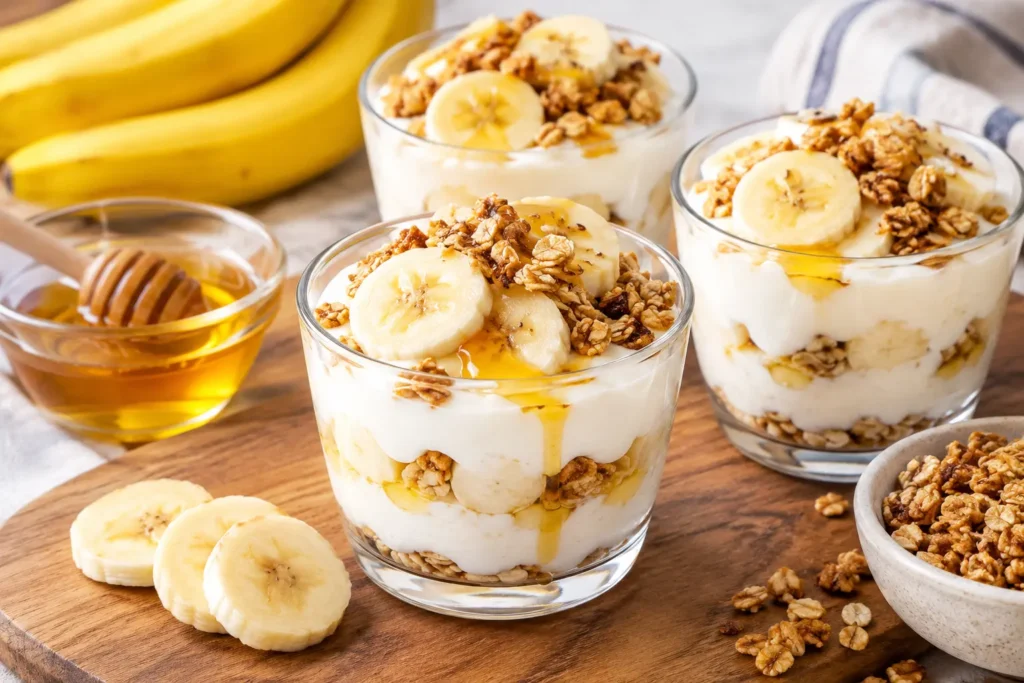
Greek yogurt is the simplest breakfast to eat before a run, because it's cold, soft, and quick to digest. Banana and honey add easy carbohydrate, and a small spoon of granola gives it a crunch.
Layer it in jars. Wednesday night works.
Best time: Eat it 1 to 2 hours before the start, with the granola still in a separate pouch.
The nutrition: About 17 g protein per cup (1 of 4). The Greek yogurt carries the most, and the granola comes next.
I'd keep the granola to a few tablespoons and add it last, since it's the highest fiber part of the cup and it turns soft within an hour. Plain yogurt gives you control over the sugar, which flavored cups can't.
Cottage Cheese Toast With Banana and Honey
Best time: Eat it about 90 minutes before you leave, then walk out the door with water.
Cottage cheese on toast sounds odd until you taste it with banana and honey, which turns it into something close to a cheesecake breakfast. Two slices carry about 18 grams of protein with a base of plain toast.
The nutrition: Each serving has about 18 g protein, and the batch makes 4. Most of that comes from the cottage cheese, with the bread adding more.
Toast it well. Soft bread goes soggy.
White or light bread is a better choice here than a seeded loaf, because a pre run breakfast is easier on the stomach when it's low in fiber. A pinch of cinnamon is enough, and you won't need syrup with the banana and honey already on top.
Egg and Cheddar English Muffin Sandwiches
A fried egg and a slice of cheddar on a toasted muffin is the fastest hot breakfast on the list, and it's built on three cheap ingredients. The sandwich is small enough that you won't feel heavy at the starting line.
The nutrition: Count on roughly 17 g protein per sandwich, from 4 equal servings. The cheddar leads, followed by the eggs.
Cook the eggs firm. Runny yolks leak.
Best time: Eat it 60 to 90 minutes before the start, standing at the counter if you have to.
Cooking both sides until the whites and yolks are firm matches the USDA's advice for egg dishes served to a mixed crowd, and it also keeps the sandwich from dripping. I'd melt the cheddar under a lid so it softens without extra butter.
Don't Miss the Next Recipe
Get fresh recipes, meal prep systems, and high-protein meal ideas delivered to your inbox every week.
No spam. Unsubscribe anytime.
Greek Yogurt Overnight Oats
The nutrition: One jar comes to about 16 g protein, with 4 in all. The oats carries the most, and the Greek yogurt comes next.
Overnight oats take care of Thanksgiving morning the night before, and they're soft enough to eat even when your stomach is nervous. Milk and Greek yogurt bring the protein, and the oats supply slow carbohydrate.
Best time: Make them Wednesday night, and eat one 1 to 2 hours before the race. They hold 3 to 4 days cold.
Stir well. Dry oats clump.
The jars thicken as the oats absorb the milk, so I'd start with the amounts on the card and add a splash more milk if you like a looser spoon. Slice the banana just before eating, because it browns and turns mushy if it sits in the jar.
Banana Peanut Butter Yogurt Smoothie
A smoothie is the lightest way to get 26 grams of protein, and it goes down easily when you don't feel like chewing. Frozen banana makes it thick, and the peanut butter adds just enough fat to keep it from tasting thin.
Freeze the bananas ahead. They blend creamy.
Blend it until you can't see any specks of banana, then drink it within a few minutes, since the texture thins as the frozen fruit melts. This is a card for people who run on a nervous stomach, and a half portion is a fine starting point.
Best time: Drink it 45 to 60 minutes before the start. It's one recipe that shouldn't be made ahead.
The nutrition: Per glass, it's about 26 g protein (2 servings). Most of that comes from the Greek yogurt, with the milk adding more.
Peanut Butter Banana Toast With a Boiled Egg
Peanut butter, banana, and a boiled egg is the most portable plate in this group, and it's the one many runners already know. The egg adds protein that the toast alone can't, and the whole plate costs very little.
Best time: Eat it 1 to 2 hours before the start, or pack the pieces and eat at the park.
The nutrition: About 16 g protein per serving (1 of 4). The eggs leads, followed by the bread.
Boil eggs the night before. Peel them cold.
Eggs cooked for 12 minutes in hot water are firm all the way through, which is the right doneness for children, older adults, and anyone who's pregnant. Hard cooked eggs in the shell keep for a week in the refrigerator, per the USDA, so a dozen can be boiled on Wednesday.
Never Miss a Recipe
Fresh high-protein recipes, meal prep ideas, and kitchen tips, straight to your inbox every week. No spam, just good food.
No spam. Unsubscribe anytime.
After the Turkey Trot: Hot Refuel Plates
Once you're back, you want protein and carbohydrate on a hot plate. These 6 cards do that, and most cook in one pan so the kitchen stays clear for the turkey.
For more egg dishes, see our high protein egg recipes.
Savory Oatmeal With Parmesan and a Fried Egg
Oatmeal doesn't have to taste like dessert, and cooking it in broth with Parmesan makes it a warm, salty bowl for a cold morning. The fried egg on top turns a side dish into a meal.
Stir often. Cheese sticks to the pot.
Best time: Eat it after the run, once you're warm again. It reheats well with a splash of milk.
The nutrition: Each bowl has about 18 g protein, and the batch makes 4. The eggs carries the most, and the oats comes next.
Add the spinach at the end, because it wilts in the heat of the oats within a minute and keeps its color. The eggs are cooked covered, so the tops set without flipping, and the yolks should be firm when you cut them.
Chorizo and Egg Breakfast Tacos
Best time: Cook them right after you get back, and plan on three tacos a person. Leftovers keep 3 to 4 days.
Chorizo scrambled with eggs in a corn tortilla is a morning classic across Mexico, and it fits a post run table because the pan does everything. Each serving of three tacos tops the list at about 38 grams of protein.
The nutrition: Count on roughly 38 g protein per serving, from 4 equal servings. Most of that comes from the chorizo, with the eggs adding more.
Use fresh chorizo. Cured is different.
Fresh chorizo is raw pork, so it needs to reach 160°F, the same as other ground pork, before the eggs go in. Cooking the sausage first renders the fat that cooks the eggs, which means you won't need any oil in the pan.
Breakfast Burrito Bowls
A burrito bowl keeps everything you like about a breakfast burrito and skips the wrapping, so it's quick to make for a hungry household. Potatoes and black beans carry the carbohydrate your body wants after a run.
The nutrition: One bowl comes to about 27 g protein, with 4 in all. The eggs leads, followed by the cheddar.
Cut the potatoes small. They cook faster.
Best time: Serve it within an hour after the run. The potatoes and beans can be cooked Wednesday.
Brown the potatoes before anything else goes in the pan, because a crust forms only when they sit on the heat without much stirring. The potatoes and beans can be done the night before, which leaves only the eggs to scramble in the morning.
Spinach and Feta Omelets
The nutrition: Per omelet, it's about 28 g protein (4 servings). The eggs carries the most, and the feta comes next.
A three egg omelet with spinach and feta is the old standby of anyone trying to eat well on a holiday, and it takes five minutes a person. It's savory and light enough to leave room for dinner.
Best time: Serve it after the run, with a slice of toast for the carbohydrate. It's best eaten the moment it's folded.
Keep the heat low. High heat toughens eggs.
Cook the omelets one at a time over medium-low heat so the eggs set gently, and add the spinach and feta only when the surface is almost set. If you're feeding a crowd, hold finished omelets in a 200°F oven for a few minutes while you cook the rest.
French Toast With Greek Yogurt Custard
French toast is a holiday treat, and stirring Greek yogurt into the custard gives it more protein than the usual milk and egg soak. Thick slices of bread hold the custard without falling apart.
Soak briefly. Long soaks fall apart.
The center of the toast must reach 160°F, because the custard contains raw egg, so I'd check the first slice with a thermometer and adjust the heat if the outside browns before the inside is done. Berries give the plate some freshness against the maple syrup.
Best time: Cook it after the run. Cooked slices freeze, and a toaster brings them back to life.
The nutrition: About 17 g protein per serving (1 of 4). Most of that comes from the bread, with the eggs adding more.
Greek Yogurt Dutch Baby With Berries
A Dutch baby puffs dramatically in the oven and looks like far more work than it is. The batter is blended in one go, and Greek yogurt makes it richer without changing the technique.
Best time: Serve it after the run, straight from the oven. It doesn't hold, so time it for when everyone is back.
The nutrition: Each wedge has about 15 g protein, and the batch makes 4. The eggs leads, followed by the flour.
Heat the skillet first. That's the secret.
The pan has to be hot when the batter goes in, because the edges climb the sides only when the batter hits hot butter. It deflates within a couple of minutes of coming out, so bring it to the table right away and don't be disappointed by the fall.
While You Cook: Standing Room Only Breakfasts
The cook never sits down on Thanksgiving, so these 6 breakfasts are built to be eaten at the counter. Most are cold or ready in a few minutes, and several can be made ahead.
For more no stove ideas, see our no cook breakfasts.
Spinach Cheddar Egg Muffins
Egg muffins are the make ahead champion of Thanksgiving morning, since a tin of 12 gives you six servings you can eat with one hand. Spinach, bell pepper, and cheddar keep them from tasting plain.
Grease the tin well. Eggs stick.
Best time: Grab two while you cook. Make them Wednesday, and warm each in the microwave until steaming.
The nutrition: Count on roughly 16 g protein per serving, from 6 equal servings. The eggs carries the most, and the cheddar comes next.
Bake them until the centers are set and a thermometer reads 160°F, which takes about 22 minutes, and let them cool a few minutes before you lift them out. They keep for 3 to 4 days in the refrigerator and freeze well for up to 2 to 3 months.
Smoked Salmon Bagels With Capers
Best time: Make it standing at the counter any time after 7 a.m. Don't leave it out for more than 2 hours.
Toasted bagels with cream cheese, smoked salmon, capers, and red onion need no stove at all, which is why they suit the cook who's already got every burner in use. The salmon and cream cheese bring each bagel to about 22 grams of protein.
The nutrition: One bagel comes to about 22 g protein, with 4 in all. Most of that comes from the salmon, with the bagels adding more.
Slice the onion thin. It stays mild.
Pregnant guests, adults over 65, and anyone with a weakened immune system should skip refrigerated smoked salmon unless it's cooked into a hot dish, per the CDC's Listeria guidance, because the cold smoked kind can carry the bacteria. Everyone else can eat it straight from the package, as long as it has been kept cold.
Avocado Toast With Poached Eggs
Avocado toast with a poached egg is a light plate that still keeps you going until a late afternoon dinner. Two eggs on each slice bring it to about 18 grams of protein.
The nutrition: Per toast, it's about 18 g protein (4 servings). The eggs leads, followed by the bread.
Use a wide pan. Eggs need room.
Best time: Make it standing up, and eat it within a few minutes of the eggs coming out of the water.
Cook the whites until set and the yolks until they're as firm as you like, and for children, older adults, or anyone who's pregnant, go firm. A small splash of lemon juice stops the mashed avocado from turning brown while the eggs finish.
Savory Cottage Cheese Bowls
The nutrition: About 21 g protein per bowl (1 of 4). The cottage cheese carries the most, and the pumpkin seeds comes next.
Cottage cheese gets overlooked as a savory food, but with tomatoes, cucumber, and a drizzle of olive oil it eats like a cold salad. A bowl has about 21 grams of protein and takes five minutes.
Best time: Assemble it anytime, no stove needed. It's fine for lunch too, but eat it the same day.
Salt it lightly. The cheese is salty.
Pumpkin seeds add crunch and extra protein, and they keep the bowl from feeling like a plain snack. If your cottage cheese looks watery, drain it in a sieve for a few minutes before it goes in the bowl.
Black Bean and Egg Quesadillas
A quesadilla stuffed with scrambled egg and black beans is a hot breakfast you can hold in one hand, and it's a good use for a can of beans. Salsa on the side gives it a bit of acid.
Fold, don't overfill. Fillings leak.
Cook the eggs first and let them cool slightly before they go into the tortilla, so the cheese melts from the heat of the pan and not from the eggs. Cook the quesadilla in a dry skillet over medium heat until the tortilla is golden and crisp at the edges.
Best time: Cook them in batches while the oven is busy. Cooked quesadillas reheat in a dry skillet.
The nutrition: Each quesadilla has about 28 g protein, and the batch makes 4. Most of that comes from the cheddar, with the eggs adding more.
Chia Yogurt Pudding Jars
Chia pudding is a cold breakfast that sets up overnight, and Greek yogurt gives it more protein than chia alone can. It's a good option for anyone who wants something sweet that isn't a pastry.
Best time: Make a tray on Wednesday night. Jars keep 3 to 4 days, so they're ready for any early riser.
The nutrition: Count on roughly 12 g protein per jar, from 4 equal servings. The Greek yogurt leads, followed by the chia seeds.
Whisk twice. Clumps hide in the bottom.
The chia seeds absorb the milk and swell into a soft pudding, which takes at least 4 hours in the refrigerator and is better overnight. Add the berries at the last minute so they don't bleed color into the pudding.
For the Table: Big Dishes That Wait for the Crowd
When a houseful of guests wakes up, one big dish beats six pans. These 8 cards feed 4 to 9 people and most can be put together the night before, so the morning is only baking and serving.
For more prep ahead dishes, see our make ahead breakfasts.
Sausage and Cheddar Breakfast Strata
A strata is the classic make ahead brunch dish, a savory bread pudding soaked overnight so nothing needs doing in the morning but baking. Sausage and cheddar make it hearty enough to carry a crowd until a late dinner.
Use stale bread. Fresh bread turns to paste.
Best time: Assemble it Wednesday night, and bake it as soon as the turkey is in. Cover and chill for at least 8 hours, but no more than 24.
The nutrition: One square comes to about 23 g protein, with 9 in all. The sausage carries the most, and the cheddar comes next.
Because the raw egg custard sits in the refrigerator overnight, keep the dish cold, and bake it until a thermometer in the center reads 160°F, which takes close to an hour. Resting it for ten minutes lets the custard finish setting so the squares hold together.
Everything Bagel Breakfast Casserole
Best time: Assemble it the night before. The oven needs 45 minutes, so slot it in before the turkey.
Torn bagels make a chewy, savory casserole that's closer to a bread pudding than a quiche. Cream cheese melts into pockets of richness, and the ham keeps the protein above 20 grams a square.
The nutrition: Per square, it's about 21 g protein (8 servings). Most of that comes from the eggs, with the ham adding more.
Tear, don't cut. Rough edges brown.
Pressing the bagel pieces into the egg mixture lets them soak evenly, and an hour in the refrigerator is enough for it to work, although overnight gives a creamier center. Bake until a thermometer in the center reads 160°F, and let the dish stand for five minutes.
Baked Eggs in Marinara With Spinach and Feta
Baked eggs in tomato sauce are the lowest stress way to cook a dozen eggs at once, because everything happens in one skillet in the oven. Spinach and feta turn jarred marinara into something worth serving to guests.
The nutrition: About 20 g protein per serving (1 of 6). The eggs leads, followed by the bread.
Make wells first. Then crack the eggs.
Best time: Serve it when the crowd is seated. The sauce can be heated ahead, and the eggs go in at the last minute.
Bake the eggs until the whites are fully set and the yolks are firm, which takes 12 to 15 minutes at 375°F, and serve them straight from the skillet with bread for dipping. Check one egg early, because oven hot spots vary and the edges cook first.
Cottage Cheese Pumpkin Pancakes
The nutrition: Each serving has about 18 g protein, and the batch makes 4. The cottage cheese carries the most, and the eggs comes next.
Blending cottage cheese and oats into the batter gives these pancakes about 19 grams of protein for three, and the pumpkin makes them taste like Thanksgiving. They're soft, so they need a gentle flip.
Best time: Cook a batch after the run, and freeze the extras for the week after the holiday.
Keep them small. Large ones tear.
Let the batter stand for five minutes so the oats soften, and cook the pancakes over medium heat until the surface bubbles and the edges look dry, because high heat browns the outside before the center is cooked through. Cooked pancakes freeze flat between sheets of paper.
Yogurt and Berry Crepes
Crepes look fancy but they're only a thin batter, and they're easy once you've sacrificed the first one to the pan. Filling them with sweetened Greek yogurt and berries turns them into a protein friendly brunch.
Rest the batter. Thick batter tears.
The batter can rest for 30 minutes or in the refrigerator overnight, and it thickens as it stands, so thin it with a splash of milk if needed. Cook each crepe until it's set and lightly golden, then stack them on a plate under a clean towel.
Best time: Make the batter Wednesday and fill the crepes at the table. Unfilled crepes freeze for 2 to 3 months.
The nutrition: Count on roughly 15 g protein per serving, from 6 equal servings. Most of that comes from the Greek yogurt, with the eggs adding more.
Yogurt Waffles With Strawberries
Waffles are a holiday morning favorite, and Greek yogurt in the batter makes them tender and a little tangy. They're the lowest protein card in the list at about 11 grams, so they work best next to eggs or yogurt.
Best time: Cook them while others sleep in. Cooled waffles freeze, and a toaster reheats them.
The nutrition: One serving comes to about 11 g protein, with 6 in all. The flour leads, followed by the milk.
Don't overmix. Lumps are fine.
Keep finished waffles on a rack in a 200°F oven so they stay crisp, since stacking them on a plate traps steam and makes them soft. Fresh strawberries on top add color, and extra yogurt on the side brings the protein up.
Ham and Hash Brown Egg Bake
Frozen hash browns make a bake that feeds eight with almost no chopping, and ham and cheddar do the seasoning. It's the dish to make when the family is large and the morning is short.
Don't thaw the potatoes. They hold shape.
Best time: Bake it early, since it holds for an hour under foil. Leftover squares reheat well in the microwave.
The nutrition: Per square, it's about 20 g protein (8 servings). The eggs carries the most, and the ham comes next.
Because the dish is mostly potato and egg, the center takes the longest to set, and a thermometer reading of 160°F is the best way to know it's done. Sprinkle the last of the cheddar near the end so it melts without burning.
Turkey and Sweet Potato Skillet Hash
Best time: Make it after the run, in one pan. The hash can be cooked Wednesday and the eggs added in the morning.
A skillet hash is breakfast for the person who wants something savory and filling after a run. Sweet potatoes and ground turkey are cheap, and the eggs cook right on top of the hash.
The nutrition: About 29 g protein per serving (1 of 4). Most of that comes from the turkey, with the eggs adding more.
Dice small. Big cubes stay hard.
Cook the turkey until no pink remains and a thermometer reads 165°F, then cook the eggs in the same pan until the whites are set and the yolks are firm. Smoked paprika and sage give the lean turkey a sausage flavor without adding anything processed.
A Thanksgiving Morning Schedule
Here's one way to put the four jobs on a clock for a 4 p.m. dinner. Adjust it to the start time of your own race.
- Wednesday night: assemble the Sausage and Cheddar Breakfast Strata and the Everything Bagel Breakfast Casserole, and refrigerate them. Stir up the Greek Yogurt Overnight Oats.
- 6:30 a.m.: eat a jar of oats or a yogurt cup, and head out for the trot.
- 8:30 a.m.: bake the casseroles at 350°F while everyone cleans up. Cook the Chorizo and Egg Breakfast Tacos on the stove.
- 10:00 a.m.: casseroles come out, and the oven is free for the turkey.
- 10:30 a.m.: the cook eats at the counter, with salmon bagels or cottage cheese bowls.
- Noon: put out a snack plate, and save the real eating for dinner.
The oven can be a bottleneck, so use the stove cards on the days when the turkey has it. For side dishes that follow the same make ahead logic, see our Thanksgiving sides you can make ahead.
What Sports Nutrition Sources Say
The 2016 joint position statement from the Academy of Nutrition and Dietetics, Dietitians of Canada, and the American College of Sports Medicine says a meal 1 to 4 hours before exercise should be built on carbohydrate, moderate in protein, and low in fat and fiber. After exercise, it suggests about 20 to 25 grams of protein with carbohydrate.
A 5K is short, so you don't need a special plan. I'd pick something familiar, avoid trying a new food on race morning, and save the heavy dishes for after the finish. I'm not a dietitian, and anyone with a medical condition should ask a professional.
Egg Safety for a Crowd
The USDA's safe temperature chart lists 160°F for egg dishes and for ground beef, ground pork, and sausage, and 165°F for poultry, including ground poultry, and for leftovers. Egg dishes that sit overnight, like a strata, should stay in the refrigerator until the oven. Cooked leftovers keep 3 to 4 days in the refrigerator, per FoodSafety.gov.
- Cook eggs until the whites and yolks are firm for children, older adults, and anyone who's pregnant.
- Keep casseroles cold until the oven, and bake them until a thermometer in the center reads 160°F.
- Don't leave cooked breakfasts out for more than 2 hours, or 1 hour above 90°F.
- Keep smoked salmon and yogurt cold until serving time.
- Reheat leftovers to 165°F.
Time and Protein at a Glance
Use this list to plan the morning. Times include prep, cooking, and resting or chilling, and protein's per serving.
- Banana Honey Yogurt Cups: 10 min, about 17 g protein per cup
- Cottage Cheese Toast With Banana and Honey: 14 min, about 18 g protein per serving
- Egg and Cheddar English Muffin Sandwiches: 17 min, about 17 g protein per sandwich
- Greek Yogurt Overnight Oats: 6 hr 10 min, about 16 g protein per jar
- Banana Peanut Butter Yogurt Smoothie: 5 min, about 26 g protein per glass
- Peanut Butter Banana Toast With a Boiled Egg: 26 min, about 16 g protein per serving
- Savory Oatmeal With Parmesan and a Fried Egg: 25 min, about 18 g protein per bowl
- Chorizo and Egg Breakfast Tacos: 25 min, about 38 g protein per serving
- Breakfast Burrito Bowls: 35 min, about 27 g protein per bowl
- Spinach and Feta Omelets: 30 min, about 28 g protein per omelet
- French Toast With Greek Yogurt Custard: 30 min, about 17 g protein per serving
- Greek Yogurt Dutch Baby With Berries: 40 min, about 15 g protein per wedge
- Spinach Cheddar Egg Muffins: 37 min, about 16 g protein per serving
- Smoked Salmon Bagels With Capers: 13 min, about 22 g protein per bagel
- Avocado Toast With Poached Eggs: 22 min, about 18 g protein per toast
- Savory Cottage Cheese Bowls: 10 min, about 21 g protein per bowl
- Black Bean and Egg Quesadillas: 30 min, about 28 g protein per quesadilla
- Chia Yogurt Pudding Jars: 4 hr 10 min, about 12 g protein per jar
- Sausage and Cheddar Breakfast Strata: 9 hr 20 min, about 23 g protein per square
- Everything Bagel Breakfast Casserole: 2 hr 5 min, about 21 g protein per square
- Baked Eggs in Marinara With Spinach and Feta: 35 min, about 20 g protein per serving
- Cottage Cheese Pumpkin Pancakes: 35 min, about 18 g protein per serving
- Yogurt and Berry Crepes: 1 hr 10 min, about 15 g protein per serving
- Yogurt Waffles With Strawberries: 40 min, about 11 g protein per serving
- Ham and Hash Brown Egg Bake: 1 hr 5 min, about 20 g protein per square
- Turkey and Sweet Potato Skillet Hash: 50 min, about 29 g protein per serving
How I Counted Protein
I multiplied typical USDA FoodData Central values by the weights on each card, then divided by the servings. Raw meat is counted raw, rolled oats are counted dry, and canned beans are counted drained, so the numbers are estimates.
Some inputs rest on assumptions: Greek yogurt at 9 g per 100 g, cottage cheese at 10.5, chia seeds at 16.5, fresh chorizo at 24, breakfast sausage at 13.5, and smoked salmon at 18.3. Brands vary, so treat those cards as rough.
Where These Cards Differ From Typical Versions
These cards are my own builds, weighed so the protein can be counted. A test cook is wise before you serve them to guests, and an oven that runs hot can change the times.
Two common habits don't meet USDA advice. Serving runny yolks to a mixed crowd and leaving a strata out on the counter overnight both raise the risk, so the cards give firm yolks and refrigerator times. That matters most for children, older adults, and pregnant guests.
Some dishes echo cards in our earlier lists, including the egg bakes in our cozy fall breakfast ideas. Don't serve both on the same day.
Questions About Thanksgiving Morning Breakfasts
Which breakfast has the most protein?
Chorizo and Egg Breakfast Tacos leads at about 38 grams per serving, followed by Turkey and Sweet Potato Skillet Hash at about 29 grams and Spinach and Feta Omelets at about 28. The lowest's the Yogurt Waffles With Strawberries at about 11 grams.
What should I eat before a turkey trot?
Pick from the first group, which is small, soft, and low in fiber, and finish it 1 to 2 hours before the start. Try nothing new on race morning.
Which dishes can I make the night before?
The strata, the bagel casserole, the overnight oats, and the chia jars all chill overnight, and the crepe batter rests in the refrigerator. For more, see our freezer breakfasts.
How long do leftovers keep?
Cooked leftovers keep 3 to 4 days in the refrigerator, per FoodSafety.gov. Reheat them to 165°F.
Are these protein numbers exact?
No. They're estimates based on typical USDA values, and brands vary.
1. Banana Honey Yogurt Cups
Approx. 17g ProteinIngredients: 3 cups (680 g) plain Greek yogurt; 2 bananas, sliced (240 g); 1/2 cup (60 g) granola; 2 tbsp honey.
Step 1: Spoon the Greek yogurt into 4 jars or cups.
Step 2: Layer the banana slices on top and drizzle with the honey.
Step 3: Add the granola just before eating so it stays crisp. Refrigerate within 2 hours, or within 1 hour above 90°F, and keep it cold in a sealed container up to 3 to 4 days. Eat it cold.
2. Cottage Cheese Toast With Banana and Honey
Approx. 18g ProteinIngredients: 8 slices sandwich bread (240 g); 2 cups (450 g) cottage cheese; 2 bananas, sliced (240 g); 2 tbsp honey; A pinch of cinnamon.
Step 1: Toast the bread until golden.
Step 2: Spread the cottage cheese over the toast and top with the banana slices.
Step 3: Drizzle with the honey and a pinch of cinnamon. Eat it right away, and refrigerate any leftovers within 2 hours, or within 1 hour above 90°F.
3. Egg and Cheddar English Muffin Sandwiches
Approx. 17g ProteinIngredients: 4 English muffins (about 57 g each, 228 g); 4 large eggs (50 g each, 200 g); 4 slices cheddar cheese (about 28 g each, 112 g); 1 tbsp butter.
Step 1: Split the English muffins and toast them until golden.
Step 2: Melt the butter in a skillet over medium heat and cook the eggs 2 to 3 minutes per side, until the whites and yolks are firm.
Step 3: Stack an egg and a slice of cheddar on each muffin and let it melt for 1 minute. Cool within 2 hours, or within 1 hour above 90°F, and pack in shallow containers. Refrigerate up to 3 to 4 days, and reheat to 165°F in the microwave or oven.
4. Greek Yogurt Overnight Oats
Approx. 16g ProteinIngredients: 2 cups (180 g) rolled oats; 2 cups (480 g) milk; 1 cup (240 g) plain Greek yogurt; 1 banana, sliced (120 g); 2 tbsp honey.
Step 1: Stir the oats, milk, Greek yogurt, and honey together and divide them among 4 jars.
Step 2: Cover and chill at least 6 hours, until thick and soft.
Step 3: Top with the banana just before eating. Refrigerate within 2 hours, or within 1 hour above 90°F, and keep it cold in a sealed container up to 3 to 4 days. Eat it cold.
5. Banana Peanut Butter Yogurt Smoothie
Approx. 26g ProteinIngredients: 2 frozen bananas (240 g); 1 1/2 cups (360 g) plain Greek yogurt; 1 cup (240 g) milk; 2 tbsp (32 g) peanut butter; 1 tbsp honey.
Step 1: Blend the bananas, Greek yogurt, milk, peanut butter, and honey for 1 minute, until smooth.
Step 2: Pour into 2 glasses. Eat it right away, and refrigerate any leftovers within 2 hours, or within 1 hour above 90°F.
6. Peanut Butter Banana Toast With a Boiled Egg
Approx. 16g ProteinIngredients: 8 slices sandwich bread (240 g); 1/4 cup (64 g) peanut butter; 2 bananas, sliced (240 g); 4 large eggs (50 g each, 200 g); Water to cover the eggs.
Step 1: Cover the eggs with water in a pot, bring to a boil, cover, and turn off the heat for 12 minutes, until the yolks are firm. Cool them under cold water and peel.
Step 2: Toast the bread until golden and spread it with the peanut butter.
Step 3: Top with the banana slices and serve each plate with an egg. Eat it right away, and refrigerate any leftovers within 2 hours, or within 1 hour above 90°F.
7. Savory Oatmeal With Parmesan and a Fried Egg
Approx. 18g ProteinIngredients: 1 1/2 cups (135 g) rolled oats; 2 cups chicken broth; 1 cup (240 g) milk; 1/2 cup (50 g) grated Parmesan; 4 large eggs (50 g each, 200 g); 4 oz (113 g) baby spinach; 1 tbsp olive oil; 1/4 tsp black pepper.
Step 1: Simmer the oats in the broth and milk for 6 to 8 minutes, stirring, until thick and creamy.
Step 2: Stir in the spinach until it wilts, then stir in the Parmesan and pepper.
Step 3: Fry the eggs in the olive oil, covered, for 3 minutes, until the whites are set and the yolks are firm, and set one on each bowl. Cool within 2 hours, or within 1 hour above 90°F, and pack in shallow containers. Refrigerate up to 3 to 4 days, and reheat to 165°F in the microwave or oven.
8. Chorizo and Egg Breakfast Tacos
Approx. 38g ProteinIngredients: 8 oz (227 g) fresh Mexican chorizo; 8 large eggs (50 g each, 400 g); 12 small corn tortillas (about 24 g each, 288 g); 1 cup (113 g) shredded cheddar cheese; 1 avocado, sliced (150 g); 1/2 cup (125 g) salsa.
Step 1: Cook the chorizo in a large skillet for 6 minutes, breaking it up, until no pink remains and a thermometer reads 160°F.
Step 2: Add the eggs and stir gently until firm, then warm the tortillas in a dry skillet for 20 seconds per side.
Step 3: Fill the tortillas with the eggs and chorizo, then top with the cheddar, avocado, and salsa. Cool within 2 hours, or within 1 hour above 90°F, and pack in shallow containers. Refrigerate up to 3 to 4 days, and reheat to 165°F in the microwave or oven.
9. Breakfast Burrito Bowls
Approx. 27g ProteinIngredients: 8 large eggs (50 g each, 400 g); 1 can (15 oz) black beans, drained (255 g); 1 lb (450 g) potatoes, diced small; 1 cup (113 g) shredded cheddar cheese; 1 cup (250 g) salsa; 2 tbsp vegetable oil; 1/2 tsp salt.
Step 1: Cook the potatoes in the vegetable oil with the salt in a large skillet for 12 to 15 minutes, stirring now and then, until tender and browned.
Step 2: Add the black beans and heat 2 minutes, then push everything aside and scramble the eggs in the pan until firm.
Step 3: Divide among 4 bowls and top with the cheddar and salsa. Cool within 2 hours, or within 1 hour above 90°F, and pack in shallow containers. Refrigerate up to 3 to 4 days, and reheat to 165°F in the microwave or oven.
10. Spinach and Feta Omelets
Approx. 28g ProteinIngredients: 12 large eggs (50 g each, 600 g); 5 oz (140 g) baby spinach; 1 cup (150 g) crumbled feta; 4 slices sandwich bread (120 g); 2 tbsp butter; 1/4 tsp black pepper.
Step 1: Wilt the spinach in 1 tablespoon of the butter for 2 minutes and set it aside.
Step 2: Whisk the eggs with the pepper. Cook one omelet at a time in a little butter over medium-low heat until almost set, add a quarter of the spinach and feta, fold, and cook 1 minute more until firm.
Step 3: Serve each omelet with a slice of toasted bread. Cool within 2 hours, or within 1 hour above 90°F, and pack in shallow containers. Refrigerate up to 3 to 4 days, and reheat to 165°F in the microwave or oven.
11. French Toast With Greek Yogurt Custard
Approx. 17g ProteinIngredients: 8 slices thick bread (40 g each, 320 g); 4 large eggs (50 g each, 200 g); 1/2 cup (120 g) milk; 1/2 cup (120 g) plain Greek yogurt; 1 tsp cinnamon; 2 tbsp butter; 1 cup (150 g) berries; 1/4 cup (80 g) maple syrup.
Step 1: Whisk the eggs, milk, Greek yogurt, and cinnamon in a shallow dish and soak each slice of bread about 20 seconds per side.
Step 2: Cook in a buttered skillet over medium heat 3 to 4 minutes per side, until golden and a thermometer reads 160°F.
Step 3: Top with the berries and maple syrup. Cool within 2 hours, or within 1 hour above 90°F, and pack in shallow containers. Refrigerate up to 3 to 4 days, or freeze portions up to 2 to 3 months, and reheat to 165°F.
12. Greek Yogurt Dutch Baby With Berries
Approx. 15g ProteinIngredients: 4 large eggs (50 g each, 200 g); 1 cup (125 g) all purpose flour; 1 cup (240 g) milk; 1/2 cup (120 g) plain Greek yogurt; 3 tbsp butter; 1 cup (150 g) berries; 1 tbsp lemon juice; 1 tbsp powdered sugar.
Step 1: Heat the oven to 425°F with a 10 or 12 inch cast iron skillet inside for 10 minutes. Blend the eggs, flour, milk, and Greek yogurt for 30 seconds, until smooth.
Step 2: Add the butter to the hot skillet, swirl it to melt, pour in the batter, and bake 18 to 20 minutes, until puffed, golden, and set.
Step 3: Top with the berries, lemon juice, and powdered sugar and serve at once. Cool within 2 hours, or within 1 hour above 90°F, and pack in shallow containers. Refrigerate up to 3 to 4 days, and reheat to 165°F in the microwave or oven.
13. Spinach Cheddar Egg Muffins
Approx. 16g ProteinIngredients: 10 large eggs (50 g each, 500 g); 3 oz (85 g) baby spinach, chopped; 1 cup (113 g) shredded cheddar cheese; 1/4 cup (60 g) milk; 1/2 cup diced red bell pepper (75 g); Cooking spray; 1/2 tsp salt; 1/4 tsp black pepper.
Step 1: Heat the oven to 350°F and grease a 12 cup muffin tin with cooking spray.
Step 2: Whisk the eggs, milk, salt, and pepper, and divide the spinach, bell pepper, and cheddar among the cups. Pour the eggs over the top.
Step 3: Bake 20 to 22 minutes, until set and a thermometer reads 160°F. Cool within 2 hours, or within 1 hour above 90°F, and pack in shallow containers. Refrigerate up to 3 to 4 days, or freeze portions up to 2 to 3 months, and reheat to 165°F.
14. Smoked Salmon Bagels With Capers
Approx. 22g ProteinIngredients: 4 bagels (about 95 g each, 380 g); 8 oz (227 g) smoked salmon; 4 oz (113 g) cream cheese; 2 tbsp (18 g) capers; 1/4 cup thinly sliced red onion (40 g).
Step 1: Split the bagels and toast them until golden.
Step 2: Spread the cream cheese on each half and top with the smoked salmon.
Step 3: Scatter the capers and red onion over the top. Eat it right away, and refrigerate any leftovers within 2 hours, or within 1 hour above 90°F.
15. Avocado Toast With Poached Eggs
Approx. 18g ProteinIngredients: 8 large eggs (50 g each, 400 g); 4 slices thick bread (40 g each, 160 g); 2 avocados (300 g); 1 tbsp lemon juice; 1/2 tsp red pepper flakes; Water for poaching; 1/2 tsp salt.
Step 1: Bring 2 inches of water to a gentle simmer in a wide pan and poach the eggs in batches for 3 to 4 minutes, until the whites are set and the yolks are as firm as you like.
Step 2: Toast the bread until golden and mash the avocado with the lemon juice and salt.
Step 3: Spread the avocado on the toast, top with the eggs, and sprinkle with the pepper flakes. Eat it right away, and refrigerate any leftovers within 2 hours, or within 1 hour above 90°F.
16. Savory Cottage Cheese Bowls
Approx. 21g ProteinIngredients: 3 cups (680 g) cottage cheese; 1 cup cherry tomatoes, halved (150 g); 1 cucumber, diced (200 g); 1/4 cup (30 g) pumpkin seeds; 1 tbsp olive oil; 1 tsp everything bagel seasoning.
Step 1: Divide the cottage cheese among 4 bowls.
Step 2: Top with the tomatoes, cucumber, and pumpkin seeds.
Step 3: Drizzle with the olive oil and sprinkle with the seasoning. Eat it right away, and refrigerate any leftovers within 2 hours, or within 1 hour above 90°F.
17. Black Bean and Egg Quesadillas
Approx. 28g ProteinIngredients: 4 large flour tortillas (about 60 g each, 240 g); 6 large eggs (50 g each, 300 g); 1 cup (170 g) canned black beans, drained; 1 1/2 cups (170 g) shredded cheddar cheese; 1/2 cup (125 g) salsa; 1 tbsp vegetable oil.
Step 1: Scramble the eggs in the vegetable oil until firm and set them aside.
Step 2: Spread the black beans, eggs, and cheddar over half of each tortilla and fold it over.
Step 3: Cook in a dry skillet 2 to 3 minutes per side, until golden and the cheese has melted, and serve with the salsa. Cool within 2 hours, or within 1 hour above 90°F, and pack in shallow containers. Refrigerate up to 3 to 4 days, and reheat to 165°F in the microwave or oven.
18. Chia Yogurt Pudding Jars
Approx. 12g ProteinIngredients: 1/2 cup (80 g) chia seeds; 1 1/2 cups (360 g) milk; 1 cup (240 g) plain Greek yogurt; 1 cup (150 g) berries; 2 tbsp honey.
Step 1: Whisk the chia seeds, milk, Greek yogurt, and honey, rest 5 minutes, and whisk again to break up clumps.
Step 2: Divide among 4 jars, cover, and chill at least 4 hours, until thick.
Step 3: Top with the berries just before eating. Refrigerate within 2 hours, or within 1 hour above 90°F, and keep it cold in a sealed container up to 3 to 4 days. Eat it cold.
19. Sausage and Cheddar Breakfast Strata
Approx. 23g ProteinIngredients: 1 lb (450 g) bulk breakfast sausage; 8 cups day old bread cubes (about 340 g); 8 large eggs (50 g each, 400 g); 2 cups (480 g) milk; 2 cups (225 g) shredded cheddar cheese; 1 tsp dry mustard; 1 tbsp butter; 1/2 tsp salt; 1/4 tsp black pepper.
Step 1: Brown the sausage for 8 minutes, until no pink remains and a thermometer reads 160°F, and cool it slightly. Butter a 9 by 13 inch baking dish and layer half the bread, sausage, and cheddar, then repeat.
Step 2: Whisk the eggs, milk, dry mustard, salt, and pepper, pour over the layers, and press the bread down. Cover and refrigerate at least 8 hours.
Step 3: Heat the oven to 350°F and bake uncovered 50 to 55 minutes, until puffed, golden, and a thermometer in the center reads 160°F. Rest 10 minutes. Cool within 2 hours, or within 1 hour above 90°F, and pack in shallow containers. Refrigerate up to 3 to 4 days, or freeze portions up to 2 to 3 months, and reheat to 165°F.
20. Everything Bagel Breakfast Casserole
Approx. 21g ProteinIngredients: 4 everything bagels, torn (95 g each, 380 g); 10 large eggs (50 g each, 500 g); 1 cup (240 g) milk; 8 oz (227 g) cream cheese, cubed; 8 oz (227 g) diced cooked ham; 3 scallions, sliced (45 g); Cooking spray; 1/2 tsp salt.
Step 1: Grease a 9 by 13 inch baking dish with cooking spray and spread in the torn bagels, ham, cream cheese, and scallions.
Step 2: Whisk the eggs, milk, and salt, pour over the top, press down, and refrigerate at least 1 hour or overnight.
Step 3: Heat the oven to 350°F and bake 40 to 45 minutes, until set and a thermometer in the center reads 160°F. Cool within 2 hours, or within 1 hour above 90°F, and pack in shallow containers. Refrigerate up to 3 to 4 days, or freeze portions up to 2 to 3 months, and reheat to 165°F.
21. Baked Eggs in Marinara With Spinach and Feta
Approx. 20g ProteinIngredients: 12 large eggs (50 g each, 600 g); 1 jar (24 oz) marinara sauce (680 g); 5 oz (140 g) baby spinach; 3/4 cup (110 g) crumbled feta; 6 slices crusty bread (30 g each, 180 g); 1 tsp Italian seasoning; 1 tbsp olive oil.
Step 1: Heat the oven to 375°F. Wilt the spinach in the olive oil in a 12 inch oven safe skillet for 2 minutes, then stir in the marinara and Italian seasoning and heat until bubbling.
Step 2: Make 12 wells in the sauce, crack an egg into each, and scatter the feta over the top.
Step 3: Bake 12 to 15 minutes, until the whites are set and the yolks are firm, and serve with the bread. Cool within 2 hours, or within 1 hour above 90°F, and pack in shallow containers. Refrigerate up to 3 to 4 days, and reheat to 165°F in the microwave or oven.
22. Cottage Cheese Pumpkin Pancakes
Approx. 18g ProteinIngredients: 1 1/2 cups (340 g) cottage cheese; 4 large eggs (50 g each, 200 g); 1 cup (90 g) rolled oats; 1/2 cup (120 g) canned pumpkin puree; 1 tsp baking powder; 1 tsp cinnamon; 2 tbsp butter; 1/4 cup (80 g) maple syrup.
Step 1: Blend the cottage cheese, eggs, oats, pumpkin, baking powder, and cinnamon until smooth and rest the batter 5 minutes.
Step 2: Cook 1/4 cup scoops in a buttered skillet over medium heat 3 minutes per side, until golden and cooked through.
Step 3: Serve with the maple syrup. Cool within 2 hours, or within 1 hour above 90°F, and pack in shallow containers. Refrigerate up to 3 to 4 days, or freeze portions up to 2 to 3 months, and reheat to 165°F.
23. Yogurt and Berry Crepes
Approx. 15g ProteinIngredients: 1 cup (125 g) all purpose flour; 1 1/2 cups (360 g) milk; 3 large eggs (50 g each, 150 g); 2 cups (480 g) plain Greek yogurt; 2 cups (300 g) berries; 2 tbsp honey; 3 tbsp butter.
Step 1: Blend the flour, milk, eggs, and 1 tablespoon of melted butter until smooth and rest the batter 30 minutes.
Step 2: Cook 1/4 cup of batter at a time in a buttered nonstick skillet for 1 minute per side, until set and lightly golden.
Step 3: Stir the honey into the Greek yogurt, fill each crepe with the yogurt and berries, and roll. Cool within 2 hours, or within 1 hour above 90°F, and pack in shallow containers. Refrigerate up to 3 to 4 days, or freeze portions up to 2 to 3 months, and reheat to 165°F.
24. Yogurt Waffles With Strawberries
Approx. 11g ProteinIngredients: 2 cups (250 g) all purpose flour; 2 large eggs (50 g each, 100 g); 1 3/4 cups (420 g) milk; 1/2 cup (120 g) plain Greek yogurt; 1/4 cup (60 g) vegetable oil; 1 tbsp baking powder; 1 tbsp sugar; 2 cups (300 g) sliced strawberries.
Step 1: Heat the waffle iron and the oven to 200°F. Whisk the flour, baking powder, and sugar in one bowl and the eggs, milk, Greek yogurt, and vegetable oil in another, then stir them together until just combined.
Step 2: Cook the batter in the waffle iron until golden and crisp and keep the finished waffles warm on a rack in the oven.
Step 3: Top with the strawberries. Cool within 2 hours, or within 1 hour above 90°F, and pack in shallow containers. Refrigerate up to 3 to 4 days, or freeze portions up to 2 to 3 months, and reheat to 165°F.
25. Ham and Hash Brown Egg Bake
Approx. 20g ProteinIngredients: 20 oz (567 g) frozen shredded hash browns; 8 oz (227 g) diced cooked ham; 10 large eggs (50 g each, 500 g); 1 1/2 cups (170 g) shredded cheddar cheese; 1/2 cup (120 g) milk; 1 yellow onion, diced (150 g); Cooking spray; 1/2 tsp salt; 1/4 tsp black pepper.
Step 1: Heat the oven to 375°F and grease a 9 by 13 inch baking dish with cooking spray. Mix the hash browns, ham, onion, and half the cheddar in the dish.
Step 2: Whisk the eggs, milk, salt, and pepper and pour them over the top.
Step 3: Bake 45 minutes, sprinkle with the remaining cheddar, and bake 5 minutes more, until set and a thermometer in the center reads 160°F. Cool within 2 hours, or within 1 hour above 90°F, and pack in shallow containers. Refrigerate up to 3 to 4 days, or freeze portions up to 2 to 3 months, and reheat to 165°F.
26. Turkey and Sweet Potato Skillet Hash
Approx. 29g ProteinIngredients: 1 lb (450 g) ground turkey; 2 sweet potatoes, diced small (500 g); 1 yellow onion, diced (150 g); 1 red bell pepper, diced (150 g); 4 large eggs (50 g each, 200 g); 1 tsp smoked paprika; 1 tsp dried sage; 2 tbsp olive oil; 1/2 tsp salt.
Step 1: Cook the sweet potatoes in the olive oil in a 12 inch skillet, covered, for 10 minutes, stirring once, then add the onion and bell pepper for 5 minutes.
Step 2: Push the vegetables aside and brown the turkey with the paprika, sage, and salt for 6 to 8 minutes, until no pink remains and a thermometer reads 165°F, then stir everything together.
Step 3: Make 4 wells, crack in the eggs, cover, and cook 4 to 5 minutes, until the whites are set and the yolks are firm. Cool within 2 hours, or within 1 hour above 90°F, and pack in shallow containers. Refrigerate up to 3 to 4 days, and reheat to 165°F in the microwave or oven.
Get Fresh Recipes Every Week
Join readers getting fresh recipes, meal prep systems, and high-protein meal ideas delivered to your inbox every week.
No spam. Unsubscribe anytime.