
See all 30 recipes
Table of Contents
- How to Read a Gluten Free Label
- The Five Slot Formula
- Nothing to Check: Whole Food Meal Prep
- Check Lightly: Rice, Quinoa, and Potato Bases
- Check the Sauce: Tamari and Glazes
- Check Every Label: Sausage, Broth, Pasta, and Canned Sauces
- Cross-Contact Rules for Prep Day
- Food Safety for Meal Prep
- Time and Protein at a Glance
- How I Counted Protein
- Where These Cards Differ From Typical Versions
- FAQ
- Recipe Cards
Gluten free meal prep goes wrong in the label, not in the pan.
So this list is sorted by how much label reading each dinner needs, from none to every item. Every card lists exact weights, containers, and protein per container, from 17 to 42 grams.
For more make-ahead dinners, see our meal prep dinners.
How to Read a Gluten Free Label
In the United States, a product labeled gluten free must contain less than 20 parts per million of gluten, per the FDA. That label is the best tool you have, because ingredient lists don't always show cross-contact.
- Tamari and soy sauce: many tamari brands still contain wheat, so choose one that says gluten free.
- Oats: they must say certified gluten free, because regular oats are often processed with wheat.
- Broth and sausage: fillers, binders, and flavorings can contain wheat.
- Sauces and canned soups: wheat flour is a common thickener.
- Spice blends: single spices are safer than blends, which can carry fillers.
- Corn tortillas and rice noodles: some brands blend in wheat, so read the list.
Labels change, so read them again each time you buy. If you have celiac disease or another medical reason to avoid gluten, follow your doctor's guidance.
The Five Slot Formula
Every dinner here fills the same five slots, and each card names them in a line called The five.
- Protein: the main source, such as chicken, shrimp, sausage, eggs, or beans.
- Base: what turns it into a meal, such as pasta, rice, potatoes, or tortillas.
- Engine: the ingredient that does the seasoning, such as a jarred sauce or a blend.
- Body: what adds richness or thickness, such as cheese, coconut milk, or canned tomatoes.
- Extra: a vegetable or a bean that rounds out the plate.
Salt, black pepper, cooking oil, and water don't count toward the five, and each card lists them anyway. A seasoning blend counts as one ingredient, and broth counts when it's the cooking liquid. A few cards run short of five on purpose.
Our Take
Read every label, cook to the USDA temperature, and reheat to 165°F.
Nothing to Check: Whole Food Meal Prep
These 8 containers are built from fresh meat, fish, eggs, and vegetables, with no sauces and no premade blends. The only labels to read are on the spice jars.
For more one pan meals, see our sheet pan dinners.
Sheet Pan Chicken, Sweet Potatoes, and Broccoli
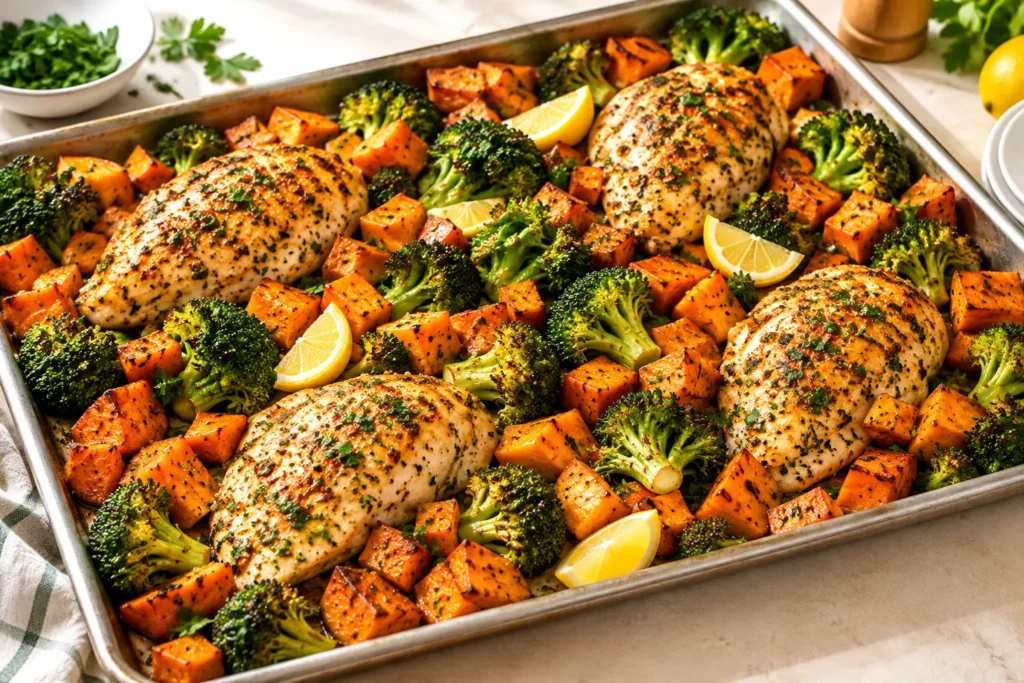
Label check: Only the spice jars. Smoked paprika and garlic powder should list a single ingredient.
This is the starting point for gluten free meal prep, because every ingredient is a whole food. There's nothing to hide and nothing to read, apart from the spices.
Cut the sweet potatoes small, so they finish with the chicken. Big cubes stay hard. Keep them uniform. That's the whole idea.
The nutrition: About 38 g protein per container (1 of 4). The chicken carries the most, and the broccoli comes next.
Roast the vegetables apart from the chicken when you pack the containers, and the sweet potatoes stay firm through four days in the refrigerator. I'd line the pan with parchment, since it keeps the pan clean and the cleanup short.
Reheat: Microwave the container for 2 minutes. Cover it so the chicken stays moist.
Spinach Feta Egg Bites
Egg bites freeze well, and they reheat in a minute. They're also gluten free without any effort, because the filling is eggs, spinach, feta, and pepper.
Grease the pan well. Eggs stick. Silicone cups help. You'll be glad you did.
Label check: Feta and the eggs are naturally gluten free. Buy crumbled feta from a brand that lists no added starch.
The nutrition: Each container has about 21 g protein, and the pan makes 4. Most of that comes from the eggs, with the feta adding more.
Bake until the centers are set and a thermometer reads 160°F, since an egg dish needs that temperature to be safe. Cool them on a rack for ten minutes, because they release from the pan more cleanly once they've cooled.
Freezer note: Freeze them on a tray first, then bag them. Reheat from frozen for 90 seconds.
Salmon With Asparagus and Roasted Potatoes
The nutrition: Count on roughly 41 g protein per container, from 4 equal servings. The salmon leads, followed by the potatoes.
Salmon, asparagus, and potatoes roast together on one pan, and none of them ever contained gluten. It's a dinner that works the same for everyone at the table.
Label check: Nothing here is processed. Fresh fish, vegetables, and a lemon need no label reading.
Start the potatoes first. They need fifteen minutes. The fish only needs twelve.
Cooked salmon keeps well for three to four days in the refrigerator, and I'd pack the lemon wedges separately so the acid doesn't soften the fish. Reheat it gently, because high heat dries it out and gives it a strong smell.
Pack it: Use a glass container with a tight lid. It holds fish smells better than plastic.
Don't Miss the Next Recipe
Get fresh recipes, meal prep systems, and high-protein meal ideas delivered to your inbox every week.
No spam. Unsubscribe anytime.
Cajun Shrimp and Vegetable Sheet Pan
Cajun seasoning blends are a common source of hidden gluten, so this pan builds the flavor from single spices. Smoked paprika, garlic powder, and a pinch of cayenne give the same warmth.
Label check: Skip the premade Cajun blend. Single spices only, since blends can carry fillers.
Roast the vegetables first and add the shrimp late. Shrimp cook fast. Five minutes is plenty. It's a quick step.
The nutrition: One container comes to about 36 g protein, with 4 in all. The shrimp carries the most, and the zucchini comes next.
Skip it if: you can't find shrimp without additives. Some bags contain a phosphate dip that may include other ingredients.
Shrimp is the shortest lived ingredient in a meal prep week, and I'd plan to eat these containers within three days, since the texture turns rubbery in the refrigerator after that. Reheat them only until they're warm.
Chicken and Sweet Potato Hash
Label check: Check the cumin and paprika for a single ingredient. The rest is whole food.
A hash is a good prep dish because it's forgiving. The sweet potatoes soften, the chicken browns, and the peppers add color that holds up for days.
The nutrition: Per container, it's about 37 g protein (4 servings). Most of that comes from the chicken, with the sweet potatoes adding more.
Cover the skillet for the first ten minutes. Steam softens the potatoes. Then uncover.
Cut the chicken to the same size as the potato cubes so every forkful has both, and let the pan sit still for a minute or two at a time to get a golden crust. It freezes well, but the peppers go soft after thawing.
Reheat: Use a skillet over medium heat for 5 minutes. It crisps up again.
Baked Cod With Tomatoes, Olives, and Potatoes
Cod is mild and flaky, and tomatoes and olives season it without any sauce from a bottle. That keeps the label reading to a minimum.
Slice the potatoes thin. They roast faster. Give them a head start. That's an easy fix.
The nutrition: About 34 g protein per container (1 of 4). The cod leads, followed by the potatoes.
Label check: Look at the olives if they come stuffed or marinated. Plain pitted olives are the safe choice.
Fish is easy to overcook, so pull the pan when the thickest part flakes and reads 145°F, since the fillets keep cooking in the hot pan for a minute. Cod reheats best at low power in the microwave, in short bursts.
Buy: Thick, center-cut fillets. Frozen cod works too, as long as it's fully thawed first.
Never Miss a Recipe
Fresh high-protein recipes, meal prep ideas, and kitchen tips, straight to your inbox every week. No spam, just good food.
No spam. Unsubscribe anytime.
Herb Pork Tenderloin With Carrots and Potatoes
Label check: Choose plain tenderloin. Pre-marinated pork often contains soy sauce, which has wheat.
Pork tenderloin is lean and quick, and a rub of thyme and garlic powder does the work of a marinade. Bottled marinades are where gluten hides, so this one is dry.
Slice the pork after it rests. The juices stay inside. Three minutes is enough.
The nutrition: Each container has about 38 g protein, and the pan makes 4. The pork carries the most, and the potatoes comes next.
Carrots and potatoes roast in the pork's drippings, and the pan makes four containers with almost no extra cooking. USDA guidance for whole pork is 145°F with a three minute rest, and I'd use a thermometer every time.
Swap: Chicken thighs work with the same rub. Roast them to 165°F.
Greek Lemon Chicken Sheet Pan
Lemon juice, oregano, and olive oil make a dressing that works on chicken, potatoes, and green beans alike. It's a Greek style dinner with no bread and no sauce to check.
Pick plain chicken breast. Some packages are injected with broth. The label tells you. It's a small habit.
Label check: Raw chicken labeled enhanced with broth can contain gluten. Pick plain chicken breast.
The nutrition: Count on roughly 42 g protein per container, from 4 equal servings. Most of that comes from the chicken, with the potatoes adding more.
Green beans keep their color better when they join the pan after the potatoes have had a head start, and the lemon juice goes on at the start so it cooks into the chicken. Store the lemon wedges apart if you want a fresh squeeze later.
Reheat: Warm it at 350°F for 10 minutes. The potatoes stay firmer than in the microwave.
Check Lightly: Rice, Quinoa, and Potato Bases
Rice, quinoa, and potatoes are naturally gluten free, and they carry a meal prep week well. These 8 dinners need a quick look at the quinoa bag, the canned tomatoes, and the salsa.
For more bowls built the same way, see our Mediterranean chicken meal prep.
Chicken Burrito Bowls
The nutrition: One container comes to about 32 g protein, with 5 in all. The chicken leads, followed by the black beans.
Burrito bowls are a gluten free classic, because the tortilla is the only part with wheat, and the bowl skips it. Rice, beans, chicken, and salsa make a complete container.
Label check: Salsa is usually gluten free, but read the label. Rice and beans should list only themselves.
Cook the rice a little firm. It softens when you reheat it. Fluff it with a fork.
Divide everything into five containers while it's still warm but not hot, and keep the salsa on the side if you like it fresh. Cooked rice needs quick chilling, so get it into the refrigerator within two hours.
Pack it: Put the rice on the bottom and the beans on top. The salsa stays separate.
Greek Chicken Quinoa Bowls
Quinoa is a seed, not a grain, and it's naturally gluten free. It holds its texture in the refrigerator better than rice, which makes it a strong choice for cold bowls.
Label check: Rinse the quinoa and check the bag for a gluten free mark. Crumbled feta should list no added starch.
Rinse the quinoa under cold water. It removes the bitter coating. Drain well.
The nutrition: Per container, it's about 42 g protein (5 servings). The chicken carries the most, and the quinoa comes next.
Skip it if: you can't find a gluten free quinoa. Rice works at the same weight, and it takes a few minutes longer.
Keep the dressing in a small jar and pour it over the bowl just before you eat, because the cucumber and tomato release water if they sit in it for days. The chicken can be eaten cold or warmed for a minute.
Turkey and Rice Stuffed Peppers
Label check: Ground turkey should be plain. Check the diced tomatoes and shredded cheese for added starch.
A stuffed pepper is a natural gluten free meal, since the pepper is the container. Turkey, rice, and tomatoes make a filling that tastes like a hearty dinner.
The nutrition: About 28 g protein per pepper (1 of 6). Most of that comes from the turkey, with the mozzarella adding more.
Pick peppers that stand up straight. They won't tip over. Trim the bases if needed. They won't tip.
Bake the peppers covered for the first half so they steam and soften, and add the cheese for the last five minutes. Each pepper freezes well in its own wrap, and it reheats in about three minutes in the microwave.
Freezer note: Wrap each pepper tightly and freeze for up to 3 months. Thaw it overnight.
Beef Picadillo Rice Bowls
Picadillo is a Latin American beef stew with tomatoes, olives, and potatoes, and it's gluten free as long as you check the cans. It gets better after a night in the refrigerator.
Dice the potatoes small. They cook through in the sauce. Fifteen minutes is enough. Don't rush it.
The nutrition: Each container has about 33 g protein, and the pan makes 5. The beef leads, followed by the rice.
Label check: Plain ground beef and rice are safe. Check the canned tomatoes and the olives.
The olives bring salt and a briny edge, so taste the pot before you add more salt, since the dish gets saltier as it simmers and reduces. Serve it over rice, and it stretches to five containers.
Reheat: Add a splash of water and microwave it covered. The sauce loosens again.
Lemon Salmon Rice Bowls
Label check: Plain salmon and frozen edamame with no sauce. Avoid edamame sold in a seasoned packet.
These bowls are cold friendly, which makes them an easy lunch to grab from the refrigerator. Salmon, rice, edamame, and cucumber need no sauce at all.
Cool the rice quickly. Spread it on a tray. Don't leave it out.
The nutrition: Count on roughly 40 g protein per container, from 5 equal servings. The salmon carries the most, and the edamame comes next.
Slice the avocado when you eat, because it browns in the refrigerator within a day. Salmon is best eaten within three days, and I'd pack the lemon juice in a small jar so the fish doesn't turn soft and tangy.
Swap: Canned salmon works when you're short on time. Drain it well.
Chicken and Potato Cheddar Skillet
Potatoes are the original gluten free base, and they cook in the same skillet as the chicken. Cheddar and scallions finish it, and it needs no sauce.
Dice the potatoes small and cook them covered. Steam makes them tender. Stir often. It's worth the patience.
Label check: Shredded cheese can carry anti-caking agents made from wheat. Shred a block yourself if the bag is unclear.
The nutrition: One container comes to about 42 g protein, with 5 in all. Most of that comes from the chicken, with the cheddar adding more.
Brown the chicken in the same pan after the potatoes so it picks up the golden bits left behind, and add the cheese at the very end so it melts without turning oily. Block cheddar melts more smoothly than a bagged shred.
Reheat: Use the microwave with a damp paper towel over the top. The potatoes stay soft.
Turkey Quinoa Skillet With Black Beans
The nutrition: Per container, it's about 34 g protein (5 servings). The turkey leads, followed by the quinoa.
One pan, one pot of quinoa, and five containers. The turkey, tomatoes, and beans cook together, so the quinoa soaks up the flavor as it simmers.
Label check: Check the quinoa bag and the canned black beans. Ground turkey should list only turkey.
Rinse the quinoa first. It tastes cleaner. Then add it dry.
Keep the lid on for the full fifteen minutes, because quinoa needs steam to turn tender, and lifting it lets the heat escape and leaves the seeds hard. Add the spinach at the end, since it wilts in two minutes.
Freezer note: It freezes well for 2 to 3 months. The quinoa stays intact after thawing.
Chickpea Coconut Curry With Rice
This is the vegetarian card in the guide, and it's still hearty at about 17 grams of protein per container. Chickpeas and coconut milk make a thick curry with no gluten at all.
Label check: Whole spices are safest. Curry powder blends can carry fillers, which is why this card uses three single spices.
Bloom the spices in hot oil. They turn fragrant. Thirty seconds is enough. You'll smell it.
The nutrition: About 17 g protein per container (1 of 4). The chickpeas carries the most, and the rice comes next.
Swap: Add a can of drained white beans for more protein. Simmer it a few minutes longer.
Curry powder blends sometimes include fillers, which is why this card uses cumin, turmeric, and coriander separately. The curry thickens in the refrigerator, so add a splash of water when you reheat it.
Check the Sauce: Tamari and Glazes
Regular soy sauce is made with wheat, so every sauce on this shelf uses tamari labeled gluten free. These 7 dinners are the ones that restaurants and takeout menus rarely get right.
For more fast weeknight meals, see our quick high-protein dinners.
Teriyaki Chicken and Rice
Label check: Many tamari brands contain wheat, so the bottle has to say gluten free. Cornstarch should list only corn.
Regular soy sauce is made with wheat, so teriyaki is a classic gluten trap. Tamari labeled gluten free fixes it, and honey, garlic, and ginger supply the rest.
The nutrition: Each container has about 34 g protein, and the pan makes 5. Most of that comes from the chicken, with the rice adding more.
Whisk the cornstarch into the cold sauce first. Lumps form in hot liquid. Then pour it in.
The sauce thickens in about two minutes and coats the chicken in a glossy layer, and it keeps its texture through four days in the refrigerator. Pack the broccoli apart from the sauce if you like it bright green.
Buy: A tamari that says gluten free on the front. The word tamari alone doesn't guarantee it.
Beef and Broccoli With Rice
Takeout beef and broccoli gets its sauce from soy and oyster sauce, and both often contain wheat. This version uses gluten free tamari, garlic, and ginger instead.
Slice the steak thin, across the grain. It stays tender. Freeze it for 20 minutes first. It's an easy trick.
The nutrition: Count on roughly 37 g protein per container, from 5 equal servings. The steak leads, followed by the rice.
Label check: Use a tamari that carries a gluten free claim, and leave oyster sauce off the list. Cornstarch should list only corn.
Sear the steak in a very hot pan for only a couple of minutes, since overcooked sirloin turns tough, and set it aside while the broccoli steams. It goes back in at the end for the sauce.
Honest note: reheated steak can turn chewy. I'd warm it gently and keep it short.
Sesame Tamari Salmon Bowls
Label check: Pick a tamari with a gluten free claim. Regular soy sauce has wheat in it.
A tamari and honey glaze gives the salmon a sweet, salty crust. It's a short list of ingredients, and the tamari is the only item that needs a label check.
Brush the glaze on just before baking. It browns well. Don't let it sit. It's a small step.
The nutrition: One container comes to about 40 g protein, with 5 in all. The salmon carries the most, and the edamame comes next.
Edamame adds protein and a bright bite, and it comes in a bag with no sauce, so it's an easy gluten free add-in. Pack the cucumber on top so it doesn't soak into the rice.
Pack it: Sprinkle the sesame seeds on at serving time. They stay crunchy.
Chicken Fried Rice
Fried rice works best with cold rice, so it's built for meal prep. Cook the rice a day ahead, and the grains stay separate and fry instead of clumping.
Use rice from the day before. Fresh rice gets mushy. Chill it on a tray.
Label check: The tamari needs a gluten free claim. Frozen peas should list only peas. Restaurant fried rice rarely passes.
The nutrition: Per container, it's about 31 g protein (5 servings). Most of that comes from the chicken, with the rice adding more.
Cooked rice can carry bacteria if it sits out, so cool it quickly and refrigerate it within two hours, per USDA guidance. The eggs go in until firm, and the whole dish should be reheated to 165°F.
Freezer note: It freezes well in flat bags. Reheat it in a skillet with a splash of water.
Honey Garlic Shrimp and Rice
The nutrition: About 33 g protein per container (1 of 5). The shrimp leads, followed by the rice.
Honey, garlic, and tamari make a sticky glaze that coats shrimp in about a minute. It's quick enough for a weeknight and keeps for a short prep week.
Label check: Choose a tamari with a gluten free claim. Check that the shrimp are plain, with no breading or seasoning.
Pat the shrimp dry. They brown, not steam. Work in one layer. That's the rule.
Add the glaze at the end, because honey burns easily over high heat, and a minute is all it needs to turn glossy. Shrimp is best eaten within three days of cooking, so I'd cook this one late in the week.
Skip it if: you avoid shellfish. Chicken thighs work with the same glaze, cooked to 165°F.
Ginger Pork and Cabbage With Rice Noodles
Rice noodles are gluten free by design, but a few brands add wheat starch, so the label matters. Ground pork, cabbage, ginger, and tamari make a fast stir fry.
Label check: Rice noodles should list only rice and water. Some brands add wheat. Your tamari bottle should carry a gluten free claim.
Soak the noodles instead of boiling them. They stay firm. Eight minutes is plenty. Don't boil them.
The nutrition: Each container has about 28 g protein, and the pan makes 5. The pork carries the most, and the noodles comes next.
Buy: Rice noodles with only rice and water on the label. Brown rice noodles work too.
Shred the cabbage thin so it cooks down in five minutes, and toss everything with the tamari while the noodles are still warm so they absorb it. The noodles soften in the refrigerator, so reheat with a splash of water.
Crispy Tofu and Edamame Rice Bowls
Label check: Plain tofu without marinade. A gluten free tamari is required, and cornstarch should list only corn.
Tofu is a plain, gluten free protein that takes on whatever sauce you give it. Press it well and fry it in cornstarch, and the cubes come out crisp and golden.
The nutrition: Count on roughly 25 g protein per container, from 5 equal servings. Most of that comes from the tofu, with the edamame adding more.
Press the tofu for 15 minutes. Wet tofu won't crisp. Use a heavy pan. Don't skip it.
Crisp tofu softens in the refrigerator, and I'd rather accept that than add a fryer, so reheat the cubes in a hot skillet for a few minutes to bring some of the crunch back. Edamame adds extra protein to the bowl.
Pack it: Keep the tofu in its own compartment. The steam softens it.
Check Every Label: Sausage, Broth, Pasta, and Canned Sauces
These 7 dinners use processed foods, and each one needs a label read before it goes in the cart. Sausage, broth, pasta, oats, and enchilada sauce are the usual places where gluten turns up.
For more soups to batch cook, see our slow cooker dinners.
Chicken Sausage, Peppers, and Potatoes
Sausage is where gluten most often hides in a gluten free kitchen. Some brands add breadcrumbs or wheat based binders, so pick a sausage labeled gluten free.
Slice the sausage on the bias. It browns more. Don't crowd the pan.
The nutrition: One container comes to about 23 g protein, with 4 in all. The sausage leads, followed by the potatoes.
Label check: Sausage is the risky item. Pick one labeled gluten free, since fillers and binders can contain wheat.
The potatoes go in first because they need the most time, and the sausage and peppers join them for the last twenty minutes. Fully cooked sausage only needs to get hot, and a thermometer should read 165°F.
Reheat: Use a hot oven for 10 minutes. The potatoes crisp again.
Chicken Tortilla Soup
Label check: Check the broth, the corn tortillas, and the canned tomatoes. Some corn tortillas contain wheat flour.
Tortilla soup has three label traps: the broth, the tortillas, and the canned tomatoes with chiles. Read all three, and the pot is gluten free and freezer friendly.
Poach the chicken in the broth. It stays tender. Shred it with two forks. It's quick.
The nutrition: Per container, it's about 31 g protein (6 servings). The chicken carries the most, and the black beans comes next.
Keep the tortilla strips out of the containers, since they turn soggy in the soup within an hour, and add them fresh when you serve so the soup keeps its crunch on top.
Freezer note: Freeze the soup without the tortillas for up to 3 months. Thaw it overnight.
Turkey Meatballs With Brown Rice Pasta
Meatballs normally use breadcrumbs, and the usual fix is rolled oats. They must be certified gluten free, since regular oats are often cross-contaminated in the field or the mill.
Wet your hands before rolling. The mixture sticks. Make the meatballs the same size.
Label check: Oats must say certified gluten free. Check the marinara and the pasta label too.
The nutrition: About 30 g protein per container (1 of 6). Most of that comes from the turkey, with the pasta adding more.
Gluten free pasta can turn soft and sticky when it sits, so cook it just until tender and rinse it lightly. Store the pasta apart from the sauce if you can, and warm them together when you eat.
Honest note: gluten free pasta never reheats quite like wheat pasta. I'd freeze the meatballs and sauce, and boil fresh pasta.
Lentil and Chicken Sausage Soup
The nutrition: Each container has about 18 g protein, and the pan makes 6. The sausage leads, followed by the lentils.
Lentils cook without soaking, and they turn a pot of broth into a filling meal. The sausage adds protein and seasoning, but it's also the item to check.
Label check: Check the broth and the sausage. Lentils from bulk bins can pick up gluten, so buy a sealed bag.
Rinse the lentils well. Dust and grit wash away. Pick through them if you like. You'll see the difference.
Cross-contact is a real concern with dry lentils, since they're often grown near wheat and sometimes packed on shared lines. A sealed bag labeled gluten free is the safer buy than bulk bins.
Freezer note: Freeze in single servings for up to 3 months. The soup thickens, so thin it with water.
Chicken Enchilada Rice Bowls
Enchilada sauce is the hidden problem here, since many brands thicken it with wheat flour. A can labeled gluten free solves it, and the rest of the bowl is naturally safe.
Label check: Enchilada sauce is the trap, since many cans use wheat flour. Look for gluten free on the can.
Simmer the sauce with the beans. They soak it up. Five minutes is enough. They'll thicken it.
The nutrition: Count on roughly 42 g protein per container, from 6 equal servings. The chicken carries the most, and the cheddar comes next.
Buy: Enchilada sauce that says gluten free on the front. A mild can works for the whole family.
Build the bowls in layers with rice on the bottom, then chicken and beans, then cheese on top, and the cheese melts when you reheat it. Each container holds a full dinner, and it freezes well.
Chicken Pasta Salad With Feta
Label check: Pasta must say gluten free, and a gluten free pasta can turn gummy when it sits. Check the label of any dressing.
A cold pasta salad is a good lunch for the week, and gluten free pasta works well in it as long as you rinse it. Chicken, feta, tomatoes, and cucumber fill it out.
The nutrition: One container comes to about 33 g protein, with 5 in all. Most of that comes from the chicken, with the pasta adding more.
Rinse the pasta under cold water. It stops the cooking. It also removes the sticky starch.
Gluten free pasta absorbs dressing as it sits, so hold back a spoonful and add it when you eat. The salad keeps for three to four days in the refrigerator, and it tastes better after an hour of chilling.
Honest note: this is the one card where texture slips by day four. I'd eat it earlier in the week.
Egg and Black Bean Burrito Bowls
These bowls skip the tortilla that makes a breakfast burrito unsafe. Eggs, potatoes, beans, and cheddar already make a complete meal.
Cook the potatoes first. They need time. Then cook the eggs. It's easy to forget.
The nutrition: Per container, it's about 27 g protein (4 servings). The eggs leads, followed by the cheddar.
Label check: Check the salsa and the shredded cheese. Eggs, potatoes, and beans are naturally gluten free.
Scramble the eggs until firm, and a thermometer should read 160°F, which keeps them safe through reheating. Top the bowls with salsa at the end, because salsa makes the eggs wet if it sits in the refrigerator.
Reheat: Microwave for 90 seconds, then stir. Add the salsa cold on top.
Cross-Contact Rules for Prep Day
A gluten free ingredient can pick up gluten from a shared surface. A few habits on prep day prevent most of it.
- Wash cutting boards, knives, and pans well before you start, or use a set kept for gluten free cooking.
- Use a clean colander and clean tongs, since a colander used for wheat pasta can hold residue.
- Don't share a toaster, butter, or jar with spoons that touched bread.
- Cook the gluten free dishes first, and keep wheat foods away from the prep area.
- Label every container with the dish and the date.
Food Safety for Meal Prep
The USDA's safe temperature chart lists 165°F for poultry, including ground poultry, and for leftovers, 160°F for ground pork, ground beef, and egg dishes, and 145°F for fish and for whole cuts of pork and beef, with a 3 minute rest. Shrimp should turn pink and opaque. Cooked leftovers keep 3 to 4 days in the refrigerator, per FoodSafety.gov.
- Cool food within 2 hours, or within 1 hour above 90°F, and pack it in shallow containers.
- Chill cooked rice quickly and refrigerate it within 2 hours.
- Don't rinse raw poultry. The USDA advises against it because the water spreads bacteria.
- Freeze containers you won't eat within 3 to 4 days, and thaw them in the refrigerator.
- Reheat every portion to 165°F.
Time and Protein at a Glance
Use this list to plan your prep day. Times include prep, cooking, and chilling, and protein's per container.
- Sheet Pan Chicken, Sweet Potatoes, and Broccoli: 50 min, about 38 g protein per container
- Spinach Feta Egg Bites: 32 min, about 21 g protein per container
- Salmon With Asparagus and Roasted Potatoes: 40 min, about 41 g protein per container
- Cajun Shrimp and Vegetable Sheet Pan: 30 min, about 36 g protein per container
- Chicken and Sweet Potato Hash: 40 min, about 37 g protein per container
- Baked Cod With Tomatoes, Olives, and Potatoes: 40 min, about 34 g protein per container
- Herb Pork Tenderloin With Carrots and Potatoes: 50 min, about 38 g protein per container
- Greek Lemon Chicken Sheet Pan: 50 min, about 42 g protein per container
- Chicken Burrito Bowls: 50 min, about 32 g protein per container
- Greek Chicken Quinoa Bowls: 45 min, about 42 g protein per container
- Turkey and Rice Stuffed Peppers: 1 hr 5 min, about 28 g protein per pepper
- Beef Picadillo Rice Bowls: 55 min, about 33 g protein per container
- Lemon Salmon Rice Bowls: 40 min, about 40 g protein per container
- Chicken and Potato Cheddar Skillet: 45 min, about 42 g protein per container
- Turkey Quinoa Skillet With Black Beans: 40 min, about 34 g protein per container
- Chickpea Coconut Curry With Rice: 40 min, about 17 g protein per container
- Teriyaki Chicken and Rice: 50 min, about 34 g protein per container
- Beef and Broccoli With Rice: 40 min, about 37 g protein per container
- Sesame Tamari Salmon Bowls: 40 min, about 40 g protein per container
- Chicken Fried Rice: 40 min, about 31 g protein per container
- Honey Garlic Shrimp and Rice: 35 min, about 33 g protein per container
- Ginger Pork and Cabbage With Rice Noodles: 35 min, about 28 g protein per container
- Crispy Tofu and Edamame Rice Bowls: 50 min, about 25 g protein per container
- Chicken Sausage, Peppers, and Potatoes: 50 min, about 23 g protein per container
- Chicken Tortilla Soup: 50 min, about 31 g protein per container
- Turkey Meatballs With Brown Rice Pasta: 55 min, about 30 g protein per container
- Lentil and Chicken Sausage Soup: 55 min, about 18 g protein per container
- Chicken Enchilada Rice Bowls: 50 min, about 42 g protein per container
- Chicken Pasta Salad With Feta: 1 hr 40 min, about 33 g protein per container
- Egg and Black Bean Burrito Bowls: 40 min, about 27 g protein per container
How I Counted Protein
I multiplied typical USDA FoodData Central values by the weights on each card, then divided by the servings. Raw meat and fish are counted raw, canned beans are counted drained, and rice and quinoa are counted dry, so the numbers are estimates.
Some inputs rest on assumptions: dry brown rice pasta at 7.5 g per 100 g, rice noodles at 6, firm tofu at 9, chicken sausage at 16, and quinoa at 14.1. Brands vary, so check your labels.
Where These Cards Differ From Typical Versions
These cards are my own builds, weighed so the protein can be counted. A test cook is wise before you serve them to guests. Check your first batch early.
I can't see your brands, so the label checks are your job. A product that was safe last year can change its recipe, and a label that says gluten free is a better guide than an ingredient list.
A few dishes resemble cards in our earlier lists, including the turkey meatballs and the chicken burrito bowls, which also appear in our meatball dinners. Don't cook both in one week.
Questions About Gluten Free Meal Prep
Which meal prep idea has the most protein?
Chicken Enchilada Rice Bowls leads at about 42 grams per container, followed by Chicken and Potato Cheddar Skillet at about 42 grams and Greek Lemon Chicken Sheet Pan at about 42. The lowest's the Chickpea Coconut Curry With Rice at about 17 grams.
Is tamari always gluten free?
No. Many brands contain wheat, so choose a bottle that says gluten free on the label.
Can I freeze these meals?
Soups, skillets, stuffed peppers, egg bites, and the rice bowls freeze well for 2 to 3 months. Cold pasta salad and fish bowls are best eaten within 3 to 4 days. See our family dinners for more batch meals.
How long do leftovers keep?
Cooked leftovers keep 3 to 4 days in the refrigerator, per FoodSafety.gov. Reheat them to 165°F.
Are these meals safe for celiac disease?
The cards avoid gluten ingredients when you buy labeled products and prevent cross-contact. Your doctor is the right source for advice on celiac disease.
1. Sheet Pan Chicken, Sweet Potatoes, and Broccoli
Approx. 38g ProteinIngredients: 1 1/2 lb (680 g) boneless chicken thighs; 2 large sweet potatoes, diced (500 g); 4 cups (400 g) broccoli florets; 2 tsp smoked paprika; 1 tsp garlic powder; 2 tbsp olive oil; 1/2 tsp salt; 1/2 tsp black pepper.
Step 1: Heat the oven to 425°F. Toss the sweet potatoes with 1 tbsp of the olive oil and the salt on a rimmed baking sheet and roast 10 minutes.
Step 2: Toss the chicken and broccoli with the remaining olive oil, the smoked paprika, garlic powder, and pepper and add them to the pan.
Step 3: Roast 22 to 25 minutes, until the chicken is browned and a thermometer reads 165°F. Cool within 2 hours, or within 1 hour above 90°F, and pack in shallow containers. Refrigerate up to 3 to 4 days, and reheat to 165°F in the microwave or oven.
2. Spinach Feta Egg Bites
Approx. 21g ProteinIngredients: 10 large eggs (50 g each, 500 g); 3.5 oz (100 g) baby spinach, chopped; 1 cup (113 g) crumbled feta cheese; 1 red bell pepper, diced (150 g); 1 tbsp olive oil; 1/2 tsp salt; 1/2 tsp black pepper.
Step 1: Heat the oven to 350°F and brush a 12 cup muffin pan with the olive oil.
Step 2: Divide the spinach, bell pepper, and feta among the cups. Whisk the eggs with the salt and pepper and pour them over.
Step 3: Bake 20 to 22 minutes, until set and a thermometer reads 160°F. Cool within 2 hours, or within 1 hour above 90°F, and pack in shallow containers. Refrigerate up to 3 to 4 days, or freeze portions up to 2 to 3 months, and reheat to 165°F.
3. Salmon With Asparagus and Roasted Potatoes
Approx. 41g ProteinIngredients: 4 salmon fillets, 6 oz each (680 g); 1 lb (450 g) asparagus, trimmed; 1 1/2 lb (680 g) baby potatoes, halved; 1 lemon, cut into wedges; 2 tbsp olive oil; 1/2 tsp salt; 1/2 tsp black pepper.
Step 1: Heat the oven to 425°F. Toss the potatoes with 1 tbsp of the olive oil and the salt on a rimmed baking sheet and roast 15 minutes.
Step 2: Add the asparagus tossed with the remaining olive oil. Set the salmon on the pan and season with the pepper.
Step 3: Roast 12 minutes, until the salmon flakes and a thermometer reads 145°F. Serve with the lemon. Cool within 2 hours, or within 1 hour above 90°F, and pack in shallow containers. Refrigerate up to 3 to 4 days, and reheat to 165°F in the microwave or oven.
4. Cajun Shrimp and Vegetable Sheet Pan
Approx. 36g ProteinIngredients: 1 1/2 lb (680 g) peeled shrimp; 2 medium zucchini, sliced (400 g); 2 bell peppers, sliced (300 g); 1 red onion, sliced (100 g); 2 tsp smoked paprika; 1 tsp garlic powder; 1/4 tsp cayenne pepper; 2 tbsp olive oil; 1/2 tsp salt.
Step 1: Heat the oven to 425°F. Toss the zucchini, bell peppers, and red onion with 1 tbsp of the olive oil and the salt on a rimmed baking sheet and roast 8 minutes, until tender.
Step 2: Toss the shrimp with the remaining olive oil, the smoked paprika, garlic powder, and cayenne pepper.
Step 3: Add the shrimp to the pan and roast 5 to 6 minutes, until pink and opaque. Cool within 2 hours, or within 1 hour above 90°F, and pack in shallow containers. Refrigerate up to 3 to 4 days, and reheat to 165°F in the microwave or oven.
5. Chicken and Sweet Potato Hash
Approx. 37g ProteinIngredients: 1 1/2 lb (680 g) boneless chicken thighs; 3 cups (600 g) diced sweet potatoes; 2 bell peppers, diced (300 g); 1 yellow onion, diced (150 g); 2 tsp ground cumin; 1 tsp smoked paprika; 2 tbsp olive oil; 1/2 tsp salt.
Step 1: Cook the sweet potatoes in 1 tbsp of the olive oil in a large skillet with a lid over medium heat for 10 minutes, until nearly tender.
Step 2: Add the chicken, cut in 1/2 inch pieces, with the remaining olive oil, the cumin, paprika, and salt and cook 8 minutes, until browned and a thermometer reads 165°F.
Step 3: Add the bell peppers and onion and cook 5 minutes, until tender. Cool within 2 hours, or within 1 hour above 90°F, and pack in shallow containers. Refrigerate up to 3 to 4 days, or freeze portions up to 2 to 3 months, and reheat to 165°F.
6. Baked Cod With Tomatoes, Olives, and Potatoes
Approx. 34g ProteinIngredients: 1 1/2 lb (680 g) cod fillets; 1 1/2 cups (300 g) cherry tomatoes; 3/4 cup (100 g) pitted olives; 1 1/8 lb (500 g) baby potatoes, sliced thin; 1 red onion, sliced (100 g); 2 tbsp olive oil; 1/2 tsp salt.
Step 1: Heat the oven to 425°F. Toss the potatoes and red onion with 1 tbsp of the olive oil and the salt in a baking pan and roast 15 minutes.
Step 2: Add the tomatoes and olives, then nestle in the cod and drizzle with the remaining olive oil.
Step 3: Roast 12 to 14 minutes, until the fish flakes and a thermometer reads 145°F. Cool within 2 hours, or within 1 hour above 90°F, and pack in shallow containers. Refrigerate up to 3 to 4 days, and reheat to 165°F in the microwave or oven.
7. Herb Pork Tenderloin With Carrots and Potatoes
Approx. 38g ProteinIngredients: 1 1/2 lb (680 g) pork tenderloin; 1 lb (450 g) carrots, cut in chunks; 1 lb (450 g) baby potatoes, halved; 2 tsp dried thyme; 1 tsp garlic powder; 2 tbsp olive oil; 1/2 tsp salt; 1/2 tsp black pepper.
Step 1: Heat the oven to 425°F. Toss the carrots and potatoes with 1 tbsp of the olive oil and the salt on a rimmed baking sheet and roast 10 minutes.
Step 2: Rub the pork with the remaining olive oil, the thyme, garlic powder, and pepper and set it on the pan.
Step 3: Roast 22 to 25 minutes, until a thermometer reads 145°F, and rest 3 minutes before slicing. Cool within 2 hours, or within 1 hour above 90°F, and pack in shallow containers. Refrigerate up to 3 to 4 days, and reheat to 165°F in the microwave or oven.
8. Greek Lemon Chicken Sheet Pan
Approx. 42g ProteinIngredients: 1 1/2 lb (680 g) boneless chicken breast; 1 1/8 lb (500 g) baby potatoes, halved; 12 oz (340 g) green beans, trimmed; 3 tbsp (45 g) lemon juice; 1 tsp dried oregano; 2 tbsp olive oil; 1/2 tsp salt; 1/2 tsp black pepper.
Step 1: Heat the oven to 425°F. Toss the potatoes with 1 tbsp of the olive oil and the salt on a rimmed baking sheet and roast 12 minutes.
Step 2: Toss the chicken and green beans with the remaining olive oil, the lemon juice, oregano, and pepper and add them to the pan.
Step 3: Roast 20 to 22 minutes, until the chicken is browned and a thermometer reads 165°F. Cool within 2 hours, or within 1 hour above 90°F, and pack in shallow containers. Refrigerate up to 3 to 4 days, and reheat to 165°F in the microwave or oven.
9. Chicken Burrito Bowls
Approx. 32g ProteinIngredients: 1 lb (454 g) boneless chicken breast; 1 1/2 cups (280 g) long grain white rice; 2 cans (15 oz each) black beans, drained (510 g); 1 cup (240 g) salsa; 2 tsp ground cumin; 3 cups water; 1 tbsp olive oil; 1/2 tsp salt.
Step 1: Simmer the rice in the water with the salt, covered, for 18 minutes, until tender, and fluff.
Step 2: Cook the chicken with the cumin in the olive oil for 7 to 8 minutes, until browned and a thermometer reads 165°F, then shred or dice.
Step 3: Warm the black beans and salsa for 5 minutes. Divide the rice, chicken, and beans among 5 containers. Cool within 2 hours, or within 1 hour above 90°F, and pack in shallow containers. Refrigerate up to 3 to 4 days, and reheat to 165°F in the microwave or oven.
10. Greek Chicken Quinoa Bowls
Approx. 42g ProteinIngredients: 1 1/2 lb (680 g) boneless chicken breast; 1 1/2 cups (255 g) dry quinoa; 2 cups (300 g) cherry tomatoes, halved; 1 large cucumber, diced (300 g); 1 cup (113 g) crumbled feta cheese; 2 tbsp (30 g) lemon juice; 1 tsp dried oregano; 3 cups water; 2 tbsp olive oil; 1/2 tsp salt.
Step 1: Rinse the quinoa and simmer it in the water with the salt, covered, for 15 minutes, until tender. Fluff and cool.
Step 2: Cook the chicken in 1 tbsp of the olive oil with the oregano for 7 to 8 minutes per side, until a thermometer reads 165°F, then slice.
Step 3: Whisk the remaining olive oil with the lemon juice and divide the quinoa, chicken, tomatoes, cucumber, and feta among 5 containers with the dressing on top. Cool within 2 hours, or within 1 hour above 90°F, and pack in shallow containers. Refrigerate up to 3 to 4 days, and reheat to 165°F in the microwave or oven.
11. Turkey and Rice Stuffed Peppers
Approx. 28g ProteinIngredients: 1 1/2 lb (680 g) ground turkey; 6 large bell peppers, tops removed and seeded (900 g); 2 cups (316 g) cooked rice; 1 can (14.5 oz) diced tomatoes (411 g); 1 cup (113 g) shredded mozzarella cheese; 2 tsp ground cumin; 1 tsp smoked paprika; 1 tbsp olive oil; 1/2 tsp salt; Aluminum foil.
Step 1: Heat the oven to 375°F. Brown the turkey in the olive oil with the cumin, paprika, and salt for 8 minutes, until no pink remains and a thermometer reads 165°F.
Step 2: Stir in the rice and diced tomatoes. Fill the bell peppers and stand them in a baking dish.
Step 3: Cover with foil and bake 30 minutes. Top with the mozzarella and bake 5 minutes, until melted. Cool within 2 hours, or within 1 hour above 90°F, and pack in shallow containers. Refrigerate up to 3 to 4 days, or freeze portions up to 2 to 3 months, and reheat to 165°F.
12. Beef Picadillo Rice Bowls
Approx. 33g ProteinIngredients: 1 1/2 lb (680 g) 90 percent lean ground beef; 1 1/4 cups (230 g) long grain white rice; 2 medium potatoes, diced (300 g); 1 can (14.5 oz) diced tomatoes (411 g); 1/2 cup (80 g) green olives, sliced; 1 yellow onion, diced (150 g); 2 tsp ground cumin; 2 1/2 cups water; 1 tbsp olive oil; 1/2 tsp salt.
Step 1: Simmer the rice in 2 1/2 cups of water with half the salt, covered, for 18 minutes, until tender, and fluff.
Step 2: Cook the onion in the olive oil for 4 minutes. Add the beef and cumin and cook 8 minutes, until no pink remains and a thermometer reads 160°F.
Step 3: Add the potatoes, diced tomatoes, olives, and remaining salt, cover, and simmer 15 minutes, until the potatoes are tender. Serve over the rice. Cool within 2 hours, or within 1 hour above 90°F, and pack in shallow containers. Refrigerate up to 3 to 4 days, or freeze portions up to 2 to 3 months, and reheat to 165°F.
13. Lemon Salmon Rice Bowls
Approx. 40g ProteinIngredients: 1 1/2 lb (680 g) salmon fillets; 1 1/2 cups (280 g) long grain white rice; 1 large cucumber, sliced (300 g); 2 ripe avocados, sliced (300 g); 2 cups (300 g) frozen shelled edamame; 2 tbsp (30 g) lemon juice; 3 cups water; 1 tbsp olive oil; 1/2 tsp salt.
Step 1: Simmer the rice in the water with half the salt, covered, for 18 minutes, until tender, and fluff. Thaw the edamame in warm water.
Step 2: Brush the salmon with the olive oil, sprinkle with the remaining salt, and bake at 400°F for 12 to 14 minutes, until it flakes and a thermometer reads 145°F.
Step 3: Flake the salmon over the rice and add the edamame, cucumber, and lemon juice. Add the avocado when you eat. Cool within 2 hours, or within 1 hour above 90°F, and pack in shallow containers. Refrigerate up to 3 to 4 days, and reheat to 165°F in the microwave or oven.
14. Chicken and Potato Cheddar Skillet
Approx. 42g ProteinIngredients: 1 1/2 lb (680 g) boneless chicken breast; 1 3/4 lb (800 g) potatoes, diced 1/2 inch; 2 bell peppers, diced (300 g); 1 1/2 cups (170 g) shredded cheddar cheese; 4 scallions, sliced (60 g); 1 tsp garlic powder; 2 tbsp olive oil; 1/2 tsp salt; 1/2 tsp black pepper.
Step 1: Cook the potatoes in 1 tbsp of the olive oil with the salt in a covered skillet over medium heat for 12 minutes, stirring often.
Step 2: Add the chicken, cut in 1/2 inch pieces, with the remaining olive oil, the garlic powder, and pepper and cook 8 minutes, until browned and a thermometer reads 165°F.
Step 3: Add the bell peppers for 3 minutes, top with the cheddar until melted, and sprinkle with the scallions. Cool within 2 hours, or within 1 hour above 90°F, and pack in shallow containers. Refrigerate up to 3 to 4 days, and reheat to 165°F in the microwave or oven.
15. Turkey Quinoa Skillet With Black Beans
Approx. 34g ProteinIngredients: 1 1/2 lb (680 g) ground turkey; 1 cup (170 g) dry quinoa; 1 can (14.5 oz) diced tomatoes (411 g); 1 can (15 oz) black beans, drained (255 g); 5 oz (140 g) baby spinach; 2 tsp ground cumin; 1 tsp smoked paprika; 1 1/2 cups water; 1 tbsp olive oil; 1/2 tsp salt.
Step 1: Brown the turkey in the olive oil with the cumin, paprika, and salt for 8 minutes, until no pink remains and a thermometer reads 165°F.
Step 2: Rinse the quinoa and add it with the diced tomatoes, black beans, and water. Cover and simmer 15 minutes, until the quinoa is tender.
Step 3: Stir in the spinach for 2 minutes, until wilted. Cool within 2 hours, or within 1 hour above 90°F, and pack in shallow containers. Refrigerate up to 3 to 4 days, or freeze portions up to 2 to 3 months, and reheat to 165°F.
16. Chickpea Coconut Curry With Rice
Approx. 17g ProteinIngredients: 2 cans (15 oz each) chickpeas, drained (510 g); 1 can (13.5 oz) coconut milk (400 g); 1 cup (185 g) long grain white rice; 7 oz (200 g) baby spinach; 1 yellow onion, diced (150 g); 2 tsp ground cumin; 1 tsp ground turmeric; 1 tsp ground coriander; 2 cups water; 1 tbsp olive oil; 1/2 tsp salt.
Step 1: Simmer the rice in the water with a pinch of the salt, covered, for 18 minutes, until tender, and fluff.
Step 2: Cook the onion in the olive oil for 5 minutes, then stir in the cumin, turmeric, and coriander for 30 seconds.
Step 3: Add the chickpeas, coconut milk, and the remaining salt and simmer 12 minutes, then stir in the spinach until wilted. Serve over the rice. Cool within 2 hours, or within 1 hour above 90°F, and pack in shallow containers. Refrigerate up to 3 to 4 days, or freeze portions up to 2 to 3 months, and reheat to 165°F.
17. Teriyaki Chicken and Rice
Approx. 34g ProteinIngredients: 1 1/2 lb (680 g) boneless chicken thighs; 1/3 cup (80 g) gluten free tamari; 3 tbsp honey; 3 garlic cloves, minced (9 g); 1 tbsp (10 g) minced fresh ginger; 1 tbsp cornstarch; 4 cups (400 g) broccoli florets; 1 1/2 cups (280 g) long grain white rice; 3 cups water.
Step 1: Simmer the rice in the water, covered, for 18 minutes, until tender. Steam the broccoli for 4 minutes, until tender.
Step 2: Whisk the tamari, honey, garlic, ginger, and cornstarch.
Step 3: Cook the chicken, cut in 1 inch pieces, in a skillet for 8 minutes, until browned and a thermometer reads 165°F, then add the sauce for 2 minutes, until thickened. Divide among 5 containers with the rice and broccoli. Cool within 2 hours, or within 1 hour above 90°F, and pack in shallow containers. Refrigerate up to 3 to 4 days, and reheat to 165°F in the microwave or oven.
18. Beef and Broccoli With Rice
Approx. 37g ProteinIngredients: 1 1/2 lb (680 g) sirloin steak, sliced thin; 1 lb (450 g) broccoli florets; 1/3 cup (80 g) gluten free tamari; 3 garlic cloves, minced (9 g); 1 tbsp (10 g) minced fresh ginger; 1 tbsp cornstarch; 1 1/2 cups (280 g) long grain white rice; 3 cups water; 1 tbsp olive oil.
Step 1: Simmer the rice in the water, covered, for 18 minutes, until tender, and fluff.
Step 2: Sear the steak in the olive oil over high heat for 2 to 3 minutes, until browned and a thermometer reads 145°F, and set it aside.
Step 3: Steam the broccoli in the pan for 4 minutes, then add the tamari, garlic, ginger, and cornstarch and simmer 1 minute, until thickened, and return the steak. Serve over the rice. Cool within 2 hours, or within 1 hour above 90°F, and pack in shallow containers. Refrigerate up to 3 to 4 days, and reheat to 165°F in the microwave or oven.
19. Sesame Tamari Salmon Bowls
Approx. 40g ProteinIngredients: 1 1/2 lb (680 g) salmon fillets; 3 tbsp (48 g) gluten free tamari; 2 tbsp honey; 1 tbsp sesame seeds; 1 1/2 cups (280 g) long grain white rice; 1 large cucumber, sliced (300 g); 2 cups (300 g) frozen shelled edamame; 3 cups water.
Step 1: Simmer the rice in the water, covered, for 18 minutes, until tender, and fluff. Thaw the edamame in warm water.
Step 2: Brush the salmon with the tamari and honey and bake at 400°F for 12 to 14 minutes, until it flakes and a thermometer reads 145°F.
Step 3: Flake the salmon over the rice, add the edamame and cucumber, and sprinkle with the sesame seeds. Cool within 2 hours, or within 1 hour above 90°F, and pack in shallow containers. Refrigerate up to 3 to 4 days, and reheat to 165°F in the microwave or oven.
20. Chicken Fried Rice
Approx. 31g ProteinIngredients: 1 lb (454 g) boneless chicken breast; 1 1/2 cups (280 g) long grain white rice, cooked and chilled; 3 large eggs (50 g each, 150 g); 1 cup (150 g) frozen peas; 3 tbsp (48 g) gluten free tamari; 4 scallions, sliced (60 g); 3 cups water for the rice; 2 tbsp olive oil.
Step 1: Cook the rice in the water a day ahead, spread it on a tray, and chill it.
Step 2: Cook the chicken, cut in 1/2 inch pieces, in 1 tbsp of the olive oil for 7 minutes, until browned and a thermometer reads 165°F. Scramble the eggs in the pan until firm and a thermometer reads 160°F.
Step 3: Add the remaining olive oil, the cold rice, and the peas and cook 5 minutes, until hot. Stir in the tamari and scallions. Cool within 2 hours, or within 1 hour above 90°F, and pack in shallow containers. Refrigerate up to 3 to 4 days, or freeze portions up to 2 to 3 months, and reheat to 165°F.
21. Honey Garlic Shrimp and Rice
Approx. 33g ProteinIngredients: 1 1/2 lb (680 g) peeled shrimp; 3 tbsp (48 g) gluten free tamari; 3 tbsp honey; 4 garlic cloves, minced (12 g); 12 oz (340 g) green beans, trimmed; 1 1/2 cups (280 g) long grain white rice; 3 cups water; 1 tbsp olive oil.
Step 1: Simmer the rice in the water, covered, for 18 minutes, until tender, and fluff.
Step 2: Cook the green beans in the olive oil for 5 minutes, until crisp tender, then add the shrimp and garlic.
Step 3: Cook the shrimp 2 to 3 minutes per side, until pink and opaque, then add the tamari and honey for 1 minute, until glossy. Serve over the rice. Cool within 2 hours, or within 1 hour above 90°F, and pack in shallow containers. Refrigerate up to 3 to 4 days, and reheat to 165°F in the microwave or oven.
22. Ginger Pork and Cabbage With Rice Noodles
Approx. 28g ProteinIngredients: 1 1/2 lb (680 g) ground pork; 6 cups (450 g) shredded green cabbage; 8 oz (227 g) dry rice noodles; 3 tbsp (48 g) gluten free tamari; 3 garlic cloves, minced (9 g); 1 tbsp (10 g) minced fresh ginger; 1 large carrot, shredded (100 g); Water for soaking the noodles; 1 tbsp olive oil.
Step 1: Soak the rice noodles in hot water for 8 minutes, until tender, and drain.
Step 2: Brown the pork in the olive oil for 8 minutes, until no pink remains and a thermometer reads 160°F. Add the garlic and ginger for 30 seconds.
Step 3: Add the cabbage and carrots and cook 5 minutes, until tender, then toss with the noodles and tamari. Cool within 2 hours, or within 1 hour above 90°F, and pack in shallow containers. Refrigerate up to 3 to 4 days, and reheat to 165°F in the microwave or oven.
23. Crispy Tofu and Edamame Rice Bowls
Approx. 25g ProteinIngredients: 2 blocks (14 oz each) extra firm tofu, pressed and cubed (700 g); 2 cups (300 g) frozen shelled edamame; 1 1/2 cups (280 g) long grain white rice; 3 tbsp (48 g) gluten free tamari; 2 large carrots, shredded (150 g); 1 tbsp cornstarch; 3 cups water; 2 tbsp olive oil.
Step 1: Simmer the rice in the water, covered, for 18 minutes, until tender, and fluff. Thaw the edamame in warm water.
Step 2: Toss the tofu with the cornstarch and cook in the olive oil over medium-high heat for 10 minutes, turning, until crisp and golden.
Step 3: Add the tamari to the tofu for 1 minute. Divide the rice, tofu, edamame, and carrots among 5 containers. Cool within 2 hours, or within 1 hour above 90°F, and pack in shallow containers. Refrigerate up to 3 to 4 days, and reheat to 165°F in the microwave or oven.
24. Chicken Sausage, Peppers, and Potatoes
Approx. 23g ProteinIngredients: 1 lb (454 g) fully cooked chicken sausage, sliced; 1 1/2 lb (680 g) baby potatoes, halved; 3 bell peppers, sliced (450 g); 1 red onion, sliced (150 g); 1 tsp garlic powder; 2 tbsp olive oil; 1/2 tsp salt; 1/2 tsp black pepper.
Step 1: Heat the oven to 425°F. Toss the potatoes with 1 tbsp of the olive oil and the salt on a rimmed baking sheet and roast 15 minutes.
Step 2: Add the sausage, bell peppers, and red onion tossed with the remaining olive oil, the garlic powder, and pepper.
Step 3: Roast 18 to 20 minutes, until browned and a thermometer in the sausage reads 165°F. Cool within 2 hours, or within 1 hour above 90°F, and pack in shallow containers. Refrigerate up to 3 to 4 days, or freeze portions up to 2 to 3 months, and reheat to 165°F.
25. Chicken Tortilla Soup
Approx. 31g ProteinIngredients: 1 1/2 lb (680 g) boneless chicken breast; 6 cups (1.4 L) gluten free chicken broth; 1 can (14.5 oz) diced tomatoes (411 g); 1 can (15 oz) black beans, drained (255 g); 1 cup (150 g) frozen corn; 6 corn tortillas, cut in strips (150 g); 2 tsp ground cumin; 1/2 tsp salt.
Step 1: Simmer the chicken in the chicken broth for 15 minutes, until a thermometer reads 165°F, then shred with two forks.
Step 2: Add the diced tomatoes, black beans, corn, cumin, and salt and simmer 10 minutes.
Step 3: Return the chicken to the pot and heat 2 minutes. Add the tortilla strips to each bowl when you serve, not in the containers. Cool within 2 hours, or within 1 hour above 90°F, and pack in shallow containers. Refrigerate up to 3 to 4 days, or freeze portions up to 2 to 3 months, and reheat to 165°F.
26. Turkey Meatballs With Brown Rice Pasta
Approx. 30g ProteinIngredients: 1 1/2 lb (680 g) ground turkey; 3/4 cup (60 g) certified gluten free rolled oats; 1 large egg (50 g); 1 jar (24 oz) marinara sauce (680 g); 12 oz (340 g) dry brown rice pasta; 1/4 cup (30 g) grated parmesan cheese; Water for boiling the pasta; 1 tbsp olive oil; 1/2 tsp salt.
Step 1: Heat the oven to 400°F. Mix the turkey, rolled oats, egg, and salt and roll into 24 meatballs. Bake on an oiled sheet 18 to 20 minutes, until a thermometer reads 165°F.
Step 2: Boil the brown rice pasta in water until just tender and drain.
Step 3: Warm the marinara sauce, toss with the pasta and meatballs, and top with the parmesan. Cool within 2 hours, or within 1 hour above 90°F, and pack in shallow containers. Refrigerate up to 3 to 4 days, or freeze portions up to 2 to 3 months, and reheat to 165°F.
27. Lentil and Chicken Sausage Soup
Approx. 18g ProteinIngredients: 1 cup (190 g) dry brown lentils; 12 oz (340 g) fully cooked chicken sausage, sliced; 6 cups (1.4 L) gluten free chicken broth; 1 can (14.5 oz) diced tomatoes (411 g); 3 carrots, sliced (200 g); 5 oz (140 g) baby spinach; 1 tbsp olive oil; 1/2 tsp salt; 1/2 tsp black pepper.
Step 1: Brown the sausage in the olive oil for 5 minutes, then add the carrots for 3 minutes.
Step 2: Add the lentils, chicken broth, diced tomatoes, salt, and pepper and simmer 25 minutes, until the lentils are tender.
Step 3: Stir in the spinach for 2 minutes, until wilted, and check that the sausage is steaming hot, at 165°F. Cool within 2 hours, or within 1 hour above 90°F, and pack in shallow containers. Refrigerate up to 3 to 4 days, or freeze portions up to 2 to 3 months, and reheat to 165°F.
28. Chicken Enchilada Rice Bowls
Approx. 42g ProteinIngredients: 1 1/2 lb (680 g) boneless chicken breast; 1 can (10 oz) red enchilada sauce (284 g); 2 cans (15 oz each) black beans, drained (510 g); 1 1/2 cups (280 g) long grain white rice; 1 1/2 cups (170 g) shredded cheddar cheese; 3 cups water; 1 tbsp olive oil; 1/2 tsp salt.
Step 1: Simmer the rice in the water with the salt, covered, for 18 minutes, until tender, and fluff.
Step 2: Cook the chicken, cut in 1 inch pieces, in the olive oil for 7 to 8 minutes, until browned and a thermometer reads 165°F.
Step 3: Add the enchilada sauce and black beans and simmer 5 minutes. Divide the rice and chicken among 6 containers and top with the cheddar. Cool within 2 hours, or within 1 hour above 90°F, and pack in shallow containers. Refrigerate up to 3 to 4 days, or freeze portions up to 2 to 3 months, and reheat to 165°F.
29. Chicken Pasta Salad With Feta
Approx. 33g ProteinIngredients: 1 1/4 lb (567 g) boneless chicken breast; 8 oz (227 g) dry gluten free pasta; 2 cups (300 g) cherry tomatoes, halved; 1 large cucumber, diced (300 g); 1 cup (113 g) crumbled feta cheese; 2 tbsp (30 g) lemon juice; 1 tsp dried oregano; Water for boiling the pasta; 3 tbsp olive oil; 1/2 tsp salt; 1/2 tsp black pepper.
Step 1: Cook the chicken in 1 tbsp of the olive oil with the salt and pepper for 7 to 8 minutes per side, until a thermometer reads 165°F, then cool and dice.
Step 2: Boil the gluten free pasta in water until just tender, rinse under cold water, and drain well.
Step 3: Whisk the remaining olive oil with the lemon juice and oregano and toss with the pasta, chicken, tomatoes, cucumber, and feta. Refrigerate within 2 hours, or within 1 hour above 90°F, and keep it cold in a sealed container up to 3 to 4 days. Eat it cold.
30. Egg and Black Bean Burrito Bowls
Approx. 27g ProteinIngredients: 8 large eggs (50 g each, 400 g); 1 can (15 oz) black beans, drained (255 g); 1 lb (450 g) potatoes, diced 1/2 inch; 1 cup (113 g) shredded cheddar cheese; 1 cup (240 g) salsa; 1 tsp ground cumin; 2 tbsp olive oil; 1/2 tsp salt.
Step 1: Cook the potatoes in 1 tbsp of the olive oil with the salt in a covered skillet for 12 minutes, until tender.
Step 2: Warm the black beans with the cumin for 3 minutes. Scramble the eggs in the remaining olive oil until firm and a thermometer reads 160°F.
Step 3: Divide the potatoes, beans, and eggs among 4 containers and top with the cheddar and salsa. Cool within 2 hours, or within 1 hour above 90°F, and pack in shallow containers. Refrigerate up to 3 to 4 days, or freeze portions up to 2 to 3 months, and reheat to 165°F.
Get Fresh Recipes Every Week
Join readers getting fresh recipes, meal prep systems, and high-protein meal ideas delivered to your inbox every week.
No spam. Unsubscribe anytime.