
See all 32 recipes
Table of Contents
- Do Kids Need High-Protein Snacks?
- Choking and Safety First
- Portion Sizes: Reading the Percent Lines
- Open the Fridge: Eight Snacks With No Prep
- Kids Can Make It: Nine Assemble-It-Yourself Snacks
- Warm Snacks: Microwave and Stove
- Make Ahead: Eight Batch Snacks
- Stocking the After-School Shelf
- Packing and Carrying Snacks
- FAQ
- Recipe Cards
The hardest thing about an after-school snack isn't the recipe. It's who's going to make it.
Some days a parent is home with time to cook. Other days a ten-year-old walks in the door alone and wants something now. So these 32 snacks are sorted by who does the work: 8 that need nothing but a fridge door, 9 that a child can put together, 7 that need a microwave or stove, and 8 that you make in a batch ahead of time. Every snack lists its protein per serving, calculated from USDA nutrient data for the exact quantities on its card, plus how that compares with the daily protein RDA for children.
Cooking times and temperatures come from the USDA, the FDA, and university extension recipes. For the rest of the day, our quick high-protein dinners for busy school nights pick up where the snack leaves off.
Video:
Do Kids Need High-Protein Snacks?
Honestly, most don't need extra. The National Academies' Food and Nutrition Board sets the protein RDA at 19 grams a day for children ages 4 to 8 and 34 grams a day for ages 9 to 13. A review in the National Library of Medicine's PubMed Central reports that protein intakes among children and adolescents in the United States and Western Europe are usually two to three times higher than the recommendations, so most kids already get enough across a whole day. The same review notes that there's no guideline for an "optimal" intake beyond preventing deficiency, which is useful to know when the internet says otherwise. You can read it here: protein intake in children and adolescents.
So why a list of snacks with protein? Because protein foods, like eggs, yogurt, cheese, beans, and lean meat, are an easy way to turn a snack into something more filling than crackers, and because many parents ask for ideas. To keep the numbers honest, each recipe shows what share of the RDA one serving provides. You'll notice that several snacks match or beat the whole-day RDA for a 4- to 8-year-old, which tells you something: for younger kids, a half portion is plenty. Don't treat these as targets to hit.
Don't Miss the Next Recipe
Get fresh recipes, meal prep systems, and high-protein meal ideas delivered to your inbox every week.
No spam. Unsubscribe anytime.
Choking and Safety First
Children under 4 are at the greatest risk of choking, according to guidance that draws on the CDC and the American Academy of Pediatrics. Several snacks here are fine for school-age children but need changes for younger siblings. The hazards on those lists that show up in this article include:
- Whole grapes, berries, and cherry tomatoes (cut them in half lengthwise, then smaller).
- Cheese sticks and large chunks of cheese (slice cheese thinly or grate it).
- Hot dog-shaped foods, such as sausages and meat sticks.
- Chunks or spoonfuls of peanut butter (spread it thinly on bread or a tortilla).
- Whole beans, nuts, seeds, popcorn, and raw hard vegetables like carrots (cook carrots until soft, or grate them).
Beyond the food itself, the Iowa Department of Health and Human Services recommends that children sit upright and not eat while walking, playing, or riding in a vehicle. Other basics: supervise children with a stove or microwave, wash hands before cooking, and check for allergies before sharing food, since eggs, milk, peanuts, wheat, and soy are among the common food allergens.
Food safety matters too. The FDA says to cook eggs until the yolk and white are firm, and dishes with eggs should reach 160°F. Cooked chicken keeps 3 to 4 days in the refrigerator, per the USDA. And if a snack is going to ride in a backpack, the USDA advises an insulated bag with at least two cold sources, and says perishable food shouldn't sit out for more than 2 hours.
Portion Sizes: Reading the Percent Lines
Every recipe ends its nutrition line with how much of a child's daily protein RDA one serving covers. Here's how to use those numbers.
- Ages 4 to 8 (19 grams a day): most snacks here cover half to all of the day's RDA, and the biggest ones go well past it. A half portion is usually plenty, and it leaves room for dinner.
- Ages 9 to 13 (34 grams a day): a full serving of most snacks covers about a third to two-thirds of the RDA, which is a reasonable share for a snack.
- Teens (46 to 52 grams a day): the larger snacks, like the chicken quesadilla triangles and the turkey meatballs, work as a small meal.
The percentages are a way to understand portions, not a goal to hit. Your child's appetite is a better guide than any number on a card, and if you have questions about your child's diet, the right person to ask is your pediatrician or a registered dietitian.
Our Take
The Food and Nutrition Board of the National Academies sets the protein RDA at 19 grams a day for children ages 4 to 8 and 34 grams a day for ages 9 to 13.
Open the Fridge: Eight Snacks With No Prep
Eight snacks a child can grab alone, with no cooking and almost no cutting. Most come from the refrigerator, so they're ready the moment the door opens.
String Cheese With Apple Slices
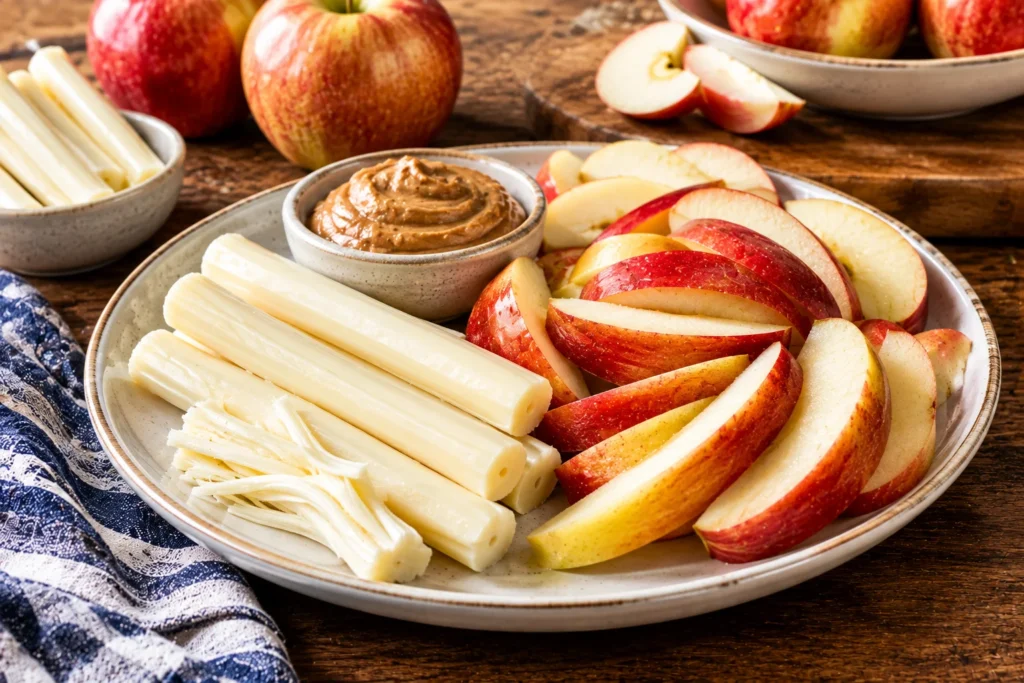
Two sticks of string cheese and a few thin apple slices make the simplest snack on the list. For children under 4, slice the cheese thinly instead of serving whole sticks, and cut the apples thin, since the CDC lists large chunks of cheese, especially string cheese, and hard pieces of raw fruit as choking hazards. Dip the apple slices in lemon water if they'll sit for a while, and pack them with a cold source so the cheese stays below 40°F.
Why this works: Cheese and fruit together give a snack both protein and something fresh, so it feels like more than one food.
The nutrition: About 12g of protein per serving of two sticks. That's about 63 percent of the RDA for ages 4 to 8 and 35 percent for ages 9 to 13.
Greek Yogurt Berry Cups
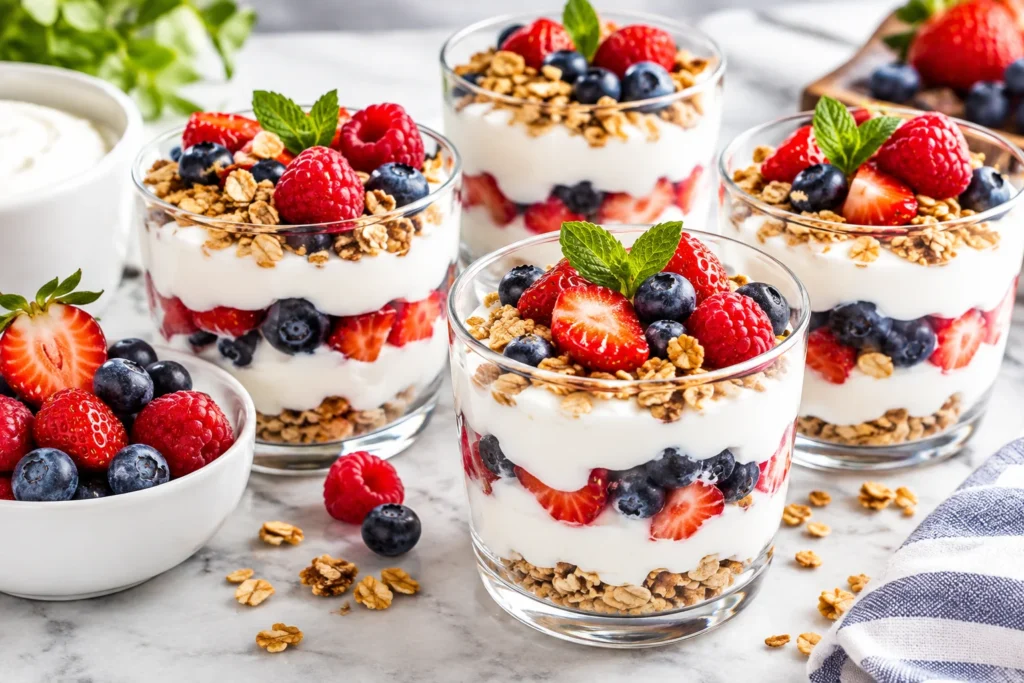
Spoon three-quarters of a cup of plain Greek yogurt into a cup and top with berries, cutting larger berries in half for younger kids. A few mashed berries stirred in works if plain is too tart. Buying a large tub and portioning it into cups is easy, and you control what goes on top.
Why this works: Greek yogurt is strained, which concentrates its protein compared with regular yogurt.
The nutrition: About 19g of protein per cup. That's about 100 percent of the RDA for ages 4 to 8 and 56 percent for ages 9 to 13.
Hard-Cooked Eggs With Cucumber
Boil a batch of eggs, cool them in cold water, and keep them peeled in a container with cucumber slices. The FDA says hard-cooked eggs should be used within a week, so a weekly batch is the limit. Cooling the eggs in cold water right after boiling makes them easier to peel, and a little salt or paprika keeps them interesting.
The nutrition: About 13g of protein per serving of two eggs. That's about 68 percent of the RDA for ages 4 to 8 and 38 percent for ages 9 to 13.
Cottage Cheese and Peach Cups
Half a cup of cottage cheese with soft diced peaches, packed in juice and drained, is a snack many kids like once they've tried it. Try pineapple instead of peaches for a different flavor. Cottage cheese texture is the sticking point for some kids, so blending it smooth with the fruit is an easy workaround.
The nutrition: About 12g of protein per cup. That's about 63 percent of the RDA for ages 4 to 8 and 35 percent for ages 9 to 13.
Shelled Edamame With Sea Salt
Microwave frozen shelled edamame per the package, let it cool, and sprinkle with a little salt. Edamame is a whole bean, though, and the CDC lists whole beans as a choking hazard for children under 4, so mash it for younger kids. A bag in the freezer is enough for several snacks, and it won't spoil before you get to it.
The nutrition: About 10g of protein per half cup. That's about 53 percent of the RDA for ages 4 to 8 and 29 percent for ages 9 to 13.
Turkey and Cheese Roll-Ups
Wrap a slice of cheddar around two ounces of sliced deli turkey and cut the roll into pinwheels. Luncheon meats keep 3 to 5 days once opened, per the USDA. Cut the pieces small for children under 4. They're easy to make in a batch of eight, and they hold well in a sealed container until the next day.
The nutrition: About 15g of protein per serving of two roll-ups. That's about 79 percent of the RDA for ages 4 to 8 and 44 percent for ages 9 to 13.
Hummus and Edamame Veggie Cups
Put a quarter cup of hummus and a few spoonfuls of cooked shelled edamame in the bottom of a cup and stand cucumber and bell pepper strips in it. For young children, skip raw hard vegetables like carrots, which the CDC lists as a hazard. Standing the vegetables upright in the cup keeps the hummus from getting on fingers and backpacks.
The nutrition: About 10g of protein per cup. That's about 53 percent of the RDA for ages 4 to 8 and 29 percent for ages 9 to 13.
Ham and Swiss Roll-Ups
Roll two ounces of sliced ham around an ounce of sliced Swiss and cut into pinwheels. Keep them cold, and cut the pieces small for children under 4. Pair them with fruit or cucumber slices so the plate has more than one color.
The nutrition: About 17g of protein per serving. That's about 89 percent of the RDA for ages 4 to 8 and 50 percent for ages 9 to 13.
Kids Can Make It: Nine Assemble-It-Yourself Snacks
Nine snacks that need only a plate, a spoon, and a clean pair of hands. They're good for kids who like to be in charge of their own snack.
Peanut Butter Banana Roll-Ups
Spread a tablespoon or two of peanut butter thinly over an 8-inch tortilla, set a small banana at the edge, and roll it up. The CDC and pediatric guidance both say to spread peanut butter thinly, never serve it in chunks or by the spoonful, and to be careful with children under 4. Check your child's allergy status and any group rules about peanuts. Slice the roll into rounds for easier handling, and keep the spread thin and even.
The nutrition: About 11g of protein per roll-up, using USDA data for smooth peanut butter. That's about 58 percent of the RDA for ages 4 to 8 and 32 percent for ages 9 to 13.
Turkey Hummus Pinwheels
Spread two tablespoons of hummus on a tortilla, cover with two ounces of sliced turkey, roll up, and cut into pinwheels. The hummus does the job of glue, so the pinwheels hold together without toothpicks.
Why this works: Hummus spreads like glue, so the roll stays together and the tortilla doesn't dry out.
The nutrition: About 15g of protein per tortilla. That's about 79 percent of the RDA for ages 4 to 8 and 44 percent for ages 9 to 13.
Yogurt Parfaits With Oats
Layer three-quarters of a cup of plain Greek yogurt with a quarter cup of rolled oats and fruit in a clear cup, and let the oats soften for a few minutes. Layers help kids who say they don't like one of the foods. The oats soften in the yogurt as they sit, so a parfait made in the morning is better by mid-afternoon.
The nutrition: About 22g of protein per parfait. That's about 116 percent of the RDA for ages 4 to 8 and 65 percent for ages 9 to 13.
Cottage Cheese Ranch Veggie Dip
Stir a packet of dry ranch seasoning or a teaspoon of dill, garlic powder, and lemon into half a cup of cottage cheese. Serve it with cucumber and bell pepper sticks, cut thin for younger children. Blend it for a few seconds if your child prefers a smooth dip.
The nutrition: About 12g of protein per half cup of dip. That's about 63 percent of the RDA for ages 4 to 8 and 35 percent for ages 9 to 13.
Chicken Salad Cucumber Boats
Halve a cucumber lengthwise, scoop out the seeds, and fill each half with two ounces of cooked chopped chicken mixed with two tablespoons of Greek yogurt and a squeeze of lemon. Cooked chicken keeps 3 to 4 days in the refrigerator. Scooping out the seeds takes a minute, and a spoon works better than a knife.
The nutrition: About 20g of protein per boat. That's about 105 percent of the RDA for ages 4 to 8 and 59 percent for ages 9 to 13.
Egg Salad Mini Sandwiches
Mash a hard-cooked egg with a spoonful of Greek yogurt and mustard, spread it on a slice of bread, top with a second slice, and cut into four small squares. Egg salad keeps 3 to 5 days in the refrigerator. Cutting each sandwich into four squares makes it feel like a snack, not a meal.
The nutrition: About 18g of protein per sandwich, from the egg, yogurt, and two slices of bread. That's about 95 percent of the RDA for ages 4 to 8 and 53 percent for ages 9 to 13.
Banana Yogurt Splits
Slice a small banana lengthwise, spoon half a cup of Greek yogurt down the center, and add a sprinkle of oats or crushed berries. Chilled yogurt over a room-temperature banana feels like a treat, and it takes about a minute.
The nutrition: About 13g of protein per split, from the yogurt. That's about 68 percent of the RDA for ages 4 to 8 and 38 percent for ages 9 to 13.
Berry Cottage Cheese Toast
Toast a slice of bread, spread it with a third of a cup of cottage cheese, and top with sliced strawberries or blueberries cut in half. Toast the bread well so it holds up to the cottage cheese without turning soggy.
The nutrition: About 13g of protein per toast. That's about 68 percent of the RDA for ages 4 to 8 and 38 percent for ages 9 to 13.
Chickpea Smash Toasts
Mash chickpeas thoroughly with a spoonful of Greek yogurt and lemon, which also solves the whole bean issue for younger children, and spread on toast. Mash until no whole chickpeas are left, and add a pinch of salt and cumin for flavor.
The nutrition: About 11g of protein per toast. That's about 58 percent of the RDA for ages 4 to 8 and 32 percent for ages 9 to 13.
Warm Snacks: Microwave and Stove
Seven snacks that need heat. A parent should supervise the stove and microwave, or decide what an older child can handle.
Never Miss a Recipe
Fresh high-protein recipes, meal prep ideas, and kitchen tips, straight to your inbox every week. No spam, just good food.
No spam. Unsubscribe anytime.
Microwave Scrambled Eggs
A Montana State University Extension method microwaves 2 eggs with 2 tablespoons of milk for 45 seconds, stirs, and cooks 30 to 45 seconds longer. Cover, stir, and rotate the dish for even cooking, and cook until the eggs are firm. The FDA says egg dishes should reach 160°F. Microwaves vary, so start with the shorter time and add a few seconds at a time instead of overcooking.
The nutrition: About 13g of protein per serving of two eggs. That's about 68 percent of the RDA for ages 4 to 8 and 38 percent for ages 9 to 13.
Cheesy Egg Mugs
Whisk 2 eggs with a tablespoon of milk in a microwave-safe mug, microwave, and stir in two tablespoons of cheddar. Check that the center is firm and let it stand a minute, since mugs heat unevenly. Use a large mug, since eggs puff up as they cook, and let the mug cool a minute before eating because the sides get hot.
Why this works: A mug keeps the eggs in a small, even layer, which is why they cook so fast in the microwave.
The nutrition: About 17g of protein per mug. That's about 89 percent of the RDA for ages 4 to 8 and 50 percent for ages 9 to 13.
Mini Quesadilla Wedges
Fold an 8-inch tortilla around a quarter cup of shredded cheddar and two tablespoons of mashed black beans, and brown it in a lightly oiled skillet 2 to 3 minutes per side. Cut into wedges. If you like skillet snacks, our high-protein skillet dinners have more. A lightly oiled pan is plenty, and a lid helps the cheese melt without burning the tortilla.
The nutrition: About 13g of protein per quesadilla. That's about 68 percent of the RDA for ages 4 to 8 and 38 percent for ages 9 to 13.
Warm Bean and Cheese Dip
Warm a third of a cup of black beans per child in the microwave, mash, and stir in two tablespoons of cheddar until melted. Serve with toast strips. Beans keep the cost down, as in our cheap high-protein dinners to feed six. Cover the bowl in the microwave and stir halfway through so the beans heat evenly.
The nutrition: About 13g of protein per serving, from the beans, cheddar, and toast. That's about 68 percent of the RDA for ages 4 to 8 and 38 percent for ages 9 to 13.
Tortilla Mini Pizzas
Spread a tablespoon of pizza sauce on an 8-inch tortilla, top with a quarter cup of mozzarella, and microwave or toast until the cheese melts. Add diced bell pepper if your child likes it. They're a good first thing for kids to cook, since the oven isn't involved, but an adult should handle anything hot.
The nutrition: About 10g of protein per pizza. That's about 53 percent of the RDA for ages 4 to 8 and 29 percent for ages 9 to 13.
Grilled Cheese Fingers
Build a sandwich with two slices of bread and an ounce and a half of cheddar, butter the outside, and cook in a skillet 3 to 4 minutes per side. Cut it into fingers. Cutting the sandwich into fingers makes dipping into tomato soup or marinara easier.
The nutrition: About 20g of protein per sandwich. That's about 105 percent of the RDA for ages 4 to 8 and 59 percent for ages 9 to 13.
Peanut Butter Oatmeal Cups
Microwave half a cup of rolled oats with three-quarters of a cup of milk per the package, then stir in a tablespoon of peanut butter, spread thin as the swirl melts. Let it cool before serving. Stir well so the peanut butter doesn't sit in a lump, and let the cup cool before it goes to a child.
The nutrition: About 16g of protein per cup, from the oats, milk, and peanut butter. That's about 84 percent of the RDA for ages 4 to 8 and 47 percent for ages 9 to 13.
Make Ahead: Eight Batch Snacks
Eight snacks you make on a weekend and pull out when the bus arrives. For more ideas that fit a weekly routine, see our healthy meal prep dinner ideas.
Egg Muffin Cups
Iowa State University Extension, the University of Washington, and other extension programs share the same method: preheat the oven to 350°F, put 2 cups of diced vegetables into a muffin tin, pour in 6 beaten eggs, and bake 20 to 25 minutes, adding cheese in the last 3 minutes, until the temperature reaches 160°F. That makes 6 muffins, and two make a snack. Keep them in the refrigerator and eat within 3 to 4 days. Chopping the vegetables small, a quarter inch or less per extension guidance, helps the muffins set evenly and keeps them tender.
Why this works: Baking the eggs in a muffin tin portions them in advance, so a snack is already measured out.
The nutrition: About 17g of protein per snack of two muffins, from the eggs and half a cup of cheddar. That's about 89 percent of the RDA for ages 4 to 8 and 50 percent for ages 9 to 13.
Turkey Meatballs With Marinara Dip
Mix a pound of ground turkey with an egg, breadcrumbs, and Parmesan, shape into about 20 small meatballs, and bake at 400°F for 18 to 22 minutes until they reach 165°F. Serve five per snack with warm marinara. For young children, cut the meatballs in small pieces. They keep 3 to 4 days. Don't overmix the meat, because that makes the meatballs tough, and use a thermometer on the largest one to check 165°F.
Why this works: Small meatballs cook through quickly and reheat evenly, which makes them a good make-ahead snack.
The nutrition: About 23g of protein per snack of five meatballs. That's about 121 percent of the RDA for ages 4 to 8 and 68 percent for ages 9 to 13.
Overnight Oats With Greek Yogurt
Stir a third of a cup of rolled oats with half a cup of Greek yogurt and a third of a cup of milk in a jar, and refrigerate overnight. Top with fruit. Stored in the refrigerator, it's ready the next day. Our high-protein meal prep ideas on a budget show how to scale this idea. Use a jar with a lid, because it travels, and add fruit in the morning so it doesn't get mushy.
Why this works: The oats soak up the yogurt and milk overnight and soften without any cooking.
The nutrition: About 20g of protein per jar. That's about 105 percent of the RDA for ages 4 to 8 and 59 percent for ages 9 to 13.
Frozen Yogurt Bites
Dollop two cups of Greek yogurt in small spoonfuls onto a lined tray, freeze until firm, and keep in a bag in the freezer. Serve a handful, about six. They're small and round, and the CDC lists small round foods as a choking risk for young children, so serve them to school-age kids who chew well. Let the bites sit for a minute before serving, since they're very cold.
The nutrition: About 13g of protein per snack of six bites, from the yogurt. That's about 68 percent of the RDA for ages 4 to 8 and 38 percent for ages 9 to 13.
Chicken Quesadilla Triangles
Fill a tortilla with a quarter cup of cheddar and two ounces of chopped cooked chicken, brown in a skillet, and cut into triangles. Reheat leftovers to 165°F. They're the most filling snack here, so cut them in half for younger kids.
The nutrition: About 27g of protein per quesadilla. That's about 142 percent of the RDA for ages 4 to 8 and 79 percent for ages 9 to 13.
Chicken Pasta Salad Cups
Toss an ounce of cooked small pasta per snack with two ounces of chopped chicken, two tablespoons of Greek yogurt, and diced cucumber, and keep cold in a cup. Pasta salads with chicken keep 3 to 5 days. Rinse the pasta under cold water so it doesn't clump, and keep the cups cold until they're eaten.
The nutrition: About 23g of protein per cup. That's about 121 percent of the RDA for ages 4 to 8 and 68 percent for ages 9 to 13.
Bean and Cheese Burrito Bites
Roll a quarter cup of black beans and a quarter cup of cheddar in an 8-inch tortilla, slice into rounds, and refrigerate. They're good cold or warmed. Roll them tightly and slice with a serrated knife so the filling stays in.
The nutrition: About 15g of protein per burrito. That's about 79 percent of the RDA for ages 4 to 8 and 44 percent for ages 9 to 13.
Banana Oat Pancakes
Blend 4 eggs, a cup of rolled oats, half a cup of cottage cheese, and 2 bananas, and cook small pancakes on a lightly oiled griddle until set and golden, about 2 to 3 minutes per side. Because they contain eggs, cook them until firm. Freeze extras and warm in a toaster. The batter is thin, so use a small scoop and flip only when the edges look set.
Why this works: Cottage cheese and oats add protein and body, so the pancakes hold together without flour.
The nutrition: About 13g of protein per snack of two pancakes. That's about 68 percent of the RDA for ages 4 to 8 and 38 percent for ages 9 to 13.
Stocking the After-School Shelf
A short list covers nearly every snack in this article:
- Refrigerator: plain Greek yogurt, cottage cheese, eggs, cheese slices, string cheese, hummus, deli turkey and ham, and cooked chicken.
- Pantry: rolled oats, tortillas, bread, canned black beans and chickpeas, and peanut butter (if your family uses it).
- Freezer: shelled edamame, berries, and any extra egg muffins or pancakes.
Rotating three or four of these each week is easier than planning 32 different snacks. If the same snack comes up every day, that's fine too.
Packing and Carrying Snacks
Snacks that travel need a plan. The USDA advises packing perishable food in an insulated bag with at least two cold sources, and not letting it sit out for more than 2 hours. Yogurt cups, cottage cheese, hard-cooked eggs, roll-ups, and anything with chicken all count as perishable. For crunchy or room-temperature options, the egg muffins and the pancakes both hold up well, but keep them cold if they'll be out for a while.
Planning the After-School Week
A little structure turns this list into a routine. Pick one batch snack on the weekend, such as the egg muffin cups or the overnight oats, and keep two or three open-the-fridge options on hand for the days nobody has time. Let older kids pick one assemble-it-yourself snack each week. If dinner follows, our high-protein dinners with 30g of protein offer a bigger step up.
Questions About High-Protein After-School Snacks
How much protein does my child need?
The RDA is 19 grams a day for ages 4 to 8 and 34 grams a day for ages 9 to 13, per the Food and Nutrition Board. Most children get more than that over a whole day.
Is a high-protein snack necessary?
Not for most children. It's one way to make a snack more filling, and the recipes here show the share of the RDA each one provides so you can adjust portions.
What foods are choking hazards for kids under 4?
The CDC and AAP guidance lists whole grapes and berries, cheese sticks, hot dog-shaped foods, nuts and seeds, popcorn, chunks of peanut butter, and raw hard vegetables like carrots, among others. Cut or change these foods for young children.
How should I serve peanut butter to kids?
Spread it thinly on bread or a tortilla, never in chunks or by the spoonful. Check for allergies first.
How long do cooked eggs keep?
Hard-cooked eggs keep up to a week, and cooked egg dishes keep 3 to 4 days, according to the FDA.
Can I pack these for school?
Yes, with care. Use an insulated bag with at least two cold sources for perishable snacks, as the USDA advises, and don't let them sit out more than 2 hours.
Which snacks have the most protein?
The chicken quesadilla triangles lead at about 27g, followed by the turkey meatballs and chicken pasta salad cups at about 23g each.
Which snacks work for kids with a nut allergy?
Most of the list is nut-free. Only the peanut butter banana roll-ups and the peanut butter oatmeal cups use peanut butter, so skip those or choose another spread your family has cleared.
1. String Cheese With Apple Slices
Approx. 12g ProteinIngredients: 8 string cheese sticks (about 1 oz each), 2 apples (thinly sliced), a little lemon water. Serve 2 sticks per snack; slice cheese thinly for children under 4.
Step 1: Slice the apples thinly and dip briefly in lemon water.
Step 2: Serve with the cheese, keeping cold until eaten.
2. Greek Yogurt Berry Cups
Approx. 19g ProteinIngredients: 3 cups plain Greek yogurt, 2 cups berries (halve large ones for young children).
Step 1: Spoon 3/4 cup yogurt into each of four cups.
Step 2: Top with the berries.
3. Hard-Cooked Eggs With Cucumber
Approx. 13g ProteinIngredients: 8 large eggs, 1 cucumber (sliced), salt.
Step 1: Boil the eggs 10 to 12 minutes, cool in cold water, and peel.
Step 2: Serve 2 eggs per snack with the cucumber. Use within 1 week.
4. Cottage Cheese and Peach Cups
Approx. 12g ProteinIngredients: 2 cups cottage cheese, 2 soft peaches or canned peaches in juice (drained and diced).
Step 1: Spoon 1/2 cup cottage cheese into each cup.
Step 2: Top with the peaches.
5. Shelled Edamame With Sea Salt
Approx. 10g ProteinIngredients: 2 cups frozen shelled edamame, pinch of sea salt.
Step 1: Microwave the edamame per the package and let cool.
Step 2: Serve 1/2 cup per snack with a little salt (mash for children under 4).
6. Turkey and Cheese Roll-Ups
Approx. 15g ProteinIngredients: 8 oz sliced deli turkey, 4 oz cheddar slices.
Step 1: Place a cheddar slice on each turkey slice and roll up.
Step 2: Cut into pinwheels and serve cold.
7. Hummus and Edamame Veggie Cups
Approx. 10g ProteinIngredients: 1 cup hummus, 1 cup cooked shelled edamame, cucumber and bell pepper strips.
Step 1: Put 1/4 cup hummus and a few spoonfuls of edamame in each cup.
Step 2: Stand the vegetable strips in the cups.
8. Ham and Swiss Roll-Ups
Approx. 17g ProteinIngredients: 8 oz sliced deli ham, 4 oz Swiss slices.
Step 1: Place a Swiss slice on each ham slice and roll up.
Step 2: Cut into pinwheels and serve cold.
9. Peanut Butter Banana Roll-Ups
Approx. 11g ProteinIngredients: Four 8-inch flour tortillas, 1/2 cup peanut butter (spread thin), 2 small bananas.
Step 1: Spread 2 tbsp peanut butter thinly over each tortilla.
Step 2: Set 1/2 banana on the edge, roll up, and slice into rounds.
10. Turkey Hummus Pinwheels
Approx. 15g ProteinIngredients: Four 8-inch flour tortillas, 1/2 cup hummus, 8 oz sliced deli turkey.
Step 1: Spread 2 tbsp hummus on each tortilla and cover with the turkey.
Step 2: Roll up and cut into pinwheels.
11. Yogurt Parfaits With Oats
Approx. 22g ProteinIngredients: 3 cups plain Greek yogurt, 1 cup rolled oats, 2 cups fruit.
Step 1: Layer 3/4 cup yogurt, 1/4 cup oats, and fruit in each cup.
Step 2: Let sit a few minutes so the oats soften.
12. Cottage Cheese Ranch Veggie Dip
Approx. 12g ProteinIngredients: 2 cups cottage cheese, 1 tsp dried dill, 1/2 tsp garlic powder, 1 tsp lemon juice, cucumber and bell pepper strips.
Step 1: Stir the seasonings into the cottage cheese.
Step 2: Serve 1/2 cup per snack with the vegetables.
13. Chicken Salad Cucumber Boats
Approx. 20g ProteinIngredients: 8 oz cooked chopped chicken, 1/2 cup plain Greek yogurt, 2 cucumbers, juice of 1/2 lemon.
Step 1: Halve the cucumbers lengthwise and scoop out the seeds.
Step 2: Mix the chicken with the yogurt and lemon and fill the boats.
14. Egg Salad Mini Sandwiches
Approx. 18g ProteinIngredients: 4 hard-cooked eggs, 4 tbsp plain Greek yogurt, 1 tsp mustard, 8 slices bread.
Step 1: Mash the eggs with the yogurt and mustard.
Step 2: Spread on 4 slices of bread, top with the other 4 slices, and cut each sandwich into four small squares.
15. Banana Yogurt Splits
Approx. 13g ProteinIngredients: 4 small bananas, 2 cups plain Greek yogurt, oats or crushed berries.
Step 1: Slice each banana lengthwise.
Step 2: Spoon 1/2 cup yogurt down the center and top with oats or berries.
16. Berry Cottage Cheese Toast
Approx. 13g ProteinIngredients: 4 slices bread, 1 1/3 cups cottage cheese, 1 cup berries (halved).
Step 1: Toast the bread.
Step 2: Spread 1/3 cup cottage cheese on each slice and top with the berries.
17. Chickpea Smash Toasts
Approx. 11g ProteinIngredients: 1 cup canned chickpeas (drained), 4 tbsp plain Greek yogurt, juice of 1/2 lemon, pinch of salt and cumin, 4 slices bread.
Step 1: Mash the chickpeas thoroughly with the yogurt, lemon, salt, and cumin.
Step 2: Toast the bread and spread on the mixture.
18. Microwave Scrambled Eggs
Approx. 13g ProteinIngredients: 8 large eggs, 4 tbsp milk, pinch of salt.
Step 1: For each snack, whisk 2 eggs with 1 tbsp milk in a microwave-safe bowl. Microwave on high 45 seconds, stir, and cook 30 to 45 seconds more until firm (160°F).
19. Cheesy Egg Mugs
Approx. 17g ProteinIngredients: 8 large eggs, 4 tbsp milk, 1/2 cup shredded cheddar.
Step 1: Whisk 2 eggs with 1 tbsp milk in each mug.
Step 2: Microwave until firm, stirring once, and stir in 2 tbsp cheddar. Let stand 1 minute and check for 160°F.
20. Mini Quesadilla Wedges
Approx. 13g ProteinIngredients: Four 8-inch flour tortillas, 1 cup shredded cheddar, 1/2 cup mashed black beans, 1 tbsp oil.
Step 1: Spread 2 tbsp beans and 1/4 cup cheddar on half of each tortilla and fold over.
Step 2: Brown in a lightly oiled skillet 2 to 3 minutes per side and cut into wedges.
21. Warm Bean and Cheese Dip
Approx. 13g ProteinIngredients: 1 1/3 cups canned black beans (drained), 1/2 cup shredded cheddar, 4 slices bread (toasted and cut into strips).
Step 1: Warm the beans in a covered bowl in the microwave, stirring halfway, and mash.
Step 2: Stir in the cheddar until melted and serve with toast strips.
22. Tortilla Mini Pizzas
Approx. 10g ProteinIngredients: Four 8-inch flour tortillas, 1/4 cup pizza sauce, 1 cup shredded mozzarella.
Step 1: Spread 1 tbsp sauce on each tortilla and top with 1/4 cup mozzarella.
Step 2: Microwave or toast until the cheese melts.
23. Grilled Cheese Fingers
Approx. 20g ProteinIngredients: 8 slices bread, 6 oz cheddar slices (1 1/2 oz per sandwich), 2 tbsp butter.
Step 1: Build four sandwiches and butter the outsides.
Step 2: Cook in a skillet 3 to 4 minutes per side until golden and the cheese melts, then cut into fingers.
24. Peanut Butter Oatmeal Cups
Approx. 16g ProteinIngredients: 2 cups rolled oats, 3 cups milk, 4 tbsp peanut butter.
Step 1: Microwave 1/2 cup oats with 3/4 cup milk per the package.
Step 2: Stir in 1 tbsp peanut butter and let cool before serving.
25. Egg Muffin Cups
Approx. 17g ProteinIngredients: 6 large eggs, 2 cups diced vegetables (1/4 inch or smaller), 1/2 cup shredded cheddar, 1/4 tsp salt, 1/4 tsp pepper, 1/4 tsp garlic powder, cooking spray.
Step 1: Preheat the oven to 350°F and spray a muffin tin.
Step 2: Add the vegetables to 6 cups, pour in the beaten eggs, and bake 20 to 25 minutes, adding the cheese for the last 3 minutes.
Step 3: Bake until the center reaches 160°F. Two muffins make a snack.
26. Turkey Meatballs With Marinara Dip
Approx. 23g ProteinIngredients: 1 lb ground turkey, 1 large egg, 1/4 cup breadcrumbs, 2 tbsp grated Parmesan, 1/2 tsp garlic powder, marinara for dipping.
Step 1: Preheat the oven to 400°F. Mix the turkey, egg, breadcrumbs, Parmesan, and garlic powder and shape into about 20 small meatballs.
Step 2: Bake 18 to 22 minutes until they reach 165°F.
Step 3: Serve 5 per snack with warm marinara.
27. Overnight Oats With Greek Yogurt
Approx. 20g ProteinIngredients: 1 1/3 cups rolled oats, 2 cups plain Greek yogurt, 1 1/3 cups milk, fruit for topping.
Step 1: Divide the oats, yogurt, and milk among four jars and stir.
Step 2: Refrigerate overnight and top with fruit.
28. Frozen Yogurt Bites
Approx. 13g ProteinIngredients: 2 cups plain Greek yogurt, 1 cup berries (mashed, optional).
Step 1: Drop the yogurt in small spoonfuls onto a lined tray (about 24).
Step 2: Freeze until firm, then store in a bag. Serve 6 per snack.
29. Chicken Quesadilla Triangles
Approx. 27g ProteinIngredients: Four 8-inch flour tortillas, 1 cup shredded cheddar, 8 oz cooked chopped chicken.
Step 1: Fill half of each tortilla with 1/4 cup cheddar and 2 oz chicken and fold over.
Step 2: Brown in a skillet 2 to 3 minutes per side, cut into triangles, and reheat leftovers to 165°F.
30. Chicken Pasta Salad Cups
Approx. 23g ProteinIngredients: 4 oz small pasta (dry), 8 oz cooked chopped chicken, 1/2 cup plain Greek yogurt, 1 cucumber (diced).
Step 1: Cook the pasta per the package, rinse in cold water, and drain.
Step 2: Toss with the chicken, yogurt, and cucumber and divide among four cups. Keep cold.
31. Bean and Cheese Burrito Bites
Approx. 15g ProteinIngredients: Four 8-inch flour tortillas, 1 cup canned black beans (drained and mashed), 1 cup shredded cheddar.
Step 1: Spread 1/4 cup beans and 1/4 cup cheddar over each tortilla and roll tightly.
Step 2: Slice into rounds with a serrated knife.
32. Banana Oat Pancakes
Approx. 13g ProteinIngredients: 4 large eggs, 1 cup rolled oats, 1/2 cup cottage cheese, 2 bananas, oil for the griddle.
Step 1: Blend the eggs, oats, cottage cheese, and bananas.
Step 2: Cook small pancakes on a lightly oiled griddle 2 to 3 minutes per side until set and golden (eggs firm). Two pancakes make a snack.
Get Fresh Recipes Every Week
Join readers getting fresh recipes, meal prep systems, and high-protein meal ideas delivered to your inbox every week.
No spam. Unsubscribe anytime.