
See all 19 recipes
Table of Contents
I wanted braised beef recipes with checkable numbers, so every one of these 19 dinners lists exact weights and counts protein per serving, from 29 to 56 grams.
They're sorted by cut, because the cut decides the timing: short ribs, chuck, other cuts, and two leftover dinners.
Each recipe follows a named, published source, adapted where noted. Most are hands-off, so you'll mostly wait. For shorter cooks, see our one-pot dinners with real protein.
Our Take
Judge a braise by fork tenderness, and reheat leftovers to 165°F.
Myth: Short Ribs Have to Be Bone-In
Bone-in short ribs are the classic, but nothing says you need them. All four short rib recipes here use boneless ribs, so the weight listed is meat, and the protein number doesn't depend on guessing how much of a rib is bone.
The four recipes taste very different: a red wine braise over potatoes, a lighter plate with Brussels sprouts, a ramen bowl, and Korean galbi jjim. Pick by how much hands-off time you have.
Braised Short Ribs over Mashed Potatoes
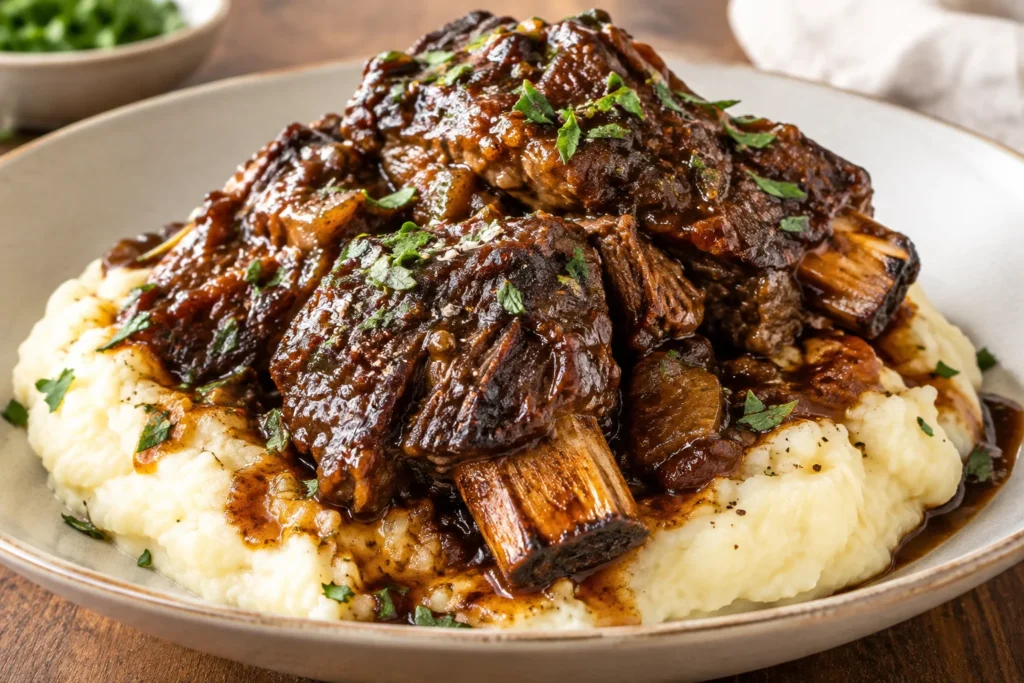
Short ribs forgive a lot, but they won't be rushed. This card follows the Well Plated method: sear the ribs in a dry pot, soften the vegetables, then boil the red wine down by half before the stock goes in. I adapted it to boneless ribs.
Buy boneless ribs and cut them into 3 inch pieces. The weight on the card is then the weight of meat, which keeps the protein count honest. Bone-in ribs work too, but you'd need to buy more and expect less protein per serving.
Sear in two batches. Don't crowd the pot. Crowded ribs steam and turn gray instead of brown, and each batch needs 6 to 8 minutes. No oil is needed, because the ribs render their own fat.
Don't Miss the Next Recipe
Get fresh recipes, meal prep systems, and high-protein meal ideas delivered to your inbox every week.
No spam. Unsubscribe anytime.
The nutrition: About 39 g protein per serving (1 of 6).
The braise runs 1 hour covered and 1 hour uncovered. The open hour lets the tops brown and the sauce thicken. If a fork still meets resistance, I'd give it 30 more minutes before calling it done.
Why this works: Cutting the ribs boneless means the number reflects meat only, with no bone weight to guess at.
Start the potatoes in cold water so they cook evenly, then mash them with warm milk and butter. Skim the fat off the sauce before you spoon it over, because short ribs release a lot of it. I'd make the pot a day ahead, and our one-pot dinners with real protein have more dishes like it.
Red Wine Short Ribs with Brussels Sprouts
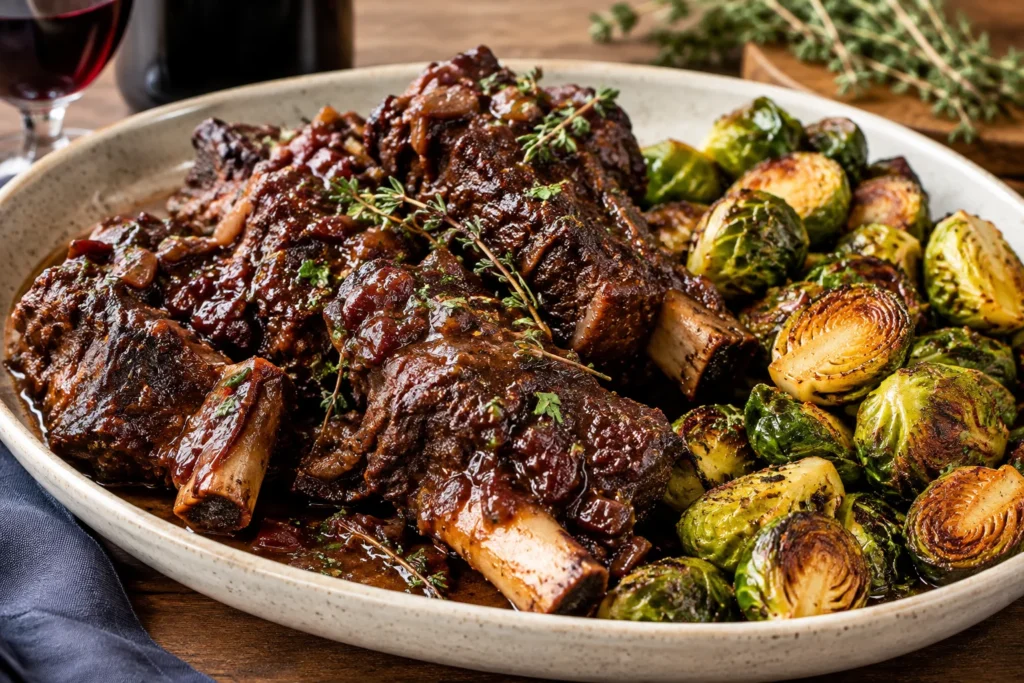
This is the lighter plate, with no potatoes. The ribs braise in red wine and stock while the sprouts roast on the side, and the sauce reduces on the stove at the same time.
The nutrition: Each serving has about 42 g protein, and the batch makes 4.
Sear the ribs 3 to 4 minutes per side, then cook the onion in the same pot. Add the garlic and tomato paste for a minute. Pour in the wine and let it cook down by half, which takes about 8 minutes.
Braise covered for 2 to 2.5 hours. Be patient. The ribs are ready when a fork slides in with no resistance, not when the timer rings.
Pull the ribs out and turn the oven up to 425°F for the sprouts. Halve them, toss them with oil and salt, and lay them cut side down on a rimmed baking sheet. That flat side is the part that browns.
Roast 20 to 25 minutes, until the edges are deep brown and a few outer leaves have turned crisp, and while they roast, simmer the sauce about 15 minutes until it coats a spoon. I'd pile the sprouts under the ribs so the sauce soaks in.
The sprouts bring most of the plate's fiber and some protein of their own. Brussels sprouts are counted at 680 grams for the four servings.
Short Rib Ramen
The nutrition: Count on roughly 49 g protein per bowl, from 4 equal servings.
This bowl skips the leftovers. You simmer the ribs right in the broth with onion, ginger, chicken broth, and soy sauce, and one pot gives you both the soup and the meat.
Cover and simmer 2 to 2.5 hours, until a fork slides in. The source recipe allows 1 to 3 hours, so judge by tenderness, not the clock. Chilled broth is easier to skim, which is worth knowing if you cook ahead.
Time the eggs near the end. Seven minutes in boiling water gives a jammy yolk, and 10 minutes gives a firm one. The USDA advises cooking eggs until the yolks are firm, so go with 10 if anyone at the table is pregnant, elderly, very young, or has a weakened immune system.
Why this works: The noodles, eggs, and mushrooms add protein on top of the beef, which is why this bowl lands near the top of the list.
Cook the noodles in their own pot. Add the bok choy to the broth for about 4 minutes instead. I'd keep the broth, noodles, and toppings in separate containers, since noodles left in broth go soft.
Korean Braised Short Ribs
Galbi jjim is a Korean braise built on a grated pear and soy sauce base. The pear sweetens the sauce and helps soften the beef. This card follows a recipe from The Delicious Life, scaled down for 2 pounds of boneless ribs, so the sauce quantities are about two thirds of the original.
Start by boiling the ribs for 5 minutes in cold water, then rinse each piece. Keep a few cups of that water as flash broth. The step clears the scum that would otherwise cloud the sauce.
The nutrition: One serving comes to about 38 g protein, with 4 in all.
Simmer the ribs in the sauce for 1 hour. Then add carrots, daikon, onion, and shiitake and cook about 30 minutes more, until a chopstick slides in. Boneless pieces may need 15 more minutes.
Skim the fat. Stir in the sesame oil just before serving. The source says you can make it a day ahead. Chilling it overnight also makes the fat easy to lift off.
Serve it with steamed rice and kimchi, which aren't counted here. I'd cut the daikon thick so it stays whole after 30 minutes.
Myth: Chuck Roast Only Belongs in Pot Roast
Chuck is the workhorse of this article. It anchors 9 recipes, from pot roast and bourguignon to rendang, barbacoa, and birria.
What they share is time. Two and a half to five hours of low heat turns tough, collagen-rich meat into something that shreds with a fork. Our high-protein dinners with 30 grams of protein cover quicker ways to hit a similar number.
Pappardelle with Braised Beef Ragu
Braised ragu shreds back into its own sauce, so nothing is wasted. I'd pick it over a quick meat sauce on any cold evening. It's worth the wait.
Why this works: Chuck has the fat and collagen to stay moist through 4 hours, which helps one serving reach about 50 g protein once the pasta and Parmesan are counted.
The method is the oven version from The Real Food Dietitians. Sear the chuck 7 minutes on one side and 8 on the other, then build the sauce with onion, carrot, celery, garlic, tomato paste, and crushed tomatoes.
The nutrition: Per serving, it's about 50 g protein (6 servings).
The pot goes into a 300°F oven for about 4 hours, until the beef is very tender. If the sauce reduces too much, add a quarter cup of broth. Stir in the red wine vinegar at the end to brighten it.
Pappardelle catches the shreds in its wide ribbons. Boil it in salted water, toss it with the ragu, and finish with Parmesan and parsley. The same source lists 7 to 8 hours on low in a slow cooker if you'd rather use one.
Classic Pot Roast
America's Test Kitchen salts the beef an hour ahead, ties it into a loaf, and braises it at 300°F, and that method is what this card follows closely. The extra steps are small, and they matter.
The pot gets covered with foil first and then the lid, which holds in steam. After 2 hours I'd open it and add the potatoes and carrots. That timing is my adaptation, borrowed from other oven pot roasts, so test it once.
Total braise time is 3.5 to 4 hours. The roast is done when a sharp knife slides in and out with no effort. Don't rely on the clock alone.
Blend the soft onions, carrot, and celery with the strained liquid for the sauce. It thickens without flour. Stir in the chopped thyme, the last of the wine, and the balsamic vinegar at the end.
The nutrition: About 53 g protein per serving (1 of 6).
Slice against the grain. Leftovers make good sandwiches, and our healthy meal prep dinner ideas cover how to portion them.
Balsamic Braised Beef
Balsamic vinegar goes in early, simmered with the onions until it turns syrupy. Dijon mustard follows, and together they make a tangy base for the beef.
The nutrition: Each serving has about 44 g protein, and the batch makes 6.
The recipe is adapted from a chuck roast with balsamic and Dijon. It warns that the broth should reach only about halfway up the roast, because more liquid boils the meat instead of braising it.
Never Miss a Recipe
Fresh high-protein recipes, meal prep ideas, and kitchen tips, straight to your inbox every week. No spam, just good food.
No spam. Unsubscribe anytime.
The roast braises at 300°F. The original uses 4 pounds and runs about 4 hours, so I'd start checking this 3 pound roast at 3.5 hours. It's done when a fork slides in easily.
Whisk the flour into cold stock before it goes into the pot juices, so there are no lumps. Pull out the thyme and rosemary stems before serving.
Why this works: The flour in the gravy adds a little protein, but the chuck does nearly all of the work.
I'd spoon it over polenta or mashed potatoes. Neither is counted on the card, so add them to your own tally.
Beef Bourguignon
Beef bourguignon rewards a patient cook. This card follows Julia Child's method as published by WGBH, with the pearl onion and mushroom steps from The Christian Science Monitor.
The beef is tossed with flour and baked at 450°F for 8 minutes before the oven drops to 325°F. That brief blast browns the flour and builds a base for the sauce.
Why this works: Chuck has the connective tissue to turn silky after nearly 3 hours, which is why bourguignon calls for stewing beef.
Wine and stock go in until they just cover the meat. Don't rush it. Braise 2.5 to 3 hours, until a fork pierces a chunk with no effort.
The nutrition: Count on roughly 50 g protein per serving, from 6 equal servings.
Cook the pearl onions and mushrooms separately in butter, then add them at the end so they don't turn to mush. Simmer the strained sauce until it coats a spoon. I'd serve it over egg noodles or with crusty bread.
Belgian Beef Carbonnade
Carbonnade is a Belgian beef and onion braise made with beer. This card is adapted from a Williams Sonoma recipe, which calls for a light Pilsner style beer. I'd follow it as written the first time.
Cut the beef into thin slices, about 2 by 4 inches and half an inch thick. Brown them quickly in batches in a heavy skillet, because crowding the pan lets the beef steam and keeps it from picking up the deep color that flavors the whole pot.
Cook the onions in the same pan for about 10 minutes, stirring often, until lightly browned. Then layer the beef and onions in a casserole. Pour over the stock and beer, and stir in the brown sugar.
The nutrition: One serving comes to about 44 g protein, with 6 in all.
The sugar balances the beer. I wouldn't skip it, and I wouldn't add more.
Cover and bake at 325°F for about 2.5 hours, at a very slow simmer. The beef is ready when a fork slides in with no resistance. If the liquid bubbles hard, lower the oven slightly.
Thicken the cooking liquid with cornstarch stirred into red wine vinegar, return it to the beef, and warm it through for 4 to 5 minutes. Serve with potatoes, noodles, or crusty bread, which aren't counted here.
Beef Rendang
Rendang takes patience, and the reward is a dark, thick sauce that clings to every piece of beef. This card follows Hot Thai Kitchen and serves four. The source allows chuck or boneless short ribs, and the card uses chuck because it costs less.
You make a spice paste first, then a kerisik: shredded coconut toasted until dark brown and ground to an oily paste. The kerisik goes in near the end. Don't rush the toasting, because pale coconut tastes flat.
The nutrition: Per serving, it's about 37 g protein (4 servings).
The beef simmers loosely covered for 2.5 to 3 hours. Stir about every 20 minutes at first, then about every 5 minutes as the sauce thickens, or it'll scorch on the bottom of the pot. Stir often.
Why this works: Coconut milk cooks down into the sauce instead of draining away, so its small share of protein stays in the pot.
Add water if the sauce gets too dry. The finished sauce should be very thick, not runny. If the beef is tender but the sauce is still wet, uncover the pot and stir for a few more minutes.
Galangal, candlenuts, and kaffir lime leaves may need a trip to an Asian grocery, so plan that errand early. The source says the kerisik can be made ahead, and I'd do that to spread out the work. Serve with rice, which isn't counted here.
Barbacoa Tostadas
Barbacoa is chuck braised in a blended chile sauce until it shreds. This card is adapted from a published chuck barbacoa recipe that uses guajillo and chipotle chiles.
Toast the dried chiles, simmer them in stock until soft, and blend them with the sautéed onion, garlic, spices, and vinegar. The roast then goes back into the pot with the sauce and two bay leaves.
It braises at 275°F for about 5 hours with the lid slightly ajar. Turn the beef now and then. Afterward, boil the liquid down on the stove to about 1.5 cups, which concentrates the flavor before the meat goes back in.
The nutrition: About 47 g protein per serving (2 tostadas) (1 of 8).
Shred the beef into the reduced sauce. Pile it on crisp tostadas, then add guacamole and cotija. Cilantro finishes the plate.
The recipe makes a lot, so freeze what you won't eat that week. I'd freeze the beef in single serving portions, which is also what the enchiladas below call for. Our high-protein meal prep ideas on a budget show how to plan it.
Birria Bowls
Birria is a Mexican chile braise, and the broth is half the point. This card follows Laura in the Kitchen, simmered on the stove for about 3 hours. Skim the foam.
Guajillo and ancho chiles simmer with tomatoes, garlic, and onion, then get blended and strained into the pot. Cumin, oregano, and vinegar finish the broth.
I swapped the chicken bouillon in the source for plain salt, and I left out the beef bones. Taste the broth before serving and adjust, because salt levels vary a lot from pot to pot.
The nutrition: Each bowl has about 38 g protein, and the batch makes 8.
Shred the beef, skim the fat, and ladle the hot consomé into each bowl. Add rice, avocado, and quick pickled onions.
Why this works: The rice and avocado round out the bowl, and the beef still supplies most of the protein.
Pickled red onions need only about 30 minutes. They cut through the rich broth. Start them while the beef rests, and the rice cooks in the meantime.
French Dip Sandwiches
The braised version of a French dip skips the roast beef slicer. A chuck roast simmers in beef broth with onions, then gets shredded back into the jus.
The nutrition: Count on roughly 56 g protein per sandwich, from 8 equal servings.
The method is from Powell Family Cooking. It uses a Dutch oven at 300°F for 2.5 to 3 hours, and the beef is done when it's fork-tender and falls apart. The onions soften into the jus as it cooks.
Pile the beef on a hoagie roll, add provolone, and broil briefly until the cheese melts. Serve the hot jus on the side for dipping. The source also suggests spooning some softened onions onto each sandwich.
Why this works: A single roast feeds eight sandwiches, and the beef does most of the protein work.
The source lists 6 servings. I count 8 here, with a smaller portion of beef on each roll. Keep the rolls apart from the beef if you plan on leftovers, so they don't go soggy.
Myth: Only Big Roasts Braise Well
Flank, top round, shank, and oxtail all braise, and each one has quirks. These 4 recipes run from about 90 minutes in the oven to about 4 hours on the stove.
Lean cuts such as flank need liquid to stay moist. Oxtail is mostly bone and collagen, so it needs the longest cook and gives the richest sauce.
Italian Beef Braciole
Braciole is beef pounded thin and rolled around a filling, then simmered in tomato sauce. This card follows the Sip and Feast recipe, and it makes a lot of sauce.
The nutrition: One serving comes to about 42 g protein, with 6 in all.
The filling is garlic, parsley, breadcrumbs, raisins, pine nuts, and Pecorino Romano. Spread it on pounded top round, leaving a border, and roll the pieces up. Roll them tight.
Secure each roll with toothpicks or twine. Sear on all sides in batches so the pan stays hot, then move the rolls to the sauce. Deglaze the pan with wine and add that liquid too.
The source simmers them on very low heat for 2 to 3 hours, with the lid partly open. The oven alternative is 300°F for the same time, and that's what the card uses.
Pull the toothpicks before you serve. The sauce doubles as a pasta sauce, so I'd cook a pound of pasta while the rolls rest, and the extra tomatoes are why this recipe feeds a crowd.
Ropa Vieja
Ropa vieja means old clothes in Spanish, and the name fits the shredded beef. This card is adapted from a Food Network recipe that uses flank steak.
The nutrition: Per serving, it's about 37 g protein (4 servings).
Flank is lean. It needs the braise to stay tender. Sear it in halves or thirds, then cook the onion and peppers in the same pot with garlic, cumin, and oregano.
Nestle the steak into the tomato sauce and stock. Cover and bake at 350°F for about 90 minutes, until the meat shreds easily with two forks.
Shred it into long thin strands. Simmer the sauce for about 3 minutes, then return the beef and stir in the lime juice and olives. I'd serve it with rice and black beans, which aren't counted here.
Red-Braised Beef Noodle Soup
Taiwanese beef noodle soup starts with beef shank. This card follows a Saveur recipe, which parboils the beef for 10 minutes before browning it. Let it cool first. Hot meat falls apart under the knife.
The broth gets ginger, garlic, chiles, rice wine, soy sauce, tomatoes, star anise, and peppercorns. Cover and simmer for 1 hour, then let the pot stand off the heat for another hour.
The nutrition: About 46 g protein per bowl (1 of 8).
Strain the broth, return the beef, and reheat. Cook the bok choy for about 2 minutes and the noodles for about 4, each in salted water.
Why this works: Shank is lean and full of collagen, so the long rest in hot broth leaves it tender.
Top each bowl with pickled mustard greens. I'd keep the broth and noodles in separate containers for leftovers.
Jamaican Braised Oxtail
Oxtail is mostly bone and collagen, and that collagen makes the sauce rich. This card is the Cook's Country Jamaican oxtail, and it takes planning, since the marinade alone needs at least 4 hours before the cooking even begins.
Marinate the oxtails 4 to 24 hours with thyme, allspice, and soy sauce. Then brown them in dark caramelized sugar, which gives the dish its color. The sugar smokes. Turn on the vent.
The nutrition: Each serving has about 33 g protein, and the batch makes 6. The oxtail is counted at 8 g protein per 100 g of bone-in weight, which is an estimate.
Simmer covered for 2.5 hours, then add the marinade and a whole Scotch bonnet and cook 1 hour more. Stir in the butter beans for the last 30 minutes.
Finish with ketchup and simmer uncovered until the sauce thickens. The meat should fall easily off the bone. I'd leave the chile whole so the heat stays manageable.
Myth: Leftover Braise Is Just Reheated Dinner
A braise often tastes better as a second meal. These 2 recipes turn leftover beef into a fast rice bowl and a pan of enchiladas.
Both count the beef by cooked weight, so use cooked beef, not raw. Leftover rules matter here, and the safety section below covers them.
Braised Beef Rice Bowls
This is the recipe for leftover braised beef. Any shredded or sliced beef from this article works, and it's the easiest dinner here.
Reheat the beef in its sauce in a covered pan, stirring now and then, until the center reaches 165°F, which is the temperature the USDA recommends for reheated leftovers.
The nutrition: Count on roughly 40 g protein per bowl, from 4 equal servings. The beef is counted by cooked weight, at 28 g protein per 100 g, which is an estimate.
Why this works: Cooked beef has more protein per gram than raw beef, because water cooks out. That's why the cooked weight is the number to use.
Cook the rice, steam the broccoli, and top the bowls with shredded carrot and green onions. Add sesame seeds. I'd use whatever vegetables are on hand.
Store the rice, beef, and vegetables separately. For more quick dinners, see our quick high-protein dinners for busy school nights.
Shredded Beef Enchiladas
Enchiladas use up leftover braised beef. This card follows a Cooking with Curls recipe, which fills corn tortillas with shredded beef.
Fry each tortilla for about 10 seconds per side so it turns limp and doesn't tear. Drain on paper towels.
The nutrition: One serving (2 enchiladas) comes to about 29 g protein, with 6 in all. The beef is counted at 28 g protein per 100 g of cooked weight.
Roll about a quarter cup of beef in each tortilla and set them seam side down in the sauced dish. Cover with sauce and cheese. I'd use the barbacoa or birria beef, since both are already seasoned.
Bake at 350°F for about 20 minutes, until the cheese melts and the center reads 165°F. That's the USDA mark for leftovers and casseroles.
Time and Protein at a Glance
Use this list to pick by the clock. Times include marinating and resting, and protein is per serving.
- Braised Short Ribs over Mashed Potatoes: 3 hr 30 min, about 39 g protein per serving
- Red Wine Short Ribs with Brussels Sprouts: 3 hr 35 min, about 42 g protein per serving
- Short Rib Ramen: 3 hr 10 min, about 49 g protein per bowl
- Korean Braised Short Ribs: 2 hr 30 min, about 38 g protein per serving
- Pappardelle with Braised Beef Ragu: 5 hr, about 50 g protein per serving
- Classic Pot Roast: 6 hr 30 min, about 53 g protein per serving
- Balsamic Braised Beef: 4 hr 25 min, about 44 g protein per serving
- Beef Bourguignon: 4 hr 45 min, about 50 g protein per serving
- Belgian Beef Carbonnade: 3 hr 40 min, about 44 g protein per serving
- Beef Rendang: 4 hr 5 min, about 37 g protein per serving
- Barbacoa Tostadas: 6 hr 45 min, about 47 g protein per serving (2 tostadas)
- Birria Bowls: 4 hr 30 min, about 38 g protein per bowl
- French Dip Sandwiches: 3 hr 35 min, about 56 g protein per sandwich
- Italian Beef Braciole: 4 hr 10 min, about 42 g protein per serving
- Ropa Vieja: 2 hr 35 min, about 37 g protein per serving
- Red-Braised Beef Noodle Soup: 4 hr, about 46 g protein per bowl
- Jamaican Braised Oxtail: 9 hr, about 33 g protein per serving
- Braised Beef Rice Bowls: 35 min, about 40 g protein per bowl
- Shredded Beef Enchiladas: 1 hr 5 min, about 29 g protein per serving (2 enchiladas)
Braise Safety: Doneness, Temperatures, and Leftovers
The USDA lists 145°F with a 3 minute rest as the safe minimum for whole cuts of beef, and 160°F for ground beef. A braise passes 145°F early, long before the meat is tender. That's why these recipes don't use a number and tell you to cook until a fork slides in easily.
Cooked beef should go into the refrigerator within 2 hours, or within 1 hour when the room is above 90°F. The USDA's leftovers guidance says to eat refrigerated leftovers within 3 to 4 days and to reheat them to 165°F. Divide a big pot into shallow containers so it cools quickly.
According to FoodSafety.gov, cooked leftovers keep 3 to 4 months in the freezer. The enchiladas are a casserole, so they bake until the center reads 165°F. Our healthy meal prep dinner ideas cover portioning.
How I Counted Protein
I multiplied USDA FoodData Central values by the raw weights on each card, then divided by the servings. Raw weights make the numbers upper estimates, because some fat and juices stay in the pot. Three inputs rest on assumptions.
Boneless short ribs are counted at 15 g protein per 100 g. Oxtail is counted at 8 g per 100 g of bone-in weight, a conservative guess. Cooked braised beef in the two leftover recipes is counted at 28 g per 100 g. Noodles, tortillas, and rolls are counted at typical label values, so check your brand.
Each recipe follows a published source, named in its section. I scaled some amounts and swapped a few ingredients, as noted, so a test run is wise. These numbers are estimates, not medical advice. If you manage a health condition, ask your doctor or dietitian what target suits you.
Questions About Braised Beef
Which recipe has the most protein?
French Dip Sandwiches leads at about 56 grams per sandwich, followed by Classic Pot Roast at about 53 grams and Beef Bourguignon at about 50. The lowest is the Shredded Beef Enchiladas at about 29 grams.
How do I know braised beef is done?
Use a fork. When it slides in with no resistance, the connective tissue has broken down. If it still resists, cook it 30 minutes more and test again.
Why is my braised beef tough?
Almost always it needs more time. Collagen takes hours of gentle heat to melt, so a roast that feels tight at 2 hours may be tender at 3. Keep the pot covered and the heat low.
Which recipes are the fastest?
The rice bowls take 35 min, but they need leftover beef. Among the from-scratch recipes, Shredded Beef Enchiladas is quickest at 1 hr 5 min, and the oxtail is longest because of its marinade.
Can I use bone-in short ribs?
Yes. The Well Plated recipe behind the first card uses 5 pounds of bone-in ribs. Bone isn't meat, so the protein per serving will be lower than the card says.
Can I make these in a slow cooker?
Only one source here lists it, and I haven't tested it. The ragu recipe gives 7 to 8 hours on low. I haven't adapted the others, so I'd keep them in the pot or oven the way the sources do.
How should I store the leftovers?
Cool them within 2 hours and refrigerate for 3 to 4 days, or freeze for 3 to 4 months. Reheat to 165°F. For sandwiches, rice bowls, and noodle soups, store the beef apart from the bread, rice, or noodles.
Which recipes are stovetop only?
The ramen, galbi jjim, rendang, birria, beef noodle soup, and oxtail all cook on the stove. The rest use the oven, and the enchiladas bake. See our high-protein skillet dinners for pan meals.
Do I need a Dutch oven?
A heavy pot with a tight lid works. Most oven recipes call for a Dutch oven because it goes from the stove to the oven. The braciole and the sandwiches work in any ovenproof pot.
What wine should I use?
Use a dry red you'd actually drink. The Well Plated recipe suggests Chianti, cabernet sauvignon, or Côtes du Rhône. Avoid cooking wine, which is often salted.
Are these protein numbers exact?
No. They're estimates based on raw weights and USDA values. Your brand of noodles, tortillas, or rolls changes the total, and so does how much fat you skim off.
1. Braised Short Ribs over Mashed Potatoes
Approx. 39g ProteinIngredients: 3 lb (1360 g) boneless beef short ribs, cut into 3 inch pieces; 1 tbsp plus 2 tsp kosher salt, divided; 1 tsp black pepper, divided; 3 medium carrots, chopped (180 g); 2 celery ribs, chopped (100 g); 1 medium onion, chopped (150 g); 4 garlic cloves, minced (12 g); 2 tbsp (32 g) tomato paste; 2 cups (480 ml) dry red wine; 2 cups (480 ml) beef stock; 1 tbsp Worcestershire sauce; 3 fresh thyme sprigs; 2 lb (910 g) russet potatoes; 4 tbsp (57 g) butter; 1/2 cup (120 ml) whole milk, warmed; 2 tbsp chopped parsley.
Step 1: Heat the oven to 325°F. Pat the ribs dry and season them all over with 2 teaspoons of the salt and 1/2 teaspoon of the pepper.
Step 2: Heat a large Dutch oven over medium-high heat with no oil. Sear the ribs in two batches, turning them, for 6 to 8 minutes per batch until deeply browned, and move them to a plate with their juices.
Step 3: Pour off all but 2 tablespoons of fat. Reduce the heat to medium, add the carrots, celery, and onion with 1 teaspoon of the salt and the remaining 1/2 teaspoon pepper, and cook about 10 minutes until tender and starting to caramelize.
Step 4: Push the vegetables aside, stir the tomato paste in for 30 seconds, then add the garlic for 30 seconds. Pour in the wine, scrape up the browned bits, and simmer about 10 minutes until reduced by about half.
Step 5: Stir in the stock, Worcestershire sauce, and thyme, then nestle the ribs and their juices into the pot. Bring to a boil, cover, and braise in the oven 1 hour. Uncover and braise 1 hour more until the meat is fork-tender, adding 30 minutes if it isn't.
Step 6: While the ribs cook, peel the potatoes and cut them into 2 inch chunks. Cover them with cold water and the remaining 2 teaspoons salt, boil gently 15 to 20 minutes until tender, then drain and mash with the butter and warm milk.
Step 7: Move the ribs to a plate and discard the thyme. Simmer the sauce 15 minutes, skim off the fat, return the ribs for 5 minutes, then spoon them and the sauce over the potatoes and sprinkle with parsley. Refrigerate leftovers within 2 hours, and eat them within 3 to 4 days, or freeze them for 3 to 4 months. Reheat to 165°F before serving.
2. Red Wine Short Ribs with Brussels Sprouts
Approx. 42g ProteinIngredients: 2 lb (910 g) boneless beef short ribs, cut into 3 inch pieces; 2 tsp kosher salt, divided; 1/2 tsp black pepper; 1 tbsp olive oil; 1 medium onion, sliced (150 g); 3 garlic cloves, minced (9 g); 2 tbsp (32 g) tomato paste; 1 1/2 cups (360 ml) dry red wine; 1 1/2 cups (360 ml) beef stock; 2 fresh thyme sprigs; 1 bay leaf; 1 1/2 lb (680 g) Brussels sprouts, trimmed and halved; 2 tbsp olive oil, for the sprouts.
Step 1: Heat the oven to 325°F. Pat the ribs dry and season them with 1 teaspoon of the salt and the pepper.
Step 2: Heat 1 tablespoon oil in a Dutch oven over medium-high heat. Sear the ribs 3 to 4 minutes per side until deeply browned, and move them to a plate.
Step 3: Cook the onion in the same pot over medium heat for 5 minutes. Stir in the garlic and tomato paste for 1 minute, then add the wine, scrape up the browned bits, and simmer about 8 minutes until reduced by half.
Step 4: Add the stock, thyme, and bay leaf, then nestle the ribs and their juices back in. Cover and braise in the oven 2 to 2 1/2 hours, until a fork slides in with no resistance.
Step 5: Move the ribs to a plate and tent them with foil. Raise the oven to 425°F. Toss the sprouts with the remaining oil and 1 teaspoon salt, and roast cut side down on a rimmed baking sheet 20 to 25 minutes until deep brown at the edges.
Step 6: While the sprouts roast, remove the thyme and bay leaf, skim the fat from the sauce, and simmer it about 15 minutes until it lightly coats a spoon. Return the ribs to the sauce and serve them with the sprouts. Refrigerate leftovers within 2 hours, and eat them within 3 to 4 days, or freeze them for 3 to 4 months. Reheat to 165°F before serving.
3. Short Rib Ramen
Approx. 49g ProteinIngredients: 1 3/4 lb (800 g) boneless beef short ribs; 1 large onion, sliced (200 g); 1 piece fresh ginger (2 inches), peeled; 4 cups (960 ml) chicken broth; 4 cups (960 ml) water; 1/3 cup (85 g) soy sauce; 8 oz (225 g) shiitake mushrooms, sliced; 1 tbsp olive oil; 1 tbsp (16 g) soy sauce, for the mushrooms; 8 oz (225 g) dried ramen noodles; 3 cups (210 g) baby bok choy, trimmed; 4 large eggs (200 g).
Step 1: Put the ribs, onion, ginger, chicken broth, water, and the 1/3 cup soy sauce in a large pot and bring to a boil. Cover, reduce the heat to low, and simmer 2 to 2 1/2 hours, until a fork slides into the ribs easily.
Step 2: About 20 minutes before the ribs are done, lower the eggs into a pot of boiling water. Boil 7 minutes for a jammy yolk, or 10 minutes for a firm one, then move them to ice water and peel.
Step 3: Heat the olive oil in a large skillet. Cook the shiitake mushrooms with 1 tablespoon soy sauce for about 5 minutes until wilted.
Step 4: Lift the ribs out, skim the fat from the broth, and slice the meat. Add the bok choy to the simmering broth for about 4 minutes.
Step 5: Cook the noodles in a separate pot of boiling water for the time on the package, then drain and divide them among 4 bowls.
Step 6: Ladle the broth and bok choy over the noodles and top with the sliced ribs, mushrooms, and halved eggs. Store the broth, noodles, and toppings in separate containers. Refrigerate leftovers within 2 hours, and eat them within 3 to 4 days. Reheat to 165°F before serving.
4. Korean Braised Short Ribs
Approx. 38g ProteinIngredients: 2 lb (910 g) boneless beef short ribs, cut into 2 inch pieces; Flash broth saved from boiling the ribs (about 3 cups); 1 small Asian pear, peeled and grated (150 g); 1 large onion (200 g), half grated and half sliced into 1/2 inch pieces; 4 garlic cloves, finely chopped (12 g); 2 tsp grated fresh ginger; 1/2 tsp black pepper; 1/3 cup (90 g) soy sauce; 1 tbsp mirin; 3 tbsp maple syrup; 3 carrots, cut into 2 inch pieces (190 g); 8 oz (225 g) daikon radish, cut into 1 inch rounds; 4 shiitake mushrooms (60 g); 2 green onions, sliced (30 g); 1 tbsp toasted sesame seeds (9 g); 1 tbsp sesame oil.
Step 1: Put the ribs in a large pot, cover with cold water, and bring to a rolling boil. Boil 5 minutes, then rinse each piece under cold water. Strain the boiling water through a fine sieve and save about 3 cups as flash broth.
Step 2: Blend the pear, the grated half of the onion, the garlic, ginger, and pepper until smooth. Stir in the soy sauce, mirin, and maple syrup.
Step 3: Wipe out the pot. Return the ribs with the sauce and enough flash broth to cover them, bring to a boil, then reduce the heat to low, cover, and simmer 1 hour.
Step 4: Add the carrots, daikon, sliced onion, and shiitake. Return to a boil, reduce to low, cover, and simmer about 30 minutes more, until a fork or chopstick slides into the meat easily. Add 15 minutes if it doesn't.
Step 5: Move the ribs and vegetables to a platter. Skim the fat from the braising liquid, stir in the sesame oil, and pour it over the top.
Step 6: Sprinkle with green onions and sesame seeds. The dish can be made a day ahead, and chilling makes the fat easy to lift off. Refrigerate leftovers within 2 hours, and eat them within 3 to 4 days. Reheat to 165°F before serving.
5. Pappardelle with Braised Beef Ragu
Approx. 50g ProteinIngredients: 1 tbsp olive oil, divided; 2 1/2 lb (1134 g) beef chuck roast, trimmed and cut into 5 to 6 pieces; 1 tsp salt; 1/2 tsp black pepper; 1 medium yellow onion, finely diced (150 g); 3 large carrots, finely diced (200 g); 3 celery stalks, finely diced (100 g); 6 garlic cloves, minced (18 g); 1 can (6 oz, 170 g) tomato paste; 2 tsp dried Italian seasoning; 1 can (28 oz, 794 g) crushed tomatoes; 3 cups (720 ml) beef broth; 2 bay leaves; 2 tbsp red wine vinegar; 12 oz (340 g) dried pappardelle; 1/2 cup (50 g) grated Parmesan; 2 tbsp chopped parsley.
Step 1: Heat the oven to 300°F. Pat the beef dry and season it with the salt and pepper.
Step 2: Heat 1/2 tablespoon of the oil in a 5 quart Dutch oven over medium-high heat. Sear the beef without moving it for 7 minutes, flip it, sear 8 minutes more, and move it to a plate.
Step 3: Add the remaining oil, reduce the heat to medium, and cook the onion, carrots, and celery 7 to 8 minutes. Stir in the garlic for 1 minute, then the tomato paste and Italian seasoning for 1 minute.
Step 4: Add the crushed tomatoes and broth and bring almost to a boil. Take the pot off the heat, return the beef, tuck in the bay leaves, cover, and braise in the oven about 4 hours until the beef is very tender. Add 1/4 cup broth if the sauce reduces too much.
Step 5: Move the beef to a cutting board and shred it with two forks. Discard the bay leaves, return the beef to the sauce, and stir in the vinegar.
Step 6: Boil the pappardelle in salted water for the time on the package, drain, and toss with the ragu. Top with Parmesan and parsley. Refrigerate leftovers within 2 hours, and eat them within 3 to 4 days, or freeze them for 3 to 4 months. Reheat to 165°F before serving.
6. Classic Pot Roast
Approx. 53g ProteinIngredients: 3 1/2 lb (1590 g) boneless beef chuck eye roast, pulled into two pieces at the natural seam and trimmed; 1 tbsp kosher salt, plus more to taste; 2 tbsp (28 g) unsalted butter; 2 medium onions, halved and thinly sliced (300 g); 1 large carrot, chopped (100 g); 1 celery rib, chopped (60 g); 2 garlic cloves, minced (6 g); 1 cup (240 ml) beef broth, plus 1 to 2 cups for the sauce; 3/4 cup (180 ml) dry red wine, divided; 1 tbsp tomato paste (16 g); 1 bay leaf; 1 fresh thyme sprig, plus 1/4 tsp chopped thyme leaves; 1 tbsp balsamic vinegar; 1/2 tsp ground black pepper; 1 lb (450 g) small red potatoes; 1 lb (450 g) carrots, peeled and cut into 2 inch pieces.
Step 1: Salt the beef pieces, set them on a wire rack over a rimmed baking sheet, and let them stand at room temperature 1 hour.
Step 2: Set a rack in the lower middle of the oven and heat it to 300°F. Melt the butter in a Dutch oven over medium heat, cook the onions 8 to 10 minutes, then add the chopped carrot and celery for 5 minutes and the garlic for 30 seconds.
Step 3: Stir in 1 cup of the broth, 1/2 cup of the wine, the tomato paste, bay leaf, and thyme sprig, and bring to a simmer.
Step 4: Pat the beef dry, season it with the pepper, and tie each piece with kitchen twine into a loaf shape. Nestle it on the vegetables, cover the pot tightly with foil and then the lid, and braise in the oven 2 hours.
Step 5: Open the pot, turn the beef, and tuck the potatoes and carrot pieces around it. Cover again and braise 1 1/2 to 2 hours more, until a sharp knife slides in and out easily.
Step 6: Move the beef and the whole vegetables to a platter. Strain the liquid, skim the fat, and blend the soft onion mixture with enough liquid and broth to make 3 cups of sauce. Simmer the sauce, then stir in the chopped thyme, the remaining 1/4 cup wine, and the vinegar.
Step 7: Remove the twine, slice the beef against the grain, and serve it with the vegetables and sauce. Refrigerate leftovers within 2 hours, and eat them within 3 to 4 days, or freeze them for 3 to 4 months. Reheat to 165°F before serving.
7. Balsamic Braised Beef
Approx. 44g ProteinIngredients: 3 lb (1360 g) beef chuck roast; 1 tsp kosher salt; 1/2 tsp black pepper; 2 tbsp canola oil; 2 medium yellow onions, chopped (300 g); 4 garlic cloves, sliced (12 g); 1/3 cup (80 ml) balsamic vinegar; 2 tbsp Dijon mustard; 2 cups (480 ml) beef stock, divided; 4 fresh thyme sprigs; 1 fresh rosemary sprig; 2 tbsp (16 g) all-purpose flour.
Step 1: Heat the oven to 300°F. Pat the roast dry and season it with the salt and pepper.
Step 2: Heat the oil in a Dutch oven over medium-high heat and brown the roast on all sides. Set it aside.
Step 3: Reduce the heat to medium and cook the onions in the drippings about 5 minutes. Add the garlic for 30 seconds, then the balsamic vinegar, and simmer 4 to 5 minutes until syrupy. Stir in the Dijon.
Step 4: Set the roast on the onions. Pour in 1 3/4 cups of the stock so it comes about halfway up the roast, add the thyme and rosemary, cover, and braise in the oven 3 1/2 to 4 hours, until a fork slides in easily.
Step 5: Move the roast to a board. Whisk the flour with the remaining 1/4 cup stock until smooth, whisk it into the pot juices, and simmer, stirring, until thickened. Remove the herb stems.
Step 6: Shred or slice the beef and spoon the onions and sauce over it. Serve it over mashed potatoes, polenta, or noodles, which are not counted here. Refrigerate leftovers within 2 hours, and eat them within 3 to 4 days, or freeze them for 3 to 4 months. Reheat to 165°F before serving.
8. Beef Bourguignon
Approx. 50g ProteinIngredients: 6 slices thick-cut bacon (170 g), cut into 1/4 inch strips; 2 tbsp olive oil, divided; 3 lb (1360 g) stewing beef (chuck), cut into 2 inch chunks; 1 carrot, sliced (60 g); 1 onion, chopped (150 g); 1 tsp salt; 1/4 tsp black pepper; 2 tbsp (16 g) all-purpose flour; 3 cups (720 ml) full-bodied dry red wine; 2 1/2 cups (600 ml) beef stock; 1 tbsp (16 g) tomato paste; 2 garlic cloves, smashed (6 g); 1/2 tsp dried thyme; 1 bay leaf; 1 lb (454 g) white mushrooms, quartered; 5 1/2 tbsp (78 g) butter, divided; 8 oz (225 g) frozen pearl onions, thawed and patted dry; 1/2 cup (120 ml) beef stock, for the onions.
Step 1: Heat the oven to 450°F. Cook the bacon in 1 tablespoon of the oil over medium heat 2 to 3 minutes until lightly browned, and remove it with a slotted spoon.
Step 2: Pat the beef dry and brown it in the hot fat in batches, then add it to the bacon. Brown the carrot and onion in the same pot and pour off the fat.
Step 3: Return the beef and bacon to the pot, toss with the salt, pepper, and flour, and bake uncovered 4 minutes. Toss, bake 4 minutes more, then lower the oven to 325°F.
Step 4: Add the wine and enough of the 2 1/2 cups stock to just cover the meat. Stir in the tomato paste, garlic, thyme, and bay leaf, bring to a simmer on the stove, cover, and braise in the oven 2 1/2 to 3 hours, until a fork pierces the beef easily.
Step 5: Meanwhile, brown the pearl onions in 1 1/2 tablespoons butter and the remaining tablespoon oil over medium heat 10 minutes. Add the 1/2 cup stock, cover, and simmer 15 to 20 minutes until a brown glaze remains.
Step 6: Cook the mushrooms in 4 tablespoons butter over medium-high heat about 10 minutes until golden, and set aside.
Step 7: Strain the cooking liquid into a saucepan and skim the fat. Simmer until it lightly coats a spoon, season it, and pour it over the beef with the onions and mushrooms. Simmer 2 to 3 minutes. Refrigerate leftovers within 2 hours, and eat them within 3 to 4 days, or freeze them for 3 to 4 months. Reheat to 165°F before serving.
9. Belgian Beef Carbonnade
Approx. 44g ProteinIngredients: 3 lb (1360 g) beef chuck, cut into slices about 2 by 4 inches and 1/2 inch thick; 3 tbsp cooking oil, divided; 1 1/2 lb (680 g) sliced onions; 1 tsp salt; 1/2 tsp black pepper; 4 garlic cloves, mashed (12 g); 1 cup (240 ml) beef stock; 2 1/2 cups (600 ml) light Pilsner style beer; 2 tbsp light brown sugar; 6 parsley sprigs, 1 bay leaf, and 1/2 tsp thyme, tied in cheesecloth; 1 1/2 tbsp cornstarch; 2 tbsp red wine vinegar.
Step 1: Heat the oven to 325°F. Pat the beef dry. Heat a thin layer of the oil in a heavy skillet until almost smoking and brown the beef quickly in batches.
Step 2: Lower the heat to medium. Cook the onions in more oil if needed, stirring often, about 10 minutes until lightly browned. Remove the pan from the heat, stir in the salt, pepper, and garlic.
Step 3: In a Dutch oven, layer half the beef and half the onions, then repeat. Heat the stock in the skillet, scrape up the browned bits, and pour it over.
Step 4: Add enough beer to barely cover the meat, stir in the brown sugar, and tuck in the herb bundle. Bring to a simmer on the stove, cover, and bake in the lower third of the oven about 2 1/2 hours at a very slow simmer, until a fork slides in easily.
Step 5: Drain the liquid into a saucepan, skim the fat, and whisk in the cornstarch mixed with the vinegar. Simmer 3 to 4 minutes, return the sauce to the beef, and remove the herb bundle.
Step 6: Cover and simmer gently 4 to 5 minutes until hot. Serve it with potatoes, noodles, or crusty bread, which are not counted here. Refrigerate leftovers within 2 hours, and eat them within 3 to 4 days, or freeze them for 3 to 4 months. Reheat to 165°F before serving.
10. Beef Rendang
Approx. 37g ProteinIngredients: 10 g dried mild chiles, such as guajillo; 6 garlic cloves (18 g); 1/2 cup chopped shallots (80 g); 1 lemongrass stalk, finely chopped; 2 inch piece galangal, chopped; 2 inch piece fresh ginger, chopped; 8 whole cloves; 5 green cardamom pods; 2 tsp ground cinnamon; 1 star anise pod; 4 candlenuts (12 g); 1 1/2 lb (700 g) beef chuck, cut into chunks; 2 cups (480 ml) coconut milk; 2 tbsp tamarind concentrate; 1 tsp salt; 1/4 cup (20 g) unsweetened dried shredded coconut; 6 kaffir lime leaves, torn.
Step 1: Toast the shredded coconut in a dry pan over medium heat, stirring constantly, until dark brown. Grind it in a mortar or coffee grinder into an oily paste (kerisik).
Step 2: Grind the dried chiles, cloves, cardamom, cinnamon, and star anise fine, then add the candlenuts. Blend the galangal, ginger, lemongrass, shallots, and garlic with a little water until smooth, and mix in the ground spices.
Step 3: Bring 1/2 cup of the coconut milk to a boil in a heavy pot. Add the paste and cook over medium heat, stirring, until it thickens and the oil begins to separate.
Step 4: Toss in the beef, add the remaining coconut milk, the salt, and the tamarind, and scrape up the paste from the bottom.
Step 5: Keep the pot loosely covered and simmer on low 2 1/2 to 3 hours, stirring about every 20 minutes at first and about every 5 minutes as the sauce thickens, until the beef is fork-tender and the sauce is very thick. Add water if it gets too dry.
Step 6: In the last few minutes, stir in 1 tablespoon of the kerisik and the lime leaves. Serve with rice, which is not counted here. Refrigerate leftovers within 2 hours, and eat them within 3 to 4 days, or freeze them for 3 to 4 months. Reheat to 165°F before serving.
11. Barbacoa Tostadas
Approx. 47g ProteinIngredients: 4 dried guajillo chiles, seeded (12 g); 4 cups (960 ml) beef stock, divided; 2 tbsp canola oil; 1 onion, diced (150 g); 6 garlic cloves, smashed (18 g); 2 tsp ground cumin; 1/4 tsp ground cloves; 2 tsp dried oregano; 3 chipotle chiles in adobo, chopped; 2 tbsp adobo sauce; 1/4 cup (60 ml) apple cider vinegar; 4 lb (1814 g) beef chuck roast; 1 tsp kosher salt; 1/2 tsp black pepper; 2 bay leaves; 16 corn tostada shells (224 g); 2 ripe avocados (300 g); 1 lime, juiced; 1/4 tsp salt, for the guacamole; 1/2 cup (60 g) crumbled cotija cheese; 1/4 cup chopped cilantro.
Step 1: Heat the oven to 275°F with a rack in the lower middle. In a large Dutch oven over high heat, toast the dried chiles, turning often, about 3 minutes. Add 2 cups of the stock, boil, then simmer about 15 minutes until the chiles are very soft. Remove the chiles and set them aside.
Step 2: Season the roast with the salt and pepper. Heat the oil in the emptied pot over medium-high heat and sear the roast about 8 minutes total until browned on all sides. Set it aside and reduce the heat to medium.
Step 3: Cook the onion 4 minutes, then the garlic about 2 minutes. Stir in the cumin, cloves, and oregano for 30 seconds. Add the chipotles, adobo sauce, vinegar, and the remaining 2 cups stock, and simmer until reduced by about half.
Step 4: Blend that mixture with the softened chiles and their liquid for about 1 minute until smooth. Return the roast to the pot, add the bay leaves, and bring to a boil.
Step 5: Cover with the lid slightly ajar and braise in the oven about 5 hours, turning the beef now and then, until very tender. Remove the bay leaves and move the beef to a plate. Boil the liquid about 5 minutes until it reduces to about 1 1/2 cups.
Step 6: Shred the beef, return it to the pot with the sauce, and fold until hot. Mash the avocados with the lime juice and salt for the guacamole.
Step 7: Pile the beef on the tostadas, 2 per serving, and top with guacamole, cotija, and cilantro. Store the beef apart from the shells. Refrigerate leftovers within 2 hours, and eat them within 3 to 4 days, or freeze them for 3 to 4 months. Reheat to 165°F before serving.
12. Birria Bowls
Approx. 38g ProteinIngredients: 1 tbsp olive oil; 3 lb (1360 g) beef chuck roast; 16 cups (3.8 L) water; 8 dried guajillo chiles, seeded (48 g); 3 dried ancho chiles, seeded (36 g); 3 Roma tomatoes (180 g); 6 garlic cloves, peeled (18 g); 1 onion, halved (150 g); 2 bay leaves; 1 small cinnamon stick; 1 tsp black peppercorns; 1 tbsp dried oregano; 1 tbsp ground cumin; 3 tbsp white vinegar; 1 tbsp kosher salt, plus more to taste; 2 1/2 cups (460 g) long-grain white rice; 2 ripe avocados, sliced (300 g); 1 red onion, thinly sliced (150 g); 1/2 cup (120 ml) white vinegar, for pickling; 1/2 cup (120 ml) hot water, for pickling; 1 tsp sugar; 1/4 cup chopped cilantro; 2 limes, cut into wedges.
Step 1: Heat the oil in a large pot and sear the beef on both sides. Add the water and bring slowly to a simmer, skimming off any foam.
Step 2: In a separate pan, simmer the chiles, tomatoes, garlic, and onion in water for 10 minutes, then remove from the heat and steep 20 minutes. Tie the bay leaves, cinnamon stick, and peppercorns in cheesecloth.
Step 3: Drain the chile mixture, blend it with 1 cup of the simmering broth until smooth, and strain it into the pot. Add the spice bundle, oregano, cumin, vinegar, and salt.
Step 4: Partly cover, lower the heat, and simmer about 3 hours, until the beef shreds with a fork.
Step 5: For the pickled onions, combine the red onion, 1/2 cup vinegar, the 1/2 cup hot water, the sugar, and 1/2 teaspoon of the salt in a bowl and let them stand 30 minutes. Cook the rice by the package directions.
Step 6: Move the beef to a plate and shred it. Skim the fat from the broth and keep the broth hot as the consomé.
Step 7: Divide the rice among 8 bowls, top with the beef, avocado, pickled onions, and cilantro, and ladle consomé over each. Serve with lime. Refrigerate leftovers within 2 hours, and eat them within 3 to 4 days, or freeze them for 3 to 4 months. Reheat to 165°F before serving.
13. French Dip Sandwiches
Approx. 56g ProteinIngredients: 4 lb (1814 g) beef chuck roast, cut into large chunks (6 to 8 pieces); 1 tsp kosher salt; 1/2 tsp black pepper; 2 tbsp olive oil; 2 tbsp (28 g) butter; 2 large yellow onions, thinly sliced (300 g); 4 garlic cloves, smashed (12 g); 4 cups (960 ml) low-sodium beef broth; 2 tsp beef bouillon; 1 tbsp Worcestershire sauce; 2 bay leaves; 1/2 tsp dried thyme; 8 hoagie rolls, split (680 g); 8 slices provolone (152 g).
Step 1: Heat the oven to 300°F. Pat the roast dry, season it with the salt and pepper, and sear it in the oil in a Dutch oven over medium-high heat 3 to 4 minutes per side. Set it aside.
Step 2: Reduce the heat to medium and melt the butter. Cook the onions 8 to 10 minutes until softened and lightly golden, then add the garlic for 30 seconds.
Step 3: Stir in the broth, bouillon, Worcestershire sauce, bay leaves, and thyme, scraping up the browned bits. Return the beef, cover, and bake 2 1/2 to 3 hours until fork-tender.
Step 4: Move the beef to a board, remove the bay leaves, shred the beef, and return it to the jus. Season to taste.
Step 5: Pile the beef on the rolls and top each with a slice of provolone. Broil briefly until the cheese melts.
Step 6: Serve with cups of hot jus for dipping. Store the beef in its jus, apart from the rolls. Refrigerate leftovers within 2 hours, and eat them within 3 to 4 days, or freeze them for 3 to 4 months. Reheat to 165°F before serving.
14. Italian Beef Braciole
Approx. 42g ProteinIngredients: 1/4 cup (60 ml) extra virgin olive oil, for the sauce; 1 medium onion, diced (150 g); 5 garlic cloves, minced (15 g); 2 tbsp (32 g) tomato paste; 1/2 cup (120 ml) dry red wine; 3 cans (28 oz each, 2380 g total) plum tomatoes, crushed by hand; 1/2 cup (120 ml) water, plus more if needed; 2 lb (908 g) top round, in one piece; 1/4 cup (60 ml) olive oil, for the filling; 3 garlic cloves, mashed to a paste (9 g); 1/2 cup minced flat-leaf parsley (30 g); 1 cup (100 g) plain breadcrumbs; 1/4 cup (37 g) raisins, soaked and drained; 1/4 cup (35 g) pine nuts; 1/2 cup (45 g) grated Pecorino Romano; Olive oil, for searing; 1/2 cup (120 ml) dry red wine, for deglazing; Salt and pepper.
Step 1: Warm the 1/4 cup oil for the sauce in a large pot and cook the onion 7 to 10 minutes until soft. Add the garlic for 2 minutes, then the tomato paste for 5 minutes. Pour in 1/2 cup wine for 2 minutes, add the tomatoes and water, and keep the sauce at a bare simmer on the lowest heat.
Step 2: Toast the pasted garlic in 1/4 cup oil until lightly golden, add the pine nuts for 1 to 2 minutes, then stir in the breadcrumbs, parsley, and raisins until a paste forms. Off the heat, mix in the Pecorino.
Step 3: Butterfly the top round to about 1/2 inch thick and cut it into rectangles about 3 by 4 inches. Pound each to about 1/4 inch thick and season with salt and pepper.
Step 4: Spread the filling on each piece, leaving a border, roll tightly, and secure with toothpicks or kitchen twine.
Step 5: Heat a thin layer of oil in a large pan and sear the rolls on all sides in batches. Move them to the sauce. Deglaze the pan with the remaining 1/2 cup wine and add that liquid to the sauce.
Step 6: Heat the oven to 300°F. Cover the pot and bake the rolls in the sauce 2 to 3 hours, until a fork slides in easily. Add up to 1/2 cup water if the sauce dries out.
Step 7: Remove the toothpicks or twine, season the sauce to taste, and serve with pasta, which is not counted here. Refrigerate leftovers within 2 hours, and eat them within 3 to 4 days, or freeze them for 3 to 4 months. Reheat to 165°F before serving.
15. Ropa Vieja
Approx. 37g ProteinIngredients: 1 1/2 lb (680 g) flank steak; 2 1/2 tsp kosher salt, divided; 1/2 tsp black pepper; 2 tbsp olive oil; 1 yellow onion, thinly sliced (150 g); 1/2 green bell pepper, thinly sliced (75 g); 1/2 red bell pepper, thinly sliced (75 g); 4 garlic cloves, minced (12 g); 2 tsp ground cumin; 1 tsp dried oregano; 1 tbsp tomato paste (16 g); 1/4 cup (60 ml) dry sherry or vino seco; 1 can (15 oz, 425 g) tomato sauce; 1 cup (240 ml) beef stock; 1 bay leaf; 1 lime, juiced; 1/4 cup (35 g) pimiento stuffed olives, sliced.
Step 1: Heat the oven to 350°F. Pat the steak dry, cut it into halves or thirds across the grain, and season it with 2 teaspoons of the salt.
Step 2: Heat the oil in a Dutch oven over medium-high heat and sear the steak 5 to 8 minutes per side until deeply browned. Set it aside.
Step 3: In the same pot, cook the onion and peppers with the remaining 1/2 teaspoon salt and the black pepper for 4 to 5 minutes. Add the garlic, cumin, and oregano for 30 seconds, then the tomato paste for about 1 minute.
Step 4: Pour in the sherry and scrape up the browned bits. Stir in the tomato sauce, stock, and bay leaf, and nestle the steak and its juices into the sauce.
Step 5: Cover and braise in the oven about 1 hour 30 minutes, until the meat shreds easily with two forks.
Step 6: Shred the steak into long thin strands. Simmer the sauce on low for about 3 minutes, return the meat, and stir in the lime juice and olives. Serve with rice and black beans, which are not counted here. Refrigerate leftovers within 2 hours, and eat them within 3 to 4 days. Reheat to 165°F before serving.
16. Red-Braised Beef Noodle Soup
Approx. 46g ProteinIngredients: 2 lb 14 oz (1305 g) boneless beef shank (about 3 pieces); 2 tbsp canola oil; 1 piece fresh ginger (2 inches), unpeeled, cut into 1/4 inch slices; 10 garlic cloves, crushed (30 g); 3 dried chiles de arbol (3 g); 1/4 cup (60 ml) Taiwanese rice wine; 2 tbsp (32 g) dark soy sauce; 1 tbsp black vinegar; 1 tsp sugar; 2 medium yellow onions, quartered (300 g); 3 plum tomatoes, quartered (240 g); 4 star anise pods; 1 tbsp whole black peppercorns; 3 tbsp kosher salt, divided; 8 cups (1.9 L) water; 6 baby bok choy (300 g); 2 lb (908 g) fresh thin egg noodles; Pickled mustard greens, chopped, for garnish.
Step 1: Put the shanks in a pot, cover with cold water, and boil 10 minutes. Drain, let the beef cool about 30 minutes, then cut it into 1/2 inch slices.
Step 2: In the same pot, heat the oil over medium-high heat and brown the beef about 8 minutes. Push it aside and cook the ginger, garlic, and chiles about 2 minutes.
Step 3: Add the rice wine, soy sauce, vinegar, and sugar and cook 1 minute. Add the onions, tomatoes, star anise, peppercorns, 2 tablespoons of the salt, and the 8 cups water, and bring to a boil.
Step 4: Cover and simmer 1 hour until a fork slides into the beef easily. Turn off the heat and let the pot stand, covered, 1 more hour.
Step 5: Remove the beef to a bowl, strain the broth and discard the solids, and return the beef and broth to the pot to reheat over medium heat.
Step 6: Boil a large pot of water with the remaining tablespoon of salt. Cook the bok choy about 2 minutes and move it to a bowl, then cook the noodles about 4 minutes and drain.
Step 7: Divide the noodles, bok choy, beef, and broth among 8 bowls and top with pickled mustard greens. Store the broth, beef, and noodles apart. Refrigerate leftovers within 2 hours, and eat them within 3 to 4 days. Reheat to 165°F before serving.
17. Jamaican Braised Oxtail
Approx. 33g ProteinIngredients: 5 lb (2268 g) oxtails, 2 to 2 1/2 inches thick, trimmed; 2 onions, halved and thinly sliced (300 g); 10 fresh thyme sprigs; 2 scallions, crushed and chopped (30 g); 2 tbsp distilled white vinegar; 1 tbsp table salt; 1 tbsp black pepper; 1 tbsp Worcestershire sauce; 1 tbsp (16 g) dark soy sauce; 3 garlic cloves, chopped (9 g); 1 tsp onion powder; 1 tsp granulated garlic; 8 whole allspice berries; 1/4 cup (50 g) sugar; 1/4 cup (60 ml) hot water, for the sugar; 6 cups (1.4 L) hot water; 1 Scotch bonnet chile; 1 can (15.5 oz) butter beans, rinsed (about 250 g); 1/4 cup (60 g) ketchup.
Step 1: Fill a large bowl with cold water, add the oxtails, and agitate to loosen bone and fat fragments. Drain and repeat twice.
Step 2: Toss the oxtails with the onions, thyme, scallions, vinegar, salt, pepper, Worcestershire sauce, soy sauce, garlic, onion powder, granulated garlic, and allspice. Cover and refrigerate 4 to 24 hours. Lift the oxtails out and reserve the marinade.
Step 3: Put the sugar in the center of a large Dutch oven over medium-low heat. Cook without stirring about 4 minutes until the edges melt and turn golden, then stir often 4 to 6 minutes more until dark chocolate brown. Carefully add the 1/4 cup hot water and simmer 1 1/2 to 2 minutes.
Step 4: Add the oxtails, raise the heat to medium-high, and turn them often 10 to 12 minutes until well colored. Add the 6 cups hot water, bring to a boil, cover, reduce to medium-low, and simmer strongly 2 1/2 hours.
Step 5: Stir in the reserved marinade, prick the Scotch bonnet with a paring knife, and add it whole. Cover and simmer about 1 hour more until the largest pieces are fork-tender.
Step 6: Stir in the butter beans and simmer covered about 30 minutes, until the meat falls easily off the bone. Add the ketchup and simmer uncovered 5 to 15 minutes until the liquid thickens. Refrigerate leftovers within 2 hours, and eat them within 3 to 4 days, or freeze them for 3 to 4 months. Reheat to 165°F before serving.
18. Braised Beef Rice Bowls
Approx. 40g ProteinIngredients: 1 lb (454 g) cooked braised beef, with its sauce, from any recipe here; 1 1/2 cups (300 g) long-grain white rice; 3 cups (270 g) broccoli florets; 2 carrots, shredded (120 g); 2 green onions, sliced (30 g); 1 tbsp toasted sesame seeds (9 g).
Step 1: Cook the rice by the package directions.
Step 2: While the rice cooks, steam the broccoli 4 to 5 minutes until crisp-tender.
Step 3: Reheat the beef in its sauce in a covered saucepan over medium heat, stirring now and then, until it reaches 165°F in the center.
Step 4: Divide the rice among 4 bowls. Top with the hot beef and sauce, the broccoli, shredded carrot, green onions, and sesame seeds.
Step 5: Cool leftover bowls fast and store the rice, beef, and vegetables apart. Refrigerate leftovers within 2 hours, and eat them within 3 to 4 days. Reheat to 165°F before serving.
19. Shredded Beef Enchiladas
Approx. 29g ProteinIngredients: 12 corn tortillas, 6 inch (290 g); 1/4 cup (60 ml) vegetable oil, for frying; 3 cups (700 g) red enchilada sauce, divided; 3 cups (about 400 g) shredded cooked braised beef, such as the barbacoa or birria; 1 1/2 cups (170 g) shredded cheddar cheese; Sour cream, cilantro, and sliced green onions, for topping.
Step 1: Heat the oven to 350°F. Heat 1/4 inch of oil in a small skillet over medium-high heat.
Step 2: Fry each tortilla about 10 seconds per side until limp and slightly blistered, then drain on paper towels.
Step 3: Spread 1 cup of the enchilada sauce across the bottom of a 10 by 15 inch baking dish.
Step 4: Put about 1/4 cup of beef in each tortilla, roll it up, and set it seam side down in the dish.
Step 5: Pour the remaining 2 cups sauce over the top and sprinkle with the cheese.
Step 6: Bake about 20 minutes, until the cheese is melted and the center reads 165°F. Top with sour cream, cilantro, and green onions. Refrigerate leftovers within 2 hours, and eat them within 3 to 4 days. Reheat to 165°F before serving.
Get Fresh Recipes Every Week
Join readers getting fresh recipes, meal prep systems, and high-protein meal ideas delivered to your inbox every week.
No spam. Unsubscribe anytime.