
See all 14 recipes
Table of Contents
I wanted breads that earn a place next to a bowl of soup, so I counted the protein in every slice, biscuit, and roll. These 14 range from 3 to 28 grams of protein per piece.
I sorted them by soup texture: brothy, creamy, and thick. Every figure comes from USDA FoodData Central values applied to the exact amounts on each recipe card.
Start with the soup you're making. For soups and stews that carry the protein, see our one-pot dinners with real protein.
Which Breads Work with Thin, Brothy Soups?
Brothy soups need bread that soaks without collapsing. These 5 breads have a firm crust or a chewy crumb that holds up in a spoonful of broth. Each is a simple one to make.
My rule is to match the bread to the broth. A light chicken or vegetable broth shows off a plain loaf, and a tomato broth likes garlic and herbs.
Crusty No-Knead Bread
No starter, no kneading, no fuss. That's the pitch, and it holds up.
You stir flour, water, salt, and yeast into a shaggy mess, cover it for 2 hours at room temperature, then chill it for at least 2 more. King Arthur says it keeps in the refrigerator for up to a week, and a longer chill means a tangier loaf. Don't panic when it puffs up and sinks back down. That's what it's supposed to do.
The nutrition: About 3 g protein per slice (1 of 8).
The whole batch of dough weighs about 400 g, which is roughly the size of a large grapefruit. That matches the loaf size King Arthur recommends from its bigger batch.
The crackle comes from steam. Put a shallow metal pan on the lowest rack while the oven heats, pour 1 cup of hot water into it the second the loaf goes in, and shut the door fast. Metal only, since glass or ceramic can crack.
Why this works: Time does the work here, which is why a four-ingredient loaf can taste like it took more effort than it did.
Flour your hands and the counter before you shape it, and be quick about it. Handle it roughly and you'll press out the bubbles that make the crumb open.
It's the plainest bread in this article and carries the least protein per slice. I'd still choose it for a rich soup, because plain bread lets the soup do the talking.
Don't Miss the Next Recipe
Get fresh recipes, meal prep systems, and high-protein meal ideas delivered to your inbox every week.
No spam. Unsubscribe anytime.
Garlic Parmesan Baguette Toasts
Store-bought baguette, 10 minutes in the oven, and you've got something crunchier than most croutons.
The nutrition: Each serving of 4 toasts has about 5 g protein, and the batch makes 6.
Slice the loaf into rounds about half an inch thick. A day-old baguette cuts cleaner than a fresh one, which squashes under the knife. If yours is soft, a serrated knife and a light sawing motion help. Brush both sides with the garlic butter, then scatter the Parmesan over the tops.
Bake at 375°F for 8 to 10 minutes, flipping the slices once halfway. Don't walk away. Watch the last two minutes, because the Parmesan goes from golden to scorched fast.
Weigh your loaf if you can. The card assumes 8 ounces, and a heavier baguette means more slices and a different protein number per toast. Four toasts count as one serving.
I like these beside an onion soup or any thin broth, and I'd bake them right before serving, because warm toasts keep their crunch against the broth much better than cold ones.
Classic Garlic Bread
Garlic bread is worth a few extra minutes of attention. Mash soft butter with the garlic, parsley, and salt, then spread it thick, all the way to the crust. A thin smear tastes like nothing.
Soft butter, not melted. Melted butter pools in the middle and leaves the edges dry.
Bake the halves cut side up at 375°F for 10 to 12 minutes, then sprinkle on the Parmesan and broil for about a minute. Don't walk away during the broil. Parmesan turns from golden to burnt in seconds.
The nutrition: Count on roughly 5 g protein per slice, from 8 equal servings.
One 12 ounce loaf makes eight slices, enough for four people with soup. I'd serve it with minestrone, tomato soup, or a pot of beans.
Leftovers go in the refrigerator within 2 hours. Warm them in the oven and not the microwave, so the crust stays crisp.
Rosemary Focaccia
The nutrition: One piece comes to about 5 g protein, with 12 in all.
Focaccia dough looks wrong the first time you see it. It's sticky, slack, and closer to thick batter than to bread dough. That's the point: the wetness gives you the open, chewy crumb, so don't add flour to fix it.
King Arthur's method skips kneading and uses four sets of gentle folds in the bowl instead. By the end, the sticky mush has turned into a dough that holds its shape.
Be generous with the oil in the pan, because it fries the bottom crust. After the second rise, dimple the dough with oiled fingertips, pressing right down to the pan, and the dimples catch pools of oil and rosemary.
The card is scaled for a 9 by 13 inch pan. King Arthur's smaller version uses a 9 inch square pan with about 360 g of flour, so don't squeeze this batch into a small pan.
Chop the rosemary fine. Whole needles turn sharp and brittle at 475°F.
Let it cool for 10 minutes before cutting, then dunk a piece in minestrone or white bean soup. Bread flour is worth buying here (I wouldn't swap it), since the extra protein helps wet dough hold its shape.
Garden Vegetable Focaccia
Think of the vegetables as part of the dough, not a topping. Press the tomato halves, pepper strips, and onion slices into the dimples so they sit in the dough and don't slide off when you cut.
Slice everything thin. Thick pepper and onion are still crunchy when the crust is done.
The nutrition: Per piece, it's about 5 g protein (12 servings).
Tomatoes weep as they bake, so the top can look wet when it comes out. It's fine. Give it 10 minutes on the rack and the juices settle back into the crumb.
Use red bell pepper for the color, which stays bright after baking. Green pepper works, but it turns olive and tastes sharper.
Keep the layer thin and the pieces even. Big chunks of tomato leave holes in the crumb, and the slices fall apart.
Kids can handle the topping. I'd pair this with a plain tomato or vegetable soup, and for other ways to get dinner on fast, see our quick high-protein dinners for busy school nights.
Never Miss a Recipe
Fresh high-protein recipes, meal prep ideas, and kitchen tips, straight to your inbox every week. No spam, just good food.
No spam. Unsubscribe anytime.
What Goes with Creamy and Tomato Soups?
Creamy and tomato soups want something you can dip, split, or scoop. These 4 are a grilled cheese, a flatbread, and two kinds of biscuit. The grilled cheese and the flatbread are the most protein-rich recipes in the article.
If the soup is the light part of the meal, one of those two can carry the protein. Our high-protein dinners with 30 grams of protein show what else fits that goal.
Grilled Cheese Sandwiches
Heat decides everything with grilled cheese. Medium-low melts the cheese before the bread burns. If the bread browns in two minutes, turn the heat down. Low and slow.
I use two cheeses: sharp cheddar for flavor and provolone for stretch. Together they supply almost all of the protein.
Why this works: Cheese is why one sandwich reaches about 28 g protein, far more than any plain bread here.
Pick sturdy sourdough or country bread, sliced about as thick as your thumb, because thin sandwich bread goes limp. Butter the outside right to the edges for an even golden crust, and keep the cheese toward the middle so it doesn't leak into the pan.
Cook 4 to 5 minutes per side. Cover the pan for the last minute if the cheese is slow.
The card counts 1.5 ounce slices of bread. Thinner supermarket slices have less protein, so read your label and adjust the number if you want it exact.
The nutrition: About 28 g protein per sandwich (1 of 4).
Cut it into strips and dunk them in tomato soup. It's the closest thing here to a full meal.
Cheesy Garlic Flatbread
Can flatbread skip the yeast? It can. Flour and Greek yogurt make the dough, baking powder lifts it, and nothing has to rise.
Why this works: Yogurt in the dough and mozzarella on top both add protein, so a serving reaches about 26 g.
Let the dough rest for 30 minutes before you roll it. That rest relaxes it, and it rolls out thin without fighting back. Thin dough puffs in the skillet and gets charred spots, which is what you want.
Use low-moisture mozzarella, the kind sold in blocks, because fresh mozzarella releases water and makes the middle soggy. Brush the garlic oil right out to the edges with a brush, not a spoon, which leaves greasy pools. I like finishing it under the broiler, where the cheese bubbles in a minute or two.
The nutrition: Each flatbread (3 strips) has about 26 g protein, and the batch makes 4.
Cut it into strips and use them like breadsticks beside a creamy soup. The dough is adapted from a Greek yogurt flatbread method that cooks in a skillet. Start the soup first, because the cooking is quick once the dough has rested.
Cheddar Garlic Drop Biscuits
Drop biscuits skip the rolling and cutting. The dough is wet and sticky on purpose, so scoop it with a quarter-cup measure and let the oven shape it.
Grate the cheddar yourself, since bagged shreds often carry an anti-caking coating that dulls the melt. Go sharp and not mild, because mild cheddar vanishes in the dough.
The nutrition: Count on roughly 5 g protein per biscuit, from 12 equal servings.
Cold butter, cold buttermilk. Same rule as rolled biscuits. Use your fingertips for the butter and skip the food processor, which warms it and blends it too fine, and the biscuits turn cakey.
The moment they come out, brush on the garlic butter. It soaks in while the crust is still hot.
Why this works: About 2 g of the protein in each biscuit comes from the cheddar alone.
I'd serve these with broccoli soup, tomato soup, or chowder, and keep the soup simple. There's plenty of flavor already.
Buttermilk Biscuits

Cold is the whole trick. The butter should stay in small pieces, because they melt in the oven and leave flaky layers behind. If the dough warms up in your hands, chill the cut rounds for 20 to 30 minutes first.
Stir in the buttermilk for about 15 seconds. That's it. The dough should look shaggy and a little dry in spots.
Pat it to three-quarters of an inch, fold it in thirds, pat it out again, and cut straight down. Twisting the cutter seals the edges and stops the rise. I'd cut squares to skip the scraps.
For smoother tops, King Arthur sets the cut biscuits on the sheet bottom side up. It's a small trick, and it works because the cut edge faces down.
The nutrition: One biscuit comes to about 4 g protein, with 12 in all.
Space the biscuits close together for soft sides, or apart for crisp ones. King Arthur points out the same trade-off. A brush of milk on top helps them brown, and they're the easiest bread here to pair with a creamy chicken soup.
What Can Stand Up to Stew, Chili, and Curry?
Thick bowls call for bread with some weight. These 5 are sturdy enough to push through chili, scoop up stew, or wipe a curry bowl clean.
These are also the heaviest breads, so I'd keep the bowl itself on the lighter side. Pick one bread per pot and bake it while the soup simmers.
Skillet Cornbread
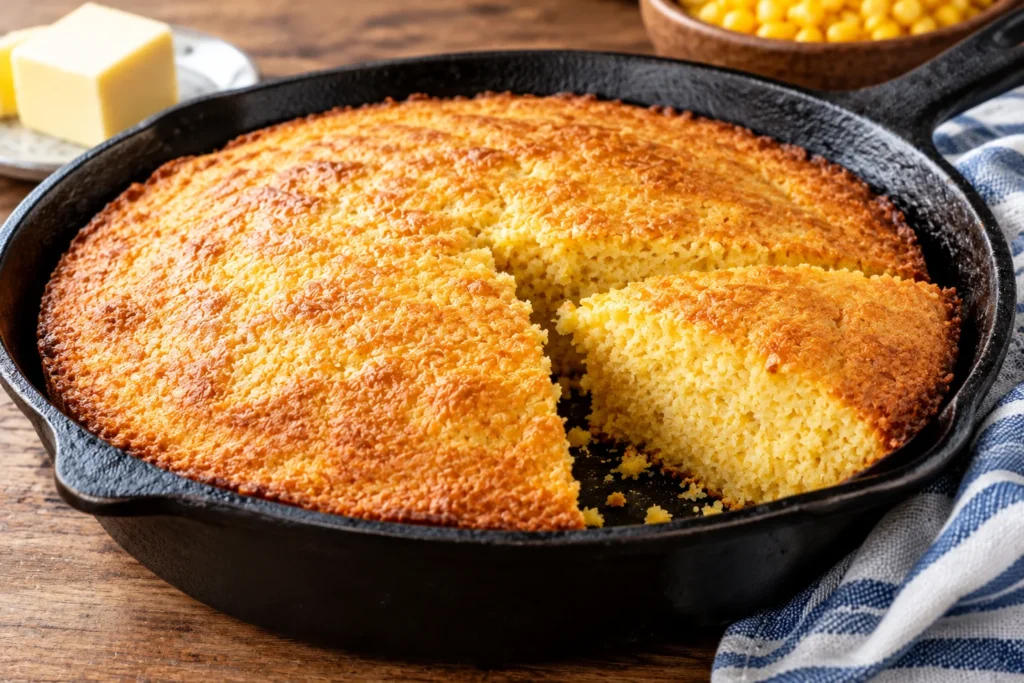
Why preheat the skillet? Because the batter hits hot oil and sizzles, and that sizzle builds the crisp brown crust. Put the skillet and the oil in the oven while it heats, and use thick mitts to carry it.
The nutrition: Per wedge, it's about 5 g protein (8 servings).
Whole-grain cornmeal, if you can find it. It tastes more like corn and gives a sandier crumb. There's very little flour in the batter, so the bread stays tender and a bit crumbly, which is exactly how skillet cornbread should eat.
Stir the batter until the dry streaks disappear, then stop. I'd quit earlier than feels natural, since a smooth, well-beaten batter makes a tough bread.
King Arthur uses bacon fat, which adds a smoky edge. A neutral oil keeps the flavor plain, and the protein count is the same.
Chili is the obvious match, but bean soups work too. Break a wedge into the bowl and let it soak. Leftovers toast well in a dry pan.
Irish Soda Bread
The nutrition: About 5 g protein per slice (1 of 12).
No yeast, no rise. Baking soda reacts with the acid in the buttermilk the moment they meet, so shape the loaf quickly and get it in the oven.
Why this works: The acid in the buttermilk activates the baking soda, so swapping in plain milk would leave the loaf flat.
If the dough looks crumbly, King Arthur says to add 1 or 2 more tablespoons of buttermilk. Add them a spoonful at a time and stop as soon as the dough comes together.
The dough is stiff, closer to biscuit dough than bread dough. Knead for about 30 seconds. Any more and the crumb turns dense.
Cut a cross about half an inch deep on top, which helps the center cook through. Bake 45 to 55 minutes, until the crust is golden and a toothpick comes out clean.
Brush with melted butter right out of the oven. King Arthur says it keeps about 2 days wrapped at room temperature. I'd slice it thick and serve it with a beef stew.
Start it when the soup is already on the stove. From bowl to table it takes about 65 minutes.
Yorkshire Popovers
Get the oven fully hot before the batter goes in. Popovers rise on steam, and a cool oven gives you dense muffins instead. King Arthur also sets the eggs in hot water for 10 minutes first so the batter starts closer to room temperature.
Grease the cups and the flat area between them well. Sticking tears the popovers when you lift them out.
A popover pan makes 6 larger popovers and needs about 5 more minutes of baking, per King Arthur. The 12 cup muffin tin on the card gives smaller ones.
The nutrition: Each popover has about 5 g protein, and the batch makes 12.
Don't open the oven for the first 20 minutes. After that, drop the heat to 350°F and bake until deep golden.
Pierce each top with a knife the moment they come out so the steam escapes and the insides don't go soggy. Serve right away.
Mostly eggs, milk, and flour, which is why each one has about 5 g protein. I'd put them next to beef stew or any gravy-heavy bowl, where the hollow centers catch the broth.
Garlic Butter Naan
If the dough sticks to your hands, dust your fingers with flour instead of working a lot more into the dough. Extra flour makes naan dry and stiff. Slightly tacky is correct.
You don't need a tandoor. A hot, dry skillet does the job, and I'd use cast iron because it holds heat best. Roll each ball into a round about 6 inches wide, lay it in the pan, and bubbles show up in 30 to 40 seconds.
Why this works: Greek yogurt softens the dough and brings a little protein, and it doesn't change how the naan cooks.
For thicker naan, roll a 6 inch round. For thinner and crisper naan, King Arthur suggests an 8 inch round, and you'll get a bit more bubbling at the edges.
The nutrition: Count on roughly 5 g protein per naan, from 8 equal servings.
Flip once the underside has brown spots and the top has puffed. The second side takes 40 to 50 seconds.
Melt the butter with the garlic over low heat for a minute, brush it on, and finish with cilantro. Keep finished naan warm in a 200°F oven while you cook the rest.
Serve it beside a curry or a lentil soup. For more skillet ideas, see our high-protein skillet dinners.
Soft Honey Butter Dinner Rolls
Soft rolls take time, but very little of it is yours. You knead 8 to 10 minutes, the dough rises for about an hour, and after shaping it rises again for about another hour. Don't skip that second rise.
Warm the milk to about 110°F. It should feel barely warm on your wrist. Hot milk can kill the yeast, and cold milk slows it down.
The nutrition: One roll comes to about 5 g protein, with 12 in all.
If you divide the dough evenly, each piece weighs about 68 g. A kitchen scale makes the rolls match in size, which helps them bake at the same speed.
Pull each piece tight over itself and pinch the seam underneath for a round, even top. Pack the rolls close in the pan so they rise together, touch as they bake, and come out pull-apart soft.
Why this works: Milk and egg enrich the dough, which is why the crumb is softer than a lean loaf like the no-knead bread.
King Arthur's soft roll recipe bakes at 350°F, and these follow its flour-to-liquid range. Honey butter is melted butter stirred with honey, brushed on while the rolls are hot. I'd serve these with stew or chowder, anywhere you want something soft to drag through the bowl.
A pan of 12 also feeds a crowd cheaply. For more budget ideas, see our cheap high-protein dinners that feed 6.
Time and Protein at a Glance
Use this list to pick by the clock. Times include rises and rests, and protein is per piece.
- Crusty No-Knead Bread: 5 hr 55 min, about 3 g protein per slice
- Garlic Parmesan Baguette Toasts: 20 min, about 5 g protein per serving of 4 toasts
- Classic Garlic Bread: 25 min, about 5 g protein per slice
- Rosemary Focaccia: 4 hr 15 min, about 5 g protein per piece
- Garden Vegetable Focaccia: 4 hr 20 min, about 5 g protein per piece
- Grilled Cheese Sandwiches: 20 min, about 28 g protein per sandwich
- Cheesy Garlic Flatbread: 1 hr, about 26 g protein per flatbread (3 strips)
- Cheddar Garlic Drop Biscuits: 31 min, about 5 g protein per biscuit
- Buttermilk Biscuits: 40 min, about 4 g protein per biscuit
- Skillet Cornbread: 40 min, about 5 g protein per wedge
- Irish Soda Bread: 1 hr 5 min, about 5 g protein per slice
- Yorkshire Popovers: 1 hr, about 5 g protein per popover
- Garlic Butter Naan: 2 hr 20 min, about 5 g protein per naan
- Soft Honey Butter Dinner Rolls: 2 hr 55 min, about 5 g protein per roll
Bread Safety: Raw Flour, Cheese, and Leftovers
The FDA says flour is a raw food, and milling doesn't kill the bacteria it can carry. Never taste raw dough or batter, and keep raw flour and eggs away from foods that are ready to eat. The FDA guidance on handling flour has the full list.
Wash your hands, bowls, and counters with warm, soapy water after you handle dough. Bake each bread until it reaches the doneness cue on its card, because cooking is the only way to make flour and egg mixtures safe.
Breads with cheese are different from plain breads. Per the USDA and FoodSafety.gov, cheese-topped breads and sandwiches should go into the refrigerator within 2 hours, or within 1 hour above 90°F, and they keep 3 to 4 days. Reheat them to 165°F. Our healthy meal prep dinner ideas cover how to portion leftovers.
Plain breads such as the naan and the soda bread keep about 2 days wrapped at room temperature, according to King Arthur, and they freeze for longer storage. Soup leftovers follow the same 2-hour rule.
How I Counted Protein
I multiplied USDA FoodData Central values by the exact weights on each recipe card, then divided by the number of pieces. The number you see is for one piece, as stated in each recipe.
The dinner rolls, the cheddar biscuits, and the flatbread are adapted from published King Arthur, Whole Foods Market, and Souvlaki for the Soul recipes, and I changed the quantities. The garlic bread, the toasts, and the grilled cheese are simple assemblies without a named source. A test bake is still wise.
Two inputs rest on assumptions. The store-bought loaves are counted at about 9 grams of protein per 100 grams, which is typical of white and sourdough breads, so check your own label. The Greek yogurt values are for plain full-fat, which both the flatbread and the naan use.
Bread isn't a major protein source, and the soup beside it is usually where your protein comes from. The soup isn't counted here, and neither are butter, jam, or dipping oil you add at the table. These numbers are estimates, not medical advice. If you manage a health condition, ask your doctor or dietitian what target suits you.
Questions About Breads for Soup
Which bread has the most protein?
Grilled Cheese Sandwiches leads at about 28 grams per sandwich, followed by Cheesy Garlic Flatbread at about 26 grams. Cheddar Garlic Drop Biscuits comes next at about 5. The lowest is Crusty No-Knead Bread at about 3 grams per slice.
Which breads work best in a thin, brothy soup?
The crusty loaf, the baguette toasts, and the focaccia all hold up in broth. Soft rolls and biscuits soak faster, so dunk them quickly or split them and set the soup beside them.
Can I make these ahead or freeze them?
King Arthur lists both naan and Irish soda bread as freezable. Wrap the cooled bread well before freezing, and warm it before serving. For batch plans, see our high-protein meal prep ideas on a budget. Cheese-topped breads should be refrigerated within 2 hours and eaten in 3 to 4 days.
Why did my biscuits or soda bread turn out tough?
Overworked dough is the usual cause. The biscuit and soda bread recipes call for brief mixing, about 15 seconds for the biscuits and about 30 seconds of kneading for the soda bread, so the gluten doesn't toughen the crumb.
How thick should I slice bread for dunking?
About as thick as your thumb. Thin slices go limp the moment they touch the broth, while thick ones hold their shape. The toasts and the grilled cheese strips are cut for dunking.
Which bread is easiest for a beginner?
The soda bread and the drop biscuits are the simplest, because neither one needs yeast or a rise. The no-knead loaf is also forgiving, since you only stir it, though it does ask for patience. You'll want a kitchen thermometer for the rolls.
What bread goes with chili?
Cornbread is the classic, and the dinner rolls are a softer choice. I'd skip the garlic bread here, because chili already has plenty of strong flavor. A wedge of cornbread soaks up the sauce and stays together.
Can I bake two breads in one oven?
Often, yes. The garlic bread and the baguette toasts both bake at 375°F, both kinds of biscuit bake at 425°F, and the focaccia needs 475°F. Check each card for the rack position, swap the pans halfway through, and remember that a crowded oven can add a few minutes.
Do I need special equipment?
Mostly no. A cast iron skillet helps for the cornbread and the naan, a 12 cup muffin tin makes the popovers, and a 9 by 13 inch pan covers the focaccia and the rolls. Everything else bakes on a plain sheet pan, and a kitchen scale makes the dough recipes easier to repeat.
What should I serve if I want the most protein?
Pair a protein-rich soup with the grilled cheese or the flatbread. Each of those reaches 25 grams or more per serving, so a small bowl of soup beside them makes a complete meal. The plain breads work best as a side, not as the main protein.
Can I use store-bought bread?
Yes, for the grilled cheese, the garlic bread, and the toasts. Protein varies by brand, so read the label and adjust the number on the card. The grilled cheese is counted with 1.5 ounce slices.
Can I use active dry yeast instead of instant?
King Arthur lists either type for the no-knead loaf. For the other yeast breads, follow the package directions, because active dry yeast may need to be dissolved in warm liquid first.
How do I keep bread warm while the soup finishes?
King Arthur suggests a 200°F oven or a wrap of foil for naan. The same trick works for rolls and biscuits. Don't leave cheese-topped breads out longer than 2 hours.
1. Crusty No-Knead Bread
Approx. 3g ProteinIngredients: 1.75 cups (225 g) all-purpose flour; 3/4 cup (170 g) lukewarm water; 3/4 tsp table salt; 1 tsp instant yeast; 1 cup hot water, for the steam pan.
Step 1: Stir the flour, water, salt, and yeast in a large bowl for 1 to 2 minutes into a very sticky, rough dough. Do not knead it.
Step 2: Cover the bowl and let the dough rise at room temperature for 2 hours.
Step 3: Refrigerate the covered dough for at least 2 hours. It will rise, then fall, which is expected.
Step 4: Shape the dough into a ball on a floured surface. Set it on parchment, dust it with flour, cover it, and let it rest for about 60 minutes.
Step 5: Preheat the oven to 450°F with a shallow metal pan (not glass or ceramic) on the lowest rack. Slash the loaf 2 or 3 times, about half an inch deep.
Step 6: Put the loaf on a middle rack, pour the hot water into the pan, and close the door quickly. Bake 25 to 35 minutes until the crust is a deep golden brown.
Step 7: Cool the loaf before slicing it into 8 slices. Cool completely, wrap well, and keep at room temperature up to 2 days, or freeze for longer storage.
2. Garlic Parmesan Baguette Toasts
Approx. 5g ProteinIngredients: 1 baguette (8 oz), cut into 24 slices, half an inch thick; 4 tbsp (57 g) butter, melted; 2 garlic cloves, minced; 1/4 cup (25 g) grated Parmesan; 1/4 tsp salt.
Step 1: Preheat the oven to 375°F and line a baking sheet with parchment.
Step 2: Stir the melted butter, garlic, and salt together. Brush the mixture over both sides of the baguette slices and arrange them on the sheet.
Step 3: Sprinkle the Parmesan over the tops and bake 8 to 10 minutes, flipping the slices once halfway through, until golden and crisp at the edges.
Step 4: Serve warm, 4 toasts per serving. Refrigerate leftovers within 2 hours and eat them within 3 to 4 days. Reheat to 165°F before serving.
3. Classic Garlic Bread
Approx. 5g ProteinIngredients: 1 Italian or French loaf (12 oz), split lengthwise; 6 tbsp (85 g) butter, softened; 4 garlic cloves, minced; 2 tbsp chopped parsley; 1/4 tsp salt; 1/4 cup (25 g) grated Parmesan.
Step 1: Preheat the oven to 375°F.
Step 2: Mash the butter, garlic, parsley, and salt together in a bowl.
Step 3: Spread the butter mixture thickly over both cut sides of the loaf, edge to edge, and set the halves cut side up on a baking sheet.
Step 4: Bake 10 to 12 minutes until the butter has melted into the bread and the edges are golden.
Step 5: Sprinkle the Parmesan over the top and broil about 1 minute, watching closely, until the cheese is bubbly and lightly browned. Cut each half into 4 slices.
Step 6: Refrigerate leftovers within 2 hours and eat them within 3 to 4 days. Reheat to 165°F before serving.
4. Rosemary Focaccia
Approx. 5g ProteinIngredients: 4 cups (500 g) bread flour; 1 3/4 tsp (10 g) table salt; 1 tsp instant yeast; 2 tsp (7 g) sugar; 1 2/3 cups (400 g) lukewarm water; 4 tbsp (60 g) olive oil, divided; 2 tbsp finely chopped fresh rosemary; 1 tsp flaky salt.
Step 1: Whisk the flour, table salt, sugar, and yeast in a large bowl. Add the water and 2 tablespoons of the olive oil, stir into a sticky dough, and rest it 15 minutes.
Step 2: Do four sets of folds in the bowl: lift one edge of the dough, fold it to the center, turn the bowl, and repeat around the dough. Rest 15 minutes after each of the first three sets.
Step 3: Cover and let the dough rise at warm room temperature for 1 hour until puffy and bubbly.
Step 4: Coat a 9 by 13 inch pan with 1 tablespoon of the olive oil. Scrape the dough into the pan and stretch it toward the corners. Cover and let it rise about 1.5 hours until marshmallowy and close to the rim.
Step 5: Late in the rise, heat the oven to 475°F with a rack in the lower third.
Step 6: Oil your fingertips, dimple the dough all over down to the pan, and drizzle with the last tablespoon of oil. Sprinkle with the rosemary and flaky salt.
Step 7: Bake 15 to 18 minutes until deep golden brown. Turn off the oven and return the pan for 5 to 7 minutes to crisp the bottom. Cool 10 minutes, then cut into 12 pieces. Cool completely, wrap well, and keep at room temperature up to 2 days, or freeze for longer storage.
5. Garden Vegetable Focaccia
Approx. 5g ProteinIngredients: 4 cups (500 g) bread flour; 1 3/4 tsp (10 g) table salt; 1 tsp instant yeast; 2 tsp (7 g) sugar; 1 2/3 cups (400 g) lukewarm water; 4 tbsp (60 g) olive oil, divided; 4 oz (120 g) cherry tomatoes, halved; 3 oz (80 g) red bell pepper, in thin strips; 2 oz (50 g) red onion, in thin slices; 1 tsp dried oregano; 1 tsp flaky salt.
Step 1: Whisk the flour, table salt, sugar, and yeast in a large bowl. Add the water and 2 tablespoons of the olive oil, stir into a sticky dough, and rest it 15 minutes.
Step 2: Do four sets of folds in the bowl: lift one edge of the dough, fold it to the center, turn the bowl, and repeat around the dough. Rest 15 minutes after each of the first three sets.
Step 3: Cover and let the dough rise at warm room temperature for 1 hour until puffy and bubbly.
Step 4: Coat a 9 by 13 inch pan with 1 tablespoon of the olive oil. Scrape the dough into the pan and stretch it toward the corners. Cover and let it rise about 1.5 hours until marshmallowy and close to the rim.
Step 5: Late in the rise, heat the oven to 475°F with a rack in the lower third.
Step 6: Oil your fingertips, dimple the dough all over down to the pan, and drizzle with the last tablespoon of oil. Press the tomatoes, bell pepper, and onion into the dimples and sprinkle with the oregano and flaky salt.
Step 7: Bake 15 to 18 minutes until deep golden brown. Turn off the oven and return the pan for 5 to 7 minutes to crisp the bottom. Cool 10 minutes, then cut into 12 pieces. Refrigerate leftovers within 2 hours and eat them within 3 to 4 days. Reheat to 165°F before serving.
6. Grilled Cheese Sandwiches
Approx. 28g ProteinIngredients: 8 slices sourdough bread (about 1.5 oz each); 2 tbsp (28 g) butter, softened; 8 oz (227 g) sharp cheddar, sliced; 4 slices provolone (4 oz, 113 g).
Step 1: Spread the butter over one side of each slice of bread.
Step 2: Set 4 slices butter side down. Top each with 2 oz of cheddar and 1 slice of provolone, then cover with a second slice, butter side up.
Step 3: Heat a large skillet over medium-low heat. Cook the sandwiches 4 to 5 minutes per side until the bread is golden and the cheese has melted. Cover the pan for the last minute if the cheese is slow to melt.
Step 4: Cut each sandwich into strips. Refrigerate leftovers within 2 hours and eat them within 3 to 4 days. Reheat to 165°F before serving.
7. Cheesy Garlic Flatbread
Approx. 26g ProteinIngredients: 1 2/3 cups (210 g) all-purpose flour; 2 1/2 tsp baking powder; 1 1/2 tsp salt; 1 1/3 cups (330 g) full-fat plain Greek yogurt; 2 tbsp (27 g) olive oil, divided; 3 garlic cloves, minced; 6 oz (170 g) low-moisture mozzarella, shredded; 1/4 cup (25 g) grated Parmesan.
Step 1: Whisk the flour, baking powder, and salt. Stir in the yogurt. If the dough is too dry, add 1 tablespoon more yogurt; if it is too wet, add 1 tablespoon more flour. It should feel smooth and not sticky.
Step 2: Shape the dough into a ball, cover it, and rest it 30 minutes.
Step 3: Knead briefly on a floured surface, divide into 4 pieces, and roll each into a thin circle.
Step 4: Heat a cast iron skillet over medium-high heat with a little of the olive oil. Cook each flatbread 2 to 3 minutes per side until puffed with charred spots.
Step 5: Stir the garlic into the remaining olive oil and brush it over the flatbreads. Set them on a baking sheet and top with the mozzarella and Parmesan.
Step 6: Broil 1 to 2 minutes, watching closely, until the cheese is bubbly. Cut each flatbread into 3 strips. Refrigerate leftovers within 2 hours and eat them within 3 to 4 days. Reheat to 165°F before serving.
8. Cheddar Garlic Drop Biscuits
Approx. 5g ProteinIngredients: 2 cups (240 g) all-purpose flour; 2 tsp baking powder; 1/2 tsp baking soda; 3/4 tsp salt; 1/2 tsp garlic powder; 4 tbsp (57 g) cold butter, cubed; 1 cup (113 g) shredded sharp cheddar; 1 cup (240 g) cold buttermilk; 1 tbsp (14 g) melted butter, for brushing; 1 tbsp chopped parsley.
Step 1: Preheat the oven to 425°F and line a baking sheet with parchment.
Step 2: Whisk the flour, baking powder, baking soda, salt, and garlic powder. Work in the cold butter with your fingers until the mixture is crumbly.
Step 3: Stir in the cheddar, then add the buttermilk and stir just until moistened. The dough will be sticky; add a splash more buttermilk only if it looks dry.
Step 4: Drop 12 mounds, one quarter cup each, onto the sheet.
Step 5: Bake 14 to 16 minutes until lightly browned. Brush with the melted butter, sprinkle with the parsley, and serve warm. Refrigerate leftovers within 2 hours and eat them within 3 to 4 days. Reheat to 165°F before serving.
9. Buttermilk Biscuits
Approx. 4g ProteinIngredients: 3 cups (360 g) all-purpose flour; 1 tsp table salt; 1 tbsp baking powder; 1 tbsp sugar; 6 tbsp (85 g) cold butter, cubed; 1 cup (240 g) cold buttermilk; 1 tbsp milk, for brushing.
Step 1: Preheat the oven to 425°F with a rack in the upper third and line a baking sheet with parchment.
Step 2: Whisk the flour, salt, baking powder, and sugar. Work in the cold butter until the mixture looks like coarse breadcrumbs with a few pea-size bits.
Step 3: Add the buttermilk and mix for about 15 seconds, until the dough just holds together.
Step 4: Pat the dough into a rough rectangle three-quarters of an inch thick. Fold it in thirds and pat it back to three-quarters of an inch.
Step 5: Cut 12 biscuits with a 2 3/8 inch cutter, pressing straight down. Set them on the sheet and brush the tops with the milk. For a higher rise, chill the cut biscuits 20 to 30 minutes first.
Step 6: Bake 15 to 20 minutes until lightly browned. Cool completely, wrap well, and keep at room temperature up to 2 days, or freeze for longer storage.
10. Skillet Cornbread
Approx. 5g ProteinIngredients: 1 1/2 cups (245 g) whole-grain cornmeal; 1/2 cup (60 g) all-purpose flour; 1/2 tsp baking powder; 1/2 tsp baking soda; 1/4 tsp table salt; 1 large egg; 1 1/2 cups (340 g) buttermilk; 1/4 cup (50 g) neutral oil or bacon fat.
Step 1: Put a 9 or 10 inch cast iron skillet with the oil in the oven and heat the oven to 450°F. Let the skillet heat at least 10 minutes.
Step 2: Whisk the cornmeal, flour, baking powder, baking soda, and salt in a bowl.
Step 3: Whisk the egg and buttermilk together, then stir them into the dry ingredients just until no dry streaks remain.
Step 4: Carefully pour the batter into the hot skillet. It will sizzle.
Step 5: Bake about 25 minutes until the center is firm and the top is golden. Rest 5 minutes, then cut into 8 wedges. Cool completely, wrap well, and keep at room temperature up to 2 days, or freeze for longer storage.
11. Irish Soda Bread
Approx. 5g ProteinIngredients: 2 1/4 cups (276 g) all-purpose flour; 1 1/4 cups (150 g) bread flour; 3 tbsp (37 g) sugar; 1 tsp baking soda; 3/4 tsp table salt; 4 tbsp (57 g) cold butter, cut in 8 pieces; 1 1/3 cups (302 g) buttermilk; 1 large egg; 2 tbsp (28 g) melted butter, for brushing.
Step 1: Preheat the oven to 400°F and grease an 8 or 9 inch round cake pan.
Step 2: Whisk the flours, sugar, baking soda, and salt. Work in the cold butter until no large chunks remain.
Step 3: Whisk the buttermilk and egg, then stir them into the dry ingredients. The dough will be stiff.
Step 4: Knead the dough for about 30 seconds, shape it into a ball, flatten it slightly, and set it in the pan. Cut a cross about half an inch deep across the top.
Step 5: Bake 45 to 55 minutes until the crust is golden and a toothpick in the center comes out clean.
Step 6: Brush with the melted butter as soon as the loaf comes out, then cool and cut into 12 slices. Cool completely, wrap well, and keep at room temperature up to 2 days, or freeze for longer storage.
12. Yorkshire Popovers
Approx. 5g ProteinIngredients: 4 large eggs; 1 1/2 cups (340 g) lukewarm milk; 3/4 tsp table salt; 1 1/2 cups (180 g) all-purpose flour; 3 tbsp (43 g) butter, melted; 1 tbsp (14 g) oil, for the pan; hot water, for warming the eggs.
Step 1: Set the eggs in a bowl of hot water for 10 minutes. Heat the oven to 450°F with a rack on a lower shelf, and grease a 12 cup muffin tin and the flat area between the cups with the oil.
Step 2: Crack the eggs into a bowl and whisk with the milk and salt until no yolk streaks remain.
Step 3: Add all the flour at once and whisk until frothy. Small lumps are fine. Stir in the melted butter.
Step 4: Fill each cup two thirds to three quarters full.
Step 5: Bake 20 minutes at 450°F without opening the oven door. Lower the heat to 350°F and bake 10 to 15 minutes more until deep golden brown.
Step 6: Pierce each top with a knife to release steam and serve right away. Cool completely, wrap well, and keep at room temperature up to 2 days, or freeze for longer storage.
13. Garlic Butter Naan
Approx. 5g ProteinIngredients: 1 1/2 cups (180 g) all-purpose flour; 3/4 cup (90 g) bread flour; 1/2 cup plus 2 tbsp (142 g) warm water; 5 tbsp (71 g) full-fat plain Greek yogurt; 2 tbsp (28 g) butter, melted; 1 1/2 tsp instant yeast; 1 tsp sugar; 1 tsp table salt; 2 tbsp (28 g) butter, for brushing; 2 garlic cloves, minced; 1/4 cup chopped cilantro.
Step 1: Mix both flours, the water, yogurt, 2 tablespoons melted butter, yeast, sugar, and salt until shaggy, then knead until smooth, bouncy, and slightly tacky.
Step 2: Place the dough in a greased bowl, cover, and let it rise until doubled, 50 to 60 minutes.
Step 3: Divide the dough into 8 pieces of about 65 g each, shape into balls, cover, and rest 20 minutes.
Step 4: Melt the remaining 2 tablespoons butter with the garlic over low heat for 1 minute and keep it warm.
Step 5: Heat a cast iron skillet over medium-high heat. Roll each ball into a 6 inch round or 7 inch oval.
Step 6: Cook each naan 30 to 40 seconds until bubbles form and the underside browns. Flip and cook 40 to 50 seconds more.
Step 7: Brush with the garlic butter, sprinkle with the cilantro, and keep warm in a 200°F oven. Cool completely, wrap well, and keep at room temperature up to 2 days, or freeze for longer storage.
14. Soft Honey Butter Dinner Rolls
Approx. 5g ProteinIngredients: 3 1/2 cups (420 g) all-purpose flour; 1 tsp table salt; 2 1/4 tsp instant yeast; 1 cup (240 g) warm milk, about 110°F; 2 tbsp (42 g) honey; 1 large egg; 4 tbsp (57 g) butter, melted; 2 tbsp (28 g) butter, melted, for the honey butter; 1 tbsp (21 g) honey, for the honey butter.
Step 1: Whisk the flour, salt, and yeast in a large bowl. Add the warm milk, 2 tablespoons honey, egg, and 4 tablespoons melted butter and stir into a shaggy dough.
Step 2: Knead 8 to 10 minutes until smooth and springy.
Step 3: Cover and let the dough rise at room temperature about 1 hour until nearly doubled.
Step 4: Divide into 12 pieces, shape into balls, and set them in a greased 9 by 13 inch pan. Cover and let them rise about 1 hour until very puffy, and heat the oven to 350°F during the rise.
Step 5: Bake about 25 minutes at 350°F until golden brown.
Step 6: Stir the 2 tablespoons melted butter with the 1 tablespoon honey and brush it over the hot rolls. Cool completely, wrap well, and keep at room temperature up to 2 days, or freeze for longer storage.
Get Fresh Recipes Every Week
Join readers getting fresh recipes, meal prep systems, and high-protein meal ideas delivered to your inbox every week.
No spam. Unsubscribe anytime.