
See all 31 recipes
Table of Contents
- Five Ways to Load a Pan, Compared
- Pan Rules That Apply to Every Card
- Everything Goes In at Once
- Vegetables First, Then the Protein Joins
- Protein First, Then the Vegetables Join
- Build It First, Then Bake Once
- Long Roasts: Cover, Cook, and Rest
- Time and Protein at a Glance
- How I Counted Protein
- Where These Cards Differ From Typical Versions
- FAQ
- Recipe Cards
A sheet pan dinner only works if everything finishes together, and that depends on when each item goes in. Salmon needs 10 minutes, broccoli needs 25, and brisket needs three hours.
I wanted pan dinners with protein I could count, so each of these 31 recipes lists exact weights and protein per serving, from 20 to 45 grams.
They're sorted by when each item joins the pan. For more hands-off dinners, see our slow cooker winter dinners.
Our Take
Check the thickest part with a thermometer, and reheat leftovers to 165°F.
Five Ways to Load a Pan, Compared
The five groups below differ in what you do at the oven door. This is how they compare.
- Everything at once: the least work, with one timer. It needs a protein and vegetables that cook in the same time, so it suits thighs, sausage, and salmon with asparagus.
- Vegetables first: the best match for fast proteins. It adds one stop at the oven, and it keeps fish and shrimp from overcooking.
- Protein first: the best match for slow proteins like bone-in chicken and pork loin. The vegetables roast in the meat juices, so they get a minimum time in the oven.
- Build, then bake: the most work before the oven and the least during. These recipes also reheat well.
- Long roasts: the least hands-on time and the longest clock. They need foil or a rack, a thermometer, and a rest.
Pan Rules That Apply to Every Card
The USDA's safe temperature chart lists 165°F for poultry, 160°F for ground meats and eggs, and 145°F for fish and for whole cuts of beef and pork, with a 3 minute rest for the beef and pork. It also says to measure with a food thermometer.
The cards assume a rimmed half sheet pan, about 18 by 13 inches, and an oven rack in the middle. Food that touches steams instead of browning, so don't crowd it. Use two pans when a card says to.
- Check the thickest part of the protein with a thermometer, not the clock.
- Don't rinse raw poultry. The USDA advises against it because the water spreads bacteria.
- Shoulder, brisket, and chuck cook to about 195 to 200°F, well above the 145°F minimum, because that's when they turn tender.
- Spoon pan juices over the plate only after the meat has reached its temperature.
- Refrigerate leftovers within 2 hours, or within 1 hour above 90°F, and eat them within 3 to 4 days.
Everything Goes In at Once
These 9 dinners go into the oven in one load, with one temperature and one timer. They work because the protein and the vegetables need about the same time.
There's no mid-roast juggling, so they're the ones I'd pick for the busiest nights. For more weeknight options, see our quick high-protein dinners.
Sheet Pan Chicken Fajitas
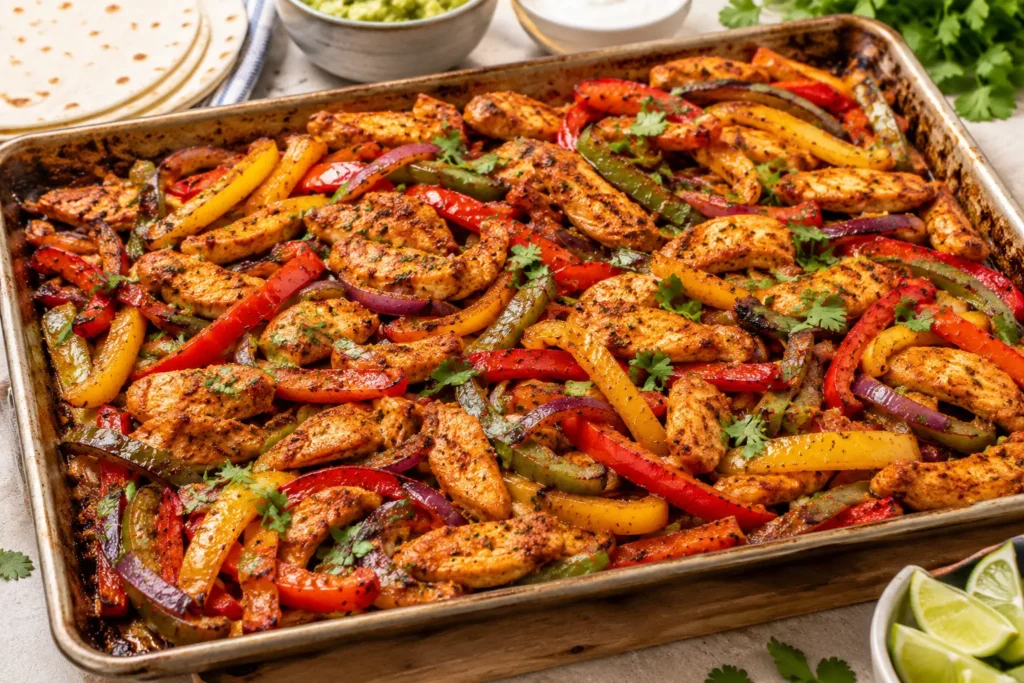
Chicken strips, peppers, and onion roast together on one pan with chili powder and cumin, and the edges char the way a skillet would. Warm tortillas turn it into a build-your-own dinner.
Spread everything in a single layer. Food that piles up steams instead of roasting, so use a second pan the moment the strips start to touch.
Slice the chicken into strips of the same thickness. Thin ones overcook while thick ones lag, and a thermometer in the thickest strip settles the question at 165°F.
The nutrition: About 45 g protein per serving (1 of 6). The chicken carries most of it, and the tortillas and yogurt add the rest.
Yogurt works. Plain Greek yogurt takes the place of sour cream, adds protein, and cools the chili powder, so a spoonful on each fajita is worth the small extra step at the table.
Sheet Pan Sausage and Peppers
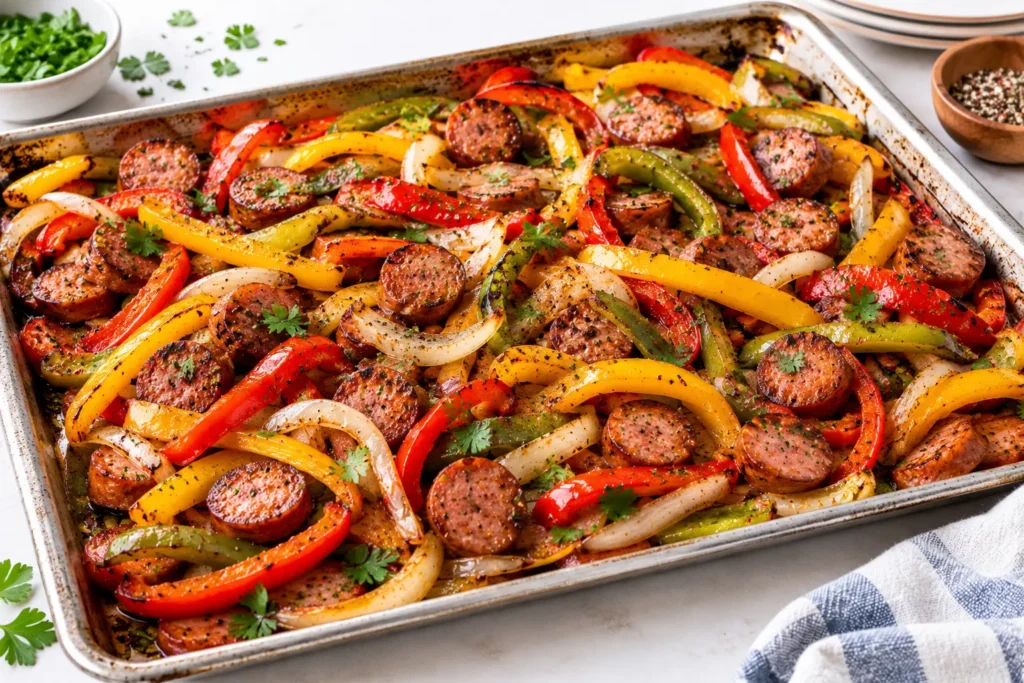
Sliced chicken sausage, peppers, and onion go on one tray and come out caramelized at the edges. It's a loose, easy dinner that fits a roll or a bowl of rice.
The nutrition: Each serving has about 25 g protein, and the pan makes 6. The sausage supplies most of it, and the rolls add a good share.
Buy fully cooked sausage. It only needs heating through to 165°F, so the pan's timing is set by the vegetables, not the meat.
Don't Miss the Next Recipe
Get fresh recipes, meal prep systems, and high-protein meal ideas delivered to your inbox every week.
No spam. Unsubscribe anytime.
Stir the pan once halfway. The edges that touch the metal brown fastest, and moving the pieces gives every slice some contact with the pan.
Skip the sauce. The onions and peppers release enough juice to coat the sausage, and a pile of wet toppings would soften the crisp bits you roasted the pan to get.
Sheet Pan Greek Chicken and Chickpeas
Thighs and chickpeas roast together with oregano, garlic, and lemon, and the chickpeas crisp in the chicken fat. Two proteins on one pan is what gives this tray its staying power.
Dry the chickpeas first. Canned ones come wet, and a quick pat with a towel lets them crisp instead of steaming under the chicken.
Add the feta after roasting. Feta melts into the pan juices if it goes in early, and a cool crumble on top gives the plate a salty contrast.
Make the yogurt sauce thick. A spoonful of plain Greek yogurt with extra lemon works like tzatziki here, and it keeps this recipe from needing a second bowl or a trip to the store.
The nutrition: Count on roughly 40 g protein per serving, from 6 equal servings. The chicken carries most of it, and the chickpeas add a good share.
Chicken Thighs with Roasted Cauliflower
The nutrition: One serving comes to about 32 g protein, with 6 in all. The thighs carry most of it, so the cauliflower mostly adds fiber.
Boneless thighs sit right on a bed of cauliflower, and the florets pick up the chicken's juices as they roast. It's the kind of dinner you can start without thinking much.
Cut the florets to a similar size. Big ones stay pale in the middle while small ones burn, and a quick look at the pan after 20 minutes tells you which is which.
Thighs reach 165°F, but they taste better a little past it because their fat keeps them juicy. That's the reason this card uses thighs and not breasts.
Lemon last. A squeeze over the finished pan brightens the cauliflower, and it won't scorch the way juice does when it's added before an hour of heat, so the sharp flavor stays fresh.
Roasted Cauliflower and Chickpea Bowls
Cauliflower and chickpeas roast side by side until the edges turn crisp, then land on quinoa under a lemon tahini sauce. It's a full meatless dinner and holds up as lunch the next day.
Pat the chickpeas dry and spread them out. The crisp is the whole point here, and a damp pan gives you soft chickpeas instead of crunchy ones.
The nutrition: Per bowl, it's about 20 g protein (4 servings). The chickpeas, quinoa, and tahini each carry a share, so it's one of the lower protein trays.
Whisk the sauce while the pan roasts. A little water thins the tahini to a drizzle, and it keeps in a jar for a few days.
Check the seasoning. Chickpeas soak up salt, so taste a few before you pull the pan, because a bland tray turns into homework the second you sit down with it.
Brussels Sprouts and Chicken Sausage Tray
Halved Brussels sprouts, chicken sausage, and baby potatoes roast on one tray until the sprout edges crisp. A drizzle of balsamic vinegar at the end ties the pan together.
Set the sprouts cut side down. The flat face browns against the metal and turns sweet, while the leaves on top crisp like chips.
Add the balsamic after the pan comes out. Vinegar poured before roasting burns on the metal and turns bitter, but a drizzle at the end sticks to the hot sprouts.
The nutrition: About 20 g protein per serving (1 of 4). The sausage carries most of it, with the sprouts and potatoes adding the rest.
Trim well. Loose outer leaves fall off in the oven and char, so peel them away and the pan stays cleaner, and you'll get fewer burnt bits in the final serving.
Herbed Lemon Chicken
Bone-in thighs and drumsticks roast over potatoes with garlic, lemon, rosemary, and thyme until the skin crackles. The pan juices drip onto the potatoes and flavor them without any extra work.
The nutrition: Each serving has about 39 g protein, and the pan makes 6. The chicken's counted bone-in, at 16 g protein per 100 g as purchased, which is an assumption.
Dry the skin before seasoning. Moisture on the skin turns to steam and keeps it soft, so a towel pass is the cheapest step in the recipe.
Check the temperature near the bone. Per the USDA, poultry is safe at 165°F, and the spot beside the bone is the slowest to heat.
Spoon late. Pan juices that held raw chicken should only go on the plate after the chicken has reached 165°F, and the potatoes underneath are already well cooked by then.
Roasted Chicken Legs
Drumsticks and thighs're cheap, forgiving, and easy to eat. A paprika rub and a brush of barbecue sauce at the end give them a glaze without much effort.
Add the sauce late. Barbecue sauce's sweet, and sugar burns at 425°F, so it only needs the last 10 to 15 minutes to set.
Line the pan with foil. The glaze drips and bakes onto bare metal, and a sheet of foil makes cleanup a matter of seconds.
Go past 165°F if you like. Dark meat near the bone gets more tender at higher temperatures, and legs that read 175°F are still juicy, so check one piece at 165 and then give the rest a few more minutes.
The nutrition: Count on roughly 36 g protein per serving, from 6 equal servings. The chicken's counted bone-in, at 16 g protein per 100 g as purchased, which is an assumption.
Never Miss a Recipe
Fresh high-protein recipes, meal prep ideas, and kitchen tips, straight to your inbox every week. No spam, just good food.
No spam. Unsubscribe anytime.
Sheet Pan Seasoned Salmon with Asparagus
The nutrition: One serving comes to about 37 g protein, with 4 in all. The salmon carries almost all of it.
Salmon fillets rubbed with olive oil, garlic, and paprika roast alongside asparagus in about 15 minutes. It's the fastest tray in the list, and the pan's clean almost as soon as dinner's over.
Use a lower oven. Salmon cooks fast, so 400°F gives the asparagus time to soften without drying the fish.
Salmon's done at 145°F, per the USDA, and it flakes easily with a fork. Pull the pan at that point, since fish keeps cooking from the pan's heat.
Buy even fillets. Pieces cut from the thick end take longer than tail pieces, so ask for center cuts, or tuck the thin ends under, because a mixed pan leaves one fillet dry.
Vegetables First, Then the Protein Joins
Fish, shrimp, and eggs cook in 10 minutes or less, while potatoes and cauliflower need 20 or more. These 6 dinners give the vegetables a head start and add the protein near the end.
The tri-tip belongs here too, because the potatoes take longer than the roast. For more fish dinners, see our easy salmon dinners.
Sheet Pan Salmon with Cauliflower and Broccoli
Cauliflower and broccoli go in first because they need about 25 minutes, and the salmon joins them for the last 10. That staggered start is the whole trick behind a pan that finishes together.
Push the vegetables aside rather than taking them out. The salmon sits on bare metal, the vegetables keep browning, and nothing needs a second pan.
The nutrition: Per serving, it's about 38 g protein (4 servings). The salmon carries almost all of it.
Look for opaque flesh that flakes. A thermometer reading 145°F in the thickest part confirms it, per the USDA, and a squeeze of lemon afterward cuts the richness.
Pat the fillets dry. Wet fish steams, so a towel before the oil helps the surface set, and the vegetables around it stay crisp because they aren't sitting in extra water on the pan.
Salmon with Olive Tapenade and Green Beans
Green beans blister on the pan first, then salmon joins them under a spoonful of olive tapenade. It tastes like restaurant food, and the tapenade comes together in a food processor in a minute.
Pulse the tapenade chunky. A smooth paste looks muddy on the fish, while a coarse chop keeps the olives and capers distinct.
Add the tapenade after roasting. Olives and capers are salty, and heat concentrates that further, so spoon it on once the fish is cooked.
The nutrition: About 37 g protein per serving (1 of 4). The salmon carries almost all of it.
Taste the tapenade first. Brined olives vary in salt a great deal, so rinse them if yours are very salty, and then season the fish lightly and let the topping do the work.
Roasted White Fish with Potatoes and Zucchini
Mild cod is a safe choice when the table can't agree. Potatoes go in first, zucchini and tomatoes follow, and the fish goes in last since it needs only about 10 minutes.
The nutrition: Each serving has about 34 g protein, and the pan makes 4. The cod carries most of it, and the potatoes add a little.
Cut the potatoes small. Quarters roast in 20 minutes, while halves would still be hard, and the fish would be overdone by the time they were soft.
Fish's done at 145°F, per the USDA, and it flakes apart easily. Thin tail pieces may be ready a minute or two earlier, so check them first.
Skip the strong marinade. Cod is mild and delicate, and thyme, lemon, and olive oil let the fish taste like itself, which is what this kind of dinner is for.
Sheet Pan Shrimp Boil
This is a cookout dinner without the big pot. Potatoes and corn go in first, sausage joins them, and the shrimp go in last for just a few minutes, with Old Bay on everything.
Use two pans. A boil's worth of food won't fit in a single layer on one sheet, and a crowded pan steams the shrimp and leaves the potatoes pale.
Shrimp're done when they turn pink and opaque, which takes 6 to 8 minutes. Pull the pans then, since each extra minute makes them tougher.
Peel the shrimp first. Shell-on shrimp are tastier to some people, but they make the pan messy and slow the table down, and a bowl for shells keeps the meal moving.
The nutrition: Count on roughly 36 g protein per serving, from 6 equal servings. The shrimp're counted raw and carry most of the protein.
Shakshuka-Style Baked Eggs
The nutrition: One serving comes to about 21 g protein, with 4 in all. The eggs carry most of it, with feta and bread adding the rest.
Tomatoes, peppers, and onion roast into a thick, jammy base, and then eggs go into wells in the pan. Crusty bread is how you eat it, and feta on top adds salt.
Roast the vegetables until the juices bubble. The base needs to be thick before the eggs go in, or the whites spread out and take forever to set.
Cook the eggs until the whites are set and the yolks are thick and firm. The USDA says to cook eggs until firm, and jammy yolks fall short of that, which matters for kids, older adults, and pregnant guests.
Watch the pan. The eggs go from set to rubbery in a couple of minutes, so check at 8 minutes, and pull the pan as soon as the whites turn opaque, then let the heat finish the job.
Tri-Tip with Roasted Potatoes and Chimichurri
Tri-tip tastes like steakhouse food and cooks in under an hour. The potatoes go in first because they need the longest, and the roast joins them to finish together.
Slice against the grain. Tri-tip has two grain directions, so look at the roast after resting and cut each half across the fibers.
The nutrition: Per serving, it's about 33 g protein (6 servings). The beef's counted raw, at 20 g protein per 100 g.
The USDA minimum for whole beef's 145°F with a 3 minute rest. Medium rare is lower than that, so I'd tell guests the target before they ask. Don't guess.
Make the chimichurri while the roast rests. Parsley, vinegar, garlic, and oil take five minutes, and the sharp sauce is the best part of the plate, so make extra for leftovers.
Protein First, Then the Vegetables Join
In these 4 dinners the protein needs the longest, so it goes in first and the vegetables join halfway. Chicken breast and pork loin are the slow ones here.
The vegetables then roast in pan juices from raw meat, so each card gives them at least 15 minutes after they join, and that's a cautious rule I chose. Our healthy meal prep dinner ideas cover portioning.
Sheet Pan Roasted Chicken and Green Beans
Bone-in chicken breasts need about 45 minutes, so they go in first. Green beans join halfway and finish with a little snap, and lemon and garlic carry the flavor.
Roast the chicken skin side up. The skin renders and crisps, and the juices run onto the pan, where the green beans pick them up.
The beans share a pan with raw chicken juices, so they'll need at least 15 minutes in the oven. That's my cautious rule, not a USDA number, and it's easy to follow.
The nutrition: About 42 g protein per serving (1 of 4). The chicken's counted bone-in, at 17.5 g protein per 100 g as purchased, which is an assumption.
Check the thickest part. Bone-in breasts vary a lot in size, so a thermometer's better than the clock, and a piece that reads 165°F first can come off the pan early.
Roasted Pork Loin with Broccoli and Cauliflower
Pork loin's cheap, lean, and feeds a table. Sear it in a skillet, roast it with broccoli and cauliflower, and let it rest before slicing so the juices stay put.
The nutrition: Each serving has about 34 g protein, and the pan makes 6. The pork loin carries most of it, at 21 g protein per 100 g raw.
Sear before roasting. Two or three minutes a side builds a brown crust, and an oven safe skillet means one less pan to wash than you might expect.
The USDA says whole pork is safe at 145°F with a 3 minute rest. Loin dries out if it goes much past that, so pull it when the thermometer says so.
Rest for ten minutes. The slices stay moist instead of leaking onto the board, and the vegetables stay warm on the pan, so nobody needs to hurry the carving to keep dinner hot.
Roasted Chicken, Quinoa, and Vegetables
Thighs roast first, then zucchini, pepper, and onion join the pan, and quinoa cooks on the stove. It looks like a meal prep bowl, and it all comes from one pan and one pot.
Rinse the quinoa. The coating can taste bitter, and a minute in a strainer fixes it before the water goes in.
Let the vegetables join after 12 minutes. They need only 20 to 25 minutes, and early on the pan they'd turn to mush while the thighs finished.
Finish with lemon. A squeeze over the bowl lifts the quinoa and the roasted vegetables, and it replaces the heavy dressing that makes meal prep taste like a chore.
The nutrition: Count on roughly 41 g protein per bowl, from 4 equal servings. The chicken carries most of it, and the quinoa adds a good share.
Sheet Pan Teriyaki Tofu and Broccoli
The nutrition: One serving comes to about 29 g protein, with 4 in all. The tofu's counted at 9 g protein per 100 g, which is a conservative assumption, and the edamame adds a good share.
Extra firm tofu roasts in a cornstarch coat until golden, then broccoli and edamame join the pan. A teriyaki glaze goes on at the very end so the sugar doesn't burn.
Press the tofu. A heavy pan on a towel for 15 minutes squeezes out water, and drier tofu browns instead of steaming.
Toss the tofu in cornstarch before the oil. It forms a thin shell that crisps in the oven, and it holds the glaze later.
Glaze late. Teriyaki sauce's sweet and burns quickly, so it goes on for the last three minutes only, and the rice underneath soaks up whatever drips off the pan.
Build It First, Then Bake Once
Meatballs, a flatbread, pinwheels, and a quiche are assembled on the counter first, and then one bake finishes them. Most of the work happens before the oven turns on.
These 5 also keep well, so they suit lunches. For more of the same, see our meatball dinners.
Turkey Meatballs with Mushrooms and Marinara
Turkey meatballs bake on one sheet and mushrooms roast on another, and then both finish in a pot of marinara. The meatballs stay saucy instead of dry.
Ground turkey needs 165°F, per the USDA, not the 160°F of beef. Check a meatball in the center, because the outside is always ready first.
The nutrition: Per serving, it's about 34 g protein (6 servings). The turkey and the pasta carry most of it.
Mix gently and wet your hands. Lean turkey turns tough if you work it, and damp hands keep the mixture from sticking while you roll 24 even balls.
Roll the same size. Meatballs of equal weight finish together, so a scoop saves guessing, and a sheet that comes out at the same time's easier to check than a mixed batch.
Freezer Batch Baked Meatballs
A double batch of beef and pork meatballs bakes in about 20 minutes and freezes well. They turn into subs, pasta, rice bowls, or a snack straight off the tray.
Space them out. Meatballs that touch steam each other and stay pale, while spaced ones brown on every side.
Ground beef and pork need 160°F, per the USDA. Test one in the center, and cut it open only if you've no thermometer.
The nutrition: About 25 g protein per serving (1 of 8). The beef and the pork each carry a big share.
Freeze them on the tray first. Frozen balls don't stick together in the bag, so you can pull out as many as dinner needs, and they reheat in the oven to 165°F without drying out.
High-Protein Chicken and Mushroom Flatbread
A flatbread covered in cooked chicken, mushrooms, and a lot of mozzarella is pizza night with a protein base. Roast the mushrooms first so they don't leak water onto the crust.
The nutrition: Each serving has about 40 g protein, and the pan makes 4. The chicken and the cheese carry most of it.
Roast the mushrooms before they go on. Raw mushrooms release water as they bake and leave the center of the flatbread soggy.
Use cooked chicken that was refrigerated within 2 hours of its first meal. The flatbread needs only enough time to melt the cheese, so the chicken has to be safe going in.
Cut it right away. Hot cheese sets as it cools, and slicing a few minutes after the pan comes out gives clean pieces, so keep the knife near the oven.
Turkey and Spinach Pinwheels
Wraps spread with cream cheese, filled with turkey and spinach, rolled, sliced, and baked turn into a hot or cold dinner. They look like party food and work as a meal.
Roll tightly. A loose roll falls apart when you slice it, so press the wrap together as you go and chill the roll for 10 minutes if it's soft.
Bake them to 165°F, per the USDA. Per CDC advice, pregnant guests should skip cold deli meat unless it's heated to 165°F, and baking covers that.
Slice with a serrated knife. Cut rolls in a sawing motion and the filling stays in place, which makes uniform pieces that bake at the same pace.
The nutrition: Count on roughly 20 g protein per serving, from 6 equal servings. The turkey, mozzarella, and wraps each carry a share.
Crustless Veggie and Cheese Quiche
The nutrition: One serving comes to about 21 g protein, with 6 in all. The eggs and the cheddar carry almost all of it.
Eggs, milk, cheddar, and chopped vegetables bake into a crustless quiche that's easy to portion. Pair it with a salad and the meal is done.
Pour the eggs over the vegetables and cheese, not the other way around. The cheese stays spread evenly and the pieces don't sink to the bottom.
The USDA says to cook eggs and egg dishes to 160°F. A knife that comes out clean isn't a guarantee, so put a thermometer in the center.
Rest it before cutting. Five minutes lets the custard firm up, and the slices hold their edges, which makes them easy to reheat for lunch the next day.
Long Roasts: Cover, Cook, and Rest
Brisket, pork shoulder, chuck, and a whole bird need hours, not minutes. These 7 dinners cook covered or on a rack, and then they rest before you slice them.
The pork and beef cuts are cut into three pieces so they heat through evenly. For stovetop versions, see our braised beef dinners.
Oven Brisket
Brisket is a big project, but the oven does the work. Rub it, wrap it, and leave it at 300°F for about three hours.
Cover it tightly with foil. The foil traps steam so the lean flat stays moist, and the onions underneath flavor the juices.
The nutrition: Per serving, it's about 31 g protein (8 servings). The brisket's counted raw, at 18 g protein per 100 g, which is an assumption for a trimmed flat.
Cook to texture, not to 145°F. The USDA floor is 145°F with a 3 minute rest, but brisket stays tough until it nears 200°F.
Slice against the grain. A fork test tells you when it's done, and a 20 minute rest under the foil lets the juices settle, so don't carve the second it leaves the oven.
Oven Kalua Pork
Kalua pork needs pork shoulder, sea salt, and liquid smoke. The oven wrapped in foil stands in for the underground oven, and the shredded meat goes into rice bowls and lettuce wraps.
Cut the shoulder into three pieces before cooking. Smaller pieces heat through evenly, and they take salt and smoke better than one big roast.
Shoulder's safe at 145°F, per the USDA, but the shreds come at about 195°F. Trust the fork over the thermometer once you pass the safe mark.
The nutrition: About 32 g protein per bowl (1 of 8). The pork's counted raw, so the number runs high.
Seal the foil. Any gap lets steam escape and dries the top of the pork, so crimp the edges tight, and open it only after the timer ends and the pan has cooled for a few minutes.
Oven Beef Chuck Roast with Carrots
Chuck is a budget cut that turns tender with a long, covered roast. Carrots and onion cook underneath and soak up the beef juices.
The nutrition: Each serving has about 31 g protein, and the pan makes 8. The chuck's counted raw, at 18 g protein per 100 g.
Cut the roast into three pieces. They fit the pan better and cook through faster, and each piece browns a little at the top.
Pieces can stay whole or shred in their juices. Whole pieces slice nicely cold, while shredded beef is better for sandwiches and bowls.
Start early. A covered chuck roast needs three hours or more, and the house smells good the whole time, so plan dinner around the rest and not around the start of cooking.
BBQ Pulled Pork Trays
Pulled pork's the easiest protein to cook ahead and use all week. This one roasts covered, then goes on a tray with buns, slaw, and pickles so each person builds a plate.
Go light on the sauce. A little barbecue sauce coats the meat, while a lot drowns it and turns the buns soggy by the second sandwich.
Roast it covered at 300°F for about four hours. The pork should shred with a fork and read about 195°F, well past the 145°F USDA minimum.
Make the slaw fresh. Coleslaw mix goes limp after an hour with dressing on it, so toss it just before the tray goes out, and keep the pork warm until the table is ready.
The nutrition: Count on roughly 34 g protein per serving, from 8 equal servings. The pork carries most of it, and the buns add a good share.
Sliced Roast Beef
The nutrition: One serving comes to about 45 g protein, with 6 in all. The beef's counted raw, at 22 g protein per 100 g.
A top round roast, seared hot and then finished at a lower heat, slices thin for salads or sandwiches. It feels fancy and takes little work.
Start hot. Heat the oven to 450°F for 15 minutes, then drop it to 325°F. The first blast browns the outside, and the lower heat cooks the center evenly.
The USDA minimum for whole beef's 145°F with a 3 minute rest. Many cooks pull roast beef at medium rare, which is lower, so cook to your guests' needs.
Slice thin and against the grain. Top round is lean and chewy if it's cut thick, and a sharp knife after a 15 minute rest makes slices that fold over bread.
Classic Oven Roasted Chicken
A whole roasted chicken earns a spot in the weekly rotation. One bird feeds dinner and leaves shredded meat for salads and bowls tomorrow.
Dry the skin and skip the rinse. The USDA advises against washing raw poultry because the water spreads bacteria, and dry skin crisps far better.
The nutrition: Per serving, it's about 34 g protein (6 servings). The chicken's counted at 10 g protein per 100 g as purchased, with bone and skin included, which is an assumption.
Check two spots with a thermometer: the thickest part of the breast and the innermost part of the thigh. Both need 165°F, and the thigh is usually the slower one.
Carve after resting. A 15 minute rest lets the juices settle, and picking the carcass clean the same night's easier than doing it cold, so save the bones for broth.
Roasted Turkey Breast
You don't need a holiday to roast turkey. A boneless breast roast cooks in under two hours and gives a pile of sliceable meat for the week.
Use a boneless breast roast, not a whole bird. It fits a baking sheet, cooks in one pass, and the thickest part's easy to check.
Poultry needs 165°F, per the USDA. Put the thermometer into the thickest part, and take the pan out as soon as it reads, because turkey breast dries quickly.
The nutrition: About 37 g protein per serving (1 of 8). The turkey's counted raw, so the number runs high.
Rest and slice. Fifteen minutes under a loose sheet of foil keeps the slices moist, and leftover turkey keeps 3 to 4 days in the refrigerator, so slice only what you'll use.
Time and Protein at a Glance
Use this list to plan the evening. Times include prep, cooking, and resting, and protein is per serving.
- Sheet Pan Chicken Fajitas: 40 min, about 45 g protein per serving
- Sheet Pan Sausage and Peppers: 40 min, about 25 g protein per serving
- Sheet Pan Greek Chicken and Chickpeas: 45 min, about 40 g protein per serving
- Chicken Thighs with Roasted Cauliflower: 50 min, about 32 g protein per serving
- Roasted Cauliflower and Chickpea Bowls: 50 min, about 20 g protein per bowl
- Brussels Sprouts and Chicken Sausage Tray: 45 min, about 20 g protein per serving
- Herbed Lemon Chicken: 1 hr, about 39 g protein per serving
- Roasted Chicken Legs: 55 min, about 36 g protein per serving
- Sheet Pan Seasoned Salmon with Asparagus: 25 min, about 37 g protein per serving
- Sheet Pan Salmon with Cauliflower and Broccoli: 45 min, about 38 g protein per serving
- Salmon with Olive Tapenade and Green Beans: 40 min, about 37 g protein per serving
- Roasted White Fish with Potatoes and Zucchini: 45 min, about 34 g protein per serving
- Sheet Pan Shrimp Boil: 55 min, about 36 g protein per serving
- Shakshuka-Style Baked Eggs: 55 min, about 21 g protein per serving
- Tri-Tip with Roasted Potatoes and Chimichurri: 1 hr 25 min, about 33 g protein per serving
- Sheet Pan Roasted Chicken and Green Beans: 1 hr, about 42 g protein per serving
- Roasted Pork Loin with Broccoli and Cauliflower: 1 hr 20 min, about 34 g protein per serving
- Roasted Chicken, Quinoa, and Vegetables: 1 hr, about 41 g protein per bowl
- Sheet Pan Teriyaki Tofu and Broccoli: 1 hr 10 min, about 29 g protein per serving
- Turkey Meatballs with Mushrooms and Marinara: 1 hr 5 min, about 34 g protein per serving
- Freezer Batch Baked Meatballs: 47 min, about 25 g protein per serving
- High-Protein Chicken and Mushroom Flatbread: 40 min, about 40 g protein per serving
- Turkey and Spinach Pinwheels: 35 min, about 20 g protein per serving
- Crustless Veggie and Cheese Quiche: 1 hr, about 21 g protein per serving
- Oven Brisket: 4 hr 10 min, about 31 g protein per serving
- Oven Kalua Pork: 5 hr, about 32 g protein per bowl
- Oven Beef Chuck Roast with Carrots: 4 hr, about 31 g protein per serving
- BBQ Pulled Pork Trays: 4 hr 45 min, about 34 g protein per serving
- Sliced Roast Beef: 1 hr 40 min, about 45 g protein per serving
- Classic Oven Roasted Chicken: 1 hr 50 min, about 34 g protein per serving
- Roasted Turkey Breast: 2 hr 15 min, about 37 g protein per serving
How I Counted Protein
I multiplied typical USDA FoodData Central values by the weights on each card, then divided by the servings. Meats and fish are counted raw and canned beans are counted drained, so the numbers are estimates and raw meat runs high.
Several inputs rest on assumptions: salmon at 20 g per 100 g, cod at 18, extra firm tofu at 9, tri-tip at 20, top round at 22, brisket at 18, bone-in thighs at 16, bone-in breasts at 17.5, and a whole chicken at 10 as purchased. Brands of sausage, cheese, and wraps vary, so check yours.
These numbers are estimates, not medical advice. If you manage a health condition, ask your doctor or dietitian what target suits you.
Where These Cards Differ From Typical Versions
These cards are my own builds, weighed so the protein can be counted. They aren't copies of one published recipe, so a test cook is wise before you serve them to guests.
Two common habits don't meet the USDA minimums. Runny egg yolks and medium rare roast beef are popular, but the cards use 160°F for eggs and 145°F for beef instead. That matters most for children, older adults, and pregnant guests.
The brisket, kalua pork, and chuck roast aren't sheet pan cooking in the strict sense, so they roast covered in a deep pan. Some of these dishes resemble recipes in our earlier meatball, braised beef, and slow cooker lists, so cook one version a week and not both.
Questions About Sheet Pan Dinners
Which recipe has the most protein?
Sheet Pan Chicken Fajitas leads at about 45 grams per serving, followed by Sliced Roast Beef at about 45 grams and Sheet Pan Roasted Chicken and Green Beans at about 42. The lowest is the Turkey and Spinach Pinwheels at about 20 grams.
Can raw chicken and vegetables share a pan?
Yes, if the vegetables roast long enough. The cards give vegetables at least 15 minutes in the oven after they join a pan that held raw poultry. That's my cautious rule, not a USDA number.
Why do my vegetables turn out soggy?
Crowding is the usual cause. Food that touches traps steam, so spread it in one layer and move to a second pan when the pieces start to overlap.
Is medium rare roast beef safe?
The USDA minimum for whole cuts of beef is 145°F with a 3 minute rest. Medium rare is lower than that, so it's a personal call, and guests who are young, older, or pregnant should get the 145°F version.
Are runny yolks safe?
The USDA says to cook eggs to 160°F, until the yolk and white are firm. Jammy yolks fall short of that, so the egg cards cook until the yolks are thick and firm.
How long do leftovers keep?
Cooked meat, fish, and egg dishes keep 3 to 4 days in the refrigerator, per FoodSafety.gov. Refrigerate within 2 hours and reheat to 165°F. Most of the cards also freeze for 2 to 3 months.
Are these protein numbers exact?
No. They're estimates based on typical USDA values, and raw meat weights run slightly high. For heavier meals, see our 50 gram protein dinners.
1. Sheet Pan Chicken Fajitas
Approx. 45g ProteinIngredients: 2 lb (907 g) boneless skinless chicken breasts, sliced in strips; 3 bell peppers, sliced (450 g); 1 red onion, sliced (150 g); 2 tbsp olive oil; 2 tsp chili powder; 1 tsp ground cumin; 1 tsp garlic powder; 12 small flour tortillas (45 g each, 540 g); 1/2 cup plain Greek yogurt (120 g); 2 limes, cut in wedges; 1 tsp salt; Aluminum foil, for warming the tortillas.
Step 1: Heat the oven to 425°F with the rack in the middle. Toss the chicken, peppers, and onion on a large rimmed baking sheet with the olive oil, chili powder, cumin, garlic powder, and salt, and spread them in one layer. Use two pans if they touch.
Step 2: Roast 20 to 25 minutes, stirring once, until the edges are charred and a thermometer reads 165°F in the thickest strips.
Step 3: Warm the tortillas in a dry skillet or wrapped in foil in the oven for 5 minutes.
Step 4: Fill the tortillas with the chicken and vegetables and top with the yogurt and a squeeze of lime. Cool within 2 hours, or within 1 hour above 90°F, in shallow containers. Refrigerate up to 3 to 4 days, or freeze up to 2 to 3 months, and reheat in the oven or microwave to 165°F.
2. Sheet Pan Sausage and Peppers
Approx. 25g ProteinIngredients: 1 1/2 lb (680 g) fully cooked chicken sausage, sliced; 3 bell peppers, sliced (450 g); 1 yellow onion, sliced (150 g); 2 tbsp olive oil; 1 tsp Italian seasoning; 6 whole grain rolls (60 g each, 360 g); Salt and black pepper, to taste.
Step 1: Heat the oven to 425°F with the rack in the middle. Toss the sausage, peppers, and onion on a rimmed baking sheet with the olive oil, Italian seasoning, salt, and pepper.
Step 2: Roast 20 to 25 minutes, stirring once, until the peppers are tender, the edges caramelize, and the sausage reads 165°F.
Step 3: Split the rolls, toast them in the oven for the last 3 minutes, and pile in the sausage and vegetables. Cool within 2 hours, or within 1 hour above 90°F, in shallow containers. Refrigerate up to 3 to 4 days, or freeze up to 2 to 3 months, and reheat in the oven or microwave to 165°F.
3. Sheet Pan Greek Chicken and Chickpeas
Approx. 40g ProteinIngredients: 2 lb (907 g) boneless skinless chicken thighs; 2 cans (15 oz each) chickpeas, drained and rinsed (510 g); 1 red onion, cut in wedges (150 g); 2 tbsp olive oil; 2 tsp dried oregano; 3 garlic cloves, minced; 2 tbsp lemon juice; 1/2 cup crumbled feta cheese (75 g); 1/2 cup plain Greek yogurt (120 g); 1 tsp salt.
Step 1: Heat the oven to 425°F with the rack in the middle. Toss the thighs, chickpeas, and onion on a rimmed baking sheet with the olive oil, oregano, garlic, lemon juice, and salt.
Step 2: Roast 28 to 30 minutes, stirring the chickpeas once, until the chickpeas are crisp at the edges and a thermometer reads 165°F in the thickest thigh.
Step 3: Top with the feta and serve with the yogurt on the side. Cool within 2 hours, or within 1 hour above 90°F, in shallow containers. Refrigerate up to 3 to 4 days, or freeze up to 2 to 3 months, and reheat in the oven or microwave to 165°F.
4. Chicken Thighs with Roasted Cauliflower
Approx. 32g ProteinIngredients: 2 lb (907 g) boneless skinless chicken thighs; 1 large head cauliflower, cut in florets (700 g); 2 tbsp olive oil; 1 tsp smoked paprika; 1 tsp garlic powder; 1 lemon, cut in wedges; 1 tsp salt.
Step 1: Heat the oven to 425°F with the rack in the middle. Spread the cauliflower on a rimmed baking sheet and toss with half the olive oil and half the salt.
Step 2: Rub the thighs with the remaining oil, the paprika, the garlic powder, and the remaining salt, and nestle them among the cauliflower.
Step 3: Roast 30 to 35 minutes, until the cauliflower is browned and a thermometer reads 165°F in the thickest thigh. The cauliflower picks up the chicken juices as it roasts.
Step 4: Serve with the lemon wedges. Cool within 2 hours, or within 1 hour above 90°F, in shallow containers. Refrigerate up to 3 to 4 days, or freeze up to 2 to 3 months, and reheat in the oven or microwave to 165°F.
5. Roasted Cauliflower and Chickpea Bowls
Approx. 20g ProteinIngredients: 2 cans (15 oz each) chickpeas, drained and rinsed (510 g); 1 large head cauliflower, cut in florets (700 g); 2 tbsp olive oil; 1 tsp ground cumin; 1 tsp smoked paprika; 1/4 cup tahini (60 g); 2 tbsp lemon juice; 3 tbsp water; 1 garlic clove, minced; 2 cups cooked quinoa (370 g); 1 tsp salt.
Step 1: Heat the oven to 425°F with the rack in the middle. Pat the chickpeas dry. Toss them and the cauliflower on a rimmed baking sheet with the olive oil, cumin, paprika, and half the salt.
Step 2: Roast 25 to 30 minutes, stirring once, until the cauliflower is browned and the chickpeas are crisp.
Step 3: Whisk the tahini, lemon juice, water, garlic, and the remaining salt until smooth, adding a spoonful more water if it's too thick.
Step 4: Spoon the quinoa into bowls, top with the chickpeas and cauliflower, and drizzle with the tahini sauce. Cool within 2 hours, or within 1 hour above 90°F, in shallow containers. Refrigerate up to 3 to 4 days, or freeze up to 2 to 3 months, and reheat in the oven or microwave to 165°F.
6. Brussels Sprouts and Chicken Sausage Tray
Approx. 20g ProteinIngredients: 1 lb (454 g) Brussels sprouts, trimmed and halved; 12 oz (340 g) fully cooked chicken sausage, sliced; 1 lb (454 g) baby potatoes, halved; 2 tbsp olive oil; 1 tbsp balsamic vinegar; Salt and black pepper, to taste.
Step 1: Heat the oven to 425°F with the rack in the middle. Toss the Brussels sprouts, sausage, and potatoes on a rimmed baking sheet with the olive oil, salt, and pepper, with the sprouts cut side down.
Step 2: Roast 25 to 30 minutes, until the potatoes are tender, the sprout edges are crisp, and the sausage reads 165°F.
Step 3: Drizzle with the balsamic vinegar and toss. Cool within 2 hours, or within 1 hour above 90°F, in shallow containers. Refrigerate up to 3 to 4 days, or freeze up to 2 to 3 months, and reheat in the oven or microwave to 165°F.
7. Herbed Lemon Chicken
Approx. 39g ProteinIngredients: 3 lb (1,361 g) bone-in chicken thighs and drumsticks; 1 1/2 lb (680 g) baby potatoes, halved; 2 tbsp olive oil; 4 garlic cloves, minced; 1 lemon, zested and juiced; 1 tbsp chopped fresh rosemary; 1 tbsp fresh thyme leaves; 1 tsp salt.
Step 1: Heat the oven to 425°F with the rack in the middle. Mix the olive oil, garlic, lemon zest and juice, rosemary, thyme, and salt and coat the chicken thighs and drumsticks with it.
Step 2: Spread the potatoes on a rimmed baking sheet, set the chicken skin side up on top, and roast 40 to 45 minutes, until the skin is crisp and a thermometer reads 165°F near the bone.
Step 3: Spoon the hot pan juices over the chicken and potatoes once the chicken has reached 165°F, never before. Cool within 2 hours, or within 1 hour above 90°F, in shallow containers. Refrigerate up to 3 to 4 days, or freeze up to 2 to 3 months, and reheat in the oven or microwave to 165°F.
8. Roasted Chicken Legs
Approx. 36g ProteinIngredients: 3 lb (1,361 g) bone-in chicken drumsticks and thighs; 1 tbsp olive oil; 2 tsp smoked paprika; 1 tsp garlic powder; 1 tsp salt and 1/2 tsp black pepper; 1/3 cup barbecue sauce; Aluminum foil.
Step 1: Heat the oven to 425°F with the rack in the middle. Pat the chicken thighs and drumsticks dry and rub them with the olive oil, paprika, garlic powder, salt, and pepper.
Step 2: Roast on a rimmed baking sheet lined with foil 30 minutes, until the skin starts to crisp.
Step 3: Brush with the barbecue sauce and roast 10 to 15 more minutes, until the skin is glazed and crisp and a thermometer reads 165°F near the bone.
Step 4: Rest 5 minutes before serving. Cool within 2 hours, or within 1 hour above 90°F, in shallow containers. Refrigerate up to 3 to 4 days, or freeze up to 2 to 3 months, and reheat in the oven or microwave to 165°F.
9. Sheet Pan Seasoned Salmon with Asparagus
Approx. 37g ProteinIngredients: 4 salmon fillets (6 oz each, 680 g); 1 lb (454 g) asparagus, trimmed; 2 tbsp olive oil; 2 garlic cloves, minced; 1 tsp smoked paprika; 1 lemon, cut in wedges; Salt and black pepper, to taste.
Step 1: Heat the oven to 400°F. Toss the asparagus with half the olive oil, salt, and pepper on a rimmed baking sheet.
Step 2: Rub the salmon with the remaining oil, the garlic, the paprika, and a pinch of salt and set the fillets among the asparagus.
Step 3: Roast 12 to 15 minutes, until the salmon flakes easily and a thermometer reads 145°F in the thickest part.
Step 4: Serve with the lemon wedges. Cool within 2 hours, or within 1 hour above 90°F, in shallow containers, refrigerate up to 3 to 4 days, and reheat in the oven or microwave to 165°F.
10. Sheet Pan Salmon with Cauliflower and Broccoli
Approx. 38g ProteinIngredients: 4 salmon fillets (6 oz each, 680 g); 1 small head cauliflower, cut in florets (350 g); 3 cups broccoli florets (270 g); 2 tbsp olive oil; 1 tsp garlic powder; 1 lemon, cut in wedges; Salt and black pepper, to taste.
Step 1: Heat the oven to 425°F with the rack in the middle. Toss the cauliflower and broccoli on a rimmed baking sheet with 1 tablespoon of the olive oil, the garlic powder, salt, and pepper.
Step 2: Roast 15 minutes, until the cauliflower starts to brown. Push the vegetables aside.
Step 3: Rub the salmon with the remaining oil and a pinch of salt, set it on the pan, and roast 10 to 12 minutes, until it flakes easily and a thermometer reads 145°F.
Step 4: Serve with the lemon wedges. Cool within 2 hours, or within 1 hour above 90°F, in shallow containers, refrigerate up to 3 to 4 days, and reheat in the oven or microwave to 165°F.
11. Salmon with Olive Tapenade and Green Beans
Approx. 37g ProteinIngredients: 4 salmon fillets (6 oz each, 680 g); 1 lb (454 g) green beans, trimmed; 1 tbsp olive oil; 1 cup pitted Kalamata olives (150 g); 2 tbsp capers, drained; 1 garlic clove; 2 tbsp olive oil, for the tapenade; 1 tbsp lemon juice; Salt and black pepper, to taste.
Step 1: Heat the oven to 425°F with the rack in the middle. Toss the green beans on a rimmed baking sheet with 1 tablespoon of the olive oil, salt, and pepper and roast 12 minutes, until they start to blister.
Step 2: Meanwhile, pulse the olives, capers, garlic, the 2 tablespoons olive oil, and the lemon juice in a food processor until chunky.
Step 3: Push the beans aside, set the salmon on the pan, season with salt, and roast 8 to 10 minutes, until it flakes and a thermometer reads 145°F.
Step 4: Spoon the tapenade over the salmon. Cool within 2 hours, or within 1 hour above 90°F, in shallow containers, refrigerate up to 3 to 4 days, and reheat in the oven or microwave to 165°F.
12. Roasted White Fish with Potatoes and Zucchini
Approx. 34g ProteinIngredients: 4 cod fillets (6 oz each, 680 g); 1 lb (454 g) baby potatoes, quartered; 2 zucchini, sliced (300 g); 1 pint cherry tomatoes (300 g); 2 tbsp olive oil; 1 tsp dried thyme; 1 lemon, cut in wedges; Salt and black pepper, to taste.
Step 1: Heat the oven to 425°F with the rack in the middle. Toss the potatoes on a rimmed baking sheet with half the olive oil, the thyme, salt, and pepper and roast 15 minutes.
Step 2: Add the zucchini and tomatoes with the rest of the oil and roast 5 more minutes.
Step 3: Push the vegetables aside, set the cod on the pan, season with salt, and roast 8 to 10 minutes, until the fish flakes apart and a thermometer reads 145°F.
Step 4: Serve with the lemon wedges. Cool within 2 hours, or within 1 hour above 90°F, in shallow containers, refrigerate up to 3 to 4 days, and reheat in the oven or microwave to 165°F.
13. Sheet Pan Shrimp Boil
Approx. 36g ProteinIngredients: 1 1/2 lb (680 g) raw peeled large shrimp; 12 oz (340 g) smoked turkey sausage, sliced; 1 1/2 lb (680 g) baby potatoes, halved; 4 ears corn, cut in thirds (600 g); 3 tbsp olive oil; 2 tbsp Old Bay seasoning; 1 lemon, cut in wedges.
Step 1: Heat the oven to 425°F with the rack in the middle. Toss the potatoes and corn on two rimmed baking sheets with half the olive oil and half the Old Bay seasoning.
Step 2: Roast 20 minutes, until the potatoes are just tender. Add the sausage and roast 8 more minutes.
Step 3: Toss the shrimp with the remaining oil and Old Bay, add them to the pans, and roast 6 to 8 minutes, until the shrimp are pink and opaque.
Step 4: Serve with the lemon wedges. Shrimp turn rubbery if they roast longer. Cool within 2 hours, or within 1 hour above 90°F, in shallow containers, refrigerate up to 3 to 4 days, and reheat in the oven or microwave to 165°F.
14. Shakshuka-Style Baked Eggs
Approx. 21g ProteinIngredients: 1 1/2 lb (680 g) tomatoes, quartered; 2 bell peppers, sliced (300 g); 1 yellow onion, sliced (150 g); 3 garlic cloves, minced; 2 tbsp olive oil; 1 tsp ground cumin; 1 tsp smoked paprika; 8 large eggs (400 g); 1/2 cup crumbled feta cheese (75 g); 4 slices crusty bread (120 g); 1/4 cup chopped fresh cilantro; 1 tsp salt.
Step 1: Heat the oven to 425°F with the rack in the middle. Toss the tomatoes, peppers, onion, and garlic on a rimmed baking sheet with the olive oil, cumin, paprika, and salt.
Step 2: Roast 25 minutes, until the vegetables are soft and the juices bubble. Mash the tomatoes lightly with a spoon.
Step 3: Make 8 wells in the vegetables and crack an egg into each. Bake 8 to 12 minutes, until the whites are set and the yolks are thick and firm, which is the USDA standard for eggs. A thermometer in an egg reads 160°F.
Step 4: Top with the feta and cilantro and serve with the bread. Cool within 2 hours, or within 1 hour above 90°F, in shallow containers, refrigerate up to 3 to 4 days, and reheat in the oven or microwave to 165°F.
15. Tri-Tip with Roasted Potatoes and Chimichurri
Approx. 33g ProteinIngredients: 2 lb (907 g) tri-tip roast; 1 1/2 lb (680 g) baby potatoes, halved; 3 tbsp olive oil; 4 garlic cloves, minced; 2 tsp salt and 1 tsp black pepper; 1 cup chopped fresh parsley (60 g); 1/4 cup red wine vinegar; 1/4 cup olive oil, for the chimichurri; 1 tsp dried oregano.
Step 1: Heat the oven to 425°F with the rack in the middle. Toss the potatoes on a rimmed baking sheet with 2 tablespoons of the olive oil and a pinch of salt and roast 20 minutes.
Step 2: Rub the tri-tip with the remaining oil, half the garlic, the salt, and the pepper. Set it on the pan with the potatoes and roast 25 to 35 minutes, until a thermometer reads 145°F in the thickest part. The USDA minimum for whole cuts of beef is 145°F with a 3 minute rest, so the higher mark is for tenderness.
Step 3: Rest the beef 10 minutes. Meanwhile, stir the parsley, vinegar, olive oil for the chimichurri, the remaining garlic, and the oregano together.
Step 4: Slice the beef against the grain and serve with the potatoes and chimichurri. Cool within 2 hours, or within 1 hour above 90°F, in shallow containers. Refrigerate up to 3 to 4 days, or freeze up to 2 to 3 months, and reheat in the oven or microwave to 165°F.
16. Sheet Pan Roasted Chicken and Green Beans
Approx. 42g ProteinIngredients: 2 lb (907 g) bone-in skin-on chicken breast halves; 1 lb (454 g) green beans, trimmed; 3 tbsp olive oil; 4 garlic cloves, minced; 1 lemon, zested and cut in wedges; 1 tsp salt and 1/2 tsp black pepper.
Step 1: Heat the oven to 425°F with the rack in the middle. Rub the chicken with 2 tablespoons of the olive oil, half the garlic, and the salt and pepper and set it skin side up on a rimmed baking sheet.
Step 2: Roast 20 minutes. Toss the green beans with the remaining oil and garlic and add them to the pan around the chicken.
Step 3: Roast 20 to 25 more minutes, until the skin is crisp and a thermometer reads 165°F in the thickest part. The beans should roast at least 15 minutes after joining the pan.
Step 4: Sprinkle with the lemon zest and serve with the wedges. Cool within 2 hours, or within 1 hour above 90°F, in shallow containers. Refrigerate up to 3 to 4 days, or freeze up to 2 to 3 months, and reheat in the oven or microwave to 165°F.
17. Roasted Pork Loin with Broccoli and Cauliflower
Approx. 34g ProteinIngredients: 2 lb (907 g) boneless pork loin; 1 small head cauliflower, cut in florets (350 g); 3 cups broccoli florets (270 g); 3 tbsp olive oil; 4 garlic cloves, minced; 1 tsp dried thyme; 1 tsp salt and 1/2 tsp black pepper.
Step 1: Heat the oven to 425°F with the rack in the middle. Season the pork with the thyme, half the garlic, the salt, and the pepper. Sear it in 1 tablespoon of the olive oil in an oven safe skillet over medium-high heat, 2 to 3 minutes per side, until browned.
Step 2: Move the pork to a rimmed baking sheet and roast 20 minutes.
Step 3: Toss the cauliflower and broccoli with the remaining oil and garlic, add them around the pork, and roast 20 to 25 more minutes, until the vegetables are golden and a thermometer in the pork reads 145°F. The USDA minimum for whole cuts of pork is 145°F with a 3 minute rest, so the higher mark is for tenderness.
Step 4: Rest the pork 10 minutes before slicing. Cool within 2 hours, or within 1 hour above 90°F, in shallow containers. Refrigerate up to 3 to 4 days, or freeze up to 2 to 3 months, and reheat in the oven or microwave to 165°F.
18. Roasted Chicken, Quinoa, and Vegetables
Approx. 41g ProteinIngredients: 1 1/2 lb (680 g) boneless skinless chicken thighs; 2 zucchini, sliced (300 g); 1 red bell pepper, chopped (150 g); 1 red onion, cut in wedges (150 g); 1 cup dry quinoa (170 g); 2 cups water; 2 tbsp olive oil; 1 lemon, juiced; 1 tsp dried oregano; 1 tsp salt.
Step 1: Heat the oven to 425°F with the rack in the middle. Toss the thighs with half the olive oil, the oregano, and half the salt and roast them on a rimmed baking sheet 12 minutes.
Step 2: Toss the zucchini, pepper, and onion with the remaining oil and salt, add them to the pan, and roast 20 to 25 more minutes, until the vegetables are browned and a thermometer reads 165°F in the thickest thigh.
Step 3: Meanwhile, rinse the quinoa, bring it to a boil with the water in a covered pot, then simmer 15 minutes, until the water is absorbed. Rest 5 minutes and fluff.
Step 4: Spoon the quinoa into bowls, top with the chicken and vegetables, and squeeze over the lemon juice. Cool within 2 hours, or within 1 hour above 90°F, in shallow containers. Refrigerate up to 3 to 4 days, or freeze up to 2 to 3 months, and reheat in the oven or microwave to 165°F.
19. Sheet Pan Teriyaki Tofu and Broccoli
Approx. 29g ProteinIngredients: 2 blocks (14 oz each) extra firm tofu (800 g); 2 tbsp cornstarch; 2 tbsp olive oil; 5 cups broccoli florets (450 g); 1 cup shelled edamame (150 g); 1/3 cup teriyaki sauce; 3 cups cooked white rice (475 g); 1 tbsp sesame seeds.
Step 1: Wrap the tofu in a clean towel and press it under a heavy pan for 15 minutes, then cut it in 1 inch cubes.
Step 2: Heat the oven to 425°F with the rack in the middle. Toss the tofu with the cornstarch and half the olive oil on a rimmed baking sheet and roast 20 minutes, flipping once, until golden and crisp.
Step 3: Toss the broccoli and edamame with the remaining oil, add them to the pan, and roast 10 to 12 more minutes, until the broccoli is tender and browned at the edges.
Step 4: Drizzle with the teriyaki sauce, toss, and roast 3 more minutes, until the sauce is sticky. Serve over the rice with the sesame seeds. Cool within 2 hours, or within 1 hour above 90°F, in shallow containers, refrigerate up to 3 to 4 days, and reheat in the oven or microwave to 165°F.
20. Turkey Meatballs with Mushrooms and Marinara
Approx. 34g ProteinIngredients: 1 1/2 lb (680 g) ground turkey; 1/2 cup Italian breadcrumbs (55 g); 1 large egg (50 g); 1/4 cup grated Parmesan cheese (25 g); 2 garlic cloves, minced; 8 oz (227 g) mushrooms, halved; 1 tbsp olive oil; 1 jar (24 oz) marinara sauce (680 g); 12 oz (340 g) spaghetti; Water, for boiling the spaghetti; 1 tsp salt.
Step 1: Heat the oven to 400°F. Mix the turkey, breadcrumbs, egg, Parmesan, garlic, and salt gently and roll into 24 meatballs.
Step 2: Set the meatballs on a rimmed baking sheet and the mushrooms, tossed with the olive oil, on a second one. Bake 18 to 20 minutes, until the meatballs reach 165°F, which is the USDA mark for ground poultry.
Step 3: Warm the marinara in a large pot, stir in the meatballs and mushrooms, and simmer 5 minutes, until steaming.
Step 4: Boil the spaghetti in salted water until al dente, drain, and serve under the meatballs. Cool within 2 hours, or within 1 hour above 90°F, in shallow containers. Refrigerate up to 3 to 4 days, or freeze up to 2 to 3 months, and reheat in the oven or microwave to 165°F.
21. Freezer Batch Baked Meatballs
Approx. 25g ProteinIngredients: 1 lb (454 g) ground beef; 1 lb (454 g) ground pork; 1/2 cup Italian breadcrumbs (55 g); 2 large eggs (100 g); 1/2 cup grated Parmesan cheese (50 g); 3 garlic cloves, minced; 2 tsp Italian seasoning; 1 tsp salt.
Step 1: Heat the oven to 400°F and line two rimmed baking sheets with parchment. Mix the beef, pork, breadcrumbs, eggs, Parmesan, garlic, Italian seasoning, and salt gently.
Step 2: Roll into 40 meatballs and set them on the pans, not touching.
Step 3: Bake 18 to 22 minutes, until browned and a thermometer reads 160°F, which is the USDA mark for ground beef and pork.
Step 4: For the freezer, cool the meatballs, freeze them on the pans until solid, and bag them. Cool within 2 hours, or within 1 hour above 90°F, in shallow containers. Refrigerate up to 3 to 4 days, or freeze up to 2 to 3 months, and reheat in the oven or microwave to 165°F.
22. High-Protein Chicken and Mushroom Flatbread
Approx. 40g ProteinIngredients: 2 large flatbreads (300 g); 8 oz (227 g) mushrooms, sliced; 1 tbsp olive oil; 1/3 cup marinara sauce (80 g); 2 cups shredded cooked chicken (280 g); 2 cups shredded mozzarella cheese (226 g); 1 tsp Italian seasoning.
Step 1: Heat the oven to 425°F with the rack in the middle. Toss the mushrooms with the olive oil on a rimmed baking sheet and roast 10 minutes, until browned.
Step 2: Set the flatbreads on two baking sheets, spread with the marinara, and top with the chicken, mushrooms, mozzarella, and Italian seasoning.
Step 3: Bake 10 to 12 minutes, until the cheese is melted and bubbly, the edges are crisp, and the chicken reads 165°F.
Step 4: Cut each flatbread in half. Cool within 2 hours, or within 1 hour above 90°F, in shallow containers. Refrigerate up to 3 to 4 days, or freeze up to 2 to 3 months, and reheat in the oven or microwave to 165°F.
23. Turkey and Spinach Pinwheels
Approx. 20g ProteinIngredients: 6 large whole wheat wraps (65 g each, 390 g); 1/2 cup cream cheese, softened (115 g); 12 oz (340 g) sliced cooked turkey breast; 3 cups baby spinach (90 g); 3/4 cup shredded mozzarella cheese (85 g).
Step 1: Heat the oven to 400°F. Spread each wrap with cream cheese, leaving a small border.
Step 2: Layer on the turkey, spinach, and mozzarella, roll tightly, and slice each roll into 4 pieces.
Step 3: Set the pinwheels cut side down on a rimmed baking sheet and bake 12 to 15 minutes, until golden and a thermometer in the center reads 165°F.
Step 4: Eat them hot, or cool them and pack them for lunch. Cool within 2 hours, or within 1 hour above 90°F, in shallow containers. Refrigerate up to 3 to 4 days, or freeze up to 2 to 3 months, and reheat in the oven or microwave to 165°F.
24. Crustless Veggie and Cheese Quiche
Approx. 21g ProteinIngredients: 10 large eggs (500 g); 1 cup whole milk (244 g); 2 cups shredded cheddar cheese (226 g); 1 cup chopped broccoli (90 g); 1 red bell pepper, chopped (150 g); 4 green onions, sliced; 1 tsp salt.
Step 1: Heat the oven to 350°F and grease a 9 by 13 inch baking dish.
Step 2: Whisk the eggs, milk, and salt. Spread the broccoli, bell pepper, green onions, and cheddar in the dish and pour the eggs over them.
Step 3: Bake 35 to 40 minutes, until the center is set and a thermometer reads 160°F, which is the USDA mark for eggs and egg dishes.
Step 4: Rest 5 minutes before cutting. Cool within 2 hours, or within 1 hour above 90°F, in shallow containers, refrigerate up to 3 to 4 days, and reheat in the oven or microwave to 165°F.
25. Oven Brisket
Approx. 31g ProteinIngredients: 3 lb (1,361 g) beef brisket flat; 2 tbsp smoked paprika; 1 tbsp garlic powder; 1 tbsp brown sugar; 2 tsp salt and 1 tsp black pepper; 1 yellow onion, sliced (150 g); 1 cup low-sodium beef broth; Aluminum foil.
Step 1: Thaw the brisket fully in the refrigerator. Heat the oven to 300°F. Mix the paprika, garlic powder, brown sugar, salt, and pepper and rub it over the brisket.
Step 2: Spread the onion in a rimmed roasting pan or deep baking sheet, set the brisket fat side up on top, and pour in the broth. Cover tightly with foil.
Step 3: Roast 3 to 3 1/2 hours, until a fork slides in with little resistance and a thermometer reads about 200°F. The USDA minimum for whole cuts of beef is 145°F with a 3 minute rest, so the higher mark is for tenderness.
Step 4: Rest 20 minutes under the foil, then slice against the grain and spoon the pan juices over it. Cool within 2 hours, or within 1 hour above 90°F, in shallow containers. Refrigerate up to 3 to 4 days, or freeze up to 2 to 3 months, and reheat in the oven or microwave to 165°F.
26. Oven Kalua Pork
Approx. 32g ProteinIngredients: 3 lb (1,361 g) boneless pork shoulder, cut in 3 equal pieces; 1 tbsp coarse sea salt; 1 tbsp liquid smoke; 1/2 cup water; 4 cups cooked white rice (632 g); 1 head butter lettuce, leaves separated (300 g); Aluminum foil.
Step 1: Thaw the pork fully in the refrigerator. Heat the oven to 300°F. Pierce the pork all over with a fork and rub in the salt and liquid smoke.
Step 2: Set the pork in a deep baking pan with the water and cover tightly with foil.
Step 3: Roast 4 to 4 1/2 hours, until the pork shreds easily and a thermometer reads about 195°F. The USDA minimum for whole cuts of pork is 145°F with a 3 minute rest, so the higher mark is for tenderness.
Step 4: Rest 15 minutes, shred, and toss with the pan juices. Serve over the rice with the lettuce leaves for wrapping. Cool within 2 hours, or within 1 hour above 90°F, in shallow containers. Refrigerate up to 3 to 4 days, or freeze up to 2 to 3 months, and reheat in the oven or microwave to 165°F.
27. Oven Beef Chuck Roast with Carrots
Approx. 31g ProteinIngredients: 3 lb (1,361 g) boneless beef chuck roast, cut in 3 equal pieces; 1 tbsp olive oil; 1 tsp garlic powder; 1 tsp smoked paprika; 2 tsp salt and 1 tsp black pepper; 1 yellow onion, sliced (150 g); 1 lb (454 g) carrots, cut in chunks; 1 cup low-sodium beef broth; Aluminum foil.
Step 1: Thaw the chuck fully in the refrigerator. Heat the oven to 300°F. Rub the beef with the olive oil, garlic powder, paprika, salt, and pepper.
Step 2: Spread the onion and carrots in a deep baking pan, set the beef on top, and pour in the broth. Cover tightly with foil.
Step 3: Roast 3 to 3 1/2 hours, until the beef is fork-tender and a thermometer reads about 200°F. The USDA minimum for whole cuts of beef is 145°F with a 3 minute rest, so the higher mark is for tenderness.
Step 4: Rest 10 minutes, then leave the pieces whole or shred them in the juices. Cool within 2 hours, or within 1 hour above 90°F, in shallow containers. Refrigerate up to 3 to 4 days, or freeze up to 2 to 3 months, and reheat in the oven or microwave to 165°F.
28. BBQ Pulled Pork Trays
Approx. 34g ProteinIngredients: 3 lb (1,361 g) boneless pork shoulder, cut in 3 equal pieces; 2 tbsp brown sugar; 1 tbsp smoked paprika; 2 tsp salt; 1/2 cup barbecue sauce; 8 hamburger buns (55 g each, 440 g); 3 cups coleslaw mix (270 g); Dill pickle slices; Aluminum foil.
Step 1: Thaw the pork fully in the refrigerator. Heat the oven to 300°F. Mix the brown sugar, paprika, and salt and rub it over the pork.
Step 2: Set the pork in a rimmed baking pan, cover tightly with foil, and roast 4 hours, until it shreds easily and a thermometer reads about 195°F. The USDA minimum for whole cuts of pork is 145°F with a 3 minute rest, so the higher mark is for tenderness.
Step 3: Rest 15 minutes, shred the pork, and toss with the barbecue sauce, using only enough to coat it.
Step 4: Set the pork on a tray with the buns, coleslaw mix, and pickles. Cool within 2 hours, or within 1 hour above 90°F, in shallow containers. Refrigerate up to 3 to 4 days, or freeze up to 2 to 3 months, and reheat in the oven or microwave to 165°F.
29. Sliced Roast Beef
Approx. 45g ProteinIngredients: 2 1/2 lb (1,134 g) top round roast; 1 tbsp olive oil; 1 tbsp garlic powder; 2 tsp salt and 1 tsp black pepper; 6 slices rye bread (180 g); 6 cups mixed salad greens (180 g).
Step 1: Let the roast sit out for no more than 30 minutes. Heat the oven to 450°F. Rub the beef with the olive oil, garlic powder, salt, and pepper and set it on a rack in a rimmed baking pan.
Step 2: Roast 15 minutes, then lower the oven to 325°F and roast 40 to 55 more minutes, until a thermometer reads 145°F in the center. The USDA minimum for whole cuts of beef is 145°F with a 3 minute rest, so the higher mark is for tenderness. Medium rare is lower than this, so cook to your guests' needs.
Step 3: Rest 15 minutes, then slice thin against the grain.
Step 4: Fan the beef over the salad greens or pile it on the bread. Cool within 2 hours, or within 1 hour above 90°F, in shallow containers. Refrigerate up to 3 to 4 days, or freeze up to 2 to 3 months, and reheat in the oven or microwave to 165°F.
30. Classic Oven Roasted Chicken
Approx. 34g ProteinIngredients: 1 whole chicken (4 1/2 lb, 2,041 g); 2 tbsp olive oil; 2 tsp salt and 1 tsp black pepper; 1 tsp smoked paprika; 1 tsp garlic powder; 1 lemon, halved.
Step 1: Thaw the chicken fully in the refrigerator, pat it very dry, and heat the oven to 425°F. Don't rinse the raw chicken, since that spreads bacteria around the sink.
Step 2: Rub the chicken with the olive oil, salt, pepper, paprika, and garlic powder, put the lemon in the cavity, and set it breast side up on a rimmed baking sheet.
Step 3: Roast 70 to 80 minutes, until the skin is crisp and a thermometer reads 165°F in the thickest part of the breast and the innermost part of the thigh.
Step 4: Rest 15 minutes before carving. Cool within 2 hours, or within 1 hour above 90°F, in shallow containers. Refrigerate up to 3 to 4 days, or freeze up to 2 to 3 months, and reheat in the oven or microwave to 165°F.
31. Roasted Turkey Breast
Approx. 37g ProteinIngredients: 3 lb (1,361 g) boneless turkey breast roast; 2 tbsp olive oil; 1 tsp dried thyme; 1 tsp garlic powder; 2 tsp salt and 1 tsp black pepper.
Step 1: Thaw the turkey fully in the refrigerator. Heat the oven to 350°F. Rub the turkey with the olive oil, thyme, garlic powder, salt, and pepper and set it on a rimmed baking sheet.
Step 2: Roast 90 minutes to 1 hour 45 minutes, until the skin is brown and a thermometer reads 165°F in the thickest part.
Step 3: Rest 15 minutes, then slice. Cool within 2 hours, or within 1 hour above 90°F, in shallow containers. Refrigerate up to 3 to 4 days, or freeze up to 2 to 3 months, and reheat in the oven or microwave to 165°F.
Get Fresh Recipes Every Week
Join readers getting fresh recipes, meal prep systems, and high-protein meal ideas delivered to your inbox every week.
No spam. Unsubscribe anytime.