
See all 28 recipes
Table of Contents
- What Protein Actually Does in the Oven
- All 28 at a Glance
- One Rule Before You Lick the Spoon
- Easy Swaps: Nobody Will Know
- Built In: Already Made of Eggs and Dairy
- Leave the Butter Alone: Protein Goes on the Side
- How I Plan a Fall Baking Weekend
- How Long Everything Keeps
- The Mistakes That Ruin Fall Baking
- Balancing a Baking Weekend
- FAQ
- Recipe Cards
I'm going to start with the pumpkin bread disaster, because it's the reason this article exists.
Three Octobers ago I decided fall baking and lifting could be friends. So I took my normal pumpkin bread, tipped in two full scoops of vanilla whey, and patted myself on the back. It came out looking gorgeous. Tall, golden, that nice crack down the middle. My sister picked it up, tapped the crust with her knuckle like she was checking for a stud in the wall, and asked if I'd made a doorstop. Rude, but not wrong. It was dry and slightly rubbery and had a weird aftertaste, like a protein shake had been baked. I ate two slices out of pure stubbornness and threw out the rest.
Since then I've made more muffins than I can count, a dozen loaves, and one really sad batch of shortbread (I'll get to it). What I figured out is that fall baking doesn't all react to protein the same way. Some bakes take a little extra without blinking. Some already have plenty from the eggs and cheese in them. And some should just be left alone, butter and all, with the protein served on the side.
So I sorted these 28 bakes that way, into three groups:
- Easy swaps, mostly muffins, quick breads, and cakes, where Greek yogurt or a bit of protein powder vanishes into the crumb
- Built in, meaning bakes made from cheese, eggs, and dairy, so there's nothing to force
- Leave it alone, which covers cookies, yeast breads, and pie, where butter has a job to do
If you only want cozy weekend baking with zero tinkering, every recipe works exactly as written. The protein stuff is optional, and I only bring it up where it's earned.
I bake on Sundays, mostly for the week ahead, so I care a lot about what freezes well and what's still good by Thursday. Sunday baking also means dinner has to be easy, and that's where my quick high-protein dinners for busy school nights come in. Nobody wants to cook a real meal after three hours with a mixer.
Emily's Take
A cup of plain whole milk Greek yogurt has about 22 grams of protein, which is why it's my go-to swap in muffins and quick breads. Bakes that lean on butter, like cookies and shortbread, are a different story, so I leave those alone.
Video:
What Protein Actually Does in the Oven
Here's the short chemistry version. Flour needs moisture and fat to stay tender. Protein powder drinks up moisture like a sponge, which is exactly why my pumpkin bread turned into a brick. Greek yogurt goes the other way: it brings its own moisture, plus a little acid that keeps a crumb soft.
These are the rules I follow now, and I learned every one of them by ruining something:
- Greek yogurt can replace up to half the oil, butter, or sour cream in muffins, quick breads, and cakes. Plain, and full fat or 2 percent if you have a choice.
- Protein powder stays small: about a quarter cup for every 2 cups of flour, taken out of the flour and not piled on top, with a splash of extra milk. Baking guides generally cap whey at about a quarter of the flour and casein at up to a third, so this is well under either limit.
- Ricotta and cottage cheese go smoother into a batter if you blend them first, otherwise you can get little curds in your cake.
- Butter in cookies, biscuits, and shortbread stays butter, because the fat is what gives them structure.
And the same thing in table form, since I know some of you skim.
| Swap | How much I use | Works in | Flops in |
|---|---|---|---|
| Plain Greek yogurt | Replaces up to half the oil, butter, or sour cream | Muffins, quick breads, cakes, cupcakes | Cookies, shortbread, flaky biscuits |
| Protein powder (casein or blend) | A quarter cup for every 2 cups of flour, taken from the flour | Banana bread, loaf cakes | Anything delicate or crisp |
| Ricotta, blended smooth | Replaces part of the butter or milk | Cakes | Bread dough |
| Cottage cheese, blended smooth | Replaces part of the milk | Cornbread, muffin batter | Cookies |
The yogurt and protein powder limits follow common baking guidance, and the rest comes from my own Sundays. Start small the first time you try any swap.
All 28 at a Glance
I calculated these from USDA nutrient data for each ingredient, using the quantities in the recipe cards at the bottom, and rounded to the nearest gram. Brand, slice size, and how generous you are with the yogurt will move them around a little. The banana bread number assumes a protein powder with about 20g of protein per quarter cup, so check your label.
| Bake | Protein move | Verdict | Approx. protein |
|---|---|---|---|
| Blueberry Muffins | Greek yogurt replaces half the oil | Easy swap | 5g |
| Banana Bread | Greek yogurt plus a little protein powder | Easy swap | 7g |
| Pumpkin Bread | Greek yogurt replaces half the oil | Easy swap | 5g |
| Cornbread | Greek yogurt in the batter | Easy swap | 4g |
| Buttermilk Biscuits | None, serve with eggs | Leave it alone | 4g |
| Cheddar Bay Biscuits | The cheddar does it | Built in | 5g |
| Cheese Biscuits | Extra sharp cheddar | Built in | 7g |
| Texas Roadhouse Rolls | None, serve with dinner | Leave it alone | 5g |
| Yorkshire Popovers | Eggs and milk | Built in | 7g |
| Rosemary Focaccia | None, serve with eggs or ricotta | Leave it alone | 4g |
| Tomato Focaccia | Shaved Parmesan on top | Leave it alone | 5g |
| Naan Bread | Yogurt is in the dough | Built in | 7g |
| Sourdough Bread | None, top with eggs | Leave it alone | 5g |
| Cinnamon Rolls | Greek yogurt in the dough and icing | Easy swap | 8g |
| Coffee Cake | Greek yogurt replaces sour cream | Easy swap | 6g |
| Blueberry Pie | None, serve with yogurt | Leave it alone | 5g |
| Loaf Cake | Greek yogurt replaces some butter | Easy swap | 6g |
| Blueberry Cake | Greek yogurt in the batter | Easy swap | 5g |
| Lemon Ricotta Cake | Ricotta | Built in | 5g |
| Spice Cake | Greek yogurt in the batter | Easy swap | 5g |
| Chai Spice Cupcakes | Greek yogurt in batter and frosting | Easy swap | 5g |
| Pumpkin Cheesecake Cups | Half the cream cheese is Greek yogurt | Built in | 7g |
| Cheesecake | Greek yogurt replaces sour cream | Built in | 8g |
| Gingerbread Cookies | None | Leave it alone | 2g |
| Shortbread Cookies | None | Leave it alone | 2g |
| Chocolate Chip Cookies | None | Leave it alone | 2g |
| Brown Sugar Cookies | None | Leave it alone | 2g |
| Churro Bread Pudding | Eggs and milk | Built in | 10g |
One Rule Before You Lick the Spoon
I know. Everyone does it, me included, for years. But the CDC is pretty clear that raw flour and dough can make you sick. Most flour is raw, meaning nobody treated it to kill germs like E. coli, and raw eggs can carry Salmonella. That covers cookie dough, muffin batter, biscuit dough, and cake batter equally.
- Bake dough and batter fully before eating any of it
- Wash your hands, bowls, and counters after handling raw flour or eggs
- Don't let kids eat or play with raw dough, even the craft kind
Sorry. Bake first, then eat as much as you want.
Easy Swaps: Nobody Will Know
These ten are why I started experimenting at all. The crumb is forgiving, the flavor is loud enough to cover a little yogurt, and every one of them is better for it.
Blueberry Muffins
A bakery owner in my old neighborhood watched me walk out with a tray of flat, sad muffins once and gave me the single most useful piece of advice I've ever gotten about them: start the oven hotter than you think. 425°F for the first five minutes, then drop it to 350°F and finish. The blast of heat pushes the tops up before the crust sets, and that's really the whole secret to bakery domes.
A few other things I do every time. I toss the blueberries in a spoonful of flour so they don't all sink to the bottom. I replace half the oil with plain Greek yogurt. I fill the cups almost to the brim, which always feels wrong and never is.
They freeze so well that I usually double the batch and pull them out one at a time all season, right alongside the meals from my healthy meal prep dinner ideas.
The nutrition: About 5g of protein per muffin, from the eggs and yogurt.
Banana Bread
This is where most of my failures happened, so I've got opinions.
One scoop of protein powder is the ceiling. My first try used two and I made a banana-flavored brick, which my sister has still not forgiven. What works is taking a quarter cup of flour out of the bowl, putting a quarter cup of casein or blended vanilla powder in its place, splashing in a little milk, and swapping half a cup of Greek yogurt in for some of the oil. The bananas are wet enough to cover for the powder, as long as they're properly ugly. Black skins, soft, a little leaky. If they're still yellow with brown freckles, wait.
I slice the whole loaf once it's cool, wrap each piece separately, and freeze them, which is basically breakfast meal prep. If you like that kind of thing, my high-protein meal prep ideas on a budget are built around the same habit.
The nutrition: Roughly 7g of protein a slice with the powder (assuming about 20g of protein per quarter cup, so check your label), and around 5g without it.
Don't Miss the Next Recipe
Get fresh recipes, meal prep systems, and high-protein meal ideas delivered to your inbox every week.
No spam. Unsubscribe anytime.
Pumpkin Bread
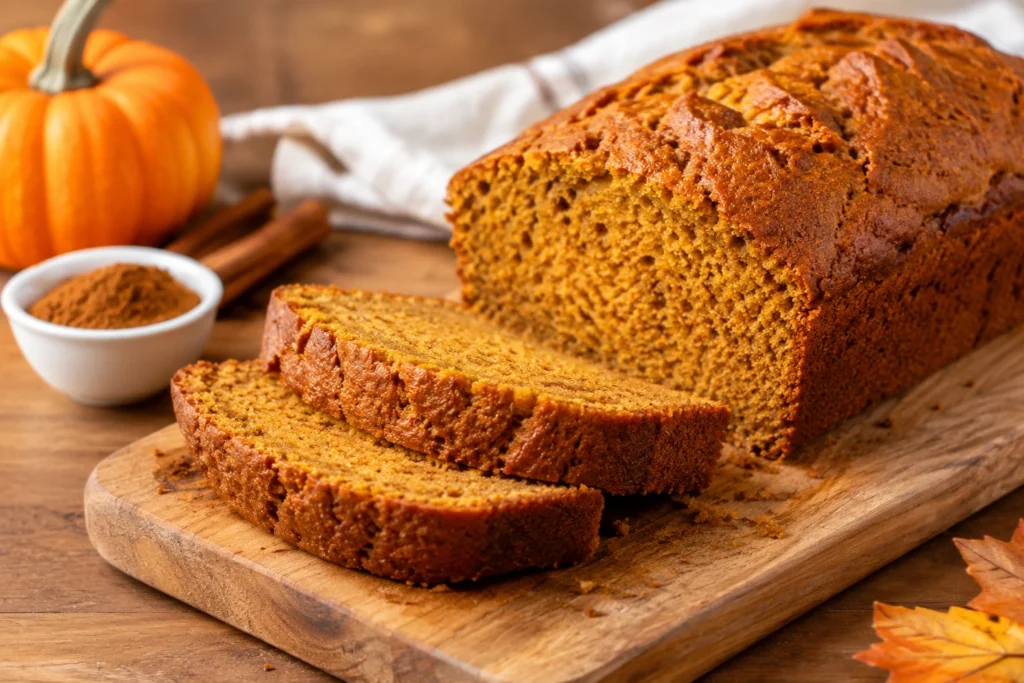
Barely sweet is how I make it. Like, could-pass-for-breakfast barely sweet.
Pumpkin puree is so wet that this loaf stays soft for days without any help, so I only make one change: Greek yogurt in place of half the oil, then a big heap of cinnamon, ginger, and nutmeg. The spices carry it.
Canned pumpkin is what I use and I don't feel guilty about it. Check the label says 100 percent pumpkin, not pie filling, because pie filling is already sweetened and spiced and will throw the whole recipe off. Fresh roasted pumpkin is watery and inconsistent anyway, so canned honestly gives you a better loaf.
Toast a thick slice the next morning with nut butter on top.
The nutrition: About 5g of protein a slice, and about 8g after a tablespoon of almond butter.
Cornbread
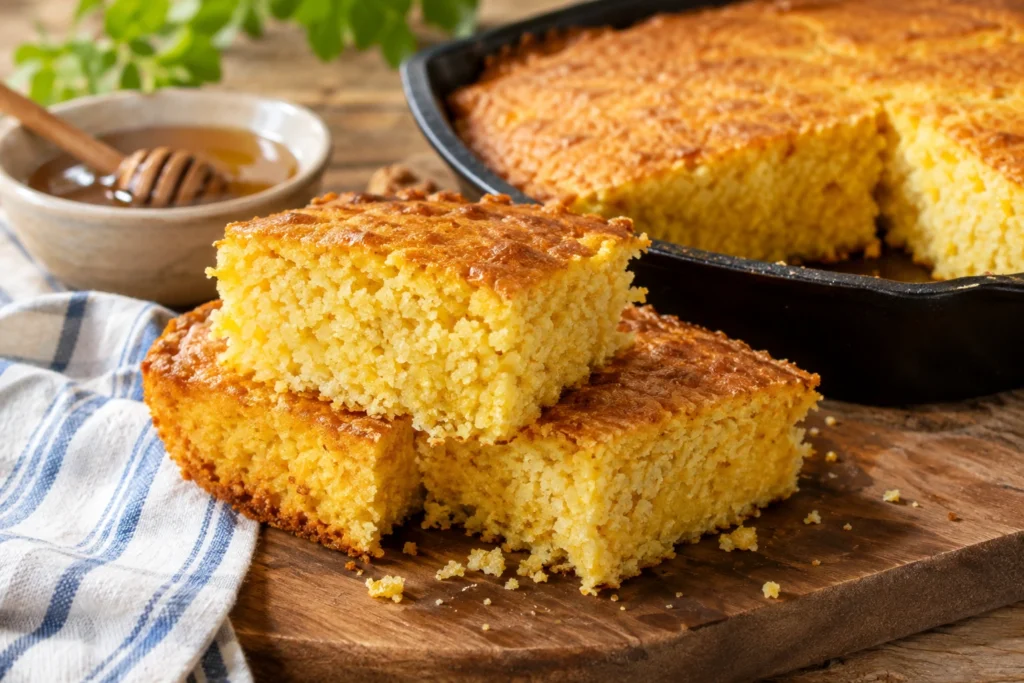
Cornbread is my move whenever chili or soup is on the stove, and if that's a regular thing at your house too, my one-pot dinners with real protein are all built for this pairing.
The one thing I'd insist on is a cast iron skillet, if you own one. Put it in the oven while you mix the batter, with a little butter melting in it, and pour the batter into a pan that's actually sizzling. Those crisp, almost fried edges are why anyone loves cornbread. Then I swap some of the milk for Greek yogurt so the middle stays tender instead of crumbling into sand.
About 30 minutes start to finish, and honey butter goes on top, obviously.
The nutrition: Around 4g of protein a square.
Cinnamon Rolls
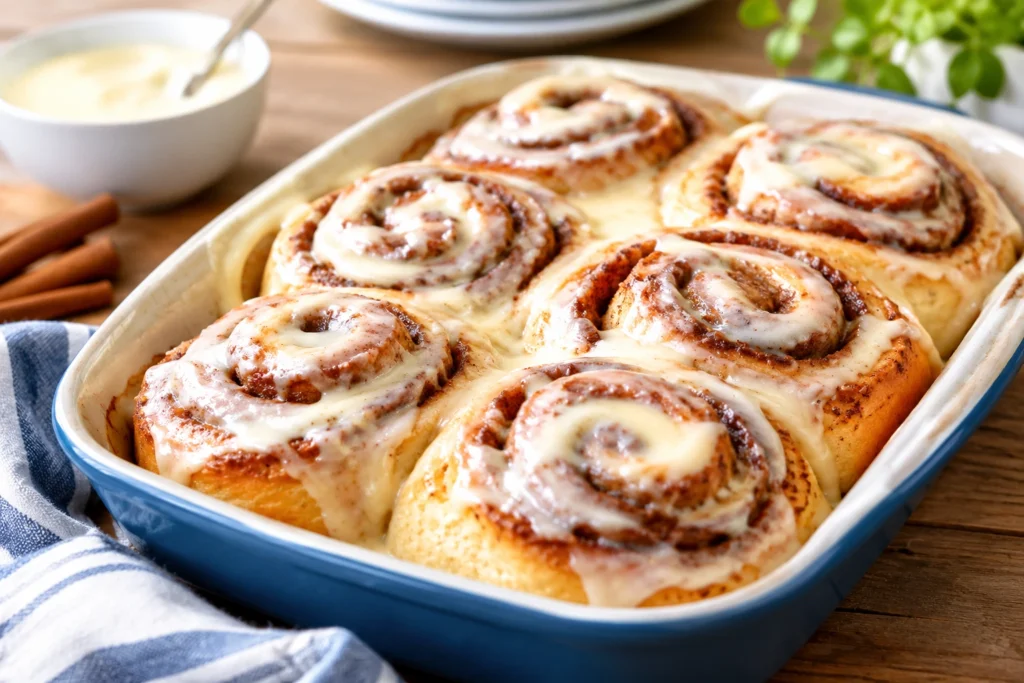
Confession: I do not make these fresh in the morning. I am not a morning baker. I make them the night before, tuck the pan in the fridge after shaping, and put them in the oven while the coffee brews.
A spoonful of Greek yogurt in the dough gives you a softer roll, and a couple more spoonfuls beaten into the cream cheese icing make it a little brighter and tangier. Nobody has ever asked why. The overnight rest slows the yeast, so the flavor is better and Sunday morning is just you turning the oven on.
The nutrition: About 8g of protein a roll.
Coffee Cake
A really good coffee cake is a tender crumb with a thick stripe of cinnamon streusel through the middle, and I'm not going to pretend it's more complicated than that.
Greek yogurt takes the place of sour cream one for one, so this is the easiest swap in the whole article. Keep the streusel cold and pea-sized when you sprinkle it, half in the middle and half on top, because if it melts into the batter you lose the crunch. It'll keep on the counter for a few days, in theory, though it has never lasted that long at my house.
I cut a thick square and call it a slow Saturday.
The nutrition: About 6g a slice.
Loaf Cake
The simplest thing here and one of the ones I bake the most. One bowl, one loaf pan, slices clean for days.
I keep the sugar modest so it works with coffee in the morning, and Greek yogurt takes over for some of the butter. The trick that makes it taste like something is citrus zest, lemon or orange, because a plain loaf cake with nothing in it can taste a little flat. Glaze it if you're feeling fancy. Leave it naked if you're not.
Three eggs plus the yogurt make it a decent afternoon snack.
The nutrition: About 6g of protein a slice.
Blueberry Cake
Halfway between a breakfast cake and a dessert, which is honestly the best place for a cake to be. It's stuffed with berries and stays moist because of yogurt in the batter.
I bake mine in a round pan and press extra blueberries into the top right before it goes in. They sink a bit, burst, and turn jammy. Frozen berries are fine, and I don't thaw them.
A square with coffee on a cold morning is hard to beat.
The nutrition: Roughly 5g a slice.
Spice Cake
Fall in dessert form: cinnamon, ginger, clove, and enough of each that you can actually taste them.
Check your spices before you start. If that jar of ginger has been in your cabinet since your last two moves, it tastes like dust, and so will the cake. Buy fresh. Then swap yogurt in for part of the oil, and try to let the cake sit a day before you eat it, because the spices settle and get better. A dollop of lightly sweetened whipped cream is all it needs.
The nutrition: About 5g a slice.
Chai Spice Cupcakes
They taste like a fall latte, and I mix my own chai spice, because the ratio matters more than the brand.
| Spice | Amount |
|---|---|
| Cinnamon | 2 teaspoons |
| Cardamom | 1 teaspoon |
| Ginger | 1 teaspoon |
| Cloves | half a teaspoon |
| Black pepper | a small pinch |
The pepper sounds ridiculous but it's what makes chai taste like chai instead of just cinnamon. Fold the spice mix into a yogurt-based vanilla batter, bake for about 20 minutes, and top with cream cheese frosting with a spoonful of Greek yogurt beaten in. The spices are strong enough that the yogurt tang just reads as part of the flavor.
The nutrition: Around 5g of protein a cupcake.
Built In: Already Made of Eggs and Dairy
Nothing to swap in this group. These eight get their protein from cheese, eggs, milk, and ricotta, so you can just bake and enjoy.
Don't Miss the Next Recipe
Get fresh recipes, meal prep systems, and high-protein meal ideas delivered to your inbox every week.
No spam. Unsubscribe anytime.
Cheddar Bay Biscuits
Dangerous to keep in the house. Sharp cheddar goes right into the dough, garlic butter goes on top, and they taste like the restaurant kind without any rolling or cutting, since you just drop spoonfuls onto the pan.
Cold butter, cold buttermilk, and a light hand. Stir until it barely holds together and then stop, even if it looks shaggy and wrong. The garlic butter gets brushed on after they come out of the oven, never before, or it sinks in and disappears.
Serve them next to one of my quick high-protein weeknight dinners and dinner feels finished.
The nutrition: About 5g of protein a biscuit, mostly from the cheddar, which is exactly how I justify a second one.
Cheese Biscuits
People ask me what makes these different from the cheddar bay ones. The honest answer is attitude. These are more savory and less buttery, with a lot more cheese folded through, and they bake up golden with crisp, lacy edges.
They're great next to a bowl of soup, and if the soup is the whole dinner, look at my high-protein dinners with 30g of protein for ones that actually fill you up. You can also split a biscuit and stuff it with an egg for breakfast. Eat them warm, while the cheese is still soft.
The nutrition: The higher-protein biscuit of the two, about 7g each, since there's a generous pile of sharp cheddar in every one.
Yorkshire Popovers
Popovers look impressive and are really just a thin batter in a very hot pan: eggs, milk, flour, salt.
There's one rule, and I do mean one. Don't open the oven door. Not to peek, not once. The steam is what puffs them up tall and hollow, and one sneaky look will deflate the whole batch. I opened the door at around minute 12 once, just to check, and watched six popovers sigh and sink right in front of me.
They're best with a roast, and if you're cooking a Sunday roast for a crowd on a budget, my cheap high-protein dinners to feed six has ideas for what goes alongside.
The nutrition: About 7g per popover, which is a lot for something that's mostly air.
Naan Bread
Homemade naan is way easier than it sounds, and yogurt is already in the traditional dough, so the protein comes free.
What you need is a very hot skillet. Roll the dough thin, lay it in a dry pan, and watch it bubble. It puffs and blisters in about two minutes a side, then gets brushed with garlic butter as it comes off. If you're already doing a skillet dinner, this is a great side, and my high-protein skillet dinners pair well with it.
I make a full batch and freeze the extras between sheets of parchment. They reheat in a dry pan in a couple of minutes and become a quick flatbread dinner.
The nutrition: About 7g a piece.
Lemon Ricotta Cake
Ricotta is why this cake is so tender. It keeps the crumb moist and adds a quiet bit of protein without changing the flavor at all, which is exactly what I want from an ingredient.
Look at your ricotta before you use it. If it looks watery, drain it in a fine strainer for 15 minutes, since wet ricotta makes a gummy cake. After that it's bright lemon zest, a handful of blueberries if you've got some, and a light hand with the sugar.
It's what I bring when I want people to think I tried harder than I did.
The nutrition: About 5g a slice.
Pumpkin Cheesecake Cups
Portion control that doesn't feel like portion control. Each cup is its own little dessert, easy to grab, hard to overeat.
Half the cream cheese in mine is plain Greek yogurt, which cuts the richness and lifts the protein. Press a graham cracker crust into the bottom of each cup, pour in the pumpkin filling, and bake just until the centers barely wobble. Then chill them fully before serving and top with whipped cream and a shake of cinnamon.
Bringing dessert to a crowd? My cheap high-protein dinners to feed six take care of the main course. Dairy and eggs mean these cups live in the fridge and shouldn't sit out more than two hours.
The nutrition: Roughly 7g each.
Cheesecake
The one I save for when I want to impress somebody.
I'll be upfront about the protein. The protein is decent for a dessert, but it's still a dessert, and a dense one. What I actually care about here is the method, because cheesecake is where people get nervous:
- Bring the cream cheese and eggs to room temperature first
- Mix on low speed, since extra air causes cracks
- Bake low and slow, then turn off the oven and crack the door for the last stretch
- Chill it overnight before you slice
The gentle heat and slow cooling are what stop the top from splitting. Leave the pan alone and it rewards you.
The nutrition: A slice runs about 8g of protein when I use Greek yogurt instead of sour cream.
Churro Bread Pudding
This is what happens when two desserts have a good idea at the same time. Cinnamon-sugar custard soaks into cubed bread and bakes up soft in the middle and crisp on top.
It's also the best possible use for a stale loaf. Fresh bread turns to mush, but day-old brioche or French bread drinks up the custard and keeps its shape. Let the cubes soak in the custard for about 20 minutes before baking so it goes all the way through.
Serve warm with a little cream.
The nutrition: About 10g of protein a serving, with four eggs and two cups of milk in there.
Leave the Butter Alone: Protein Goes on the Side
This is the group where I finally stopped fighting. Cookies, yeast breads, and pie depend on butter, sugar, and gluten doing very specific jobs, and every time I tried to force protein into them they got worse. So now I leave them alone and put the protein next to them, and when the plate needs more than a glass of milk, my 50g protein dinners fill the gap.
Here's what I actually pair them with.
| Bake | What I pair it with | Roughly added protein |
|---|---|---|
| Buttermilk Biscuits | A fried egg and a slice of cheese | 13g |
| Rosemary Focaccia | Ricotta and a soft egg | 11g |
| Sourdough Bread | Two eggs on top | 13g |
| Blueberry Pie | Half a cup of plain Greek yogurt | 11g |
| Gingerbread Cookies | A glass of milk | 8g |
| Chocolate Chip Cookies | A glass of milk | 8g |
Buttermilk Biscuits
Flaky biscuits are worth learning from scratch. Cold butter and a gentle hand are basically the whole secret to tall layers.
Cut the butter in until you can still see pea-sized pieces, pat the dough out, and fold it over itself a few times like a letter. Then cut straight down with a sharp cutter and do not twist, because twisting seals the edges and they won't rise. Fifteen minutes in a hot oven and they beat anything from a can.
I split one and tuck in a fried egg with a slice of cheese, and that's where the protein comes from.
The nutrition: About 4g a biscuit alone and around 17g with the egg and cheese.
Texas Roadhouse Rolls
These are why people show up early to dinner. Soft, a little sweet, brushed with butter, and very hard to stop at one.
They need rise time but almost no hands-on work, which is my favorite kind of project. Shape them, let them puff, bake until golden, and brush with cinnamon honey butter the second they come out. One thing I do differently now is weigh the flour on a kitchen scale, because rolls are the bake where a cup of flour packed too tight turns a pillow into a biscuit.
Make extra, since they'll be gone before the main course.
The nutrition: About 5g a roll, and honestly I just eat them next to a big plate of dinner.
Never Miss a Recipe
Fresh high-protein recipes, meal prep ideas, and kitchen tips, straight to your inbox every week. No spam, just good food.
No spam. Unsubscribe anytime.
Rosemary Focaccia
The bread I bake when I want to feel like I know what I'm doing.
A long, slow rise in the fridge gives you the big airy holes and chewy crust. Dimple the dough with oily fingers, scatter rosemary and flaky salt over it, and bake until deeply golden. Tear off a warm piece and dip it in good olive oil.
For an actual meal, I spread ricotta on a square and put a soft egg on top.
The nutrition: About 4g a piece alone, and closer to 15g with that topping.
Tomato Focaccia
Same dough, different mood. I make this one while tomatoes are still hanging around in early fall.
Press halved cherry tomatoes into the dough cut side up, then pour on a lot of olive oil. As it bakes, they burst and the juices soak into the bread. A little shaved Parmesan for the last few minutes adds a savory edge and a small hit of protein. Small tomatoes work better than big ones, because a sliced big tomato releases so much water the top goes soggy. Cherry or grape, halved, every time.
It feeds a crowd cut into squares, and it's just as good torn apart at the counter.
The nutrition: About 5g a square.
Sourdough Bread
Sourdough is the fall project I look forward to and also the one where I'm least qualified to lecture anybody. My starter has nearly died twice.
This is the simple timeline I follow:
- Feed the starter the night before
- Mix the dough in the morning, then fold it every half hour or so during the day
- Shape it and chill it in the fridge overnight
- Bake it hot in a covered pot the next day
The long ferment builds the flavor while you basically wait around. A fresh loaf with a crackly crust is worth the patience, and thick slices make the best toast of your week, especially with two eggs on top. Add a bowl of soup and it's dinner, and my one-pot dinners with real protein have plenty of soups and stews that fit.
The nutrition: About 5g a slice by itself and about 18g with those eggs.
Blueberry Pie
A homemade blueberry pie can turn an ordinary weekend into an event. The filling bubbles up jammy under a golden, flaky crust.
Fresh or frozen berries both work, so this isn't only a summer thing. With frozen, don't thaw them, just toss them with sugar and cornstarch and pile them in. Set the pie on a sheet pan to catch drips, and let it cool for a couple of hours before cutting or the filling runs everywhere. I know you won't want to wait.
My lighter answer to ice cream is a scoop of plain Greek yogurt on the side.
The nutrition: About 5g of protein a slice, and about 16g with half a cup of the yogurt.
Gingerbread Cookies
The cookie I make once the holidays start creeping close. The dough rolls easily, holds its shape, and tastes warm with molasses and spice.
Pull them just before they look done, because they firm up as they cool and that's how they stay soft. Overbaked gingerbread turns into a decoration you can't eat. And roll the dough between two sheets of parchment instead of flouring the counter, since extra flour makes the cookies dry and pale. If it gets sticky while you work, slide it into the fridge for ten minutes.
They're as fun to decorate as they are to eat.
The nutrition: About 2g a cookie, and a glass of milk covers the rest.
Shortbread Cookies
Remember the sad batch I mentioned? This is it. I got ambitious once and replaced some of the butter with Greek yogurt, and what came out was closer to a dry cracker.
Shortbread is butter, sugar, and flour, and that's the entire magic, so nothing gets substituted. Chill the dough, bake low so the cookies stay pale, and dip an edge in chocolate if you want them to look fancy. They keep for a couple of weeks.
The nutrition: about 2g a cookie. With so few ingredients the butter is the flavor, and anything you swap out shows.
Chocolate Chip Cookies
There's a reason they never go out of style. I like crisp edges and a soft, chewy middle.
Underbake them slightly. Pull the tray while the centers still look a little doughy, sprinkle on flaky salt, and let them finish setting on the pan. If you have the patience, chill the dough for an hour or overnight, since the flavor gets deeper and butterscotchy and the cookies spread less. I don't always have the patience, and they're still good.
A glass of milk is all they ask for.
The nutrition: About 2g each, and roughly 8g more with the milk.
Brown Sugar Cookies
Like a snickerdoodle's more caramel-forward cousin. The brown sugar gives them a deep, almost toffee flavor and a chewy bite.
No chilling required, so this is my move when I want cookies in under an hour. Scoop, flatten a little, bake, and leave them on the tray for five minutes before moving them, since they're fragile when hot and firm up as they cool. Dark brown sugar is best if you have it, because the extra molasses makes them chewier. Light brown works fine.
The nutrition: about 2g each.
How I Plan a Fall Baking Weekend
I obviously don't bake all 28 in a season. What I do is pick two or three per weekend, and I try to pair one fast bake with one that needs a long rise or a long chill, so both the oven and my afternoon get used.
| Weekend | Bake this | Then this | Why the pairing works |
|---|---|---|---|
| Cozy start | Blueberry Muffins | Rosemary Focaccia (dough rises overnight) | Muffins Saturday, focaccia goes in the fridge while you relax |
| Soup night | Cornbread | Pumpkin Bread | Cornbread with dinner, loaf for the week |
| Brunch weekend | Cinnamon Rolls (made ahead) | Coffee Cake | One goes in the fridge overnight, one bakes while you eat |
| Dessert weekend | Cheesecake (chills overnight) | Gingerbread Cookies | Cheesecake sets while you decorate |
| Bread project | Sourdough | Texas Roadhouse Rolls | Both need long rises, so plan them together |
The trick is letting the fridge do the waiting for you. Anything that rests overnight, like cinnamon rolls, focaccia dough, rolls, cheesecake, and sourdough, is a gift to a busy person.
How Long Everything Keeps
Storage matters more than people think, especially for anything with dairy. My rule of thumb is that anything with cream cheese, ricotta, custard, or a lot of eggs goes in the fridge and doesn't sit out longer than two hours.
| Type of bake | Counter | Fridge | Freezer |
|---|---|---|---|
| Muffins, quick breads, loaf cakes | 2 to 3 days, airtight | Not needed | Up to 3 months |
| Yeast breads, rolls, focaccia, naan | 1 to 2 days | Not ideal, it dries them | Up to 2 months |
| Biscuits and popovers | Same day is best | 2 days | Up to 2 months (biscuits) |
| Cookies | 5 to 7 days (shortbread about 2 weeks) | Not needed | Up to 3 months |
| Cheesecake, cheesecake cups, ricotta cake, bread pudding | Never longer than 2 hours | 3 to 4 days | Cheesecake up to 2 months |
| Fruit pie | Up to 2 days | Up to 4 days | Up to 3 months |
These are conservative numbers from my own kitchen, so if something smells or looks off, toss it.
A few freezer habits that have saved me:
- Cool everything completely before wrapping, or you get ice crystals
- Wrap muffins and slices one by one, then bag them together
- Freeze cookie dough balls flat, then bake from frozen with an extra minute or two
- Write the date on the bag, because you will forget
The same freezer habit works for dinners, by the way. My healthy meal prep dinner ideas are the meals I stock next to the muffins.
The Mistakes That Ruin Fall Baking
I've made every one of these, some more than once. Fix these five and most recipes work.
- Trusting the oven dial. Most home ovens run 15 to 25 degrees off. A five dollar oven thermometer is the best baking tool I own.
- Scooping flour with the measuring cup. Scooping packs it down and gives you up to 30 percent extra. Spoon it in and level it off, or weigh it.
- Skipping room temperature. Cold eggs and cold cream cheese don't blend smoothly, and you get lumps and cracks. Set them out an hour before.
- Overmixing. Muffins, quick breads, and biscuits want you to stop as soon as the flour disappears. A few lumps are fine.
- Old spices and old baking powder. Both lose their punch. If your baking powder is over six months old, drop a spoonful in hot water, and if it doesn't fizz, replace it.
Butter matters too. I bake with unsalted butter so I control the salt, and I keep it cold for biscuits and shortbread, soft for cakes, and melted for muffins and cornbread. The recipe cards at the bottom spell out which is which.
Balancing a Baking Weekend
I'll be honest, if I bake all day I'm not eating a balanced meal by dinner. It's cinnamon rolls, then cookies, then more cookies. So on baking days I keep dinner simple and heavy on protein. When I want something serious after a long afternoon, I go to my 50g protein dinners, and it's a much better system than trying to make every muffin do the work of a meal.
Questions People Ask About Protein and Fall Baking
Can I add protein powder to any baking recipe?
No, and that's the main thing I learned the hard way. Protein powder soaks up moisture, so it works in wet, forgiving batters like banana bread and loaf cakes, but it fails in cookies, shortbread, and flaky biscuits. Keep it to about a quarter cup per 2 cups of flour, taken out of the flour, with a splash of extra milk. Baking guides generally put the ceiling at about a quarter of the flour for whey and up to a third for casein.
How much Greek yogurt can I swap for oil or butter?
Up to half in muffins, quick breads, and cakes. Go past that and the texture gets dense and a little gummy. Sour cream swaps one for one with plain Greek yogurt.
Which protein powder bakes best?
Both whey and casein work, but whey has the lower limit, about a quarter of the flour before baked goods turn dry and rubbery, while casein can go up to about a third. Both soak up extra liquid, so add a splash more milk. Vanilla flavors blend into baked goods best, and every brand behaves a little differently, so test a small batch first.
Will Greek yogurt make my baking taste sour?
Not in spiced or sweet bakes, because the tang disappears behind cinnamon, banana, pumpkin, or lemon. It's most noticeable in plain vanilla cakes. If that worries you, use full fat yogurt, which tastes milder.
Can I freeze these?
Most of them, yes. Muffins, quick breads, biscuits, cinnamon rolls, cookies, and cheesecake all freeze well. Popovers are best fresh, and fruit fillings and cream toppings are better added after thawing.
How do I keep muffins and quick breads from drying out?
Don't overbake them, for starters. Pull them when a toothpick comes out with a few moist crumbs instead of totally clean. Then store them airtight once they're completely cool. A slice of bread in the container helps too.
Is it really unsafe to taste the batter?
Yes, according to the CDC. Most flour is raw and can carry germs like E. coli, and raw eggs can carry Salmonella. It's a small risk that's easy to avoid, so I just bake it first.
Can I make these dairy free?
Many of them, with swaps like plant butter and unsweetened plant milk. Just know the protein will drop, since dairy is doing most of the work. Ricotta cake, cheesecake, and the cheese biscuits are the hardest to convert.
Which recipe should a beginner start with?
Blueberry muffins or the loaf cake. Both are one bowl, forgiving, and hard to ruin. Once you're comfortable, try banana bread with the yogurt swap, then work up to biscuits and popovers.
How do I get tall, domed muffin tops?
Fill the cups almost to the brim and start the oven hot, 425°F for the first 5 minutes, then drop to 350°F. Also, don't overmix. Stir just until the flour disappears.
What's the easiest way to add protein to a baking day?
Serve the bake with something. Eggs with biscuits or focaccia, Greek yogurt with pie, milk with cookies. It costs nothing, ruins nothing, and works every time. For a full meal after a baking day, my high-protein dinners with 30g of protein do the same job.
Related Articles
- Healthy Meal Prep Dinner Ideas
- High-Protein Meal Prep Ideas on a Budget
- Quick High-Protein Dinners for Busy School Nights
- One-Pot Dinners with Real Protein
- 50g Protein Dinners
1. Blueberry Muffins
Approx. 5g ProteinIngredients: 2 cups all-purpose flour, 3/4 cup sugar, 2 tsp baking powder, 1/2 tsp baking soda, 1/2 tsp salt, 2 eggs, 3/4 cup plain Greek yogurt, 1/4 cup milk, 1/4 cup oil, 1 tsp vanilla, 1 1/2 cups blueberries (tossed in 1 tbsp flour).
Step 1: Preheat the oven to 425°F and line a 12-cup muffin tin.
Step 2: Whisk flour, sugar, baking powder, baking soda, and salt in a large bowl.
Step 3: In another bowl, whisk eggs, Greek yogurt, milk, oil, and vanilla.
Step 4: Pour the wet mixture into the dry and stir just until the flour disappears. A few lumps are fine.
Step 5: Fold in the floured blueberries and fill the cups almost to the top.
Step 6: Bake 5 minutes at 425°F, then lower the oven to 350°F and bake 15 to 17 minutes until a toothpick comes out with a few moist crumbs.
2. Banana Bread
Approx. 7g ProteinIngredients: 3 very ripe bananas (mashed), 1 1/2 cups all-purpose flour, 1/4 cup vanilla casein or blended protein powder (about 20 g protein; check your label), 3/4 tsp baking soda, 1/2 tsp salt, 1/2 tsp cinnamon, 1/2 cup plain Greek yogurt, 1/4 cup oil or melted butter, 1/2 cup sugar, 2 eggs, 1 tsp vanilla, 2 to 3 tbsp milk.
Step 1: Preheat the oven to 350°F and grease a 9 by 5 loaf pan.
Step 2: Whisk flour, protein powder, baking soda, salt, and cinnamon.
Step 3: In a large bowl, mix the mashed bananas, Greek yogurt, oil, sugar, eggs, and vanilla.
Step 4: Stir the dry ingredients into the wet until just combined, adding milk a tablespoon at a time if the batter looks thick.
Step 5: Pour into the pan and bake 50 to 55 minutes until a toothpick comes out with a few moist crumbs.
Step 6: Cool in the pan for 10 minutes, then move to a rack.
3. Pumpkin Bread
Approx. 5g ProteinIngredients: 1 1/2 cups all-purpose flour, 1 tsp baking soda, 1/2 tsp baking powder, 1/2 tsp salt, 2 tsp cinnamon, 1 tsp ginger, 1/2 tsp nutmeg, 1 cup 100 percent pumpkin puree, 2 eggs, 1/2 cup sugar, 1/4 cup oil, 1/2 cup plain Greek yogurt.
Step 1: Preheat the oven to 350°F and grease a 9 by 5 loaf pan.
Step 2: Whisk flour, baking soda, baking powder, salt, and spices.
Step 3: In another bowl, whisk pumpkin, eggs, sugar, oil, and Greek yogurt.
Step 4: Fold the wet into the dry until just combined.
Step 5: Pour into the pan and bake 55 to 60 minutes until a toothpick comes out clean.
Step 6: Cool 15 minutes in the pan, then turn out onto a rack.
4. Cornbread
Approx. 4g ProteinIngredients: 1 cup cornmeal, 1 cup all-purpose flour, 1/4 cup sugar, 2 tsp baking powder, 1/2 tsp salt, 2 eggs, 1/2 cup plain Greek yogurt, 1/2 cup milk, 4 tbsp melted butter, 1 tbsp butter for the pan.
Step 1: Preheat the oven to 400°F. Put a 10-inch cast iron skillet in the oven with 1 tbsp butter to heat.
Step 2: Whisk cornmeal, flour, sugar, baking powder, and salt.
Step 3: Whisk eggs, Greek yogurt, milk, and melted butter, then stir into the dry ingredients until just combined.
Step 4: Carefully pour the batter into the hot, sizzling skillet.
Step 5: Bake 20 to 25 minutes until golden and a toothpick comes out clean.
Step 6: Cut into 12 pieces and serve warm with honey butter.
5. Buttermilk Biscuits
Approx. 4g ProteinIngredients: 2 1/2 cups all-purpose flour, 1 tbsp baking powder, 1 tsp sugar, 1 tsp salt, 1/2 cup (1 stick) cold butter (cubed), 1 cup cold buttermilk, extra flour for dusting.
Step 1: Preheat the oven to 450°F.
Step 2: Whisk flour, baking powder, sugar, and salt. Cut in the cold butter until pea-sized pieces remain.
Step 3: Stir in the buttermilk just until a shaggy dough forms.
Step 4: Pat the dough out on a floured surface, fold it over itself like a letter 3 or 4 times, then pat to 1 inch thick.
Step 5: Cut straight down with a sharp round cutter. Do not twist.
Step 6: Place close together on a baking sheet and bake 12 to 15 minutes until golden.
6. Cheddar Bay Biscuits
Approx. 5g ProteinIngredients: 2 cups all-purpose flour, 1 tbsp baking powder, 1/2 tsp salt, 1/2 tsp garlic powder, 6 tbsp cold butter (cubed), 1 cup shredded sharp cheddar, 3/4 cup cold buttermilk. Garlic butter: 2 tbsp melted butter, 1 small clove garlic (minced), 1 tsp chopped parsley.
Step 1: Preheat the oven to 400°F and line a baking sheet.
Step 2: Whisk flour, baking powder, salt, and garlic powder. Cut in the cold butter until pea-sized pieces remain.
Step 3: Stir in the cheddar, then the buttermilk, just until the dough comes together.
Step 4: Drop 12 mounds onto the sheet and bake 14 to 16 minutes until golden.
Step 5: Stir together the garlic butter and brush over the biscuits after they come out of the oven.
7. Cheese Biscuits
Approx. 7g ProteinIngredients: 2 cups all-purpose flour, 1 tbsp baking powder, 1/2 tsp salt, 1/2 tsp black pepper, 6 tbsp cold butter (cubed), 1 1/2 cups shredded sharp cheddar, 3/4 cup cold milk.
Step 1: Preheat the oven to 425°F and line a baking sheet.
Step 2: Whisk flour, baking powder, salt, and pepper. Cut in the butter until pea-sized pieces remain.
Step 3: Toss in the cheddar, then stir in the milk just until a dough forms.
Step 4: Drop 10 mounds onto the sheet.
Step 5: Bake 13 to 15 minutes until golden with crisp, cheesy edges.
Step 6: Serve warm.
8. Texas Roadhouse Rolls
Approx. 5g ProteinIngredients: 3 1/2 cups all-purpose flour, 2 1/4 tsp instant yeast, 1 tsp salt, 1/4 cup sugar, 1 cup warm milk, 1 egg, 4 tbsp melted butter. Cinnamon honey butter: 4 tbsp softened butter, 1 tbsp honey, 1/2 tsp cinnamon, pinch of salt.
Step 1: Mix flour, yeast, salt, and sugar. Add warm milk, egg, and melted butter and knead 8 minutes until smooth.
Step 2: Cover and let rise about 1 hour until doubled.
Step 3: Divide into 12 pieces, shape into rolls, and place in a buttered pan.
Step 4: Let rise 30 to 40 minutes until puffy.
Step 5: Bake at 375°F for about 15 minutes until golden.
Step 6: Stir together the honey butter and brush over the hot rolls.
9. Yorkshire Popovers
Approx. 7g ProteinIngredients: 1 cup all-purpose flour, 1 cup whole milk (room temperature), 3 eggs (room temperature), 1/2 tsp salt, 1 tbsp melted butter, extra butter or oil for the pan.
Step 1: Put a popover pan or muffin tin in the oven and heat to 425°F.
Step 2: Blend the flour, milk, eggs, salt, and melted butter until smooth. Let the batter rest 10 minutes.
Step 3: Carefully brush the hot pan with butter and fill each cup about halfway.
Step 4: Bake at 425°F for 20 minutes without opening the oven door.
Step 5: Lower to 350°F and bake 15 minutes more until deep golden and crisp.
Step 6: Serve immediately with a roast or stew.
10. Rosemary Focaccia
Approx. 4g ProteinIngredients: 4 cups all-purpose flour, 2 tsp salt, 1 tsp instant yeast, 1 3/4 cups water, 1/3 cup olive oil (divided), 2 sprigs fresh rosemary, flaky sea salt.
Step 1: Stir flour, salt, yeast, water, and 2 tbsp olive oil into a sticky dough. Cover and refrigerate overnight.
Step 2: Pour 2 tbsp olive oil into a sheet pan and stretch the dough to fit, resting it if it springs back.
Step 3: Let it sit 30 to 45 minutes until puffy.
Step 4: Dimple deeply with oiled fingertips. Drizzle with the remaining oil and top with rosemary and flaky salt.
Step 5: Bake at 450°F for 22 to 25 minutes until deeply golden.
Step 6: Serve warm with olive oil, or top with ricotta and a soft egg.
11. Tomato Focaccia
Approx. 5g ProteinIngredients: Rosemary Focaccia dough (4 cups flour, 2 tsp salt, 1 tsp instant yeast, 1 3/4 cups water, 1/3 cup olive oil), 1 1/2 cups cherry tomatoes (halved), 1/4 cup shaved Parmesan, flaky sea salt, dried oregano.
Step 1: Make the dough and let it rise in the fridge overnight, as for Rosemary Focaccia.
Step 2: Stretch into an oiled sheet pan and let it sit until puffy.
Step 3: Dimple the dough and press the tomatoes in cut side up. Drizzle generously with olive oil.
Step 4: Sprinkle with flaky salt and oregano.
Step 5: Bake at 450°F for about 22 minutes, adding the Parmesan for the last 3 minutes.
Step 6: Cool slightly and cut into squares.
12. Naan Bread
Approx. 7g ProteinIngredients: 3 cups all-purpose flour, 1 tsp instant yeast, 1 tsp sugar, 1 tsp salt, 1/2 tsp baking powder, 1/2 cup plain Greek yogurt, 3/4 cup warm milk, 2 tbsp oil. Garlic butter: 3 tbsp melted butter, 2 cloves garlic (minced), chopped parsley.
Step 1: Mix the dry ingredients. Add yogurt, warm milk, and oil and knead 5 minutes until smooth.
Step 2: Cover and let rest 1 hour until puffy.
Step 3: Divide into 8 pieces and roll each thin.
Step 4: Heat a dry cast iron skillet over high heat. Cook each naan 1 to 2 minutes per side until puffed and blistered.
Step 5: Brush with garlic butter as they come off the pan.
Step 6: Freeze extras between sheets of parchment.
13. Sourdough Bread
Approx. 5g ProteinIngredients: 4 cups (500 g) bread flour, 1 1/2 cups (340 g) water, 1/2 cup (100 g) active sourdough starter, 2 tsp salt.
Step 1: The night before, feed your starter.
Step 2: In the morning, mix the flour, water, and starter and rest 30 minutes. Add the salt.
Step 3: Over the next 4 to 5 hours, fold the dough every 30 minutes, 3 or 4 times, until puffy.
Step 4: Shape into a round, place in a floured bowl, cover, and refrigerate overnight.
Step 5: Preheat a Dutch oven at 450°F for 30 minutes. Score the loaf and bake covered for 20 minutes.
Step 6: Uncover and bake 20 to 25 minutes more until deeply browned. Cool before slicing.
14. Cinnamon Rolls
Approx. 8g ProteinIngredients: Dough: 4 cups all-purpose flour, 1/4 cup sugar, 2 1/4 tsp instant yeast, 1 tsp salt, 1 cup warm milk, 1/4 cup plain Greek yogurt, 2 eggs, 4 tbsp melted butter. Filling: 1/2 cup brown sugar, 2 tbsp cinnamon, 4 tbsp softened butter. Icing: 4 oz cream cheese, 1/4 cup Greek yogurt, 1 cup powdered sugar, 1 tsp vanilla, splash of milk.
Step 1: Mix the dough ingredients and knead 8 minutes until smooth. Let rise 1 hour until doubled.
Step 2: Roll into a large rectangle. Spread with softened butter and sprinkle with brown sugar and cinnamon.
Step 3: Roll up tightly and cut into 12 rolls. Place in a buttered 9 by 13 pan.
Step 4: Cover and refrigerate overnight, or let rise 45 minutes if baking the same day.
Step 5: Bake at 350°F for 22 to 25 minutes until golden.
Step 6: Beat the icing ingredients until smooth and spread over the warm rolls.
15. Coffee Cake
Approx. 6g ProteinIngredients: Cake: 2 cups all-purpose flour, 3/4 cup sugar, 1 tsp baking powder, 1/2 tsp baking soda, 1/2 tsp salt, 1/2 cup softened butter, 2 eggs, 1 cup plain Greek yogurt, 1 tsp vanilla. Streusel: 3/4 cup flour, 1/2 cup brown sugar, 1 tbsp cinnamon, 6 tbsp cold butter.
Step 1: Preheat the oven to 350°F and grease a 9 by 9 pan.
Step 2: Rub the streusel ingredients together until pea-sized crumbs form and chill while you mix the cake.
Step 3: Beat butter and sugar, then add the eggs, Greek yogurt, and vanilla.
Step 4: Fold in the flour, baking powder, baking soda, and salt just until combined.
Step 5: Spread half the batter in the pan, sprinkle with half the streusel, add the remaining batter, and top with the rest of the streusel.
Step 6: Bake 38 to 42 minutes until a toothpick comes out clean.
16. Blueberry Pie
Approx. 5g ProteinIngredients: Crust: 2 1/2 cups all-purpose flour, 1 tsp salt, 1 tbsp sugar, 1 cup cold butter (cubed), 6 to 8 tbsp ice water. Filling: 6 cups blueberries (fresh or frozen, not thawed), 3/4 cup sugar, 1/4 cup cornstarch, 1 tbsp lemon juice, 1 tsp lemon zest, pinch of salt. 1 egg for egg wash.
Step 1: Mix flour, salt, and sugar. Cut in the butter, then add ice water a tablespoon at a time until the dough holds together. Divide in two, and chill 1 hour.
Step 2: Roll one disc and fit it into a 9-inch pie plate.
Step 3: Toss the blueberries with sugar, cornstarch, lemon juice, zest, and salt and pile into the crust.
Step 4: Roll out the second disc, cover the pie, crimp, and cut vents. Brush with beaten egg.
Step 5: Bake on a sheet pan at 425°F for 20 minutes, then lower to 375°F for 40 minutes until the filling bubbles.
Step 6: Cool at least 2 hours before cutting. Serve with plain Greek yogurt.
17. Loaf Cake
Approx. 6g ProteinIngredients: 2 cups all-purpose flour, 1 tsp baking powder, 1/2 tsp baking soda, 1/2 tsp salt, 1/2 cup softened butter, 3/4 cup sugar, 3 eggs, 1/2 cup plain Greek yogurt, zest of 1 lemon or orange, 1 tsp vanilla, 1/4 cup milk. Optional glaze: 1/2 cup powdered sugar and 1 tbsp lemon juice.
Step 1: Preheat the oven to 350°F and line a 9 by 5 loaf pan.
Step 2: Whisk flour, baking powder, baking soda, and salt.
Step 3: Beat butter, sugar, and zest until fluffy. Add eggs one at a time, then the yogurt, vanilla, and milk.
Step 4: Fold in the dry ingredients just until combined.
Step 5: Bake 50 to 55 minutes until a toothpick comes out clean.
Step 6: Cool completely, then drizzle with glaze if you like.
18. Blueberry Cake
Approx. 5g ProteinIngredients: 2 cups all-purpose flour, 3/4 cup sugar, 2 tsp baking powder, 1/2 tsp salt, 1/2 cup softened butter, 2 eggs, 3/4 cup plain Greek yogurt, 1/4 cup milk, 1 tsp vanilla, 2 cups blueberries (1 1/2 cups in the batter, 1/2 cup for the top).
Step 1: Preheat the oven to 350°F and grease a 9-inch round pan.
Step 2: Whisk flour, baking powder, and salt.
Step 3: Beat butter and sugar, then add the eggs, Greek yogurt, milk, and vanilla.
Step 4: Fold in the dry ingredients, then 1 1/2 cups of the blueberries.
Step 5: Spread in the pan and press the remaining blueberries into the top.
Step 6: Bake 38 to 42 minutes until golden and a toothpick comes out clean.
19. Lemon Ricotta Cake
Approx. 5g ProteinIngredients: 1 1/2 cups all-purpose flour, 1 1/2 tsp baking powder, 1/2 tsp salt, 1 cup whole milk ricotta (drained if watery), 3/4 cup sugar, 1/2 cup softened butter, 3 eggs, zest of 2 lemons, 3 tbsp lemon juice, 1 tsp vanilla, 1/2 cup blueberries (optional).
Step 1: Preheat the oven to 350°F and grease a 9-inch springform or round pan.
Step 2: Drain the ricotta in a fine strainer for 15 minutes if it looks wet.
Step 3: Beat butter, sugar, and lemon zest, then add the eggs one at a time. Mix in the ricotta, lemon juice, and vanilla.
Step 4: Fold in the flour, baking powder, and salt just until combined, then the blueberries.
Step 5: Bake 40 to 45 minutes until golden and a toothpick comes out clean.
Step 6: Cool before slicing.
20. Spice Cake
Approx. 5g ProteinIngredients: 2 1/2 cups all-purpose flour, 2 tsp baking powder, 1/2 tsp baking soda, 1/2 tsp salt, 2 tsp cinnamon, 1 1/2 tsp ginger, 1/2 tsp cloves, 1/4 tsp nutmeg, 1 cup brown sugar, 1/3 cup oil, 1/2 cup plain Greek yogurt, 2 eggs, 1 cup milk, 1 tsp vanilla.
Step 1: Preheat the oven to 350°F and grease a 9 by 13 pan.
Step 2: Whisk flour, baking powder, baking soda, salt, and all the spices.
Step 3: In another bowl, whisk brown sugar, oil, Greek yogurt, eggs, milk, and vanilla.
Step 4: Fold the wet into the dry until just combined.
Step 5: Bake 35 to 40 minutes until a toothpick comes out clean.
Step 6: Cool and serve with lightly sweetened whipped cream. The flavor deepens the next day.
21. Chai Spice Cupcakes
Approx. 5g ProteinIngredients: Cupcakes: 1 3/4 cups all-purpose flour, 1 1/2 tsp baking powder, 1/4 tsp salt, 2 tsp cinnamon, 1 tsp cardamom, 1 tsp ginger, 1/2 tsp cloves, small pinch black pepper, 1/2 cup softened butter, 3/4 cup sugar, 2 eggs, 1/2 cup plain Greek yogurt, 1/2 cup milk, 1 tsp vanilla. Frosting: 4 oz cream cheese, 4 tbsp butter, 1/4 cup Greek yogurt, 2 cups powdered sugar, 1/2 tsp cinnamon.
Step 1: Preheat the oven to 350°F and line a 12-cup muffin tin.
Step 2: Whisk the flour, baking powder, salt, and all the spices.
Step 3: Beat butter and sugar, then add the eggs, Greek yogurt, milk, and vanilla.
Step 4: Fold in the dry ingredients until just combined.
Step 5: Fill the cups about two-thirds full and bake 18 to 20 minutes.
Step 6: Cool completely, then beat the frosting ingredients until smooth and swirl on top.
22. Pumpkin Cheesecake Cups
Approx. 7g ProteinIngredients: Crust: 1 cup graham cracker crumbs, 3 tbsp melted butter. Filling: 8 oz cream cheese (softened), 1 cup plain Greek yogurt, 1/2 cup pumpkin puree, 1/3 cup sugar, 2 eggs, 1 tsp cinnamon, 1/2 tsp pumpkin pie spice, 1 tsp vanilla. Topping: whipped cream and cinnamon.
Step 1: Preheat the oven to 325°F and set 8 small jars or ramekins on a baking sheet.
Step 2: Mix the graham crumbs and butter and press into the bottom of each cup.
Step 3: Beat the cream cheese and Greek yogurt until smooth. Add pumpkin, sugar, eggs, spices, and vanilla and mix on low.
Step 4: Divide the filling among the cups.
Step 5: Bake 22 to 25 minutes until the centers barely wobble.
Step 6: Cool, then chill at least 4 hours. Top with whipped cream and cinnamon.
23. Cheesecake
Approx. 8g ProteinIngredients: Crust: 1 1/2 cups graham cracker crumbs, 5 tbsp melted butter, 2 tbsp sugar. Filling: 24 oz cream cheese (room temperature), 3/4 cup sugar, 3 eggs (room temperature), 1 cup plain Greek yogurt, 1 tsp vanilla, 1 tbsp lemon juice, 2 tbsp flour.
Step 1: Preheat the oven to 325°F. Mix the crust ingredients and press into the bottom of a 9-inch springform pan.
Step 2: Beat the cream cheese on low speed until smooth, then add the sugar and flour.
Step 3: Add the eggs one at a time on low speed, then the Greek yogurt, vanilla, and lemon juice. Do not overmix.
Step 4: Pour over the crust and bake 55 to 60 minutes until the edges are set and the center still jiggles slightly.
Step 5: Turn off the oven, crack the door, and leave the cheesecake inside for 1 hour.
Step 6: Cool, then chill overnight before slicing.
24. Gingerbread Cookies
Approx. 2g ProteinIngredients: 3 cups all-purpose flour, 1 tsp baking soda, 1 tbsp ground ginger, 1 tsp cinnamon, 1/2 tsp cloves, 1/2 tsp salt, 1/2 cup softened butter, 1/2 cup brown sugar, 1/2 cup molasses, 1 egg, 1 tsp vanilla.
Step 1: Whisk flour, baking soda, spices, and salt.
Step 2: Beat butter and brown sugar, then mix in the molasses, egg, and vanilla.
Step 3: Stir in the dry ingredients, divide the dough in two, and chill 1 hour.
Step 4: Roll between two sheets of parchment to 1/4 inch thick and cut shapes.
Step 5: Bake at 350°F for 8 to 10 minutes. Pull them just before they look done.
Step 6: Cool on the pan for 5 minutes, then decorate once fully cool.
25. Shortbread Cookies
Approx. 2g ProteinIngredients: 1 cup unsalted butter (softened), 1/2 cup sugar, 2 cups all-purpose flour, 1/4 tsp salt. Optional: melted chocolate for dipping.
Step 1: Beat the butter and sugar until creamy.
Step 2: Mix in the flour and salt until a soft dough forms.
Step 3: Press into a 9-inch pan or roll and cut into shapes. Chill 30 minutes.
Step 4: Bake at 325°F for 20 to 25 minutes until pale and just golden at the edges.
Step 5: Cut into wedges while warm and cool completely.
Step 6: Dip an edge in melted chocolate if you like.
26. Chocolate Chip Cookies
Approx. 2g ProteinIngredients: 2 1/4 cups all-purpose flour, 1 tsp baking soda, 1 tsp salt, 1 cup softened butter, 3/4 cup granulated sugar, 3/4 cup brown sugar, 2 eggs, 2 tsp vanilla, 2 cups chocolate chips, flaky salt.
Step 1: Preheat the oven to 375°F and line two baking sheets.
Step 2: Whisk flour, baking soda, and salt.
Step 3: Beat butter and both sugars until fluffy, then add the eggs and vanilla.
Step 4: Stir in the flour, then the chocolate chips. Chill the dough for an hour if you have time.
Step 5: Scoop onto the sheets and bake 9 to 11 minutes. Pull when the centers still look a little soft.
Step 6: Sprinkle with flaky salt and cool on the pan for 5 minutes.
27. Brown Sugar Cookies
Approx. 2g ProteinIngredients: 2 1/2 cups all-purpose flour, 1 tsp baking soda, 1/2 tsp salt, 1 cup softened butter, 1 1/4 cups dark brown sugar, 1 egg plus 1 egg yolk, 2 tsp vanilla.
Step 1: Preheat the oven to 350°F and line two baking sheets.
Step 2: Whisk flour, baking soda, and salt.
Step 3: Beat butter and brown sugar until fluffy. Add the egg, yolk, and vanilla.
Step 4: Stir in the flour just until combined.
Step 5: Scoop onto the sheets and flatten slightly.
Step 6: Bake 9 to 11 minutes and rest on the tray for 5 minutes before moving.
28. Churro Bread Pudding
Approx. 10g ProteinIngredients: 1 loaf (about 12 oz) day-old brioche or French bread, cubed (about 10 cups), 4 eggs, 2 cups milk, 1/2 cup heavy cream, 1/2 cup sugar, 2 tsp vanilla, 1 tbsp cinnamon, 4 tbsp melted butter. Topping: 1/4 cup sugar mixed with 1 tbsp cinnamon.
Step 1: Preheat the oven to 350°F and butter a 9 by 13 dish. Spread the bread cubes in the dish.
Step 2: Whisk eggs, milk, cream, sugar, vanilla, and cinnamon.
Step 3: Pour over the bread and press down. Let it soak 20 minutes.
Step 4: Drizzle with the melted butter and sprinkle with the cinnamon sugar.
Step 5: Bake 40 to 45 minutes until the custard is set and the top is crisp.
Step 6: Serve warm with a little cream.
Get Fresh Recipes Every Week
Join readers getting fresh recipes, meal prep systems, and high-protein meal ideas delivered to your inbox every week.
No spam. Unsubscribe anytime.