
See all 25 recipes
Table of Contents
- Why Stir Fry Actually Works as a Complete Meal
- The Stuff That Actually Matters
- What You Actually Need (Spoiler: Not Much)
- Which Recipes Are Actually Easy (Real Talk)
- 25 Stir Fry Recipes
- FAQ
- What My Sunday Actually Looks Like
- Stuff I've Literally Done Wrong (So You Don't Have To)
- What Goes With It
- Real Talk About Why I'm Telling You This
- Recipe Cards
Okay so like five years ago I was in the worst habit of ordering takeout. Every single day. Tuesday night I'm exhausted from work, I don't want to deal with cooking, so I call the Thai place and drop $18 on pad thai. Wednesday same thing. By the time Friday rolled around I'd spent like $90 on delivery and felt broke and bloated and basically mad at myself.
Then one Tuesday I came home with twenty minutes before the gym and almost nothing in my fridge except chicken and whatever vegetables hadn't gone bad. I threw it all in a pan while boiling rice. Grabbed soy sauce, threw in some cornstarch, made this sauce in like two minutes that actually tasted better than half the takeout I'd been ordering. Sat down and realized: I just made 32 grams of protein, actually good food, for three bucks, in less time than delivery takes.
That was the moment.
I started experimenting. A lot. Some attempts were genuinely bad. I burned garlic in ways I didn't know were possible. I steamed chicken instead of searing it. I used fresh rice and got mush. But slowly I figured out which combinations actually worked. Which sauces tasted legit. Which proteins cooked fastest. Which vegetables stayed crisp instead of turning into sad mush.
Now I make stir fry like three times a week. Not because I'm trying to be healthy or whatever. Because it's genuinely faster than ordering food. Tastes better. Costs way less. And I can make it exactly how I want instead of hoping the restaurant doesn't mess up the order. If you're into meal prepping like I am, these recipes fit perfectly into a budget-friendly approach to eating high protein without breaking the bank.
These twenty five recipes are the ones I actually come back to. Like not the failed experiments or the one-off versions I made once and never again. These are the recipes that work every single time. The ones that deliver real protein. The ones that stay budget friendly. The ones that take less than twenty minutes from cold stove to plate full of food.
I'm gonna be honest though. Some are easier than others. Some require you to actually know what you're doing. I'll point that out. And I'll tell you exactly what usually goes wrong so you don't waste an hour learning my mistakes.
Emily's Take
Sports nutrition research suggests aiming for about 0.4 grams of protein per kilogram of body weight at each meal, which works out to roughly 25 to 35 grams for a lot of adults. When I build a stir fry, I plan the protein first and let the vegetables and sauce fill in around it.
Video :
Why Stir Fry Actually Works as a Complete Meal
Most quick dinners compromise somewhere. They're either high in protein and boring, high in vegetables and unsatisfying, or high in everything bad for you. Stir fry doesn't compromise because it was designed to balance all three.
The protein goes first. Chicken, beef, tofu, shrimp, pork. Whatever you choose, it sears quickly in high heat and develops flavor through the Maillard reaction in minutes instead of hours. The vegetables come next, cooked long enough to soften slightly while staying crisp enough to provide actual texture instead of mush. The sauce ties everything together with fat for satiety, carbohydrates from the rice or noodles, and enough sodium and umami to make you actually want to eat it.
This isn't accidental. It's how stir fry was designed. High heat, quick cooking, real protein, real vegetables, real sauce. Everything in one pan. One dish to clean.
The budget works too. Most stir fries cost three to four dollars per serving. That's lower than takeout for higher quality nutrition. Chicken breasts are affordable. Vegetables are whatever's on sale that week. Rice is pennies. The overhead is genuinely low and the satisfaction is high. If you're feeding a family or just trying to keep dinners cheap while maintaining protein intake, stir fry is one of the best strategies I've found.
The Stuff That Actually Matters
So here's the thing about stir fry that nobody talks about. It's actually super simple but also weirdly unforgiving. Like you can't just kind of half-ass it and expect decent results. You do though.
Heat. Seriously. Your pan needs to be actually hot.
I'm talking screaming hot. Like 350 to 375 degrees if you want to get technical about it. The reason this matters is that cold protein hitting a lukewarm pan doesn't sear. It steams. Steaming means no browning. No browning means it tastes like boiled sadness instead of actual food.
The test I use? Flick a drop of water at the pan. If it sits there and boils you're not ready. If it evaporates in like a second then you're good. If it evaporates so fast it kinda vanishes before you can even track it then you're in the perfect zone.
I learned this the hard way by making chicken that looked like it was cooked but tasted like nothing. Then I realized my pan wasn't actually hot. It just looked hot. There's a difference. This is actually the same mistake people make with other quick dinner methods too—rushing the heat and getting disappointed results.
Don't Miss the Next Recipe
Get fresh recipes, meal prep systems, and high-protein meal ideas delivered to your inbox every week.
No spam. Unsubscribe anytime.
Cut everything the same size or your food cooks unevenly.
This seems stupid to say out loud but I literally can't tell you how many times I've rushed the cutting and then ended up with some pieces that are barely warm while other pieces are overcooked rubber. A quarter inch dice takes three minutes. Half inch dice takes like six minutes. Mix them in the same pan and boom—some pieces are done before other pieces even know what's happening.
I spend maybe two minutes making sure every single piece of chicken or beef is the exact same thickness. Two minutes. That's it. And it saves the entire meal because everything finishes cooking at the same time.
Sauce timing is honestly weird and specific.
Cornstarch is this finicky ingredient that activates only in a certain temperature range. Too cold and it just sits there doing nothing. Too hot and it breaks down and releases back into the liquid and suddenly your sauce is thin again. The sweet spot is like one to two minutes of medium heat where you're stirring constantly.
I used to just dump cornstarch in and hope and end up with either gloppy sauce or too-thin sauce. Now I mix it with cold water first in its own little bowl. Then when the pan is at the right temp I add it and stir for exactly one minute. Works every time.
Also honestly a thick sauce with mediocre seasoning beats a perfectly seasoned thin sauce. Like if you had to choose.
What You Actually Need (Spoiler: Not Much)
Real talk: most people have the equipment to make stir fry. The stuff that actually makes a difference isn't fancy or expensive. It's just knowing what to use.
The pan thing: Use cast iron or stainless steel. Honestly I lean cast iron because it's like this heat battery that holds temperature forever. Takes a minute to get it hot but once you're there it stays there. Stainless steel heats up faster and cools faster which is nice if you like having control.
Do not use non-stick. I know it seems smart but non-stick pans tap out at lower temperatures and stir fry needs actual heat. You'll end up with chicken that looks cooked but tastes like nothing.
Size wise? Twelve inch is the standard for a reason. Ten inch and your protein is constantly piling on top of itself. Fourteen inch and your home stove can't handle the heating requirements. Twelve inch is the goldilocks zone.
Get a thermometer because guessing is stupid: Seriously just get an instant-read one from the grocery store. Like six bucks. It eliminates the entire guessing game of whether your chicken is actually done or if it's gonna make you sick. 165°F for chicken. 145°F for shrimp. Done. No more playing Russian roulette with undercooked poultry.
Sharp knife saves your life: If your knife is dull you're gonna press harder and make uneven cuts. Uneven cuts means uneven cooking. Get one sharp knife for like thirty bucks and it lasts forever. This one change alone prevents so many cooking disasters.
Bowls before you start cooking: This is legitimately the thing that stops me from burning garlic every time. Before you even turn the stove on grab like four small bowls. One for raw protein. One for vegetables. One for your wet ingredients. One for dry stuff. Takes ninety seconds. Saves you from total chaos when things get going.
Which Recipes Are Actually Easy (Real Talk)
So like. Not all of these are equal. Some you can make when you're half asleep. Others need you to actually pay attention. Here's the breakdown of what's actually beginner friendly and what's gonna teach you stuff the hard way.
| Difficulty | Fastest | Recipe Name | Prep | Cook | Total |
|---|---|---|---|---|---|
| Beginner | ⭐ | Pan Fried Potstickers | 2 min | 8 min | 10 min |
| Beginner | ⭐ | Honey Garlic Shrimp | 3 min | 9 min | 12 min |
| Beginner | ⭐ | Egg Fried Rice | 3 min | 9 min | 12 min |
| Beginner | ⭐⭐ | Chicken Stir Fry | 5 min | 13 min | 18 min |
| Beginner | ⭐⭐ | Teriyaki Chicken | 5 min | 13 min | 18 min |
| Intermediate | ⭐ | Cold Sesame Noodle Bowl | 5 min | 10 min | 15 min |
| Intermediate | ⭐⭐ | Beef and Broccoli | 5 min | 10 min | 15 min |
| Intermediate | ⭐⭐ | Chicken Fried Rice | 5 min | 10 min | 15 min |
| Intermediate | ⭐⭐ | Mongolian Beef | 5 min | 10 min | 15 min |
| Intermediate | ⭐⭐ | Shrimp and Scallop Stir Fry | 5 min | 10 min | 15 min |
| Intermediate | ⭐⭐⭐ | Sesame Chicken | 5 min | 13 min | 18 min |
| Intermediate | ⭐⭐⭐ | Pad Thai | 5 min | 13 min | 18 min |
| Intermediate | ⭐⭐⭐ | Cashew Chicken | 5 min | 15 min | 20 min |
| Intermediate | ⭐⭐⭐ | Peanut Noodles | 5 min | 13 min | 18 min |
| Advanced | ⭐ | Tofu Stir Fry | 20 min | 10 min | 30 min |
| Advanced | ⭐⭐ | Beef Lo Mein | 5 min | 13 min | 18 min |
| Advanced | ⭐⭐ | Beef Chow Fun | 5 min | 13 min | 18 min |
| Advanced | ⭐⭐ | Kung Pao Chicken | 5 min | 13 min | 18 min |
| Advanced | ⭐⭐ | Spicy Sriracha Beef Stir Fry | 5 min | 13 min | 18 min |
| Advanced | ⭐⭐⭐ | Orange Chicken | 5 min | 13 min | 18 min |
| Advanced | ⭐⭐⭐ | Sweet and Sour Chicken | 5 min | 13 min | 18 min |
| Advanced | ⭐⭐⭐ | Crispy Duck with Bok Choy | 5 min | 15 min | 20 min |
| Advanced | ⭐⭐⭐ | Teriyaki Pork Belly Fried Rice | 5 min | 13 min | 18 min |
| Advanced | ⭐⭐⭐ | Chicken Fried Rice with Greens | 5 min | 10 min | 15 min |
| Advanced | ⭐⭐⭐⭐ | Coconut Curry Chicken | 5 min | 13 min | 18 min |
Beginner recipes: Start with these if you've never made stir fry. They teach you the absolute basics without a ton of ways to mess up. You'll learn temperature and timing and that's honestly what matters.
Intermediate recipes: Do these once you stop being scared of the pan getting hot. These have more complex sauces and multiple proteins so you learn how different things cook differently.
Advanced recipes: Only tackle these after you've made like five recipes and feel confident. These have weird techniques like rendering duck skin or pressing tofu properly. Not hard just requires you to already know what you're doing.
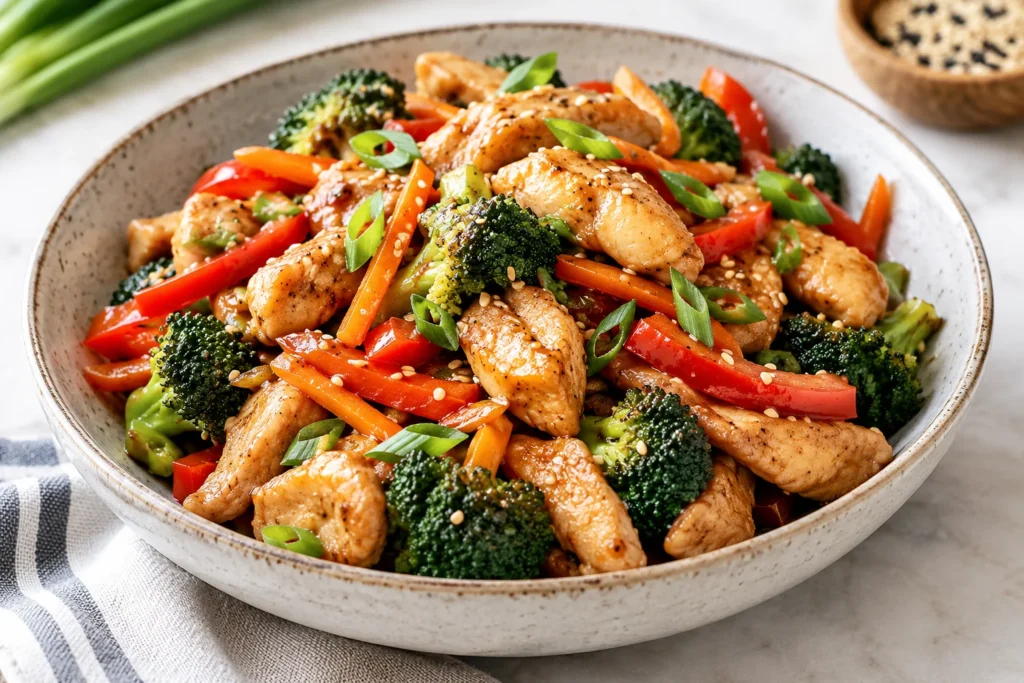
Chicken Stir Fry
This is like the recipe I make when I'm being lazy but still want food to be good. It's so basic that you'd think it couldn't possibly be good but it's just... solid every single time. Chicken gets thrown in a hot pan. Whatever vegetables didn't go bad this week go in. Soy sauce garlic and cornstarch become sauce. Rice catches everything. Done. The fact that it's this simple and still tastes legit shocked me the first time.
Ingredients:
- 1.5 pounds boneless skinless chicken breasts diced into three quarter inch pieces
- 3 cups mixed vegetables such as bell peppers, broccoli, snap peas, and carrots
- 3 cloves fresh garlic minced
- 2 tablespoons low sodium soy sauce
- 1 tablespoon dark sesame oil
- 1 teaspoon cornstarch
- 2 tablespoons neutral oil
- Salt and pepper to taste
- Cooked rice for serving
Instructions:
- Heat oil in a twelve inch cast iron or stainless steel skillet over high heat for three minutes. The pan needs to be genuinely hot.
- Add chicken in a single layer without crowding. Maximum two cups of chicken at a time.
- Leave undisturbed for four minutes. The chicken will release from the pan when it's ready to flip.
- Flip and cook four more minutes. Remove to a plate.
- Reduce heat to medium. Add vegetables for four to five minutes until they're crisp tender.
- While vegetables cook mix cornstarch with one tablespoon cold water and mix soy sauce with sesame oil separately.
- Return chicken to the pan. Pour both mixtures in and stir constantly for one minute.
- Serve over rice immediately.
Nutrition per serving (serves 4): Protein 32g | Carbs 28g | Fat 8g | Calories 315 | Time: 18 minutes
Why this works
Honestly because nothing is fancy here and that's the whole point. Hot pan means sear. Uniform pieces means everything finishes at the same time. Sauce hits the pan and has exactly the right time to thicken before things get weird. It's like basic stir fry explained through doing it perfectly.
Beef and Broccoli
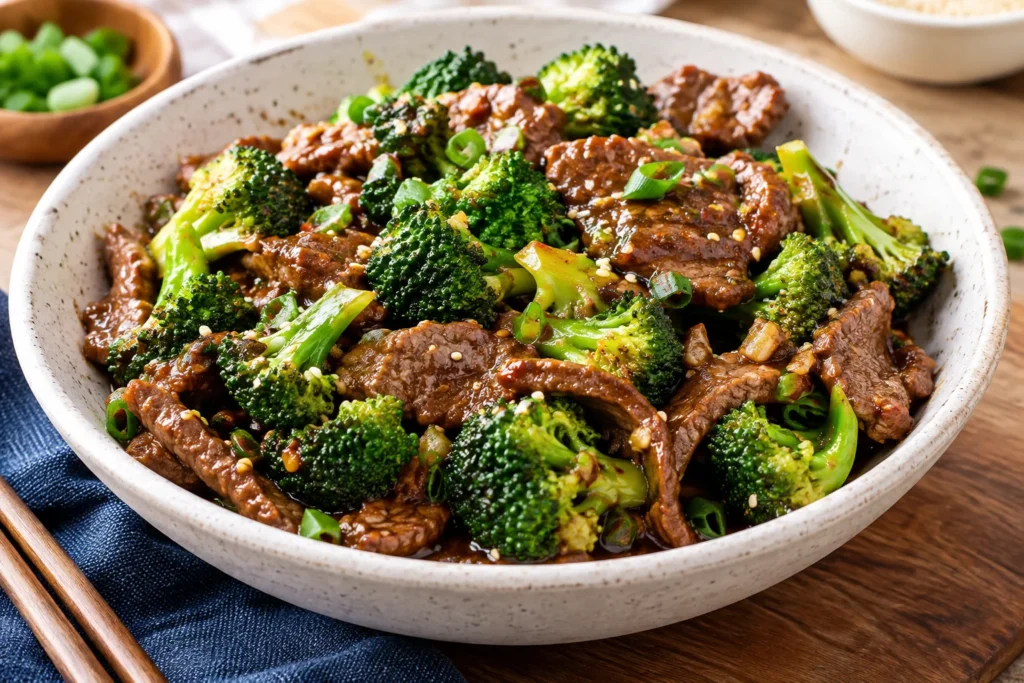
This is the recipe that legitimately changed my takeout habits. I made it one time because I had beef and broccoli in the fridge and realized it tasted better than the place I usually order from. Plus it was literally ready while I was still deciding if I wanted to call them. Thin sliced beef sears fast. Broccoli gets these charred edges that somehow taste way better than normal broccoli. Oyster sauce does heavy lifting that soy sauce cannot handle alone.
Ingredients:
- 1.5 pounds flank steak sliced thin against the grain
- 5 cups fresh broccoli florets
- 4 cloves garlic minced
- 3 tablespoons soy sauce
- 2 tablespoons oyster sauce
- 1 tablespoon rice vinegar
- 1 teaspoon cornstarch
- 1 tablespoon sesame oil
- 2 tablespoons neutral oil
- Salt and pepper
- Cooked rice for serving
Instructions:
- Heat oil in a large skillet over high heat.
- Sear beef in batches two to three minutes per side. Crowding the pan drops the temperature so work in batches even if it seems inefficient.
- Remove and set aside.
- Add garlic and cook thirty seconds.
- Add broccoli and stir fry five to six minutes until the florets start to brown slightly.
- Return beef to the pan.
- Mix soy sauce, oyster sauce, rice vinegar, cornstarch, and sesame oil with three tablespoons water.
- Pour into the pan and toss for one minute until the sauce coats everything.
- Serve over rice.
Nutrition per serving (serves 4): Protein 38g | Carbs 26g | Fat 11g | Calories 365 | Time: 15 minutes
Why this works
The beef sliced thin against the grain stays tender despite high heat. The broccoli gets slightly charred which adds depth most people skip. The oyster sauce adds umami that soy sauce alone cannot provide.
Tofu Stir Fry
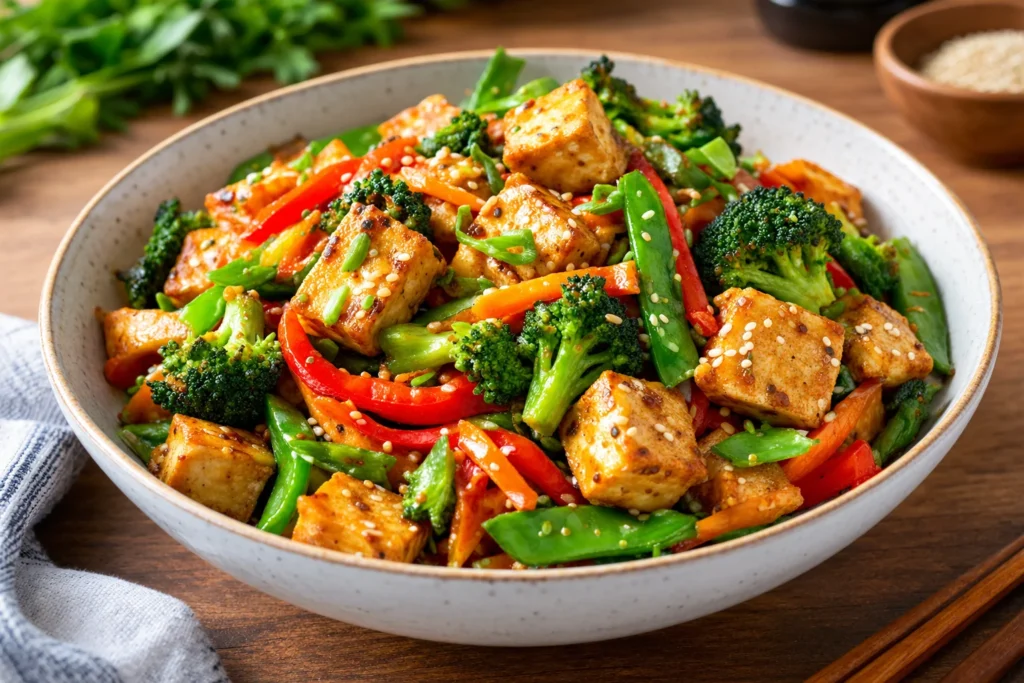
People assume tofu is complicated or lacks protein. Both assumptions are wrong. Firm tofu pressed properly and seared correctly becomes something genuinely excellent. The pressing step seems unnecessary until you see the difference it makes. Crispy golden cubes absorb the sauce completely and deliver eighteen grams of protein per serving without any meat.
Ingredients:
- 1 block (14 ounce) firm tofu pressed for fifteen minutes between paper towels
- 3 cups vegetables such as broccoli, bok choy, mushrooms, and bell peppers
- 3 cloves garlic minced
- 2 tablespoons soy sauce
- 1 tablespoon rice vinegar
- 1 teaspoon cornstarch
- 3 tablespoons neutral oil (divided)
- 1 teaspoon sesame oil
- Red pepper flakes to taste
- Cooked rice for serving
Instructions:
- The pressing step is mandatory. Tofu is mostly water and that water prevents crisping. Press it between paper towels with weight on top for at least fifteen minutes. Cut into half inch cubes.
- Heat two tablespoons oil in a large skillet over high heat.
- Add tofu and cook until golden on all sides about eight minutes total.
- Remove and set aside.
- Add remaining oil and garlic and cook thirty seconds.
- Add vegetables and stir fry four to five minutes.
- Return tofu to the pan.
- Mix soy sauce, rice vinegar, cornstarch, and sesame oil with two tablespoons water.
- Pour into the pan and toss for one minute.
- Serve over rice with red pepper flakes.
Nutrition per serving (serves 4): Protein 18g | Carbs 25g | Fat 12g | Calories 285 | Time: 20 minutes
Why this works
The pressing removes the water that prevents browning. High heat creates a golden crust. The stir fry technique stays identical to any protein version.
Cashew Chicken
This one gets eaten first every single time. Like if I make two stir fries at once this is the one that's gone while the other one's still sitting there. Toasted cashews are the secret that most takeout places skip. Cold cashews are fine whatever. But toasted cashews? They taste like butter and crunch and make the whole thing feel indulgent even though you're spending like three dollars per serving. Takes twenty minutes total and legitimately tastes like someone actually tried.
Ingredients:
- 1.5 pounds boneless skinless chicken breasts diced
- 1 cup raw cashews toasted
- 3 cups vegetables such as bell peppers, snap peas, and onions
- 4 cloves garlic minced
- 2 tablespoons soy sauce
- 1 tablespoon honey
- 1 teaspoon cornstarch
- 2 tablespoons rice vinegar
- 1 tablespoon sesame oil
- 2 tablespoons neutral oil
- Salt and pepper
- Cooked rice for serving
Instructions:
- Toast cashews in a dry pan over medium heat for three to four minutes stirring occasionally. This wakes up their flavor significantly. Set aside.
- Heat oil in a large skillet over high heat.
- Sear chicken until golden about six minutes.
- Add garlic and cook thirty seconds.
- Add vegetables and stir fry four to five minutes.
- Mix soy sauce, honey, cornstarch, rice vinegar, and sesame oil with two tablespoons water.
- Pour into the pan and toss for one minute.
- Top with toasted cashews and serve over rice.
Nutrition per serving (serves 4): Protein 34g | Carbs 32g | Fat 18g | Calories 445 | Time: 20 minutes
Why this works
Toasted cashews taste exponentially better than raw. Adding them at the end keeps them crunchy instead of soft from the sauce.
Mongolian Beef
This tastes genuinely restaurant quality and takes less time than delivery would arrive. The sauce balance between salty and sweet feels effortless until you realize someone tested this exact ratio hundreds of times to get it right. Thin sliced beef soaks up a glossy sauce that sticks perfectly to every grain of rice.
Ingredients:
- 1.5 pounds flank steak thinly sliced
- 5 scallions cut into one inch pieces
- 4 cloves garlic minced
- 1 tablespoon ginger minced
- 3 tablespoons soy sauce
- 2 tablespoons brown sugar
- 1 tablespoon rice vinegar
- 1 teaspoon cornstarch
- 1 tablespoon sesame oil
- 2 tablespoons neutral oil
- Red pepper flakes (optional)
- Cooked rice for serving
Instructions:
- Heat oil in a large skillet over high heat.
- Sear beef in batches two to three minutes per side. Set aside.
- Add garlic and ginger and cook thirty seconds.
- Add scallions and stir fry one minute.
- Mix soy sauce, brown sugar, rice vinegar, cornstarch, and sesame oil with three tablespoons water.
- Return beef to the pan and pour sauce in and toss for one minute until glossy.
- Serve over rice.
Nutrition per serving (serves 4): Protein 36g | Carbs 24g | Fat 10g | Calories 355 | Time: 15 minutes
Why this works
The sauce balance between salty and sweet is precise. Too much soy and it becomes overwhelmingly salty. Too much sugar and it becomes dessert. This ratio works after extensive testing.
Egg Fried Rice
This is how leftover rice becomes dinner instead of waste. Monday night's leftover rice gets scrambled eggs and whatever vegetables haven't been used yet. By Tuesday you have something that tastes deliberately made instead of assembled from scraps. Day-old rice is the secret that changes everything.
Ingredients:
- 3 cups cooked rice (chilled and day old preferred)
- 4 large eggs beaten
- 1 cup mixed vegetables such as peas, carrots, and corn
- 3 cloves garlic minced
- 3 tablespoons soy sauce
- 1 tablespoon sesame oil
- 2 tablespoons neutral oil (divided)
- Salt and pepper
- Scallions for garnish
Instructions:
- Heat one tablespoon oil in a large skillet over high heat.
- Pour in beaten eggs and scramble until cooked through about two minutes.
- Remove and set aside.
- Add remaining oil and garlic and cook thirty seconds.
- Add rice breaking up clumps and vegetables and stir fry three to four minutes.
- Return eggs to the pan and add soy sauce and sesame oil and toss for one minute.
- Season with salt and pepper and garnish with scallions.
Nutrition per serving (serves 4): Protein 12g | Carbs 38g | Fat 10g | Calories 310 | Time: 12 minutes
Why this works
Day old rice is better than fresh because the starches have set. Fresh rice becomes mushy instead of staying fluffy. Save leftover rice specifically for this purpose.
Never Miss a Recipe
Fresh high-protein recipes, meal prep ideas, and kitchen tips, straight to your inbox every week. No spam, just good food.
No spam. Unsubscribe anytime.
Sesame Chicken
Takeout you can actually make faster than the drive. The sesame seeds scattered on top make it look like you invested real effort even though the cooking time is genuinely fifteen minutes. Nutty aromatic coated chicken over rice feels like a restaurant version but costs a third as much and delivers twice the protein.
Ingredients:
- 1.5 pounds boneless skinless chicken breasts diced
- 3 cups vegetables such as broccoli, bell peppers, and snap peas
- 4 cloves garlic minced
- 3 tablespoons soy sauce
- 2 tablespoons sesame oil
- 1 tablespoon rice vinegar
- 1 teaspoon cornstarch
- 1 tablespoon honey
- 2 tablespoons neutral oil
- 2 tablespoons sesame seeds
- 2 scallions chopped
- Cooked rice for serving
Instructions:
- Heat oil in a large skillet over high heat.
- Sear chicken until golden about six minutes.
- Add garlic and cook thirty seconds.
- Add vegetables and stir fry four to five minutes.
- Mix soy sauce, sesame oil, rice vinegar, cornstarch, and honey with two tablespoons water.
- Pour sauce in and toss for one minute until glossy.
- Top with sesame seeds and scallions and serve over rice.
Nutrition per serving (serves 4): Protein 33g | Carbs 28g | Fat 12g | Calories 380 | Time: 18 minutes
Why this works
Skipping the deep frying gives you restaurant flavor with far more protein and less oil.
Chicken Fried Rice
Chicken fried rice is better than egg fried rice when the chicken cooks right in the pan. The residue left behind from cooking chicken becomes the foundation of everything that follows. One pan gets you from raw ingredients to a complete meal that actually feels substantial. No separate protein needed because the chicken carries the entire dish.
Ingredients:
- 1 pound boneless skinless chicken breasts diced small
- 3 cups cooked rice (chilled)
- 2 large eggs beaten
- 1.5 cups mixed vegetables such as peas, carrots, corn, and broccoli
- 3 cloves garlic minced
- 3 tablespoons soy sauce
- 1 tablespoon sesame oil
- 2 tablespoons neutral oil
- Salt and pepper
- Scallions for garnish
Instructions:
- Heat oil in a large skillet over high heat.
- Add chicken and cook until cooked through about five to six minutes and season with salt and pepper.
- Push chicken to the side and add beaten eggs and scramble until cooked and mix with chicken.
- Add garlic and cook thirty seconds.
- Add rice breaking up clumps and vegetables and stir fry three to four minutes.
- Add soy sauce and sesame oil and toss for one minute.
- Garnish with scallions and serve hot.
Nutrition per serving (serves 4): Protein 28g | Carbs 38g | Fat 10g | Calories 380 | Time: 15 minutes
Why this works
Cooking chicken right in the pan means everything picks up that savory flavor from the pan residue. This transforms simple egg fried rice into something substantial.
Pad Thai
Making pad thai at home is weirdly intimidating but honestly it's not that complex once you understand the sauce is the whole thing. Most people skip the fish sauce which is literally why their pad thai tastes like nothing. Fish sauce is weird I know but it's what makes pad thai actually taste like pad thai instead of just noodles with soy sauce on them. The rest is just rice noodles that soak up this tangy sauce and get scattered with peanuts. That's it. Sounds weird tastes great.
Ingredients:
- 8 ounces rice noodles
- 1 pound boneless skinless chicken breast or shrimp diced
- 2 large eggs beaten
- 2 cups vegetables such as snap peas, carrots, and bell peppers
- 3 cloves garlic minced
- 3 tablespoons fish sauce
- 2 tablespoons tamarind paste or lime juice
- 1 tablespoon palm sugar or brown sugar
- 1 tablespoon cornstarch
- 2 tablespoons neutral oil
- One quarter cup crushed peanuts
- 1 lime cut into wedges
- Scallions for garnish
Instructions:
- Cook rice noodles according to package directions and drain and set aside.
- Heat oil in a large skillet over high heat.
- Add chicken and cook until done about five to six minutes and remove and set aside.
- Add garlic and cook thirty seconds.
- Push everything to the side and add beaten eggs and scramble and mix with other ingredients.
- Add vegetables and noodles and toss for two minutes.
- Mix fish sauce, tamarind paste, palm sugar, and cornstarch with two tablespoons water.
- Pour into the pan and toss for one minute.
- Top with peanuts, scallions, and a squeeze of lime and serve immediately.
Nutrition per serving (serves 4): Protein 29g | Carbs 45g | Fat 10g | Calories 415 | Time: 18 minutes
Why this works
The sauce balance between salty, sour, and sweet is what makes pad thai pad thai. Fish sauce provides depth that soy sauce cannot.
Kung Pao Chicken
For when you want genuine heat with dinner. Dried chiles bloom in hot oil with garlic and fill the entire kitchen with a smell that promises actual flavor. The heat comes through but the peanuts and honey prevent it from overwhelming everything. This is the recipe for people who think they want mild then change their minds halfway through.
Ingredients:
- 1.5 pounds boneless skinless chicken breast diced
- 1 cup roasted peanuts (unsalted)
- 4 to 6 dried chiles (adjust to heat preference)
- 3 cups vegetables such as bell peppers, onions, and snap peas
- 4 cloves garlic minced
- 2 tablespoons soy sauce
- 1 tablespoon rice vinegar
- 1 teaspoon cornstarch
- 1 tablespoon honey
- 1 tablespoon sesame oil
- 2 tablespoons neutral oil
- Cooked rice for serving
Instructions:
- Remove stems and seeds from dried chiles.
- Heat oil in a large skillet over high heat.
- Sear chicken until golden about six minutes and set aside.
- Add chiles and garlic and cook thirty seconds until fragrant.
- Add vegetables and stir fry four to five minutes.
- Return chicken to the pan.
- Mix soy sauce, rice vinegar, cornstarch, honey, and sesame oil with two tablespoons water.
- Pour sauce in and toss for one minute and top with peanuts.
- Serve over rice.
Nutrition per serving (serves 4): Protein 36g | Carbs 26g | Fat 16g | Calories 415 | Time: 18 minutes
Why this works
Dried chiles release their flavor when bloomed in hot fat with garlic. The peanuts add richness that balances the heat.
Teriyaki Chicken
This is genuinely reliable and works every single time. Mirin creates a glossy finish that soy sauce alone cannot achieve. The broccoli cooks tender but stays green. The ginger and garlic add depth that makes people ask if you went to culinary school. It does not. It just tastes like you did.
Ingredients:
- 1.5 pounds boneless skinless chicken breasts diced
- 4 cups broccoli florets
- 4 cloves garlic minced
- 1 tablespoon ginger minced
- 3 tablespoons soy sauce
- 2 tablespoons mirin or 1 tablespoon honey and 1 tablespoon water
- 1 tablespoon rice vinegar
- 1 teaspoon cornstarch
- 1 tablespoon sesame oil
- 2 tablespoons neutral oil
- 1 tablespoon sesame seeds
- Cooked rice for serving
Instructions:
- Heat oil in a large skillet over high heat.
- Sear chicken until golden about six minutes and set aside.
- Add garlic and ginger and cook thirty seconds.
- Add broccoli and stir fry five minutes until crisp tender.
- Return chicken to the pan.
- Mix soy sauce, mirin, rice vinegar, cornstarch, and sesame oil with two tablespoons water.
- Pour sauce in and simmer for one to two minutes until it thickens and coats the chicken.
- Top with sesame seeds and serve over rice.
Nutrition per serving (serves 4): Protein 33g | Carbs 30g | Fat 9g | Calories 370 | Time: 18 minutes
Why this works
Mirin is slightly sweet and creates an authentic glossy sauce. The ginger and garlic add depth that makes this taste restaurant quality.
Beef Chow Fun
Wide rice noodles stir fried with beef until slightly charred. The flat noodles catch heat differently than round ones and develop spots that look wrong until you taste them. Those charred spots are where all the flavor lives. This is the recipe that taught me that browning is a feature not a mistake.
Ingredients:
- 1.5 pounds flank steak thinly sliced
- 8 ounces fresh or dried chow fun noodles
- 3 cups vegetables such as bok choy, onions, and snap peas
- 4 cloves garlic minced
- 3 tablespoons soy sauce
- 1 tablespoon oyster sauce
- 1 tablespoon sesame oil
- 1 teaspoon cornstarch
- 2 tablespoons neutral oil (divided)
- Red pepper flakes
- Scallions for garnish
Instructions:
- Prepare noodles according to package directions or use fresh if available and set aside.
- Heat one tablespoon oil in a large skillet or wok over high heat.
- Sear beef in batches two to three minutes per side and set aside.
- Add remaining oil and garlic and cook thirty seconds.
- Add vegetables and stir fry four minutes.
- Add noodles and beef back to the pan.
- Mix soy sauce, oyster sauce, sesame oil, and cornstarch with two tablespoons water and pour in and toss for one to two minutes.
- The slight charring on the noodles is intentional.
- Garnish with scallions and red pepper flakes.
Nutrition per serving (serves 4): Protein 37g | Carbs 42g | Fat 12g | Calories 445 | Time: 18 minutes
Why this works
The charred spots on noodles are where the flavor is. Do not avoid the browning.
Peanut Noodles
Fast enough for weeknight but feels like a treat. The peanut butter sauce seems like it should be heavy until you actually make it and realize it coats noodles like nothing else can. Warm water helps it mix smoothly instead of clumping. This is the one that converts people who think peanuts belong only in dessert.
Ingredients:
- 8 ounces noodles such as rice, wheat, or egg noodles
- 1.5 pounds boneless skinless chicken breast diced or 1 cup edamame for vegetarian
- One half cup natural peanut butter
- 3 tablespoons soy sauce
- 2 tablespoons rice vinegar
- 1 tablespoon honey
- 1 teaspoon sesame oil
- 2 tablespoons neutral oil
- 3 cloves garlic minced
- 2 cups vegetables such as snap peas, carrots, and bell peppers
- One quarter cup crushed peanuts
- Scallions for garnish
Instructions:
- Cook noodles according to package directions and drain and set aside.
- Heat oil in a large skillet over high heat.
- Cook chicken until done about five to six minutes and set aside.
- Add garlic and cook thirty seconds.
- Add vegetables and stir fry three to four minutes.
- Return noodles and chicken to the pan.
- Mix peanut butter, soy sauce, rice vinegar, honey, and sesame oil with one quarter cup warm water until smooth.
- Pour sauce over noodles and toss until everything is coated about one minute.
- Top with crushed peanuts and scallions.
Nutrition per serving (serves 4): Protein 35g | Carbs 42g | Fat 18g | Calories 495 | Time: 18 minutes
Why this works
Natural peanut butter works best because it has no added sugars. Warm water helps it mix smoothly without clumping.
Orange Chicken
Sweet and tangy without the heavy batter. Fresh orange juice makes a real difference compared to the bottled concentrate most recipes use. The zest added at the end brings brightness that juice alone cannot provide. This is takeout orange chicken but with actual nutrition and actual freshness.
Ingredients:
- 1.5 pounds boneless skinless chicken breast diced
- Zest of 2 oranges
- One half cup fresh orange juice
- 4 cloves garlic minced
- 1 tablespoon ginger minced
- 3 tablespoons soy sauce
- 1 tablespoon rice vinegar
- 1 teaspoon cornstarch
- 1 tablespoon honey
- 1 tablespoon sesame oil
- 2 tablespoons neutral oil
- 3 cups vegetables such as broccoli, bell peppers, and snap peas
- Scallions for garnish
- Cooked rice for serving
Instructions:
- Heat oil in a large skillet over high heat.
- Sear chicken until golden about six minutes and set aside.
- Add garlic and ginger and cook thirty seconds.
- Add vegetables and stir fry four to five minutes.
- Return chicken to the pan.
- Mix orange juice, soy sauce, rice vinegar, cornstarch, honey, and sesame oil.
- Pour sauce in and toss for one to two minutes until it coats the chicken.
- Finish with orange zest and scallions and serve over rice.
Nutrition per serving (serves 4): Protein 33g | Carbs 30g | Fat 9g | Calories 370 | Time: 18 minutes
Why this works
Fresh orange juice makes a real difference. The zest added at the end brings brightness that bottled juice cannot provide.
Cold Sesame Noodle Bowl
Perfect after training or on hot nights. The noodles chill completely so they do not turn into an unpleasant texture from the sauce. Crisp cold vegetables stay that way. The sesame paste sauce ties everything together with nutty richness that makes you forget the entire meal is sitting at room temperature.
Ingredients:
- 8 ounces noodles such as rice, wheat, or egg noodles
- 1.5 pounds boneless skinless chicken breast cooked and shredded or 1 cup edamame for vegetarian
- 2 cups crisp vegetables such as radishes, cucumber, carrots, and bell peppers
- 4 tablespoons sesame paste or tahini
- 3 tablespoons soy sauce
- 2 tablespoons rice vinegar
- 1 tablespoon honey
- 2 teaspoons sesame oil
- 1 clove garlic minced
- 1 teaspoon ginger minced
- Red pepper flakes to taste
- Scallions for garnish
Instructions:
- Cook noodles according to package directions and drain and rinse with cold water and chill.
- Make sauce by mixing sesame paste, soy sauce, rice vinegar, honey, sesame oil, garlic, ginger, and 3 tablespoons cold water until smooth.
- Toss chilled noodles with sauce until coated.
- Top with shredded chicken, crisp vegetables, scallions, and red pepper flakes and serve cold.
Nutrition per serving (serves 4): Protein 32g | Carbs 40g | Fat 12g | Calories 415 | Time: 15 minutes
Why this works
Cold noodles are refreshing but still deliver complete nutrition.
Pan Fried Potstickers
Ten minutes and it looks like you put in real effort. Store bought potstickers become legitimately impressive when you pan fry them until the bottoms crisp then steam them until they finish cooking. The water in the pan creates steam that cooks the wrappers without drying them. This is the trick restaurants use but do not advertise.
Ingredients:
- 24 store bought potstickers such as pork, chicken, or vegetable
- 2 tablespoons neutral oil
- One half cup water
- 2 tablespoons soy sauce
- 1 tablespoon rice vinegar
- 1 teaspoon sesame oil
- 1 clove garlic minced
- Scallions for garnish
Instructions:
- Heat oil in a large skillet over medium high heat.
- Place potstickers flat side down in the pan and do not move them for three to four minutes until bottoms are golden and crispy.
- Add water to the pan (it will steam) and cover and cook for four to five minutes until water mostly evaporates.
- Meanwhile mix soy sauce, rice vinegar, sesame oil, and garlic in a small bowl.
- Transfer potstickers to a plate and drizzle with dipping sauce and garnish with scallions.
Nutrition per serving (serves 4, 6 potstickers per person): Protein 14g | Carbs 20g | Fat 8g | Calories 220 | Time: 10 minutes
Why this works
Store bought potstickers make this genuinely ten minutes total.
Beef Lo Mein
Soft noodles that still have texture from high heat cooking. Unlike pad thai with its sharp tanginess lo mein stays savory and comforting. The oyster sauce adds umami that soy sauce simply cannot reach. This is the noodle dish for when you want richness without complexity.
Ingredients:
- 1.5 pounds flank steak thinly sliced
- 8 ounces lo mein noodles
- 3 cups vegetables such as bok choy, snap peas, carrots, and onions
- 4 cloves garlic minced
- 3 tablespoons soy sauce
- 1 tablespoon oyster sauce
- 1 tablespoon rice vinegar
- 1 teaspoon cornstarch
- 1 tablespoon sesame oil
- 2 tablespoons neutral oil
- Scallions for garnish
Instructions:
- Cook lo mein according to package directions and drain and set aside.
- Heat one tablespoon oil in a large skillet over high heat.
- Sear beef in batches two to three minutes per side and set aside.
- Add remaining oil and garlic and cook thirty seconds.
- Add vegetables and stir fry four to five minutes.
- Return beef and noodles to the pan.
- Mix soy sauce, oyster sauce, rice vinegar, cornstarch, and sesame oil with two tablespoons water.
- Pour sauce in and toss for one to two minutes until everything is coated.
- Garnish with scallions and serve.
Nutrition per serving (serves 4): Protein 38g | Carbs 44g | Fat 11g | Calories 455 | Time: 18 minutes
Why this works
Oyster sauce adds depth that soy sauce alone cannot provide.
Teriyaki Pork Belly Fried Rice
Fried rice turned all the way up. This is what happens when you stop holding back and just commit to richness. Crispy pork belly renders its fat into the rice. Shrimp adds a lighter element that prevents it from becoming overwhelming. Drizzle of sriracha at the end wakes everything up.
Ingredients:
- 12 ounces pork belly thinly sliced and cooked crispy
- 8 ounces shrimp peeled and deveined
- 3 cups cooked rice (chilled)
- 2 large eggs beaten
- 1.5 cups vegetables such as peas, carrots, and corn
- 4 cloves garlic minced
- 3 tablespoons soy sauce
- 1 tablespoon mirin
- 1 tablespoon rice vinegar
- 1 tablespoon sesame oil
- 2 tablespoons neutral oil
- Sriracha to taste
- Scallions for garnish
Instructions:
- Cook pork belly in a skillet over medium heat until crispy about eight minutes and remove and set aside.
- Add oil to the same pan over high heat.
- Add shrimp and cook until pink about two to three minutes and remove and set aside.
- Add garlic and cook thirty seconds.
- Add rice breaking up clumps and vegetables and stir fry three to four minutes.
- Push rice to the side and add beaten eggs and scramble and mix with rice.
- Return pork and shrimp to the pan.
- Mix soy sauce, mirin, rice vinegar, and sesame oil and pour in and toss for one minute.
- Top with a drizzle of sriracha and scallions.
Nutrition per serving (serves 4): Protein 32g | Carbs 38g | Fat 18g | Calories 485 | Time: 18 minutes
Why this works
The pork belly adds richness and the shrimp adds lightness. Together they create complexity.
Crispy Duck with Bok Choy
Duck feels fancy but cooks fast. The scoring of the skin is where the magic happens. Fat renders into the pan creating its own cooking medium. The resulting skin becomes impossibly crispy. This is the recipe that makes people think you trained professionally when the reality is far simpler.
Ingredients:
- 2 duck breasts (about 1.5 pounds total)
- 1.5 pounds bok choy chopped
- 4 cloves garlic minced
- 2 tablespoons soy sauce
- 1 tablespoon hoisin sauce
- 1 tablespoon rice vinegar
- 1 teaspoon cornstarch
- 1 teaspoon sesame oil
- Salt and pepper
- Cooked rice for serving
Instructions:
- Score the duck skin in a crosshatch pattern.
- Place duck skin side down in a cold skillet and turn heat to medium and cook for eight to ten minutes until skin is crispy and fat renders.
- Season with salt and pepper.
- Flip duck over and cook for three to four minutes for medium rare.
- Remove duck and let rest five minutes and slice thinly.
- Drain excess duck fat from the pan leaving one tablespoon.
- Add garlic and cook thirty seconds.
- Add bok choy and stir fry four to five minutes until tender.
- Mix soy sauce, hoisin, rice vinegar, cornstarch, and sesame oil with two tablespoons water.
- Pour sauce into the pan with bok choy and toss for one minute.
- Serve duck slices over bok choy and rice.
Nutrition per serving (serves 4): Protein 40g | Carbs 24g | Fat 14g | Calories 415 | Time: 20 minutes
Why this works
Scoring the duck skin helps it render the fat and get crispy. The hoisin adds depth.
Honey Garlic Shrimp
Shrimp that cook in minutes and soak up sauce. The butter melts into the oil creating a garlic infusion that feels fancy but requires no special skills. Shrimp go from raw to done in four minutes total. This is the dinner you make when you have no time but need to eat something that tastes like you tried.
Ingredients:
- 1.5 pounds large shrimp peeled and deveined
- 6 cloves garlic minced
- 3 tablespoons honey
- 2 tablespoons soy sauce
- 1 tablespoon rice vinegar
- 1 teaspoon cornstarch
- 1 tablespoon butter
- 1 tablespoon neutral oil
- Red pepper flakes
- Lime wedges
- Cooked rice or noodles for serving
Instructions:
- Heat oil and butter in a large skillet over high heat.
- Add garlic and cook thirty seconds until fragrant.
- Add shrimp and cook until pink about two to three minutes per side and do not overcook.
- Mix honey, soy sauce, rice vinegar, and cornstarch with two tablespoons water.
- Pour sauce into the pan and toss for one minute until sauce coats the shrimp.
- Top with red pepper flakes and scallions and serve over rice or noodles.
Nutrition per serving (serves 4): Protein 32g | Carbs 22g | Fat 6g | Calories 295 | Time: 12 minutes
Why this works
Shrimp cook in minutes so timing is critical. The sauce works because it's thin enough to coat without overwhelming.
Chicken Fried Rice with Greens
Greens forward fried rice. The spinach wilts into the rice delivering nutrition that most fried rice completely ignores. It does not taste like you are eating greens. It tastes like you made an intentional choice to eat something better than the standard version.
Ingredients:
- 1.5 pounds boneless skinless chicken breast diced
- 3 cups cooked rice (chilled)
- 3 cups fresh spinach or kale (chopped)
- 1.5 cups mixed vegetables such as carrots, peas, and corn
- 3 large eggs beaten
- 4 cloves garlic minced
- 3 tablespoons soy sauce
- 1 tablespoon sesame oil
- 2 tablespoons neutral oil
- Salt and pepper
- Scallions for garnish
Instructions:
- Heat oil in a large skillet over high heat.
- Cook chicken until done about five to six minutes and set aside.
- Add garlic and cook thirty seconds.
- Push ingredients to the side and add beaten eggs and scramble and mix together.
- Add rice breaking up clumps, vegetables, and greens and stir fry three to four minutes.
- Return chicken to the pan.
- Add soy sauce and sesame oil and toss for one minute.
- Season with salt and pepper and garnish with scallions.
Nutrition per serving (serves 4): Protein 34g | Carbs 38g | Fat 10g | Calories 405 | Time: 15 minutes
Why this works
Greens wilt quickly so they do not need long cooking. The spinach adds nutrition without overwhelming the dish.
Shrimp and Scallop Stir Fry
Both cook in minutes for a fast complete meal. The combination of two lean proteins creates something elegant without requiring any special technique. Shrimp and scallops both finish cooking at exactly the same rate so timing becomes simple. This is the seafood version for people who think high-protein dinners need to be ordinary.
Ingredients:
- 12 ounces large shrimp peeled and deveined
- 12 ounces sea scallops
- 3 cups vegetables such as snap peas, bell peppers, and bok choy
- 4 cloves garlic minced
- 2 tablespoons soy sauce
- 1 tablespoon oyster sauce
- 1 tablespoon rice vinegar
- 1 teaspoon cornstarch
- 1 tablespoon sesame oil
- 2 tablespoons neutral oil
- Salt and pepper
- Lemon wedges for serving
- Cooked rice for serving
Instructions:
- Heat oil in a large skillet over high heat.
- Add shrimp and scallops and season with salt and pepper and cook two minutes per side until opaque and do not overcook and remove and set aside.
- Add garlic and cook thirty seconds.
- Add vegetables and stir fry four to five minutes.
- Return shrimp and scallops to the pan.
- Mix soy sauce, oyster sauce, rice vinegar, cornstarch, and sesame oil with two tablespoons water.
- Pour sauce in and toss for one minute.
- Serve over rice with lemon wedges.
Nutrition per serving (serves 4): Protein 34g | Carbs 26g | Fat 8g | Calories 340 | Time: 15 minutes
Why this works
Both proteins cook fast so timing must be tight. Overcooked seafood becomes tough.
Sweet and Sour Chicken
A classic lightened up. The pineapple adds real sweetness instead of relying on sugar alone. Skipping the heavy batter keeps the protein count high without sacrificing the flavors people actually want. This is takeout nostalgia but actually good for you.
Ingredients:
- 1.5 pounds boneless skinless chicken breast diced
- 2 cups pineapple chunks (fresh or canned in juice and drained)
- 1 red bell pepper chopped
- 1 yellow bell pepper chopped
- 1 onion chopped
- 4 cloves garlic minced
- 3 tablespoons ketchup
- 2 tablespoons rice vinegar
- 2 tablespoons honey
- 2 tablespoons soy sauce
- 1 tablespoon cornstarch
- 1 tablespoon sesame oil
- 2 tablespoons neutral oil
- Cooked rice for serving
Instructions:
- Heat oil in a large skillet over high heat.
- Sear chicken until golden about six minutes and set aside.
- Add garlic and cook thirty seconds.
- Add peppers and onion and stir fry four to five minutes.
- Return chicken to the pan and add pineapple chunks.
- Mix ketchup, rice vinegar, honey, soy sauce, cornstarch, and sesame oil with two tablespoons water.
- Pour sauce in and toss for one to two minutes until thickened and everything is coated.
- Serve over rice.
Nutrition per serving (serves 4): Protein 33g | Carbs 38g | Fat 9g | Calories 420 | Time: 18 minutes
Why this works
Skipping the batter keeps this high protein. The pineapple adds sweetness and brightness.
Spicy Sriracha Beef Stir Fry
Bold and spicy. The sriracha brings genuine heat but the honey prevents it from becoming a one note experience. Thin sliced beef carries the sauce well. Lime wedges on the side cool things down just enough to keep eating. This is the one for people who measure spice in how much they sweat.
Ingredients:
- 1.5 pounds flank steak thinly sliced
- 4 cups mixed vegetables such as broccoli, bell peppers, snap peas, and carrots
- 4 cloves garlic minced
- 3 tablespoons soy sauce
- 2 tablespoons sriracha
- 1 tablespoon honey
- 1 tablespoon rice vinegar
- 1 teaspoon cornstarch
- 1 tablespoon sesame oil
- 2 tablespoons neutral oil
- Red pepper flakes
- Lime wedges
- Cooked rice for serving
Instructions:
- Heat one tablespoon oil in a large skillet over high heat.
- Sear beef in batches two to three minutes per side and set aside.
- Add remaining oil and garlic and cook thirty seconds.
- Add vegetables and stir fry five minutes.
- Return beef to the pan.
- Mix soy sauce, sriracha, honey, rice vinegar, cornstarch, and sesame oil with two tablespoons water.
- Pour sauce in and toss for one to two minutes.
- Top with red pepper flakes and serve with lime wedges and rice.
Nutrition per serving (serves 4): Protein 38g | Carbs 26g | Fat 11g | Calories 380 | Time: 18 minutes
Why this works
Sriracha brings heat and the honey balances it.
Coconut Curry Chicken
Creamy and aromatic. The coconut milk transforms from liquid into something that coats every piece of chicken with richness. Red curry paste does the actual flavor work so you do not need anything else to taste authentic. Fresh basil scattered at the end brings brightness that balances all the richness.
Ingredients:
- 1.5 pounds boneless skinless chicken breast diced
- 1 can (14 ounce) coconut milk
- 3 tablespoons red curry paste
- 1 tablespoon fish sauce
- 1 tablespoon lime juice
- 1 tablespoon honey
- 3 cups vegetables such as bell peppers, snap peas, zucchini, and broccoli
- 1 red onion sliced
- 3 cloves garlic minced
- 1 tablespoon ginger minced
- 2 tablespoons neutral oil
- Fresh basil for garnish (optional)
- Cooked rice for serving
Instructions:
- Heat oil in a large skillet over high heat.
- Sear chicken until just cooked through about five to six minutes and set aside.
- Add garlic and ginger and cook thirty seconds.
- Stir in curry paste and cook one minute stirring constantly.
- Add coconut milk, fish sauce, lime juice, and honey and bring to a simmer.
- Add vegetables and chicken back to the pan and simmer for five to six minutes until vegetables are crisp tender.
- Taste and adjust seasonings.
- Garnish with fresh basil and serve over rice.
Nutrition per serving (serves 4): Protein 32g | Carbs 28g | Fat 14g | Calories 410 | Time: 18 minutes
Why this works
The coconut cream makes this rich and satisfying. The curry paste provides depth.
Stuff People Constantly Ask Me About This
Can I meal prep these?
Oh my god yes. I do this literally every Sunday. The key that most people miss is you cannot store everything mixed together. Seriously do not do that. It turns into soggy rice and broken sauce and tastes like disappointment by Tuesday.
What I do: Cook all your proteins on Sunday and put them in separate containers. Chop all your vegetables and stick them in their own containers. Cook your rice and portion it separately. Keep your sauce ingredients unmixed until you actually cook. Then on Monday night when you get home from work you just throw protein, veggies, and rice in a hot pan with your pre-made sauce and boom. Two minutes. Fresh tasting meal. Done.
Stored like this stuff lasts like four to five days easily. The separated storage is literally the only reason this works.
I've never made stir fry in my life where do I even start?
Start with the potsticker recipe or the honey garlic shrimp. Seriously. These are the beginner training wheels. They teach you temperature management and sauce timing without a lot of room to mess up. After you nail those a few times try egg fried rice then basic chicken stir fry.
Don't jump straight to Pad Thai or Kung Pao because those sauces are more complex and if you don't understand the basics you'll just get frustrated. The progression actually matters.
Can I just swap in different proteins?
Totally. Chicken and tofu work interchangeably in most of these. Shrimp cooks like two minutes faster than chicken so just reduce the cooking time. Beef and pork take about the same time. Turkey works but needs chicken timing.
The one thing that actually matters is making sure your pieces are all the same size. If you cut some small and some thick the small ones are done before the thick ones even warm up. It doesn't matter if you use chicken or beef or whatever if your cutting is sloppy.
What about random allergies and dietary restrictions?
All of these can be modified honestly. Need gluten-free? Tamari or coconut aminos instead of soy sauce. Fish sauce weirds you out? Just use more salt plus a tiny bit of miso. Don't like peanuts? Use almonds or cashews. Can't do sesame oil? Use more of whatever neutral oil you're using. Heat is too spicy? Just remove the chiles or use fewer. The basic structure of these recipes is flexible enough that you can adapt them without breaking them.
How long do leftovers actually last?
Four to five days if you store them right. And by right I mean keep them separated. Protein in one container. Rice in another. Sauce in another. Vegetables separate.
When you go to eat just throw it all back together in a hot pan with a splash of water for like two minutes. Stovetop only. Do not microwave because it heats unevenly and turns everything into sad mush. You can freeze them but the texture gets weird when they thaw. Fresh leftovers reheated on the stove taste so much better.
I made the sauce and it's too thin?
It's fine. Just let it simmer for a couple minutes without adding any protein back in and it concentrates down. Cornstarch usually didn't activate fully which happens when the heat's too low or you waited too long after mixing it. Let it bubble and you're good.
To prevent this: Always mix cornstarch with cold water in its own little bowl first. Then add it to the hot pan and stir for exactly one minute. That works like ninety nine percent of the time.
What about frozen vegetables?
They work but they're wet. Wet vegetables make steam not sear. Either thaw them first and dry them completely with a paper towel. Or throw them straight into a really hot pan and just cook them an extra thirty seconds to evaporate the moisture.
Do not skip the drying step. Water stops browning cold.
How do I know my chicken won't make me sick?
Get a thermometer dude. Seriously like six dollars. Chicken needs to be exactly 165°F. Shrimp needs 145°F. Beef 145°F for medium rare. Stop guessing. It's the most common beginner mistake and a thermometer literally fixes it forever.
Are sesame oil and regular oil the same thing?
Correct. Neutral oils like canola have basically zero flavor and can handle high heat. That's what you cook your actual protein in. Sesame oil has like serious nutty flavor and a low smoke point so it burns if you try to use it for cooking. Only put sesame oil in the sauce or add it right at the end for flavor.
Using sesame oil to cook your protein makes it taste burnt and bitter. Don't do that.
Can I make like ten of these at once?
Yeah totally. Double all your protein amounts and cook them in batches. Use two pans if you can. Keep your veggies and sauce liquids in big bowls so you're not constantly prepping. The sauce ratio stays exactly the same so you just multiply everything. Cool everything on sheet pans before you put it in containers.
You can knock out like ten to twelve meals in a couple hours this way and it's genuinely not that complicated.
What My Sunday Actually Looks Like
Okay so Sunday afternoon around like two o'clock I basically take over my kitchen for like ninety minutes. This is my stir fry prep day and I'm not leaving until I have five full dinners ready to go. The whole meal prep approach changed my relationship with cooking and eating during the week. Instead of scrambling on weeknights I'm just reheating and eating.
First thing: I get all my proteins going. Chicken goes in first gets seared in batches because cramming it all in at once just makes it steam. While that's finishing I'm already working on the shrimp and beef. Everything gets portioned into labeled containers the second it's done. Chicken in one box. Shrimp in another. Beef separate. All cool and waiting.
Then the vegetables. I go through and chop like everything I'm gonna use that week. Bell peppers. Carrots. Snap peas. Broccoli. Whatever. Each one gets its own container. Sounds excessive but it literally prevents chaos during the week.
Rice gets cooked on the stove and I portion it into containers too. At this point I have like eight containers sitting on my counter just waiting.
The sauce ingredients stay unmixed. Soy sauce sits in a bowl. Oyster sauce in another. Cornstarch and sesame oil in separate bowls. I label them with a sharpie so I don't forget which sauce goes with which protein.
Then Monday night when I get home from work tired and hungry I literally just open the fridge. Grab a container of protein. Grab veggies. Grab rice. Hot pan for two minutes. Sauce goes in. Done. Plate full of food.
The reason this works is because nothing is mixed until the very last second. If I made everything at once on Sunday it would be soggy rice and broken sauce by like Tuesday afternoon. That's just facts. Separated everything means Tuesday tastes like it just came off the stove on Sunday.
Stuff lasts four five days easy like this. Reheating is brain dead simple. Throw it all in a hot pan with a splash of water. Two minutes. Stovetop method only. Microwave makes everything sad and uneven. Trust me on this.
Stuff I've Literally Done Wrong (So You Don't Have To)
I have burned garlic so badly the whole apartment smelled like burnt sadness. I've crowded the pan like an idiot and watched chicken steam instead of sear. I've used fresh rice and created literal paste. I've overcooked shrimp until they were rubbery little rocks. These are not noble failures or whatever. These are mistakes that taught me things the hard way.
| Mistake | What Actually Happens | How to Fix It |
|---|---|---|
| Cold protein from fridge | Temperature plummets and protein steams instead of sears | Pull protein out thirty minutes before cooking. Let it sit on counter while the pan heats. |
| Crowding the pan | Too much cold protein hits hot pan and temperature drops instantly | Cook in batches. Two cups maximum in a twelve inch pan. It takes longer but the results are worth it. |
| Sauce turns thin | Cornstarch did not activate because heat was wrong or timing was off | Let it simmer two to three minutes without protein. Reduction fixes it. Prevention is better though—mix cornstarch with cold water separately. |
| Burnt garlic | The smell tells you immediately and the damage is permanent | Start over. Burnt garlic tastes bitter and ruins everything. Cook garlic at medium heat for thirty seconds only. Never walk away. |
| Overcooked protein | Chicken becomes dry rubber. Shrimp becomes tough rubber. | Get an instant-read thermometer and stop guessing. Chicken 165°F. Shrimp 145°F. Takes thirty seconds and eliminates this entire problem. |
| Mushy rice | Fresh cooked rice absorbs sauce and becomes paste | Day-old rice only. Cooked rice has set starches. Fresh rice has not. This matters more than people think. |
| Vegetables become mush | They were in the pan too long and texture disappeared | Add vegetables last. Cook four to five minutes maximum. The goal is crisp tender not soft. |
What Goes With It
Rice is like. The obvious move. Get steamed rice. It catches sauce and soaks up all the flavor. Egg noodles also work if you want noodles instead of rice that night. Cauliflower rice if you're being low carb about it. Honestly any of these work just pick one.
A salad on the side is not required but it changes everything. Just like sharp lemon and olive oil dressing that cuts through all the richness and makes you keep eating more. Roasted broccoli on the side is good. Sauteed asparagus. Just like simple vegetables that aren't covered in sauce so it doesn't feel heavy.
Wine if that's your thing: Chardonnay with like light oak goes okay with cream-based stir fries. Red wine go light with Pinot Noir. Honestly water works fine. Or tea. Stir fry does not care what you drink with it.
Real Talk About Why I'm Telling You This
So like. Fast food doesn't have to be trash. That's literally the entire point of this.
I used to convince myself that ordering takeout was just part of life. That making food at home would always take longer and taste worse and not be worth the effort. It's not true at all. It's just what I told myself to justify spending forty dollars on mediocre delivery when I could have spent eight dollars and made something way better in the same time it takes to wait for delivery.
The thing that changed for me was realizing that complicated cooking is overrated. A simple sauce with the right ratio beats a complicated fancy sauce made with bad technique. A properly hot pan beats any fancy equipment. Taking two minutes to cut things uniformly beats rushing. That's it. Those basic rules repeated over and over eventually made me someone who just... doesn't order takeout anymore. The one-pan approach that stir fry uses is honestly one of the most efficient ways to get dinner done without destroying your kitchen in the process.
Not because I'm some food snob or whatever. Just because I figured out how to make things I actually like more than restaurants make them. These twenty five recipes are literally the ones I made on repeat until they became automatic. The ones that saved me money. The ones that let me control how much protein I was eating. The ones that never disappoint.
Pick literally any one of these. Don't overthink it. Get your pan hot. Don't skip cutting everything uniform. Do the sauce timing. Serve it over rice.
That's actually the whole thing. There's no trick. Just like. Showing up and doing it right.
For more high-protein meal prep strategies that work with busy schedules, explore our complete guide to healthy meal prep dinner ideas that actually save time.
To understand how protein intake affects recovery and fitness goals, research from the International Society of Sports Nutrition publishes guidelines on protein timing and amounts for different training goals.
1. Chicken Stir Fry (32g Protein)
Approx. 32g ProteinIngredients: 1.5 lbs boneless skinless chicken breasts diced, 3 cups mixed vegetables (peppers, broccoli, snap peas, carrots), 3 cloves garlic minced, 2 tbsp low-sodium soy sauce, 1 tbsp dark sesame oil, 1 tsp cornstarch, 2 tbsp neutral oil, salt and pepper, cooked rice for serving.
Step 1: Heat oil in a 12-inch skillet over high heat for 3 minutes.
Step 2: Add chicken in a single layer without crowding. Cook 4 minutes without moving.
Step 3: Flip and cook 4 more minutes. Remove to a plate.
Step 4: Reduce heat to medium. Add vegetables for 4-5 minutes until crisp-tender.
Step 5: Mix cornstarch with 1 tbsp cold water. Mix soy sauce with sesame oil separately.
Step 6: Return chicken to the pan. Pour both mixtures in and stir constantly for 1 minute.
Step 7: Serve over rice immediately.
2. Beef and Broccoli (38g Protein)
Approx. 38g ProteinIngredients: 1.5 lbs flank steak sliced thin, 5 cups fresh broccoli florets, 4 cloves garlic minced, 3 tbsp low-sodium soy sauce, 1 tbsp oyster sauce, 1 tbsp honey, 1 tsp cornstarch, 1 tbsp sesame oil, 2 tbsp neutral oil, cooked rice.
Step 1: Heat 1 tbsp oil in a large skillet over high heat.
Step 2: Sear beef in batches 2-3 minutes per side. Set aside.
Step 3: Add remaining oil and garlic. Cook 30 seconds.
Step 4: Add broccoli and stir fry 4-5 minutes until tender-crisp.
Step 5: Return beef to pan.
Step 6: Mix soy sauce, oyster sauce, honey, cornstarch, and sesame oil. Pour in and toss 1-2 minutes.
Step 7: Serve over rice.
3. Tofu Stir Fry (18g Protein)
Approx. 18g ProteinIngredients: 1 block (14 oz) extra-firm tofu pressed and cubed, 4 cups mixed vegetables, 3 cloves garlic minced, 3 tbsp low-sodium soy sauce, 1 tbsp rice vinegar, 1 tsp cornstarch, 1 tbsp sesame oil, 3 tbsp neutral oil, cooked rice.
Step 1: Press tofu between paper towels for 15 minutes to remove excess moisture.
Step 2: Heat 2 tbsp oil in large skillet over high heat.
Step 3: Sear tofu in batches 3-4 minutes until golden on multiple sides. Set aside.
Step 4: Add remaining oil and garlic. Cook 30 seconds.
Step 5: Add vegetables and stir fry 5 minutes.
Step 6: Return tofu. Mix soy sauce, rice vinegar, cornstarch, and sesame oil. Add and toss 1-2 minutes.
Step 7: Serve over rice.
4. Cashew Chicken (34g Protein)
Approx. 34g ProteinIngredients: 1.5 lbs chicken breast diced, 3 cups mixed vegetables (peppers, snap peas, onions), 1 cup roasted cashews, 3 cloves garlic minced, 3 tbsp low-sodium soy sauce, 1 tbsp honey, 1 tsp cornstarch, 1 tbsp sesame oil, 2 tbsp neutral oil, cooked rice.
Step 1: Heat 1 tbsp oil in large skillet over high heat.
Step 2: Sear chicken in batches 3-4 minutes per side. Set aside.
Step 3: Add remaining oil and garlic. Cook 30 seconds.
Step 4: Add vegetables and stir fry 4-5 minutes.
Step 5: Return chicken to pan.
Step 6: Mix soy sauce, honey, cornstarch, and sesame oil. Pour in and toss 1-2 minutes.
Step 7: Add cashews and toss briefly. Serve over rice.
5. Mongolian Beef (36g Protein)
Approx. 36g ProteinIngredients: 1.5 lbs flank steak sliced thin, 4 cloves garlic minced, 3 tbsp low-sodium soy sauce, 2 tbsp brown sugar, 1 tbsp rice vinegar, 1 tsp cornstarch, 1 tbsp sesame oil, 2 tbsp neutral oil, red pepper flakes, sliced green onions, cooked rice.
Step 1: Heat 1 tbsp oil in large skillet over high heat.
Step 2: Sear beef in batches 2-3 minutes per side. Set aside.
Step 3: Add remaining oil and garlic. Cook 30 seconds.
Step 4: Return beef to pan.
Step 5: Mix soy sauce, brown sugar, rice vinegar, cornstarch, and sesame oil.
Step 6: Pour sauce in and toss 1-2 minutes until thickened.
Step 7: Top with red pepper flakes and green onions. Serve over rice.
6. Egg Fried Rice (12g Protein)
Approx. 12g ProteinIngredients: 3 cups cooked day-old rice, 4 large eggs beaten, 1 cup frozen mixed vegetables, 3 cloves garlic minced, 2 tbsp low-sodium soy sauce, 1 tbsp sesame oil, 2 tbsp neutral oil, 2 green onions sliced.
Step 1: Heat 1 tbsp neutral oil in large skillet or wok over high heat.
Step 2: Push rice to the sides and scramble eggs in the center until just set. Break up into small pieces.
Step 3: Add remaining oil and garlic. Cook 30 seconds.
Step 4: Add frozen vegetables and stir fry 2 minutes.
Step 5: Mix rice with eggs and vegetables.
Step 6: Add soy sauce and sesame oil. Toss until combined.
Step 7: Top with green onions and serve immediately.
7. Sesame Chicken (33g Protein)
Approx. 33g ProteinIngredients: 1.5 lbs chicken breast diced, 4 cups mixed vegetables, 3 cloves garlic minced, 2 tbsp low-sodium soy sauce, 1 tbsp rice vinegar, 2 tbsp honey, 1 tsp cornstarch, 2 tbsp sesame oil divided, 2 tbsp neutral oil, sesame seeds, cooked rice.
Step 1: Heat 1 tbsp neutral oil in large skillet over high heat.
Step 2: Sear chicken in batches 3-4 minutes per side. Set aside.
Step 3: Add remaining oil and garlic. Cook 30 seconds.
Step 4: Add vegetables and stir fry 5 minutes.
Step 5: Return chicken to pan.
Step 6: Mix soy sauce, rice vinegar, honey, cornstarch, and 1 tbsp sesame oil. Pour in and toss 1-2 minutes.
Step 7: Drizzle with remaining sesame oil, top with sesame seeds, and serve over rice.
8. Chicken Fried Rice (28g Protein)
Approx. 28g ProteinIngredients: 1 lb boneless skinless chicken breast diced, 3 cups cooked day-old rice, 1 cup frozen mixed vegetables, 3 cloves garlic minced, 2 tbsp low-sodium soy sauce, 1 tbsp sesame oil, 2 tbsp neutral oil, 2 green onions sliced, 2 large eggs beaten.
Step 1: Heat 1 tbsp neutral oil in large skillet or wok over high heat.
Step 2: Sear chicken pieces 3-4 minutes until just cooked through. Set aside.
Step 3: Push rice to sides and scramble eggs in the center. Break up into small pieces.
Step 4: Add remaining oil and garlic. Cook 30 seconds.
Step 5: Add frozen vegetables and stir fry 2 minutes.
Step 6: Return chicken, add rice, soy sauce, and sesame oil. Toss until combined.
Step 7: Top with green onions and serve.
9. Pad Thai (29g Protein)
Approx. 29g ProteinIngredients: 8 oz rice noodles, 1 lb shrimp peeled and deveined, 3 cloves garlic minced, 3 tbsp fish sauce, 2 tbsp lime juice, 2 tbsp brown sugar, 1 tbsp tamarind paste, 2 tbsp neutral oil, crushed peanuts, lime wedges, cilantro.
Step 1: Soak rice noodles in warm water for 20 minutes or cook per package directions. Drain.
Step 2: Heat oil in large skillet over high heat.
Step 3: Add garlic and cook 30 seconds.
Step 4: Add shrimp and cook 2-3 minutes until pink.
Step 5: Add noodles and toss.
Step 6: Mix fish sauce, lime juice, brown sugar, and tamarind paste. Pour over noodles and toss 1-2 minutes.
Step 7: Top with peanuts, cilantro, and serve with lime wedges.
10. Kung Pao Chicken (36g Protein)
Approx. 36g ProteinIngredients: 1.5 lbs chicken breast diced, 1 cup roasted unsalted peanuts, 2 bell peppers diced, 2 green onions sliced, 3 cloves garlic minced, 1 tbsp ginger minced, 3 tbsp low-sodium soy sauce, 2 tbsp rice vinegar, 1 tbsp honey, 1 tsp cornstarch, 1 tbsp sesame oil, 2 tbsp neutral oil, red pepper flakes, cooked rice.
Step 1: Heat 1 tbsp neutral oil in large skillet over high heat.
Step 2: Sear chicken in batches 3-4 minutes per side. Set aside.
Step 3: Add remaining oil, garlic, and ginger. Cook 30 seconds.
Step 4: Add bell peppers and stir fry 3 minutes.
Step 5: Return chicken to pan.
Step 6: Mix soy sauce, rice vinegar, honey, cornstarch, and sesame oil. Pour in and toss 1-2 minutes.
Step 7: Add peanuts and green onions. Top with red pepper flakes and serve over rice.
11. Teriyaki Chicken (33g Protein)
Approx. 33g ProteinIngredients: 1.5 lbs chicken breast diced, 4 cups mixed vegetables, 3 cloves garlic minced, 1 tbsp ginger minced, 3 tbsp low-sodium soy sauce, 2 tbsp mirin or honey, 1 tsp cornstarch, 1 tbsp sesame oil, 2 tbsp neutral oil, sesame seeds, cooked rice.
Step 1: Heat 1 tbsp neutral oil in large skillet over high heat.
Step 2: Sear chicken in batches 3-4 minutes per side. Set aside.
Step 3: Add remaining oil, garlic, and ginger. Cook 30 seconds.
Step 4: Add vegetables and stir fry 4-5 minutes.
Step 5: Return chicken to pan.
Step 6: Mix soy sauce, mirin, cornstarch, and sesame oil. Pour in and toss 1-2 minutes.
Step 7: Top with sesame seeds and serve over rice.
12. Beef Chow Fun (37g Protein)
Approx. 37g ProteinIngredients: 1.5 lbs flank steak sliced thin, 8 oz wide rice noodles, 2 cups bean sprouts, 4 cloves garlic minced, 2 green onions sliced, 3 tbsp low-sodium soy sauce, 1 tbsp oyster sauce, 1 tsp cornstarch, 1 tbsp sesame oil, 2 tbsp neutral oil.
Step 1: Prepare rice noodles per package directions. Drain and set aside.
Step 2: Heat 1 tbsp oil in large skillet or wok over high heat.
Step 3: Sear beef in batches 2-3 minutes per side. Set aside.
Step 4: Add remaining oil and garlic. Cook 30 seconds.
Step 5: Add noodles and bean sprouts. Toss 2 minutes.
Step 6: Return beef. Mix soy sauce, oyster sauce, cornstarch, and sesame oil. Pour in and toss 1-2 minutes.
Step 7: Top with green onions and serve.
13. Peanut Noodles (35g Protein)
Approx. 35g ProteinIngredients: 8 oz egg noodles or ramen, 1 lb chicken breast diced, 1 cup shredded carrots, 1 cup shredded cucumber, 4 cloves garlic minced, 1/3 cup natural peanut butter, 2 tbsp low-sodium soy sauce, 1 tbsp rice vinegar, 1 tbsp honey, 1 tbsp sesame oil, 2 tbsp neutral oil, crushed peanuts, green onions.
Step 1: Cook noodles per package directions. Drain and set aside.
Step 2: Heat 1 tbsp neutral oil in large skillet over high heat.
Step 3: Sear chicken in batches 3-4 minutes per side. Set aside.
Step 4: Add remaining oil and garlic. Cook 30 seconds.
Step 5: Add noodles, carrots, and cucumber. Toss 2 minutes.
Step 6: Mix peanut butter, soy sauce, rice vinegar, honey, and sesame oil with 2 tbsp warm water.
Step 7: Return chicken, add sauce, toss to combine. Top with peanuts and green onions.
14. Orange Chicken (33g Protein)
Approx. 33g ProteinIngredients: 1.5 lbs chicken breast diced, 4 cups mixed vegetables, 3 cloves garlic minced, 1 tbsp ginger minced, 1/2 cup orange juice, 2 tbsp orange zest, 2 tbsp low-sodium soy sauce, 1 tbsp honey, 1 tsp cornstarch, 1 tbsp sesame oil, 2 tbsp neutral oil, cooked rice.
Step 1: Heat 1 tbsp neutral oil in large skillet over high heat.
Step 2: Sear chicken in batches 3-4 minutes per side. Set aside.
Step 3: Add remaining oil, garlic, and ginger. Cook 30 seconds.
Step 4: Add vegetables and stir fry 4-5 minutes.
Step 5: Return chicken to pan.
Step 6: Mix orange juice, orange zest, soy sauce, honey, cornstarch, and sesame oil. Pour in and toss 1-2 minutes.
Step 7: Serve over rice.
15. Cold Sesame Noodle Bowl (32g Protein)
Approx. 32g ProteinIngredients: 8 oz soba or rice noodles, 1 lb cooked shredded chicken, 2 cups shredded cucumber, 1 cup shredded carrots, 1 cup shredded red cabbage, 1/4 cup tahini, 2 tbsp low-sodium soy sauce, 1 tbsp rice vinegar, 1 tbsp sesame oil, 1 tbsp honey, 2 cloves garlic minced, sesame seeds, cilantro.
Step 1: Cook noodles per package directions. Drain and rinse with cold water. Chill.
Step 2: Whisk tahini, soy sauce, rice vinegar, sesame oil, honey, and garlic with 2 tbsp water until smooth.
Step 3: Divide cold noodles among bowls.
Step 4: Top with chicken and vegetables.
Step 5: Drizzle with sesame dressing.
Step 6: Garnish with sesame seeds and cilantro. Serve chilled.
16. Pan Fried Potstickers (14g Protein)
Approx. 14g ProteinIngredients: 16 frozen potstickers (vegetable or pork), 1 tbsp neutral oil, 1/2 cup water, 2 tbsp low-sodium soy sauce, 1 tbsp rice vinegar, 1 tsp sesame oil, 1 tsp ginger minced, green onions for garnish.
Step 1: Heat neutral oil in large skillet over high heat.
Step 2: Place potstickers flat side down in the skillet. Cook 2-3 minutes until bottoms are golden.
Step 3: Add water to the skillet and cover. Steam for 4-5 minutes until water mostly evaporates.
Step 4: Uncover and cook 1 minute more until bottoms are crispy again.
Step 5: Mix soy sauce, rice vinegar, sesame oil, and ginger for dipping sauce.
Step 6: Serve hot with dipping sauce and garnish with green onions.
17. Beef Lo Mein (38g Protein)
Approx. 38g ProteinIngredients: 8 oz lo mein or egg noodles, 1.5 lbs flank steak sliced thin, 3 cups mixed vegetables, 4 cloves garlic minced, 3 tbsp low-sodium soy sauce, 1 tbsp oyster sauce, 1 tsp cornstarch, 1 tbsp sesame oil, 2 tbsp neutral oil, green onions.
Step 1: Cook noodles per package directions. Drain and set aside.
Step 2: Heat 1 tbsp oil in large skillet or wok over high heat.
Step 3: Sear beef in batches 2-3 minutes per side. Set aside.
Step 4: Add remaining oil and garlic. Cook 30 seconds.
Step 5: Add vegetables and stir fry 4 minutes.
Step 6: Return beef and noodles. Mix soy sauce, oyster sauce, cornstarch, and sesame oil. Pour in and toss 1-2 minutes.
Step 7: Top with green onions and serve.
18. Teriyaki Pork Belly Fried Rice (32g Protein)
Approx. 32g ProteinIngredients: 1 lb pork belly sliced thin, 3 cups cooked day-old rice, 1 cup frozen mixed vegetables, 3 cloves garlic minced, 1 tbsp ginger minced, 2 tbsp mirin or honey, 2 tbsp low-sodium soy sauce, 1 tbsp sesame oil, 2 tbsp neutral oil divided, 2 eggs beaten, green onions.
Step 1: Heat 1 tbsp oil in large skillet or wok over high heat.
Step 2: Cook pork until crispy and fat is rendered, about 5 minutes. Remove to plate.
Step 3: Add remaining oil, push rice to sides and scramble eggs. Break into small pieces.
Step 4: Add garlic and ginger. Cook 30 seconds.
Step 5: Add vegetables and mix with rice.
Step 6: Return pork. Mix mirin and soy sauce, add to pan along with sesame oil. Toss 1-2 minutes.
Step 7: Top with green onions and serve.
19. Crispy Duck with Bok Choy (40g Protein)
Approx. 40g ProteinIngredients: 1.5 lbs duck breast sliced, 6 cups bok choy chopped, 4 cloves garlic minced, 3 tbsp low-sodium soy sauce, 1 tbsp oyster sauce, 1 tsp cornstarch, 1 tbsp sesame oil, 1 tbsp neutral oil, cooked rice.
Step 1: Score duck skin in a crosshatch pattern. Heat skillet over medium-high heat.
Step 2: Place duck skin-side down and cook 6-8 minutes until skin is crispy and fat is rendered. Remove to plate.
Step 3: Pour off excess fat, keep 1 tbsp in pan.
Step 4: Add garlic and cook 30 seconds.
Step 5: Add bok choy and stir fry 4-5 minutes until tender-crisp.
Step 6: Return duck. Mix soy sauce, oyster sauce, cornstarch, and sesame oil. Pour in and toss 1-2 minutes.
Step 7: Serve over rice.
20. Honey Garlic Shrimp (32g Protein)
Approx. 32g ProteinIngredients: 1.5 lbs shrimp peeled and deveined, 4 cups mixed vegetables, 5 cloves garlic minced, 2 tbsp honey, 2 tbsp low-sodium soy sauce, 1 tbsp rice vinegar, 1 tbsp sesame oil, 1 tbsp neutral oil, red pepper flakes, green onions, cooked rice.
Step 1: Heat neutral oil in large skillet over high heat.
Step 2: Add garlic and cook 30 seconds.
Step 3: Add shrimp and cook 2-3 minutes until starting to turn pink.
Step 4: Add vegetables and stir fry 3-4 minutes.
Step 5: Mix honey, soy sauce, rice vinegar, and sesame oil.
Step 6: Pour sauce over shrimp and vegetables. Toss 1 minute.
Step 7: Top with red pepper flakes and green onions. Serve over rice.
21. Chicken Fried Rice with Greens (34g Protein)
Approx. 34g ProteinIngredients: 1 lb boneless skinless chicken breast diced, 3 cups cooked day-old rice, 2 cups chopped spinach or kale, 1 cup frozen mixed vegetables, 3 cloves garlic minced, 2 tbsp low-sodium soy sauce, 1 tbsp sesame oil, 2 tbsp neutral oil, 2 eggs beaten, green onions.
Step 1: Heat 1 tbsp neutral oil in large skillet or wok over high heat.
Step 2: Sear chicken pieces 3-4 minutes until just cooked through. Set aside.
Step 3: Push rice to sides and scramble eggs in the center. Break up into small pieces.
Step 4: Add remaining oil and garlic. Cook 30 seconds.
Step 5: Add frozen vegetables and greens. Stir fry 3 minutes.
Step 6: Return chicken, add rice, soy sauce, and sesame oil. Toss until combined.
Step 7: Top with green onions and serve.
22. Shrimp and Scallop Stir Fry (34g Protein)
Approx. 34g ProteinIngredients: 12 oz shrimp peeled and deveined, 12 oz sea scallops, 4 cups mixed vegetables, 4 cloves garlic minced, 1 tbsp ginger minced, 2 tbsp low-sodium soy sauce, 1 tbsp oyster sauce, 1 tsp cornstarch, 1 tbsp sesame oil, 2 tbsp neutral oil, cooked rice.
Step 1: Heat 1 tbsp neutral oil in large skillet over high heat.
Step 2: Sear scallops 1-2 minutes per side. Set aside.
Step 3: Add shrimp and cook 2 minutes until starting to turn pink. Set aside.
Step 4: Add remaining oil, garlic, and ginger. Cook 30 seconds.
Step 5: Add vegetables and stir fry 4 minutes.
Step 6: Return shrimp and scallops. Mix soy sauce, oyster sauce, cornstarch, and sesame oil. Pour in and toss 1 minute.
Step 7: Serve over rice.
23. Sweet and Sour Chicken (33g Protein)
Approx. 33g ProteinIngredients: 1.5 lbs chicken breast diced, 2 cups bell peppers diced, 1 cup pineapple chunks drained, 4 cloves garlic minced, 2 tbsp ketchup, 2 tbsp honey, 2 tbsp rice vinegar, 1 tbsp low-sodium soy sauce, 1 tsp cornstarch, 1 tbsp sesame oil, 2 tbsp neutral oil, cooked rice.
Step 1: Heat 1 tbsp neutral oil in large skillet over high heat.
Step 2: Sear chicken in batches 3-4 minutes per side. Set aside.
Step 3: Add remaining oil and garlic. Cook 30 seconds.
Step 4: Add bell peppers and stir fry 3-4 minutes.
Step 5: Return chicken. Mix ketchup, honey, rice vinegar, soy sauce, cornstarch, and sesame oil.
Step 6: Pour sauce in and toss 1-2 minutes.
Step 7: Add pineapple and toss briefly. Serve over rice.
24. Spicy Sriracha Beef Stir Fry (38g Protein)
Approx. 38g ProteinIngredients: 1.5 lbs flank steak sliced thin, 4 cups mixed vegetables, 4 cloves garlic minced, 3 tbsp soy sauce, 2 tbsp sriracha, 1 tbsp honey, 1 tbsp rice vinegar, 1 tsp cornstarch, 1 tbsp sesame oil, 2 tbsp neutral oil, red pepper flakes, lime wedges, cooked rice.
Step 1: Heat 1 tbsp oil in large skillet over high heat.
Step 2: Sear beef in batches 2-3 minutes per side. Set aside.
Step 3: Add remaining oil and garlic. Cook 30 seconds.
Step 4: Add vegetables and stir fry 5 minutes.
Step 5: Return beef to the pan.
Step 6: Mix soy sauce, sriracha, honey, rice vinegar, cornstarch, and sesame oil. Pour in and toss 1-2 minutes.
Step 7: Top with red pepper flakes and serve with lime wedges and rice.
25. Coconut Curry Chicken (32g Protein)
Approx. 32g ProteinIngredients: 1.5 lbs boneless skinless chicken breast diced, 1 can (14 oz) coconut milk, 3 tbsp red curry paste, 1 tbsp fish sauce, 1 tbsp lime juice, 1 tbsp honey, 3 cups vegetables (peppers, snap peas, zucchini, broccoli), 1 red onion sliced, 3 cloves garlic minced, 1 tbsp ginger minced, 2 tbsp neutral oil, fresh basil, cooked rice.
Step 1: Heat oil in large skillet over high heat.
Step 2: Sear chicken until just cooked through, about 5-6 minutes. Set aside.
Step 3: Add garlic and ginger. Cook 30 seconds.
Step 4: Stir in curry paste and cook 1 minute stirring constantly.
Step 5: Add coconut milk, fish sauce, lime juice, and honey. Bring to a simmer.
Step 6: Add vegetables and chicken. Simmer 5-6 minutes until vegetables are crisp-tender.
Step 7: Taste and adjust seasonings. Garnish with fresh basil and serve over rice.
Get Fresh Recipes Every Week
Join readers getting fresh recipes, meal prep systems, and high-protein meal ideas delivered to your inbox every week.
No spam. Unsubscribe anytime.