
See all 29 recipes
Table of Contents
- Pick Your Lunch in Four Questions
- A Cost Formula in Place of Prices
- Canned Tuna: A Can Opener and Five Minutes
- Beans: Rice Bowls, Hot Plates, and Soups
- Chickpeas, Hummus, and Edamame: Cold Plant Protein
- Chicken and Pork: Cook Once, Eat All Week
- Eggs and Yogurt: Dairy-Based Lunches
- Deli Lunches: Wraps, Sliders, and Snack Boxes
- Time and Protein at a Glance
- Lunch Safety: Temperatures, Cooling, and Deli Meat
- How I Counted Protein
- Where These Cards Differ From Typical Versions
- FAQ
- Recipe Cards
I wanted cheap lunches with protein numbers you can check, so each of these 29 recipes lists exact weights and counts protein per serving, from 14 to 39 grams.
They're sorted by the pantry staple that carries the protein: tuna, beans, chickpeas, chicken and pork, eggs and yogurt, or deli meat. The staple decides how long a lunch keeps and whether it needs a microwave.
The recipes are my own builds of standard lunches, with USDA temperatures and storage times on every card. For more batch cooking, see our high-protein meal prep ideas on a budget.
Our Take
Cool leftovers within 2 hours, and reheat them to 165°F.
Pick Your Lunch in Four Questions
Answer these in order and stop at the first one that decides your lunch. Protein is per serving.
- Is there a microwave or oven where you eat? If not, pick a lunch built to eat cold: Tuna Pasta with Lemon; Tuna and White Bean Salad; Tuna Spinach Tomato Salad; Hummus and Veggie Plate; Mediterranean Chickpea Salad; Greek Chickpea and Olive Salad; Chickpea, Feta and Cucumber Bowl; Mediterranean Veggie Bowl; Edamame Protein Box; Chicken Cucumber Tomato Salad; Chicken Apple Salad; Grilled Chicken Greek Salad; Greek Yogurt Bowl; Turkey Hummus Wrap; Salami and Cheese Snack Box.
- Do you want to freeze a batch? These are cooked dishes that freeze: Vegetable Bean Soup; Tuscan White Bean Soup; White Bean and Tomato Stew; Chicken Thigh and Rice; Shredded Chicken Tacos; Pulled Pork Rice Bowl; Cheesy Chicken Bake; Chicken Lettuce Wraps; Egg Bake Slice.
- Do you need at least 30 grams of protein? Start with Tuna Spinach Tomato Salad; Chicken Thigh and Rice; Chicken Cucumber Tomato Salad; Chicken Apple Salad; Shredded Chicken Tacos; Cheesy Chicken Bake; Grilled Chicken Greek Salad.
- Is anyone eating pregnant, or at higher risk of foodborne illness? Read the tuna advice and the deli notes in the safety section before you choose.
Our 20-minute high-protein meal prep ideas help if you want to cook several of these in one session.
A Cost Formula in Place of Prices
Cheap is a number, not a mood, so here's how to check it. Cost per serving is the price you paid for each ingredient, scaled to the amount used, added up, and divided by the servings on the card.
I haven't printed dollar amounts because they change by store, brand, and month, and I won't quote a price I can't source. Use your own receipts, and compare the result with what you'd spend on a cafe lunch or a frozen entree.
Two habits keep the number low. Buy the largest can or bag you'll finish before it spoils, and cook the chicken or the pork once so a single purchase covers several lunches.
Canned Tuna: A Can Opener and Five Minutes
Canned tuna needs no cooking, and a 5 ounce can drained holds about 28 grams of protein. These 4 recipes use it cold in a pasta and two salads, and hot in an open-faced melt.
The FDA and EPA fish advice is in the safety section below. Light tuna is the easier default.
Tuna Pasta with Lemon
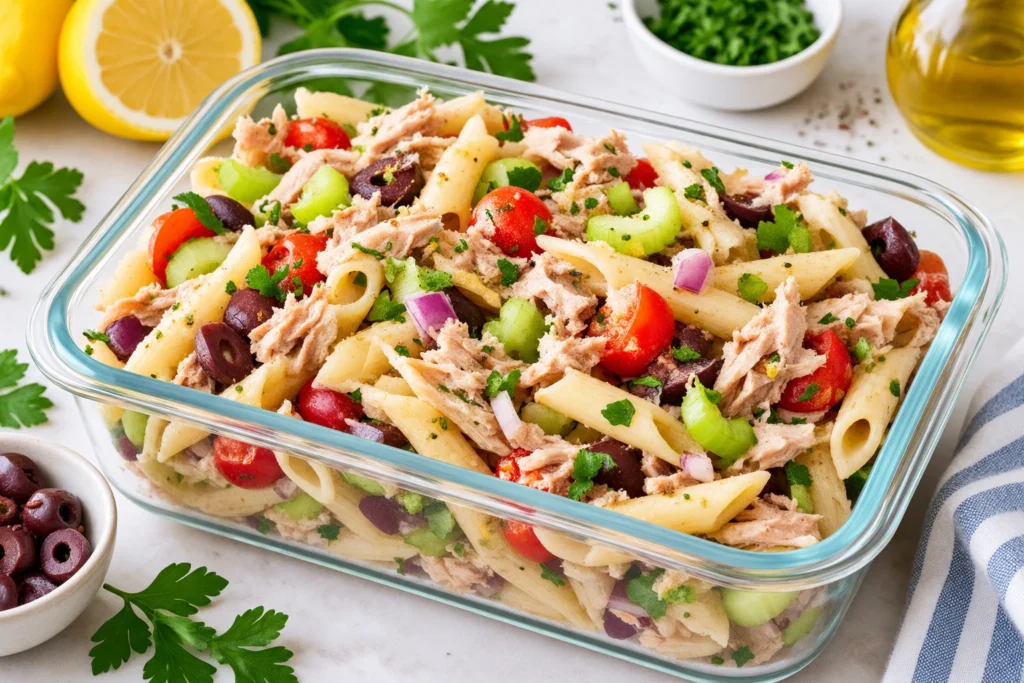
Tuna pasta is the fastest hot-or-cold lunch in this group, and it doesn't ask for more than a pantry. Boil the pasta, toss it with olive oil, garlic, and lemon, and flake the tuna in last.
Add the tuna off the heat. Warm pasta softens the fish just enough, while a hot pan dries it out and makes it chalky.
The nutrition: About 22 g protein per serving (1 of 4). The tuna is counted drained, at 25.5 g protein per 100 g, and the pasta is counted dry.
Reserve a little pasta water before draining, because the starch helps the oil and lemon cling to the noodles instead of pooling at the bottom of the container. Keep it simple.
Tuna and White Bean Salad
Two cans and a lemon cover most of this salad, and the rest is a handful of parsley and red onion. White beans are mild, so they carry the lemon and olive oil better than most vegetables do.
The nutrition: Each serving has about 25 g protein, and the batch makes 3. Beans and tuna are both counted drained.
Fold gently. Beans that get stirred hard turn mushy, and the salad loses the texture that makes it worth packing.
It improves after 10 minutes in the bowl, because the onion softens and the beans soak up the dressing, but I'd still pack it in a sealed container, keep it cold, and eat it within 3 to 4 days.
Tuna Melt
The nutrition: Count on roughly 24 g protein per serving (2 melts), from 2 equal servings. The cheese is counted as cheddar, at 23 g protein per 100 g.
A tuna melt is the one recipe here that's best eaten hot and fresh. The card is open-faced, with toast on the bottom and cheddar on top, so the bread stays crisp instead of steaming under a lid.
Mix the tuna with mayonnaise, celery, and lemon juice, then pile it onto toasted bread. Bake it at 400°F until the cheese bubbles. Use a toaster oven.
Don't pack a finished melt for later. Soggy toast is the price, and you avoid it by carrying the tuna salad in one container and the bread in another, then baking at lunch if there's an oven within reach. The tuna salad itself keeps 3 to 4 days, per FoodSafety.gov.
Tuna Spinach Tomato Salad
Spinach and cherry tomatoes give volume to the highest protein tuna lunch here, because two cans go into just two servings. There's little else in the bowl, and that's fine.
Keep the dressing apart. Lemon juice wilts spinach within hours, and a limp salad is the reason many people give up on packed lunches.
Tuna packed in water is leaner and tuna packed in olive oil is richer, and either works if you drain it well. Pick whichever tastes better to you, since the protein difference per can is small.
The nutrition: One serving comes to about 31 g protein, with 2 in all. Spinach and tomatoes are counted, though they add little.
Beans: Rice Bowls, Hot Plates, and Soups
Beans are the workhorse here. A drained 15 ounce can holds about 15 to 20 grams of protein, and these 6 recipes turn it into a rice bowl, two hot plates, and three soups and stews.
The soups freeze well. For more one-pot meals, see our one-pot dinners with real protein.
Don't Miss the Next Recipe
Get fresh recipes, meal prep systems, and high-protein meal ideas delivered to your inbox every week.
No spam. Unsubscribe anytime.
Rice and Beans Bowl
Rice and beans is the budget classic, and the pot method keeps cleanup to a single pot. The rice starts in oil and cumin, the water comes next, and the beans sit right on top while everything steams together.
Don't stir. Once the lid goes on, the beans heat in the steam, and the rice underneath finishes tender without turning to paste.
The nutrition: Per bowl, it's about 16 g protein (4 servings). The rice is counted uncooked, and the beans are counted drained.
Whole pinto beans are my pick over refried beans. Refried beans work too, but protein varies by brand, so check the label before you swap them in.
Add the avocado at serving, because it browns in the container. Put the cheese on while the bowl is hot so it melts.
Black Bean Quesadilla
A quesadilla is a cheap lunch that still feels like a real plate. Mashing half the beans is the trick, because the mashed beans glue the filling together and keep it from sliding out when you cut it.
The nutrition: About 28 g protein per quesadilla (1 of 2). Both the beans and the cheddar are counted.
Brush the pan with a little oil, not a lot. Cook the quesadilla over medium heat for 2 to 3 minutes a side. Crisp tortilla and melted cheese are the signs you're done.
Eat it fresh. Reheated quesadillas lose their crunch, though a dry skillet brings some of it back, and if you must pack one, I'd pack the salsa separately and accept a softer tortilla.
Bean and Cheese Nachos
The nutrition: Each serving has about 26 g protein, and the batch makes 2. Chips are counted at a typical label value.
Nachos can pass for lunch when the beans carry real weight. A full can of pinto beans over 3 ounces of chips, buried under a cup of cheddar, lands at a respectable protein number.
Warm the beans first. Cold beans straight from the can cool the cheese before it melts, and the chips on top scorch while the middle stays cold.
Eat these right away, because chips go soft within minutes under beans and salsa. Leftovers are safe for 3 to 4 days if refrigerated promptly, but they're a pale copy of the first plate, so I'd build only what you'll eat.
Vegetable Bean Soup
A big pot of bean and vegetable soup is the best use of whatever vegetables are left in the drawer. This card uses three cans of beans, which is what it takes to get a bowl to 14 grams of protein.
Sauté the onion, carrots, and celery first. Then add the tomatoes, broth, and beans, simmer for 20 minutes, and stir in the kale at the end so it keeps some color.
Soups and stews keep 3 to 4 days in the refrigerator and 2 to 3 months in the freezer, per FoodSafety.gov. Freeze single portions, and leave an inch of headroom because the liquid expands.
A spoonful of grated parmesan adds salt and a little more protein. I'd keep it off the pot if you plan to freeze it.
The nutrition: Count on roughly 14 g protein per bowl, from 5 equal servings. Broth isn't counted.
Tuscan White Bean Soup
Tuscan white bean soup is brothy rather than thick, and garlic, rosemary, and spinach do most of the flavor work. It's the lightest of the three bean soups in this group.
Mash a cup of beans against the pot wall before the spinach goes in. That one step thickens the broth without cream or flour, and it costs nothing extra beyond a spoon and ten seconds at the stove.
The nutrition: One bowl comes to about 15 g protein, with 4 in all. The bread is counted too, at a typical label value.
I'd serve it with a slice of crusty bread, as the card does. The slice adds a few grams of protein and soaks up the broth. Skip the bread when freezing.
White Bean and Tomato Stew
A stew is a soup that has given up on being brothy. This one cooks white beans in crushed tomatoes with rosemary until they're creamy at the edges, and it reheats well across a few days of lunches.
The nutrition: Per bowl, it's about 16 g protein (4 servings). The crushed tomatoes add a few grams, and the bread adds more.
Simmer it uncovered. The liquid reduces, the flavor concentrates, and the stew thickens enough to sit on a slice of bread.
A thick slice soaks up the sauce, and a spoonful of parmesan on top adds salt and a little protein without any extra oil. I'd choose cheese over more olive oil here.
Never Miss a Recipe
Fresh high-protein recipes, meal prep ideas, and kitchen tips, straight to your inbox every week. No spam, just good food.
No spam. Unsubscribe anytime.
Chickpeas, Hummus, and Edamame: Cold Plant Protein
These 6 recipes are mostly cold. Chickpeas and edamame supply plant protein, and store-bought hummus does the rest, so most of the work is chopping.
Check labels, because hummus and pesto vary by brand and can contain allergens such as sesame, soy, milk, or nuts.
Hummus and Veggie Plate
A hummus plate is more assembly than recipe, and that's the point. Hummus holds roughly 8 grams of protein per 100 grams, so the plate relies on a generous half cup per person.
Cut the vegetables the night before. Keep them dry in their own container, because wet carrots and soggy cucumbers are what ruin a packed plate by noon.
Pita adds more protein than most people expect, about 5 to 6 grams a round. Pack it separately and cut it into wedges at lunch, or it'll get damp from the hummus and the cucumber and turns gummy before you eat it.
The nutrition: About 17 g protein per plate (1 of 2). Hummus is counted at a typical store-bought value.
Check the label. Hummus brands vary in protein and in how long they keep once opened.
Mediterranean Chickpea Salad
Chickpeas make a salad filling enough to count as lunch, and this one adds cucumber, tomato, red onion, and feta. A drained 15 ounce can holds about 19 grams of protein, which is why the card uses one can for two servings.
Let it sit 30 minutes. Chickpeas soak up lemon and oregano as they rest, and you'll notice the salad tastes better at lunch than it did when you mixed it.
If you want more protein, a boiled egg is easy to add. Hard-cooked eggs keep 1 week in the refrigerator, per FoodSafety.gov, so they outlast the salad itself.
The nutrition: Each serving has about 16 g protein, and the batch makes 2. The feta is counted at 14.2 g protein per 100 g.
Greek Chickpea and Olive Salad
Chickpeas, olives, and jarred roasted peppers all live in the pantry, which makes this the shelf-stable version of the chickpea salad. Only the tomatoes and the feta need to be fresh.
Taste before salting. Kalamata olives and feta are both salty, and it's easy to oversalt a salad that already comes with its own brine.
The nutrition: Count on roughly 16 g protein per serving, from 2 equal servings. Olives and peppers add very little protein.
Red wine vinegar and oregano set this apart from the other chickpea salads, and they keep the flavor sharp after a night in the refrigerator, which is when most packed salads start to taste flat to me.
Chickpea, Feta and Cucumber Bowl
Rice is the base here, with chickpeas, cucumber, and feta on top and a spoonful of pesto as the dressing. Pesto adds flavor in one step, and the lemon juice keeps it from tasting heavy.
The nutrition: One bowl comes to about 20 g protein, with 2 in all. The rice is counted cooked, at 2.7 g protein per 100 g.
Cool the rice quickly. Spread it on a tray, get it into the refrigerator within an hour, and don't leave it on the counter while you pack the rest.
Store-bought pesto often contains cheese and nuts, so it counts as an allergen for some households. Check the label before packing this for a school or an office with a nut policy, and swap in olive oil and lemon if needed.
Mediterranean Veggie Bowl
The nutrition: Per bowl, it's about 16 g protein (2 servings). Most of the protein comes from the hummus and the feta.
Hummus does the heavy lifting in this bowl, with feta, cucumber, bell pepper, and olives on top. It's the easiest recipe in this group, because nothing gets cooked.
Spread the hummus flat on the bottom of the container. Everything else sits on top, so the vegetables stay dry and the dip stays cold until you stir.
Grain is optional. Cooked rice or a pita round would make it heavier, and either would add a few grams of protein, but the card is already filling at this size for most appetites.
Edamame Protein Box
Edamame is the plant protein that surprises people, at about 12 grams per 100 grams of shelled beans. This box pairs it with hummus, carrots, celery, and cheddar, so it reads like a snack plate but it's really lunch.
Use frozen shelled edamame. Boil it about 4 minutes, rinse it cold, and let it cool before it goes into the box, or the steam will make everything else damp.
Soy is one of the common allergens, and so is the milk in the cheese. If you pack this for someone else, ask first, and keep the compartments separate so the hummus doesn't leak into the rest.
The nutrition: About 26 g protein per box (1 of 2). Edamame is counted shelled.
Chicken and Pork: Cook Once, Eat All Week
Cook the chicken once and it covers several lunches. Poach 1 pound of boneless breasts in simmering salted water until a thermometer reads 165°F, about 15 to 20 minutes, then cool and shred. A rotisserie chicken with the skin removed works the same way.
These 8 recipes cover chicken in several forms and pork in one. See also our quick high-protein dinners for weeknights.
Chicken Thigh and Rice
Chicken thighs forgive a few extra minutes in the oven, which I find makes them a safer pick than breasts for batch cooking. A sheet pan of thighs and broccoli, plus rice in the containers, is Sunday prep at its simplest.
The nutrition: Each bowl has about 39 g protein, and the batch makes 4. The thighs are counted raw, which makes the number an upper estimate.
Roast at 425°F, with the broccoli joining the pan halfway so it doesn't turn to mush. Pull the chicken when the thickest piece reads 165°F, then rest it 5 minutes.
Raw weight overstates what lands in the bowl, because a thigh loses water in the oven, but the protein itself mostly stays. Weigh your cooked portions if you need exact numbers.
Season boldly. Smoked paprika, garlic powder, salt, and pepper are enough, and reheated chicken needs the extra punch.
Chicken Cucumber Tomato Salad
A rotisserie chicken turns this salad into a job that's done in five minutes. Pull the meat, discard the skin, and toss it with cucumber, tomato, and red onion in an oregano vinaigrette.
The nutrition: Count on roughly 32 g protein per serving, from 3 equal servings. The chicken is counted cooked, at 27 g protein per 100 g.
Use a food thermometer if you're cooking the chicken yourself, and stop at 165°F. Chill it fully before you mix it into the salad, since warm chicken wilts the vegetables and raises the temperature of everything it touches.
Pack it cold. FoodSafety.gov lists chicken salad at 3 to 4 days in the refrigerator and says it doesn't freeze well, so make only what you'll eat that week.
Chicken Apple Salad
The nutrition: One serving comes to about 35 g protein, with 3 in all. The yogurt is counted at 9 g protein per 100 g, as plain Greek yogurt.
Apple and celery give chicken salad a crunch that mayonnaise versions rarely have. This card uses Greek yogurt as the base, which adds protein and cuts the richness.
Toss the diced apple in lemon juice before it meets anything else. The acid slows browning, and a salad that stays pale looks fresher when you open the container at noon.
Serve it on greens or on crackers. Lettuce is packed apart so it doesn't wilt, and the chicken salad itself keeps 3 to 4 days in the refrigerator, per FoodSafety.gov. Keep it cold.
Shredded Chicken Tacos
Shredded chicken tacos are where a single pan feeds several lunches. The chicken simmers in salsa with cumin, shreds with two forks, and warms into corn tortillas with cabbage and lime on top.
Cook it to 165°F in the thickest part, then shred. Covered simmering keeps the breast moist, and the salsa becomes the sauce.
The nutrition: Per serving (2 tacos), it's about 30 g protein (4 servings). The chicken is counted raw, so the number runs high.
Store the chicken and the toppings apart. The filling freezes well for 2 to 3 months, while the cabbage and tortillas are better when they're bought fresh in small amounts, and warming the tortillas takes a minute at lunch.
Add the lime last. Acid keeps the cabbage bright.
Pulled Pork Rice Bowl
Pulled pork is the long weekend recipe in this group. A 2 pound shoulder roasts for about three hours, and that's six bowls of shredded pork over rice with slaw.
Roast it at 325°F in a covered Dutch oven with a cup of broth. The USDA's safe minimum for whole pork is 145°F with a 3 minute rest, but shoulder only turns tender around 195°F, so I'd cook to texture.
Toss the slaw mix in cider vinegar, not mayonnaise, so it keeps its crunch. Pork keeps 3 to 4 days, per FoodSafety.gov, so freeze the portions you won't eat in time.
The nutrition: About 29 g protein per bowl (1 of 6). The pork is counted raw, so the number runs high.
Skim the fat. Fat floats to the top of the cooking liquid, and removing it keeps the bowls from tasting greasy.
Cheesy Chicken Bake
A cheesy chicken bake is chicken parmesan without the breading. Thin cutlets, marinara, mozzarella, and parmesan go in one dish, and six portions come out of it.
The nutrition: Each portion has about 34 g protein, and the batch makes 6. The chicken is counted raw, and the cheese adds a large share.
Slice the breasts into thin cutlets so they cook evenly. Bake at 375°F until the sauce bubbles and the thickest piece reads 165°F, which takes 30 to 35 minutes.
It reheats better than most chicken dishes because the sauce keeps the meat moist, and the portions freeze neatly for 2 to 3 months if you cool them quickly. Reheat to 165°F.
Chicken Lettuce Wraps
The nutrition: Count on roughly 29 g protein per serving (3 wraps), from 3 equal servings. The soy sauce adds a little protein too.
Lettuce wraps are the takeout-style lunch here. Ground chicken browns in garlic, ginger, and soy sauce, then spoons into butter lettuce cups.
Ground poultry needs 165°F, not 160°F. That's the USDA number for all poultry, and it's an easy mix-up with ground beef. I'd check it.
Pack the filling and the lettuce in separate containers. The leaves stay crisp that way, and the filling reheats on its own, which a wrap with lettuce already in it can't do.
Grilled Chicken Greek Salad
A Greek chicken salad costs little when the chicken is already cooked. Leftover grilled chicken, or any chicken you've cooked to 165°F, slices over romaine with cucumber, tomato, olives, and feta.
Frozen peppers fill the vegetable gap. Thaw them, pat them very dry, and add them with the other vegetables, since extra water would thin the dressing.
Keep the dressing apart. Wet lettuce turns limp within a few hours, and the whole point of a packed salad is crisp leaves when you finally open it at noon.
The nutrition: One serving comes to about 36 g protein, with 3 in all. Chicken and feta provide most of the protein.
Eggs and Yogurt: Dairy-Based Lunches
Eggs and yogurt need almost no equipment. These 2 recipes are a cold yogurt bowl and a baked egg dish that reheats well.
Both lean on dairy, so check labels if anyone avoids milk. Our 25 high-protein breakfast bowls and plates use the same ingredients.
Greek Yogurt Bowl
A yogurt bowl is easy to make at home and hard to get wrong. Greek yogurt supplies most of the protein, with about 20 grams in a cup.
Pack the granola apart. Granola goes soft within an hour in wet yogurt, so add it at the table and keep the almonds with it.
The nutrition: Per bowl, it's about 25 g protein (2 servings). Protein in Greek yogurt varies by brand and fat level, so check your label.
Plain Greek yogurt beats flavored cups on protein and on added sugar, so the card sweetens with a little honey on top. Use less if the berries are ripe and more if they're tart, because you can always add more at the table.
Egg Bake Slice
An egg bake is the make-ahead cousin of a frittata, and one 9 by 13 inch dish cuts into six lunch slices. This card uses ten eggs, cheddar, spinach, pepper, and onion.
The nutrition: About 16 g protein per slice (1 of 6). The eggs and cheddar carry most of the protein.
Bake it until the center is set and a thermometer reads 160°F, which is the USDA mark for dishes with eggs. The USDA also says to cook eggs until the white and the yolk are firm.
Cool and refrigerate it within 2 hours. FoodSafety.gov lists egg casseroles at 3 to 4 days in the refrigerator and 2 to 3 months in the freezer, so freeze extra slices the day you bake, because they won't improve in the refrigerator. Reheat to 165°F.
Deli Lunches: Wraps, Sliders, and Snack Boxes
Deli lunches are the quickest to build and the one group that needs a safety note. These 3 recipes use sliced turkey, ham, and salami.
The CDC advises heating deli meat to 165°F for people at higher risk of listeria, which includes pregnancy. Only the sliders are heated.
Turkey Hummus Wrap
The nutrition: Each wrap has about 26 g protein, and the batch makes 2. Deli turkey is counted at 17 g protein per 100 g.
A wrap is the fastest sandwich to build, and hummus works in it as both spread and protein. Turkey, spinach, cucumber, and carrots go in a large tortilla, and the whole thing takes ten minutes.
Roll it tight. Fold the sides in first, then roll from the bottom, and wrap it in plastic wrap so it holds its shape in the bag.
Deli meat comes with a rule. The CDC advises heating deli meats to 165°F, or until steaming hot, for people at higher risk of listeria, including pregnant women. If that's you, warm the turkey first or choose a different lunch.
Ham and Cheese Sliders
Sliders turn 12 ounces of deli ham and a pack of dinner rolls into a tray of lunches. Swiss, mustard, and a butter glaze go on top, and the whole pan bakes in about 25 minutes.
Keep the rolls connected and slice them as one sheet. It's faster than splitting twelve rolls, and the tops stay together for the glaze.
Bake covered at 350°F so the cheese melts before the tops brown, then uncover for the last stretch. The CDC advises heating deli meat to 165°F or steaming hot for at-risk groups, and this recipe does that, so it's the safer deli lunch.
Rest it first. Cutting too soon drags the cheese out of the rolls, and you'll lose the layers.
The nutrition: Count on roughly 23 g protein per serving (2 sliders), from 6 equal servings. The rolls are counted at 9 g protein per 100 g.
Salami and Cheese Snack Box
A snack box is an upgraded lunchable, and it's honestly the easiest lunch on the list. Salami, cheddar, olives, cucumber, grapes, and crackers go into one container.
Salami and cheese are salty, so I'd balance them with cucumber and grapes, and I'd watch the sodium if you eat this box often.
The nutrition: One box comes to about 28 g protein, with 2 in all. The salami is counted at 22 g protein per 100 g.
Keep it cold. The USDA 2 hour rule applies to a lunch box, so use an ice pack or keep it in the refrigerator until you eat. The CDC advises heating deli meats to 165°F in pregnancy, which a cold box can't do.
Time and Protein at a Glance
Use this list to pick by the clock. Times include chilling, soaking, and resting, and protein is per serving.
- Tuna Pasta with Lemon: 22 min, about 22 g protein per serving
- Tuna and White Bean Salad: 20 min, about 25 g protein per serving
- Tuna Melt: 18 min, about 24 g protein per serving (2 melts)
- Tuna Spinach Tomato Salad: 10 min, about 31 g protein per serving
- Rice and Beans Bowl: 40 min, about 16 g protein per bowl
- Black Bean Quesadilla: 20 min, about 28 g protein per quesadilla
- Bean and Cheese Nachos: 20 min, about 26 g protein per serving
- Vegetable Bean Soup: 50 min, about 14 g protein per bowl
- Tuscan White Bean Soup: 40 min, about 15 g protein per bowl
- White Bean and Tomato Stew: 40 min, about 16 g protein per bowl
- Hummus and Veggie Plate: 10 min, about 17 g protein per plate
- Mediterranean Chickpea Salad: 45 min, about 16 g protein per serving
- Greek Chickpea and Olive Salad: 25 min, about 16 g protein per serving
- Chickpea, Feta and Cucumber Bowl: 10 min, about 20 g protein per bowl
- Mediterranean Veggie Bowl: 10 min, about 16 g protein per bowl
- Edamame Protein Box: 25 min, about 26 g protein per box
- Chicken Thigh and Rice: 50 min, about 39 g protein per bowl
- Chicken Cucumber Tomato Salad: 15 min, about 32 g protein per serving
- Chicken Apple Salad: 15 min, about 35 g protein per serving
- Shredded Chicken Tacos: 35 min, about 30 g protein per serving (2 tacos)
- Pulled Pork Rice Bowl: 3 hr 35 min, about 29 g protein per bowl
- Cheesy Chicken Bake: 55 min, about 34 g protein per portion
- Chicken Lettuce Wraps: 25 min, about 29 g protein per serving (3 wraps)
- Grilled Chicken Greek Salad: 15 min, about 36 g protein per serving
- Greek Yogurt Bowl: 5 min, about 25 g protein per bowl
- Egg Bake Slice: 55 min, about 16 g protein per slice
- Turkey Hummus Wrap: 10 min, about 26 g protein per wrap
- Ham and Cheese Sliders: 40 min, about 23 g protein per serving (2 sliders)
- Salami and Cheese Snack Box: 10 min, about 28 g protein per box
Lunch Safety: Temperatures, Cooling, and Deli Meat
The USDA's leftovers guidance says to refrigerate food within 2 hours, or within 1 hour above 90°F, and to reheat leftovers to 165°F. Cook poultry and ground poultry to 165°F, whole cuts of pork to 145°F with a 3 minute rest, and egg dishes to 160°F.
Per FoodSafety.gov, egg, chicken, ham, and tuna salad keep 3 to 4 days and don't freeze well. Soups and stews keep 3 to 4 days in the refrigerator and 2 to 3 months in the freezer. Opened deli meat keeps 3 to 5 days.
The cards stick to the shorter 3 to 4 day window for every assembled lunch, and they don't promise the longer ones. They also use 2 to 3 months for frozen cooked dishes, even though cooked poultry is listed at 2 to 6 months.
The FDA and EPA fish advice lists canned light tuna as a Best Choice, with 2 to 3 servings a week in pregnancy and while breastfeeding. Albacore and yellowfin are a Good Choice at 1 serving a week, and a serving is 4 ounces. Our omega-3 rich dinners cover other fish.
The CDC advises reheating deli meats to 165°F, or until steaming hot, for pregnant women and other higher-risk groups. The ham sliders are baked to that mark. The turkey wrap and the salami box are served cold, so skip them in that case.
Don't leave cooked rice sitting out: spread it in a shallow container to cool it fast. Our healthy meal prep dinner ideas cover portioning and containers.
How I Counted Protein
I multiplied typical USDA FoodData Central values by the weights on each card, then divided by the servings. Meats are counted raw, and beans, chickpeas, and tuna are counted drained, so the numbers are estimates, and raw meat runs high. Don't treat them as lab results.
Several inputs rest on assumptions: drained canned beans at 7 g per 100 g, chickpeas at 7.5, canned tuna at 25.5, hummus at 7.9, deli turkey at 17, salami at 22, and cooked chicken at 27. Tortillas, bread, chips, and crackers use typical label values, so check yours.
A drained 15 ounce can of beans holds about 15 to 20 grams of protein, not a flat 20. Broth isn't counted, and vegetables add little. These numbers are estimates, not medical advice. If you manage a health condition, ask your doctor or dietitian what target suits you.
Where These Cards Differ From Typical Versions
These cards are my own builds of standard lunches, scaled and weighed so the protein can be counted. They aren't copies of one published recipe, so a test cook is wise before you batch a week of them.
A few choices stand out. The rice and beans use whole pinto beans rather than refried, the tuna melt is open-faced, and the Greek chicken salad uses thawed frozen peppers for the freezer-vegetable idea. The pork is cooked past the USDA minimum because shoulder only turns tender near 195°F.
Questions About Cheap High-Protein Lunches
Which recipe has the most protein?
Chicken Thigh and Rice leads at about 39 grams per bowl, followed by Grilled Chicken Greek Salad at about 36 grams and Chicken Apple Salad at about 35. The lowest is the Vegetable Bean Soup at about 14 grams.
Which lunches need no microwave?
15 of the 29 are built to eat cold, and they're marked in the four questions list near the top. Everything else tastes best warm or can be reheated to 165°F.
Can I freeze tuna salad or chicken salad?
No. FoodSafety.gov says egg, chicken, ham, and tuna salad don't freeze well. Soups, stews, and cooked chicken dishes do freeze, for about 2 to 3 months.
Is canned tuna safe to eat every week?
The FDA and EPA list canned light tuna as a Best Choice, with 2 to 3 servings a week in pregnancy and while breastfeeding. Albacore is a Good Choice at 1 serving a week. A serving is 4 ounces, and your doctor can advise on your own situation.
What temperature should chicken reach?
Poultry, including ground chicken, should reach 165°F in the thickest part. Check with a food thermometer, and reheat leftovers to 165°F as well.
Which recipes take the least hands-on time?
Greek Yogurt Bowl takes 5 minutes of work, followed by Bean and Cheese Nachos and Black Bean Quesadilla at 10 to 10 minutes.
Which recipes need no cooking?
13 of the 29 need no stove or oven, because they use canned, cooked, or deli ingredients. Most of the others involve a pot, a skillet, or the oven.
How do I know a lunch is actually cheap?
Use the cost formula near the top with your own receipts. I don't quote prices, so no number here depends on a store or a season. For heavier meals, our 50 gram protein dinners show how far food alone can go.
Are these protein numbers exact?
No. They're estimates based on typical USDA values, and brands of hummus, tortillas, and yogurt change the total. Raw meat weights run slightly high.
1. Tuna Pasta with Lemon
Approx. 22g ProteinIngredients: 8 oz (227 g) spaghetti or penne pasta, dry; 2 cans (5 oz each) tuna, drained (220 g); 3 tbsp olive oil; 2 garlic cloves, minced (6 g); 1 lemon, zested, plus 3 tbsp lemon juice; 1/4 cup chopped fresh parsley (15 g); Salt and black pepper, to taste; Water, for boiling the pasta.
Step 1: Boil the pasta in salted water until al dente, following the package time. Scoop out half a cup of the pasta water, then drain.
Step 2: While the pasta cooks, stir the olive oil, garlic, lemon zest, and lemon juice together in a large bowl.
Step 3: Add the hot pasta to the bowl and toss, adding a splash of the reserved pasta water until the sauce coats the noodles.
Step 4: Flake in the tuna, add the parsley, salt, and black pepper, and toss again. Taste and add more lemon juice if you like.
Step 5: Eat it cold or at room temperature. Refrigerate within 2 hours, or within 1 hour above 90°F, and eat within 3 to 4 days. This doesn't freeze well.
2. Tuna and White Bean Salad
Approx. 25g ProteinIngredients: 2 cans (5 oz each) tuna, drained (220 g); 1 can (15 oz) white beans, drained and rinsed (255 g); 1/4 cup finely chopped red onion (40 g); 1/4 cup chopped fresh parsley (15 g); 3 tbsp olive oil; 3 tbsp lemon juice; Salt and black pepper, to taste.
Step 1: Drain and rinse the white beans in a colander, then drain the tuna well.
Step 2: Whisk the olive oil, lemon juice, salt, and black pepper in a large bowl.
Step 3: Add the beans, tuna, red onion, and parsley, and fold gently so the beans stay whole.
Step 4: Let the salad sit 10 minutes so the onion mellows, then taste and add more salt or lemon juice. Refrigerate within 2 hours, or within 1 hour above 90°F, and eat within 3 to 4 days. This doesn't freeze well.
3. Tuna Melt
Approx. 24g ProteinIngredients: 1 can (5 oz) tuna, drained (110 g); 2 tbsp mayonnaise (28 g); 2 tbsp finely chopped celery (12 g); 1 tsp lemon juice; 4 slices bread (28 g each, 112 g); 2 slices cheddar cheese (21 g each, 42 g); Black pepper, to taste.
Step 1: Heat the oven to 400°F. Toast the bread on a baking sheet for 3 minutes.
Step 2: Mix the tuna, mayonnaise, celery, lemon juice, and black pepper in a bowl.
Step 3: Pile the tuna salad on the toast and top with the cheddar, cutting the slices to fit.
Step 4: Bake 5 to 6 minutes, until the cheese is melted and bubbly and the edges are golden.
Step 5: Eat it warm. Refrigerate any leftover tuna salad within 2 hours, or within 1 hour above 90°F, and use it within 3 to 4 days. If you save a finished melt, reheat it to 165°F before eating.
4. Tuna Spinach Tomato Salad
Approx. 31g ProteinIngredients: 2 cans (5 oz each) tuna, drained (220 g); 4 cups baby spinach (120 g); 1 cup cherry tomatoes, halved (150 g); 2 tbsp finely chopped red onion (20 g); 2 tbsp olive oil; 2 tbsp lemon juice; Salt and black pepper, to taste.
Step 1: Divide the spinach and tomatoes between two containers, and scatter the red onion on top.
Step 2: Whisk the olive oil, lemon juice, salt, and black pepper in a small jar and keep it separate until lunch.
Step 3: Flake the tuna over the spinach in each container, or pack it in its own small container.
Step 4: Pour the dressing over the salad just before eating. Refrigerate within 2 hours, or within 1 hour above 90°F, and eat within 3 to 4 days. This doesn't freeze well.
5. Rice and Beans Bowl
Approx. 16g ProteinIngredients: 1 tbsp vegetable oil; 1 cup long-grain white rice, uncooked (185 g); 2 cups water; 1 tsp ground cumin; 1/2 tsp salt; 2 cans (15 oz each) pinto beans, drained and rinsed (510 g); 1/2 cup shredded cheddar cheese (57 g); 1 ripe avocado, diced (150 g).
Step 1: Heat the oil in a medium pot over medium heat. Stir in the rice and cumin for 1 minute.
Step 2: Add the water and salt, turn the heat to high, and bring to a boil.
Step 3: Pour the beans on top of the rice without stirring, cover, and turn the heat to low.
Step 4: Cook 15 to 18 minutes, until the water is absorbed, the rice is tender, and the beans are steaming hot. Rest 5 minutes, covered.
Step 5: Fluff and stir the rice and beans together. Top each bowl with the cheddar, and add the avocado fresh at serving, because it browns. Refrigerate within 2 hours, or within 1 hour above 90°F, and eat within 3 to 4 days. Reheat to 165°F before eating.
6. Black Bean Quesadilla
Approx. 28g ProteinIngredients: 1 can (15 oz) black beans, drained and rinsed (240 g); 1/2 tsp ground cumin; 2 large flour tortillas, 10 inch (70 g each, 140 g); 1 cup shredded cheddar cheese (113 g); 1 tsp vegetable oil; 1/4 cup salsa, for dipping (65 g).
Step 1: Mash half the beans with a fork in a bowl, then stir in the remaining whole beans and the cumin.
Step 2: Lay the tortillas flat, spread the bean mixture over half of each, top with the cheddar, and fold over.
Step 3: Brush a skillet with the oil and heat over medium. Cook each quesadilla 2 to 3 minutes per side, until golden and crisp and the cheese is melted.
Step 4: Rest 1 minute, cut into wedges, and serve with the salsa. Refrigerate within 2 hours, or within 1 hour above 90°F, and eat within 3 to 4 days. Reheat to 165°F before eating.
7. Bean and Cheese Nachos
Approx. 26g ProteinIngredients: 3 oz (85 g) tortilla chips; 1 can (15 oz) pinto beans, drained and rinsed (255 g); 1/2 tsp ground cumin; 1 cup shredded cheddar cheese (113 g); 1/2 cup chopped tomato (75 g); 1/4 cup salsa (65 g).
Step 1: Heat the oven to 400°F. Warm the beans in a small pot with the cumin until steaming hot, about 3 minutes.
Step 2: Spread the chips on a rimmed baking sheet, spoon the beans over them, and sprinkle on the cheddar.
Step 3: Bake 6 to 8 minutes, until the cheese is melted and bubbly.
Step 4: Top with the tomato and salsa and eat right away. Refrigerate within 2 hours, or within 1 hour above 90°F, and eat within 3 to 4 days. Reheat to 165°F before eating.
8. Vegetable Bean Soup
Approx. 14g ProteinIngredients: 2 tbsp olive oil; 1 yellow onion, diced (150 g); 2 carrots, diced (120 g); 2 celery stalks, diced (80 g); 3 garlic cloves, minced (9 g); 1 can (14.5 oz) diced tomatoes, with juice (411 g); 6 cups low-sodium vegetable broth; 3 cans (15 oz each) white or kidney beans, drained and rinsed (765 g); 2 cups chopped kale (60 g); 1/2 tsp salt; 1/2 tsp black pepper; 1/4 cup grated parmesan, for serving (25 g).
Step 1: Heat the oil in a large pot over medium heat. Cook the onion, carrots, and celery 6 to 8 minutes, until softened, then add the garlic for 1 minute.
Step 2: Add the tomatoes, broth, beans, salt, and pepper. Bring to a boil, then lower the heat and simmer 20 minutes, until the vegetables are tender.
Step 3: Stir in the kale and simmer 5 more minutes.
Step 4: Taste, adjust the salt, and ladle into bowls topped with the parmesan. Cool within 2 hours, or within 1 hour above 90°F. Refrigerate up to 3 to 4 days, or freeze up to 2 to 3 months, and reheat to 165°F before eating.
9. Tuscan White Bean Soup
Approx. 15g ProteinIngredients: 2 tbsp olive oil; 1 yellow onion, diced (150 g); 1 carrot, diced (60 g); 4 garlic cloves, minced (12 g); 2 tsp chopped fresh rosemary; 4 cups low-sodium chicken broth; 2 cans (15 oz each) cannellini beans, drained and rinsed (510 g); 4 cups baby spinach (120 g); 1/4 cup grated parmesan (25 g); 4 slices crusty bread (28 g each, 112 g); Salt and black pepper, to taste.
Step 1: Heat the oil in a large pot over medium heat. Cook the onion and carrot 6 minutes, until soft, then add the garlic and rosemary for 1 minute.
Step 2: Add the broth and beans, bring to a boil, then lower the heat and simmer 20 minutes.
Step 3: Mash about a cup of the beans against the side of the pot with a spoon to thicken the broth.
Step 4: Stir in the spinach until wilted, season with salt and black pepper, and top with the parmesan. Serve with the bread. Cool within 2 hours, or within 1 hour above 90°F. Refrigerate up to 3 to 4 days, or freeze up to 2 to 3 months, and reheat to 165°F before eating.
10. White Bean and Tomato Stew
Approx. 16g ProteinIngredients: 2 tbsp olive oil; 1 yellow onion, diced (150 g); 4 garlic cloves, minced (12 g); 2 tsp chopped fresh rosemary; 1 can (28 oz) crushed tomatoes (794 g); 1 cup low-sodium broth; 2 cans (15 oz each) white beans, drained and rinsed (510 g); 1/4 cup grated parmesan (25 g); 4 slices crusty bread (28 g each, 112 g); Salt and black pepper, to taste.
Step 1: Heat the oil in a deep skillet or pot over medium heat. Cook the onion 5 minutes, until soft, then add the garlic and rosemary for 1 minute.
Step 2: Add the tomatoes, broth, beans, salt, and black pepper. Bring to a simmer.
Step 3: Simmer, uncovered, 20 to 25 minutes, stirring now and then, until the stew has thickened and the beans are creamy at the edges.
Step 4: Ladle into bowls, top with the parmesan, and serve with the bread. Cool within 2 hours, or within 1 hour above 90°F. Refrigerate up to 3 to 4 days, or freeze up to 2 to 3 months, and reheat to 165°F before eating.
11. Hummus and Veggie Plate
Approx. 17g ProteinIngredients: 1 cup store-bought hummus (240 g); 2 pita rounds (60 g each, 120 g); 1 cup baby carrots (110 g); 1 cup cucumber slices (120 g); 1 bell pepper, cut into strips (150 g).
Step 1: Cut the bell pepper into strips and slice the cucumber.
Step 2: Spoon half the hummus into each of two small containers.
Step 3: Pack the carrots, cucumber, and pepper in a second container so they stay crisp, and wrap the pita separately.
Step 4: Cut the pita into wedges at lunch and dip. Keep refrigerated and eat within 3 to 4 days. If the hummus label gives a shorter window, follow the label.
12. Mediterranean Chickpea Salad
Approx. 16g ProteinIngredients: 1 can (15 oz) chickpeas, drained and rinsed (250 g); 1 cup diced cucumber (120 g); 1 cup halved cherry tomatoes (150 g); 1/4 cup diced red onion (40 g); 1/2 cup crumbled feta cheese (75 g); 2 tbsp olive oil; 2 tbsp lemon juice; 1/2 tsp dried oregano; Salt and black pepper, to taste.
Step 1: Whisk the olive oil, lemon juice, oregano, salt, and black pepper in a large bowl.
Step 2: Add the chickpeas, cucumber, tomatoes, and red onion, and toss to coat.
Step 3: Fold in the feta, cover, and refrigerate 30 minutes so the chickpeas soak up the dressing.
Step 4: Stir again and taste before packing. Keep refrigerated and eat within 3 to 4 days.
13. Greek Chickpea and Olive Salad
Approx. 16g ProteinIngredients: 1 can (15 oz) chickpeas, drained and rinsed (250 g); 1/2 cup pitted kalamata olives, halved (75 g); 1 cup grape tomatoes, halved (150 g); 1/2 cup jarred roasted red peppers, drained and chopped (75 g); 1/2 cup crumbled feta cheese (75 g); 2 tbsp red wine vinegar; 2 tbsp olive oil; 1 tsp dried oregano; Black pepper, to taste.
Step 1: Whisk the vinegar, olive oil, oregano, and black pepper in a large bowl.
Step 2: Add the chickpeas, olives, tomatoes, and roasted peppers, and toss.
Step 3: Fold in the feta and refrigerate 15 minutes. The olives and feta are already briny, so taste before you season.
Step 4: Stir and pack into containers. Keep refrigerated and eat within 3 to 4 days.
14. Chickpea, Feta and Cucumber Bowl
Approx. 20g ProteinIngredients: 1 can (15 oz) chickpeas, drained and rinsed (250 g); 1 1/2 cups cooked white rice (237 g); 1 cup diced cucumber (120 g); 1/2 cup crumbled feta cheese (75 g); 3 tbsp basil pesto, store-bought (48 g); 1 tbsp lemon juice.
Step 1: If the rice is freshly cooked, spread it on a tray to cool and refrigerate it within 1 hour.
Step 2: Stir the pesto and lemon juice together in a large bowl, then add the chickpeas and toss to coat.
Step 3: Divide the cold rice between two containers and top with the chickpeas, cucumber, and feta.
Step 4: Stir everything together at lunch. Keep refrigerated and eat within 3 to 4 days.
15. Mediterranean Veggie Bowl
Approx. 16g ProteinIngredients: 1 cup store-bought hummus (240 g); 1/2 cup crumbled feta cheese (75 g); 1 cup diced cucumber (120 g); 1 bell pepper, diced (150 g); 1/4 cup olives (40 g); 1 tbsp olive oil; 1/2 tsp dried oregano.
Step 1: Spoon half the hummus into the bottom of each of two containers and spread it flat.
Step 2: Top with the cucumber, bell pepper, olives, and feta in separate piles.
Step 3: Drizzle with the olive oil and sprinkle on the oregano.
Step 4: Scoop it up with a fork and mix as you eat. Keep refrigerated and eat within 3 to 4 days. If the hummus label gives a shorter window, follow the label.
16. Edamame Protein Box
Approx. 26g ProteinIngredients: 1 1/2 cups frozen shelled edamame (230 g); Water, for cooking the edamame; 1/2 tsp salt; 1/2 cup store-bought hummus (120 g); 1 cup baby carrots (110 g); 2 celery stalks, cut into sticks (80 g); 2 oz (56 g) cheddar cheese, cubed.
Step 1: Cook the edamame in boiling salted water for about 4 minutes, until bright green and tender, or follow the package.
Step 2: Drain and rinse the edamame under cold water, then let it cool 10 minutes.
Step 3: Divide the edamame, hummus, carrots, celery, and cheddar between two boxes, keeping the hummus in its own compartment.
Step 4: Sprinkle the edamame with a pinch more salt if you like. Keep refrigerated and eat within 3 to 4 days.
17. Chicken Thigh and Rice
Approx. 39g ProteinIngredients: 1 1/2 lb (680 g) boneless skinless chicken thighs; 2 tbsp olive oil; 1 tsp smoked paprika; 1 tsp garlic powder; 3/4 tsp salt; 1/2 tsp black pepper; 4 cups broccoli florets (360 g); 3 cups cooked white rice (474 g).
Step 1: Heat the oven to 425°F. Toss the thighs on a rimmed sheet pan with 1 tablespoon of the olive oil, the paprika, garlic powder, half the salt, and the pepper.
Step 2: Roast the thighs 12 minutes. Toss the broccoli with the remaining oil and salt, add it to the pan, and roast 12 to 15 minutes more.
Step 3: Check that the thickest thigh reads 165°F and the broccoli is tender and browned at the edges. Rest the chicken 5 minutes, then slice.
Step 4: Divide the rice among 4 containers and top with the chicken and broccoli. Cool within 2 hours, or within 1 hour above 90°F. Refrigerate up to 3 to 4 days, or freeze up to 2 to 3 months, and reheat to 165°F before eating.
18. Chicken Cucumber Tomato Salad
Approx. 32g ProteinIngredients: 12 oz (340 g) cooked chicken, shredded or diced, skin removed; 1 1/2 cups diced cucumber (180 g); 1 1/2 cups halved cherry tomatoes (225 g); 1/4 cup thinly sliced red onion (40 g); 3 tbsp olive oil; 2 tbsp red wine vinegar; 1/2 tsp dried oregano; Salt and black pepper, to taste.
Step 1: Use rotisserie chicken with the skin removed, or chicken you've cooked to 165°F and cooled. Shred it into bite-size pieces.
Step 2: Whisk the olive oil, vinegar, oregano, salt, and black pepper in a large bowl.
Step 3: Add the chicken, cucumber, tomatoes, and red onion, and toss to coat.
Step 4: Taste and adjust the salt. Refrigerate within 2 hours, or within 1 hour above 90°F, and eat within 3 to 4 days. This doesn't freeze well.
19. Chicken Apple Salad
Approx. 35g ProteinIngredients: 12 oz (340 g) cooked chicken, shredded or diced, skin removed; 1 large apple, diced (200 g); 2 celery stalks, diced (80 g); 1/2 cup plain Greek yogurt (115 g); 1 tbsp lemon juice; 1 tsp Dijon mustard; 3 cups chopped romaine lettuce (141 g); Salt and black pepper, to taste.
Step 1: Toss the diced apple with the lemon juice so it stays bright.
Step 2: Stir the yogurt, Dijon mustard, salt, and black pepper together in a large bowl.
Step 3: Fold in the chicken, apple, and celery. Use rotisserie chicken with the skin removed, or chicken you've cooked to 165°F and cooled.
Step 4: Pack the lettuce separately and spoon the chicken salad over it at lunch. Refrigerate within 2 hours, or within 1 hour above 90°F, and eat within 3 to 4 days. This doesn't freeze well.
20. Shredded Chicken Tacos
Approx. 30g ProteinIngredients: 1 lb (454 g) boneless skinless chicken breasts; 1 cup salsa, divided (250 g); 1 tsp ground cumin; 1/2 tsp salt; 8 corn tortillas (24 g each, 192 g); 2 cups shredded cabbage (140 g); 1 lime, cut into wedges.
Step 1: Put the chicken, 3/4 cup of the salsa, the cumin, and the salt in a skillet. Cover and bring to a simmer over medium heat.
Step 2: Simmer, covered, 18 to 22 minutes, turning once, until a thermometer in the thickest part reads 165°F.
Step 3: Shred the chicken with two forks right in the pan and stir it into the sauce. Simmer 2 minutes.
Step 4: Warm the tortillas in a dry skillet or the microwave until soft.
Step 5: Fill with the chicken, then top with the cabbage, the remaining salsa, and a squeeze of lime. Store the chicken and the cabbage separately. Cool within 2 hours, or within 1 hour above 90°F. Refrigerate up to 3 to 4 days, or freeze up to 2 to 3 months, and reheat to 165°F before eating.
21. Pulled Pork Rice Bowl
Approx. 29g ProteinIngredients: 2 lb (907 g) boneless pork shoulder, trimmed and cut into 4 pieces; 1 tbsp smoked paprika; 1 tsp garlic powder; 1 tsp salt; 1/2 tsp black pepper; 1 cup low-sodium broth; 1/2 cup barbecue sauce (140 g); 3 cups cooked white rice (474 g); 3 cups coleslaw mix (210 g); 1 tbsp apple cider vinegar.
Step 1: Heat the oven to 325°F. Rub the pork with the paprika, garlic powder, salt, and pepper.
Step 2: Place the pork in a Dutch oven with the broth and cover tightly. Roast 2 hours 30 minutes to 3 hours, until the pork shreds easily with a fork and a thermometer reads about 195°F. The USDA minimum for whole cuts of pork is 145°F with a 3 minute rest, so 195°F is for tenderness.
Step 3: Shred the pork with two forks, discard any large pieces of fat, and stir in the barbecue sauce and a few spoonfuls of the cooking liquid.
Step 4: Toss the coleslaw mix with the vinegar and a pinch of salt.
Step 5: Build the bowls with rice, pork, and slaw. Cool within 2 hours, or within 1 hour above 90°F. Refrigerate up to 3 to 4 days, or freeze up to 2 to 3 months, and reheat to 165°F before eating.
22. Cheesy Chicken Bake
Approx. 34g ProteinIngredients: 1 1/2 lb (680 g) boneless skinless chicken breasts, sliced into thin cutlets; 1 tbsp olive oil; 1 tsp Italian seasoning; 1/2 tsp salt; 1/4 tsp black pepper; 1 1/2 cups marinara sauce (375 g); 1 1/2 cups shredded mozzarella cheese (170 g); 1/4 cup grated parmesan (25 g); Nonstick cooking spray.
Step 1: Heat the oven to 375°F and spray a 9 by 13 inch baking dish with nonstick cooking spray.
Step 2: Arrange the chicken cutlets in one layer, drizzle with the olive oil, and season with the Italian seasoning, salt, and pepper.
Step 3: Spoon the marinara over the chicken and top with the mozzarella and parmesan.
Step 4: Bake 30 to 35 minutes, until the sauce is bubbly and a thermometer in the thickest cutlet reads 165°F.
Step 5: Rest 5 minutes and cut into 6 portions. Cool within 2 hours, or within 1 hour above 90°F. Refrigerate up to 3 to 4 days, or freeze up to 2 to 3 months, and reheat to 165°F before eating.
23. Chicken Lettuce Wraps
Approx. 29g ProteinIngredients: 1 lb (454 g) ground chicken; 1 tbsp vegetable oil; 3 garlic cloves, minced (9 g); 1 tbsp grated fresh ginger; 3 tbsp low-sodium soy sauce (48 g); 1 tbsp rice vinegar; 1/2 cup shredded carrots (55 g); 1/4 cup sliced green onions (25 g); 9 butter lettuce leaves (135 g).
Step 1: Heat the oil in a large skillet over medium-high heat. Add the chicken and break it up as it cooks, 6 to 8 minutes, until no pink remains and a thermometer reads 165°F.
Step 2: Stir in the garlic and ginger for 30 seconds, then add the soy sauce, vinegar, and carrots. Cook 1 minute.
Step 3: Spoon the filling into the lettuce leaves and top with the green onions.
Step 4: Store the filling and the lettuce separately so the leaves stay crisp. Cool within 2 hours, or within 1 hour above 90°F. Refrigerate up to 3 to 4 days, or freeze up to 2 to 3 months, and reheat to 165°F before eating.
24. Grilled Chicken Greek Salad
Approx. 36g ProteinIngredients: 12 oz (340 g) cooked chicken, shredded or diced, skin removed; 4 cups chopped romaine lettuce (188 g); 1 cup diced cucumber (120 g); 1 cup halved cherry tomatoes (150 g); 1/4 cup thinly sliced red onion (40 g); 1/4 cup olives (40 g); 1/2 cup crumbled feta cheese (75 g); 1 cup thawed frozen sliced bell peppers, patted dry (140 g); 3 tbsp olive oil; 2 tbsp red wine vinegar; 1 tsp dried oregano; Salt and black pepper, to taste.
Step 1: Use leftover grilled chicken, or chicken you've cooked to 165°F and cooled. Slice it into strips.
Step 2: Whisk the olive oil, vinegar, oregano, salt, and black pepper in a small jar.
Step 3: Layer the lettuce, cucumber, tomatoes, red onion, olives, and bell peppers in three containers, and top with the chicken and feta.
Step 4: Keep the dressing separate until lunch, then shake it and pour it on. Refrigerate within 2 hours, or within 1 hour above 90°F, and eat within 3 to 4 days. This doesn't freeze well.
25. Greek Yogurt Bowl
Approx. 25g ProteinIngredients: 2 cups plain Greek yogurt (454 g); 1/2 cup granola (60 g); 1 cup berries (150 g); 2 tbsp sliced almonds (14 g); 2 tsp honey.
Step 1: Spoon the yogurt into two containers and top with the berries.
Step 2: Pack the granola and almonds in a separate small container so they stay crunchy.
Step 3: Drizzle the honey over the yogurt, then add the granola and almonds at lunch. Keep refrigerated and eat within 3 to 4 days.
26. Egg Bake Slice
Approx. 16g ProteinIngredients: 10 large eggs (500 g); 1/2 cup milk (122 g); 1 cup shredded cheddar cheese (113 g); 2 cups chopped spinach (60 g); 1 bell pepper, diced (150 g); 1/2 cup diced onion (80 g); 1 tsp olive oil; Salt and black pepper, to taste; Nonstick cooking spray.
Step 1: Heat the oven to 375°F and spray a 9 by 13 inch baking dish with nonstick cooking spray.
Step 2: Heat the olive oil in a skillet over medium heat. Cook the onion and bell pepper 5 minutes, until soft, then stir in the spinach until wilted.
Step 3: Whisk the eggs, milk, salt, and black pepper. Spread the vegetables and the cheddar in the dish and pour the eggs over them.
Step 4: Bake 25 to 30 minutes, until the center is set and a thermometer reads 160°F.
Step 5: Rest 10 minutes and cut into 6 slices. Cool within 2 hours, or within 1 hour above 90°F. Refrigerate up to 3 to 4 days, or freeze up to 2 to 3 months, and reheat to 165°F before eating.
27. Turkey Hummus Wrap
Approx. 26g ProteinIngredients: 2 large flour tortillas, 10 inch (70 g each, 140 g); 1/2 cup store-bought hummus (120 g); 6 oz (170 g) deli sliced turkey breast; 1 cup baby spinach (30 g); 1/2 cup sliced cucumber (60 g); 1/2 cup shredded carrots (55 g); Plastic wrap.
Step 1: Spread the hummus over each tortilla, leaving a 1 inch border.
Step 2: Layer the turkey, spinach, cucumber, and carrots down the center.
Step 3: Fold in the sides, roll up tightly, and wrap each in plastic wrap to hold the shape.
Step 4: Slice in half at lunch. Keep refrigerated and eat within 3 to 4 days. Pregnant people are advised by the CDC to heat deli meat to 165°F, so skip this one cold if that applies.
28. Ham and Cheese Sliders
Approx. 23g ProteinIngredients: 12 soft dinner rolls, split (28 g each, 336 g); 12 oz (340 g) deli sliced ham; 6 oz (170 g) sliced Swiss cheese; 4 tbsp butter, melted; 1 tbsp Dijon mustard; 1 tsp Worcestershire sauce; Aluminum foil.
Step 1: Heat the oven to 350°F. Keep the rolls connected, slice them in half horizontally, and set the bottoms in a 9 by 13 inch pan.
Step 2: Spread the Dijon mustard over the bottoms, then layer on the ham and Swiss and replace the tops.
Step 3: Whisk the butter and Worcestershire sauce and brush the mixture over the tops. Cover the pan with foil.
Step 4: Bake 15 minutes, then uncover and bake 8 to 10 minutes more, until the cheese is melted and the ham is steaming hot, 165°F.
Step 5: Cut into 12 sliders. Refrigerate within 2 hours, or within 1 hour above 90°F, and eat within 3 to 4 days. Reheat to 165°F before eating.
29. Salami and Cheese Snack Box
Approx. 28g ProteinIngredients: 4 oz (113 g) sliced salami; 4 oz (113 g) cheddar cheese, cubed; 1/4 cup olives (40 g); 12 whole wheat crackers (30 g); 1 cup cucumber slices (120 g); 1 cup grapes (150 g).
Step 1: Fold or fan the salami and cube the cheddar.
Step 2: Divide the salami, cheddar, olives, cucumber, and grapes between two boxes.
Step 3: Pack the crackers in their own compartment so they don't go soft.
Step 4: Keep the box in the refrigerator or with an ice pack until lunch. Keep refrigerated and eat within 3 to 4 days. The CDC advises heating deli meats to 165°F during pregnancy, so this box isn't for that situation.
Get Fresh Recipes Every Week
Join readers getting fresh recipes, meal prep systems, and high-protein meal ideas delivered to your inbox every week.
No spam. Unsubscribe anytime.