
See all 27 recipes
Table of Contents
- What the Hold Score Means
- Before You Cook Anything Early
- The Full Scoreboard
- Hold Score 5: Make It Early and Forget About It
- Hold Score 4: Great, But Watch One Thing
- Hold Score 3: Prep Early, Save One Step
- Hold Score 2: Prep the Pieces, Finish Late
- Building Your Thursday by Score
- What a Balanced Plate Looks Like
- Planning the Leftovers
- FAQ
- Recipe Cards
Okay so, two Thanksgivings ago I cooked everything on Monday. Everything. Stuffing, potatoes, three salads, the works. I even took a picture of my fridge because it looked so organized, foil-covered dishes lined up like little soldiers, and I texted it to my sister with a fist-pump emoji.
Then Thursday happened. The mashed potatoes were the best of my life. The soup tasted like something from a place with cloth napkins. And the salad I'd dressed on Monday (yes, Monday, yes, I know) was a wet green heap that nobody touched, including me, and I made it.
That night I opened the notes app on my phone and started a list. Every side gets a number from 1 to 5, and I only ask one question: did it taste better, the same, or worse on Thursday than the day I made it? I've added to that list every year since. This article is that list, with the embarrassing parts left in.
Most make-ahead roundups treat every dish the same, like a casserole and a green salad are equally relaxed about sitting in a fridge for three days. They're not. Some improve, some need a small trick, some can only be half-done early, and a few just have to wait until the last hour no matter how proud of yourself you feel on Tuesday. So I sorted all 27 by how well they hold instead of by ingredient. Cooking once and coasting? Start at the top. Got one free hour Thursday morning? Skip to the bottom.
I also sneak protein in wherever I can. A Thanksgiving plate is basically a beige pile and I'm starving again by the second quarter of the game. Yogurt in the potatoes, cottage cheese in the mac. My family has yet to catch on.
Emily's Take
Cooked food keeps safely in the fridge for 3 to 4 days, according to the USDA, so anything you cook Monday or Tuesday is fine for Thursday. The trick is knowing which sides get better with time and which ones don't, and that's what the ranking below is for.
Video :
What the Hold Score Means
These numbers are just me, my kitchen, and my taste buds. Not a lab test. Think of it as advice from a friend who has ruined a couple of Thanksgivings so you don't have to.
| Hold Score | What it means | How I treat it |
|---|---|---|
| 5 | Tastes as good or better after resting | Make it early and forget about it |
| 4 | Great, with one small fix | Follow the one note in the recipe |
| 3 | Only part of it holds | Prep ahead, finish one step on the day |
| 2 | Loses its best qualities in the fridge | Prep the pieces, assemble at the last minute |
Before You Cook Anything Early
Cooking days ahead only works if it's safe. I follow the USDA's advice on leftovers and food safety, and the short version goes like this:
- Cool food fast, in shallow containers, not one deep pot
- Fridge within 2 hours of cooking (1 hour if it's hotter than 90°F)
- Fridge at 40°F or below, so buy the five dollar thermometer, because a holiday fridge gets opened about a hundred times
- Cooked food keeps 3 to 4 days
- Reheat to 165°F, and use a thermometer for anything with sausage, bacon, eggs, or dairy
When a dish below says "up to 4 days," treat that as the limit, not the plan.
The Full Scoreboard
Everything in one place. Screenshot it and stick it on your fridge.
| Side | Hold Score | Fridge | Freezer | On Thursday |
|---|---|---|---|---|
| Garlic Mashed Potatoes | 5 | Up to 4 days | Yes | Stovetop or slow cooker |
| Potatoes au Gratin | 5 | Up to 4 days | Not ideal | Oven, 25 minutes |
| Butternut Squash Soup | 5 | Up to 4 days | Yes | Stovetop |
| Slow-Baked Beans | 5 | Up to 4 days | Yes | Slow cooker |
| Thanksgiving Stuffing Casserole | 5 | 2 days, unbaked | No | Oven, 50 minutes |
| Loaded Twice-Baked Potatoes | 5 | 3 days | Yes | Oven, 25 minutes |
| Cheddar Bay Biscuits | 5 | 4 days baked | Yes | Oven, 10 minutes |
| Roasted Beet Salad | 5 | 4 days | No | No heat |
| Roasted Cauliflower and Chickpea Salad | 5 | 3 days | No | No heat |
| Garlic Mashed Parsnips | 4 | Up to 4 days | Yes | Stovetop |
| Homemade Creamed Corn | 4 | Up to 4 days | Yes | Stovetop |
| Baked Cinnamon Apples | 4 | 3 days | Yes | Oven, covered |
| Creamy Mac and Cheese | 4 | 2 days, unbaked | No | Oven, 30 minutes |
| Parmesan Spaghetti Squash Boats | 4 | 2 days | No | Oven, 20 minutes |
| Lemon Parmesan Orzo | 4 | 3 days | No | No heat |
| Acorn Squash Salad | 4 | 3 days | No | No heat |
| Cornbread Squares | 4 | 3 days | Yes | Oven, 10 minutes |
| Rosemary Focaccia | 4 | 2 days baked | Yes | Oven, 5 minutes |
| Herb Roasted Baby Red Potatoes | 3 | 2 days, par-boiled | No | Oven, 30 minutes |
| Green Beans with Almonds | 3 | 3 days, blanched | No | Stovetop, 5 minutes |
| Roasted Carrots and Green Beans | 3 | 3 days, cut raw | No | Oven, 25 minutes |
| Broccoli Cauliflower Bake | 3 | 2 days, unbaked | No | Oven, 30 minutes |
| Roasted Butternut Squash Arugula Salad | 3 | 3 days, squash only | No | Toss at serving |
| Texas Roadhouse Rolls | 3 | 1 night, shaped | Yes, baked | Oven, 15 minutes |
| Roasted Brussels Sprouts | 2 | 3 days, trimmed raw | No | Oven, 25 minutes |
| Pear Pomegranate Salad | 2 | 1 day, pieces only | No | Assemble at serving |
| Spinach Salad with Feta | 2 | 3 days, pieces only | No | Assemble at serving |
Nine of these get a 5. Those nine could carry your whole Thursday by themselves.
Hold Score 5: Make It Early and Forget About It
Garlic Mashed Potatoes
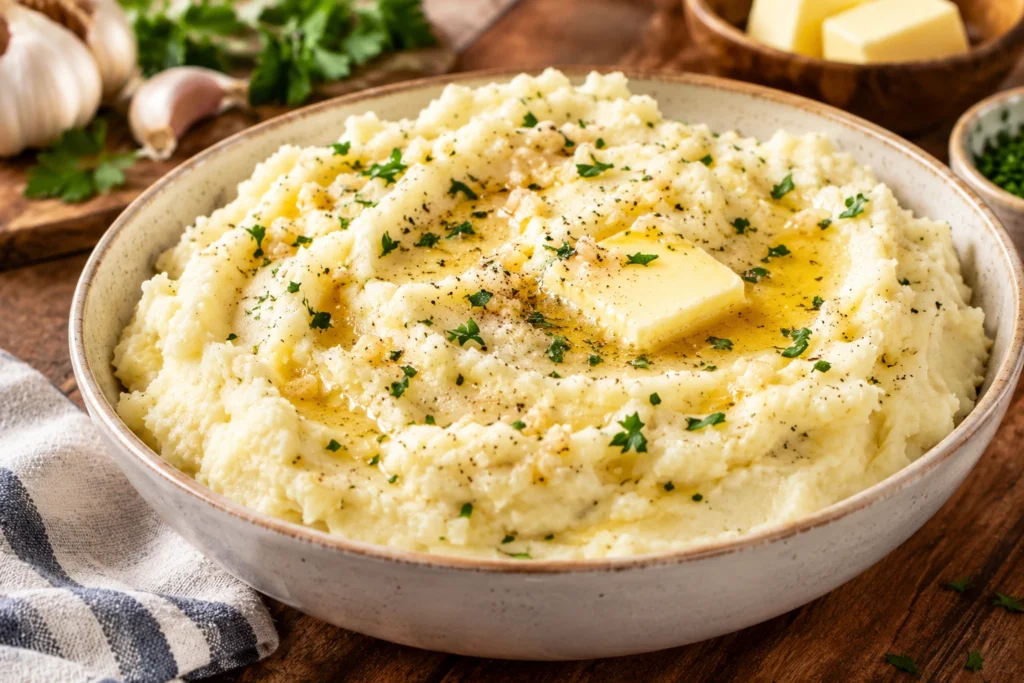
I used to make these Thursday afternoon, in a sweat, with the turkey resting and four people asking where the serving spoons were. They came out gluey or lukewarm, and sometimes, impressively, both.
Tuesday fixed it. Boil the potatoes, drain them, and then (this is the part I skipped for years) let them sit in the hot empty pot for a couple of minutes so the steam leaves. Mash with butter, a whole roasted head of garlic, and a big scoop of plain Greek yogurt, about a cup for three pounds of potatoes. Cool in something shallow, cover, fridge. They keep up to four days and even freeze okay.
Thursday they go into a 300°F oven, covered, with a splash of milk, or into the slow cooker on low. Stir once. They taste rounder than they did on Tuesday, like the garlic finally made friends with the butter.
The nutrition: Around 6g of protein a serving, nearly all from the yogurt.
Potatoes au Gratin
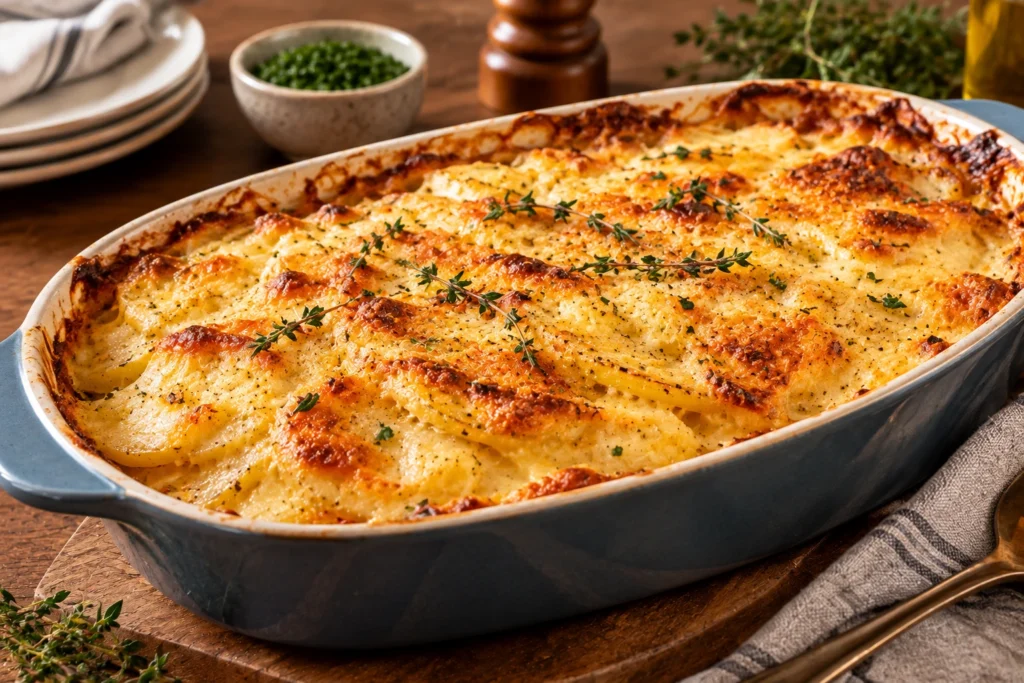
Gratin gets better in the fridge. I know people say that about everything, but this one's real. Straight from the oven it's loose and a little sloppy. After a night, the potatoes have drunk the cream, the whole thing has set, and you can lift out a square that stands up on its own. So bake it Wednesday. Reheat covered at 325°F for about 25 minutes, then uncover for the last five so the top crisps again. Don't freeze it, the cream turns grainy.
Slice the potatoes evenly or regret it. Gruyère and sharp cheddar, garlic, cream, done.
The nutrition: About 9g of protein a serving, all cheese. I'd fight you for the corner piece.
Don't Miss the Next Recipe
Get fresh recipes, meal prep systems, and high-protein meal ideas delivered to your inbox every week.
No spam. Unsubscribe anytime.
Butternut Squash Soup
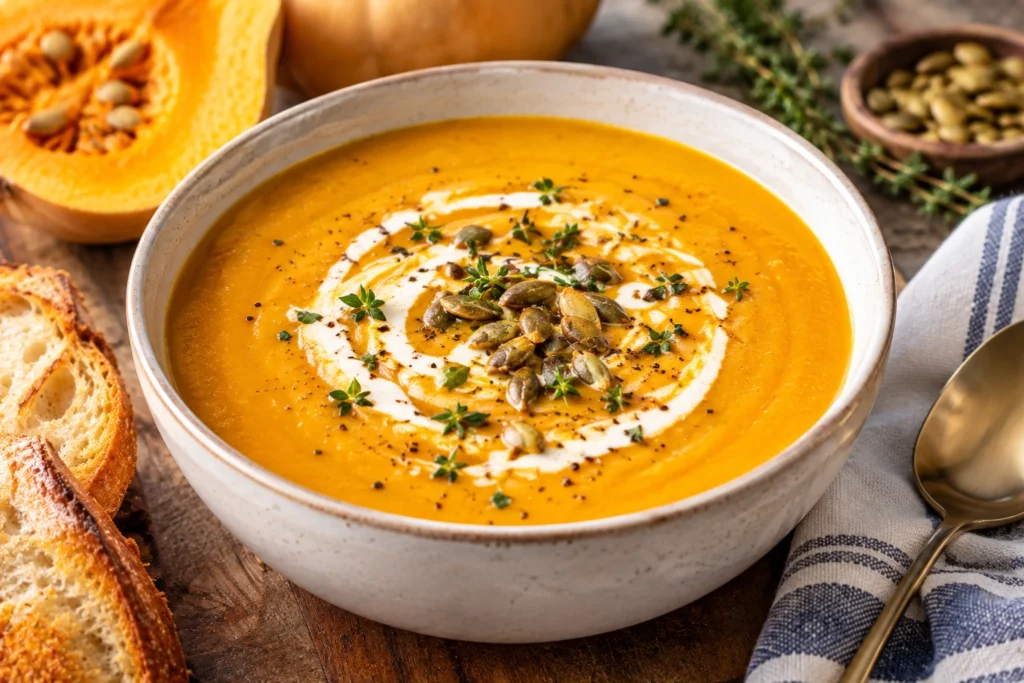
My mom asked why I bother with soup when there's already so much food. Then people showed up two hours early, cold and hungry, and she was the first one holding a mug.
Simmer cubed butternut with onion and garlic in vegetable broth until it collapses, drop in a drained can of white beans, and blend it smooth. You can't taste the beans. You just get a thicker soup without dumping in a pint of cream. The nutrition: roughly 9g of protein a serving, which surprises people.
Cool it in a few shallow containers instead of leaving it in the pot, since a deep pot stays warm in the middle for hours. Fridge for up to four days, freezer for months. Warm it on the stove Thursday and serve it in small mugs.
Slow-Baked Beans
Dan, my brother-in-law, ate half a pot of these last year standing at the stove with a spoon. I let him.
Two cans of navy or pinto beans, crisp diced bacon, an onion cooked in the bacon fat, brown sugar, a spoonful of molasses, a splash of cider vinegar, some mustard. Covered, 325°F, two hours. Make them up to three days ahead, and on Thursday put them in a slow cooker on warm and forget about them, which frees the oven for the stuff that actually needs it.
The nutrition: About 8g of protein a serving. They also freeze fine.
Thanksgiving Stuffing Casserole
The year I didn't dry out the bread, my stuffing came out like a savory bread pudding, and not in a good way. So now I cube the bread and bake it low, around 250°F, until it's crunchy all the way through. Thirty minutes or so. Actually crunchy, not "sort of dry."
Cook the turkey sausage completely before it goes in, soften celery and onion in the same pan, then add sage, thyme, broth, and beaten eggs. Press it into a buttered dish, cover, and refrigerate. Two days is the limit for this one, because of the raw egg, and I wouldn't freeze it unbaked.
Thursday it bakes covered for 30 minutes and uncovered for 20 more, and the middle has to reach 165°F. Use a thermometer. I know, but the USDA is firm on stuffing and so am I now.
The nutrition: Around 11g of protein a serving, the most of any starch on the table.
Loaded Twice-Baked Potatoes
These go first. Every single time. I think it's the individual portions, since nobody has to wait for the spoon.
- Bake russets until tender, about an hour at 400°F
- Scoop out the middles and mash with butter, Greek yogurt, sharp cheddar, crumbled bacon, and green onion
- Refill the shells, dust with paprika, cover, and refrigerate (three days is fine)
- Thursday: 375°F for 25 to 30 minutes, until hot all the way through
Yogurt takes the place of sour cream and nobody has said a word. The nutrition: about 10g of protein a potato. They freeze well if you wrap each one separately.
Cheddar Bay Biscuits
I bake these in October. Freezer, forget, done.
Cold butter gets cut into flour, baking powder, salt, and garlic powder until there are still pea-size chunks in there. Fold in sharp cheddar, add cold buttermilk, and stop stirring the second it holds together. Ugly is good. Overmixed biscuits could be used as coasters.
400°F for 15 minutes, cool, freeze flat on the pan, then bag them. Thursday they go in straight from frozen at 350°F for 8 to 10 minutes. The garlic butter goes on after they come out, never before, or it just sinks in and vanishes.
The nutrition: About 6g of protein a biscuit, from the cheddar and buttermilk.
Roasted Beet Salad
Beets are one of the few things that genuinely taste better cold. Foil-wrap them whole, roast at 400°F for 45 to 60 minutes until a knife goes in easy, let them cool, and rub the skins off with a paper towel. Wear something you don't love. I've stained two shirts and one countertop.
Sliced beets hold in the fridge for four days. Thursday, put arugula on a platter, lay the beets on last (or everything goes pink), then shaved Parmesan and a dressing of balsamic, olive oil, and a little Dijon. Goat cheese works too.
The nutrition: About 6g of protein a serving.
Roasted Cauliflower and Chickpea Salad
For the guest who asks what they can eat that isn't turkey and won't leave them hungry.
Cauliflower florets plus a can of chickpeas, dried really well on a towel, tossed with olive oil, smoked paprika, cumin, and salt. 425°F for around 30 minutes, until the chickpeas crunch and the cauliflower's dark at the edges. Wet chickpeas steam and never crisp, so dry them. After it cools, add lemon juice, parsley, and a little tahini thinned with water.
Holds for three days. The chickpeas soften some by then, and I like that. The nutrition: about 9g of protein a serving, tops among the salads.
Hold Score 4: Great, But Watch One Thing
Garlic Mashed Parsnips
My aunt served these once and I figured they were some fancy potato. When she said parsnips I felt a little betrayed. Then I went back for seconds.
They're sweeter than potatoes with a faint peppery bite. Peel, cut out the woody core if they're big, boil until really soft, and mash with roasted garlic, butter, Greek yogurt, and a pinch of nutmeg. Fridge for four days, freezer fine.
The catch: don't swap them in for regular mashed potatoes. Put a small scoop next to them so people try it without committing. The nutrition: about 3g of protein a serving.
Homemade Creamed Corn
Fifteen minutes, one pan. I haven't bought the canned stuff since.
Garlic in butter, then corn (frozen is fine in November, I won't tell), a splash of cream, a handful of Parmesan. Simmer till it thickens and a few kernels pop. Salt, white pepper, thyme.
It turns thick as cement in the fridge. Warm it slowly in a saucepan and thin it with milk. Crank the heat and the cream can split, so keep it low. The nutrition: about 4g of protein a serving.
Baked Cinnamon Apples
Side or dessert? At my house it's both, sometimes on the same plate, and nobody's complained.
Sliced apples, brown sugar, cinnamon, a pinch of salt, a few cubes of butter, covered, 375°F for roughly 30 minutes. Pull them while they've still got some bite, because they soften again when you rewarm them and mushy apples are depressing. Three days in the fridge, and they freeze.
The best part is the morning after: cold apples on Greek yogurt with walnuts. The nutrition: almost none on their own, so let the yogurt carry it.
Creamy Mac and Cheese
Strong opinion incoming. Most baked mac and cheese is dry.
What I landed on, after some trial and error, is cottage cheese. Blend a cup of it until smooth and whisk it into the cheese sauce. Yes, cottage cheese. The sauce stays creamy through the fridge and the oven, and the protein about doubles. I've served this to skeptical relatives for three years and nobody's caught on.
I learned two things the hard way. Undercook the pasta by a full two minutes, because it keeps soaking up sauce. And hold the breadcrumbs until Thursday, since crumbs that sit overnight on wet pasta turn into paste. Assemble everything else, cover it, and it keeps 2 days. Bake at 350°F for about 30 minutes, until the edges bubble. It doesn't freeze well.
The nutrition: About 14g of protein a serving, the most on this whole list.
Parmesan Spaghetti Squash Boats
Meant for the vegetarians, though I've watched plenty of turkey people take a second boat.
Roast the halves cut side down at 400°F for about 40 minutes, scrape out the strands, and stir in ricotta, Parmesan, garlic, parsley, a little nutmeg. Pile it back in the shells. Before you mix, squeeze the strands in a clean kitchen towel. Spaghetti squash holds a ridiculous amount of water, and a soggy boat is a sad boat.
Two days in the fridge, then 375°F for around 20 minutes. The nutrition: roughly 8g of protein per half.
Lemon Parmesan Orzo
This is my potluck dish. It travels well and nobody has to reheat it.
Toss warm orzo with olive oil, lemon zest and juice, Parmesan, and parsley. Warm pasta soaks up dressing much better than cold. Stir in a can of white beans and it goes from a side to basically lunch.
Pasta tightens up in the fridge, so pull it out an hour before dinner and add a drizzle more oil. Three days is about the limit. The nutrition: around 10g of protein a serving with the beans and cheese.
Acorn Squash Salad
Roasted acorn squash makes a salad look like a centerpiece for almost no effort, which is my favorite kind of trick.
Cut it into thick crescents with the skin on (it goes soft and a little sweet), roast at 400°F for about 35 minutes, and stash it in the fridge for up to three days. Let it come back to room temperature before you plate it, because cold squash tastes flat and hot squash wilts the greens. Goat cheese, toasted pecans, balsamic dressing. Leftovers are great Friday with turkey on top.
The nutrition: About 7g of protein a serving.
Don't Miss the Next Recipe
Get fresh recipes, meal prep systems, and high-protein meal ideas delivered to your inbox every week.
No spam. Unsubscribe anytime.
Cornbread Squares
Cornbread is the friendliest thing on the table. No rising, no shaping, no schedule.
I use cornmeal and flour together, and swap some of the milk for Greek yogurt so the crumb stays tender. 9 by 9 pan, 400°F, about 25 minutes, until golden and a toothpick comes out clean. Foil the whole pan once it cools so it doesn't dry out. Thursday, ten minutes at 350°F, covered.
And honey butter. Please. Don't skip the honey butter.
The nutrition: About 5g of protein a square. They freeze well.
Rosemary Focaccia
I make focaccia when I want to look relaxed and impressive at the same time.
The dough is wet and sticky, and you barely knead it, which is the fun part. Flour, yeast, salt, water, olive oil, stirred together, then into the fridge overnight for a slow rise. Next day, spread it in an oiled pan, poke dimples in it with your fingertips, and scatter on rosemary and flaky salt. About 20 minutes at 450°F.
Wrap it well, because uncovered focaccia dries out fast, and warm it for five minutes before serving. Everyone uses it to mop up gravy. The nutrition: about 5g of protein a slice. Why this works: the long cold rise builds flavor while you do absolutely nothing.
Hold Score 3: Prep Early, Save One Step
This is where most make-ahead plans go sideways. You do the bulk early and keep one step for the day.
Herb Roasted Baby Red Potatoes
Fully roasted potatoes lose their crunch in the fridge and don't get it back. That's the whole problem, and it's why this only rates a 3.
So split the job. Wednesday, par-boil halved baby reds for about 10 minutes, until barely tender. Drain, let them steam dry, toss with olive oil, garlic, rosemary, and thyme, and shake the colander to rough up the edges. Scuffed edges are what get crispy. Put them on a sheet pan, cover, refrigerate (two days max).
Thursday they roast at 425°F for about 30 minutes, flipped once. The nutrition: only about 3g of protein a serving, so I serve them alongside the heavier stuff.
Green Beans with Almonds
For years I cooked these all the way on Tuesday and served them Thursday. They were gray and floppy and I couldn't figure out why.
Restaurants cook green beans twice, so do that. Tuesday: blanch trimmed beans in salted boiling water for four minutes, dunk them in ice water, dry them completely (wet beans steam instead of sauté), and store them with a paper towel in the container. Thursday: butter in your widest pan, sliced garlic for thirty seconds, beans for five minutes, then toasted almonds and lemon juice.
The nutrition: About 5g of protein a serving with the almonds.
Roasted Carrots and Green Beans
Not glamorous. I make it every year anyway.
One sheet pan. Halved carrots, trimmed green beans, olive oil, garlic, thyme, salt. Cut everything Tuesday and bag it, and on Thursday toss, spread, and roast at 425°F for 25 minutes, shaking the pan halfway. Cut the carrots thicker than the beans or the beans will scorch first. Lemon at the end.
The nutrition: About 3g of protein a serving. Why this works: it needs the oven for only 25 minutes, right when the turkey comes out to rest.
Broccoli Cauliflower Bake
Every table needs one green dish that people actually eat, and I gave up trying to make the canned-soup version taste good.
Toss broccoli and cauliflower florets with olive oil, garlic, salt, and pepper, put them in a baking dish, and cover. Broccoli gets a strong smell when it sits too long, so two days is the max, and that's why it only earns a 3. The topping (Parmesan, panko, a little oil) stays in its own container until Thursday, when you sprinkle it on and bake at 425°F for about 30 minutes. The slightly charred floret tips are the best bite.
The nutrition: About 7g of protein a serving.
Roasted Butternut Squash Arugula Salad
When I want the table to look like I hired help, I make this.
Roast cubed squash with olive oil and salt at 425°F for about 30 minutes, until the edges caramelize. Keep the squash, arugula, feta, and toasted pepitas in four separate containers, and the maple vinaigrette in a jar. At serving time, dress the arugula first and fold in the rest, so everything gets coated without the squash turning to mush.
The squash keeps three days. Everything else, assemble late. The nutrition: about 8g of protein a serving from the feta and pepitas.
Texas Roadhouse Rolls
These make people think you're a serious baker.
The dough is soft and a little sweet, made with milk, egg, and butter. Mix, knead until smooth, let it rise once, shape the rolls, then refrigerate them overnight, covered. The slow cold rise builds flavor and lets you skip the frantic morning rise.
Thursday, leave them out for 30 minutes while the oven heats, bake at 375°F for about 15 minutes, and brush with cinnamon honey butter while they're hot. That's softened butter, honey, cinnamon, and a pinch of salt, and it can be made days ahead. Baked rolls freeze fine, too. The nutrition: about 6g of protein a roll.
Hold Score 2: Prep the Pieces, Finish Late
These three lose their whole personality if you assemble them early. Don't fight it.
Roasted Brussels Sprouts
If you think you hate Brussels sprouts, somebody probably boiled them. I get it.
Cooked ahead, they go soft and smell like a school cafeteria. But the raw prep is easy: trim and halve them up to three days early and keep them dry, because moisture kills crispiness. Thursday, toss with olive oil and salt, put them cut side down on a hot sheet pan with room between them, and roast at 425°F for about 25 minutes. Crowd the pan and they steam. Balsamic goes on the second they come out, and crumbled bacon if you want them heartier.
The nutrition: About 4g of protein a serving, plus a lot of fiber and vitamin C.
Pear Pomegranate Salad
My answer to a table full of brown food.
Everything but the pears can be done early. Seed the pomegranate the day before (in a bowl of water, so the seeds sink and the white pith floats), candy the walnuts in a dry pan with a spoonful of maple syrup, and whisk a champagne vinaigrette. Slice the pears at the very last minute or they brown. Then greens, dressing, pears, pomegranate, walnuts, goat cheese.
The nutrition: About 5g of protein a serving. It's a palate cleanser, not a protein dish, and it's supposed to be.
Spinach Salad with Feta
Not every side needs a story. I include this one because something sharp and crunchy makes everything else on the plate taste better.
Prep the parts: boil eggs up to three days ahead and leave them in their shells, whisk a red wine vinaigrette with a little mustard, soak sliced red onion in cold water for ten minutes to take the edge off. Dress the spinach at the last second, since it wilts within an hour. Feta, onion, and sliced eggs on top.
The nutrition: About 10g of protein a serving thanks to the eggs and feta.
Building Your Thursday by Score
Here's how I use the ranking. The higher the score, the earlier it gets made.
| When | What to cook | Examples |
|---|---|---|
| Weeks before | Freezer-friendly 5s and 4s | Cheddar Bay Biscuits, Cornbread Squares |
| Monday or Tuesday | Your 5s | Mashed potatoes, soup, beans, roasted beets |
| Wednesday | Your 4s, plus prep for your 3s | Mac and cheese, parsnips, blanched green beans, par-boiled potatoes |
| Thursday morning | Bake the assembled dishes | Stuffing, twice-baked potatoes, gratin |
| Last hour | Your 2s | Brussels sprouts, pear salad, spinach salad |
People cook everything early because it feels efficient. The scoreboard shows you where early actually hurts.
What a Balanced Plate Looks Like
I want a plate that keeps me full through the game, so I aim for a few protein-heavy sides next to the turkey:
- One high-protein starch, like the stuffing or the mac and cheese
- A bean or chickpea dish, like the baked beans or the cauliflower chickpea salad
- Something green and light, like the green beans with almonds
- One sweet-savory dish, like the cinnamon apples
For more ideas on building protein into a full meal, my high-protein dinners with 30g of protein are a good next stop.
Planning the Leftovers
Cooked leftovers last 3 to 4 days, so the Monday after Thanksgiving is pretty much the deadline.
- Pack everything up within two hours of the meal, in shallow containers
- Freeze what you won't finish by Sunday, especially soup, beans, and mashed potatoes
- Turn leftover squash, beets, and chickpeas into a grain bowl
- Reheat to 165°F before eating
The week after, my healthy meal prep dinner ideas are handy when nobody wants to think about cooking. And if you're feeding a crowd on a budget, cheap high-protein dinners for six will help stretch what's left.
Questions People Ask About Making Thanksgiving Sides Ahead
How far ahead can I safely make Thanksgiving sides?
The USDA says cooked food keeps 3 to 4 days in a fridge at 40°F or below. So Monday or Tuesday cooking is fine for Thursday. Bread is the exception, since biscuits, rolls, and cornbread can be baked and frozen weeks early.
What does the Hold Score mean?
It's my own 1 to 5 rating for how a dish tastes on Thursday compared to the day I made it. A 5 is as good or better after resting. A 2 means prep the pieces and assemble late. It's from my own kitchen, not a lab, so use it as a planning guide.
Do I really have to reheat everything to 165 degrees?
The USDA recommends it for leftovers, and I do it for anything with meat, eggs, or dairy. A cheap instant-read thermometer ends the guessing. Cold salads don't need reheating, but they do need to stay chilled until they hit the table.
How long can food sit out on the table?
Two hours for perishable food, one hour if it's hotter than 90°F. I keep the beans, soup, and potatoes in slow cookers on warm, and I put cold salads out in smaller bowls so I can swap in fresh ones from the fridge.
Which sides freeze well?
Biscuits, cornbread, rolls, focaccia, soup, and baked beans all freeze great. Mashed potatoes are okay with lots of butter and yogurt. Salads and roasted green vegetables don't freeze. Thaw everything overnight in the fridge, never on the counter.
Can I assemble casseroles two days ahead?
Stuffing, the broccoli cauliflower bake, and the spaghetti squash boats are fine two days out. Mac and cheese is better the day before, since the pasta keeps drinking sauce. Hold back crunchy toppings until you bake.
How do I keep reheated mashed potatoes from drying out?
Cover them, go low and slow, and stir in a splash of milk or a little butter halfway. A slow cooker on warm is the easiest way. A hot uncovered oven gives you a dry skin on top.
What if my fridge is too full?
Clear out drinks and condiments a few days early. If it's cold enough where you live, a cooler with ice can take the drinks. Keep a thermometer in it, and never leave cooked food outside unattended.
Which side should a beginner make first?
Roasted Carrots and Green Beans. One pan, a handful of ingredients, hard to ruin. Then try the Garlic Mashed Potatoes, which are forgiving and hold really well.
Never Miss a Recipe
Fresh high-protein recipes, meal prep ideas, and kitchen tips, straight to your inbox every week. No spam, just good food.
No spam. Unsubscribe anytime.
What if I only have time for a few sides?
Start with the Hold Score 5 list. Mashed potatoes, stuffing, baked beans, and freezer biscuits make a full Thanksgiving with only two dishes needing the oven on Thursday.
Related Articles
- Healthy Meal Prep Dinner Ideas
- High-Protein Meal Prep Ideas on a Budget
- Cheap High-Protein Dinners to Feed 6
- One-Pot Dinners with Real Protein
- High-Protein Dinners with 30g Protein
1. Garlic Mashed Potatoes
Approx. 6g ProteinIngredients: 3 lbs Yukon Gold or russet potatoes (peeled and quartered), 1 head roasted garlic, 4 tbsp butter, 1 cup plain Greek yogurt, 1/4 cup milk (plus more for reheating), salt and pepper.
Step 1: Boil the potatoes in salted water for about 20 minutes until a knife slides in with no resistance.
Step 2: Drain well and return to the hot pot for 2 minutes to steam dry.
Step 3: Mash with butter, squeezed roasted garlic, and Greek yogurt. Loosen with milk and season with salt and pepper.
Step 4: Cool in a shallow dish, cover, and refrigerate for up to 4 days.
Step 5: To serve, reheat covered at 300°F for about 25 minutes (or in a slow cooker on low), stirring in a splash of milk until creamy and hot to 165°F.
2. Thanksgiving Stuffing Casserole
Approx. 11g ProteinIngredients: 1 lb day-old bread (cubed), 1 lb turkey sausage, 2 celery stalks (diced), 1 onion (diced), 2 tbsp butter, 2 tsp dried sage, 1 tsp dried thyme, 3 cups chicken broth, 2 eggs (beaten), salt and pepper.
Step 1: Spread bread cubes on baking sheets and dry in a 250°F oven for 30 minutes until crisp all the way through.
Step 2: Cook the turkey sausage completely in a skillet and set aside. Sauté celery and onion in butter until soft.
Step 3: Toss bread, sausage, vegetables, sage, and thyme together. Stir in broth and eggs until evenly moistened.
Step 4: Press into a buttered 9x13 dish, cover, and refrigerate for up to 2 days.
Step 5: Bake covered at 350°F for 30 minutes, then uncover and bake 20 minutes more until golden and the center reaches 165°F.
3. Potatoes au Gratin
Approx. 9g ProteinIngredients: 3 lbs potatoes (thinly and evenly sliced), 2 cups heavy cream, 3 cloves garlic (minced), 1 cup shredded Gruyère, 1 cup shredded sharp cheddar, 2 tbsp butter, salt and white pepper.
Step 1: Butter a 9x13 baking dish. Warm the cream with garlic, salt, and white pepper.
Step 2: Layer potato slices in the dish, sprinkling cheese between each layer.
Step 3: Pour the warm cream over the top and cover with foil.
Step 4: Bake at 375°F covered for 35 minutes, then uncover and bake 15 minutes more until deeply golden.
Step 5: Cool, cover, and refrigerate for up to 4 days.
Step 6: Reheat covered at 325°F for about 25 minutes, then uncover for the last few minutes to bring back the crust.
4. Creamy Mac and Cheese
Approx. 14g ProteinIngredients: 1 lb elbow macaroni, 4 tbsp butter, 4 tbsp flour, 2 cups milk, 1 cup cottage cheese (blended smooth), 3 cups shredded sharp cheddar, 1/4 tsp nutmeg, salt and pepper. Topping: 1/2 cup panko mixed with 2 tbsp melted butter.
Step 1: Cook the macaroni 2 minutes less than the package directions and drain.
Step 2: Melt butter in a pot, whisk in flour, and cook 1 minute. Slowly whisk in milk and simmer until thickened.
Step 3: Whisk in the blended cottage cheese, then the cheddar until smooth. Season with nutmeg, salt, and pepper.
Step 4: Fold in the pasta and transfer to a baking dish. Cover and refrigerate for up to 2 days.
Step 5: On serving day, sprinkle with the buttered panko and bake at 350°F for about 30 minutes until bubbling at the edges.
5. Homemade Creamed Corn
Approx. 4g ProteinIngredients: 4 cups corn kernels (frozen is fine), 3 tbsp butter, 2 cloves garlic (minced), 1/2 cup heavy cream, 1/4 cup grated Parmesan, 1/2 tsp fresh thyme, salt and white pepper.
Step 1: Melt butter in a large skillet and cook the garlic for 30 seconds.
Step 2: Add the corn and cream and simmer for 10 minutes until thickened and a few kernels burst.
Step 3: Stir in Parmesan and thyme and season with salt and white pepper.
Step 4: Cool in a shallow container and refrigerate for up to 4 days.
Step 5: Reheat gently in a saucepan over low heat, loosening with milk as it warms.
6. Green Beans with Almonds
Approx. 5g ProteinIngredients: 2 lbs green beans (trimmed), 3 tbsp butter, 3 cloves garlic (sliced), 1/2 cup sliced almonds (toasted), juice of 1 lemon, salt and pepper.
Step 1: Blanch the beans in salted boiling water for exactly 4 minutes.
Step 2: Move to ice water, then drain and dry completely. Store with a paper towel in a container for up to 3 days.
Step 3: On serving day, melt butter in your widest skillet over medium-high heat and cook the garlic for 30 seconds.
Step 4: Add the beans and toss for about 5 minutes until hot.
Step 5: Finish with toasted almonds, lemon juice, salt, and pepper.
7. Roasted Brussels Sprouts
Approx. 4g ProteinIngredients: 2 lbs Brussels sprouts (trimmed and halved), 3 tbsp olive oil, 1 tsp salt, black pepper, 2 tbsp balsamic vinegar, optional crumbled bacon.
Step 1: Trim and halve the sprouts up to 3 days ahead and store them dry in the fridge.
Step 2: Preheat the oven to 425°F with a sheet pan inside.
Step 3: Toss sprouts with olive oil, salt, and pepper.
Step 4: Place cut side down on the hot pan with space between each one.
Step 5: Roast about 25 minutes until deeply browned and crisp at the edges.
Step 6: Drizzle with balsamic vinegar the moment they come out of the oven.
8. Garlic Mashed Parsnips
Approx. 3g ProteinIngredients: 2 lbs parsnips (peeled, woody core removed), 1 head roasted garlic, 3 tbsp butter, 1/2 cup plain Greek yogurt, pinch of nutmeg, salt and pepper.
Step 1: Cut the parsnips into even chunks and boil in salted water for about 20 minutes until very soft.
Step 2: Drain well and return to the pot to steam dry for 2 minutes.
Step 3: Mash with butter, squeezed roasted garlic, Greek yogurt, and nutmeg. Season with salt and pepper.
Step 4: Cool in a shallow dish and refrigerate for up to 4 days.
Step 5: Reheat on the stovetop or covered at 300°F, stirring in a splash of milk.
9. Lemon Parmesan Orzo
Approx. 10g ProteinIngredients: 1 lb orzo, zest and juice of 2 lemons, 1/4 cup olive oil, 1 cup grated Parmesan, 1/2 cup chopped parsley, 1 can (15 oz) white beans (drained and rinsed), salt and pepper.
Step 1: Cook the orzo in salted water until tender and drain.
Step 2: While still warm, toss with olive oil, lemon zest, and lemon juice.
Step 3: Stir in Parmesan, parsley, and white beans. Season with salt and pepper.
Step 4: Cool, cover, and refrigerate for up to 3 days.
Step 5: Take out 1 hour before serving and loosen with a little olive oil. Serve at room temperature.
10. Cornbread Squares
Approx. 5g ProteinIngredients: 1 cup cornmeal, 1 cup all-purpose flour, 1/4 cup sugar, 2 tsp baking powder, 1/2 tsp salt, 3/4 cup milk, 1/4 cup plain Greek yogurt, 2 eggs, 4 tbsp melted butter.
Step 1: Preheat the oven to 400°F and butter a 9x9 pan.
Step 2: Whisk cornmeal, flour, sugar, baking powder, and salt.
Step 3: Whisk milk, Greek yogurt, eggs, and melted butter, then stir into the dry ingredients until just combined.
Step 4: Pour into the pan and bake for about 25 minutes until golden and a toothpick comes out clean.
Step 5: Cool, cut into squares, and wrap the whole pan in foil for up to 3 days.
Step 6: Warm covered at 350°F for 10 minutes and serve with honey butter.
11. Cheddar Bay Biscuits
Approx. 6g ProteinIngredients: 2 cups all-purpose flour, 1 tbsp baking powder, 1/2 tsp salt, 1/2 tsp garlic powder, 6 tbsp cold butter (cubed), 3/4 cup shredded sharp cheddar, 3/4 cup cold buttermilk. Garlic butter: 2 tbsp melted butter, 1 small clove garlic (minced), 1 tsp chopped parsley.
Step 1: Preheat the oven to 400°F. Whisk flour, baking powder, salt, and garlic powder.
Step 2: Cut in the cold butter until pea-sized pieces remain, then stir in the cheddar.
Step 3: Add the buttermilk and stir just until the dough comes together. Stop while it still looks shaggy.
Step 4: Drop 12 mounds onto a lined sheet pan and bake about 15 minutes until golden.
Step 5: Cool completely, then freeze flat on the sheet pan and bag for up to 2 months.
Step 6: On serving day, bake from frozen at 350°F for 8 to 10 minutes, then brush with garlic butter.
12. Texas Roadhouse Rolls
Approx. 6g ProteinIngredients: 3 cups all-purpose flour, 2 1/4 tsp instant yeast, 1 tsp salt, 2 tbsp sugar, 1 cup warm milk, 1 egg, 3 tbsp melted butter. Cinnamon honey butter: 4 tbsp softened butter, 1 tbsp honey, 1/2 tsp cinnamon, pinch of salt.
Step 1: Mix flour, yeast, salt, and sugar. Add warm milk, egg, and melted butter and knead 8 minutes until smooth.
Step 2: Let the dough rise once, about 1 hour, until doubled.
Step 3: Shape into 12 rolls and place in a buttered pan. Cover and refrigerate overnight.
Step 4: Let the rolls sit out for 30 minutes while the oven heats to 375°F.
Step 5: Bake about 15 minutes until golden.
Step 6: Stir together the honey butter ingredients and brush over the hot rolls.
13. Roasted Carrots and Green Beans
Approx. 3g ProteinIngredients: 1 1/2 lbs carrots (halved lengthwise and cut thick), 1 lb green beans (trimmed), 3 tbsp olive oil, 3 cloves garlic (minced), 1 tsp fresh thyme, juice of 1 lemon, salt and pepper, chopped parsley.
Step 1: Cut the carrots and beans up to 3 days ahead and store in a bag in the fridge.
Step 2: Preheat the oven to 425°F.
Step 3: Toss the vegetables with olive oil, garlic, thyme, salt, and pepper and spread on one sheet pan.
Step 4: Roast about 25 minutes, shaking the pan halfway through.
Step 5: Finish with lemon juice and parsley.
14. Baked Cinnamon Apples
Approx. 1g ProteinIngredients: 6 apples (peeled and sliced), 1/4 cup brown sugar, 1 1/2 tsp cinnamon, 1/4 tsp salt, 3 tbsp butter (cubed), 2 tbsp water.
Step 1: Preheat the oven to 375°F.
Step 2: Toss the apples with brown sugar, cinnamon, and salt and spread in a baking dish.
Step 3: Dot with butter and add the water. Cover with foil.
Step 4: Bake about 30 minutes until tender and syrupy but still holding their shape.
Step 5: Cool and refrigerate for up to 3 days. Reheat covered at 350°F.
Step 6: Leftovers are excellent cold over Greek yogurt with walnuts.
15. Roasted Butternut Squash Arugula Salad
Approx. 8g ProteinIngredients: 1 medium butternut squash (peeled and cubed), 2 tbsp olive oil, 6 cups arugula, 1/2 cup crumbled feta, 1/3 cup toasted pepitas. Maple vinaigrette: 3 tbsp olive oil, 1 tbsp maple syrup, 1 tbsp apple cider vinegar, 1 tsp Dijon, salt and pepper.
Step 1: Toss the squash with olive oil and salt and roast at 425°F for about 30 minutes until caramelized at the edges.
Step 2: Cool and store the squash, arugula, feta, and pepitas in separate containers for up to 3 days (squash only).
Step 3: Shake the vinaigrette ingredients in a jar.
Step 4: At serving time, toss the arugula with the dressing first.
Step 5: Fold in the squash, feta, and pepitas.
16. Roasted Beet Salad
Approx. 6g ProteinIngredients: 6 medium beets, 6 cups arugula, 1/3 cup shaved Parmesan (or crumbled goat cheese), 1/3 cup chopped walnuts. Dressing: 2 tbsp balsamic vinegar, 3 tbsp olive oil, 1 tsp Dijon, salt and pepper.
Step 1: Wrap the beets individually in foil and roast at 400°F for 45 to 60 minutes until a knife slides in easily.
Step 2: Cool, rub off the skins with a paper towel, then slice or cube.
Step 3: Refrigerate the beets for up to 4 days.
Step 4: Whisk the dressing ingredients.
Step 5: At serving time, toss the arugula with dressing, top with the beets, cheese, and walnuts. Add the beets last so they do not turn the salad pink.
17. Pear Pomegranate Salad
Approx. 5g ProteinIngredients: 6 cups mixed greens, 2 ripe pears, 1 cup pomegranate seeds, 1/2 cup walnuts, 1 tbsp maple syrup, 1/3 cup crumbled goat cheese. Champagne vinaigrette: 3 tbsp olive oil, 1 1/2 tbsp champagne vinegar, 1 tsp honey, salt and pepper.
Step 1: Seed the pomegranate the day before, preferably in a bowl of water so the seeds sink and the pith floats.
Step 2: Toast the walnuts in a dry pan and stir in the maple syrup for 1 minute until glazed. Cool.
Step 3: Whisk the vinaigrette and store in a jar.
Step 4: Slice the pears at the last minute so they do not brown.
Step 5: Toss the greens with dressing, then top with pears, pomegranate, walnuts, and goat cheese.
18. Acorn Squash Salad
Approx. 7g ProteinIngredients: 2 acorn squash (cut into thick crescents, skin on), 2 tbsp olive oil, 6 cups mixed greens, 1/2 cup crumbled goat cheese, 1/3 cup toasted pecans, balsamic vinaigrette, salt and pepper.
Step 1: Toss the squash with olive oil, salt, and pepper.
Step 2: Roast at 400°F for about 35 minutes until tender and browned.
Step 3: Cool, then refrigerate for up to 3 days.
Step 4: Let the squash come to room temperature before plating.
Step 5: Lay the crescents over dressed greens and top with goat cheese and pecans.
19. Herb Roasted Baby Red Potatoes
Approx. 3g ProteinIngredients: 2 lbs baby red potatoes (halved), 3 tbsp olive oil, 4 cloves garlic (minced), 1 tbsp fresh rosemary, 1 tbsp fresh thyme, salt and pepper.
Step 1: Par-boil the potatoes in salted water for about 10 minutes until barely tender.
Step 2: Drain and steam dry, then shake the colander to rough up the edges.
Step 3: Toss with olive oil, garlic, rosemary, thyme, salt, and pepper.
Step 4: Spread on a sheet pan, cover, and refrigerate for up to 2 days.
Step 5: On serving day, roast at 425°F for about 30 minutes, turning once, until deeply golden.
20. Butternut Squash Soup
Approx. 9g ProteinIngredients: 1 large butternut squash (about 3 lbs, peeled and cubed), 1 onion (chopped), 3 cloves garlic, 2 tbsp olive oil, 4 cups vegetable broth, 1 can (15 oz) white beans (drained and rinsed), 1/4 tsp nutmeg, salt and pepper, optional splash of cream.
Step 1: Sauté the onion and garlic in olive oil until soft.
Step 2: Add the squash and broth and simmer about 25 minutes until very soft.
Step 3: Add the white beans and blend until completely smooth.
Step 4: Season with nutmeg, salt, and pepper and stir in cream if using.
Step 5: Cool in shallow containers and refrigerate for up to 4 days or freeze.
Step 6: Reheat in a pot over medium heat and serve in small mugs.
21. Loaded Twice-Baked Potatoes
Approx. 10g ProteinIngredients: 6 large russet potatoes, 4 tbsp butter, 1/2 cup plain Greek yogurt, 1 1/2 cups shredded sharp cheddar, 6 slices bacon (cooked and crumbled), 3 green onions (sliced), paprika, salt and pepper.
Step 1: Bake the potatoes at 400°F for about 60 minutes until tender.
Step 2: Cool slightly, halve, and scoop out the centers, leaving a thin shell.
Step 3: Mash the centers with butter, Greek yogurt, cheddar, bacon, and green onions. Season well.
Step 4: Refill the shells, dust with paprika, cover, and refrigerate for up to 3 days.
Step 5: Bake at 375°F for 25 to 30 minutes until hot in the center (165°F).
22. Slow-Baked Beans
Approx. 8g ProteinIngredients: 2 cans (15 oz each) navy or pinto beans (drained), 6 slices bacon (diced and cooked crisp), 1 onion (diced), 1/4 cup brown sugar, 2 tbsp molasses, 2 tbsp apple cider vinegar, 1 tbsp mustard, salt and pepper.
Step 1: Cook the onion in the bacon fat until soft.
Step 2: Combine the beans, bacon, onion, brown sugar, molasses, vinegar, and mustard in a baking dish.
Step 3: Cover and bake at 325°F for 2 hours (or cook on low in a slow cooker for 4 hours).
Step 4: Cool in shallow containers and refrigerate for up to 4 days.
Step 5: Reheat in a slow cooker on warm and keep there until serving.
23. Broccoli Cauliflower Bake
Approx. 7g ProteinIngredients: 3 cups broccoli florets, 3 cups cauliflower florets, 3 tbsp olive oil, 4 cloves garlic (minced), salt and pepper. Topping: 3/4 cup grated Parmesan, 1/2 cup panko, 1 tbsp olive oil.
Step 1: Toss the broccoli and cauliflower with olive oil, garlic, salt, and pepper and spread in a baking dish.
Step 2: Cover and refrigerate for up to 2 days.
Step 3: Keep the topping of Parmesan, panko, and olive oil in a separate container.
Step 4: On serving day, sprinkle on the topping.
Step 5: Bake at 425°F for about 30 minutes until browned and the floret tips are slightly charred.
24. Roasted Cauliflower and Chickpea Salad
Approx. 9g ProteinIngredients: 1 large head cauliflower (cut into florets), 1 can (15 oz) chickpeas (drained and thoroughly dried), 3 tbsp olive oil, 1 tsp smoked paprika, 1/2 tsp cumin, salt. Dressing: juice of 1 lemon, 2 tbsp tahini thinned with water, 1/4 cup chopped parsley.
Step 1: Toss the cauliflower and chickpeas with olive oil, smoked paprika, cumin, and salt.
Step 2: Roast at 425°F for about 30 minutes until the chickpeas are crisp and the cauliflower has dark edges.
Step 3: Cool completely.
Step 4: Dress with lemon juice, thinned tahini, and parsley.
Step 5: Refrigerate for up to 3 days and serve at room temperature.
25. Rosemary Focaccia
Approx. 5g ProteinIngredients: 3 cups all-purpose flour, 1 tsp instant yeast, 1 1/2 tsp salt, 1 1/4 cups water, 4 tbsp olive oil (divided), 2 sprigs fresh rosemary, flaky sea salt.
Step 1: Stir flour, yeast, salt, water, and 2 tbsp olive oil into a sticky dough with barely any kneading.
Step 2: Cover and refrigerate overnight.
Step 3: Spread the dough in an oiled sheet pan and dimple the surface with your fingertips.
Step 4: Top with rosemary, remaining olive oil, and flaky salt.
Step 5: Bake at 450°F for about 20 minutes until deeply golden.
Step 6: Wrap well, and warm for 5 minutes before serving.
26. Parmesan Spaghetti Squash Boats
Approx. 8g ProteinIngredients: 2 spaghetti squash (halved and seeded), 1 cup ricotta, 1/2 cup grated Parmesan, 2 cloves garlic (minced), 1/4 cup chopped parsley, 2 tbsp olive oil, pinch of nutmeg, salt and pepper.
Step 1: Roast the squash halves cut side down at 400°F for about 40 minutes until tender.
Step 2: Scrape out the strands with a fork and squeeze them in a clean kitchen towel to remove water.
Step 3: Mix the strands with ricotta, Parmesan, garlic, parsley, olive oil, nutmeg, salt, and pepper.
Step 4: Pile back into the shells, cover, and refrigerate for up to 2 days.
Step 5: Bake at 375°F for about 20 minutes until hot and lightly golden.
27. Spinach Salad with Feta
Approx. 10g ProteinIngredients: 8 cups baby spinach, 1/2 red onion (thinly sliced), 1/2 cup crumbled feta, 4 hard-boiled eggs (sliced). Dressing: 3 tbsp olive oil, 1 tbsp red wine vinegar, 1 tsp Dijon, salt and pepper.
Step 1: Boil the eggs up to 3 days ahead and keep them in their shells in the fridge.
Step 2: Soak the sliced red onion in cold water for 10 minutes, then drain.
Step 3: Whisk the dressing ingredients.
Step 4: At the last minute, toss the spinach with the dressing.
Step 5: Top with feta, onion, and sliced eggs.
Get Fresh Recipes Every Week
Join readers getting fresh recipes, meal prep systems, and high-protein meal ideas delivered to your inbox every week.
No spam. Unsubscribe anytime.