
Jump to All 17 Christmas Beef Recipes ↓
Table of Contents
- Before You Buy: Match the Roast to Your Christmas Plans
- Classic Prime Rib Recipes for a Christmas Centerpiece
- Leaner Roast Beef Cuts for a Beautiful Holiday Dinner
- Slow-Cooked and Smoked Beef for a Relaxed Christmas
- Turn Christmas Roast Beef Leftovers Into Another Great Meal
- How to Keep Christmas Dinner on Schedule
- Three Techniques That Matter More Than Fancy Seasonings
- What to Serve with Christmas Prime Rib and Roast Beef
- Christmas Beef Dinner FAQs
- A Christmas Beef Dinner Worth Remembering
A Christmas beef dinner should feel special long before the roast reaches the table. The aroma of garlic and rosemary, a deeply browned crust, a rich pan gravy, and a platter of beautifully carved beef can make the holiday meal feel like a celebration.
But choosing the right beef recipe isn’t always straightforward. Prime rib offers generous marbling and traditional holiday appeal, while beef tenderloin brings exceptional tenderness. Sirloin and round roasts can make a more economical centerpiece, and slow-braised dishes such as Beef Bourguignon or short ribs are especially convenient when the oven schedule is already crowded.
These 17 Christmas prime rib and roast beef dinners are organized around the way you actually cook and serve them: classic rib roasts, leaner cuts, slow-cooked favorites, and easy meals made from Christmas leftovers.
Along the way, you’ll find practical guidance on selecting beef cuts, planning portions, building a flavorful crust, managing oven space, carving across the grain, and serving each dish with the right sides.
Recipe Information & Christmas Cooking Tips
These 17 Christmas beef dinner recipes include classic prime rib, flavorful roast beef cuts, slow-braised favorites, smoked beef, and delicious ways to enjoy holiday leftovers. Each dish brings its own combination of seasonings, cooking methods, and serving ideas to the Christmas table.
Choosing Your Roast: Prime rib and tenderloin make beautiful holiday centerpieces. Sirloin and round roasts are practical alternatives, while chuck, short ribs, and brisket benefit from longer cooking methods.
Cooking Temperature: For whole beef roasts, USDA recommends an internal temperature of 145°F (63°C), followed by a minimum three-minute rest. Use a thermometer rather than relying on time alone.
Make-Ahead Planning: Seasoning blends, sauces, and vegetable preparations can be organized ahead. Braised beef dishes are especially convenient for holiday meal planning.
Leftovers: Refrigerate cooked beef promptly, enjoy within three to four days, and reheat leftovers thoroughly to 165°F (74°C).
Before You Buy: Match the Roast to Your Christmas Plans
The best roast depends on more than its price per pound.
For a traditional centerpiece, prime rib is hard to beat. Its marbling gives it a rich flavor, and the bone-in version makes an impressive presentation. Remember, though, that part of the purchased weight is bone and fat rather than carved meat.
Beef tenderloin is a better fit when tenderness and neat presentation matter most. Because it is relatively lean, it benefits from careful temperature monitoring and a flavorful sauce.
Top sirloin, eye of round, and bottom round offer different advantages. Sirloin generally has a beefier, more forgiving texture, while round cuts are leaner and benefit from thin carving and plenty of gravy.
If Christmas Day is already busy, choose a braise. Beef Bourguignon and short ribs can be prepared ahead, cooled promptly, refrigerated, and reheated thoroughly before serving.
Our Take
For a traditional Christmas centerpiece: Garlic Herb Prime Rib is a standout choice. The combination of rosemary, thyme, garlic, and beautifully browned beef creates the rich flavors people associate with a special holiday roast.
For an elegant smaller gathering: Beef Tenderloin offers exceptionally tender slices and pairs wonderfully with mushroom sauce and simple roasted vegetables.
For a relaxed holiday schedule: Beef Bourguignon and Braised Short Ribs are especially practical. Their rich sauces and slow-cooked textures make them well suited to preparing ahead.
Our favorite hosting strategy: Choose one centerpiece, prepare a sauce and at least one side in advance, and leave enough time for the beef to rest before carving. A thoughtful schedule makes Christmas dinner feel just as enjoyable for the cook as it does for the guests.
Quick Christmas Roast Selection Guide
| Your priority | Best choices | Why |
|---|---|---|
| Traditional holiday presentation | Classic Prime Rib, Garlic Herb Prime Rib | Rich flavor and dramatic carving |
| An elegant smaller dinner | Beef Tenderloin | Tender, evenly portioned slices |
| A practical family budget | Top Sirloin, Eye of Round, Bottom Round | More economical cuts with satisfying beef flavor |
| Prepare most of dinner ahead | Beef Bourguignon, Braised Short Ribs | Slow cooking develops tenderness and sauce |
| Outdoor cooking | Smoked Prime Rib, Smoked Brisket | Deep smoke flavor and distinctive crust |
| Next-day meals | Sliders, French Dip, Roast Beef Hash | Make good use of cooked beef |
For a 4–6 lb bone-in rib roast, USDA’s roasting chart gives approximately 23–25 minutes per pound at 325°F. A boneless rib roast of the same weight may take longer per pound. Treat these as planning estimates and use a thermometer to determine when the roast is ready.
Classic Prime Rib Recipes for a Christmas Centerpiece
1. Classic Prime Rib with Glazed Carrots
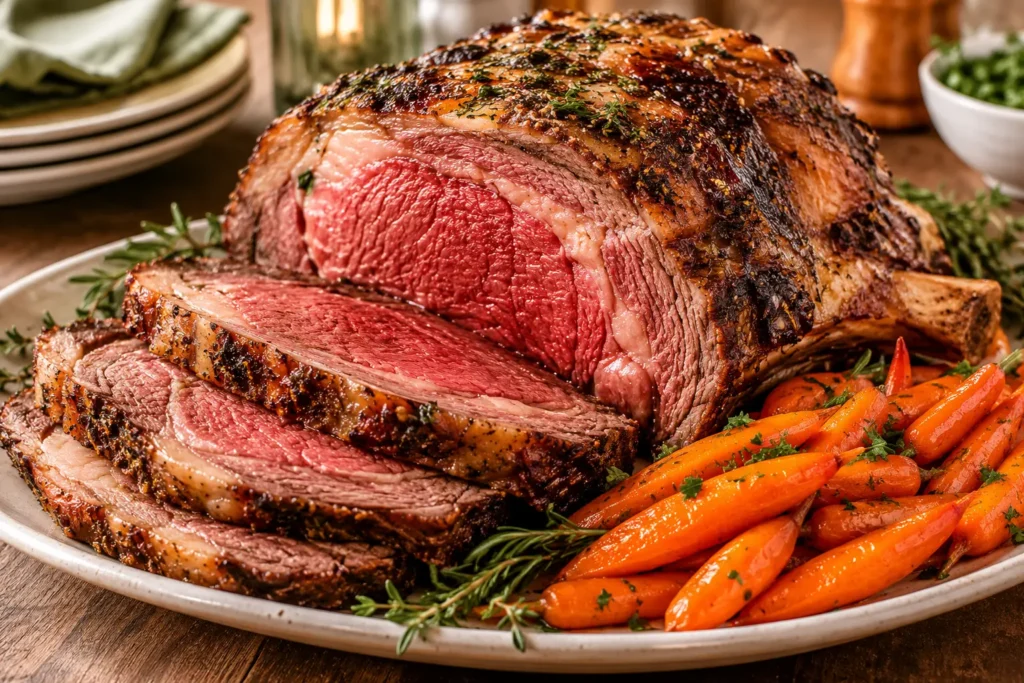
This traditional Christmas roast pairs the richness of prime rib with buttery, lightly sweetened carrots. Garlic, rosemary, salt, and cracked black pepper create a savory exterior without overpowering the beef.
Cook the carrots separately so their texture can be controlled, then glaze them just before serving. The contrast between deeply flavored beef and bright, tender vegetables makes this a particularly balanced holiday plate.
Best serving idea: Arrange carved prime rib on a warm platter with glazed carrots, a little pan jus, and fresh rosemary.
2. Garlic Herb Prime Rib
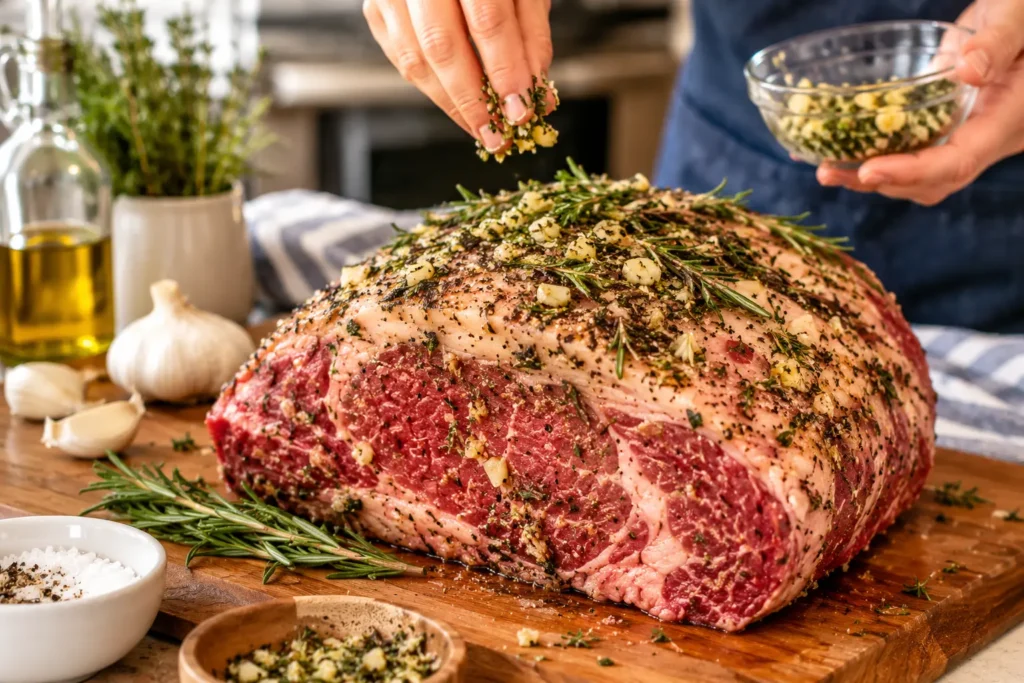
Garlic herb butter is a natural partner for prime rib. Rosemary and thyme provide a fragrant, earthy finish, while the butter helps the seasonings adhere to the surface.
For a more flavorful roast, season the beef with salt ahead of time and refrigerate it uncovered on a rack. Add the garlic-herb butter before cooking.
Best serving idea: Pair with mashed potatoes and green beans, then serve extra jus separately.
3. Reverse Sear Prime Rib
Reverse searing uses gentle roasting followed by a short, high-temperature finish. The goal is to build an evenly cooked interior and a deeply browned exterior without exposing the roast to intense heat throughout cooking.
The important detail is planning for the temperature increase during the finishing stage. A high-heat sear applied after the roast has already reached its desired final temperature can lead to overcooking.
Best serving idea: Carve immediately after the final browning stage and serve with horseradish cream.
4. Horseradish Crusted Prime Rib
Prepared horseradish, Dijon mustard, garlic, and herbs add a lively, peppery contrast to richly marbled prime rib.
A light breadcrumb coating can create extra texture, but it should be applied evenly and monitored during roasting so the crust browns without scorching.
Best serving idea: Serve with crispy potatoes and a simple green vegetable to balance the rich coating.
Don’t Miss the Next Recipe
Get fresh recipes, meal prep systems, and high-protein meal ideas delivered to your inbox every week.
No spam. Unsubscribe anytime.
5. Prime Rib with Crispy Potatoes
A holiday roast with golden potatoes is an especially satisfying combination, but the potatoes deserve their own cooking space.
Parboil the potatoes until their edges begin to soften, roughen the surfaces slightly, and roast them on a spacious baking sheet. Finish them at high heat while the beef rests.
Best serving idea: Spoon beef jus over the carved meat, keeping the potatoes crisp until they reach the table.
6. Smoked Prime Rib
Smoked prime rib combines the familiar richness of a holiday rib roast with a gentle wood-fired aroma.
Oak and pecan are excellent choices for a beef-forward smoke flavor. Keep the seasoning straightforward and monitor both the smoker chamber and the meat’s internal temperature.
Best serving idea: Serve with horseradish sauce, roasted Brussels sprouts, and creamy potatoes.
Leaner Roast Beef Cuts for a Beautiful Holiday Dinner
7. Eye of Round Roast Beef
Eye of round is a lean, compact cut that works particularly well when carved into thin slices.
Garlic, black pepper, and thyme provide a classic roast-beef flavor. Because the cut contains relatively little marbling, serve it with warm beef jus or gravy.
Key detail: Slice as thinly as possible against the grain for a more pleasant texture.
8. Tri-Tip Roast
Tri-tip has a robust, steak-like flavor and an attractive browned exterior. Smoked paprika, garlic, oregano, and black pepper complement the beef without requiring an elaborate sauce.
Its most important carving detail is the grain: the muscle fibers change direction across the roast.
Key detail: Divide the cooked roast where the grain changes, then slice each portion across its fibers.
9. Beef Tenderloin
Tenderloin is ideal for a Christmas dinner where elegant presentation and tenderness are the priorities.
Tuck the thin end underneath and tie the roast to create a more consistent thickness. A mushroom sauce or rich pan reduction complements the lean beef beautifully.
Key detail: Avoid cooking by time alone; tenderloin can change temperature quickly near the end.
10. Top Sirloin Roast
Top sirloin is a flavorful alternative to more expensive holiday cuts. Garlic, thyme, and black pepper create a traditional roast-beef profile.
Serve the carved beef with onion gravy, roasted carrots, and Yorkshire puddings for a classic family-style dinner.
Key detail: Cut thinly across the grain and serve with sauce to keep each portion enjoyable.
11. Bottom Round Roast with Pan Gravy
Bottom round makes a practical holiday roast when a flavorful gravy is part of the plan.
A roasting pan with well-browned drippings gives the gravy a richer base. Deglaze thoroughly, then whisk in stock and thicken until smooth.
Key detail: Rest the roast before slicing, then carve thinly and serve with plenty of gravy.
Slow-Cooked and Smoked Beef for a Relaxed Christmas
12. Beef Bourguignon
Beef Bourguignon turns chuck roast into a rich French-inspired holiday dinner with mushrooms, carrots, pearl onions, red wine, and aromatic herbs.
Browning the beef in batches creates a more flavorful foundation. Gentle braising then softens the connective tissue and allows the sauce to develop depth.
Make-ahead advantage: Prepare it the day before Christmas, refrigerate promptly, and reheat thoroughly before serving.
13. Braised Short Ribs
Short ribs offer a deeply savory alternative to a carved roast. Their connective tissue softens during long, gentle cooking, producing tender beef and a rich sauce.
Brown the ribs well, use enough braising liquid to surround rather than completely submerge them, and remove excess fat before serving.
Best serving idea: Spoon the ribs and sauce over creamy mashed potatoes or polenta.
14. Smoked Brisket
Brisket is an excellent choice for a relaxed holiday gathering, especially when serving a larger group.
It requires patience. The cooking process must allow enough time for the connective tissue to soften, while the smoker maintains steady heat.
Key detail: Check both internal temperature and tenderness. A properly finished brisket should slice cleanly without feeling firm or rubbery.
Turn Christmas Roast Beef Leftovers Into Another Great Meal
15. Roast Beef Sliders
Layer thinly sliced cooked beef, provolone, Dijon mustard, and caramelized onions inside soft slider buns.
Brush the tops with seasoned butter and bake until golden and thoroughly heated.
Best occasion: A casual Boxing Day lunch or an easy holiday gathering.
16. French Dip Sandwiches
Warm sliced roast beef in a savory broth made with beef stock, onions, and Worcestershire sauce.
Serve inside toasted rolls with melted provolone and small bowls of hot jus for dipping.
Key detail: Toast the rolls first so they hold their shape when dipped.
17. Roast Beef Hash
Turn leftover beef into a hearty skillet meal with golden potatoes, onions, bell peppers, and parsley.
Parboiling the potatoes helps them develop a crisp exterior without leaving the centers undercooked.
Best serving idea: Add separately cooked eggs for a substantial post-Christmas brunch.
How to Keep Christmas Dinner on Schedule
For a holiday roast, work backward from the time you plan to serve dinner.
Two days ahead: Confirm the roast weight, check your thermometer, and shop for sauces, herbs, and side dishes.
Christmas Eve: Prepare seasoning blends, wash vegetables, and make braised dishes if using them. Refrigerate perishable food promptly.
Christmas Day: Allow time for preheating, roasting, resting, carving, and finishing the side dishes.
For prime rib, avoid scheduling crispy potatoes and other high-temperature sides to cook at the same time as a roast requiring gentler heat. Instead, use the resting period strategically.
You can round out the menu with one of these winter salads or a comforting dish from these high-protein casserole dinners.
Three Techniques That Matter More Than Fancy Seasonings
1. Match the Cooking Method to the Cut
Prime rib and tenderloin suit roasting. Chuck and short ribs benefit from slow, moist cooking. Brisket requires a longer process that allows connective tissue to soften.
2. Check Temperature at the Thickest Point
Insert a food thermometer into the thickest part of the beef, avoiding bone and large fat pockets.
USDA recommends a minimum internal temperature of 145°F with a three-minute rest for whole beef roasts. For safe oven roasting, FoodSafety.gov recommends an oven temperature of at least 325°F.
3. Carve Against the Grain
Cutting across the muscle fibers makes beef easier to chew. This is especially important for tri-tip and lean round roasts.
What to Serve with Christmas Prime Rib and Roast Beef
Rich prime rib pairs beautifully with horseradish cream, crispy potatoes, glazed carrots, and green beans.
Tenderloin works well with mushroom sauce and roasted asparagus.
Braised short ribs and Beef Bourguignon are particularly satisfying with mashed potatoes, buttered noodles, or polenta.
For smoked brisket, serve crunchy coleslaw, pickled vegetables, and roasted sweet potatoes.
If you’re planning several family meals around Christmas, these pantry staple dinner ideas and high-protein dinner recipes can help organize the rest of the week.
Never Miss a Recipe
Fresh high-protein recipes, meal prep ideas, and kitchen tips, straight to your inbox every week. No spam, just good food.
No spam. Unsubscribe anytime.
Christmas Beef Dinner FAQs
How much prime rib should I buy per guest?
A useful shopping estimate is approximately one pound of raw bone-in prime rib per adult, depending on appetites and the number of side dishes. For boneless beef, a smaller raw portion may be sufficient.
Which Christmas beef dinner is easiest to make ahead?
Beef Bourguignon and braised short ribs are particularly convenient because they can be cooked ahead, chilled promptly, and reheated thoroughly.
How do I prevent lean roast beef from becoming dry?
Use a thermometer, avoid excessive cooking, allow the roast to rest, and carve thinly against the grain. Serve leaner cuts with gravy or jus.
What is the difference between prime rib and beef tenderloin?
Prime rib has more marbling and a rich, robust flavor. Tenderloin is leaner and exceptionally tender, making it suitable for a more delicate presentation.
How should I store leftover Christmas roast beef?
Refrigerate promptly in shallow, covered containers. Use refrigerated leftovers within three to four days and reheat them thoroughly to 165°F.
A Christmas Beef Dinner Worth Remembering
A beautiful Christmas dinner starts with choosing a beef recipe that suits your gathering.
Prime rib delivers traditional holiday appeal, tenderloin makes an elegant centerpiece, and sirloin or round roast can help keep the meal practical. For a slower, more relaxed approach, Beef Bourguignon, short ribs, and smoked brisket bring rich flavor and satisfying portions.
And with sliders, French dip sandwiches, and roast beef hash, even the leftovers can become something special.
Choose your centerpiece, plan the timing, and build the rest of the menu around it. The result is a Christmas dinner that feels generous, thoughtful, and genuinely enjoyable.