
Thirty grams of protein at dinner becomes much easier when I build the meal around a clear protein source instead of trying to add small amounts from several side dishes. Chicken, beef, pork, seafood, eggs, dairy, beans, and lentils can all work, but the serving size and the rest of the plate still matter.
These dinners are designed to provide approximately 30 grams of protein or more per serving when prepared with the portions described. Actual protein will vary by the cut of meat, product brand, cooking method, and serving size, so I treat every number as a practical estimate rather than an exact laboratory value.
I also use a food thermometer instead of judging meat by color. The official FoodSafety.gov temperature chart recommends 165°F for poultry, 160°F for ground meat and sausage, 145°F with a three-minute rest for whole cuts of beef and pork, and 145°F for fish.
1. Cast-Iron Ribeye Steak
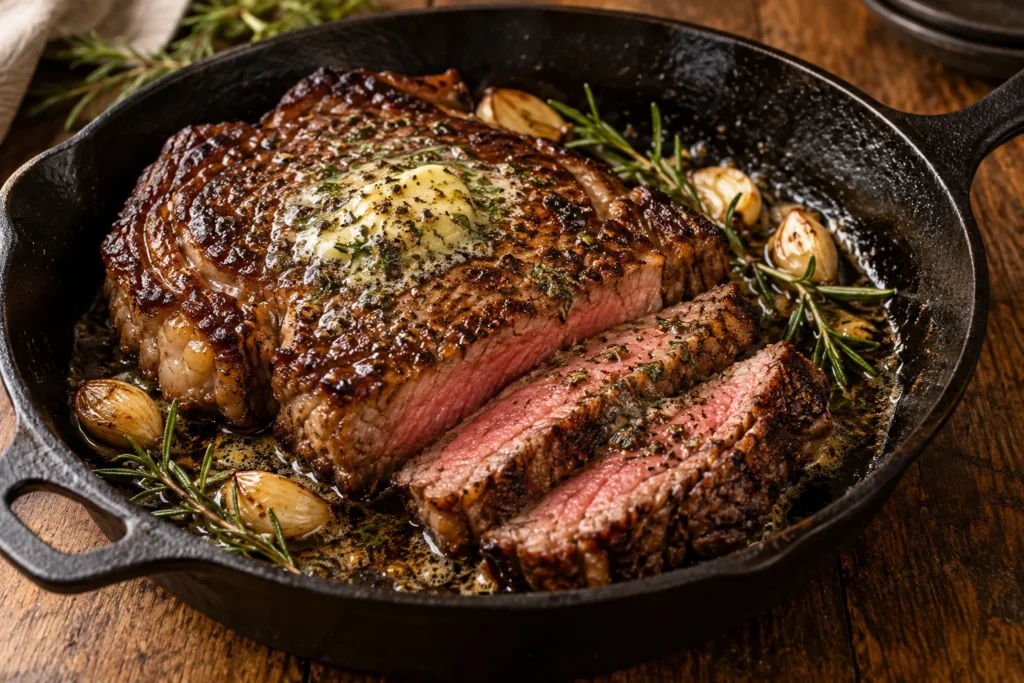
A 6-ounce cooked ribeye comfortably clears the 30-gram protein mark and needs very little help from complicated ingredients. I pat the steak dry, season it generously, and place it in a properly heated cast-iron skillet.
The hot pan creates a deep crust while the center remains tender. I finish the steak with garlic and rosemary, let it rest for at least three minutes, and slice it against the grain. Roasted vegetables or a crisp salad balance the richness without distracting from the steak.
2. Braised Short Ribs Over Mashed Potatoes
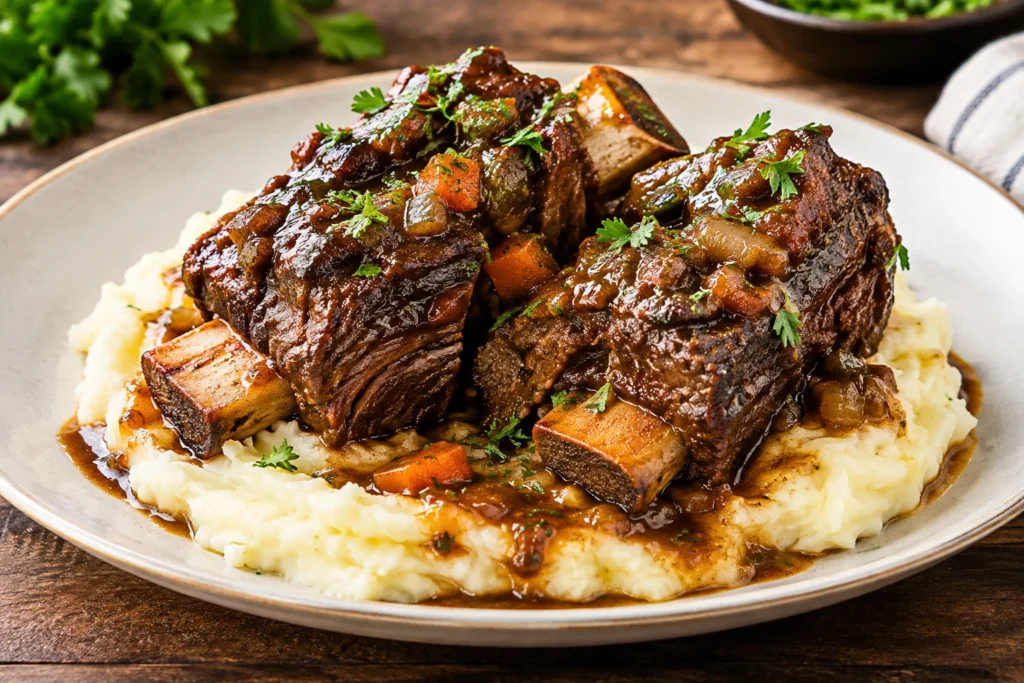
Short ribs take time, but most of that time is hands-off. I brown the ribs first, then braise them slowly with onion, garlic, tomato paste, broth, and herbs until the meat becomes tender enough to separate with a fork.
A generous portion of boneless meat provides more than 30 grams of protein. I serve the ribs and their reduced sauce over mashed potatoes with green vegetables on the side. This meal belongs in the same cold-weather rotation as my other high-protein comfort food dinners.
Don’t Miss the Next Recipe
Get fresh recipes, meal prep systems, and high-protein meal ideas delivered to your inbox every week.
No spam. Unsubscribe anytime.
3. Mongolian Beef With Rice
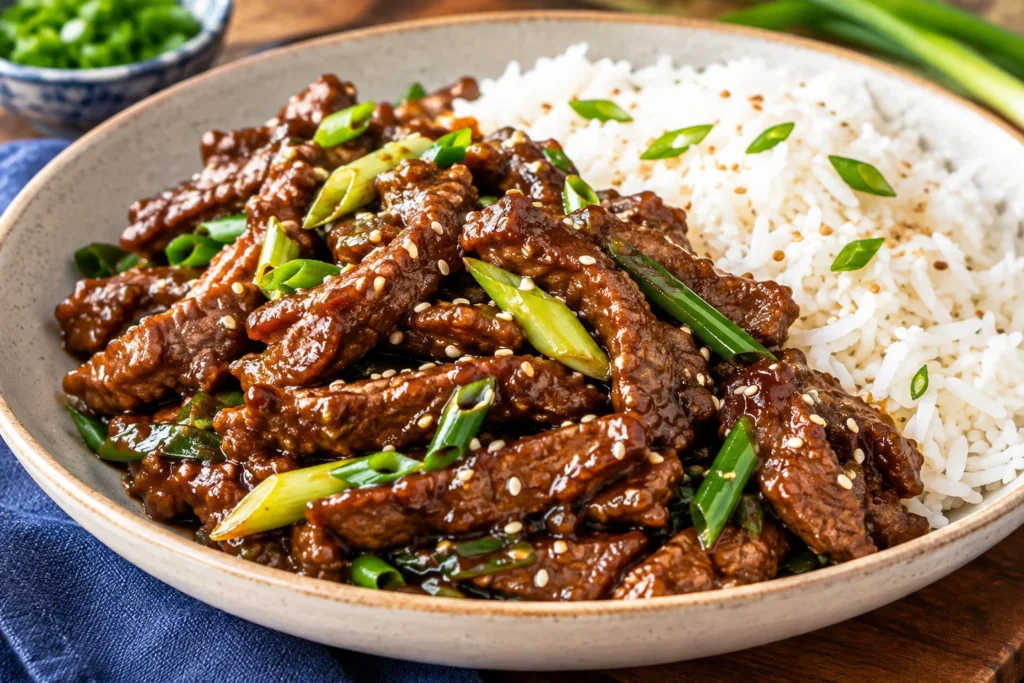
Thinly sliced flank steak makes this dinner quick enough for a busy evening. I sear the beef in small batches so the edges brown instead of releasing liquid and steaming.
The sauce combines reduced-sodium soy sauce, garlic, ginger, and a small amount of brown sugar or honey. I return the beef to the skillet just long enough to coat it, then serve it with rice and broccoli. Using approximately 6 ounces of cooked beef per serving brings the meal comfortably above 30 grams of protein.
4. Roasted Beef Tenderloin
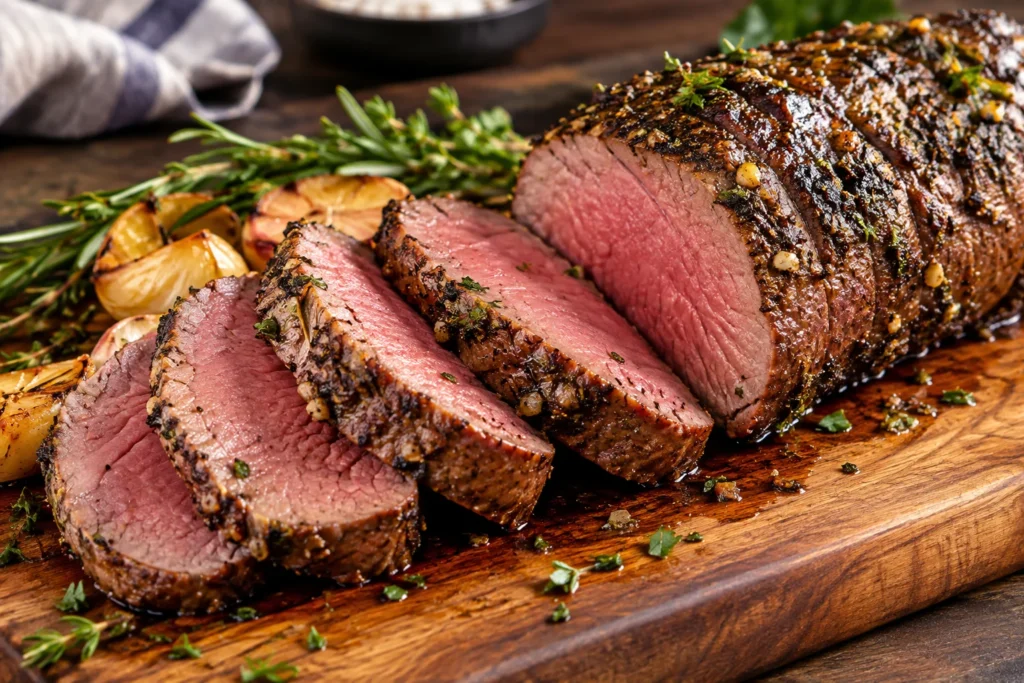
Beef tenderloin is naturally tender and does not need a heavy sauce. I season it with garlic, black pepper, rosemary, and salt, sear the outside, and finish it in the oven.
A 5- to 6-ounce portion provides more than enough protein for the meal. I let the roast rest before slicing so the juices remain in the meat. Green beans, roasted potatoes, or butternut squash make easy sides without hiding the flavor of the beef.
5. Chopped Steak With Mushroom Gravy
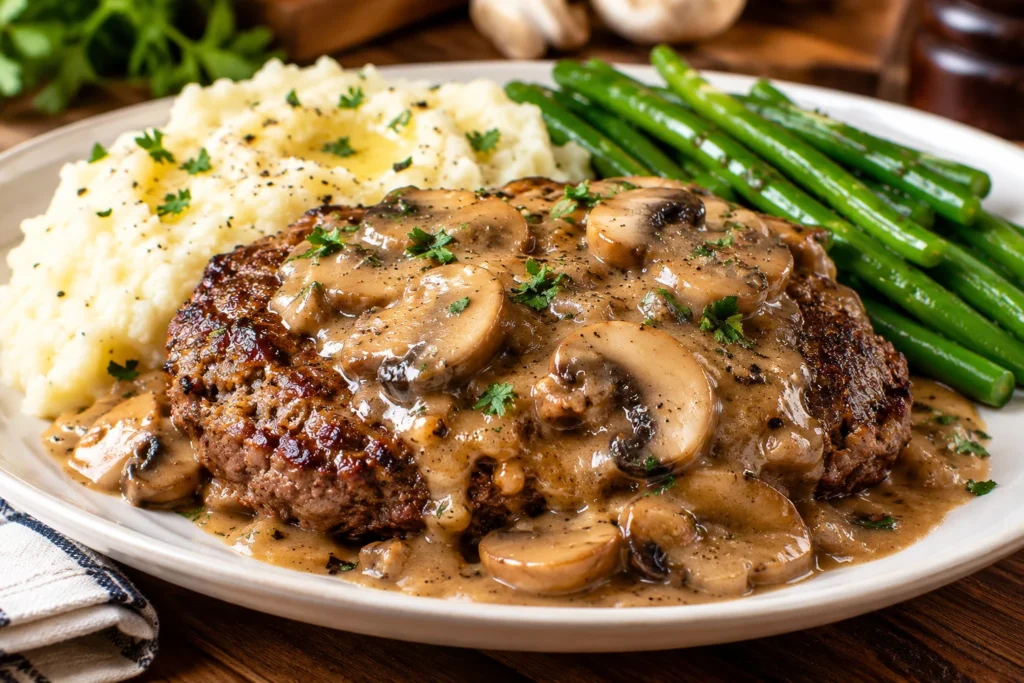
Chopped steak gives me the comfort of Salisbury steak with a shorter ingredient list. I shape lean ground beef into thick patties and cook them until the centers reach 160°F.
The gravy comes together in the same skillet with mushrooms, onion, broth, and a small amount of flour. One substantial patty provides approximately 30 grams of protein, while mashed cauliflower, potatoes, or green beans complete the plate.
6. Lemon Herb Chicken With Roasted Vegetables
Chicken breast is one of the simplest ways to build a 30-gram protein dinner, but it needs proper seasoning and cooking to stay interesting.
I marinate the chicken with lemon juice, olive oil, garlic, oregano, and black pepper, then roast or pan-cook it to 165°F. A 5- to 6-ounce cooked portion provides roughly 40 grams of protein. I make extra because the leftovers work well in salads, wraps, and grain bowls.
For more make-ahead options, I also use these high-protein crockpot chicken dinners.
7. Chicken and Egg Fried Rice
Chicken fried rice combines several protein sources in one skillet. I use about 4 ounces of cooked chicken per serving and add eggs so the meal easily reaches 30 grams.
Cold cooked rice works best because it stays separate instead of becoming sticky. I cook the eggs first, set them aside, and then stir-fry the rice with chicken, peas, carrots, green onions, garlic, ginger, and reduced-sodium soy sauce.
8. Chicken Shawarma Plate
Chicken shawarma tastes much more interesting than plain grilled chicken but uses equally practical ingredients. I coat chicken thighs or breasts with Greek yogurt, lemon juice, garlic, cumin, coriander, paprika, and turmeric.
After roasting the chicken to 165°F, I slice it and serve it with warm pita, cucumber-tomato salad, rice, hummus, and a yogurt sauce. A generous serving of chicken provides more than 30 grams of protein before the hummus or yogurt is counted.
9. Chicken Cacciatore
Chicken cacciatore turns chicken thighs into a rich one-pan dinner. I brown the chicken, then simmer it with tomatoes, bell peppers, mushrooms, onion, garlic, and Italian herbs.
Bone-in thighs give the sauce extra flavor, although boneless thighs make serving easier. I allow enough chicken for each person to receive at least 5 ounces of cooked meat, which places the dinner above the 30-gram protein target.
10. Balsamic Chicken and Farro Bowls
Farro gives these bowls a chewy base, while glazed chicken provides most of the protein. I season chicken breast with garlic and herbs, cook it to 165°F, and finish it with a balsamic glaze.
Each bowl gets sliced chicken, farro, roasted vegetables, spinach, and a small amount of feta. The chicken alone provides approximately 35 to 40 grams of protein per serving, while farro and feta add a little more.
Never Miss a Recipe
Fresh high-protein recipes, meal prep ideas, and kitchen tips, straight to your inbox every week. No spam, just good food.
No spam. Unsubscribe anytime.
11. Braised Chicken Thighs With Brown Rice
Chicken thighs remain tender during braising and are difficult to dry out. I brown them first, then cook them gently with broth, garlic, onion, thyme, and a small amount of Dijon mustard.
I serve approximately 6 ounces of cooked chicken with brown rice and broccoli. The rice absorbs the savory braising liquid, while the chicken carries the protein target without needing an oversized portion.
12. Glazed Bone-In Pork Chops
A thick bone-in pork chop can provide more than 30 grams of protein in one serving. I season the chops and sear them before adding a glaze made with Dijon mustard, maple syrup, garlic, and apple cider vinegar.
I cook the pork to 145°F and let it rest for at least three minutes. Brussels sprouts, apples, green beans, or roasted squash complement the sweet-savory glaze particularly well.
13. Crispy Pork Carnitas Bowls
Carnitas give me several dinners from one batch of pork. I slow-cook pork shoulder with citrus juice, garlic, cumin, oregano, and onion until it shreds easily.
Before serving, I spread the meat on a baking sheet and broil it until the edges become crisp. Each bowl gets enough pork to provide at least 30 grams of protein, plus rice, black beans, salsa, cabbage, and lime.
14. Herb-Crusted Pork Tenderloin With Wild Rice
Pork tenderloin is lean, quick to cook, and easy to portion. I coat it with rosemary, thyme, garlic, mustard, and black pepper, then roast it until the center reaches 145°F.
After a three-minute rest, I slice it into medallions and serve it with wild rice and roasted vegetables. A 5- to 6-ounce cooked portion of pork keeps this dinner safely above 30 grams of protein.
15. Pulled Pork and Broccolini Bowls
Pulled pork bowls are useful when I want comfort food with clear portions. I start each bowl with rice or quinoa, then add pulled pork, roasted broccolini, pickled onion, and a spoonful of barbecue sauce.
Using about 5 ounces of cooked pork gives each serving more than 30 grams of protein. I keep the sauce controlled so the bowl tastes smoky and savory without becoming overly sweet.
16. Crispy Pork Belly With Cabbage
Pork belly provides protein, but it also contains considerably more fat than lean pork. I treat it as an occasional dinner and keep the serving moderate.
I roast the pork belly slowly until tender, then increase the heat to crisp the surface. To bring the meal near 30 grams of protein without relying on a very large portion of pork belly, I serve it with edamame and a crunchy cabbage slaw.
17. Seared Salmon With Asparagus
A 6-ounce salmon fillet provides approximately 34 to 38 grams of protein and cooks quickly enough for a weeknight.
I pat the fish dry, season it, and sear it skin-side down until the skin becomes crisp. The salmon is ready when it reaches 145°F or flakes easily and is no longer translucent. Asparagus and small roasted potatoes turn it into a complete dinner.
18. Pesto Salmon With Quinoa
Pesto salmon is useful when I want a high-protein meal without a long marinade. I spread a thin layer of pesto over salmon fillets and roast them until cooked through.
Quinoa adds texture and additional protein, while cherry tomatoes and spinach make the bowl fresh and colorful. A 5- to 6-ounce salmon portion keeps each bowl above 30 grams of protein.
19. Mediterranean Salmon With Olives and Capers
Olives, capers, garlic, tomatoes, and lemon give salmon a strong Mediterranean flavor without requiring a heavy sauce.
I place the salmon in a baking dish, scatter the toppings around it, and roast everything together. The fish provides more than 30 grams of protein per portion, while couscous, rice, or roasted vegetables absorb the lemony pan juices.
20. Sesame-Crusted Tuna
A tuna steak is one of the leanest ways to reach 30 grams of protein at dinner. I press white and black sesame seeds onto the outside and sear the fish in a very hot skillet.
I slice the tuna thinly and serve it with rice, cucumber, edamame, and a soy-ginger sauce. For anyone who should avoid raw or undercooked fish, I cook the tuna completely to 145°F.
More practical fresh and canned tuna meals are included in these high-protein tuna food ideas.
21. Pepper-Crusted Tuna Steaks
Coarsely cracked black pepper creates a bold crust on tuna without covering its natural flavor. I press the pepper onto the steaks with a little salt and sear them briefly in a hot skillet.
Each 5- to 6-ounce steak provides well over 30 grams of protein. I pair the tuna with green beans, roasted potatoes, or a chilled cucumber salad. The fish can be cooked rare or taken to 145°F for a fully cooked center.
22. Shrimp Creole Over Rice
Shrimp Creole combines lean seafood with a tomato-based sauce full of vegetables and spices. I cook onion, celery, bell pepper, garlic, tomatoes, paprika, thyme, and cayenne before adding the shrimp near the end.
Approximately 6 to 7 ounces of cooked shrimp provides about 30 to 35 grams of protein. I serve the Creole over rice, allowing the spicy tomato sauce to flavor the entire bowl.
23. Shrimp Étouffée
Shrimp étouffée starts with a roux, but I keep the butter and flour moderate so the shrimp remains the focus.
The sauce includes onion, celery, bell pepper, garlic, broth, Cajun seasoning, and a small amount of tomato. I stir the shrimp in during the last several minutes and cook only until it turns pearly and opaque. A generous shrimp portion brings every serving above 30 grams of protein.
24. Seared Scallops With Quinoa
Scallops cook in minutes but feel like a dinner I would normally order at a restaurant. I dry them thoroughly before adding them to a very hot skillet so they develop a golden crust.
A serving of approximately 7 ounces of scallops, combined with quinoa, provides around 30 grams of protein. I add spinach, asparagus, or roasted tomatoes and finish the plate with lemon juice.
25. Shrimp and Scallop Vegetable Bowls
Combining shrimp and scallops adds variety while keeping the bowl lean and protein-rich. I quickly sear both types of seafood and serve them over quinoa or rice with broccoli, bell peppers, and snap peas.
Around 4 ounces of shrimp and 4 ounces of scallops per person comfortably clears the 30-gram target. A garlic-lime or soy-ginger dressing gives the bowl flavor without overwhelming the delicate seafood.
26. Classic Meatloaf With Brussels Sprouts
Lean ground beef or turkey makes meatloaf a practical family dinner with easy-to-measure portions. I combine the meat with egg, breadcrumbs, onion, garlic, Worcestershire sauce, and seasonings.
A substantial slice made from approximately 6 ounces of raw lean meat provides more than 30 grams of protein. I cook the meatloaf to 160°F for beef or 165°F for turkey and serve it with roasted Brussels sprouts.
27. Sausage and Peppers
Sausage and peppers is a one-pan dinner that does not need much preparation. I roast or sauté sliced sausage with bell peppers, onions, garlic, and Italian seasoning.
Protein varies significantly between sausage brands, so I check the nutrition label and portion enough sausage to provide approximately 30 grams. Chicken or turkey sausage often delivers the protein with less saturated fat than traditional pork sausage.
This same low-mess approach makes the recipes in my crispy high-protein air fryer dinners useful on busy nights.
28. Short Rib Ramen With Egg
Short rib ramen turns leftover braised beef into an entirely different dinner. I prepare a savory broth with garlic, ginger, mushrooms, soy sauce, and green onions, then add noodles and shredded short rib.
A soft-boiled egg brings another source of protein and makes the bowl feel complete. Enough short rib to provide about 25 grams of protein, combined with the egg and noodles, takes the finished serving beyond 30 grams.
29. Chicken Sausage and Green Bean Skillet
This skillet works when I need dinner quickly and do not want to use several pans. I brown sliced chicken sausage, then add green beans, garlic, cherry tomatoes, and a small amount of broth.
Because sausage products vary, I calculate the portion using the package nutrition information. I aim for enough chicken sausage to provide at least 30 grams of protein in each serving. Mustard and lemon juice brighten the finished skillet.
30. High-Protein Chickpea Curry
Chickpeas alone require a very large serving to provide 30 grams of protein, so I build this curry with more than one plant-based source.
I combine chickpeas with red lentils, tomatoes, spinach, curry powder, garlic, ginger, and light coconut milk. Greek yogurt served on top and quinoa underneath help bring the full meal to approximately 30 grams of protein per serving.
The combination is warm, filling, and useful when I want a meatless option. It also follows the same bean-forward approach found in these high-protein chili dishes.
How I Build a Dinner With 30 Grams of Protein
I start by choosing the main protein and checking how much it contributes in the portion I actually plan to serve. A small garnish of chicken, half a can of beans, or a sprinkle of cheese may make a meal sound high in protein without bringing it close to 30 grams.
For meat, poultry, and fish, a cooked serving of approximately 5 to 6 ounces often reaches the target, although the exact amount varies. Shrimp and scallops may require slightly larger portions, while combinations such as beef and egg or chicken and farro can reach the goal through more than one ingredient.
Plant-based meals need more planning. I combine beans or chickpeas with lentils, quinoa, tofu, edamame, high-protein pasta, nuts, seeds, or Greek yogurt rather than expecting one modest serving of legumes to do all the work.
I also avoid increasing protein by making every meal unnecessarily large. A correctly portioned chicken breast with vegetables and rice is more practical than adding cheese, eggs, yogurt, beans, and protein powder to a dinner that did not need them.
Protein Numbers Are Estimates
Protein content changes with the brand, cut, cooked weight, and serving size. Meat also loses water during cooking, which means the protein concentration per ounce can appear different depending on whether a figure refers to raw or cooked weight.
For packaged foods such as sausage, pasta, yogurt, and broth, I use the label on the exact product. For meat and seafood, I portion the cooked food consistently and treat the number as an estimate.
The goal is not to make every plate land on exactly 30.0 grams. I want a reliable dinner structure that makes reaching approximately 30 grams straightforward while still giving me enough variety to enjoy eating it.
1. Cast-Iron Ribeye Steak (Approx. 42g Protein)
Approx. 42g ProteinIngredients: 4 boneless ribeye steaks (6 oz each), 1 tbsp olive oil, 1 tsp kosher salt, 1 tsp black pepper, 2 garlic cloves smashed, 2 tbsp butter, and 2 rosemary sprigs.
Step 1: Pat steaks dry and season both sides with salt and pepper.
Step 2: Heat a cast-iron skillet over medium-high heat, add oil, and sear steaks for 3 to 4 minutes per side.
Step 3: Add butter, garlic, and rosemary and baste until the steaks reach 145°F for medium, or the doneness you prefer.
Step 4: Rest for at least 3 minutes before slicing and serving.
Storage: Refrigerate within 2 hours in a shallow airtight container and use within 3 to 4 days. Reheat cooked leftovers to 165°F.
2. Braised Short Ribs Over Mashed Potatoes (Approx. 38g Protein)
Approx. 38g ProteinIngredients: 3 lb bone-in beef short ribs, 1 tsp salt, 1/2 tsp pepper, 1 tbsp olive oil, 1 chopped onion, 2 chopped carrots, 3 minced garlic cloves, 2 tbsp tomato paste, 3 cups low-sodium beef broth, 2 lb potatoes, and 1/2 cup milk.
Step 1: Season ribs and brown them in oil in a Dutch oven; remove to a plate.
Step 2: Cook onion, carrots, garlic, and tomato paste for 5 minutes, then add broth and return the ribs.
Step 3: Cover and braise at 325°F for 2 1/2 to 3 hours until fork-tender.
Step 4: Boil and mash potatoes with milk, then serve one rib portion and sauce over each serving.
Storage: Refrigerate within 2 hours in a shallow airtight container and use within 3 to 4 days. Reheat cooked leftovers to 165°F.
3. Mongolian Beef With Rice (Approx. 37g Protein)
Approx. 37g ProteinIngredients: 1 1/2 lb flank steak thinly sliced, 2 tbsp cornstarch, 1 tbsp avocado oil, 3 minced garlic cloves, 1 tsp grated ginger, 1/3 cup reduced-sodium soy sauce, 1/3 cup water, 2 tbsp brown sugar, 4 sliced green onions, and 2 cups cooked brown rice.
Step 1: Toss sliced beef with cornstarch.
Step 2: Sear beef in hot oil in batches until browned, then transfer to a plate.
Step 3: Simmer garlic, ginger, soy sauce, water, and brown sugar for 2 minutes; return beef and cook until the sauce coats it and the beef reaches 145°F.
Step 4: Fold in green onions and serve over 1/2 cup rice per person.
Storage: Refrigerate within 2 hours in a shallow airtight container and use within 3 to 4 days. Reheat cooked leftovers to 165°F.
4. Roasted Beef Tenderloin (Approx. 39g Protein)
Approx. 39g ProteinIngredients: 1 3/4 lb center-cut beef tenderloin, 1 tbsp olive oil, 1 1/2 tsp kosher salt, 1 tsp black pepper, 2 minced garlic cloves, 1 tsp thyme, and 1 tsp rosemary.
Step 1: Bring beef toward room temperature for 20 minutes and preheat oven to 425°F.
Step 2: Rub tenderloin with oil, salt, pepper, garlic, thyme, and rosemary.
Step 3: Roast for 25 to 35 minutes until the center reaches at least 145°F.
Step 4: Rest for at least 3 minutes, then cut into four equal portions.
Storage: Refrigerate within 2 hours in a shallow airtight container and use within 3 to 4 days. Reheat cooked leftovers to 165°F.
5. Chopped Steak With Mushroom Gravy (Approx. 35g Protein)
Approx. 35g ProteinIngredients: 1 1/2 lb 90% lean ground beef, 1/2 cup breadcrumbs, 1 large egg, 1 tsp Worcestershire sauce, 1/2 tsp salt, 8 oz sliced mushrooms, 1 sliced onion, 2 cups low-sodium beef broth, 2 tbsp flour, and 1 tbsp olive oil.
Step 1: Mix beef, breadcrumbs, egg, Worcestershire, and salt and form four patties.
Step 2: Brown patties in oil for 4 to 5 minutes per side until they reach 160°F; remove.
Step 3: Cook mushrooms and onion until tender, sprinkle with flour, then gradually stir in broth.
Step 4: Simmer until thick, return patties briefly, and spoon gravy over each serving.
Storage: Refrigerate within 2 hours in a shallow airtight container and use within 3 to 4 days. Reheat cooked leftovers to 165°F.
6. Lemon Herb Chicken With Roasted Vegetables (Approx. 42g Protein)
Approx. 42g ProteinIngredients: 1 1/2 lb boneless skinless chicken breasts, 2 cups broccoli florets, 2 cups sliced zucchini, 1 sliced red bell pepper, 2 tbsp olive oil, juice and zest of 1 lemon, 2 minced garlic cloves, 1 tsp oregano, 1/2 tsp salt, and black pepper.
Step 1: Preheat oven to 425°F and arrange vegetables on a sheet pan.
Step 2: Toss vegetables with 1 tbsp oil and half the seasonings.
Step 3: Rub chicken with remaining oil, lemon, garlic, and seasonings and place it beside the vegetables.
Step 4: Roast for 20 to 25 minutes until chicken reaches 165°F; rest and divide into four portions.
Storage: Refrigerate within 2 hours in a shallow airtight container and use within 3 to 4 days. Reheat cooked leftovers to 165°F.
7. Chicken and Egg Fried Rice (Approx. 38g Protein)
Approx. 38g ProteinIngredients: 1 lb cooked diced chicken breast, 4 large eggs, 4 cups cold cooked brown rice, 2 cups frozen peas and carrots, 1 tbsp sesame oil, 2 tbsp avocado oil, 3 tbsp reduced-sodium soy sauce, and 3 sliced green onions.
Step 1: Heat 1 tbsp avocado oil in a large skillet and scramble eggs until set; remove.
Step 2: Add remaining oil and cook peas and carrots for 3 minutes.
Step 3: Add rice and chicken and stir-fry until hot throughout and the chicken reaches 165°F.
Step 4: Return eggs, add soy sauce, sesame oil, and green onions, then divide evenly.
Storage: Refrigerate within 2 hours in a shallow airtight container and use within 3 to 4 days. Reheat cooked leftovers to 165°F.
8. Chicken Shawarma Plate (Approx. 39g Protein)
Approx. 39g ProteinIngredients: 1 1/2 lb boneless skinless chicken thighs, 2 tbsp olive oil, juice of 1 lemon, 3 minced garlic cloves, 2 tsp cumin, 1 tsp paprika, 1/2 tsp turmeric, 1/2 tsp salt, 2 cups cooked rice, 2 cups chopped cucumber and tomato, and 1 cup Greek yogurt sauce.
Step 1: Coat chicken with oil, lemon, garlic, spices, and salt.
Step 2: Cook in a hot skillet for 6 to 8 minutes per side until the thickest pieces reach 165°F.
Step 3: Rest chicken for 5 minutes, then slice thinly.
Step 4: Build four plates with chicken, 1/2 cup rice, vegetables, and 1/4 cup yogurt sauce each.
Storage: Refrigerate within 2 hours in a shallow airtight container and use within 3 to 4 days. Reheat cooked leftovers to 165°F.
9. Chicken Cacciatore (Approx. 36g Protein)
Approx. 36g ProteinIngredients: 1 1/2 lb boneless skinless chicken thighs, 1 tbsp olive oil, 1 sliced onion, 1 sliced bell pepper, 8 oz mushrooms, 3 minced garlic cloves, 1 can (28 oz) crushed tomatoes, 1 tsp oregano, 1/2 tsp salt, and 1/4 cup chopped parsley.
Step 1: Season chicken and brown it in oil for 3 minutes per side; remove.
Step 2: Cook onion, bell pepper, mushrooms, and garlic for 6 minutes.
Step 3: Add tomatoes and oregano, return chicken, cover, and simmer for 25 to 30 minutes until chicken reaches 165°F.
Step 4: Taste for seasoning, sprinkle with parsley, and divide into four portions.
Storage: Refrigerate within 2 hours in a shallow airtight container and use within 3 to 4 days. Reheat cooked leftovers to 165°F.
10. Balsamic Chicken and Farro Bowls (Approx. 42g Protein)
Approx. 42g ProteinIngredients: 1 1/2 lb boneless skinless chicken breasts, 1 cup dry farro, 4 cups baby spinach, 2 cups cherry tomatoes, 2 tbsp olive oil, 3 tbsp balsamic vinegar, 1 tbsp Dijon mustard, 1 minced garlic clove, 1/2 tsp salt, and pepper.
Step 1: Cook farro according to package directions and drain.
Step 2: Whisk oil, balsamic, mustard, garlic, salt, and pepper; reserve half and coat chicken with the rest.
Step 3: Cook chicken in a skillet for 5 to 7 minutes per side until it reaches 165°F, then rest and slice.
Step 4: Divide farro, spinach, tomatoes, and chicken among bowls and drizzle with reserved dressing.
Storage: Refrigerate within 2 hours in a shallow airtight container and use within 3 to 4 days. Reheat cooked leftovers to 165°F.
11. Braised Chicken Thighs With Brown Rice (Approx. 36g Protein)
Approx. 36g ProteinIngredients: 1 1/2 lb boneless skinless chicken thighs, 1 tbsp olive oil, 1 chopped onion, 2 minced garlic cloves, 1 tsp smoked paprika, 2 cups low-sodium chicken broth, 1 cup dry brown rice, 2 cups chopped kale, 1/2 tsp salt, and pepper.
Step 1: Season chicken and brown it in oil for 3 minutes per side; remove.
Step 2: Cook onion and garlic for 3 minutes, then stir in paprika, broth, and rice.
Step 3: Return chicken, cover, and simmer gently for 35 to 40 minutes until rice is tender and chicken reaches 165°F.
Step 4: Stir in kale for the final 5 minutes and divide evenly.
Storage: Refrigerate within 2 hours in a shallow airtight container and use within 3 to 4 days. Reheat cooked leftovers to 165°F.
12. Glazed Bone-In Pork Chops (Approx. 40g Protein)
Approx. 40g ProteinIngredients: 4 bone-in pork loin chops (7 oz each), 1 tbsp olive oil, 2 tbsp Dijon mustard, 2 tbsp maple syrup, 1 tbsp apple cider vinegar, 1 minced garlic clove, 1/2 tsp salt, and pepper.
Step 1: Season pork chops with salt and pepper.
Step 2: Sear in hot oil for 4 to 5 minutes per side.
Step 3: Whisk mustard, maple syrup, vinegar, and garlic and brush over the chops.
Step 4: Cook until chops reach 145°F, rest for at least 3 minutes, and serve with the pan glaze.
Storage: Refrigerate within 2 hours in a shallow airtight container and use within 3 to 4 days. Reheat cooked leftovers to 165°F.
13. Crispy Pork Carnitas Bowls (Approx. 34g Protein)
Approx. 34g ProteinIngredients: 2 lb boneless pork shoulder cut into chunks, 1 tsp salt, 2 tsp cumin, 1 tsp oregano, 4 minced garlic cloves, juice of 1 orange, 1 cup chicken broth, 2 cups cooked brown rice, 2 cups black beans, and 2 cups shredded cabbage.
Step 1: Place pork, salt, spices, garlic, orange juice, and broth in a covered Dutch oven.
Step 2: Braise at 325°F for about 3 hours until the pork shreds easily.
Step 3: Shred pork, spread it on a sheet pan, and broil for 4 to 6 minutes until the edges crisp.
Step 4: Divide rice, beans, cabbage, and 4 oz cooked carnitas among four bowls.
Storage: Refrigerate within 2 hours in a shallow airtight container and use within 3 to 4 days. Reheat cooked leftovers to 165°F.
14. Herb-Crusted Pork Tenderloin With Wild Rice (Approx. 40g Protein)
Approx. 40g ProteinIngredients: 1 1/2 lb pork tenderloin, 1 tbsp olive oil, 2 tsp Dijon mustard, 2 minced garlic cloves, 1 tsp rosemary, 1 tsp thyme, 1/2 tsp salt, pepper, and 2 cups cooked wild rice blend.
Step 1: Preheat oven to 425°F.
Step 2: Coat pork with oil, mustard, garlic, herbs, salt, and pepper.
Step 3: Roast for 22 to 28 minutes until the center reaches 145°F.
Step 4: Rest at least 3 minutes, slice, and serve with 1/2 cup wild rice per person.
Storage: Refrigerate within 2 hours in a shallow airtight container and use within 3 to 4 days. Reheat cooked leftovers to 165°F.
15. Pulled Pork and Broccolini Bowls (Approx. 35g Protein)
Approx. 35g ProteinIngredients: 2 lb boneless pork shoulder, 1 tsp smoked paprika, 1 tsp cumin, 1/2 tsp salt, 1 cup low-sodium broth, 2 bunches broccolini, 1 tbsp olive oil, and 2 cups cooked quinoa.
Step 1: Rub pork with paprika, cumin, and salt and place in a covered Dutch oven with broth.
Step 2: Braise at 325°F for 3 1/2 to 4 hours until tender, then shred and skim excess fat.
Step 3: Roast broccolini with oil at 425°F for 12 to 15 minutes.
Step 4: Divide quinoa, 4 oz pulled pork, and broccolini among four bowls.
Storage: Refrigerate within 2 hours in a shallow airtight container and use within 3 to 4 days. Reheat cooked leftovers to 165°F.
16. Crispy Pork Belly With Cabbage (Approx. 30g Protein)
Approx. 30g ProteinIngredients: 2 lb skinless pork belly cut into 1-inch pieces, 1/2 tsp salt, 1/2 tsp pepper, 6 cups shredded cabbage, 3 cups shelled edamame, 1 tbsp reduced-sodium soy sauce, 1 tbsp rice vinegar, and 1 tsp sesame oil.
Step 1: Season pork belly and arrange on a rack over a sheet pan.
Step 2: Roast at 425°F for 35 to 45 minutes until browned and at least 145°F, turning once.
Step 3: Sauté cabbage and edamame with soy sauce, vinegar, and sesame oil until tender and hot.
Step 4: Drain pork well and serve a measured 4 oz cooked portion with the cabbage-edamame mixture.
Storage: Refrigerate within 2 hours in a shallow airtight container and use within 3 to 4 days. Reheat cooked leftovers to 165°F.
17. Seared Salmon With Asparagus (Approx. 36g Protein)
Approx. 36g ProteinIngredients: 4 salmon fillets (5 oz each), 1 lb asparagus trimmed, 1 tbsp olive oil, 1 minced garlic clove, juice of 1 lemon, 1/2 tsp salt, and pepper.
Step 1: Season salmon with salt and pepper.
Step 2: Sear salmon in half the oil for 4 to 5 minutes per side until it reaches 145°F.
Step 3: Sauté asparagus in remaining oil with garlic for 5 to 7 minutes.
Step 4: Finish salmon and asparagus with lemon juice and serve.
Storage: Refrigerate within 2 hours in a shallow airtight container and use within 3 to 4 days. Reheat cooked leftovers to 165°F.
18. Pesto Salmon With Quinoa (Approx. 38g Protein)
Approx. 38g ProteinIngredients: 4 salmon fillets (5 oz each), 1/3 cup basil pesto, 2 cups cooked quinoa, 2 cups cherry tomatoes, 1 tbsp olive oil, and black pepper.
Step 1: Preheat oven to 400°F and place salmon on a lined sheet pan.
Step 2: Spread pesto over salmon and arrange tomatoes around it with oil and pepper.
Step 3: Bake for 12 to 16 minutes until salmon reaches 145°F.
Step 4: Serve each fillet with 1/2 cup quinoa and roasted tomatoes.
Storage: Refrigerate within 2 hours in a shallow airtight container and use within 3 to 4 days. Reheat cooked leftovers to 165°F.
19. Mediterranean Salmon With Olives and Capers (Approx. 36g Protein)
Approx. 36g ProteinIngredients: 4 salmon fillets (5 oz each), 2 cups cherry tomatoes, 1/2 cup sliced olives, 2 tbsp capers, 2 tbsp olive oil, 2 minced garlic cloves, juice of 1 lemon, 1 tsp oregano, and pepper.
Step 1: Preheat oven to 400°F and place salmon in a baking dish.
Step 2: Scatter tomatoes, olives, capers, and garlic around the fish.
Step 3: Drizzle with oil and lemon and season with oregano and pepper.
Step 4: Bake for 12 to 18 minutes until salmon reaches 145°F, then divide evenly.
Storage: Refrigerate within 2 hours in a shallow airtight container and use within 3 to 4 days. Reheat cooked leftovers to 165°F.
20. Sesame-Crusted Tuna (Approx. 39g Protein)
Approx. 39g ProteinIngredients: 4 tuna steaks (6 oz each), 1/3 cup sesame seeds, 1 tbsp avocado oil, 2 tbsp reduced-sodium soy sauce, 1 tbsp rice vinegar, and 1 tsp grated ginger.
Step 1: Pat tuna dry and press sesame seeds onto both sides.
Step 2: Heat oil in a skillet over medium-high heat.
Step 3: Sear tuna to your preferred doneness; for fully cooked fish, cook until the center reaches 145°F.
Step 4: Whisk soy sauce, vinegar, and ginger and spoon over the tuna.
Storage: Refrigerate within 2 hours in a shallow airtight container and use within 3 to 4 days. Reheat cooked leftovers to 165°F.
21. Pepper-Crusted Tuna Steaks (Approx. 39g Protein)
Approx. 39g ProteinIngredients: 4 tuna steaks (6 oz each), 2 tsp coarsely cracked black pepper, 1 tsp kosher salt, 1 tbsp olive oil, 1 tbsp lemon juice, and 1 tbsp chopped parsley.
Step 1: Pat tuna dry and season with pepper and salt.
Step 2: Heat olive oil in a heavy skillet over medium-high heat.
Step 3: Sear to your preferred doneness; for fully cooked fish, cook to 145°F.
Step 4: Rest briefly, drizzle with lemon juice, and finish with parsley.
Storage: Refrigerate within 2 hours in a shallow airtight container and use within 3 to 4 days. Reheat cooked leftovers to 165°F.
22. Shrimp Creole Over Rice (Approx. 34g Protein)
Approx. 34g ProteinIngredients: 1 3/4 lb peeled and deveined shrimp, 1 tbsp olive oil, 1 chopped onion, 1 chopped bell pepper, 2 chopped celery stalks, 3 minced garlic cloves, 1 can (14.5 oz) diced tomatoes, 1 cup tomato sauce, 1 tsp Creole seasoning, and 2 cups cooked brown rice.
Step 1: Cook onion, bell pepper, and celery in oil for 6 minutes, then add garlic.
Step 2: Stir in tomatoes, tomato sauce, and Creole seasoning and simmer for 12 minutes.
Step 3: Add shrimp and cook for 4 to 6 minutes until opaque and 145°F.
Step 4: Serve each portion over 1/2 cup cooked rice.
Storage: Refrigerate within 2 hours in a shallow airtight container and use within 3 to 4 days. Reheat cooked leftovers to 165°F.
23. Shrimp Étouffée (Approx. 35g Protein)
Approx. 35g ProteinIngredients: 1 3/4 lb peeled and deveined shrimp, 3 tbsp butter, 3 tbsp flour, 1 chopped onion, 1 chopped bell pepper, 2 chopped celery stalks, 3 minced garlic cloves, 2 cups low-sodium seafood stock, 1 tsp Cajun seasoning, and 2 cups cooked rice.
Step 1: Melt butter, whisk in flour, and cook until the roux is light brown.
Step 2: Add onion, bell pepper, celery, and garlic and cook for 6 minutes.
Step 3: Gradually stir in stock and seasoning and simmer until thickened.
Step 4: Add shrimp and cook until opaque and 145°F, then serve over 1/2 cup rice per person.
Storage: Refrigerate within 2 hours in a shallow airtight container and use within 3 to 4 days. Reheat cooked leftovers to 165°F.
24. Seared Scallops With Quinoa (Approx. 31g Protein)
Approx. 31g ProteinIngredients: 1 3/4 lb dry sea scallops, 2 cups cooked quinoa, 1 tbsp olive oil, 1 tbsp butter, 2 minced garlic cloves, juice of 1 lemon, 2 cups baby spinach, 1/2 tsp salt, and pepper.
Step 1: Pat scallops very dry and season with salt and pepper.
Step 2: Sear in hot oil for about 2 minutes per side until opaque and 145°F; remove.
Step 3: Add butter, garlic, and spinach and cook until wilted.
Step 4: Divide quinoa, spinach, and scallops among four plates and finish with lemon.
Storage: Refrigerate within 2 hours in a shallow airtight container and use within 3 to 4 days. Reheat cooked leftovers to 165°F.
25. Shrimp and Scallop Vegetable Bowls (Approx. 38g Protein)
Approx. 38g ProteinIngredients: 1 lb peeled and deveined shrimp, 1 lb sea scallops, 2 tbsp olive oil, 4 cups mixed broccoli, bell pepper, and zucchini, 2 cups cooked quinoa, 2 minced garlic cloves, juice of 1 lemon, salt, and pepper.
Step 1: Pat seafood dry and season lightly.
Step 2: Sauté vegetables in 1 tbsp oil until tender-crisp, then divide among four bowls with quinoa.
Step 3: Cook shrimp and scallops in remaining oil with garlic until opaque and 145°F.
Step 4: Divide seafood among bowls and finish with lemon juice.
Storage: Refrigerate within 2 hours in a shallow airtight container and use within 3 to 4 days. Reheat cooked leftovers to 165°F.
26. Classic Meatloaf With Brussels Sprouts (Approx. 35g Protein)
Approx. 35g ProteinIngredients: 1 1/2 lb 90% lean ground beef, 2 large eggs, 3/4 cup breadcrumbs, 1/2 cup milk, 1/2 chopped onion, 2 tbsp Worcestershire sauce, 1/3 cup ketchup, 1 1/2 lb Brussels sprouts, 1 tbsp olive oil, salt, and pepper.
Step 1: Preheat oven to 375°F and mix beef, eggs, breadcrumbs, milk, onion, Worcestershire, salt, and pepper.
Step 2: Shape into a loaf, spread ketchup on top, and place on a lined pan.
Step 3: Toss Brussels sprouts with oil and roast beside the loaf, stirring once.
Step 4: Cook meatloaf until the center reaches 160°F, rest 10 minutes, and cut into four servings.
Storage: Refrigerate within 2 hours in a shallow airtight container and use within 3 to 4 days. Reheat cooked leftovers to 165°F.
27. Sausage and Peppers (Approx. 31g Protein)
Approx. 31g ProteinIngredients: 1 3/4 lb fully cooked high-protein chicken or turkey sausage (check label for at least 14g protein per 4 oz), 3 sliced bell peppers, 1 sliced onion, 1 tbsp olive oil, 1 tsp Italian seasoning, and 2 cups marinara sauce.
Step 1: Slice sausage into thick rounds.
Step 2: Cook peppers and onion in oil for 7 minutes.
Step 3: Add sausage, Italian seasoning, and marinara and simmer for 12 to 15 minutes.
Step 4: Heat poultry sausage to 165°F and divide evenly, including about 7 oz sausage per serving.
Storage: Refrigerate within 2 hours in a shallow airtight container and use within 3 to 4 days. Reheat cooked leftovers to 165°F.
28. Short Rib Ramen With Egg (Approx. 36g Protein)
Approx. 36g ProteinIngredients: 2 1/2 lb bone-in beef short ribs, 6 cups low-sodium beef broth, 2 tbsp reduced-sodium soy sauce, 1 tbsp grated ginger, 3 minced garlic cloves, 4 packs ramen noodles with seasoning discarded, 4 large eggs, 2 cups sliced mushrooms, and 4 sliced green onions.
Step 1: Brown short ribs in a Dutch oven, then add broth, soy sauce, ginger, and garlic.
Step 2: Cover and braise at 325°F for about 3 hours until tender; remove bones, shred meat, and skim fat.
Step 3: Soft-boil eggs separately and cook mushrooms and noodles in the simmering broth.
Step 4: Divide noodles, broth, about 4 oz beef, and one egg among four bowls; top with green onions.
Storage: Refrigerate within 2 hours in a shallow airtight container and use within 3 to 4 days. Reheat cooked leftovers to 165°F.
29. Chicken Sausage and Green Bean Skillet (Approx. 31g Protein)
Approx. 31g ProteinIngredients: 1 3/4 lb fully cooked chicken sausage (check label for at least 14g protein per 4 oz), 1 1/2 lb trimmed green beans, 1 tbsp olive oil, 1 sliced onion, 2 minced garlic cloves, 1 tsp smoked paprika, 1/2 cup chicken broth, and 1 tbsp lemon juice.
Step 1: Slice sausage into rounds.
Step 2: Cook onion and green beans in oil for 7 to 8 minutes.
Step 3: Add sausage, garlic, paprika, and broth and simmer until beans are tender.
Step 4: Heat sausage to 165°F, finish with lemon, and divide evenly with about 7 oz sausage per serving.
Storage: Refrigerate within 2 hours in a shallow airtight container and use within 3 to 4 days. Reheat cooked leftovers to 165°F.
30. High-Protein Chickpea Curry (Approx. 30g Protein)
Approx. 30g ProteinIngredients: 2 cans (15 oz each) chickpeas drained, 1 cup dry red lentils rinsed, 1 tbsp olive oil, 1 chopped onion, 3 minced garlic cloves, 1 tbsp grated ginger, 2 tbsp curry powder, 1 can (14 oz) light coconut milk, 3 cups low-sodium vegetable broth, 2 cups cooked quinoa, 1 cup plain nonfat Greek yogurt, and 4 cups spinach.
Step 1: Cook onion in oil for 5 minutes, then add garlic, ginger, and curry powder.
Step 2: Stir in chickpeas, lentils, coconut milk, and broth and simmer for 25 to 30 minutes until lentils are tender.
Step 3: Fold in spinach and cook until wilted; remove from heat before stirring in Greek yogurt to prevent curdling.
Step 4: Serve each portion with 1/2 cup quinoa; warm leftovers gently to 165°F.
Storage: Refrigerate within 2 hours in a shallow airtight container and use within 3 to 4 days. Reheat cooked leftovers to 165°F.
Get Fresh Recipes Every Week
Join readers getting fresh recipes, meal prep systems, and high-protein meal ideas delivered to your inbox every week.
No spam. Unsubscribe anytime.