
See all 26 recipes
Table of Contents
- Four Questions to Ask Before You Cook
- Holding Rules for a Potluck Table
- How Much Protein a Potluck Plate Holds
- Dishes That Need an Outlet
- Casseroles That Travel in an Insulated Carrier
- Salads and Sides That Need Nothing
- Desserts That Need Nothing but a Knife
- Planning the Table
- Transporting and Storing
- FAQ
- Recipe Cards
Most potluck advice starts with the recipe. The better question is usually what the room has to offer.
A slow cooker needs an outlet. A casserole needs an oven or a very good carrier. A salad needs a fridge or a cool corner, and a pan of brownies needs nothing at all. If you pick the dish before you know what the venue provides, you can end up with a stew nobody can plug in or a hot casserole that's cold by the time the line forms, and that's a waste of a good recipe. So these 26 winter potluck dishes are sorted by what you need once you get there: 8 that want an outlet, 10 that travel hot in an insulated carrier, 5 salads and sides that need nothing, and 3 desserts you can cut with a knife.
Each recipe lists its serving count, a safe internal temperature, and the protein per serving, calculated from USDA nutrient data for the exact quantities on its card. Cooking times come from the USDA, extension services, and published recipes, and we note where sources disagree. For a bigger protein target at home, our high-protein dinners with 30g of protein apply the same math to a regular weeknight.
Our Take
The USDA advises heating cooked food to 165°F on the stove, in a microwave, or in an oven before moving it to a preheated slow cooker, where it should stay at 140°F or above.
Four Questions to Ask Before You Cook
A two-minute message to the host saves most potluck problems, and it's worth sending before you shop.
- Is there an outlet near the buffet? Slow cookers and warming trays depend on it. If the answer is no, choose from the casserole section.
- Is the oven free? Plenty of venues have one, but it may be busy. Some casseroles can be reheated there, and others need to arrive hot.
- Is there refrigerator space? Salads with feta, dips, and anything creamy need to stay cold or hot, not in between.
- How long will food sit out? The shorter the window, the less you need to worry about holding temperature.
Don't Miss the Next Recipe
Get fresh recipes, meal prep systems, and high-protein meal ideas delivered to your inbox every week.
No spam. Unsubscribe anytime.
Holding Rules for a Potluck Table
The USDA's numbers are simple, and they matter most on a buffet. Food that stays between 40°F and 140°F for more than 2 hours isn't safe to eat, so hot dishes should stay at 140°F or above and cold dishes at 40°F or below. FoodSafety.gov recommends refrigerating perishable leftovers within 2 hours.
Slow cookers have their own rules, and the USDA's slow cooker guidance is worth a read before you pack one:
- Thaw meat and poultry first, and put vegetables in first because they cook slower.
- If you can, start on high for the first hour, then switch to low or the setting your recipe calls for.
- Soups, stews, and sauces should reach 165°F, and roasts should reach at least 145°F.
- Don't reheat leftovers in a slow cooker. Heat them to 165°F on the stove, in a microwave, or in an oven, then move them to a preheated slow cooker, where they should stay at 140°F or above.
That last rule is the one most people break at potlucks. If you cooked a dish the night before, reheat it properly before it goes into the cooker at the venue.
How Much Protein a Potluck Plate Holds
A potluck plate usually holds a spoonful or two of several dishes, not a full serving of one, and that changes the math. The slow cooker mains, from the cranberry meatballs to the pulled pork sliders, land between about 17g and 36g per serving. The casseroles run from about 17g to 30g, and the dips, salads, and sides are lighter, from 3g to 17g. Desserts contribute only 2g or 3g each.
Two notes on how we counted. Each number covers the main protein sources on the card, such as meat, cheese, beans, pasta, eggs, and grains. Vegetables, sauces, biscuits, and the sugar-and-butter parts of desserts aren't counted. For slow-cooked meats and meatballs, we assumed some weight is lost during cooking, using the same 74 percent cooked yield the USDA applies to beef cuts, and 70 or 75 percent for pork shoulder, lamb, and ground beef. Real results vary, so don't treat the numbers as a lab result; they're a planning guide.
Dishes That Need an Outlet
Eight dishes that taste best held warm in a slow cooker or a small warming tray. Check that the venue has an outlet within reach of the buffet, and bring an extension cord to be safe.
Slow Cooker Beef Stew
A stew that cooks in its own serving dish is about as easy as potluck food gets.
A Montana State University Extension recipe for beef stew uses 2 pounds of cubed stew meat and cooks it 8 to 10 hours on low or 4 to 6 hours on high. For a richer pot, we brown 2 pounds of chuck cubes, then add them to the slow cooker with carrots, onion, garlic, tomato paste, 4 cups of beef broth, Worcestershire, and 1.5 pounds of Yukon Gold potatoes. Vegetables go in the bottom of the cooker, since they'll cook slower than the meat.
Stews have to reach 165°F, per the USDA, and they won't get there unless the lid stays on. Thicken the broth at the end with a cornstarch slurry and cook on high for 15 minutes. If you cooked the stew the day before, reheat it on the stove to 165°F, then transfer it to a preheated slow cooker. That also makes it a close cousin of our one-pot dinners with real protein.
Why this works: Browning the beef first adds flavor the slow cooker can't build on its own, and putting the potatoes at the bottom keeps them from overcooking.
The nutrition: About 27g of protein per serving when 2 pounds of chuck feeds eight, from roughly 3 ounces of cooked beef each plus the potatoes.
White Chicken Chili
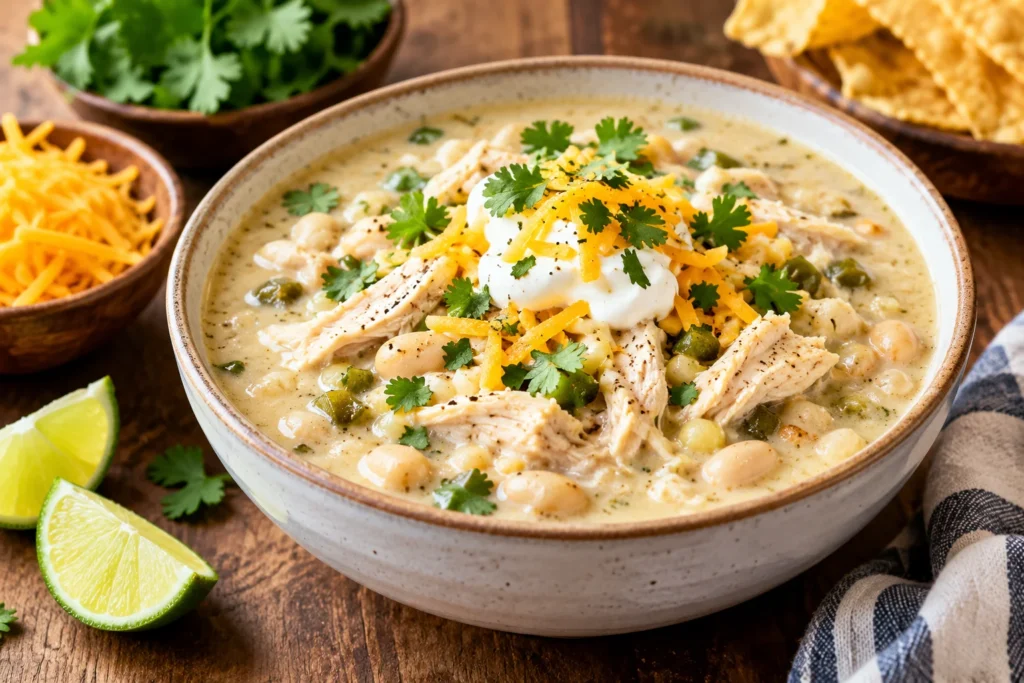
White chicken chili is creamy without being heavy, and it works as a main for guests who skip beef.
Poach 1.5 pounds of boneless, skinless chicken breasts until a thermometer reads 165°F. Published methods put that at about 12 to 15 minutes for medium breasts. Shred the chicken, then simmer it with three cans of drained white beans, two cans of diced green chiles, corn, onion, garlic, cumin, oregano, and 4 cups of broth. Stir in 4 ounces of cream cheese until smooth, and finish with Greek yogurt off the heat so it doesn't curdle.
Pack the garnishes in their own containers: limes, fresh cilantro, extra cheese, and jalapeño slices. Because chili is a stew-like dish, keep it at 140°F or above in the slow cooker. It's a great make-ahead option, which is why it also belongs with our healthy meal prep dinner ideas.
Why this works: Adding the yogurt off the heat keeps the chili smooth, because dairy can curdle in a bubbling pot.
The nutrition: About 29g of protein per serving when the pot feeds eight, from the chicken, beans, cream cheese, and yogurt.
Slow Cooker Swedish Meatballs
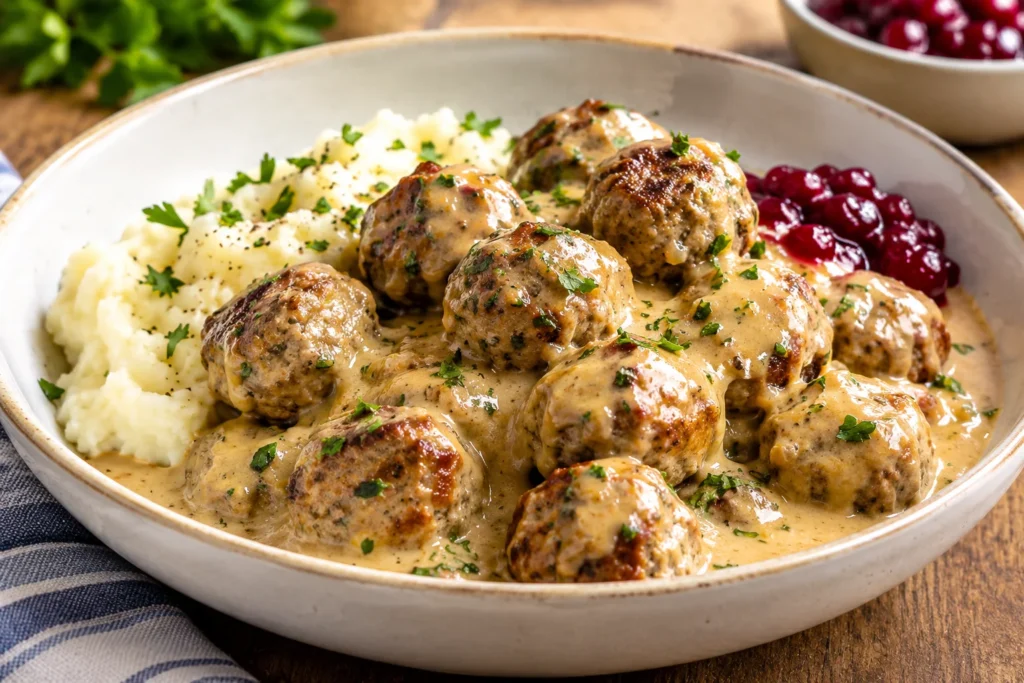
Meatballs in gravy serve two ways at a potluck: on toothpicks as an appetizer, or over noodles as a main.
Mix 2 pounds of 90% lean ground beef with two eggs, breadcrumbs, milk, grated onion, allspice, and salt. Shape about 32 meatballs and bake at 400°F for about 15 minutes to brown them. Ground beef needs 160°F, per the USDA. Put them in the slow cooker with a gravy of beef broth, flour, and Worcestershire, and cook on low for 3 to 4 hours. Stir in sour cream at the end.
The gravy tightens as it sits, so pack a small jar of broth to thin it. Meatballs also freeze well, and they're easy to reheat in portions, which fits the budget-friendly batch cooking in our high-protein meal prep ideas on a budget.
Why this works: Browning the meatballs in the oven first holds their shape, so they don't break apart during hours in the gravy.
The nutrition: About 21g of protein per serving when the batch feeds ten, which is about three meatballs each.
Pulled Pork Sliders
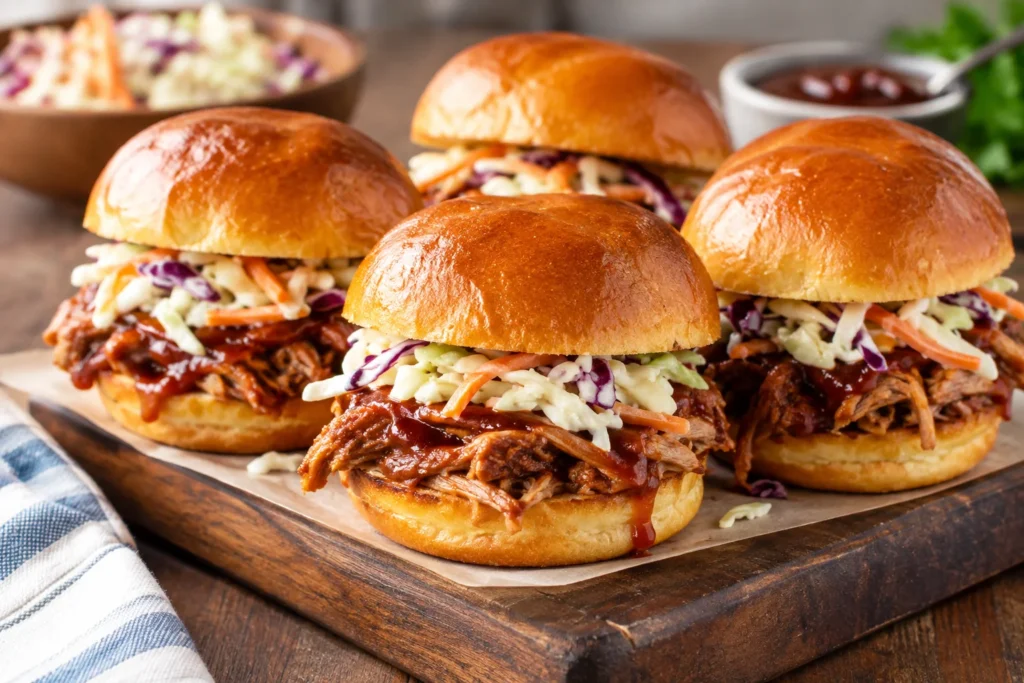
Sliders are the right choice when you don't know whether guests want a full plate or a bite.
A Mississippi State University Extension recipe cooks a pork shoulder in a slow cooker for 8 hours on low or 4 to 5 hours on high, and calls the pork ready at 145°F. For pulled pork that shreds easily, many recipes cook it to a higher temperature of around 195°F, so go by texture. Rub a 3-pound boneless shoulder with smoked paprika, garlic powder, and salt, set it over a sliced onion, add a cup of broth, and cook on low until it shreds.
Stir the shredded pork into barbecue sauce, keep it at 140°F or above, and pack the buns, pickles, and slaw separately. Sliders are budget food at their best, and they're easy to scale, and they fit with our cheap high-protein dinners that feed six.
The nutrition: About 36g of protein per serving of two sliders when 3 pounds of pork feeds eight, including the buns. We assumed about 70 percent of the raw weight remains as shredded meat.
Turkey Meatballs With Marinara
Turkey meatballs are the lighter option on a table full of rich dishes.
Mix 2 pounds of ground turkey with eggs, breadcrumbs, grated Parmesan, garlic, Italian seasoning, and salt, being careful not to overmix so they stay tender. Ground poultry needs 165°F, per the USDA, so bake them at 400°F for 18 to 22 minutes and confirm with a thermometer. Move them into hot marinara in a slow cooker to keep warm.
They're quick enough that they'd fit our quick high-protein dinners for busy school nights too, and they can be spooned over pasta, tucked into slider rolls, or served on toothpicks.
The nutrition: About 21g of protein per serving when the batch feeds ten, about three meatballs each.
Cranberry Glazed Meatballs
Sweet and tangy meatballs suit a winter table, and the glaze takes five minutes.
Make beef meatballs with the same base as the Swedish version, bake them at 400°F for 18 to 22 minutes until they reach 160°F, then simmer them in a glaze made from canned cranberry sauce, bottled chili sauce, a splash of orange juice, and a spoonful of brown sugar. Keep them in the slow cooker on low, at 140°F or above.
These are also a hit at holiday parties, because the glaze looks festive.
The nutrition: About 17g of protein per serving when 2 pounds of beef feeds twelve, about two to three meatballs each.
Buffalo Chicken Dip
This dip is usually the first thing to disappear, and it keeps well in a small slow cooker.
Mix 4 cups of shredded cooked chicken with 16 ounces of softened cream cheese, a cup of Greek yogurt, a cup of buffalo-style hot sauce, 2 cups of shredded cheddar, and ranch seasoning. Bake at 375°F for 20 to 25 minutes, until it's bubbling and the center reaches 165°F, then move it to a small slow cooker set to warm so it holds 140°F or above.
Serve with celery, carrots, tortilla chips, and baguette slices, and refill the dippers as needed.
The nutrition: About 17g of protein per serving when the dip feeds sixteen, from the chicken, cream cheese, yogurt, and cheddar.
Baked Spinach and Artichoke Dip
Draining the vegetables well is what decides whether this dip comes out thick or watery.
Squeeze a thawed 16-ounce package of spinach until it's very dry, drain and chop two cans of artichoke hearts, and stir both into 16 ounces of cream cheese along with a cup of Greek yogurt, plus mozzarella, grated Parmesan, and minced garlic. Bake at 375°F for 20 to 25 minutes until hot and lightly browned, and serve it warm in a small slow cooker.
This is the lightest option in this group for protein, so it's smart to pair it with a protein-rich main.
The nutrition: About 8g of protein per serving when the dip feeds sixteen, from the cream cheese, yogurt, mozzarella, and Parmesan. The vegetables aren't counted.
Casseroles That Travel in an Insulated Carrier
Ten dishes for guests who don't have an outlet to count on. Bake them as close to departure as you can, wrap the dish in foil and towels, and carry it in an insulated bag so it arrives above 140°F. A casserole that's been chilled before baking needs more oven time, so judge doneness by the center reaching 165°F instead of by the clock.
Baked Ziti With Italian Sausage
Baked ziti feeds a crowd and stays good while the line moves along the buffet.
Boil 1 pound of ziti for about 2 minutes less than the package says, because it keeps cooking in the oven. Brown 1.5 pounds of Italian sausage until it reaches 160°F, then stir in marinara. Mix 15 ounces of ricotta with an egg and grated Parmesan, layer everything in a 9 by 13-inch dish with mozzarella, and cover with foil.
Published versions bake at 375°F, covered for about 20 minutes and uncovered for another 10 to 15. An assembled pan can wait in the refrigerator for up to 2 days, but plan on extra time if it goes in cold.
Why this works: Stopping the pasta short of tender leaves room for it to finish in the sauce, so the ziti doesn't turn mushy.
The nutrition: About 30g of protein per serving when one pan feeds ten, from the pasta, sausage, ricotta, mozzarella, Parmesan, and egg.
Chicken Pot Pie Casserole
This gives you the filling and the golden top of a pot pie without the work of individual pies.
Cook diced onion and celery in butter, whisk in flour, then broth and milk until thick. Fold in about 20 ounces of cooked, chopped chicken, peas, carrots, and thyme. Pour the filling into a 9 by 13-inch dish and top with refrigerated biscuits.
A published 9 by 13-inch chicken pot pie bakes at 400°F for 30 to 40 minutes until golden and bubbling, so use that as a guide and check the biscuits at 25 minutes. The center should reach 165°F. Biscuits stay sturdy for travel, while puff pastry looks lighter but is best served soon after baking.
The nutrition: About 19g of protein per serving when one dish feeds ten, from the chicken, milk, peas, and flour. The biscuits aren't counted.
Chicken, Broccoli, and Rice Casserole
This is the one to bring when the table already has plenty of sides and needs a full meal.
Build the sauce from butter, flour, milk, and chicken broth, then stir in 2 cups of freshly shredded cheddar off the heat. Freshly shredded cheese melts smoother than the pre-shredded kind. Fold in 4 cups of cooked chicken, 4 cups of cooked brown rice, and 5 cups of lightly steamed broccoli, spread it in a 9 by 13-inch dish, and top with the remaining cheese.
Bake at 375°F until the center reaches 165°F, covering the dish during transport so the rice doesn't dry out. Casserole times vary with the dish and how cold the filling is, so rely on the thermometer.
The nutrition: About 30g of protein per serving when one pan feeds ten, from the chicken, rice, cheddar, milk, and flour.
Smoked Gouda Mac and Cheese
Winter tables need a macaroni dish, and smoked Gouda adds more depth than cheddar by itself.
Published recipes use a 9 by 13-inch dish at 375°F and cook the pasta only until it's just beginning to turn tender, since it finishes in the oven. A base sauce of butter, flour, and 4 cups of milk takes 2 cups of smoked Gouda and 2 cups of sharp cheddar. Top with buttered breadcrumbs and bake 20 to 30 minutes, until bubbling and golden.
You can assemble it the night before. Let the dish sit out for 30 minutes (and no longer than 2 hours total) before baking, and let the cheese sauce cool before it meets the pasta.
Why this works: Pasta cooked only until it begins to soften absorbs sauce in the oven instead of going soft, which keeps the texture creamy.
The nutrition: About 22g of protein per serving when one pan feeds ten, from the macaroni, milk, Gouda, cheddar, flour, and breadcrumbs.
Scalloped Potatoes With Ham
Scalloped potatoes with ham can serve as a main or a hearty side, and it's one of the best casseroles for reheating.
Slice 3 pounds of russet potatoes thinly and layer them in a 9 by 13-inch dish with 2 cups of diced ham and a sauce of butter, flour, onion, thyme, and 4 cups of milk. Published recipes bake at 350 to 375°F, covered for 50 to 60 minutes and uncovered for 20 to 30 more. Add the cheddar for the last 15 minutes. A sharp knife should slide in without resistance, and the potatoes shouldn't feel firm.
Let it stand for a quarter of an hour so the sauce sets. To reheat a cooked pan, one published method warms it at 350°F, covered, for about 30 minutes; aim for 165°F in the center.
Why this works: Thin, even slices cook at the same rate, and a covered first bake traps steam so the potatoes soften before the top browns.
The nutrition: About 17g of protein per serving when one pan feeds ten, from the potatoes, ham, milk, cheddar, and flour.
Cornbread Chili Casserole
Two cold-weather favorites share one pan.
Brown 2 pounds of lean ground beef with an onion until it reaches 160°F, then simmer it with two cans of rinsed kidney beans, a can of crushed tomatoes, chili powder, and cumin for about 10 minutes. Spread it in a 9 by 13-inch dish and sprinkle on a cup of cheddar.
For the topping, whisk 1 cup of cornmeal, 1 cup of flour, 2 teaspoons of baking powder, a little sugar and salt, then stir in 1 cup of milk, an egg, and melted butter. Spoon it over the chili and bake at 400°F for 25 to 35 minutes, until the topping springs back and a toothpick comes out clean. Published versions range from 20 to 35 minutes, so check early. If you like one-pan baking, our high-protein skillet dinners use the same idea in cast iron.
The nutrition: About 28g of protein per serving when one pan feeds ten, from the beef, beans, cheddar, cornmeal, flour, egg, and milk.
Shepherd's Pie
A full meal that can be fully assembled in advance.
Cook 2 pounds of ground lamb with onion and carrots until it reaches 160°F, then stir in tomato paste, flour, beef broth, thyme, and peas. Boil 3 pounds of peeled potatoes and mash them with milk, butter, salt, and pepper. Spread the filling in a 9 by 13-inch dish, cover with the potatoes, and drag a fork across the top so the ridges brown.
Published recipes bake it at 400°F for 20 to 25 minutes. If you assembled it ahead and it goes in cold, bake until the center hits 165°F. A version with ground beef is technically a cottage pie, and the method is identical.
The nutrition: About 21g of protein per serving when one pan feeds ten, from the lamb, potatoes, peas, milk, and flour.
Spinach and Ricotta Lasagna Roll-Ups
Individual rolls are simpler to serve from a buffet line than a big layered lasagna, since each guest lifts out one or two.
Cook 12 lasagna noodles just to al dente. Stir 15 ounces of ricotta together with squeezed-dry spinach, an egg, mozzarella, Parmesan, and Italian seasoning. Spread about a quarter cup of filling over each noodle, roll them up, and set them seam side down over marinara in a 9 by 13-inch dish. Add more sauce and mozzarella on top.
Published recipes bake at 375°F, covered, for 30 to 35 minutes, and the assembled pan can be refrigerated overnight. Remember that a cold dish needs extra time, and the center should reach 165°F.
Why this works: Rolling each noodle makes the filling portion itself, so nobody has to cut through the whole pan.
The nutrition: About 24g of protein per serving of two rolls when a pan serves six, from the noodles, ricotta, mozzarella, Parmesan, and egg.
Sausage and Cheese Stuffed Shells
Stuffed shells stay neatly arranged in the pan, which makes them a travel-friendly choice.
Boil 24 jumbo shells until just tender. Brown 1.5 pounds of Italian sausage to 160°F and let it cool slightly, then mix it with 24 ounces of ricotta, mozzarella, Parmesan, an egg, spinach, and seasoning. Fill the shells, set them over half the marinara in a 9 by 13-inch dish, and cover with the rest of the sauce and more mozzarella.
Bake covered at 375°F for about 30 minutes, until the center is 165°F. Counting the shells before you serve gives you a quick sense of how many portions the pan provides, which is handy when you're not sure how many people are coming.
The nutrition: About 22g of protein per serving when the pan feeds twelve, about two shells each.
Maple-Dijon Pork Tenderloin
When the table has plenty of casseroles, a roasted pork tenderloin adds a lighter, sliceable main.
The USDA's roasting chart lists a pork tenderloin of half a pound to 1.5 pounds at 425°F for 20 to 30 minutes total, until the thickest part reaches 145°F, followed by a 3-minute rest. Stir together Dijon, maple syrup, garlic, rosemary, olive oil, salt, and pepper, and coat two tenderloins of about 1.25 pounds each, and roast on a sheet pan.
Slice before you leave and spoon the pan glaze over the pieces. Serve it warm, or let it sit at room temperature for up to the 2-hour limit. If you want a bigger protein main, our 50g protein dinners show how to scale the idea.
The nutrition: About 27g of protein per serving when two tenderloins feed eight, based on USDA data for roasted pork tenderloin and an assumed cooking yield of 74 percent.
Salads and Sides That Need Nothing
Five dishes that work at room temperature or warm, with no equipment on site. Keep dressing in a separate jar and add it just before serving.
Roasted Root Vegetable Salad
Not every winter dish has to be creamy.
Cube 2 pounds of sweet potatoes and slice 1 pound each of carrots and parsnips, then roast them with a red onion at 425°F. University extension charts list root vegetables at 30 to 45 minutes at that temperature, so 30 to 35 minutes is right for these smaller pieces. Cool slightly, then toss with baby spinach or arugula, crumbled feta, and toasted pecans, and dress with a maple-Dijon vinaigrette.
Keep the dressing in a jar and pour it on only at the last minute so the greens don't go limp.
The nutrition: About 3g of protein per serving when the salad feeds twelve, from the feta and pecans. This is a side, not a protein dish.
Kale, Quinoa, and Roasted Squash Salad
This salad stays sturdy during transport and doesn't wilt like delicate greens.
Cook 2 cups of dry quinoa with 4 cups of water, simmered covered for 15 to 20 minutes, the method a USDA recipe uses for 1 cup of quinoa to 2 cups of water. Roast 2 pounds of cubed butternut squash at 425°F for 25 to 30 minutes. Massage chopped kale with a little of the lemon and maple dressing, which softens it, then combine with the quinoa, squash, pumpkin seeds, feta, and dried cranberries.
Between the quinoa, seeds, and feta, it has enough heft to serve as a meatless main.
The nutrition: About 9g of protein per serving when the salad feeds twelve, from the quinoa, pumpkin seeds, and feta.
Maple Balsamic Brussels Sprouts With Bacon
Brussels sprouts become potluck-friendly once their edges are properly roasted, and they're one of the few vegetables that don't mind waiting.
Cut 3 pounds of sprouts in half, coat them in olive oil, salt, and pepper, and spread them on a large sheet pan in a single layer, because crowding makes them steam. Extension charts give crucifers 15 to 25 minutes at 425°F, but dense, halved sprouts tend to take the longer end, so check from 20 minutes and expect 25 to 30. Cook 12 ounces of bacon until crisp, then toss it with the sprouts, maple syrup, and balsamic vinegar at the end.
The result is savory, a little sweet, and still textured after a while on the buffet.
The nutrition: About 4g of protein per serving when the pan feeds twelve, from the bacon. The sprouts aren't counted.
Cheesy Roasted Cauliflower
A vegetable side with a cheese sauce works well when the menu already has pasta, rice, and potatoes.
Roast 3 large heads of cauliflower florets at 425°F for about 20 minutes, which sits inside the extension chart's range of 15 to 25 minutes for crucifers. Then make a cheddar sauce from butter, flour, milk, and garlic powder, pour it over the florets in a baking dish, top with Parmesan and breadcrumbs, and bake at 400°F for 15 minutes until bubbling and golden.
Roasting the cauliflower first removes water that'd otherwise thin the sauce.
Why this works: Roasting the florets first drives off water, which would otherwise thin the cheese sauce into a puddle.
The nutrition: About 13g of protein per serving when the dish feeds twelve, from the cheddar, Parmesan, milk, flour, and breadcrumbs.
Sausage and Herb Stuffing
Stuffing deserves a place on a winter table even when no turkey is on the menu.
Toast 16 cups of day-old bread cubes if they aren't already dry. Brown 1.5 pounds of breakfast sausage to 160°F, then cook onion and celery in butter. Toss everything with 4 cups of low-sodium chicken broth, two eggs, sage, thyme, and parsley, spread it in a greased 9 by 13-inch dish, and bake at 375°F for 35 to 45 minutes, until the center reaches 165°F, which is the USDA's number for stuffing.
A shallow dish gives you more of the crisp edges and less of the soft center, which is what most guests are hoping for.
The nutrition: About 14g of protein per serving when the pan feeds twelve, from the bread, sausage, and eggs.
Desserts That Need Nothing but a Knife
Three desserts that travel in the pan they baked in and need no refrigeration for the short time they sit out. They contribute little protein, so treat them as the sweet finish, not part of the protein plan.
Cinnamon Apple Crisp
Compared with pie, apple crisp is far easier to carry, and it can go from the oven to the table in the same dish.
A published 9 by 13-inch version uses about 4 pounds of sliced apples, tossed with brown sugar, cinnamon, and a little vanilla, under a topping of 1.25 cups of old-fashioned oats, three-quarters of a cup of flour, half a cup of brown sugar, and half a cup of butter. It bakes at 375°F for about 45 minutes, until the apples bubble and the topping turns golden. Another extension recipe uses the same temperature for 35 to 40 minutes in a smaller dish, so judge by the bubbling.
Pack whipped cream or ice cream on the side only if there's somewhere cold to keep it.
The nutrition: About 2g of protein per serving when the pan feeds twelve, from the oats and flour.
Gingerbread Snack Cake
Small gingerbread squares are easy to pick up with your fingers.
One published 9 by 13-inch recipe whisks 2.5 cups of flour with baking powder, baking soda, ginger, cinnamon, and cloves, then combines three-quarters of a cup of molasses, 1 cup of boiling water, melted butter, sugars, and two eggs. It bakes at 350°F for 30 to 40 minutes, until the center springs back. Dust with powdered sugar right before serving, so it doesn't soak in.
The spices mellow after a night's rest, which makes this an easy day-ahead bake.
The nutrition: About 3g of protein per serving when the pan feeds fifteen, from the flour and eggs.
Hot Chocolate Brownies
Fudgy brownies finished with marshmallows are a winter favorite, and small squares go a long way.
A published recipe for a 9 by 13-inch pan bakes the batter, made with butter, sugar, four eggs, cocoa, hot chocolate mix, and flour, at 350°F for 25 minutes. Then you spread 2.5 cups of mini marshmallows over the top and return the pan to the oven for 5 minutes. Watch closely if you toast them under the broiler, because marshmallows burn fast.
Let the pan cool fully before cutting, then stack the squares in a covered container so they don't dry out.
The nutrition: About 3g of protein per serving when the pan feeds sixteen, from the flour, eggs, and cocoa. The hot chocolate mix isn't counted.
Planning the Table
A winter potluck doesn't need dozens of dishes, and the table's better when it doesn't have them. A reliable plan is one or two mains, a casserole or two, a vegetable or salad, and something sweet. Choose by what the venue provides: if there's an outlet, one slow cooker main frees the oven for a casserole, and if there isn't, choose casseroles that carry hot and a room-temperature salad.
Think about guests too, since you can't always know who's coming. A mix of meat and vegetarian dishes makes the table easier for everyone. The kale and quinoa salad, the spinach and ricotta roll-ups, the spinach and artichoke dip, and the cheesy cauliflower all work without meat.
Transporting and Storing
- Wrap hot dishes in foil and towels and carry them in an insulated bag or box.
- Keep cold dishes below 40°F with ice packs or a bowl set over ice.
- Don't leave perishable food out for more than 2 hours.
- Refrigerate leftovers promptly in shallow containers, eat them within 3 to 4 days, and reheat them to 165°F.
Questions About Winter Potluck Food
How do I keep food hot at a potluck?
For hot dishes, a preheated slow cooker or warming tray should hold them at 140°F or higher. The USDA says to heat cooked food to 165°F on the stove, in a microwave, or in an oven first, then move it into a preheated slow cooker, because a slow cooker isn't designed to reheat food from cold.
How long can potluck food sit out?
No more than 2 hours for perishable food, according to the USDA. After that, discard it or move it to the refrigerator.
Can I assemble casseroles the day before?
Yes. Ziti, mac and cheese, shepherd's pie, and lasagna roll-ups can be assembled ahead and refrigerated. Published recipes keep an assembled pan for up to 2 days. Allow extra baking time if it goes in cold, and check that the center reaches 165°F.
What is the safe temperature for a slow cooker stew?
The USDA lists 165°F for soups, stews, and sauces, and at least 145°F for roasts. Keep the lid on, start on high for the first hour if you can, and check with a thermometer.
Never Miss a Recipe
Fresh high-protein recipes, meal prep ideas, and kitchen tips, straight to your inbox every week. No spam, just good food.
No spam. Unsubscribe anytime.
Which potluck dishes have the most protein?
The pulled pork sliders lead at about 36g per serving, followed by the baked ziti and the chicken, broccoli, and rice casserole at about 30g each, and the white chicken chili at about 29g.
What can I bring if there's no oven or outlet?
Room-temperature salads, roasted vegetable dishes served at room temperature, and no-bake or cut-and-serve desserts. Dips that need to stay hot won't work without an outlet.
Can I double these recipes?
Most of them, but use a second pan, not a deeper one. Casseroles bake unevenly when they're too thick, and slow cookers cook best when they're between half and three-quarters full.
Are there meatless options?
Yes. The spinach and ricotta lasagna roll-ups, the baked spinach and artichoke dip, the kale and quinoa salad, the cheesy roasted cauliflower, and all three desserts contain no meat.
1. Slow Cooker Beef Stew
Approx. 27g ProteinIngredients: 2 lb beef chuck (1-inch cubes), 1 1/2 lb Yukon Gold potatoes (cubed), 4 carrots (sliced), 1 onion (chopped), 3 cloves garlic (minced), 3 tbsp tomato paste, 4 cups beef broth, 2 tbsp Worcestershire sauce, 1 tsp thyme, 1 tsp salt, 1/2 tsp pepper, 3 tbsp cornstarch mixed with 3 tbsp water.
Step 1: Brown the beef in a skillet. Put the potatoes and carrots in the bottom of a 6-quart slow cooker, then add the beef, onion, garlic, tomato paste, broth, Worcestershire, thyme, salt, and pepper.
Step 2: Start on high for the first hour if you can, then cook on low about 7 hours more, until the beef is tender (extension recipes give 8 to 10 hours on low or 4 to 6 on high).
Step 3: Stir in the cornstarch slurry, cover, and cook on high 15 minutes until thickened.
Step 4: Check that the stew reaches 165°F and hold it at 140°F or above. If made ahead, reheat to 165°F on the stove before moving it to a preheated slow cooker.
2. White Chicken Chili
Approx. 29g ProteinIngredients: 1 1/2 lb boneless skinless chicken breasts, three 15-oz cans white beans (drained), two 4-oz cans diced green chiles, 1 cup corn, 1 onion (chopped), 3 cloves garlic, 4 cups chicken broth, 2 tsp cumin, 1 tsp oregano, 4 oz cream cheese, 1 cup plain Greek yogurt, lime wedges.
Step 1: Simmer the chicken in the broth with the beans, chiles, corn, onion, garlic, cumin, and oregano, covered, until the chicken reads 165°F (about 20 to 25 minutes).
Step 2: Shred the chicken and return it to the pot with the cream cheese; stir until smooth.
Step 3: Remove from direct heat and stir in the yogurt and a squeeze of lime.
Step 4: Hold at 140°F or above. Pack lime, cilantro, cheese, and jalapenos separately.
3. Baked Ziti With Italian Sausage
Approx. 30g ProteinIngredients: 1 lb ziti, 1 1/2 lb Italian sausage (casings removed), 5 cups marinara sauce, 15 oz ricotta, 3 cups shredded mozzarella (divided), 1 cup grated Parmesan, 1 large egg, 1 tsp Italian seasoning, 1/4 cup chopped parsley.
Step 1: Boil the ziti for 2 minutes less than the package directs and drain.
Step 2: Brown the sausage until it reaches 160°F, then stir in the marinara.
Step 3: Mix the ricotta, 1 cup mozzarella, Parmesan, egg, and seasoning. Layer the pasta, sauce, and cheese mixture in a 9 by 13-inch dish and top with the remaining mozzarella.
Step 4: Cover with foil and bake at 375°F for 20 minutes, then uncover and bake 10 to 15 minutes, until the center reaches 165°F. Allow extra time if the pan goes in cold.
4. Chicken Pot Pie Casserole
Approx. 19g ProteinIngredients: 20 oz cooked chopped chicken (about 4 cups), 2 cups frozen peas, 2 cups diced carrots, 1 onion (chopped), 3 celery stalks (chopped), 4 tbsp butter, 1/3 cup flour, 3 cups chicken broth, 1 cup milk, 1 tsp thyme, 1/2 tsp salt, pepper, 12 refrigerated biscuits.
Step 1: Preheat the oven to 400°F. Cook the onion, celery, and carrots in the butter until tender, then stir in the flour for 1 minute.
Step 2: Whisk in the broth and milk and simmer until thick. Add the chicken, peas, thyme, salt, and pepper.
Step 3: Pour into a 9 by 13-inch dish and arrange the biscuits on top.
Step 4: Bake 30 to 35 minutes (check the biscuits at 25) until golden and the filling reaches 165°F.
5. Slow Cooker Swedish Meatballs
Approx. 21g ProteinIngredients: 2 lb 90 percent lean ground beef, 2 large eggs, 3/4 cup breadcrumbs, 1/2 cup milk, 1 grated onion, 1 tsp salt, 1/2 tsp allspice, 1/2 tsp pepper, 3 cups beef broth, 3 tbsp flour, 1 tbsp Worcestershire sauce, 1 cup sour cream.
Step 1: Mix the beef, eggs, breadcrumbs, milk, onion, salt, allspice, and pepper and shape into 32 meatballs.
Step 2: Bake at 400°F for about 15 minutes to brown, then place in a slow cooker.
Step 3: Whisk the broth, flour, and Worcestershire, pour over the meatballs, and cook on low 3 to 4 hours until they reach 160°F.
Step 4: Stir in the sour cream and hold at 140°F or above.
6. Pulled Pork Sliders
Approx. 36g ProteinIngredients: 3 lb boneless pork shoulder, 1 tbsp smoked paprika, 2 tsp garlic powder, 1 tsp salt, 1 onion (sliced), 1 cup chicken broth, 1 1/2 cups barbecue sauce, 16 slider buns, 3 cups cabbage slaw, sliced pickles.
Step 1: Rub the pork with the paprika, garlic powder, and salt and set it over the onion in a slow cooker. Add the broth.
Step 2: Cook on low about 8 hours until it shreds easily (145°F is the safe minimum; shredding usually needs closer to 195°F).
Step 3: Shred the pork, discard excess fat, and stir in the barbecue sauce.
Step 4: Hold at 140°F or above. Pack the buns, pickles, and slaw separately.
7. Turkey Meatballs With Marinara
Approx. 21g ProteinIngredients: 2 lb ground turkey, 2 large eggs, 1 cup breadcrumbs, 1 cup grated Parmesan, 3 cloves garlic (minced), 2 tsp Italian seasoning, 1 tsp salt, 5 cups marinara sauce.
Step 1: Combine the turkey, eggs, breadcrumbs, Parmesan, garlic, seasoning, and salt without overmixing.
Step 2: Shape into 32 meatballs on a lined baking sheet.
Step 3: Bake at 400°F for 18 to 22 minutes until the centers reach 165°F.
Step 4: Transfer to hot marinara in a slow cooker set to hold 140°F or above.
8. Chicken, Broccoli, and Rice Casserole
Approx. 30g ProteinIngredients: 20 oz cooked chopped chicken (about 4 cups), 4 cups cooked brown rice, 5 cups broccoli florets (lightly steamed), 3 tbsp butter, 1/4 cup flour, 3 cups milk, 2 cups chicken broth, 3 cups shredded cheddar (freshly shredded), 1 tsp garlic powder, salt and pepper.
Step 1: Melt the butter, whisk in the flour, then gradually add the milk and broth and cook until thickened.
Step 2: Remove from heat and stir in 2 cups cheddar, the garlic powder, salt, and pepper.
Step 3: Fold in the chicken, rice, and broccoli and spread in a 9 by 13-inch dish. Top with the remaining cheese.
Step 4: Bake at 375°F until the center reaches 165°F (about 30 minutes). Cover during transport.
9. Buffalo Chicken Dip
Approx. 17g ProteinIngredients: 20 oz cooked shredded chicken (about 4 cups), 16 oz cream cheese (softened), 1 cup plain Greek yogurt, 1 cup buffalo-style hot sauce, 2 cups shredded cheddar (divided), 2 tsp ranch seasoning, celery, carrots, tortilla chips, and baguette slices for serving.
Step 1: Mix the chicken, cream cheese, yogurt, hot sauce, 1 cup cheddar, and ranch seasoning.
Step 2: Spread in a 2-quart baking dish and top with the remaining cheddar.
Step 3: Bake at 375°F for 20 to 25 minutes until bubbling and 165°F in the center.
Step 4: Move to a small slow cooker on warm to hold 140°F or above and refill the dippers as needed.
10. Baked Spinach and Artichoke Dip
Approx. 8g ProteinIngredients: 16 oz frozen chopped spinach (thawed and squeezed very dry), two 14-oz cans artichoke hearts (drained and chopped), 16 oz cream cheese (softened), 1 cup plain Greek yogurt, 2 cups shredded mozzarella (divided), 1 cup grated Parmesan, 3 cloves garlic (minced), pepper, pita chips or crackers for serving.
Step 1: Mix the spinach, artichokes, cream cheese, yogurt, 1 cup mozzarella, Parmesan, garlic, and pepper.
Step 2: Spread in a 2-quart baking dish and top with the remaining mozzarella.
Step 3: Bake at 375°F for 20 to 25 minutes until hot and lightly browned.
Step 4: Keep warm at 140°F or above.
11. Smoked Gouda Mac and Cheese
Approx. 22g ProteinIngredients: 1 lb elbow macaroni, 4 tbsp butter (plus 2 tbsp melted), 1/3 cup flour, 4 cups milk, 2 cups shredded smoked Gouda, 2 cups shredded sharp cheddar, 1 tsp Dijon mustard, 1 tsp salt, 3/4 cup breadcrumbs.
Step 1: Preheat the oven to 375°F. Boil the macaroni until it is just beginning to turn tender and drain.
Step 2: Melt the butter, whisk in the flour, then gradually add the milk and cook until thickened.
Step 3: Remove from heat and stir in the Gouda, cheddar, Dijon, and salt. Fold in the pasta.
Step 4: Transfer to a greased 9 by 13-inch dish, top with the breadcrumbs mixed with the melted butter, and bake 20 to 30 minutes until bubbling and golden.
12. Scalloped Potatoes With Ham
Approx. 17g ProteinIngredients: 3 lb russet potatoes (peeled and thinly sliced), 2 cups diced cooked ham, 1 onion (diced), 4 tbsp butter, 1/3 cup flour, 4 cups milk, 2 cups shredded cheddar (divided), 1 tsp salt, 1/2 tsp pepper, 1/2 tsp thyme.
Step 1: Preheat the oven to 375°F. Melt the butter, cook the onion until soft, and stir in the flour for 1 minute.
Step 2: Gradually whisk in the milk and simmer until thick. Add the salt, pepper, thyme, and 1 cup cheddar.
Step 3: Layer the potatoes, ham, and sauce in a greased 9 by 13-inch dish.
Step 4: Cover and bake 1 hour, then uncover, add the remaining cheese, and bake 20 to 25 minutes until the potatoes are tender and the center reaches 165°F. Rest 15 minutes.
13. Cornbread Chili Casserole
Approx. 28g ProteinIngredients: Chili: 2 lb 90 percent lean ground beef, two 15-oz cans kidney beans (rinsed), one 28-oz can crushed tomatoes, 1 onion (chopped), 2 tbsp chili powder, 1 tsp cumin, 1 cup shredded cheddar. Topping: 1 cup cornmeal, 1 cup all-purpose flour, 2 tsp baking powder, 1/4 cup sugar, 1/2 tsp salt, 1 cup milk, 1 large egg, 1/3 cup melted butter.
Step 1: Preheat the oven to 400°F. Brown the beef and onion until the beef reaches 160°F.
Step 2: Stir in the beans, tomatoes, chili powder, and cumin and simmer 10 minutes. Spread in a 9 by 13-inch dish and top with the cheddar.
Step 3: Whisk the cornmeal, flour, baking powder, sugar, and salt, then stir in the milk, egg, and butter. Spoon over the chili.
Step 4: Bake 25 to 35 minutes until the topping springs back and a toothpick comes out clean.
14. Shepherd's Pie
Approx. 21g ProteinIngredients: 2 lb ground lamb, 1 onion (chopped), 3 carrots (diced), 1 1/2 cups frozen peas, 2 tbsp tomato paste, 2 tbsp flour, 2 cups beef broth, 1 tsp thyme, 3 lb potatoes (peeled and cubed), 1/2 cup milk, 4 tbsp butter, salt and pepper.
Step 1: Boil the potatoes until tender, then mash with the milk, butter, salt, and pepper.
Step 2: Cook the lamb, onion, and carrots until the lamb reaches 160°F; drain excess fat.
Step 3: Stir in the tomato paste, flour, broth, thyme, and peas and simmer until thick.
Step 4: Spread in a 9 by 13-inch dish, cover with the potatoes, and drag a fork across the top. Bake at 400°F for 20 to 25 minutes until golden and 165°F in the center.
15. Spinach and Ricotta Lasagna Roll-Ups
Approx. 24g ProteinIngredients: 12 lasagna noodles, 15 oz ricotta, 10 oz frozen spinach (thawed and squeezed dry), 2 cups shredded mozzarella (divided), 1/2 cup grated Parmesan, 1 large egg, 1 tsp Italian seasoning, 25 oz marinara sauce.
Step 1: Cook the noodles to al dente and lay them flat.
Step 2: Mix the ricotta, spinach, 1 cup mozzarella, Parmesan, egg, and seasoning.
Step 3: Spread about 1/4 cup of filling on each noodle, roll up, and set seam side down over half the sauce in a 9 by 13-inch dish.
Step 4: Top with the remaining sauce and mozzarella, cover, and bake at 375°F for 30 to 35 minutes until the center reaches 165°F. (Can be assembled the night before.)
16. Sausage and Cheese Stuffed Shells
Approx. 22g ProteinIngredients: 24 jumbo pasta shells, 1 1/2 lb Italian sausage, 24 oz ricotta, 2 cups shredded mozzarella (divided), 1 cup grated Parmesan, 1 large egg, 5 oz chopped spinach, 4 cups marinara sauce, 1 tsp Italian seasoning.
Step 1: Cook the shells until just tender and drain.
Step 2: Brown the sausage to 160°F, cool slightly, and mix with the ricotta, 1 cup mozzarella, Parmesan, egg, spinach, and seasoning.
Step 3: Fill the shells and set them over half the marinara in a 9 by 13-inch dish.
Step 4: Top with the remaining sauce and mozzarella, cover, and bake at 375°F for about 30 minutes until the center reaches 165°F.
17. Maple-Dijon Pork Tenderloin
Approx. 27g ProteinIngredients: Two pork tenderloins (about 1 1/4 lb each), 2 tbsp olive oil, 1/4 cup Dijon mustard, 1/4 cup maple syrup, 3 cloves garlic (minced), 1 tsp rosemary, 1 tsp salt, 1/2 tsp pepper.
Step 1: Preheat the oven to 425°F and pat the pork dry.
Step 2: Stir together the oil, mustard, maple syrup, garlic, rosemary, salt, and pepper and coat the tenderloins.
Step 3: Roast 20 to 30 minutes until the thickest part reaches 145°F.
Step 4: Rest at least 3 minutes, slice, and spoon the pan glaze over the meat.
18. Cranberry Glazed Meatballs
Approx. 17g ProteinIngredients: 2 lb 90 percent lean ground beef, 2 large eggs, 1 cup breadcrumbs, 1/2 cup milk, 1 tsp salt, 1/2 tsp pepper. Glaze: one 14-oz can cranberry sauce, 1 cup chili sauce, 1/4 cup orange juice, 1 tbsp brown sugar.
Step 1: Mix the beef, eggs, breadcrumbs, milk, salt, and pepper and shape into 32 meatballs.
Step 2: Bake at 400°F for 18 to 22 minutes until the centers reach 160°F.
Step 3: Combine the glaze ingredients in a slow cooker.
Step 4: Add the meatballs, heat through, and hold at 140°F or above.
19. Roasted Root Vegetable Salad
Approx. 3g ProteinIngredients: 2 lb sweet potatoes (cubed), 1 lb carrots (sliced), 1 lb parsnips (sliced), 1 red onion (wedges), 2 tbsp olive oil, 8 cups baby spinach or arugula, 1 cup crumbled feta, 1 cup toasted pecans. Dressing: 1/3 cup olive oil, 3 tbsp balsamic vinegar, 2 tbsp maple syrup, 1 tbsp Dijon mustard, salt and pepper.
Step 1: Toss the vegetables with 2 tbsp oil, salt, and pepper and roast at 425°F for 30 to 35 minutes until tender and browned. Cool slightly.
Step 2: Whisk the dressing in a separate jar.
Step 3: Arrange the greens with the roasted vegetables, feta, and pecans.
Step 4: Add the dressing just before serving.
20. Kale, Quinoa, and Roasted Squash Salad
Approx. 9g ProteinIngredients: 2 lb butternut squash (cubed), 2 tbsp olive oil, 2 cups dry quinoa (cooked in 4 cups water), 8 cups chopped kale, 1 cup dried cranberries, 1 cup pumpkin seeds, 1 1/2 cups crumbled feta. Dressing: 1/3 cup olive oil, 1/4 cup lemon juice, 2 tbsp maple syrup, salt and pepper.
Step 1: Roast the squash with 2 tbsp oil at 425°F for 25 to 30 minutes until tender.
Step 2: Simmer the quinoa covered 15 to 20 minutes and cool slightly.
Step 3: Whisk the dressing and massage a little into the kale.
Step 4: Combine the kale, quinoa, squash, pumpkin seeds, feta, and cranberries with the remaining dressing.
21. Maple Balsamic Brussels Sprouts With Bacon
Approx. 4g ProteinIngredients: 3 lb Brussels sprouts (halved), 12 oz bacon (chopped), 2 tbsp olive oil, 3 tbsp maple syrup, 3 tbsp balsamic vinegar, 1/2 tsp salt, 1/2 tsp pepper.
Step 1: Cook the bacon until crisp, drain, and reserve 1 tbsp drippings.
Step 2: Toss the sprouts with the oil, drippings, salt, and pepper and spread in a single layer on a large sheet pan.
Step 3: Roast at 425°F for 25 to 30 minutes, turning once, until browned.
Step 4: Toss with the bacon, maple syrup, and balsamic vinegar and serve warm.
22. Cheesy Roasted Cauliflower
Approx. 13g ProteinIngredients: 3 large heads cauliflower (florets), 2 tbsp olive oil, 3 tbsp butter, 1/4 cup flour, 3 cups milk, 3 cups shredded cheddar, 1 cup grated Parmesan, 1 cup breadcrumbs, 1 tsp garlic powder, salt and pepper.
Step 1: Toss the cauliflower with the oil, salt, and pepper and roast at 425°F for about 20 minutes.
Step 2: Melt the butter, whisk in the flour, gradually add the milk, and cook until thick. Stir in the cheddar and garlic powder.
Step 3: Transfer the cauliflower to a baking dish, cover with the cheese sauce, and top with the Parmesan and breadcrumbs.
Step 4: Bake at 400°F for 15 minutes until bubbling and golden.
23. Sausage and Herb Stuffing
Approx. 14g ProteinIngredients: 16 cups day-old bread cubes, 1 1/2 lb breakfast sausage, 1 onion (chopped), 5 celery stalks (chopped), 6 tbsp butter, 4 cups low-sodium chicken broth, 2 large eggs, 2 tsp sage, 1 tsp thyme, 1/2 cup chopped parsley, salt and pepper.
Step 1: If the bread cubes aren't dry, toast them at 300°F for 15 minutes.
Step 2: Cook the sausage to 160°F, then add the onion, celery, and butter and cook until tender.
Step 3: Whisk the broth, eggs, herbs, salt, and pepper and toss with the bread and sausage mixture.
Step 4: Spread in a greased 9 by 13-inch dish and bake at 375°F for 35 to 45 minutes until the center reaches 165°F.
24. Cinnamon Apple Crisp
Approx. 2g ProteinIngredients: Filling: 4 lb apples (peeled and sliced), 3/4 cup brown sugar, 1 tsp cinnamon, 1/4 tsp nutmeg, 1 tbsp vanilla, dash of salt. Topping: 1 1/4 cups old-fashioned oats, 3/4 cup flour, 1/2 cup brown sugar, 1 tsp cinnamon, 1/2 tsp salt, 1/2 cup cold butter (cubed).
Step 1: Preheat the oven to 375°F. Toss the apples with the sugar, spices, and vanilla and spread in a greased 9 by 13-inch pan.
Step 2: Mix the oats, flour, brown sugar, cinnamon, and salt and cut in the butter until crumbly. Scatter over the apples.
Step 3: Bake about 45 minutes until the apples are bubbling and the topping is golden.
Step 4: Rest 15 minutes before serving.
25. Gingerbread Snack Cake
Approx. 3g ProteinIngredients: 2 1/2 cups flour, 2 tsp baking powder, 1 tsp baking soda, 2 tsp ground ginger, 2 tsp cinnamon, 1/2 tsp cloves, 1/2 tsp salt, 3/4 cup molasses, 1 cup boiling water, 1/2 cup melted butter, 2/3 cup granulated sugar, 1/2 cup brown sugar, 2 large eggs, powdered sugar.
Step 1: Preheat the oven to 350°F and butter a 9 by 13-inch pan.
Step 2: Whisk the flour, baking powder, baking soda, spices, and salt.
Step 3: Whisk the molasses and boiling water, then the butter, sugars, and eggs, and combine with the dry ingredients.
Step 4: Bake 30 to 40 minutes until the center is set and springs back. Cool completely and dust with powdered sugar.
26. Hot Chocolate Brownies
Approx. 3g ProteinIngredients: 3/4 cup melted butter, 2 cups granulated sugar, 4 large eggs, 1 tsp vanilla, 1/2 cup cocoa powder, 1/2 cup hot chocolate mix (without marshmallows), 1 1/4 cups flour, 1 tsp baking powder, 1 tsp salt, 2 1/2 cups mini marshmallows.
Step 1: Preheat the oven to 350°F and grease a 9 by 13-inch pan.
Step 2: Whisk the butter and sugar, then the eggs and vanilla. Stir in the cocoa, hot chocolate mix, flour, baking powder, and salt until just combined.
Step 3: Bake 25 minutes, spread the marshmallows over the top, and bake 5 minutes more.
Step 4: Cool completely before cutting into 16 squares.
Get Fresh Recipes Every Week
Join readers getting fresh recipes, meal prep systems, and high-protein meal ideas delivered to your inbox every week.
No spam. Unsubscribe anytime.