
See all 20 recipes
Potatoes are not a high-protein food, and this article starts there on purpose. A raw potato holds about 2 grams of protein per 100 grams by USDA data, so a large baked potato carries only a few grams on its own. The protein in these 20 sides comes from what we pair with the potato: Greek yogurt, cottage cheese, cheese, eggs, bacon, ham, and sausage. Each recipe lists its protein per serving, calculated from USDA nutrient data for the exact quantities on its card, and most land between 10 and 24 grams.
The organizing idea is a single rule: pick the potato for the job. Extension educators sort potatoes into three groups, starchy, all-purpose, and waxy, and the group decides how a potato behaves in the oven, in a pot, or on a grill. The sides below are sorted the same way, with seven for starchy russets, seven for all-purpose Yukon Golds, and six for waxy reds and new potatoes. If you’ve ever had a gummy mash or a salad that fell apart, the potato was probably the cause and not the recipe.
Potatoes also come with a few safety habits that most side dish lists skip. Foil-wrapped baked potatoes have been linked to rare botulism outbreaks, the FDA advises cooking cut potatoes to golden yellow instead of dark brown, and raw potatoes shouldn’t be stored in the refrigerator. We’ve put these rules in one section near the end and worked them into the recipes where they apply. For other budget-friendly ways to build protein around starchy sides, our high-protein meal prep ideas on a budget show how to plan a week around them.
Cooking times come from extension programs, the Idaho Potato Commission as quoted by extension educators, the FDA, and the USDA, and where a time is only a typical range, the recipe says to check for tenderness or a thermometer reading. Nutrition is counted on raw weights where cooking changes the weight, and the potatoes use a raw value of about 2.1 grams per 100 grams. Our healthy meal prep dinner ideas cover how to batch the proteins that sit next to these sides.
Don’t Miss the Next Recipe
Get fresh recipes, meal prep systems, and high-protein meal ideas delivered to your inbox every week.
No spam. Unsubscribe anytime.
The One Rule: Match the Potato to the Method
Starchy potatoes, such as russets and Idaho potatoes, are dry and fluffy when cooked, which makes them the best choice for baking, mashing, and frying, according to extension guidance. Waxy potatoes, such as red and new potatoes, are moist and low in starch, so they hold their shape in salads, soups, and gratins. All-purpose potatoes, such as Yukon Golds and white potatoes, fall in between and, as the University of Arkansas Extension notes, work in nearly any dish.
That is why a potato salad made from russets falls apart and a mash made from reds turns dense and gluey. It’s also why we’ve assigned each recipe to a group and said what to substitute if your store doesn’t carry the right potato. When in doubt, buy Yukon Golds, which handle most of the sides here without complaint. Whatever you choose, pick potatoes that are firm and smooth, without green patches or sprouts.
Our Take
The FDA advises cooking cut potato products to a golden yellow color instead of dark brown and storing raw potatoes outside the refrigerator.
Starchy Potatoes: Russets for Fluffy and Crisp
Seven sides are built on russets. Starchy potatoes bake light, mash fluffy, and fry crisp, which makes them the base for loaded potatoes, skins, fries, and latkes. If you can only find one kind of potato, russets are also the one to buy for most of this group.
Loaded Baked Potatoes
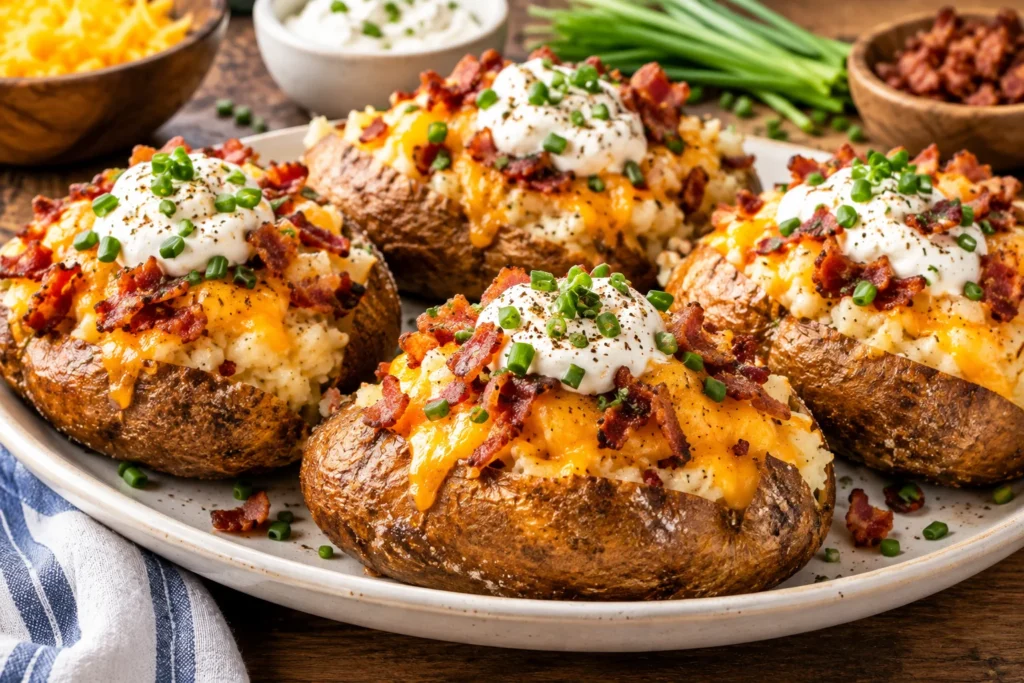
A russet is the classic baking potato, and the Idaho Potato Commission’s guidance, repeated by extension educators, is to bake whole potatoes at 400°F for 45 to 60 minutes or until the center reaches 210°F. Prick four russets, rub them with oil and salt, and set them directly on the oven rack so the skins turn crisp. Split each potato and fill it with Greek yogurt, sharp cheddar, chives, and crumbled bacon.
The nutrition: Each loaded potato delivers about 22g of protein, from the yogurt, cheddar, and bacon, with the potato itself adding only a few grams.
Bake them without foil. Foil traps moisture and heat, and it has been linked to rare botulism outbreaks, which is why extension guidance says to wrap loosely if you wrap at all and to remove the foil before storing leftovers. Bacon should be cooked until crisp first, and we counted it by its raw weight.
Twice-Baked Potatoes
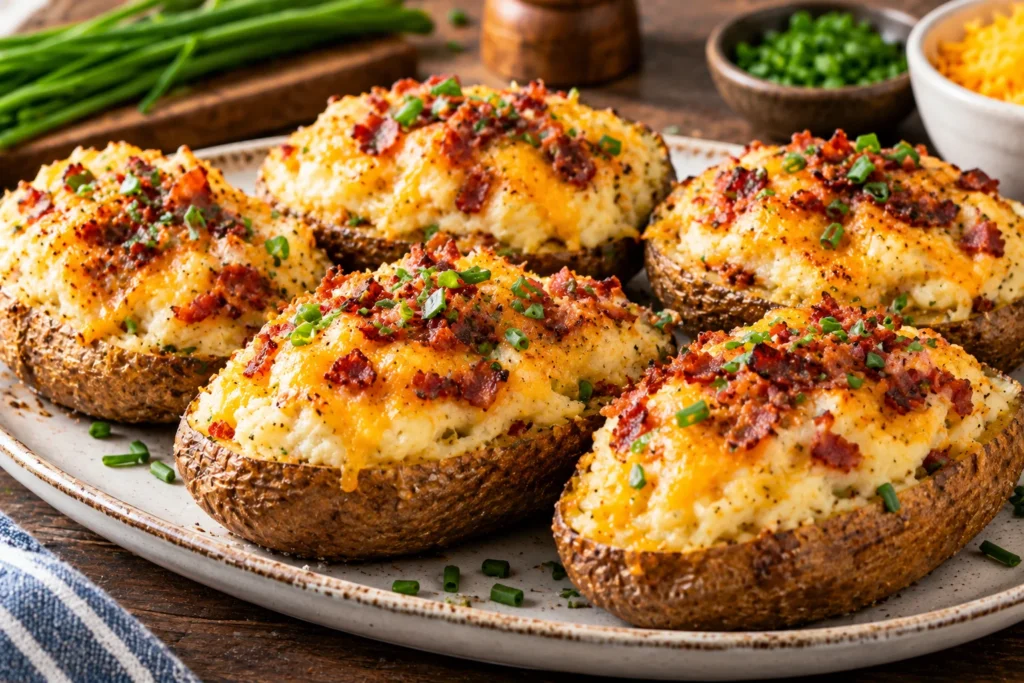
Twice-baked potatoes are the best way to hide protein inside a potato. Bake four russets as described above, halve them, scoop the flesh into a bowl, and mash it with a cup of cottage cheese, a cup of shredded cheddar, and chives. Pile the filling back into the skins and bake again at 400°F until the tops are golden and the filling is hot.
Cottage cheese holds about 11 grams of protein per 100 grams by USDA data, and it blends into the potato so completely that most people never notice it. Thick russet skins hold the shape of the shell, which is why the University of Tennessee Extension singles out starchy russets for twice-baked potatoes and potato skins. Each serving is two halves.
The nutrition: Two halves come to about 18g of protein, from the cottage cheese, cheddar, and potato.
Loaded Potato Skins
Skins are what’s left of a baked potato after you scoop out the middle, so make them from the same bake as the twice-baked version. Brush the empty skins with oil, bake them cut side down for about 10 minutes to crisp them, then flip them and fill with shredded cheddar and crumbled bacon. Return them to the oven until the cheese melts, and finish each one with a dollop of yogurt and sliced scallions.
Why this works: Baking the skins empty first drives off moisture, so they stay crisp even after the toppings go on.
The nutrition: Four skin halves provide about 19g of protein, from the cheddar, bacon, and yogurt.
Save the scooped potato for mash or for frying the next day. The skins hold the toppings the way a cracker would, and Greek yogurt works as a lighter stand-in for sour cream. Serve them hot, and don’t let a tray sit out more than 2 hours.
Crinkle-Cut Oven Fries
The FDA’s acrylamide advice comes in handy here. Soaking raw potato slices in water for 15 to 30 minutes before frying or roasting helps reduce acrylamide formation, so soak the cut russets, dry them thoroughly, toss them with oil, and bake on a preheated sheet pan. The agency also says to cook cut potatoes to a golden yellow color and not a dark brown, because brown areas hold more acrylamide.
Serve the fries with a dip made from a cup of plain Greek yogurt, a quarter cup of grated Parmesan, garlic, and lemon, which brings the protein up. A crinkle-cut knife is optional, since the ridges only add more surface to crisp. Roasted potato pieces take about 30 to 45 minutes at 425°F, according to extension charts.
The nutrition: With the yogurt dip alongside, a portion of fries comes to about 13g of protein.
Duchess Potatoes
Duchess potatoes are mashed potatoes enriched with egg and piped into rosettes. Boil two pounds of russets until tender, drain them well, and mash them with two beaten eggs, half a cup of grated Parmesan, and a pinch of nutmeg. Pipe the mixture onto a parchment-lined tray and bake at 400°F until the ridges turn golden.
The nutrition: Four rosettes per serving deliver about 11g of protein, from the eggs, Parmesan, and potatoes.
Because the potatoes contain egg, they count as an egg dish, and the FDA says dishes containing eggs should reach 160°F. Check one rosette with a thermometer. You can pipe the rosettes ahead and freeze them on a tray, then bake from frozen with a few extra minutes.
Potato Latkes
Water is the enemy of a crisp latke. Shred about a pound and a half of russets and an onion, wrap them in a clean towel, and squeeze out as much liquid as you can before mixing in three beaten eggs, a few spoonfuls of flour, and salt. Fry spoonfuls of the mixture in a thin layer of hot oil until deep golden on both sides.
Why this works: Squeezing the liquid out lets the shreds fry instead of steam, which is what makes the edges lacy and crisp.
Drain the latkes on a rack, not on paper towels, so the bottoms don’t steam. Serve them with Greek yogurt on one side and applesauce on the other, which adds protein and a sweet contrast. Cook them until the centers are set, since the batter contains raw eggs.
The nutrition: Three latkes with yogurt deliver about 15g of protein.
Bacon Cheese Fries
Some nights the plate is meant to be indulgent, and the aim here is to keep it from being protein-empty. Bake homemade fries as in the crinkle-cut recipe, scatter 1.5 cups of shredded cheddar and 6 ounces of crisp, crumbled bacon over them, and return the pan to the oven until the cheese melts. Finish with green onions and a dip made from half a cup of Greek yogurt.
Serve the fries immediately, because the cheese and fries lose their crunch as they cool. If you want a bigger meal, pair them with a lean burger, as in our 50g protein dinners. Bacon should be counted by its raw weight, since cooking removes fat and water.
The nutrition: One serving brings about 24g of protein, from the cheddar, bacon, and yogurt dip.
Why this works: Melting the cheese on the fries in the oven, not in a separate sauce, keeps the toppings crisp on top and creamy underneath.
All-Purpose Potatoes: Yukon Golds for Almost Anything
Seven sides are built on Yukon Golds. These medium-starch potatoes mash creamy, roast with crisp edges, and hold up on a grill, so they cover the widest range of recipes. Several of them also work with white potatoes if that’s what you have.
Garlic Mashed Potatoes
Yukon Golds are an all-purpose potato, and the University of Arkansas Extension notes that they work in nearly any preparation, mashing included. Boil two pounds until fork-tender, drain, and mash with roasted garlic, half a cup of warm milk, and a cup of cottage cheese pushed through a sieve or blended smooth first. Season with salt and pepper.
The nutrition: Each helping of mash comes to about 12g of protein, mostly from the cottage cheese.
The cottage cheese disappears into the texture and adds about 25 grams of protein across the batch. Mashed potatoes reheat well in a covered pan with a splash of milk, and leftovers should reach 165°F, which makes them handy on busy nights like those in our quick high-protein dinners for busy school nights. They keep 3 to 4 days in the refrigerator.
Potatoes au Gratin
Thin slices are the whole game with a gratin, so use a mandoline and keep them an even thickness. Layer two pounds of sliced Yukon Golds in a buttered dish with a cup of shredded Swiss and a custard-like sauce of a cup of milk, garlic, and a pinch of nutmeg. Bake covered until the potatoes are tender when pierced, then uncover and brown the top.
Let the dish rest for 15 minutes before cutting so the layers set. Published recipes bake gratins at roughly 350 to 400°F for about an hour, so check with a knife instead of the clock. Leftovers keep 3 to 4 days when chilled.
The nutrition: A portion delivers about 14g of protein, from the Swiss cheese, milk, and potatoes.
Hasselback Potatoes
Hasselback potatoes look fancy and need only a knife and patience. Set a Yukon Gold between two chopsticks so the knife can’t cut all the way through, slice thin crosswise cuts, brush with oil and butter, and bake until the layers fan open and the edges brown. Baked whole potatoes are done when the center reaches 210°F, according to the Idaho Potato Commission’s guidance.
The nutrition: Each potato with Parmesan and yogurt comes to about 13g of protein.
Why this works: The thin cuts fan open as the potato bakes, so more surface crisps while the center stays tender.
Sprinkle half a cup of grated Parmesan between the layers during the last stretch of baking. Serve with a spoonful of Greek yogurt on each potato. Keep the color golden, not dark brown, as the FDA advises.
Greek Lemon Potatoes
Yukon Gold wedges roast in a marinade of lemon, oil, oregano, and a little broth, which reduces to a glaze and caramelizes the edges. Cut two pounds into wedges, toss them in a baking dish with the lemon, oil, oregano, garlic, and half a cup of broth, and roast at 425°F, stirring once, until tender. Extension charts put root vegetables at 30 to 45 minutes at that temperature.
The nutrition: A serving provides about 15g of protein, from the feta, yogurt, and potatoes.
Crumble a cup of feta over the top at the end, and serve with a tzatziki made from three-quarters of a cup of Greek yogurt. Choose pasteurized feta for anyone who is pregnant. Leftover wedges make a good base for a lunch bowl, or for a bigger dinner like the ones in our high-protein dinners with 30g of protein.
Grilled Potato Wedges
Par-boiling is the step that keeps grilled potatoes from raw centers. Cut two pounds of Yukon Golds into thick wedges, boil them for about 8 minutes until just tender, drain, and let them steam dry. Toss with oil, smoked paprika, and garlic powder, and grill over medium heat until charred.
Finish them with a sprinkle of Parmesan and a Greek yogurt dip. The FDA’s acrylamide advice says boiling doesn’t form acrylamide, so a par-boil also helps keep the charring in check. Aim for grill marks and golden spots instead of blackened edges.
The nutrition: A portion with the yogurt dip comes to about 11g of protein.
Crispy Pan-Fried Potatoes
Boiled potatoes left over from another meal can be fried the next day. Slice a pound and a half of cooked Yukon Golds into thick coins, fry them in a little oil without crowding the pan, and turn them once the first side is deep golden. Season with flaky salt at the end.
Why this works: Boiled potatoes have already cooked through, so the skillet only has to brown them, and that makes the crust crisp without raw centers.
The nutrition: A serving of potatoes with a fried egg comes to about 10g of protein.
Serve them with fried eggs, cooked until the white and yolk are firm, for breakfast or dinner, in a one-pan style like our high-protein skillet dinners. Four eggs add about 25 grams of protein across the pan. Cooked potatoes keep 3 to 4 days in the refrigerator, so fry them within that window.
Never Miss a Recipe
Fresh high-protein recipes, meal prep ideas, and kitchen tips, straight to your inbox every week. No spam, just good food.
No spam. Unsubscribe anytime.
Cajun Home Fries
Diced potatoes, peppers, and onions go into a large pan with plenty of Cajun seasoning. Add 8 ounces of diced ham for protein, which should be heated until steaming if it’s a fully cooked packaged ham. Cook in batches so the potatoes brown instead of steam, and top each serving with a fried egg.
The nutrition: Potatoes, ham, and an egg deliver about 20g of protein per serving.
Heat is the thing to watch with ham. The USDA says to reheat fully cooked ham packaged in a USDA plant to 140°F, and 165°F for other hams. A serving of potatoes, ham, and an egg is a complete breakfast or dinner.
Why this works: A wide skillet gives the potatoes room, so the pieces fry in the oil and don’t steam in their own moisture.
Waxy Potatoes: Reds and New Potatoes for Holding Shape
Six sides are built on reds and new potatoes. Their low starch and high moisture mean the pieces stay intact, which is what you want in a salad, a smash, or a sheet pan of roasted potatoes. New potatoes are harvested young and tend to keep for only a week or so, so use them quickly.
Smashed Potatoes
Waxy new potatoes are the right choice for smashing because they hold together when flattened. Boil two pounds of small potatoes until tender, drain, press each one flat with a glass, brush with oil, and roast until the edges crisp. Sprinkle half a cup of Parmesan over them for the last few minutes.
Serve with a dip made from a cup of Greek yogurt, lemon, and herbs. Roasted potatoes should look golden yellow and not dark brown, which is the FDA’s advice for limiting acrylamide. They’re best eaten right away.
The nutrition: A serving with the dip delivers about 15g of protein.
Classic Potato Salad
A cookout staple is also one of the riskiest dishes at the table, because mayonnaise, eggs, and cooked potatoes sit out for hours. Boil two pounds of red potatoes until tender, cool them, and fold in six chopped hard-cooked eggs, celery, mustard, and three-quarters of a cup of unsweetened Greek yogurt in place of most of the mayonnaise. Chill it for at least an hour before serving.
The nutrition: Each of six servings gives about 13g of protein, from the eggs, yogurt, and potatoes.
The USDA says perishable food shouldn’t sit out for more than 2 hours, or 1 hour when it’s above 90°F, so nest the bowl in ice at an outdoor meal. Salads made with eggs keep about 3 to 4 days in the refrigerator on the current FoodSafety.gov chart. Waxy red potatoes hold their shape in a salad, as extension guidance notes.
German Potato Salad
This salad skips mayonnaise altogether. Boil two pounds of waxy red potatoes, slice them while warm, and toss them with a hot dressing of rendered bacon, onion, cider vinegar, and grainy mustard so they soak up the flavor. Cook six ounces of raw bacon until crisp and crumble it over the top.
Why this works: Warm potatoes absorb the dressing better than cold ones, so the vinegar and bacon flavor goes all the way through.
Serve it warm or at room temperature with grilled sausages or pork chops. Since it contains no mayonnaise, it holds better than creamy salads, but it still shouldn’t sit out more than 2 hours. Pork chops should reach 145°F with a 3-minute rest.
The nutrition: A serving provides about 10g of protein, from the bacon (counted raw) and potatoes.
Herb Roasted Baby Red Potatoes
Cut a couple of pounds of baby reds in half and coat them with oil, rosemary, and garlic. Set them cut side down in a preheated cast iron pan and roast until the flat faces are deeply browned. Extension charts put roasted root vegetables at 30 to 45 minutes at 425°F. Stop when the color is golden brown and not dark.
A garlicky yogurt sauce, made from a cup of plain Greek yogurt, lemon, and minced garlic, gives the potatoes protein and a tang. Spoon it over just before serving. The whole dish takes about 30 minutes.
The nutrition: A serving with the yogurt sauce comes to about 11g of protein.
Why this works: A preheated skillet starts the browning the moment the potatoes touch it, so the cut sides crisp before the middles overcook.
Patatas Bravas
Crispy potatoes, a smoky tomato sauce, and a garlic aioli make this a tapas-style plate. Cube two pounds of waxy potatoes, roast them until golden, and serve them with a bravas sauce of tomato, smoked paprika, and garlic. For the aioli, stir minced garlic and lemon into a cup of plain, strained yogurt.
The nutrition: A serving with aioli delivers about 11g of protein.
Make the sauce ahead, and warm it just before serving. Potatoes are low in protein, about 2 grams per 100 grams, so the yogurt aioli supplies most of the protein here, and the dish is gentle on the budget like those in our cheap high-protein dinners to feed six. Add grilled chicken or shrimp on the side for a bigger plate.
Potato Foil Packets on the Grill
Foil packets are a fine campsite or backyard method as long as you handle them properly. Slice two pounds of potatoes and an onion, toss them with oil and seasoning, divide into four foil packets with a pound of sliced Italian sausage, and seal them loosely. Grill until the potatoes are tender and the sausage reaches 160°F.
Loose wrapping and quick unwrapping matter, because extension guidance says foil-wrapped baked potatoes have been linked to rare botulism outbreaks. Open the packets as soon as they come off the heat, and refrigerate leftovers without the foil. Sausage and potatoes also work in one pot, as in our one-pot dinners with real protein. Don’t let them sit out more than 2 hours.
The nutrition: A packet delivers about 21g of protein, from the sausage (counted raw) and potatoes.
Potato Safety in Five Rules
First, handle foil with care. University extension educators and the National Center for Home Food Preservation note that potatoes baked in foil have been linked to rare botulism outbreaks, so wrap loosely, remove the foil as soon as the potatoes leave the heat, and refrigerate leftovers without it. The University of California guidance on baked potatoes explains why foil can hold potatoes in the 40°F to 140°F danger zone.
Second, follow the 2-hour rule, which says perishable food shouldn’t sit out for more than 2 hours, or 1 hour when it’s above 90°F. That applies to potato salads, gratins, and anything with eggs, cheese, or meat. Third, don’t store raw potatoes in the refrigerator, which can raise acrylamide during cooking, according to the FDA, and keep them in a cool, dark place away from onions.
Fourth, aim for golden yellow and not dark brown when roasting, frying, or baking cut potatoes, since brown areas hold more acrylamide, per the FDA. The agency says frying forms the most acrylamide, roasting less, and baking whole potatoes less still, while boiling forms none. Fifth, cut away green patches and sprouts before cooking, as extension guidance advises.
How We Counted Protein
Protein is calculated from USDA nutrient data for the exact quantities on each recipe card, and most recipes make four servings, except the classic potato salad, which makes six. Potatoes are counted at about 2.1 grams per 100 grams raw. Bacon, ham, and sausage are counted by raw or packaged weight, and eggs at about 6.3 grams each.
Dairy uses USDA values for plain Greek yogurt (about 10.3 grams per 100 grams), cottage cheese (about 11), cheddar (about 25), Swiss (about 27), Parmesan (about 28), and feta (about 14). Oil, butter, spices, vegetables, and garnishes aren’t counted. These numbers are close approximations, not lab measurements, and they’ll shift with brand and portion size.
Questions About High-Protein Potato Sides
Are potatoes high in protein?
No. Raw potatoes hold about 2 grams of protein per 100 grams by USDA data, so the protein in a potato side comes mostly from what you add. Greek yogurt, cottage cheese, cheese, and eggs are the easiest ways to raise it. Potatoes are still a useful carbohydrate and a source of other nutrients.
Which potato is best for each recipe?
Starchy russets suit baking, mashing, and frying, waxy reds suit salads and smashing, and all-purpose Yukon Golds work for most dishes. Extension guidance sorts potatoes into these three groups. If you can’t find the right one, Yukon Golds are the safest substitute.
Is it safe to bake potatoes in foil?
It’s safe if you handle it correctly, but foil has been linked to rare botulism outbreaks. Wrap loosely, remove the foil when the potatoes come out, and refrigerate leftovers unwrapped. Don’t leave foil-wrapped potatoes at room temperature for hours.
What is acrylamide, and should I worry?
Acrylamide forms in starchy foods cooked at high heat, and the FDA says frying forms the most, roasting less, and boiling none. The agency advises cooking potatoes to golden yellow and not dark brown and storing raw potatoes outside the refrigerator. Those are small changes, and no one needs to give up potatoes.
How long does potato salad keep?
Potato salads made with eggs keep about 3 to 4 days in the refrigerator on the current FoodSafety.gov chart. At a cookout, don’t leave it out for more than 2 hours, or 1 hour above 90°F. Nest the bowl in ice to keep it cold.
Which potato side has the most protein?
The bacon cheese fries lead at about 24g per serving, followed by the loaded baked potatoes at about 22g and the potato foil packets with sausage at about 21g. The lightest are the crispy pan-fried potatoes at about 10g and the German potato salad at about 10g. Adding a side of eggs or a lean main brings those lighter ones up to a full dinner.
Can I freeze these sides?
Duchess potato rosettes can be piped, frozen on a tray, and baked from frozen with a few extra minutes. Mashed potatoes and twice-baked potatoes also freeze in portions. Potato salads and gratins don’t hold up as well.
How do I make potato sides crispy without much oil?
Dry the potatoes thoroughly, use a hot preheated pan, and don’t crowd them. The FDA also says soaking raw slices for 15 to 30 minutes before roasting reduces acrylamide. Cook until golden yellow.
1. Loaded Baked Potatoes
Approx. 22g ProteinIngredients: 4 russet potatoes (about 8 oz each), 1 tbsp oil, 1/2 tsp salt, 1 cup plain Greek yogurt, 1 cup shredded cheddar, 4 oz bacon (raw weight), chives.
Step 1: Preheat the oven to 400°F. Prick the potatoes, rub with the oil and salt, and bake directly on the rack 45 to 60 minutes until the center reaches 210°F (no foil).
Step 2: Cook the bacon until crisp and crumble.
Step 3: Split the potatoes and fill with the yogurt, cheddar, bacon, and chives.
2. Twice-Baked Potatoes
Approx. 18g ProteinIngredients: 4 russet potatoes, 1 cup cottage cheese (blended smooth), 1 cup shredded cheddar, 2 tbsp chives, salt.
Step 1: Bake the potatoes at 400°F until the center reaches 210°F, then halve and scoop the flesh into a bowl.
Step 2: Mash with the cottage cheese, cheddar, chives, and salt and pile back into the skins.
Step 3: Bake again at 400°F until golden and hot. Two halves per serving.
3. Loaded Potato Skins
Approx. 19g ProteinIngredients: 4 baked russet potatoes (halved and scooped), 1 tbsp oil, 1 cup shredded cheddar, 4 oz bacon (raw weight), 1/2 cup plain Greek yogurt, scallions.
Step 1: Brush the empty skins with oil and bake cut side down about 10 minutes to crisp.
Step 2: Flip, fill with the cheddar and crumbled cooked bacon, and bake until the cheese melts.
Step 3: Top with the yogurt and scallions.
4. Crinkle-Cut Oven Fries
Approx. 13g ProteinIngredients: 2 lb russet potatoes (cut into fries), 2 tbsp oil, 1/2 tsp salt. Dip: 1 cup plain Greek yogurt, 1/4 cup grated Parmesan, 1 clove garlic, juice of 1/2 lemon.
Step 1: Soak the cut potatoes in cold water 15 to 30 minutes and dry thoroughly.
Step 2: Toss with the oil and salt and bake on a preheated sheet pan at 425°F until golden yellow, not dark brown.
Step 3: Stir the dip together and serve.
5. Duchess Potatoes
Approx. 11g ProteinIngredients: 2 lb russet potatoes (peeled and cubed), 2 large eggs (beaten), 1/2 cup grated Parmesan, pinch of nutmeg, 1/2 tsp salt.
Step 1: Boil the potatoes until tender, drain well, and mash with the eggs, Parmesan, nutmeg, and salt.
Step 2: Pipe 16 rosettes onto a parchment-lined tray.
Step 3: Bake at 400°F until golden and the center reaches 160°F.
6. Potato Latkes
Approx. 15g ProteinIngredients: 1 1/2 lb russet potatoes (shredded), 1 onion (shredded), 3 large eggs, 3 tbsp flour, 1/2 tsp salt, oil for frying, 1 cup plain Greek yogurt, applesauce.
Step 1: Squeeze the shredded potato and onion dry in a towel and mix with the eggs, flour, and salt.
Step 2: Fry spoonfuls in a thin layer of hot oil until deep golden on both sides and set in the center.
Step 3: Drain on a rack and serve with the yogurt and applesauce.
7. Bacon Cheese Fries
Approx. 24g ProteinIngredients: 2 lb russet potatoes (cut into fries), 2 tbsp oil, 1 1/2 cups shredded cheddar, 6 oz bacon (raw weight), 1/2 cup plain Greek yogurt, green onions.
Step 1: Soak, dry, oil, and bake the fries at 425°F until golden yellow.
Step 2: Scatter the cheddar and crumbled cooked bacon over the fries and return to the oven until the cheese melts.
Step 3: Serve with the yogurt dip and green onions.
8. Garlic Mashed Potatoes
Approx. 12g ProteinIngredients: 2 lb Yukon Gold potatoes (cubed), 1 head roasted garlic, 1/2 cup warm milk, 1 cup cottage cheese (blended smooth), salt and pepper.
Step 1: Boil the potatoes until fork-tender and drain.
Step 2: Mash with the roasted garlic, milk, cottage cheese, salt, and pepper.
Step 3: Serve warm. Reheat leftovers to 165°F.
9. Potatoes au Gratin
Approx. 14g ProteinIngredients: 2 lb Yukon Gold potatoes (thinly sliced), 1 cup shredded Swiss, 1 cup milk, 2 cloves garlic, pinch of nutmeg, 1 tbsp butter, salt.
Step 1: Butter a baking dish and layer the potatoes with the Swiss, garlic, and salt.
Step 2: Pour over the milk and nutmeg, cover, and bake until the potatoes are tender when pierced, then uncover and brown.
Step 3: Rest 15 minutes before cutting.
10. Hasselback Potatoes
Approx. 13g ProteinIngredients: 4 medium Yukon Gold potatoes (about 8 oz each), 1 tbsp oil, 1 tbsp butter, 1/2 cup grated Parmesan, 3/4 cup plain Greek yogurt.
Step 1: Cut thin crosswise slits almost through each potato, using chopsticks as a guide.
Step 2: Brush with the oil and butter and bake at 425°F until tender (center at 210°F), adding the Parmesan for the last 10 minutes.
Step 3: Top with the yogurt.
11. Greek Lemon Potatoes
Approx. 15g ProteinIngredients: 2 lb Yukon Gold potatoes (wedges), juice of 2 lemons, 3 tbsp olive oil, 1 tsp oregano, 3 cloves garlic, 1/2 cup broth, 1 cup crumbled pasteurized feta. Tzatziki: 3/4 cup plain Greek yogurt, 1/2 cucumber (grated), 1 clove garlic.
Step 1: Toss the potatoes in a baking dish with the lemon, oil, oregano, garlic, and broth.
Step 2: Roast at 425°F, stirring once, until tender and the liquid has cooked off (about 30 to 45 minutes).
Step 3: Top with the feta and serve with the tzatziki.
12. Grilled Potato Wedges
Approx. 11g ProteinIngredients: 2 lb Yukon Gold potatoes (thick wedges), 1 tbsp oil, 1 tsp smoked paprika, 1/2 tsp garlic powder, 1/4 cup grated Parmesan, 3/4 cup plain Greek yogurt (dip).
Step 1: Boil the wedges about 8 minutes until just tender, drain, and let steam dry.
Step 2: Toss with the oil and spices and grill over medium heat until charred in spots and golden.
Step 3: Sprinkle with the Parmesan and serve with the yogurt dip.
13. Crispy Pan-Fried Potatoes
Approx. 10g ProteinIngredients: 1 1/2 lb cooked Yukon Gold potatoes (thick coins), 2 tbsp oil, flaky salt, 4 large eggs.
Step 1: Fry the potato coins in the oil without crowding until golden on both sides.
Step 2: Fry the eggs until the white and yolk are firm.
Step 3: Season the potatoes with flaky salt and serve with the eggs.
14. Cajun Home Fries
Approx. 20g ProteinIngredients: 2 lb potatoes (diced), 1 bell pepper, 1 onion, 2 tbsp Cajun seasoning, 2 tbsp oil, 8 oz diced cooked ham, 4 large eggs.
Step 1: Cook the potatoes in the oil in batches until browned and tender.
Step 2: Add the pepper, onion, seasoning, and ham and cook until the ham is steaming hot.
Step 3: Top each serving with a fried egg cooked until firm.
15. Smashed Potatoes
Approx. 15g ProteinIngredients: 2 lb small waxy potatoes, 2 tbsp oil, 1/2 cup grated Parmesan, salt. Dip: 1 cup plain Greek yogurt, lemon juice, herbs.
Step 1: Boil the potatoes until tender and drain.
Step 2: Smash each flat with a glass, brush with oil, and roast at 425°F until the edges are golden.
Step 3: Add the Parmesan for the last few minutes and serve with the dip.
16. Classic Potato Salad
Approx. 13g ProteinIngredients: 2 lb red potatoes (cubed), 6 hard-cooked eggs (chopped), 2 celery ribs, 1 tbsp mustard, 3/4 cup plain Greek yogurt, salt and pepper.
Step 1: Boil the potatoes until tender, drain, and cool.
Step 2: Fold in the eggs, celery, mustard, and yogurt and chill at least an hour.
Step 3: Keep cold; discard after 2 hours out (1 hour above 90°F).
17. German Potato Salad
Approx. 10g ProteinIngredients: 2 lb red potatoes, 6 oz bacon (raw weight), 1/2 onion (diced), 1/3 cup cider vinegar, 1 tbsp grainy mustard, salt.
Step 1: Boil the potatoes until tender and slice while warm.
Step 2: Cook the bacon until crisp, remove, and cook the onion in the drippings with the vinegar and mustard.
Step 3: Toss the warm potatoes with the dressing and crumbled bacon.
18. Herb Roasted Baby Red Potatoes
Approx. 11g ProteinIngredients: 2 lb baby red potatoes (halved), 2 tbsp olive oil, 1 tbsp chopped rosemary, 3 cloves garlic, salt. Sauce: 1 cup plain Greek yogurt, juice of 1/2 lemon, 1 clove garlic.
Step 1: Toss the potatoes with the oil, rosemary, garlic, and salt.
Step 2: Roast cut side down in a preheated cast iron pan at 425°F until golden brown.
Step 3: Stir the sauce together and spoon over.
19. Patatas Bravas
Approx. 11g ProteinIngredients: 2 lb waxy potatoes (cubed), 2 tbsp oil, salt. Sauce: 1 cup tomato sauce, 1 tsp smoked paprika, 1 clove garlic. Aioli: 1 cup plain Greek yogurt, 2 cloves garlic, juice of 1/2 lemon.
Step 1: Roast the potatoes with the oil and salt at 425°F until golden.
Step 2: Simmer the sauce ingredients 5 minutes and stir the aioli together.
Step 3: Serve the potatoes with the sauce and aioli.
20. Potato Foil Packets on the Grill
Approx. 21g ProteinIngredients: 2 lb potatoes (sliced), 1 onion, 1 tbsp oil, seasoning, 1 lb Italian sausage (sliced).
Step 1: Toss the potatoes and onion with the oil and seasoning and divide into four loose foil packets with the sausage.
Step 2: Grill until the potatoes are tender and the sausage reaches 160°F.
Step 3: Open the packets right away and refrigerate leftovers without the foil.
Get Fresh Recipes Every Week
Join readers getting fresh recipes, meal prep systems, and high-protein meal ideas delivered to your inbox every week.
No spam. Unsubscribe anytime.