
I make this the nights I want dinner to feel like more effort went in than actually did. Juicy, herby chicken thighs with crispy skin and a bright citrus finish, and the whole thing comes together with a marinade you can whisk in under five minutes.
Chicken thighs already carry a solid protein number on their own, and I’ve built in a couple of ways to push it even higher without touching the flavor.
Quick Summary
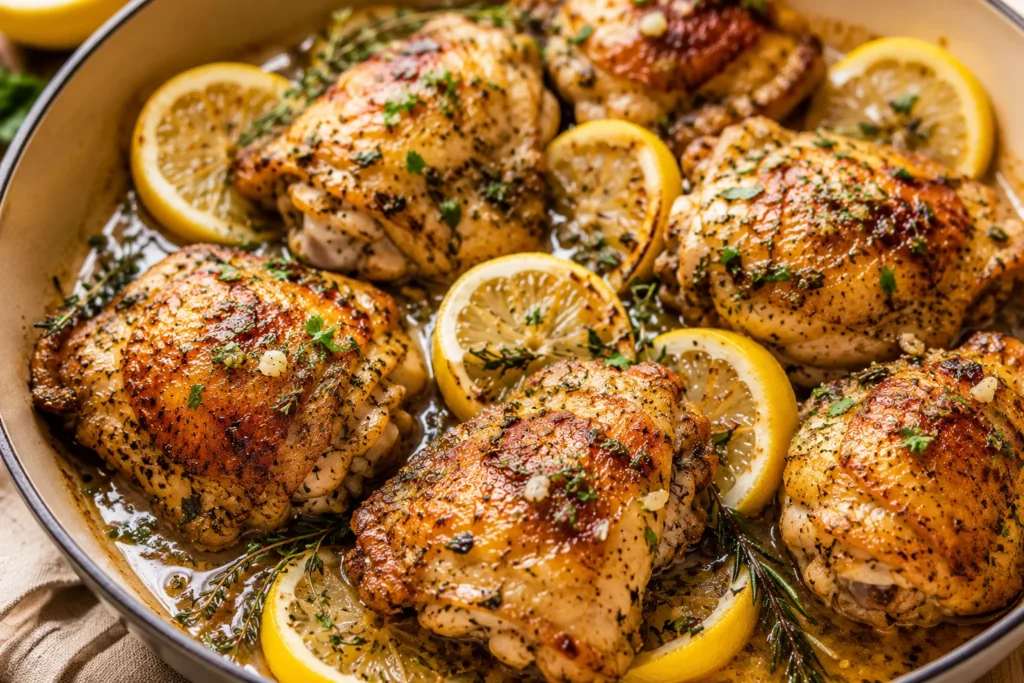
What it is: Bone-in, skin-on chicken thighs marinated in lemon juice, olive oil, garlic, rosemary, and thyme, then roasted until the skin turns crispy and golden.
Why it works: The bone distributes heat evenly so the meat stays juicy even at high roasting temperatures, while the skin acts as a protective barrier. Lemon juice tenderizes the surface, and the olive oil carries the herb and garlic flavor through the meat.
Timing: About 45 to 50 minutes total, 10 minutes prep, an optional 30-minute marinade, 30 to 35 minutes roasting, and 5 minutes resting.
Key tips: Dry the chicken thoroughly before marinating. Roast skin-side up the entire time, no flipping. Let it rest 5 minutes before cutting so the juices redistribute.
Best texture move: If I have the time, I leave the marinated chicken uncovered on a rack in the fridge for an hour up to overnight. The skin dries out slightly, which makes it noticeably crispier once it hits the hot oven.
Never Miss a Recipe
Fresh high-protein recipes, meal prep ideas, and kitchen tips, straight to your inbox every week. No spam, just good food.
No spam. Unsubscribe anytime.
Ingredients (Serves 4-6)
- 6 bone-in, skin-on chicken thighs — the bone keeps the meat juicy and the skin gets genuinely crispy. Boneless works for a shorter cook but won’t deliver the same flavor.
- 3 tbsp olive oil — carries the herb and garlic flavor into the meat and helps the skin brown.
- Juice of 1 lemon — fresh, not bottled, the acidity is sharper and actually helps the marinade penetrate the surface.
- 1 tbsp fresh rosemary, finely chopped (or 1 tsp dried) — holds up well under high heat, chop it fine so it doesn’t burn on the skin.
- 1 tbsp fresh thyme (or 1 tsp dried) — earthier and more delicate than rosemary, the two herbs work well together.
- 3 cloves garlic, minced — roasts into something sweet and mellow instead of sharp.
- 1 tsp salt — helps draw moisture to the skin’s surface, which is part of what makes it crisp.
- 1/2 tsp black pepper, freshly ground if you have it
Ingredients (Serves 4-6)
- 6 bone-in, skin-on chicken thighs
- 3 tablespoons olive oil
- Juice of 1 lemon
- 1 tbsp fresh rosemary, finely chopped (or 1 tsp dried)
- 1 tbsp fresh thyme (or 1 tsp dried)
- 3 cloves garlic, minced
- 1 teaspoon salt
- 1/2 teaspoon black pepper
Master Ratio (Scale as Needed)
| Component | 6 thighs | 4 thighs | 12 thighs |
|---|---|---|---|
| Olive oil | 3 tbsp | 2 tbsp | 6 tbsp |
| Lemon juice | 1 lemon | 1/2 lemon | 2 lemons |
| Garlic, minced | 3 cloves | 2 cloves | 6 cloves |
| Salt | 1 tsp | 3/4 tsp | 2 tsp |
Instructions
- Pat chicken thighs completely dry with paper towels, this is the most important step for crispy skin.
- Whisk olive oil, lemon juice, rosemary, thyme, garlic, salt, and pepper together. Pour over chicken in a dish or zip-top bag, coating each piece. Loosen the skin and work marinade underneath.
- Marinate in the fridge at least 30 minutes, up to 8 hours (overnight for the crispiest skin).
- Preheat oven to 400°F (200°C). Arrange thighs skin-side up on a baking sheet with space between each piece. No flipping needed.
- Roast 30-35 minutes until skin is deep golden and internal temperature reaches 165°F at the thickest part.
- Rest at least 5 minutes before serving so juices redistribute.
Troubleshooting
- Skin not crispy: Wasn’t dried well, pan overcrowded, or oven wasn’t actually at 400°F. Use an oven thermometer to check.
- Chicken dry: Overcooked past 165°F. Pull it right at temperature and let it rest.
- Marinade flavor weak: Press marinade directly under the skin against the meat, not just on top.
Master Ratio (Easy to Scale)
| Component | 6 thighs (base) | 4 thighs (smaller) | 12 thighs (double) |
|---|---|---|---|
| Olive oil | 3 tbsp | 2 tbsp | 6 tbsp |
| Lemon juice | 1 lemon | 1/2 lemon | 2 lemons |
| Fresh rosemary | 1 tbsp | 2 tsp | 2 tbsp |
| Fresh thyme | 1 tbsp | 2 tsp | 2 tbsp |
| Garlic, minced | 3 cloves | 2 cloves | 6 cloves |
| Salt | 1 tsp | 3/4 tsp | 2 tsp |
Scaling note: For a double batch, I use two baking sheets. Crowding the pan means steaming instead of roasting, and you lose the crispy skin. I switch pan positions halfway through if using two.
Ingredient Choices That Change the Result
| Ingredient | Best Option | Easy Swap | What Changes |
|---|---|---|---|
| Chicken cut | Bone-in, skin-on thighs | Boneless thighs or drumsticks | Bone-in has more flavor and moisture; boneless cooks in 20-25 min |
| Rosemary | Fresh, finely chopped | Dried (1 tsp) or fresh oregano | Fresh is more aromatic; oregano shifts it Mediterranean |
| Citrus | Fresh lemon juice | Orange or lime juice | Orange is sweeter and less sharp; lime adds a brighter note |
| Oil | Extra virgin olive oil | Avocado oil | Olive oil adds its own flavor; avocado oil is neutral with a higher smoke point |
| Method | Oven roasted at 400°F | Grilled or pan-seared then oven-finished | Oven is most hands-off; pan-sear then oven gives the crispiest skin of all three |
How I Actually Make It
Equipment: A shallow dish or zip-top bag, a small bowl and whisk, a rimmed baking sheet, and a meat thermometer, this one isn't optional for food safety.
I start by patting the chicken thighs completely dry with paper towels. This is genuinely the step that matters most, any surface moisture turns to steam in the oven, and steam is why roasted chicken skin comes out soft instead of crispy.
I whisk together the olive oil, lemon juice, rosemary, thyme, garlic, salt, and pepper in a bowl. I put the chicken in a shallow dish or zip-top bag and pour the marinade over, turning each piece to coat. I'll also loosen the skin gently with my fingers and work a little marinade directly under it, that's where the real flavor payoff happens.
I marinate in the fridge for at least 30 minutes, up to 8 hours if I have the time. Even 15 minutes at room temperature while the oven preheats makes a difference over skipping it entirely.
I preheat the oven to 400°F (200°C), then arrange the thighs skin-side up on the baking sheet with real space between each piece. No flipping needed, the skin stays facing up the whole time to get the direct heat it needs. I roast for 30 to 35 minutes until the skin is deep golden and the internal temperature hits 165°F at the thickest part, avoiding the bone.
Once done, I move the chicken to a plate and let it rest at least 5 minutes before serving, cutting too early lets all the juices run out onto the cutting board instead of staying in the meat.
Boosting the Protein Further
A single bone-in, skin-on thigh already runs about 25g of protein, which puts this dish in solid territory before I do anything extra.
I'll often serve 2 thighs per person instead of one for a dinner that lands around 45 to 50g of protein per plate. If you want a starch that pulls its own weight nutritionally alongside the chicken, my garlic parmesan roasted potatoes roast at the exact same 400°F, so they can genuinely share the oven with this dish.
Variations I've Tried
Mediterranean version: Swap the rosemary and thyme for oregano and basil, add a teaspoon of red pepper flakes, and finish with Kalamata olives and cherry tomatoes added to the pan for the last 10 minutes.
Honey lemon herb: Stir 1 tbsp honey into the marinade. It caramelizes on the skin into a slightly sweet, lacquered crust.
Garlic butter version: Swap 1 tbsp of the olive oil for softened butter, add an extra garlic clove, and press the butter mixture under the skin before roasting. Excellent over mashed potatoes.
Sheet pan with vegetables: Add 2 cups halved baby potatoes and a cup of green beans or asparagus to the same pan, tossed in oil, salt, and pepper. Everything roasts together in the same 30 to 35 minutes.
Grilled version: Same marinade, grilled skin-side down over medium-high heat for 5 to 6 minutes until the skin releases cleanly, then flipped for another 5 to 8 minutes to 165°F.
Pairing and Serving Ideas
Roasted vegetables like asparagus, broccoli, or zucchini go on a separate pan at the same 400°F, making the whole dinner genuinely one-oven. For a starchy side, mashed potatoes, roasted baby potatoes, or an herb orzo all soak up the pan drippings well, my lemon chicken orzo uses a similar lemon-herb flavor profile if you want the two to share a table.
A simple arugula salad with shaved Parmesan echoes the citrus theme without much extra work. And I never skip pouring the pan drippings over whatever starch I'm serving, that's genuinely where a lot of the flavor is hiding.
Troubleshooting
Skin isn't getting crispy. The skin was likely wet going into the oven, the pan was overcrowded, or the oven wasn't actually at 400°F. An oven thermometer is worth owning since most ovens run 25 to 50 degrees off from the dial.
Chicken came out dry. It was overcooked past 165°F. Thighs are more forgiving than breasts and can go to about 175°F before drying out noticeably, but that's the ceiling.
Garlic burning on the skin. Mince it very finely so it blends into the oil rather than sitting in visible clumps exposed to direct heat, or tuck it under the skin instead.
Marinade flavor isn't coming through. The skin acts as a barrier. Loosening it and pressing marinade directly against the meat underneath makes a noticeably bigger difference than just coating the outside.
Nutrition and Storage
A single skin-on, bone-in thigh runs about 280 to 320 calories and roughly 25g of protein. For a lighter version, I'll cook with the skin on for flavor and moisture, then remove it before eating rather than before cooking.
Storage: Leftovers keep in an airtight container in the fridge for up to 4 days. I reheat in the oven at 350°F for 10 to 12 minutes to bring back some skin crispness, the microwave works faster but won't restore that texture.
Freezing: Cooked thighs freeze well for up to 3 months, wrapped individually before going into a zip-top bag. The skin won't stay crispy after freezing, but the meat still works well in soups, tacos, or grain bowls.
Frequently Asked Questions
Can I use boneless, skinless thighs?
Yes, reduce roasting time to 20 to 25 minutes and check the internal temperature earlier. You'll lose the crispy skin but still get juicy, flavorful meat.
Do I have to marinate it?
No, but even 15 minutes makes a noticeable difference over skipping it entirely. Overnight in the fridge is ideal if you can plan ahead.
Can I use dried herbs instead of fresh?
Yes, use about a third of the amount since dried herbs are more concentrated, 1 tbsp fresh rosemary becomes 1 tsp dried.
How accurate is the protein estimate?
Based on a standard bone-in, skin-on thigh, roughly 25g protein each. Two thighs per serving brings you to about 45-50g. Our Macro Calculator can help you recalculate for your exact portion.
Final Thoughts
This is the kind of dinner that feels more special than the actual effort involved. Dry the chicken well, don't skip the marinade time if you can help it, and let it rest before cutting. Those three habits are really the whole recipe.
Getting a reliable protein number from a dish this simple matters more than people expect on a busy week. According to the USDA, chicken thighs deliver protein comparable to breast meat while staying more forgiving to cook, which is exactly why this stays in heavy rotation at my house. If you're mapping out a full week of dinners around real numbers like this one, my 30-Day Protein Plan tool can help build that out from scratch.
Get Fresh Recipes Every Week
Join readers getting fresh recipes, meal prep systems, and high-protein meal ideas delivered to your inbox every week.
No spam. Unsubscribe anytime.