
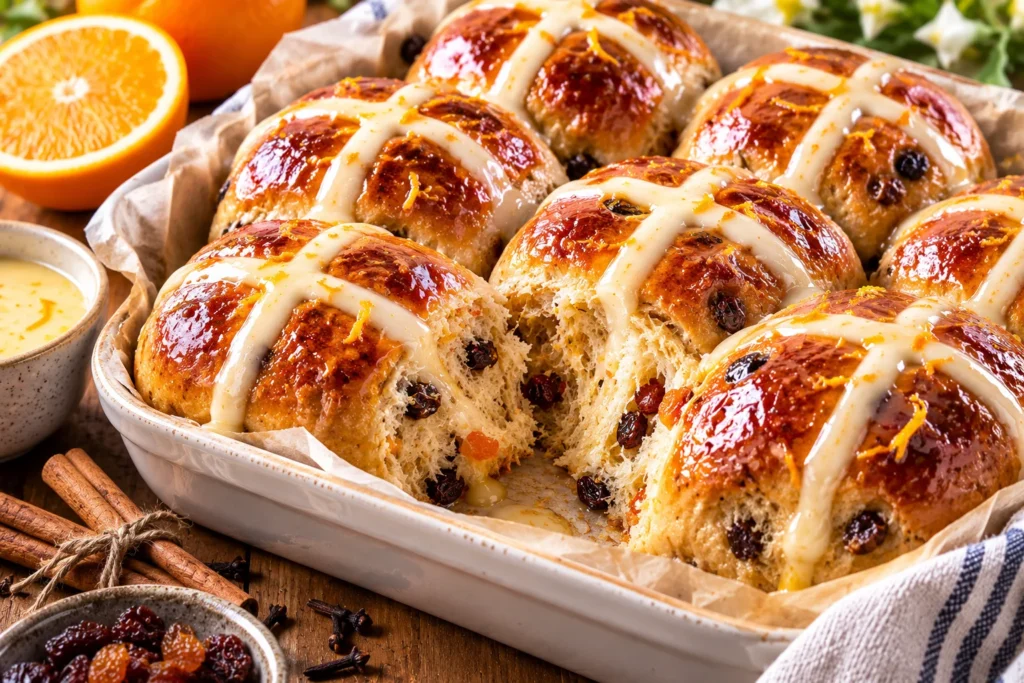
I make these every year around Easter, and honestly the smell alone is worth the effort, warm cinnamon and orange filling the whole kitchen while the second rise does its thing. These buns come out soft and pillowy with little bursts of fruit throughout, finished with a bright citrus glaze that ties everything together.
Quick Summary
What it is: Sweet, spiced yeasted buns filled with dried currants and orange zest, piped with a flour cross, and finished with an orange glaze.
Why it works: Enriching the dough with milk, butter, and egg gives it a softer, more pillowy crumb than a plain bread dough could ever manage. Cinnamon and nutmeg scent the interior while orange zest in the dough echoes the glaze on top for consistent flavor in every bite.
Timing: About 2.5 to 3 hours total, roughly 20 minutes of hands-on work spread across two rises (1 hour, then 30 minutes) and 20-25 minutes of baking.
Flavor profile: Warm spice and gentle sweetness, with fruit scattered throughout and a citrus glaze that cuts through the richness of the dough.
Key tips: Warm the milk to about 110°F before adding yeast, too cool and it won’t activate, too hot and it kills the yeast entirely. The dough should feel tacky after kneading, not sticky.
Best texture move: Let the shaped buns rise until they’re visibly puffy and just barely touching each other on the pan. That second rise is exactly what gives hot cross buns their signature soft, pull-apart quality.
Never Miss a Recipe
Fresh high-protein recipes, meal prep ideas, and kitchen tips, straight to your inbox every week. No spam, just good food.
No spam. Unsubscribe anytime.
Ingredients (Makes 12 Buns)
This recipe has three parts, the dough, the cross paste, and the glaze. Every ingredient here is doing real work.
For the dough:
- 4 cups all-purpose flour, plus more for dusting — spoon and level this rather than scooping straight from the bag, which packs in extra flour and leads to dense buns. Bread flour works as a swap for a chewier crumb.
- 1/3 cup granulated sugar — feeds the yeast and lightly sweetens the dough. Drop to 1/4 cup for less sweetness, or bump to 1/2 cup for something closer to a sweet roll.
- 1 packet (2 1/4 tsp) active dry yeast — needs proofing in warm liquid first. Instant yeast can skip that step and mix straight into the dry ingredients, shaving 10-15 minutes off the rise.
- 1 teaspoon ground cinnamon — the dominant spice here, warm and instantly recognizable.
- 1/2 teaspoon ground nutmeg — rounds out the cinnamon with a quiet, warm note.
- 1/2 teaspoon salt — balances the sweetness and strengthens the dough’s structure, don’t skip it even in a sweet bread.
- 1 cup warm milk (about 110°F) — activates the yeast and hydrates the dough. Whole milk gives the richest crumb, though oat milk is the closest plant-based substitute.
- 4 tablespoons unsalted butter, melted and cooled — enriches the dough for softness. Let it cool to lukewarm first or it can interfere with the yeast.
- 1 large egg, lightly beaten, room temperature — adds structure, richness, and color.
- 1/2 cup dried currants or raisins — currants are more tart and distribute more evenly; raisins are sweeter and chewier. Either works.
- Zest of 1 orange — carries bright citrus flavor through the dough and ties it to the glaze. Zest before juicing.
For the cross:
- 1/2 cup flour plus 4 tablespoons water — mixed into a thick, pipeable paste. Adjust water a teaspoon at a time until it holds a clean line without tearing the dough.
For the glaze:
- 1 cup powdered sugar plus 2 tablespoons fresh orange juice — whisked until pourable but not runny, drizzles without sliding straight off the bun.
Master Ratio (Easy to Scale)
| Component | 12 buns (base) | 6 buns (half) | 24 buns (double) |
|---|---|---|---|
| All-purpose flour | 4 cups | 2 cups | 8 cups |
| Sugar | 1/3 cup | 3 tbsp | 2/3 cup |
| Active dry yeast | 1 packet | 1 1/4 tsp | 2 packets |
| Warm milk | 1 cup | 1/2 cup | 2 cups |
| Butter, melted | 4 tbsp | 2 tbsp | 8 tbsp |
| Eggs | 1 large | 1 large | 2 large |
| Dried currants | 1/2 cup | 1/4 cup | 1 cup |
Scaling note: Kneading a doubled batch by hand gets genuinely tiring, a stand mixer with a dough hook helps a lot here. Rise times stay the same regardless of batch size. For a double batch, use two baking sheets so the buns have room to expand during the second rise.
Ingredient Choices That Change the Result
| Ingredient | Best Option | Easy Swap | What Changes |
|---|---|---|---|
| Yeast | Active dry, proofed first | Instant yeast | Instant skips proofing and rises slightly faster; results are nearly identical |
| Milk | Whole milk, warmed | Oat milk or 2% | Whole milk is richest; oat milk is the closest plant-based match |
| Dried fruit | Currants | Raisins, dried cranberries, chocolate chips | Currants are tart and small; raisins are sweeter; chocolate chips lean dessert |
| Flour | All-purpose | Bread flour or half whole wheat | Bread flour adds chew; whole wheat adds nuttiness and needs a longer rise |
| Glaze | Powdered sugar and orange juice | Warmed apricot jam brushed on | Jam gives the traditional British shiny finish, less sweet |
Dough Ingredients (Makes 12 Buns)
- 4 cups all-purpose flour, plus more for dusting
- 1/3 cup granulated sugar
- 1 packet (2 1/4 tsp) active dry yeast
- 1 teaspoon ground cinnamon
- 1/2 teaspoon ground nutmeg
- 1/2 teaspoon salt
- 1 cup warm milk (about 110°F)
- 4 tablespoons unsalted butter, melted and cooled
- 1 large egg, lightly beaten, room temperature
- 1/2 cup dried currants or raisins
- Zest of 1 orange
Cross & Glaze
- 1/2 cup flour plus 4 tbsp water (for the cross)
- 1 cup powdered sugar plus 2 tbsp fresh orange juice (for the glaze)
Master Ratio (Scale as Needed)
| Component | 12 buns | 6 buns | 24 buns |
|---|---|---|---|
| Flour | 4 cups | 2 cups | 8 cups |
| Warm milk | 1 cup | 1/2 cup | 2 cups |
| Dried currants | 1/2 cup | 1/4 cup | 1 cup |
Instructions
- Warm milk to 110°F, stir in a pinch of sugar, sprinkle yeast on top. Let sit 5-10 min until foamy.
- Combine remaining sugar, flour, cinnamon, nutmeg, and salt. Make a well, add proofed yeast, melted butter, and beaten egg. Stir into a shaggy dough.
- Knead 5-7 minutes until smooth and tacky. Flatten, sprinkle with currants and orange zest, fold and knead 1-2 more minutes.
- Shape into a ball, place in an oiled bowl, cover, rise 1 hour until doubled. Punch down, divide into 12 pieces, shape into balls.
- Space on a lined baking sheet, cover, rise 30 minutes until puffy and touching.
- Mix cross paste, pipe crosses onto each bun. Bake at 375°F for 20-25 min until golden. Cool 5 min, then drizzle with orange glaze.
Troubleshooting
- Dough isn’t rising: Milk was too hot (kills yeast) or too cold (won’t activate it). Always proof yeast first.
- Dense buns: Under-kneaded or too much flour worked in. Dough should stay tacky, not stiff.
- Cross paste spreading: Paste too thin. Add flour until it holds a clean line, pipe right before baking.
How I Actually Make Them
Equipment: A large mixing bowl, a small bowl for proofing yeast, a parchment-lined baking sheet, a clean surface for kneading, a small piping or zip-top bag, and a whisk.
I warm the milk to about 110°F, stir in a pinch of the measured sugar, then sprinkle the yeast on top and let it sit 5-10 minutes until foamy. If nothing happens, the yeast is dead or the milk was the wrong temperature, I start over with fresh yeast rather than push forward.
I combine the remaining sugar, flour, cinnamon, nutmeg, and salt in a large bowl, make a well in the center, and add the proofed yeast, melted butter, and beaten egg. I stir from the center outward until a shaggy dough forms, then turn it onto a lightly floured surface.
I knead for 5-7 minutes by hand until smooth and slightly tacky, springing back when poked. I flatten the dough, sprinkle on the currants and orange zest, fold it over, and knead 1-2 more minutes until the fruit is evenly distributed.
I shape the dough into a ball, place it in a lightly oiled bowl, cover, and let it rise in a warm, draft-free spot for about 1 hour until doubled. Once risen, I punch it down, divide it into 12 equal pieces (weighing them helps keep sizes consistent), and roll each into a smooth ball. I space them on a parchment-lined sheet about an inch apart, cover loosely, and let them rise a second time for 30 minutes, until puffy and just touching.
While that second rise finishes, I mix the cross paste to a thick, pipeable consistency and transfer it to a piping bag. I pipe a line across each row, then perpendicular lines to form crosses, right before baking, not earlier. I bake at 375°F for 20-25 minutes until deeply golden and hollow-sounding when tapped on the bottom. I let them cool on the pan 5 minutes, then whisk together the orange glaze and drizzle it over the warm buns.
Variations I've Tried
Chocolate chip version: Swap the currants for mini chocolate chips and the orange zest for a teaspoon of vanilla. A plain powdered sugar and milk glaze replaces the orange one.
Cranberry white chocolate: Dried cranberries in place of currants, plus 1/4 cup white chocolate chips folded in alongside them.
Cardamom honey: Add 1/2 teaspoon ground cardamom to the spice mix, then drizzle warm honey over the buns instead of the citrus glaze.
Whole wheat swap: Replace 1 cup of the flour with whole wheat for a nuttier, denser bun. Allow an extra 10-15 minutes of rise time since whole wheat slows the yeast slightly.
Traditional apricot glaze: Brush warmed apricot jam over the buns right out of the oven instead of the powdered sugar glaze, the classic British finish, shinier and less sweet.
Overnight version: After shaping the buns, cover tightly and refrigerate overnight instead of doing the second rise at room temperature. Pull them out in the morning, rest 45 minutes, pipe the crosses, and bake as usual. The slow, cold rise deepens the flavor noticeably.
A Note on Protein (Since I Can't Help Myself)
These are an enriched sweet bread, and I'm not going to pretend they're doing any nutritional heavy lifting. A single bun with egg, milk, and butter in the dough does carry a small amount of protein, roughly 4-5g per bun, but that's not the point of this recipe.
If you're serving these for an Easter brunch and want to round the table out, a side of Greek yogurt with fresh fruit or a protein-forward main gives people an easy way to balance the plate. My lemon herb roasted chicken thighs make a genuinely good brunch centerpiece alongside a basket of these.
Pairing and Serving Ideas
Butter — the simplest, arguably best way to eat one. Split it warm and let real salted butter melt into the crumb.
Clotted cream and jam — full afternoon tea treatment, strawberry or raspberry jam works especially well against the spice.
Coffee or tea — a bold black tea or an Americano balances the sweetness of the glaze nicely.
Toasted and buttered — day-old buns sliced and pan-toasted in butter until the cut side turns golden, sometimes better than the day they're baked.
Easter brunch centerpiece — serve the whole batch still loosely attached on a board, the crosses and golden tops make a genuine visual centerpiece.
With fresh fruit — sliced strawberries or a citrus salad on the side adds color and a fresh contrast.
Troubleshooting and Pro Tips
Dough isn't rising. Almost always a yeast problem, milk too hot (over 115°F kills it), too cold (under 100°F won't activate it), or expired yeast. Always proof first and look for visible foam before continuing.
Buns came out dense and heavy. Usually under-kneaded dough, insufficient rise time, or too much flour worked in during kneading. The dough should stay tacky, not turn stiff.
Cross paste spread out and lost its shape. The paste was too thin. Add flour a teaspoon at a time until it holds a clean line, and pipe right before baking, not during the rise.
Tops are browning too fast. Tent with foil after 15 minutes and keep baking. Fully baked buns hit roughly 190°F internally, or sound hollow when tapped.
Dried fruit sank to the bottom. The fruit was likely too wet or too large. Pat currants dry and chop any larger fruit down to currant size before folding in.
Glaze is too runny and sliding off. Add more powdered sugar a tablespoon at a time until it drizzles slowly instead of running. Let the buns cool 5 minutes before glazing so there's something firmer for it to hold onto.
Buns stuck together while baking. That's actually intentional and part of the charm here. For more distinctly separate buns, space them 2 inches apart instead of 1 during the second rise.
Nutrition and Storage
Between the butter, egg, and sugar, these are an enriched bread and calorically denser than a standard roll, roughly 220-260 calories per glazed bun depending on size.
For a lighter version, cut the butter to 2 tablespoons, reduce sugar to 1/4 cup, and swap the powdered sugar glaze for a thin honey drizzle instead. Subbing half the flour for whole wheat adds fiber and makes each bun more filling.
Storage: Best the day they're baked, while the glaze is fresh and the crumb still soft. Keep leftovers in an airtight container at room temperature up to 2 days, toasting them briefly to bring back some texture after that. Skip the fridge, it actually speeds up staling.
Freezing: These freeze well without the glaze. Cool completely, wrap individually, and freeze up to 2 months. Thaw at room temperature for an hour or warm in a 300°F oven for 8-10 minutes, then glaze after reheating.
Real Examples From My Kitchen
The Easter morning tradition: I made these the first time using the overnight rise, thinking I'd have them ready for Easter morning. All the real work was done the night before, so morning-of was just 25 minutes of baking and a quick glaze. The smell alone got everyone out of bed earlier than usual, they've been the standing Easter morning tradition in my house ever since.
The fruit skeptic: Someone who insists they don't like fruit in bread tried my chocolate chip version at a brunch and went back for a second without saying a word about it. The orange glaze against spiced dough and chocolate somehow won over someone who'd written off the classic version entirely. I make both variations every year now.
Checklist
- Warm milk to 110°F, proof yeast with a pinch of sugar, wait 5-10 minutes for foam
- Combine flour, remaining sugar, cinnamon, nutmeg, and salt
- Mix in proofed yeast, melted butter, and beaten egg into a shaggy dough
- Knead 5-7 minutes until smooth and tacky
- Fold in currants and orange zest, knead 1-2 more minutes
- Rise covered in a warm spot 1 hour until doubled
- Punch down, divide into 12 equal pieces, shape into balls
- Space on a lined baking sheet, cover, rise 30 minutes
- Mix cross paste, preheat oven to 375°F
- Pipe crosses onto each bun right before baking
- Bake 20-25 minutes until deep golden and hollow-sounding
- Whisk glaze, drizzle over warm buns
Glossary
Enriched dough: Bread dough with added fats, sugar, eggs, or dairy beyond the basic flour, water, yeast, and salt. Produces a softer, more tender crumb than lean dough. Brioche and cinnamon rolls fall into this same category.
Proofing yeast: Dissolving active dry yeast in warm liquid with a little sugar to confirm it's alive before adding it to the dough. No foam within 10 minutes means dead yeast.
Kneading: Working the dough to develop gluten structure, which gives bread its chew and shape. Properly kneaded dough feels smooth, elastic, and springs back when poked.
First rise (bulk fermentation): The initial rise after kneading, where yeast consumes sugars and releases gas, expanding the dough. Most of a bread's flavor develops during this stage.
Second rise (proofing): The rise after shaping, which puffs the individual buns up before baking. Skipping or rushing it leads to denser, heavier results.
Frequently Asked Questions
Can I use instant yeast instead of active dry?
Yes, skip the proofing step and mix it straight into the dry ingredients, same quantity. The rise may finish slightly faster, so start checking around 45 minutes into the first rise.
My dough is too sticky to knead, what do I do?
Add flour a tablespoon at a time, kneading between additions, until it's tacky but no longer sticking to your hands. Avoid adding too much at once, over-flouring leads to dense buns.
Can I make the dough the night before?
Yes, shape the buns after the first rise, cover tightly, and refrigerate overnight. Let them sit at room temperature 45 minutes the next morning before piping crosses and baking, the cold rise actually deepens the flavor.
Why didn't my buns rise at all?
Almost always a yeast issue, expired yeast, milk that was too hot or cold, or a rising spot that wasn't warm enough. Check the yeast first with a proper proof, and find a genuinely warm, draft-free spot.
Can I make these without dried fruit?
Yes, just leave it out. The spices and orange zest still carry plenty of flavor on their own. Some bakers tuck a small piece of marzipan or chocolate into the center of each ball instead for a surprise filling.
How were the nutrition estimates calculated?
Based on the exact ingredients listed above, divided across 12 buns. Our Macro Calculator can help you factor a bun or two into your day's targets.
Final Thoughts
Hot cross buns reward patience more than skill, the spiced dough and orange glaze are simple once you understand the rhythm of the two rises. Most of the total time is hands-off waiting, the actual active work adds up to about 30 minutes spread across an afternoon.
According to nutrition data on enriched breads, the egg and dairy in a dough like this contribute a modest amount of protein alongside the richness they bring, a small bonus layered onto what's fundamentally a treat. If you're planning a full Easter spread and want the rest of the table to carry real nutrition, my 32 Easter sides collection has plenty built to round things out.
Get Fresh Recipes Every Week
Join readers getting fresh recipes, meal prep systems, and high-protein meal ideas delivered to your inbox every week.
No spam. Unsubscribe anytime.