
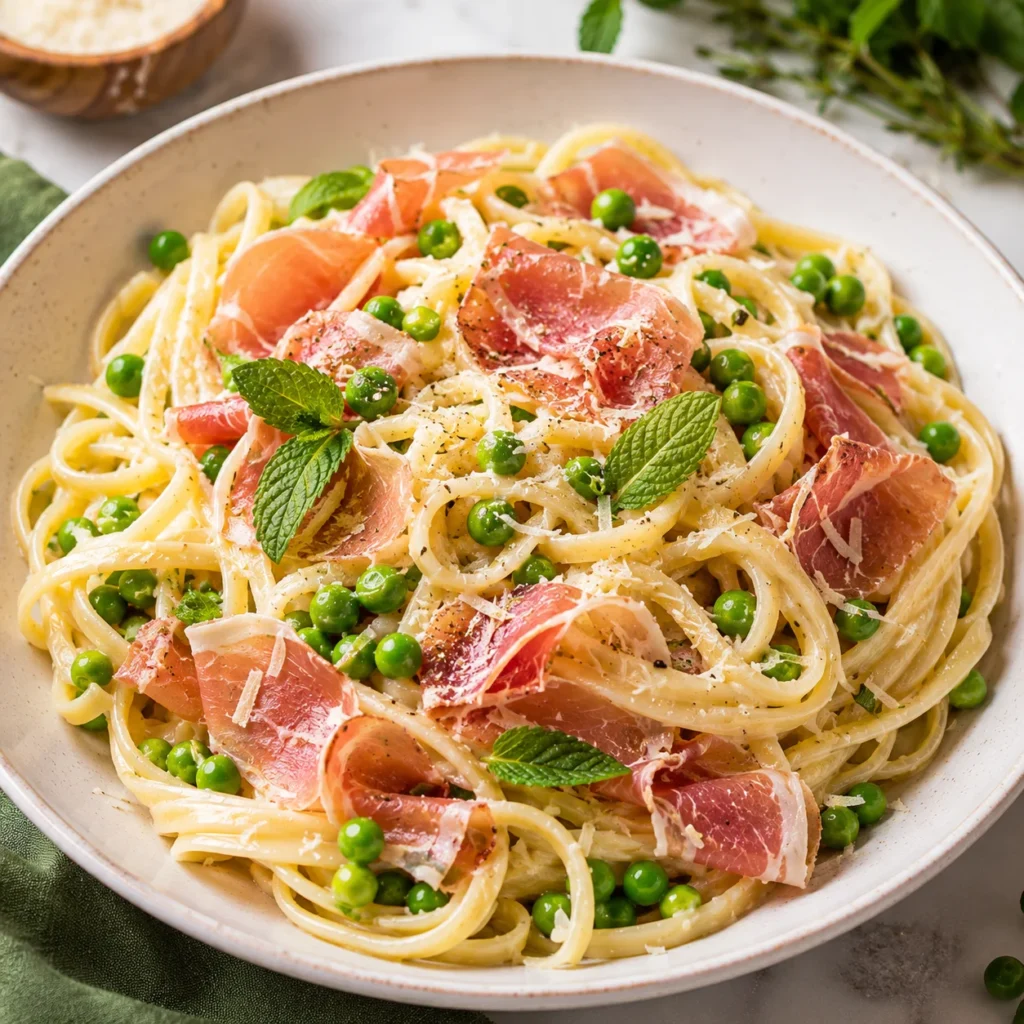
Some dinners taste more impressive than the effort they actually took, and this is one of mine. Delicate peas, thin ribbons of salty prosciutto, and a glossy sauce built from nothing more than pasta water, butter, and Parmesan. No cream, no fuss, just twenty minutes between me and a bowl that feels like it belongs on a restaurant menu.
Quick Summary
What it is: A pantry-simple pasta where reserved starchy water does the heavy lifting, turning butter, oil, and Parmesan into a sauce that actually clings, finished with sweet peas and delicate prosciutto.
Why it works: Pasta water isn’t just leftover cooking liquid, it’s loaded with starch that emulsifies fat into a proper sauce. Prosciutto goes in last, off the heat entirely, so it stays silky instead of turning into a leathery, salty chip.
Timing: Roughly 20 minutes start to finish, most of that is just waiting for water to boil.
Flavor profile: Salt-forward from the prosciutto, sweetness from the peas cutting right through it, and Parmesan rounding the whole thing into something cohesive.
Key tips: Season lightly, prosciutto and Parmesan are both already salty. Fold the prosciutto in last and kill the heat immediately.
Best texture move: I pull my pasta about 60 seconds before the package says it’s ready. It keeps cooking once it hits the sauce, and pulling it late is the single fastest way to end up with mush.
Never Miss a Recipe
Fresh high-protein recipes, meal prep ideas, and kitchen tips, straight to your inbox every week. No spam, just good food.
No spam. Unsubscribe anytime.
Ingredients (Serves 4)
There’s no hiding a weak ingredient in a recipe this stripped down, so I don’t cut corners here.
- 8 oz spaghetti or linguine — a real durum wheat pasta holds its bite and lets sauce actually cling to it, rather than sliding off.
- 1 cup peas, fresh or frozen — fresh is sweeter when it’s actually in season, but frozen genuinely holds up fine here.
- 3 oz prosciutto, roughly chopped — this is the whole point of the dish. Spend a little more on real Prosciutto di Parma if you can, it’s noticeably more complex than a generic deli slice.
- 1 tablespoon butter — rounds out the sauce and helps it emulsify properly.
- 2 tablespoons olive oil — the vehicle for the garlic flavor.
- 2 cloves garlic, minced — subtle warmth, not the star of the show here.
- 1/2 cup grated Parmesan, plus extra for serving — gives the sauce body and a salty backbone.
- 1/2 cup reserved pasta water — the actual trick behind this whole dish. This is what turns fat and cheese into a real sauce instead of a greasy puddle.
- Salt and black pepper — go easy, there’s already plenty of salt coming from elsewhere.
Ingredients (Serves 4)
- 8 oz spaghetti or linguine
- 1 cup peas, fresh or frozen
- 3 oz prosciutto, roughly chopped
- 1 tablespoon butter
- 2 tablespoons olive oil
- 2 cloves garlic, minced
- 1/2 cup grated Parmesan, plus extra for serving
- 1/2 cup reserved pasta water
- Salt and black pepper, to taste
Master Ratio (Scale as Needed)
| Component | 4 servings | 2 servings | 8 servings |
|---|---|---|---|
| Pasta | 8 oz | 4 oz | 16 oz |
| Prosciutto | 3 oz | 1.5 oz | 6 oz |
| Parmesan | 1/2 cup | 1/4 cup | 1 cup |
Instructions
- Cook pasta in salted water about 1 minute short of al dente, it finishes in the sauce. Reserve pasta water early in the boil.
- Melt butter into olive oil over medium-low heat. Add garlic, cook until fragrant, about 1 minute.
- Add peas to the skillet. Lift pasta directly from the pot with tongs into the skillet. Ladle in pasta water, stir until glossy.
- Stir in Parmesan, taste and season lightly. Fold in chopped prosciutto and immediately turn off the heat.
- Finish with cracked pepper and extra Parmesan. Serve immediately while the sauce is still loose.
Troubleshooting
- Sauce gluey, not silky: Too much starch, not enough water. Loosen with more reserved pasta water.
- Prosciutto tough and chewy: Cooked too long. Fold in last, kill the heat immediately.
- Sauce looks oily/broken: Pasta water wasn’t starchy enough. Scoop it early in the boil.
Master Ratio (Easy to Scale)
| Component | 4 servings (base) | 2 servings (half) | 8 servings (double) |
|---|---|---|---|
| Pasta | 8 oz | 4 oz | 16 oz |
| Peas | 1 cup | 1/2 cup | 2 cups |
| Prosciutto | 3 oz | 1.5 oz | 6 oz |
| Parmesan | 1/2 cup | 1/4 cup | 1 cup |
| Reserved pasta water | 1/2 cup | 1/4 cup | 1 cup |
Scaling note: When doubling, pull extra pasta water than the straight math suggests, a bigger batch of sauce needs a bit more liquid to loosen evenly across the whole pan.
Ingredient Choices That Change the Result
| Ingredient | Best Option | Easy Swap | What Changes |
|---|---|---|---|
| Pasta | Durum wheat spaghetti | Whole wheat or protein pasta | Whole wheat brings nuttiness; protein pasta adds nutrition with barely any flavor shift |
| Prosciutto | Prosciutto di Parma | Standard deli prosciutto | Parma is more complex and slightly sweet; deli versions run saltier and flatter |
| Peas | Fresh, in season | Frozen | Fresh wins on sweetness; frozen is nearly indistinguishable once cooked |
| Vegetable | Peas | Asparagus tips | Asparagus brings more texture and an earthier bite, great in early spring |
| Sauce base | Butter and oil only | A splash of cream at the end | Cream pushes this toward a richer, Alfredo-style finish |
How I Actually Make It
Equipment: A large pot, a wide skillet, tongs, and something to scoop out pasta water before draining.
Salted water goes to a boil, and I cook the pasta about a minute short of al dente, it finishes the rest of the way once it hits the sauce. While that's going, I melt butter into the olive oil over medium-low heat, then add garlic and let it turn fragrant and just barely golden, roughly a minute. Any longer and it turns bitter.
Peas go straight into the skillet, and I lift the pasta directly from the pot with tongs rather than draining it in a colander. I ladle in some pasta water and stir, watching the starch pull everything together into something glossy. Parmesan goes in next, stirred through, tasting as I go since I want to see how much salt I actually need before the prosciutto joins.
Once it all looks cohesive and coated, I fold in the chopped prosciutto and cut the heat immediately. Whatever warmth is left in the pan is genuinely enough to bring it up to temperature without turning it tough. A final crack of pepper, extra Parmesan if I'm feeling generous, and it goes straight to the table while the sauce is still loose.
Variations I've Tried
Asparagus swap: Peas out, blanched asparagus tips in. A slightly firmer, more textured take that leans into early spring.
Richer version: A quarter cup of heavy cream stirred in alongside the Parmesan pushes this toward Alfredo territory.
Bright finish: Lemon juice and zest at the very end wakes the whole dish up, especially good once it warms up outside.
Whole wheat swap: A one-for-one pasta swap for a nuttier bite, nothing else changes.
Herb finish: Torn mint or basil stirred in right before serving adds a green freshness that plays surprisingly well against the salty prosciutto.
Making This a Real Protein Source
This dish leans light on its own, prosciutto runs about 7g of protein per ounce, so the 3 oz here works out to somewhere in the 15-18g range per serving once pasta and Parmesan are factored in.
Want it higher without throwing off the balance? Fold in 4-5 oz of grilled chicken, or top each bowl with a poached egg, either pushes a serving past 30g without much extra work. My lemon garlic shrimp and spinach pasta runs on a similar light, bright wavelength, just with protein built in from the start rather than layered on after.
Pairing and Serving Ideas
Crusty bread — non-negotiable for whatever sauce is left behind in the bowl.
A simple green salad — lightly dressed arugula cuts through the richness without stepping on the more delicate flavors.
Crisp white wine — Pinot Grigio or Sauvignon Blanc plays well against the prosciutto's salt.
Roasted asparagus — a good side if you kept the peas in the pasta and want more spring flavor without overlap.
Troubleshooting and Pro Tips
Sauce turned gluey instead of silky. Too much starch relative to water. Loosen with another splash of reserved pasta water, off the heat if it's already thickened too far.
Prosciutto went tough and chewy. It sat in the heat too long. Fold it in last and kill the burner the second it's in, residual warmth does the rest.
Everything tastes too salty. Prosciutto and Parmesan are both naturally salty. Hold back on added salt and taste before reaching for more.
Sauce looks broken or oily instead of glossy. The pasta water wasn't starchy enough. Scoop it out early in the boil, before too much starch has cooked off, and keep the pan at medium-low while building the sauce.
Peas turned dull and mushy. They spent too long in the hot pan. A quick blanch before adding fresh peas keeps their color and snap.
Nutrition and Storage
A single serving lands around 380-420 calories as written, with real protein and sodium coming from the prosciutto and cheese.
Storage: This one's genuinely better fresh, the sauce tends to soak into the pasta and dry out in the fridge. Leftovers keep about 2 days in an airtight container, reheat with a splash of water or broth to bring the sauce back to life.
Make-ahead tip: Chopping prosciutto and measuring out peas and cheese ahead saves a couple minutes, but honestly the whole dish comes together fast enough that prepping much further ahead doesn't buy you a lot.
Frequently Asked Questions
Can pancetta replace the prosciutto?
Yes, but pancetta needs actual cooking rather than a quick warm-through, since it isn't cured the same way. Render it in the pan before the peas go in.
My sauce looks oily, not creamy, why?
The pasta water probably wasn't starchy enough, or went in too late. Scoop it early in the cooking process, right after the pasta hits the boiling water, when starch concentration is at its highest.
Can I skip the prosciutto entirely?
Yes, add an extra 1/4 cup Parmesan and a squeeze of lemon to make up for the lost depth. You'll lose the salty punch but still end up with something genuinely good.
How accurate is the protein number?
It's based on standard portions of pasta and prosciutto, divided across 4 servings. Adding chicken or an egg shifts that meaningfully upward. Our Macro Calculator can help you recalculate your exact version.
Final Thoughts
Two things determine whether this dish turns out right: reserving enough starchy pasta water, and pulling the prosciutto off heat before it has a chance to toughen up. Everything else here is genuinely forgiving.
According to nutrition data on prosciutto, a single ounce delivers around 7-8 grams of protein along with iron and B12, a solid return for such a small amount of meat. If you're planning a week of dinners with real protein numbers in mind rather than guessing, my 32 pasta dishes collection has more built with that same intention.
Get Fresh Recipes Every Week
Join readers getting fresh recipes, meal prep systems, and high-protein meal ideas delivered to your inbox every week.
No spam. Unsubscribe anytime.