
See all 30 recipes
Table of Contents
- What Stretching Means Here
- Stretch It With Beans and Lentils
- Stretch It With Eggs
- Stretch It With Canned Fish
- Stretch It With Starch
- Stretch a Cheaper Cut or Ground Meat
- Cooking Cheap Food Safely
- Time and Protein at a Glance
- How I Counted Protein
- Where These Cards Differ From Typical Versions
- FAQ
- Recipe Cards
A pound of meat can feed four people, but only if something else shares the work. This list is sorted by that something: beans, eggs, canned fish, a starch, or a cheaper cut.
Every dinner makes four servings, with exact weights, USDA safety times, and protein per serving, from 17 to 38 grams. I haven't put a price on anything, because prices change by store and by week.
If you cook in winter, our cheap winter dinners that feed four has more.
Our Take
Pick the stretch, cook once, and let the cheap food carry the protein.
What Stretching Means Here
A cheap dinner isn't just a small one. It's a dinner where one low cost food supplies a real share of the protein, so you need less of the expensive part.
- Each card has a line called Stretch math, which says what percent of the protein comes from the stretching food.
- Every dinner serves four, and the weights are for the whole pan.
- Each card names the one tip that matters most.
- Nothing needs a special store, and most items are pantry or freezer staples.
For a six person version of this idea, see our cheap dinners for six.
Stretch It With Beans and Lentils
Dry and canned beans are the cheapest protein in the store, and they take on whatever flavor you cook them with. These 6 dinners use them as the base or as a partner to a little meat.
For more of the same, see our cheap bean and lentil dinners.
Black Bean and Cheese Quesadillas With Cabbage Slaw
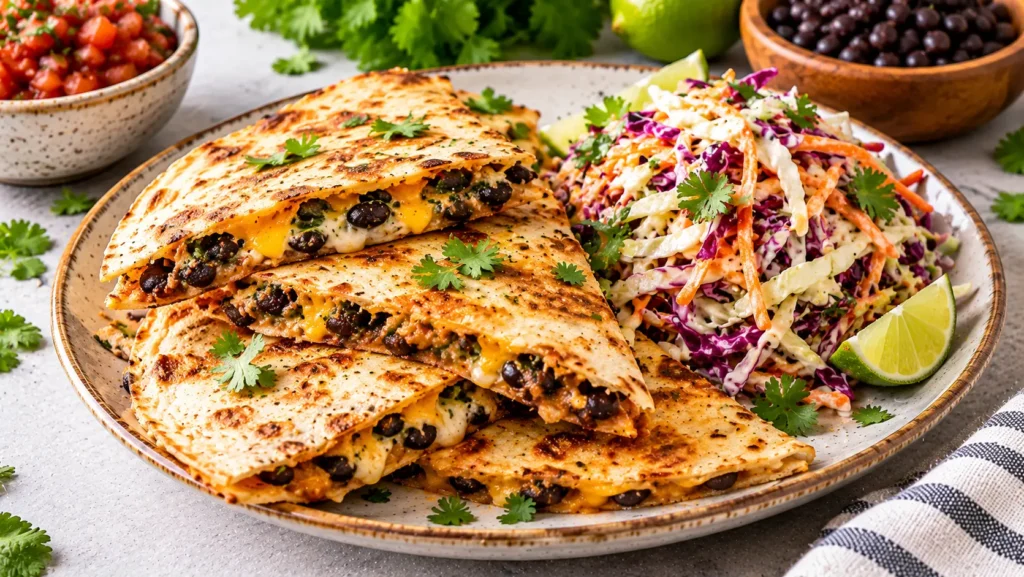
A quesadilla with only cheese is mostly fat, so I mash black beans into it and the protein goes up without the cost climbing. The cabbage slaw on the side keeps the plate from feeling heavy.
Stretch math: The black beans supply about 21 percent of the protein. Buy one can of black beans and a small block of cheddar. Cabbage keeps for weeks, so the slaw is nearly free.
Mash, don't puree.
Leave about a third of the beans whole so the filling has some texture, and spread it thin so the tortilla folds without splitting. Cook over medium heat, because high heat browns the outside before the cheese has melted, and you want both to finish together. It's the easiest swap on the list.
The nutrition: About 21 g protein per quesadilla (1 of 4). The cheddar carries the most, and the tortillas comes next.
Half Lentil Sloppy Joes
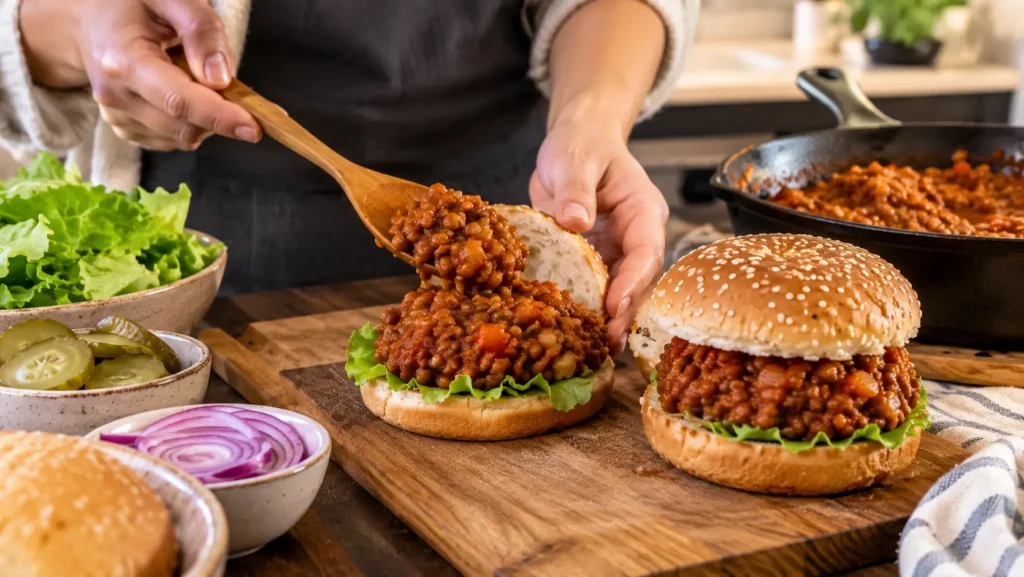
The nutrition: Each sandwich has about 23 g protein, and the batch makes 4. Most of that comes from the beef, with the lentils adding more.
Sloppy joes are a good place to hide lentils, since they soak up the sauce and nobody can pick them out. Half the beef is swapped for them here, which cuts the meat you need without a thinner sandwich.
Keep the cooking water.
The lentils release starch as they cook, and that liquid thickens the sauce, so pouring it off would waste it. If the mix looks loose after ten minutes, let it simmer uncovered a little longer. It will tighten as it cools, so don't judge it straight from the pan. You won't taste the difference.
Stretch math: About 27 percent of the protein comes from the lentils. Dry lentils cost much less than meat and keep for months. Freeze extra filling flat in a bag.
Don't Miss the Next Recipe
Get fresh recipes, meal prep systems, and high-protein meal ideas delivered to your inbox every week.
No spam. Unsubscribe anytime.
Pasta e Fagioli
Stretch math: Roughly 54 percent of the protein here is the white beans. Small pasta shapes work best, so use whatever box is half empty. Grated Parmesan rinds also add flavor if you save them.
Pasta e fagioli is a soup built from pantry cans, and two cans of white beans do most of the work. It's thick enough to eat as a full dinner with a slice of bread.
Mash a few beans.
The nutrition: Count on roughly 17 g protein per serving, from 4 equal servings. The white beans leads, followed by the pasta.
Press a ladle of beans against the side of the pot before the pasta goes in, and the broth turns creamy with no cream at all. The pasta keeps absorbing liquid as it sits, so stir in extra broth or water when you reheat the leftovers. It's better on day two.
Chickpea Curry Over Rice
This curry leans on canned chickpeas and tomatoes, and it takes about as long as the rice does. A spoonful of yogurt on top adds a little protein and cools the heat.
Bloom the curry powder.
The nutrition: One serving comes to about 18 g protein, with 4 in all. The chickpeas carries the most, and the rice comes next.
Cooking the curry powder in oil for a minute before any liquid goes in takes away its raw, dusty taste. Simmer the chickpeas until some of them break down, since that thickens the sauce. If it gets too thick, thin it with a splash of water. It's mild, so add heat if you like.
Stretch math: The chickpeas supply close to 54 percent of the protein in each bowl or plate. Curry powder is the only spice you need. Make extra rice and use it for the fried rice later in this list.
Split Pea and Ham Soup
Split peas are one of the most protein dense things in the pantry, and they cook down into a thick soup with no blender. A little diced ham adds a smoky note without much meat.
The nutrition: Per serving, it's about 27 g protein (4 servings). Most of that comes from the split peas, with the ham adding more.
Stretch math: Take away the split peas, and 69 percent of the protein goes with it. Rinse the peas, but don't soak them. Use a ham steak, or the bone from a holiday ham if you have one.
Stir it often.
Split peas settle on the bottom of the pot and can scorch, so scrape the bottom every ten minutes or so. The soup thickens a lot as it cools, which is normal, and a little water loosens it when you reheat a bowl. It's thick enough to stand a spoon in.
Black Bean Burrito Bowls With Roasted Peppers
Stretch math: Count on the black beans for about 23 percent of the protein. Set out the toppings and let everyone build a bowl. Leftover rice from another night works well here.
The nutrition: About 19 g protein per serving (1 of 4). The cheddar leads, followed by the black beans.
A burrito bowl skips the tortilla and puts the beans on rice, which is the cheaper way to eat the same meal. Roasted peppers and onions add sweetness, and the Greek yogurt stands in for sour cream.
Roast the peppers hot.
A hot oven browns the edges of the peppers and onions, and that char is where most of the flavor comes from. Spread them in one layer, because a crowded pan steams them instead. Warm the beans with the lime juice at the end so they taste fresh. Everyone's bowl can be different.
Stretch It With Eggs
A dozen eggs can cover two dinners, and they cook in minutes. These 5 dinners put eggs at the center and let rice, potatoes, or toast do the filling.
For more ideas, see our high protein egg recipes.
Cabbage Egg Fried Rice
Fried rice is the classic leftover dinner, and eggs make it filling. This version uses eight eggs and a lot of cabbage, so the pan is full without much meat or any special sauce.
Stretch math: The eggs supply 61 percent or so of what you're eating in protein. Cook the rice a day early. Eggs, frozen vegetables, and cabbage all come from the cheapest part of the store.
Use cold rice.
Rice that has chilled overnight is drier, so the grains fry separately instead of clumping into paste. If you only have fresh rice, spread it on a tray for twenty minutes first. Keep the heat high, and don't stir constantly, so the rice gets a little color. It's ready in 30 minutes.
The nutrition: Each serving has about 21 g protein, and the batch makes 4. The eggs carries the most, and the rice comes next.
Potato and Onion Frittata
The nutrition: Count on roughly 19 g protein per wedge, from 4 equal servings. Most of that comes from the eggs, with the cheddar adding more.
A frittata is the best answer to a dozen eggs and a bag of potatoes. Thin potato slices make it hearty, so a single wedge feels like a real dinner.
Slice the potatoes thin.
Slices about an eighth of an inch thick cook through in the skillet before the eggs go in, which matters because raw potato won't soften in the oven. Cover the pan while they cook so they steam. The frittata is done when the center doesn't jiggle and reads 160°F. It's good cold too.
Stretch math: By my count, the eggs supply 66 percent of the protein. A mandoline makes quick work of the potatoes. Serve it with a green salad or a spoonful of salsa.
Never Miss a Recipe
Fresh high-protein recipes, meal prep ideas, and kitchen tips, straight to your inbox every week. No spam, just good food.
No spam. Unsubscribe anytime.
Eggs in Spicy Tomato Sauce With Toast
Stretch math: Nearly 68 percent of the protein traces back to the eggs. Smoked paprika adds depth for pennies. Stale bread is fine, since the sauce softens it.
Eggs poached in spicy tomato sauce is a dish many cooks know as shakshuka, and it costs little to make. A can of crushed tomatoes and a pan are about all you need, plus toast for dipping.
Make wells first.
The nutrition: One serving comes to about 19 g protein, with 4 in all. The eggs leads, followed by the bread.
Use the back of a spoon to press eight small wells into the sauce, then crack one egg into each. Keep the heat low and the pan covered, so the whites set gently and the yolks stay soft. Check after six minutes, and stop when they look right to you. Don't skip the toast.
Spinach and Cheddar Baked Omelet
A baked omelet feeds four from one dish, and it needs no flipping. Spinach and cheddar make it taste like brunch, but it works at dinner with a simple side.
Squeeze the spinach.
The nutrition: Per square, it's about 25 g protein (4 servings). The eggs carries the most, and the cheddar comes next.
Wilted spinach holds a lot of water, and that water makes the omelet weep and turn soggy. Press the cooked spinach in a strainer before it goes into the eggs. Let the dish rest for five minutes after baking, because the eggs keep setting as they sit, and it will cut into clean squares instead of sliding apart. It's easy to double.
Stretch math: Here, the eggs supply about 64 percent of the total protein. Frozen spinach works too, if you thaw it and squeeze it dry. Cut the squares and freeze them for later.
Egg and Vegetable Ramen
Instant ramen is cheap, and a poached egg and a handful of frozen vegetables turn it into dinner. I skip the seasoning packets and use broth with soy sauce, which tastes better and has less salt.
The nutrition: About 20 g protein per serving (1 of 4). Most of that comes from the eggs, with the noodles adding more.
Stretch math: The eggs supply about 48 percent of the protein. Buy the cheapest block noodles. Frozen vegetables stand in for fresh and don't need chopping.
Poach in the broth.
Lower the eggs into the simmering broth in a ladle and cook them gently for about four minutes, until the whites are set and the yolks are firm. The noodles keep cooking in the hot bowl, so pull them a minute early. Serve right away. It's a bowl you'll make again.
Stretch It With Canned Fish
Canned tuna and salmon sit on the shelf for years and need no cooking at all. These 5 dinners turn a few cans into meals that taste fresh.
For more, see our tuna recipes.
Tuna Pasta With Peas and Lemon Yogurt Sauce
Stretch math: About 57 percent of the protein comes from the tuna. Three cans of tuna feed four, which is why this one is high in protein. Plain canned tuna in water is the better buy here.
The nutrition: Each serving has about 38 g protein, and the batch makes 4. The tuna leads, followed by the pasta.
Tuna pasta can be dry and bland, so I whisk together a quick sauce of Greek yogurt, lemon, and garlic that clings to the noodles. Frozen peas add color, and the whole thing is ready in 25 minutes.
Save the pasta water.
The starchy water loosens the yogurt into a smooth sauce that coats every noodle, so measure out half a cup before you drain. Take the pan off the heat before you add the yogurt, or it may curdle. Flake the tuna with a fork and fold it in last. It's fine cold the next day.
Canned Salmon Cakes With Cabbage Slaw
Canned salmon makes better patties than most people expect, and it costs a fraction of fresh fillets. A crisp cabbage slaw with yogurt dressing cuts through the richness.
Stretch math: Roughly 72 percent of the protein here is the canned salmon. Press the salmon bones in with your fork, since they're soft and add calcium. Leftover cakes make a good sandwich.
Chill before frying.
Let the shaped patties sit in the refrigerator for ten minutes, and the panko absorbs moisture so they hold together in the pan. Turn them once only, and give each side time to form a crust before you flip. They're done at 160°F inside. They're easy to double.
The nutrition: Count on roughly 26 g protein per serving, from 4 equal servings. The salmon carries the most, and the eggs comes next.
Tuna Melts With Celery and Greek Yogurt
The nutrition: One sandwich comes to about 31 g protein, with 4 in all. Most of that comes from the tuna, with the cheddar adding more.
A tuna melt is a diner classic for a reason, and it's one of the fastest dinners on this list. Greek yogurt replaces most of the mayonnaise, which adds protein and keeps the filling light.
Toast the bread first.
Broiling the bread before you add the tuna gives the base a crisp surface that stays firm under the filling. Watch the oven closely, because a broiler can burn cheese in under a minute. Add a slice of tomato if you have one. Kids won't mind these.
Stretch math: The tuna supplies close to 57 percent of the protein in each bowl or plate. Two cans of tuna cover eight halves. Serve with a bowl of soup or raw carrot sticks.
Tuna and White Bean Toast
Stretch math: Take away the tuna, and 68 percent of the protein goes with it. A can of beans and two cans of tuna cost very little. Add a pinch of red pepper flakes for heat.
Tuna and white beans are a pairing that Italian cooks have used for generations, and on thick toast it makes a no-cook dinner. Half the beans are mashed, which makes the topping creamy enough to spread.
Mash half the beans.
The nutrition: Per toast, it's about 27 g protein (4 servings). The tuna leads, followed by the white beans.
Smashing some of the beans with olive oil and lemon makes a spread that holds the whole beans in place, so nothing rolls off the toast. Use a fork, and leave it a bit rough. Pile the topping high just before eating, since the bread softens fast. It's as good as it sounds.
Canned Salmon Rice Bowls With Cucumber
Canned salmon, warm rice, and crisp vegetables make a bowl that comes together in ten minutes with nothing to cook but the rice. A salty, tangy sauce ties it all together.
Flake it gently.
The nutrition: About 24 g protein per serving (1 of 4). The salmon carries the most, and the rice comes next.
Break the salmon into big pieces so you can see them, and remove any bits of skin you don't want. Warm rice soaks up the sauce, so drizzle it over the top just before serving. Add a few sesame seeds if you've got some. It doesn't heat up the kitchen.
Stretch math: Count on the canned salmon for about 77 percent of the protein. Day old rice works if you warm it with a splash of water. Swap in any crunchy vegetable you have.
Stretch It With Starch
Rice, potatoes, and pasta fill a plate for very little, so a small amount of protein goes a long way. These 6 dinners pair a starch with one good protein food.
For a larger set built on pantry shelves, see our pantry staple dinners for a family of four.
Cottage Cheese and Broccoli Stuffed Potatoes
A baked potato is cheap and filling, and cottage cheese turns it into a real dinner. Blended with broccoli, the filling is creamy and has far more protein than butter and sour cream.
The nutrition: Each potato has about 24 g protein, and the batch makes 4. Most of that comes from the cottage cheese, with the cheddar adding more.
Stretch math: The cottage cheese supplies 38 percent or so of what you're eating in protein. Stir the cottage cheese well before measuring. Large russets are usually the best deal per pound.
Bake them until soft.
A russet needs close to an hour at 400°F, and it's ready when a fork slides in with no resistance. Let it cool for five minutes, then split it so the steam can escape. Mash the flesh a little before you fill it, and the filling will sit better. They're better than a plain baked potato.
Sheet Pan Smoked Sausage, Potatoes, and Cabbage
Stretch math: By my count, the sausage supplies 77 percent of the protein. A pound of sausage feeds four when the pan is mostly vegetables. A spoonful of mustard on the side is nice.
The nutrition: Count on roughly 21 g protein per serving, from 4 equal servings. The sausage leads, followed by the potatoes.
Smoked sausage is already cooked, which makes it one of the easiest proteins for a weeknight. Roasted with potatoes and cabbage on a pan, it needs no sauce and very little cleanup.
Add the sausage late.
Potatoes take longer than sausage, so give them a head start of fifteen minutes. Cabbage wedges turn sweet and crisp at the edges in a hot oven, so don't cut them too small. Use two pans if one is crowded, because the vegetables will steam instead of browning, and you'll lose the crisp edges that make this dinner worth eating. There's hardly a dish to wash.
Roasted Drumsticks With Rice and Green Beans
Drumsticks are among the cheapest cuts of chicken, and they stay juicy because the bone and skin protect the meat. Roasted with a simple spice rub, they need almost no attention.
Stretch math: Nearly 84 percent of the protein traces back to the chicken. Buy the family pack and freeze half. Add the green beans to the same pan to save a dish.
Dry the skin.
Pat the drumsticks with a paper towel before you season them, since a dry surface crisps in the oven while a wet one steams. Give them space on the pan so the hot air can reach every side. They're done when a thermometer in the thickest part reads 165°F. They're hard to overcook.
The nutrition: One serving comes to about 38 g protein, with 4 in all. The chicken carries the most, and the rice comes next.
Cheesy Rice and Bean Bake
The nutrition: Per serving, it's about 24 g protein (4 servings). Most of that comes from the cheddar, with the black beans adding more.
This bake is a pan of rice, beans, and cheese, and it asks for almost nothing. It reheats well, which makes it a sensible choice for a busy week.
Hold back some cheese.
Stirring in two thirds of the cheddar spreads it through the dish, and sprinkling the rest on top gives you a golden crust. Use cooked rice that's still a little moist, so the bake doesn't dry out. Let it stand five minutes before you scoop. It's a pan that doesn't need watching.
Stretch math: Here, the black beans supply about 38 percent of the total protein. Freeze single portions in containers. Serve with fresh lime wedges and a spoonful of salsa.
Peanut Noodles With Egg and Cabbage
Stretch math: The peanut butter supplies about 17 percent of the protein. Peanut butter supplies a small share of the protein, so the eggs matter here. Add chili sauce for heat.
Peanut noodles are a cold or warm dinner that comes from a jar of peanut butter. Boiled eggs add protein, and the cabbage cooks in the same pot as the spaghetti, so there's one less pan.
Thin the sauce.
The nutrition: About 23 g protein per serving (1 of 4). The pasta leads, followed by the eggs.
Peanut butter turns thick and sticky when it meets the soy sauce, so whisk in hot water a spoonful at a time until it pours. The noodles will drink some of it, so make it a little looser than you think you need. Taste it before you toss everything. They're good cold, too.
Stovetop Mac and Cheese With Ham and Peas
Boxed mac and cheese is cheap, but a homemade version costs barely more and tastes far better. Ham and peas make it a full dinner, and it's ready in the time the pasta takes to boil.
Melt the cheese off heat.
The nutrition: Each serving has about 38 g protein, and the batch makes 4. The cheddar carries the most, and the pasta comes next.
Stir the cheddar into the sauce after you take the pot off the burner, and it melts smoothly instead of turning grainy. Shred it yourself from a block, since pre-shredded cheese has a coating that keeps it from blending. Add a little milk if the sauce tightens. Kids won't believe it isn't boxed.
Stretch math: About 34 percent of the protein comes from the cheddar. Buy the cheese in a block, which is a better deal. Leftovers reheat well with a spoonful of milk.
Stretch a Cheaper Cut or Ground Meat
Ground meat and chicken thighs cost less per pound than steaks and breasts, and they stretch further when cooked with rice, cabbage, or beans. These 8 dinners show how.
For even more, see our cheap high protein dinners for four.
Ground Beef and Rice Skillet
A pound of ground beef feeds four when it's cooked with rice, tomatoes, and peppers in one pan. The rice absorbs the flavor of the beef as it cooks, so there's nothing to drain.
The nutrition: Count on roughly 29 g protein per serving, from 4 equal servings. Most of that comes from the beef, with the rice adding more.
Stretch math: Roughly 72 percent of the protein here is the beef. Use leaner beef if you like, but fattier beef works fine here. Top with cheese for the last minute.
Don't lift the lid.
Rice cooks in steam, so keep the lid on for the full twenty minutes and resist the urge to stir. If the grains are still firm at the end, add a splash of broth and cook five minutes more. Fluff with a fork before serving. It's one pan, start to finish.
Chicken Thigh and Broccoli Stir Fry
Stretch math: The chicken supplies close to 75 percent of the protein in each bowl or plate. A pound of chicken is plenty for four with this much rice. Freeze sliced chicken in dinner sized bags.
The nutrition: One serving comes to about 30 g protein, with 4 in all. The chicken leads, followed by the rice.
Boneless thighs are cheaper than breasts and harder to overcook, which makes them a good fit for a fast stir fry. Frozen broccoli is ready to go, and a simple sauce turns it into dinner.
Slice against the grain.
Cut the chicken into thin strips and it cooks in a few minutes with no tough bits. Keep the pan hot, and don't crowd it, or the meat turns gray and loses its juice. The sauce thickens fast, so stir it as it hits the pan. It's done before the rice cools.
Turkey and Three Bean Chili
Ground turkey is often cheaper than beef, and with three kinds of beans a pound of it makes a chili that feeds a crowd. It's thick and hearty, and it tastes better the next day.
Stretch math: Take away the beans, and 37 percent of the protein goes with it. Freeze it in single servings. Any canned beans you have work, so mix and match.
Brown it well.
Let the turkey sit in the pan without stirring for a couple of minutes at a time so it picks up color, since that is where the depth comes from. Add the spices to the hot oil before the tomatoes go in, and they'll taste richer. It's ready after about twenty five minutes of simmering. It's better the next day.
The nutrition: Per serving, it's about 36 g protein (4 servings). The turkey carries the most, and the pinto beans comes next.
Pizza Quesadillas With Turkey Pepperoni
The nutrition: About 22 g protein per quesadilla (1 of 4). Most of that comes from the mozzarella, with the tortillas adding more.
Pizza night usually means delivery, but a tortilla, some marinara, and a bag of mozzarella give you the same flavors for much less. Turkey pepperoni adds a little extra protein.
Go light on sauce.
Too much sauce makes the tortilla soggy and the filling slide out, so spread just a thin layer and save the rest for dipping. Press the folded tortilla flat with a spatula as it cooks. It's ready when the outside is crisp and the cheese oozes. They're gone fast.
Stretch math: Count on the mozzarella for about 56 percent of the protein. Mozzarella supplies most of the protein here. Cut each one into wedges and serve with the extra marinara.
Chicken and Rice Soup With Carrots
Stretch math: The chicken supplies 89 percent or so of what you're eating in protein. Thighs add more flavor than breasts and cost less. Make a double batch and freeze it without the rice.
Chicken and rice soup feeds a family from just a pound of chicken and a small amount of rice. It's gentle, filling, and a good use of the thighs you already have.
Add the rice late.
The nutrition: Each serving has about 25 g protein, and the batch makes 4. The chicken leads, followed by the rice.
If the rice goes in with the chicken, it overcooks and turns mushy by the time the soup is done. Add it once the chicken has been shredded and returned, and it needs only about fifteen minutes. The rice keeps swelling, so thin leftovers with extra broth. It's what you want on a cold night.
Sheet Pan Turkey and Bean Nachos
Nachos are a snack that can be dinner if you pile on beans and turkey. Spread on a sheet pan, everything gets hot at once, and the cheese melts into the chips.
Layer twice.
The nutrition: Count on roughly 33 g protein per serving, from 4 equal servings. The turkey carries the most, and the cheddar comes next.
Put down half the chips, half the toppings, and half the cheese, then repeat, so the toppings don't all end up on top. Bake only until the cheese bubbles, because chips go from crisp to burnt quickly. Eat them right away, while they're still crunchy. They won't wait.
Stretch math: By my count, the black beans supply 14 percent of the protein. Add shredded lettuce at the end for crunch.
Chicken Thigh Tacos With Cabbage Slaw
Chicken thighs and corn tortillas make tacos for a fraction of the cost of a takeout order. A tangy slaw with a lime yogurt sauce adds crunch, and nobody needs a special sauce.
The nutrition: One plate comes to about 30 g protein, with 4 in all. Most of that comes from the chicken, with the tortilla adding more.
Stretch math: Nearly 74 percent of the protein traces back to the chicken. Three small tortillas per person is a good serving. Leftover chicken works well on a salad.
Warm the tortillas.
Heat each corn tortilla for about 20 seconds per side in a dry pan, and it turns soft and pliable instead of cracking when you fold it. Stack them in a clean towel to keep them warm. Slice the chicken thin so it tucks into the shell. They're ready in 30 minutes.
Ground Pork and Cabbage Stir Fry Over Rice
Stretch math: Here, the pork supplies about 73 percent of the total protein. A head of cabbage costs little and goes far. Fresh ginger freezes well, so keep a knob in the freezer.
The nutrition: Per serving, it's about 27 g protein (4 servings). The pork leads, followed by the rice.
Ground pork and cabbage is the filling of a good dumpling, minus the wrapper. Cooked in a hot pan with garlic and ginger, it makes a fast stir fry that goes a long way over rice.
Let the pork brown.
Break the pork into small pieces and leave it alone for a few minutes, so it forms brown, crisp edges. Add the cabbage in handfuls, as it wilts quickly, and stop cooking while it still has some bite. Finish with the soy sauce off the heat so it doesn't burn. It's fast, and you'll want seconds.
Cooking Cheap Food Safely
The USDA's safe temperature chart lists 165°F for poultry and leftovers, 160°F for ground meat and egg dishes, and 145°F for whole cuts of pork. Perishable food shouldn't sit out more than 2 hours, or 1 hour above 90°F, per the USDA.
- Cool soups and casseroles in shallow containers so they chill fast.
- Reheat leftovers to 165°F, and stir halfway so there are no cold spots.
- Don't leave rice sitting out, because cooked rice can grow bacteria if it stays warm.
- Freeze extra portions the day you cook them, not on day four.
Time and Protein at a Glance
Use this list to plan your week. Times include prep and cooking, and protein is per serving.
- Black Bean and Cheese Quesadillas With Cabbage Slaw: 30 min, about 21 g protein per quesadilla
- Half Lentil Sloppy Joes: 50 min, about 23 g protein per sandwich
- Pasta e Fagioli: 45 min, about 17 g protein per serving
- Chickpea Curry Over Rice: 35 min, about 18 g protein per serving
- Split Pea and Ham Soup: 1 hr 30 min, about 27 g protein per serving
- Black Bean Burrito Bowls With Roasted Peppers: 40 min, about 19 g protein per serving
- Cabbage Egg Fried Rice: 30 min, about 21 g protein per serving
- Potato and Onion Frittata: 45 min, about 19 g protein per wedge
- Eggs in Spicy Tomato Sauce With Toast: 35 min, about 19 g protein per serving
- Spinach and Cheddar Baked Omelet: 40 min, about 25 g protein per square
- Egg and Vegetable Ramen: 25 min, about 20 g protein per serving
- Tuna Pasta With Peas and Lemon Yogurt Sauce: 25 min, about 38 g protein per serving
- Canned Salmon Cakes With Cabbage Slaw: 32 min, about 26 g protein per serving
- Tuna Melts With Celery and Greek Yogurt: 16 min, about 31 g protein per sandwich
- Tuna and White Bean Toast: 20 min, about 27 g protein per toast
- Canned Salmon Rice Bowls With Cucumber: 20 min, about 24 g protein per serving
- Cottage Cheese and Broccoli Stuffed Potatoes: 1 hr 20 min, about 24 g protein per potato
- Sheet Pan Smoked Sausage, Potatoes, and Cabbage: 55 min, about 21 g protein per serving
- Roasted Drumsticks With Rice and Green Beans: 55 min, about 38 g protein per serving
- Cheesy Rice and Bean Bake: 45 min, about 24 g protein per serving
- Peanut Noodles With Egg and Cabbage: 30 min, about 23 g protein per serving
- Stovetop Mac and Cheese With Ham and Peas: 30 min, about 38 g protein per serving
- Ground Beef and Rice Skillet: 45 min, about 29 g protein per serving
- Chicken Thigh and Broccoli Stir Fry: 30 min, about 30 g protein per serving
- Turkey and Three Bean Chili: 55 min, about 36 g protein per serving
- Pizza Quesadillas With Turkey Pepperoni: 22 min, about 22 g protein per quesadilla
- Chicken and Rice Soup With Carrots: 55 min, about 25 g protein per serving
- Sheet Pan Turkey and Bean Nachos: 40 min, about 33 g protein per serving
- Chicken Thigh Tacos With Cabbage Slaw: 30 min, about 30 g protein per plate
- Ground Pork and Cabbage Stir Fry Over Rice: 30 min, about 27 g protein per serving
How I Counted Protein
I multiplied typical USDA FoodData Central values by the weights on each card, then divided by four. Canned beans and fish are counted drained, and the stretch percentage uses the same numbers, so it's an estimate too.
Rice, pasta, and bread add a little protein, and I've counted it. Cooking changes weights, so your results may differ a bit.
Where These Cards Differ From Typical Versions
Many cheap dinner lists name a dish and stop. These give weights, so you can shop from the card, see what the stretching food contributes, and count the protein at the table. For a plan built on what's in the pantry, freezer, and refrigerator, see our cheap high protein dinners by pantry, freezer, and fridge.
Questions About Cheap Dinners for Four
Which dinner has the most protein?
Roasted Drumsticks With Rice and Green Beans leads at about 38 grams per serving, followed by Stovetop Mac and Cheese With Ham and Peas at about 38 grams and Tuna Pasta With Peas and Lemon Yogurt Sauce at about 38. The lowest's the Pasta e Fagioli at about 17 grams.
Which foods stretch protein the best?
Dry lentils, split peas, canned beans, and eggs give the most protein for the least money. Pair them with a smaller amount of meat, as in the sloppy joes and the chili. For a weekly plan, see our budget meal prep ideas.
Which dinners freeze well?
The soups, the chili, the rice and bean bake, the mac and cheese, and the sloppy joe filling all freeze for 2 to 3 months. Skip freezing the tacos, the nachos, and the tuna melts.
How long do leftovers keep?
Cooked leftovers keep 3 to 4 days in the refrigerator, per FoodSafety.gov. Reheat them to 165°F.
Are these numbers exact?
No. They're estimates based on typical USDA values, and your brands will vary.
1. Black Bean and Cheese Quesadillas With Cabbage Slaw
Approx. 21g ProteinIngredients: 4 large flour tortillas (65 g each, 260 g); 1 can (15 oz) black beans, drained (255 g); 6 oz (170 g) shredded cheddar cheese; 2 cups shredded green cabbage (150 g); 1/2 cup (125 g) salsa; 1 tsp ground cumin; 2 tbsp lime juice; 1 tbsp vegetable oil; 1/4 tsp salt.
Step 1: Mash the black beans with the cumin and salt, leaving some whole. Toss the cabbage with the lime juice for the slaw.
Step 2: Spread the beans over half of each tortilla, add the cheddar cheese, and fold in half. Cook in the vegetable oil in a skillet for 2 to 3 minutes a side, until golden and the cheese has melted.
Step 3: Serve with the slaw and salsa. Cool within 2 hours, or within 1 hour above 90°F, and pack in shallow containers. Refrigerate up to 3 to 4 days, and reheat to 165°F in the microwave or oven.
2. Half Lentil Sloppy Joes
Approx. 23g ProteinIngredients: 8 oz (227 g) ground beef; 1/2 cup (100 g) dry brown lentils, rinsed; 1 yellow onion, diced (150 g); 1/2 cup ketchup; 1 tbsp yellow mustard; 1 tbsp brown sugar; 1 tbsp tomato paste; 4 hamburger buns (60 g each, 240 g); 1 1/2 cups water; 1/2 tsp salt.
Step 1: Simmer the lentils in the water for 20 minutes, until tender, and do not drain.
Step 2: Brown the beef and onion in a skillet for 8 minutes, until no pink remains and a thermometer reads 160°F, then stir in the lentils with their cooking water, ketchup, yellow mustard, brown sugar, tomato paste, and salt and simmer 10 minutes, until thick.
Step 3: Spoon onto the buns. Cool within 2 hours, or within 1 hour above 90°F, and pack in shallow containers. Refrigerate up to 3 to 4 days, or freeze portions up to 2 to 3 months, and reheat to 165°F.
3. Pasta e Fagioli
Approx. 17g ProteinIngredients: 2 cans (15 oz each) white beans, drained (510 g); 4 oz (113 g) dry small pasta such as ditalini; 1 can (14.5 oz) crushed tomatoes (411 g); 2 carrots, diced (120 g); 2 celery ribs, diced (80 g); 1 yellow onion, diced (150 g); 3 garlic cloves (9 g); 4 cups chicken broth; 1/4 cup (25 g) grated Parmesan; 1 tsp Italian seasoning; 1 tbsp vegetable oil.
Step 1: Cook the onion, carrots, and celery in the vegetable oil for 6 minutes, then add the garlic and Italian seasoning for 1 minute.
Step 2: Add the tomatoes, white beans, and chicken broth and simmer 10 minutes, then stir in the pasta and cook 8 to 10 minutes, until al dente.
Step 3: Stir in the Parmesan. Cool within 2 hours, or within 1 hour above 90°F, and pack in shallow containers. Refrigerate up to 3 to 4 days, or freeze portions up to 2 to 3 months, and reheat to 165°F.
4. Chickpea Curry Over Rice
Approx. 18g ProteinIngredients: 2 cans (15 oz each) chickpeas, drained (510 g); 1 can (14.5 oz) diced tomatoes (411 g); 1 yellow onion, diced (150 g); 3 garlic cloves (9 g); 1 tbsp curry powder; 3 cups cooked rice (about 585 g); 1/2 cup (120 g) plain yogurt; 1 cup water; 1 tbsp vegetable oil; 1/2 tsp salt.
Step 1: Cook the onion in the vegetable oil for 5 minutes, then add the garlic and curry powder for 1 minute.
Step 2: Add the chickpeas, tomatoes, water, and salt and simmer 15 minutes, until thickened.
Step 3: Serve over the rice with the yogurt. Cool within 2 hours, or within 1 hour above 90°F, and pack in shallow containers. Refrigerate up to 3 to 4 days, or freeze portions up to 2 to 3 months, and reheat to 165°F.
5. Split Pea and Ham Soup
Approx. 27g ProteinIngredients: 1 1/2 cups (300 g) dry split peas, rinsed; 6 oz (170 g) cooked ham, diced; 2 carrots, diced (120 g); 2 celery ribs, diced (80 g); 1 yellow onion, diced (150 g); 6 cups chicken broth; 1 bay leaf; 1 tbsp vegetable oil; 1/4 tsp black pepper.
Step 1: Cook the onion, carrots, and celery in the vegetable oil for 6 minutes.
Step 2: Add the split peas, chicken broth, ham, and bay leaf and simmer, partly covered, for 1 hour, stirring now and then, until the peas are soft and the soup is thick.
Step 3: Remove the bay leaf and season with the pepper. Cool within 2 hours, or within 1 hour above 90°F, and pack in shallow containers. Refrigerate up to 3 to 4 days, or freeze portions up to 2 to 3 months, and reheat to 165°F.
6. Black Bean Burrito Bowls With Roasted Peppers
Approx. 19g ProteinIngredients: 1 can (15 oz) black beans, drained (255 g); 3 cups cooked rice (about 585 g); 2 bell peppers, sliced (300 g); 1 yellow onion, sliced (150 g); 4 oz (113 g) shredded cheddar cheese; 1/2 cup (120 g) plain Greek yogurt; 1/2 cup (125 g) salsa; 1 tsp chili powder; 2 tbsp lime juice; 1 tbsp vegetable oil.
Step 1: Heat the oven to 425°F. Toss the bell peppers and onion with the vegetable oil and chili powder and roast 20 to 25 minutes, until tender and browned at the edges.
Step 2: Warm the black beans with the lime juice until steaming.
Step 3: Divide the rice among 4 bowls and top with the beans, roasted vegetables, cheddar cheese, Greek yogurt, and salsa. Cool within 2 hours, or within 1 hour above 90°F, and pack in shallow containers. Refrigerate up to 3 to 4 days, and reheat to 165°F in the microwave or oven.
7. Cabbage Egg Fried Rice
Approx. 21g ProteinIngredients: 8 large eggs (50 g each, 400 g); 4 cups cooked rice, cold (about 780 g); 1 cup (150 g) frozen mixed vegetables; 2 cups shredded green cabbage (150 g); 3 scallions, sliced (45 g); 2 garlic cloves (6 g); 3 tbsp (48 g) soy sauce; 2 tbsp vegetable oil.
Step 1: Scramble the eggs in 1 tablespoon of the vegetable oil until just set and the eggs are cooked through, then set them aside.
Step 2: Cook the cabbage and frozen vegetables in the remaining oil for 4 minutes, add the garlic for 30 seconds, then add the rice and cook 4 minutes, until hot and steaming.
Step 3: Stir in the eggs, soy sauce, and scallions. Cool within 2 hours, or within 1 hour above 90°F, and pack in shallow containers. Refrigerate up to 3 to 4 days, and reheat to 165°F in the microwave or oven.
8. Potato and Onion Frittata
Approx. 19g ProteinIngredients: 8 large eggs (50 g each, 400 g); 1 lb (450 g) potatoes, thinly sliced; 1 yellow onion, diced (150 g); 2 oz (56 g) shredded cheddar cheese; 1/4 cup (60 g) milk; 2 tbsp vegetable oil; 1/2 tsp salt; 1/4 tsp black pepper.
Step 1: Heat the oven to 375°F. Cook the potatoes and onion in the vegetable oil in a 10 inch oven safe skillet, covered, for 12 minutes, stirring once, until tender.
Step 2: Whisk the eggs, milk, salt, and pepper and pour them over the potatoes. Scatter the cheddar cheese on top and cook 2 minutes on the stove.
Step 3: Bake 15 to 18 minutes, until set and a thermometer in the center reads 160°F. Cool within 2 hours, or within 1 hour above 90°F, and pack in shallow containers. Refrigerate up to 3 to 4 days, and reheat to 165°F in the microwave or oven.
9. Eggs in Spicy Tomato Sauce With Toast
Approx. 19g ProteinIngredients: 8 large eggs (50 g each, 400 g); 1 can (28 oz) crushed tomatoes (794 g); 1 yellow onion, diced (150 g); 3 garlic cloves (9 g); 1 tsp smoked paprika; 4 thick slices bread (40 g each, 160 g); 1/2 tsp red pepper flakes; 2 tbsp vegetable oil; 1/2 tsp salt.
Step 1: Cook the onion in the vegetable oil for 5 minutes, then add the garlic, smoked paprika, and red pepper flakes for 1 minute.
Step 2: Add the tomatoes and salt and simmer 10 minutes, until thickened. Make 8 wells and crack in the eggs.
Step 3: Cover and cook 6 to 8 minutes, until the whites are set and the yolks are firm, and serve with the toasted bread. Cool within 2 hours, or within 1 hour above 90°F, and pack in shallow containers. Refrigerate up to 3 to 4 days, and reheat to 165°F in the microwave or oven.
10. Spinach and Cheddar Baked Omelet
Approx. 25g ProteinIngredients: 10 large eggs (50 g each, 500 g); 5 oz (140 g) baby spinach; 4 oz (113 g) shredded cheddar cheese; 1/2 cup (120 g) milk; 1 yellow onion, diced (100 g); 1 tbsp vegetable oil; 1/2 tsp salt; 1/4 tsp black pepper.
Step 1: Heat the oven to 375°F and grease a 9 by 13 inch baking dish. Cook the onion in the vegetable oil for 4 minutes, then add the spinach until it wilts.
Step 2: Whisk the eggs, milk, salt, and pepper, then stir in the onion, spinach, and cheddar cheese and pour into the dish.
Step 3: Bake 25 to 30 minutes, until set and a thermometer in the center reads 160°F. Cool within 2 hours, or within 1 hour above 90°F, and pack in shallow containers. Refrigerate up to 3 to 4 days, and reheat to 165°F in the microwave or oven.
11. Egg and Vegetable Ramen
Approx. 20g ProteinIngredients: 4 packs (3 oz each) instant ramen noodles, seasoning packets discarded (340 g); 6 large eggs (50 g each, 300 g); 2 cups (300 g) frozen mixed vegetables; 6 cups chicken broth; 2 tbsp (32 g) soy sauce; 1 tsp sesame oil; 3 scallions, sliced (45 g).
Step 1: Bring the chicken broth and soy sauce to a boil, add the frozen vegetables, and simmer 3 minutes.
Step 2: Add the ramen noodles and cook 3 minutes, until tender, then lower the eggs into the simmering broth in a ladle and poach them 4 minutes, until the whites are set and the yolks are firm.
Step 3: Divide among 4 bowls and top with the scallions and sesame oil. Cool within 2 hours, or within 1 hour above 90°F, and pack in shallow containers. Refrigerate up to 3 to 4 days, and reheat to 165°F in the microwave or oven.
12. Tuna Pasta With Peas and Lemon Yogurt Sauce
Approx. 38g ProteinIngredients: 3 cans (5 oz each, 142 g) tuna, drained (340 g); 12 oz (340 g) dry pasta; 1 1/2 cups (200 g) frozen peas; 1/2 cup (120 g) plain Greek yogurt; 2 tbsp lemon juice; 2 garlic cloves (6 g); 1/2 cup reserved pasta water; 1 tbsp vegetable oil; 1/2 tsp salt; 1/4 tsp black pepper.
Step 1: Boil the pasta in salted water until al dente, adding the peas for the last 2 minutes, and save 1/2 cup of the pasta water before draining.
Step 2: Cook the garlic in the vegetable oil for 1 minute and stir in the Greek yogurt, lemon juice, and pasta water.
Step 3: Toss with the pasta, peas, tuna, salt, and pepper until steaming. Cool within 2 hours, or within 1 hour above 90°F, and pack in shallow containers. Refrigerate up to 3 to 4 days, and reheat to 165°F in the microwave or oven.
13. Canned Salmon Cakes With Cabbage Slaw
Approx. 26g ProteinIngredients: 2 cans (6 oz each, 170 g) boneless salmon, drained (340 g); 2 large eggs (50 g each, 100 g); 1/2 cup (30 g) panko bread crumbs; 2 scallions, sliced (30 g); 2 tbsp Dijon mustard; 3 cups shredded green cabbage (225 g); 1/2 cup (120 g) plain Greek yogurt; 1 tbsp cider vinegar; 2 tbsp vegetable oil; 1/2 tsp salt.
Step 1: Mix the salmon, eggs, panko, scallions, and Dijon mustard and shape into 8 patties.
Step 2: Cook in the vegetable oil for 4 to 5 minutes a side, until golden and a thermometer reads 160°F.
Step 3: Toss the cabbage with the Greek yogurt, cider vinegar, and salt and serve with the cakes. Cool within 2 hours, or within 1 hour above 90°F, and pack in shallow containers. Refrigerate up to 3 to 4 days, and reheat to 165°F in the microwave or oven.
14. Tuna Melts With Celery and Greek Yogurt
Approx. 31g ProteinIngredients: 2 cans (5 oz each, 142 g) tuna, drained (284 g); 8 slices bread (30 g each, 240 g); 4 oz (113 g) sliced cheddar cheese; 1/4 cup (60 g) plain Greek yogurt; 2 celery ribs, diced (80 g); 1 tbsp lemon juice; 1/4 tsp salt; 1/4 tsp black pepper.
Step 1: Heat the broiler. Stir the tuna with the Greek yogurt, celery, lemon juice, salt, and pepper.
Step 2: Toast the bread on a baking sheet under the broiler for 2 minutes a side, spread with the tuna, and top with the cheddar cheese.
Step 3: Broil 2 to 3 minutes, until bubbling and golden. Cool within 2 hours, or within 1 hour above 90°F, and pack in shallow containers. Refrigerate up to 3 to 4 days, and reheat to 165°F in the microwave or oven.
15. Tuna and White Bean Toast
Approx. 27g ProteinIngredients: 2 cans (5 oz each, 142 g) tuna, drained (284 g); 1 can (15 oz) white beans, drained (255 g); 4 thick slices bread (40 g each, 160 g); 1 cup (170 g) cherry tomatoes, halved; 2 tbsp lemon juice; 2 tbsp olive oil; 2 tbsp chopped fresh parsley; 1/4 tsp black pepper.
Step 1: Toast the bread until golden and crisp.
Step 2: Mash half the white beans with the olive oil and lemon juice, then stir in the remaining beans, tuna, tomatoes, parsley, and pepper.
Step 3: Pile the mixture on the toast. Cool within 2 hours, or within 1 hour above 90°F, and pack in shallow containers. Refrigerate up to 3 to 4 days, and reheat to 165°F in the microwave or oven.
16. Canned Salmon Rice Bowls With Cucumber
Approx. 24g ProteinIngredients: 2 cans (6 oz each, 170 g) boneless salmon, drained (340 g); 3 cups cooked rice (about 585 g); 1 cucumber, sliced (300 g); 2 carrots, shredded (120 g); 3 scallions, sliced (45 g); 2 tbsp (32 g) soy sauce; 1 tbsp rice vinegar; 1 tsp sesame oil.
Step 1: Warm the rice until steaming and flake the salmon.
Step 2: Whisk the soy sauce, rice vinegar, and sesame oil together.
Step 3: Divide the rice among 4 bowls and top with the salmon, cucumber, carrots, and scallions and drizzle with the sauce. Cool within 2 hours, or within 1 hour above 90°F, and pack in shallow containers. Refrigerate up to 3 to 4 days, and reheat to 165°F in the microwave or oven.
17. Cottage Cheese and Broccoli Stuffed Potatoes
Approx. 24g ProteinIngredients: 4 russet potatoes (250 g each, 1000 g); 1 1/2 cups (340 g) cottage cheese; 1 lb (450 g) broccoli florets; 4 oz (113 g) shredded cheddar cheese; 1 tsp garlic powder; 1/2 tsp salt; 1/4 tsp black pepper.
Step 1: Heat the oven to 400°F. Prick the potatoes and bake on a baking sheet 50 to 60 minutes, until tender.
Step 2: Steam the broccoli for 4 minutes, until tender crisp, and stir it with the cottage cheese, garlic powder, salt, and pepper.
Step 3: Split the potatoes, fill them, top with the cheddar cheese, and bake 5 minutes, until melted. Cool within 2 hours, or within 1 hour above 90°F, and pack in shallow containers. Refrigerate up to 3 to 4 days, and reheat to 165°F in the microwave or oven.
18. Sheet Pan Smoked Sausage, Potatoes, and Cabbage
Approx. 21g ProteinIngredients: 1 lb (450 g) smoked sausage, sliced; 1 1/2 lb (680 g) potatoes, diced; 1/2 small head green cabbage, cut in wedges (300 g); 1 yellow onion, cut in wedges (150 g); 1 tsp smoked paprika; 3 tbsp vegetable oil; 1/2 tsp salt; 1/4 tsp black pepper.
Step 1: Heat the oven to 425°F. Toss the potatoes, cabbage, and onion with the vegetable oil, smoked paprika, salt, and pepper on two baking sheets and roast 15 minutes.
Step 2: Add the sausage and roast 15 to 20 minutes more, until the potatoes are tender and the sausage is browned and hot, at least 165°F.
Step 3: Serve from the pan. Cool within 2 hours, or within 1 hour above 90°F, and pack in shallow containers. Refrigerate up to 3 to 4 days, and reheat to 165°F in the microwave or oven.
19. Roasted Drumsticks With Rice and Green Beans
Approx. 38g ProteinIngredients: 8 chicken drumsticks (about 100 g each, 800 g); 3 cups cooked rice (about 585 g); 1 lb (450 g) frozen green beans; 1 tsp smoked paprika; 1 tsp garlic powder; 2 tbsp vegetable oil; 1/2 tsp salt; 1/4 tsp black pepper.
Step 1: Heat the oven to 425°F. Toss the drumsticks with 1 tablespoon of the vegetable oil, smoked paprika, garlic powder, salt, and pepper on a baking sheet.
Step 2: Roast 40 to 45 minutes, until the skin is crisp and a thermometer reads 165°F.
Step 3: Toss the green beans with the remaining oil, add them to the pan for the last 15 minutes, and serve with the rice. Cool within 2 hours, or within 1 hour above 90°F, and pack in shallow containers. Refrigerate up to 3 to 4 days, and reheat to 165°F in the microwave or oven.
20. Cheesy Rice and Bean Bake
Approx. 24g ProteinIngredients: 3 cups cooked rice (about 585 g); 2 cans (15 oz each) black beans, drained (510 g); 1 cup (250 g) salsa; 6 oz (170 g) shredded cheddar cheese; 1 tsp ground cumin; 1 tsp chili powder.
Step 1: Heat the oven to 375°F. Mix the rice, black beans, salsa, cumin, chili powder, and two thirds of the cheddar cheese.
Step 2: Spread in a 9 by 13 inch baking dish and top with the remaining cheese.
Step 3: Bake 25 to 30 minutes, until bubbling and golden. Cool within 2 hours, or within 1 hour above 90°F, and pack in shallow containers. Refrigerate up to 3 to 4 days, or freeze portions up to 2 to 3 months, and reheat to 165°F.
21. Peanut Noodles With Egg and Cabbage
Approx. 23g ProteinIngredients: 12 oz (340 g) dry spaghetti; 4 large eggs (50 g each, 200 g); 1/4 cup (64 g) peanut butter; 3 tbsp (48 g) soy sauce; 2 cups shredded green cabbage (150 g); 1 cucumber, sliced (300 g); 1 tbsp brown sugar; 1 tbsp rice vinegar; Water for boiling the spaghetti and thinning the sauce.
Step 1: Boil the spaghetti in water, adding the cabbage for the last minute, then drain. Boil the eggs separately for 10 minutes, cool, peel, and halve them.
Step 2: Whisk the peanut butter, soy sauce, brown sugar, rice vinegar, and 1/4 cup of hot water until smooth.
Step 3: Toss the noodles and cabbage with the sauce and top with the eggs and cucumber. Cool within 2 hours, or within 1 hour above 90°F, and pack in shallow containers. Refrigerate up to 3 to 4 days, and reheat to 165°F in the microwave or oven.
22. Stovetop Mac and Cheese With Ham and Peas
Approx. 38g ProteinIngredients: 12 oz (340 g) dry elbow macaroni; 8 oz (225 g) shredded cheddar cheese; 2 cups (480 g) milk; 6 oz (170 g) cooked ham, diced; 1 cup (150 g) frozen peas; 2 tbsp butter; 2 tbsp all purpose flour (16 g); 1/2 tsp salt; Water for boiling the macaroni.
Step 1: Boil the macaroni in water until al dente, adding the peas for the last minute, and drain.
Step 2: Melt the butter, whisk in the flour for 1 minute, then whisk in the milk and cook until thickened and smooth. Off the heat, stir in the cheddar cheese a handful at a time with the salt.
Step 3: Fold in the macaroni, peas, and ham and heat until steaming. Cool within 2 hours, or within 1 hour above 90°F, and pack in shallow containers. Refrigerate up to 3 to 4 days, or freeze portions up to 2 to 3 months, and reheat to 165°F.
23. Ground Beef and Rice Skillet
Approx. 29g ProteinIngredients: 1 lb (450 g) ground beef; 1 cup (185 g) dry long grain rice; 1 can (14.5 oz) diced tomatoes (411 g); 1 yellow onion, diced (150 g); 1 green bell pepper, diced (150 g); 2 cups beef broth; 2 oz (56 g) shredded cheddar cheese; 1 tbsp chili powder; 1/2 tsp salt.
Step 1: Brown the beef with the onion and bell pepper in a deep skillet for 8 minutes, until no pink remains and a thermometer reads 160°F.
Step 2: Stir in the rice, tomatoes, beef broth, chili powder, and salt, cover, and simmer 20 minutes, until the rice is tender.
Step 3: Top with the cheddar cheese until melted. Cool within 2 hours, or within 1 hour above 90°F, and pack in shallow containers. Refrigerate up to 3 to 4 days, or freeze portions up to 2 to 3 months, and reheat to 165°F.
24. Chicken Thigh and Broccoli Stir Fry
Approx. 30g ProteinIngredients: 1 lb (450 g) boneless skinless chicken thighs, sliced; 1 lb (450 g) frozen broccoli florets; 2 carrots, sliced (120 g); 3 cups cooked rice (about 585 g); 3 garlic cloves (9 g); 1 tbsp grated fresh ginger; 1/4 cup (64 g) soy sauce; 1 tbsp cornstarch; 1 tbsp brown sugar; 2 tbsp vegetable oil; 1/2 cup water.
Step 1: Whisk the soy sauce, cornstarch, brown sugar, and water together.
Step 2: Cook the chicken in the vegetable oil for 6 to 8 minutes, until a thermometer reads 165°F, then add the garlic, ginger, carrots, and broccoli for 4 minutes, until tender crisp.
Step 3: Pour in the sauce and cook 1 to 2 minutes, until thickened, and serve over the rice. Cool within 2 hours, or within 1 hour above 90°F, and pack in shallow containers. Refrigerate up to 3 to 4 days, and reheat to 165°F in the microwave or oven.
25. Turkey and Three Bean Chili
Approx. 36g ProteinIngredients: 1 lb (450 g) ground turkey; 1 can (15 oz) kidney beans, drained (255 g); 1 can (15 oz) pinto beans, drained (255 g); 1 can (15 oz) black beans, drained (255 g); 1 can (28 oz) crushed tomatoes (794 g); 1 yellow onion, diced (150 g); 3 garlic cloves (9 g); 2 tbsp chili powder; 1 tsp ground cumin; 1 tbsp vegetable oil; 1/2 tsp salt.
Step 1: Brown the turkey and onion in the vegetable oil for 8 minutes, until no pink remains and a thermometer reads 165°F, then add the garlic, chili powder, and cumin for 1 minute.
Step 2: Add the kidney beans, pinto beans, black beans, tomatoes, and salt and simmer 25 minutes, until thick.
Step 3: Serve hot. Cool within 2 hours, or within 1 hour above 90°F, and pack in shallow containers. Refrigerate up to 3 to 4 days, or freeze portions up to 2 to 3 months, and reheat to 165°F.
26. Pizza Quesadillas With Turkey Pepperoni
Approx. 22g ProteinIngredients: 4 large flour tortillas (65 g each, 260 g); 8 oz (227 g) shredded mozzarella cheese; 1 cup (250 g) marinara sauce; 2 oz (57 g) turkey pepperoni; 1 tsp Italian seasoning; 1 tbsp vegetable oil.
Step 1: Spread a thin layer of the marinara sauce over half of each tortilla and sprinkle with the Italian seasoning.
Step 2: Top with the mozzarella cheese and turkey pepperoni and fold in half.
Step 3: Cook in the vegetable oil in a skillet for 2 to 3 minutes a side, until golden and the cheese has melted, and dip in the rest of the marinara sauce. Cool within 2 hours, or within 1 hour above 90°F, and pack in shallow containers. Refrigerate up to 3 to 4 days, and reheat to 165°F in the microwave or oven.
27. Chicken and Rice Soup With Carrots
Approx. 25g ProteinIngredients: 1 lb (450 g) boneless skinless chicken thighs; 1/2 cup (95 g) dry long grain rice; 3 carrots, diced (180 g); 3 celery ribs, diced (120 g); 1 yellow onion, diced (150 g); 2 garlic cloves (6 g); 8 cups chicken broth; 1 tsp dried thyme; 1 tbsp vegetable oil; 1/2 tsp salt; 1/4 tsp black pepper.
Step 1: Cook the onion, carrots, and celery in the vegetable oil for 6 minutes, then add the garlic and thyme for 1 minute.
Step 2: Add the chicken broth and chicken thighs and simmer 15 minutes, until a thermometer in the chicken reads 165°F. Lift out the chicken and shred it.
Step 3: Add the rice to the broth and simmer 15 minutes, until tender, then return the chicken and season with the salt and pepper. Cool within 2 hours, or within 1 hour above 90°F, and pack in shallow containers. Refrigerate up to 3 to 4 days, or freeze portions up to 2 to 3 months, and reheat to 165°F.
28. Sheet Pan Turkey and Bean Nachos
Approx. 33g ProteinIngredients: 12 oz (340 g) ground turkey; 1 can (15 oz) black beans, drained (255 g); 6 oz (170 g) tortilla chips; 6 oz (170 g) shredded cheddar cheese; 1/2 cup (125 g) salsa; 1 tbsp chili powder; 1 tsp ground cumin; 1 tbsp vegetable oil; 1/4 tsp salt.
Step 1: Heat the oven to 400°F. Brown the turkey in the vegetable oil for 7 minutes, until no pink remains and a thermometer reads 165°F, then stir in the chili powder, cumin, and salt.
Step 2: Spread the tortilla chips on a baking sheet and top with the turkey, black beans, and cheddar cheese.
Step 3: Bake 8 to 10 minutes, until the cheese is melted and bubbling, and top with the salsa. Cool within 2 hours, or within 1 hour above 90°F, and pack in shallow containers. Refrigerate up to 3 to 4 days, and reheat to 165°F in the microwave or oven.
29. Chicken Thigh Tacos With Cabbage Slaw
Approx. 30g ProteinIngredients: 1 lb (450 g) boneless skinless chicken thighs; 12 small corn tortillas (25 g each, 300 g); 3 cups shredded green cabbage (225 g); 1/2 cup (120 g) plain Greek yogurt; 2 tbsp lime juice; 1 tbsp chili powder; 1 tsp ground cumin; 1 tbsp vegetable oil; 1/2 tsp salt.
Step 1: Toss the chicken with the chili powder, cumin, and salt and cook it in the vegetable oil for 7 to 8 minutes, until a thermometer reads 165°F, then slice it.
Step 2: Stir the Greek yogurt with the lime juice and toss half with the cabbage.
Step 3: Warm the corn tortillas and fill them with the chicken and slaw and drizzle with the remaining yogurt sauce. Cool within 2 hours, or within 1 hour above 90°F, and pack in shallow containers. Refrigerate up to 3 to 4 days, and reheat to 165°F in the microwave or oven.
30. Ground Pork and Cabbage Stir Fry Over Rice
Approx. 27g ProteinIngredients: 1 lb (450 g) ground pork; 1 small head green cabbage, shredded (600 g); 3 cups cooked rice (about 585 g); 3 garlic cloves (9 g); 1 tbsp grated fresh ginger; 3 tbsp (48 g) soy sauce; 1 tbsp rice vinegar; 3 scallions, sliced (45 g); 1 tbsp vegetable oil.
Step 1: Brown the pork in the vegetable oil for 6 to 8 minutes, until no pink remains and a thermometer reads 160°F, then add the garlic and ginger for 30 seconds.
Step 2: Add the cabbage and cook 5 minutes, until tender crisp.
Step 3: Stir in the soy sauce, rice vinegar, and scallions and serve over the rice. Cool within 2 hours, or within 1 hour above 90°F, and pack in shallow containers. Refrigerate up to 3 to 4 days, and reheat to 165°F in the microwave or oven.
Get Fresh Recipes Every Week
Join readers getting fresh recipes, meal prep systems, and high-protein meal ideas delivered to your inbox every week.
No spam. Unsubscribe anytime.